HISTORY 26 Lecture Twenty-Four: The Neo-Babylonian Empire (626 - 539 BC)
“ Sacred Places’ Wordy Walls”  The Material of Early Christian Devotional Graffiti Ann Marie Yasin  Professor of History, USC  Wednesday, December 1st  4:00 p.m.  HMNSS 1500  This paper examines what early Christian graffiti can tell us about the lived experience of Christian sacred spaces in the late third to seventh centuries.
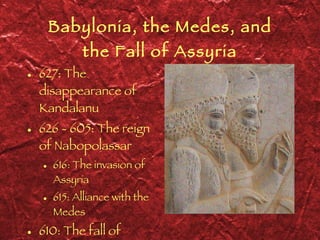
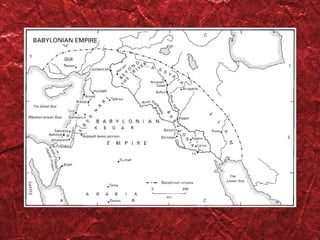
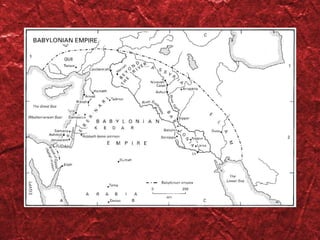
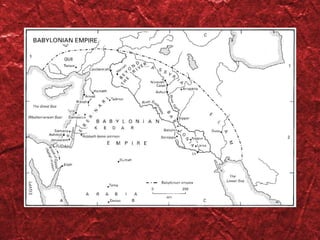
Babylonia, the Medes, and the Fall of Assyria 627: The disappearance of Kandalanu 626 - 605: The reign of Nabopolassar 616: The invasion of Assyria 615: Alliance with the Medes 610: The fall of Assyria
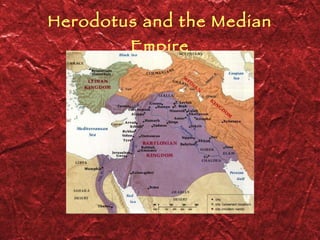
Herodotus and the Median Empire
 
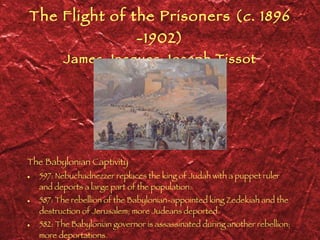
The Flight of the Prisoners ( c . 1896 -1902) James Jacques Joseph Tissot The Babylonian Captivity 597: Nebuchadnezzer replaces the king of Judah with a puppet ruler and deports a large part of the population. 587: The rebellion of the Babylonian-appointed king Zedekiah and the destruction of Jerusalem; more Judeans deported. 582: The Babylonian governor is assassinated during another rebellion; more deportations.
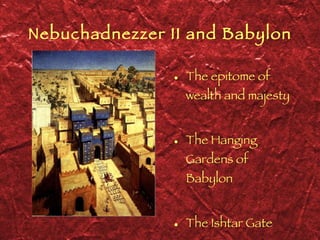
Nebuchadnezzer II and Babylon The epitome of wealth and majesty The Hanging Gardens of Babylon The Ishtar Gate
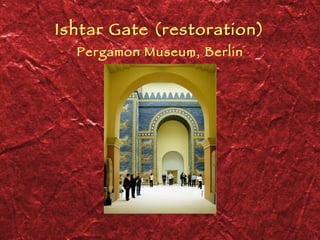
Ishtar Gate (restoration) Pergamon Museum, Berlin
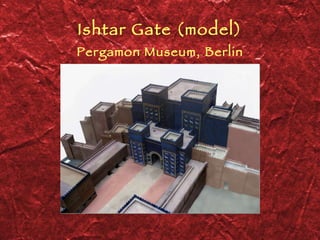
Ishtar Gate (model) Pergamon Museum, Berlin
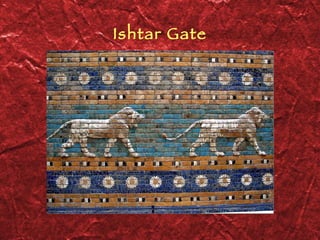
Ishtar Gate
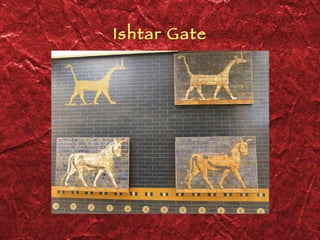
Ishtar Gate
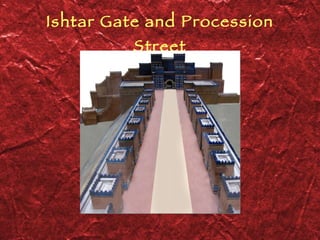
Ishtar Gate and Procession Street
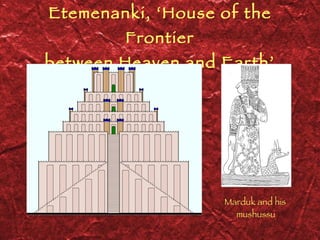
Etemenanki, ‘House of the Frontier between Heaven and Earth’ Marduk and his mushussu
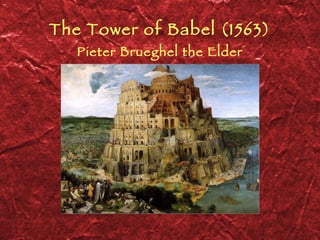
The Tower of Babel (1563) Pieter Brueghel the Elder
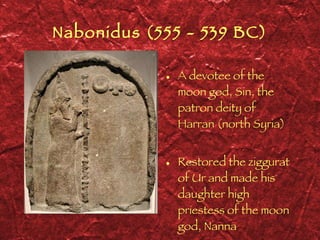
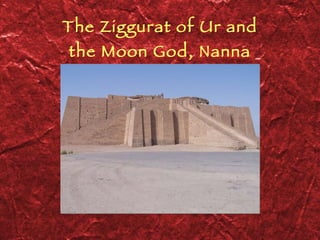
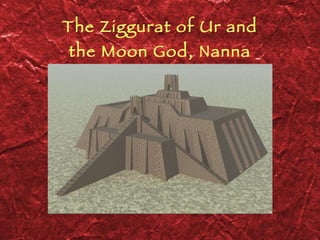
Nabonidus (555 - 539 BC) A devotee of the moon god, Sin, the patron deity of Harran (north Syria) Restored the ziggurat of Ur and made his daughter high priestess of the moon god, Nanna
 
The Ziggurat of Ur and the Moon God, Nanna
 
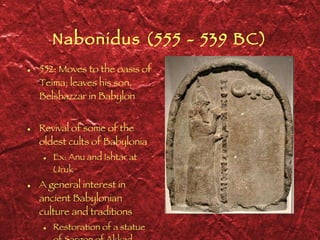
Nabonidus (555 - 539 BC) 552: Moves to the oasis of Teima; leaves his son, Belshazzar in Babylon Revival of some of the oldest cults of Babylonia Ex: Anu and Ishtar at Uruk A general interest in ancient Babylonian culture and traditions Restoration of a statue of Sargon of Akkad
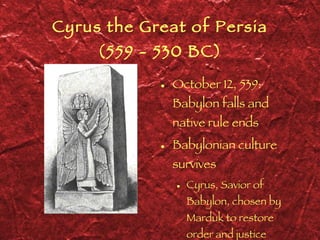
Cyrus the Great of Persia (559 - 530 BC) October 12, 539: Babylon falls and native rule ends Babylonian culture survives Cyrus, Savior of Babylon, chosen by Marduk to restore order and justice

Lecture 24 neo-babylonian empire (b)

  • 1.
    HISTORY 26 LectureTwenty-Four: The Neo-Babylonian Empire (626 - 539 BC)
  • 2.
    “ Sacred Places’Wordy Walls” The Material of Early Christian Devotional Graffiti Ann Marie Yasin Professor of History, USC Wednesday, December 1st 4:00 p.m. HMNSS 1500 This paper examines what early Christian graffiti can tell us about the lived experience of Christian sacred spaces in the late third to seventh centuries.
  • 3.
    Babylonia, the Medes,and the Fall of Assyria 627: The disappearance of Kandalanu 626 - 605: The reign of Nabopolassar 616: The invasion of Assyria 615: Alliance with the Medes 610: The fall of Assyria
  • 4.
    Herodotus and theMedian Empire
  • 5.
  • 6.
    The Flight ofthe Prisoners ( c . 1896 -1902) James Jacques Joseph Tissot The Babylonian Captivity 597: Nebuchadnezzer replaces the king of Judah with a puppet ruler and deports a large part of the population. 587: The rebellion of the Babylonian-appointed king Zedekiah and the destruction of Jerusalem; more Judeans deported. 582: The Babylonian governor is assassinated during another rebellion; more deportations.
  • 7.
    Nebuchadnezzer II andBabylon The epitome of wealth and majesty The Hanging Gardens of Babylon The Ishtar Gate
  • 8.
    Ishtar Gate (restoration)Pergamon Museum, Berlin
  • 9.
    Ishtar Gate (model)Pergamon Museum, Berlin
  • 10.
  • 11.
  • 12.
    Ishtar Gate andProcession Street
  • 13.
    Etemenanki, ‘House ofthe Frontier between Heaven and Earth’ Marduk and his mushussu
  • 14.
    The Tower ofBabel (1563) Pieter Brueghel the Elder
  • 15.
    Nabonidus (555 -539 BC) A devotee of the moon god, Sin, the patron deity of Harran (north Syria) Restored the ziggurat of Ur and made his daughter high priestess of the moon god, Nanna
  • 16.
  • 17.
    The Ziggurat ofUr and the Moon God, Nanna
  • 18.
    The Ziggurat ofUr and the Moon God, Nanna
  • 19.
  • 20.
    Nabonidus (555 -539 BC) 552: Moves to the oasis of Teima; leaves his son, Belshazzar in Babylon Revival of some of the oldest cults of Babylonia Ex: Anu and Ishtar at Uruk A general interest in ancient Babylonian culture and traditions Restoration of a statue of Sargon of Akkad
  • 21.
    Cyrus the Greatof Persia (559 - 530 BC) October 12, 539: Babylon falls and native rule ends Babylonian culture survives Cyrus, Savior of Babylon, chosen by Marduk to restore order and justice