6 Perspectives on Social Theory & Work
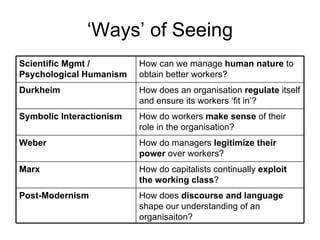
‘Ways’ of Seeing How does  discourse and language  shape our understanding of an organisaiton? Post-Modernism How do capitalists continually  exploit the working class ? Marx  How do managers  legitimize their power  over workers? Weber How do workers  make sense  of their role in the organisation? Symbolic Interactionism How does an organisation  regulate  itself and ensure its workers ‘fit in’? Durkheim How can we manage  human nature  to obtain better workers? Scientific Mgmt / Psychological Humanism
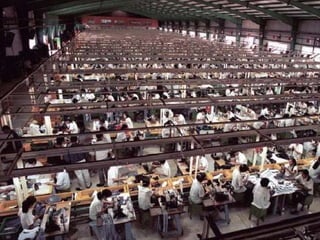
1a Scientific Management (or Taylorism)
 
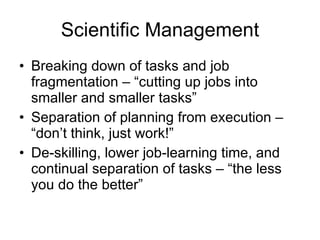
Scientific Management Breaking down of tasks and job fragmentation – “cutting up jobs into smaller and smaller tasks” Separation of planning from execution – “don’t think, just work!” De-skilling, lower job-learning time, and continual separation of tasks – “the less you do the better”


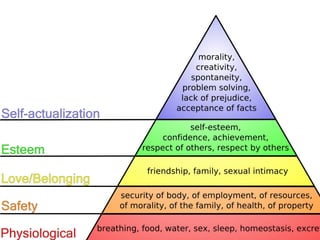
1b Psychological Humanism
 
 
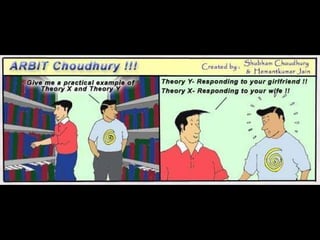
Comparing Theory X and Y Theory X – people are naturally ‘bad’ (scientific management) Theory Y – people are naturally ‘good’ (psychological humanism) Both approaches focusing on managing  human nature .
 
2. Durkheim & Systems
 
 
Suicides Divorced, more than non-divorced Protestant more than communal religion Single, more than married Suicide often a result of anomie i.e.  a LACK of social solidarity.

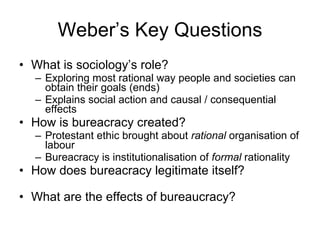
Weber’s Key Questions What is sociology’s role? Exploring most rational way people and societies can obtain their goals (ends) Explains social action and causal / consequential effects How is bureacracy created? Protestant ethic brought about  rational  organisation of labour Bureacracy is institutionalisation of  formal  rationality How does bureacracy legitimate itself? What are the effects of bureaucracy?
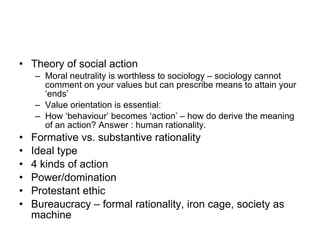
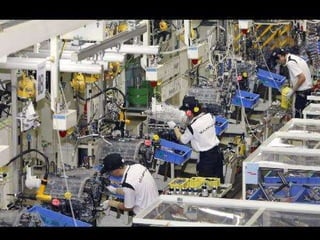
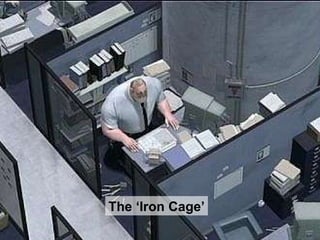
Theory of social action Moral neutrality is worthless to sociology – sociology cannot comment on your values but can prescribe means to attain your ‘ends’ Value orientation is essential:  How ‘behaviour’ becomes ‘action’ – how do derive the meaning of an action? Answer : human rationality. Formative vs. substantive rationality Ideal type 4 kinds of action Power/domination Protestant ethic Bureaucracy – formal rationality, iron cage, society as machine
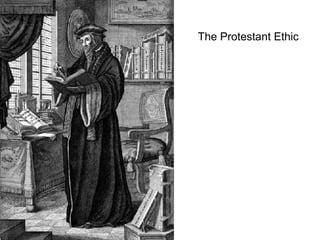
The Protestant Ethic
 
 
4 Kinds of Action
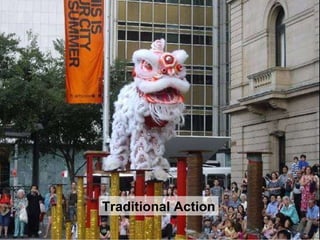
Traditional Action
 
Affective Action
 
 
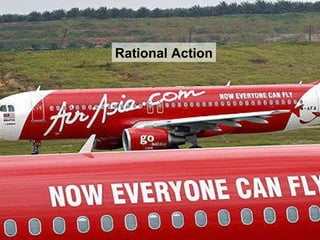
Rational Action
 
3 Kinds of Domination
Traditional Authority
 
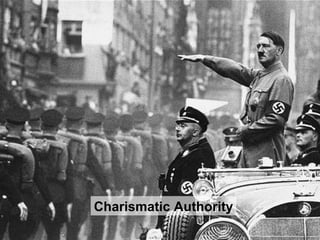
Charismatic Authority
WWOD?
 
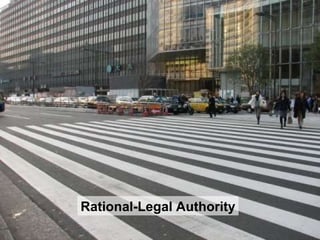
Rational-Legal Authority
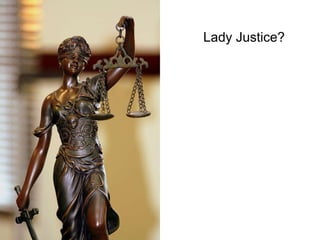
Lady Justice?
The ‘Iron Cage’

Lecture 2

  • 1.
    6 Perspectives onSocial Theory & Work
  • 2.
    ‘Ways’ of SeeingHow does discourse and language shape our understanding of an organisaiton? Post-Modernism How do capitalists continually exploit the working class ? Marx How do managers legitimize their power over workers? Weber How do workers make sense of their role in the organisation? Symbolic Interactionism How does an organisation regulate itself and ensure its workers ‘fit in’? Durkheim How can we manage human nature to obtain better workers? Scientific Mgmt / Psychological Humanism
  • 3.
  • 4.
  • 5.
    Scientific Management Breakingdown of tasks and job fragmentation – “cutting up jobs into smaller and smaller tasks” Separation of planning from execution – “don’t think, just work!” De-skilling, lower job-learning time, and continual separation of tasks – “the less you do the better”
  • 6.
  • 7.
  • 8.
  • 9.
  • 10.
  • 11.
  • 12.
    Comparing Theory Xand Y Theory X – people are naturally ‘bad’ (scientific management) Theory Y – people are naturally ‘good’ (psychological humanism) Both approaches focusing on managing human nature .
  • 13.
  • 14.
  • 15.
  • 16.
  • 17.
    Suicides Divorced, morethan non-divorced Protestant more than communal religion Single, more than married Suicide often a result of anomie i.e. a LACK of social solidarity.
  • 18.
    Weber’s Key QuestionsWhat is sociology’s role? Exploring most rational way people and societies can obtain their goals (ends) Explains social action and causal / consequential effects How is bureacracy created? Protestant ethic brought about rational organisation of labour Bureacracy is institutionalisation of formal rationality How does bureacracy legitimate itself? What are the effects of bureaucracy?
  • 19.
    Theory of socialaction Moral neutrality is worthless to sociology – sociology cannot comment on your values but can prescribe means to attain your ‘ends’ Value orientation is essential: How ‘behaviour’ becomes ‘action’ – how do derive the meaning of an action? Answer : human rationality. Formative vs. substantive rationality Ideal type 4 kinds of action Power/domination Protestant ethic Bureaucracy – formal rationality, iron cage, society as machine
  • 20.
  • 21.
  • 22.
  • 23.
    4 Kinds ofAction
  • 24.
  • 25.
  • 26.
  • 27.
  • 28.
  • 29.
  • 30.
  • 31.
    3 Kinds ofDomination
  • 32.
  • 33.
  • 34.
  • 35.
  • 36.
  • 37.
  • 38.
  • 39.