FCE 201: Psycho-Philosophical and Socio-Anthro Economic Foundations of Education, 3rd Trimester 2019
• LEARNING PROCESS
• THEORIES OF LEARNING
1
Discussant: SOZIL M. PENARANDA
Master in Physical Education
DR. RESURRECION M. MARCELO
Professor
* LEARNING
- Meaning
- Process
* THEORIES OF LEARNING
2
IS THE RELATIVELY PERMANENT
CHANGE IN A PERSON'S BEHAVIOR OR
PERFORMANCE AS A RESULT OF
INSTRUCTION, EXPERIENCES, STUDY,
AND/OR PRACTICE.
LEARNING
LEARNING
PROCESS
STAGES OF LEARNING
PROCESS:
• CONCRETE EXPERIENCE
• REFLECTIVE
OBSERVATION
• ABSTRACT
CONCEPTUALIZATION
• ACTIVE
EXPERIMENTATION
5
THEORIES OF LEARNING
6
7
 MIND THEORY (Christian Wolff, 1734)
 CONNECTIONIST’S THEORY
(Stimulus-Response) - Thorndike
 BEHAVIORISM (Ivan Pavlov)
 INTEGRATION THEORY (Gestalt)
 PROGRESSIVISTS THEORY (John Dewey)
POINT OF VIEWS
MIND THEORY
8
. THE MIND HAS
THE POWERS OF
REMEMBERING
AND THE
POWER OF
PERCEIVING
RELATIONS.
CONNECTIONIST’S
THEORY
9
.. LEARNING OCCURS
THROUGH A CHANGE IN
THE CONNECTION
BETWEEN A PARTICULAR
STIMULUS AND A
RESPONSE; THUS THIS
THEORY REGARDS
CONNECTIONS AS THE
KEY TO THE
UNDERSTANDING OF THE
LEARNING PROCESS
BEHAVIORISM
10
BEHAVIORISTS
ASSUME THAT ALL
HUMAN LEARNING
SHOULD BE
STUDIED IN TERMS
OF OBSERVABLE
BEHAVIOR,
WITHOUT ANY
REFERENCE TO
CONSCIOUSNESS.
INTEGRATION
THEORY
11
.LEARNING IS CONSIDERED
AS THE ACQUISITION OF
KNOWLEDGE, ABILITIES,
HABITS AND SKILL
THROUGH THE
INTERACTION OF THE
WHOLE INDIVIDUAL AND
HIS TOTAL ENVIRONMENT
OR SITUATION. IT MEANS
THAT RESPONSES MUST
BECOME AN INTEGRAL
PART OF THE ACTIVE
UNIFIED SELF IN MEETING-
LIFE’S DEMANDS.
PROGRESSIVISTS
THEORY
12
ACCORDING TO THIS
THEORY, UNLESS THE
LEARNER CAN BE
INVOLVED IN THE
SITUATION, UNLESS HE
CAN BE GUIDED TO THINK,
TO FEEL, AND TO ACT IN
WAYS APPROPRIATE TO
THE SITUATIONS, IT IS
NOT POSSIBLE FOR HIM TO
LEARN THESE REACTIONS.
13
 MIND THEORY (Christian Wolff, 1734)
 CONNECTIONIST’S THEORY
(Stimulus-Response) - Thorndike
 BEHAVIORISM (Ivan Pavlov)
 INTEGRATION THEORY (Gestalt)
 PROGRESSIVISTS THEORY (John Dewey)
POINT OF VIEWS
THREE
BASIC
TYPES OF
LEARNING
THEORY
14
BEHAVIORISM
COGNITIVE
CONSTRUCTIVISM
SOCIAL
CONSTRUCTIVISM
View of
Knowledge
Knowledge is a
repertoire of
behavioral responses
to environmental
stimuli.
Knowledge systems of
cognitive structures are
actively constructed by
learners based on pre-existing
cognitive structures.
Knowledge is constructed within
social contexts through
interactions with a knowledge
community
View of
Learning
Passive absorption of
a predefined body of
knowledge by the
learner. Promoted by
repetition and positive
reinforcement.
Active assimilation and
accommodation of new
information to existing
cognitive structures.
Discovery by learner is
emphasized.
Integration of students into a
knowledge community.
Collaborative assimilation and
accommodation of new
information.
View of
Motivation
Extrinsic, involving
positive and negative
reinforcement.
Intrinsic; learners set their
own goals and motivate
themselves to learn.
Intrinsic and Extrinsic. Learning
goals and motives are determined
both by learners and extrinsic
rewards provided by the
knowledge community
Implication
for
Teaching
Correct behavioral
responses are
transmitted by the
teacher and absorbed
by the student.
The teacher facilities learning
by providing an environment
that promotes discovery and
assimilation/accommodation.
Collaborative learning is
facilitated is guided by the
learner. Group work is
encouraged.
This implies that teaching of
Physical Education and other
disciplines should be anchored to
various Learning Theories in
order to produce effective and
productive results.
GENERAL IMPLICATION
Through the adaption of different
teaching strategies which are
anchored to various learning
theories would enhance the skills
and talents of our clientele which
are very vital in their
development as individuals.
CONCLUSION
Don’t limit a child
to your own
learning, for he
was born in
another time. 17
THANK
YOU !SOZIL PENARANDA

learning theories

  • 1.
    FCE 201: Psycho-Philosophicaland Socio-Anthro Economic Foundations of Education, 3rd Trimester 2019 • LEARNING PROCESS • THEORIES OF LEARNING 1 Discussant: SOZIL M. PENARANDA Master in Physical Education DR. RESURRECION M. MARCELO Professor
  • 2.
    * LEARNING - Meaning -Process * THEORIES OF LEARNING 2
  • 3.
    IS THE RELATIVELYPERMANENT CHANGE IN A PERSON'S BEHAVIOR OR PERFORMANCE AS A RESULT OF INSTRUCTION, EXPERIENCES, STUDY, AND/OR PRACTICE. LEARNING
  • 4.
  • 5.
    STAGES OF LEARNING PROCESS: •CONCRETE EXPERIENCE • REFLECTIVE OBSERVATION • ABSTRACT CONCEPTUALIZATION • ACTIVE EXPERIMENTATION 5
  • 6.
  • 7.
    7  MIND THEORY(Christian Wolff, 1734)  CONNECTIONIST’S THEORY (Stimulus-Response) - Thorndike  BEHAVIORISM (Ivan Pavlov)  INTEGRATION THEORY (Gestalt)  PROGRESSIVISTS THEORY (John Dewey) POINT OF VIEWS
  • 8.
    MIND THEORY 8 . THEMIND HAS THE POWERS OF REMEMBERING AND THE POWER OF PERCEIVING RELATIONS.
  • 9.
    CONNECTIONIST’S THEORY 9 .. LEARNING OCCURS THROUGHA CHANGE IN THE CONNECTION BETWEEN A PARTICULAR STIMULUS AND A RESPONSE; THUS THIS THEORY REGARDS CONNECTIONS AS THE KEY TO THE UNDERSTANDING OF THE LEARNING PROCESS
  • 10.
    BEHAVIORISM 10 BEHAVIORISTS ASSUME THAT ALL HUMANLEARNING SHOULD BE STUDIED IN TERMS OF OBSERVABLE BEHAVIOR, WITHOUT ANY REFERENCE TO CONSCIOUSNESS.
  • 11.
    INTEGRATION THEORY 11 .LEARNING IS CONSIDERED ASTHE ACQUISITION OF KNOWLEDGE, ABILITIES, HABITS AND SKILL THROUGH THE INTERACTION OF THE WHOLE INDIVIDUAL AND HIS TOTAL ENVIRONMENT OR SITUATION. IT MEANS THAT RESPONSES MUST BECOME AN INTEGRAL PART OF THE ACTIVE UNIFIED SELF IN MEETING- LIFE’S DEMANDS.
  • 12.
    PROGRESSIVISTS THEORY 12 ACCORDING TO THIS THEORY,UNLESS THE LEARNER CAN BE INVOLVED IN THE SITUATION, UNLESS HE CAN BE GUIDED TO THINK, TO FEEL, AND TO ACT IN WAYS APPROPRIATE TO THE SITUATIONS, IT IS NOT POSSIBLE FOR HIM TO LEARN THESE REACTIONS.
  • 13.
    13  MIND THEORY(Christian Wolff, 1734)  CONNECTIONIST’S THEORY (Stimulus-Response) - Thorndike  BEHAVIORISM (Ivan Pavlov)  INTEGRATION THEORY (Gestalt)  PROGRESSIVISTS THEORY (John Dewey) POINT OF VIEWS
  • 14.
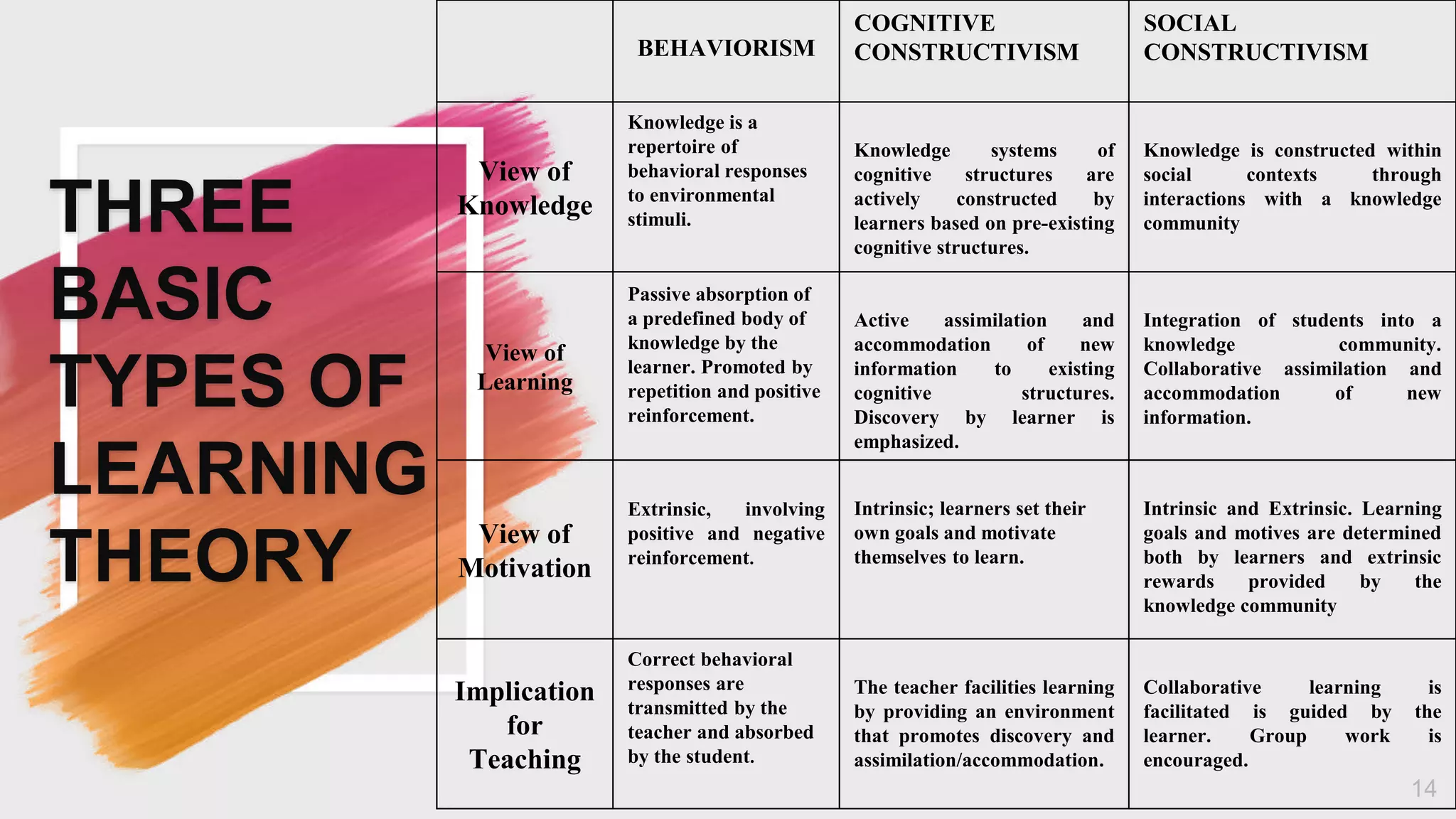
    THREE BASIC TYPES OF LEARNING THEORY 14 BEHAVIORISM COGNITIVE CONSTRUCTIVISM SOCIAL CONSTRUCTIVISM View of Knowledge Knowledgeis a repertoire of behavioral responses to environmental stimuli. Knowledge systems of cognitive structures are actively constructed by learners based on pre-existing cognitive structures. Knowledge is constructed within social contexts through interactions with a knowledge community View of Learning Passive absorption of a predefined body of knowledge by the learner. Promoted by repetition and positive reinforcement. Active assimilation and accommodation of new information to existing cognitive structures. Discovery by learner is emphasized. Integration of students into a knowledge community. Collaborative assimilation and accommodation of new information. View of Motivation Extrinsic, involving positive and negative reinforcement. Intrinsic; learners set their own goals and motivate themselves to learn. Intrinsic and Extrinsic. Learning goals and motives are determined both by learners and extrinsic rewards provided by the knowledge community Implication for Teaching Correct behavioral responses are transmitted by the teacher and absorbed by the student. The teacher facilities learning by providing an environment that promotes discovery and assimilation/accommodation. Collaborative learning is facilitated is guided by the learner. Group work is encouraged.
  • 15.
    This implies thatteaching of Physical Education and other disciplines should be anchored to various Learning Theories in order to produce effective and productive results. GENERAL IMPLICATION
  • 16.
    Through the adaptionof different teaching strategies which are anchored to various learning theories would enhance the skills and talents of our clientele which are very vital in their development as individuals. CONCLUSION
  • 17.
    Don’t limit achild to your own learning, for he was born in another time. 17
  • 18.