Learning Process
Theories
By : Malyn C. Singson
MaEd GS740
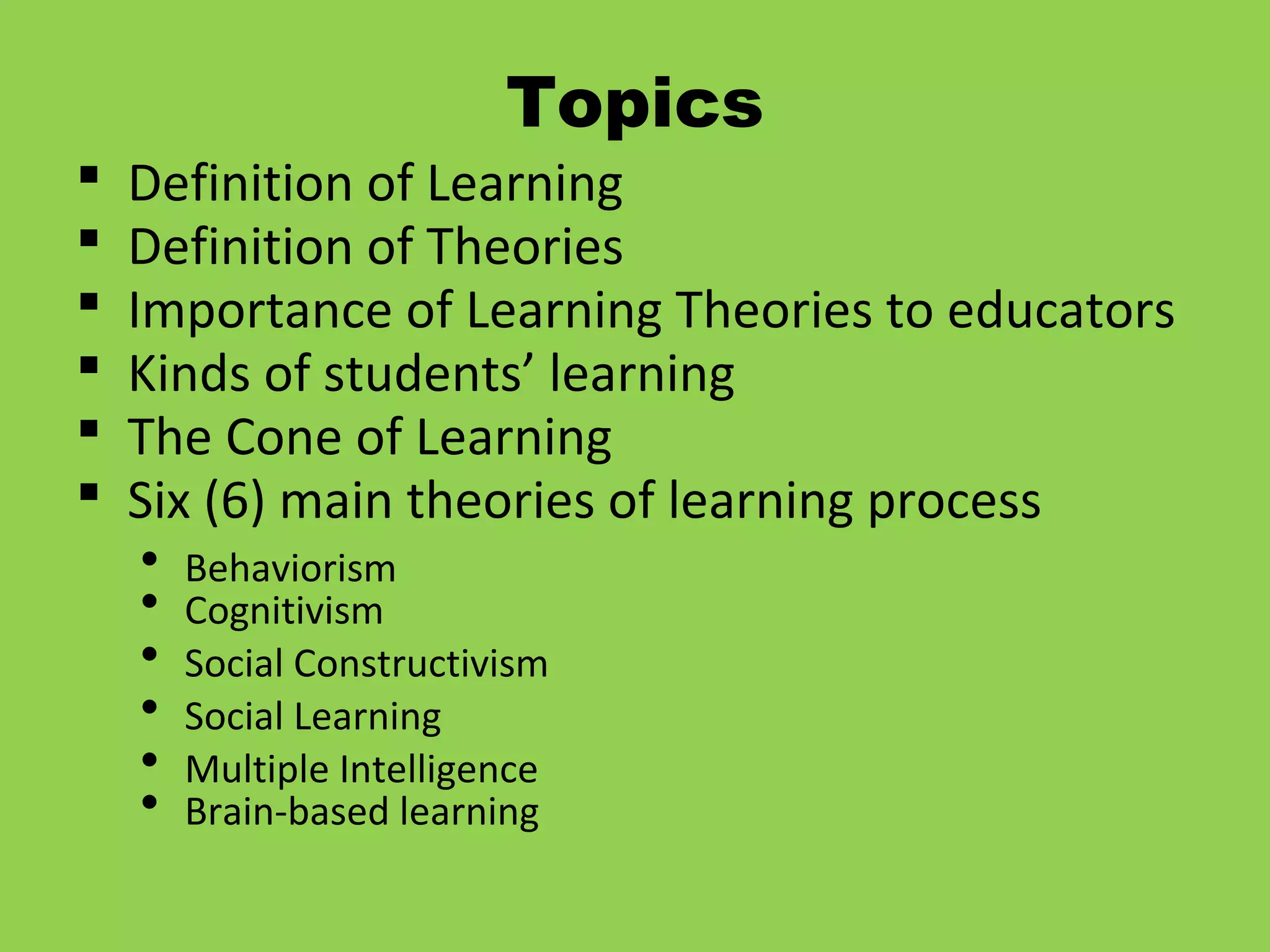
Topics
 Definition of Learning
 Definition of Theories
 Importance of Learning Theories to educators
 Six (6) main theories of learning process
• Behaviorism
• Cognitivism
• Social Learning
• Social Constructivism
• Multiple Intelligence
• Brain-based learning
 Kinds of students’ learning
 The Cone of Learning
3
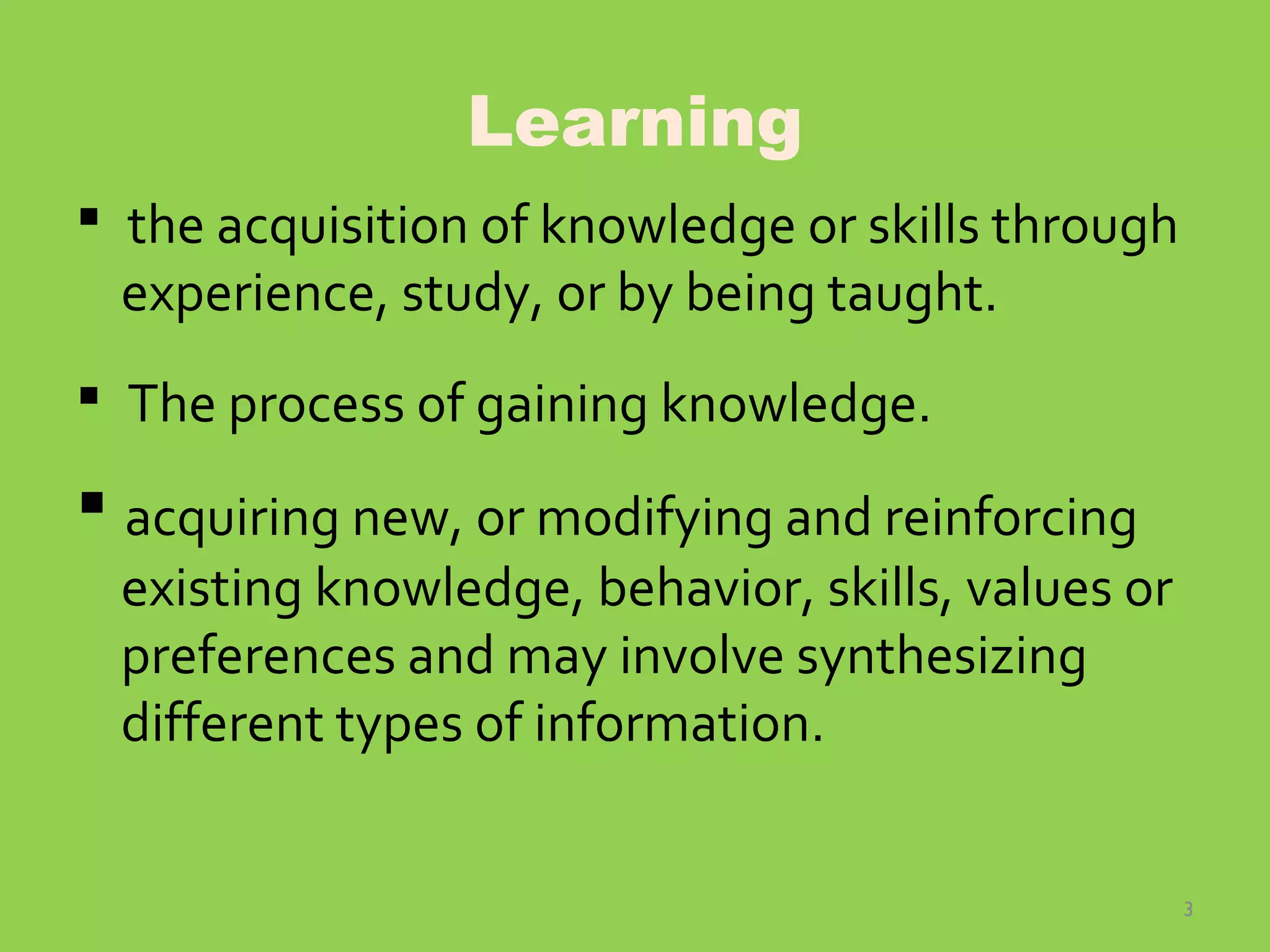
Learning
 the acquisition of knowledge or skills through
experience, study, or by being taught.
 The process of gaining knowledge.
 acquiring new, or modifying and reinforcing
existing knowledge, behavior, skills, values or
preferences and may involve synthesizing
different types of information.
4
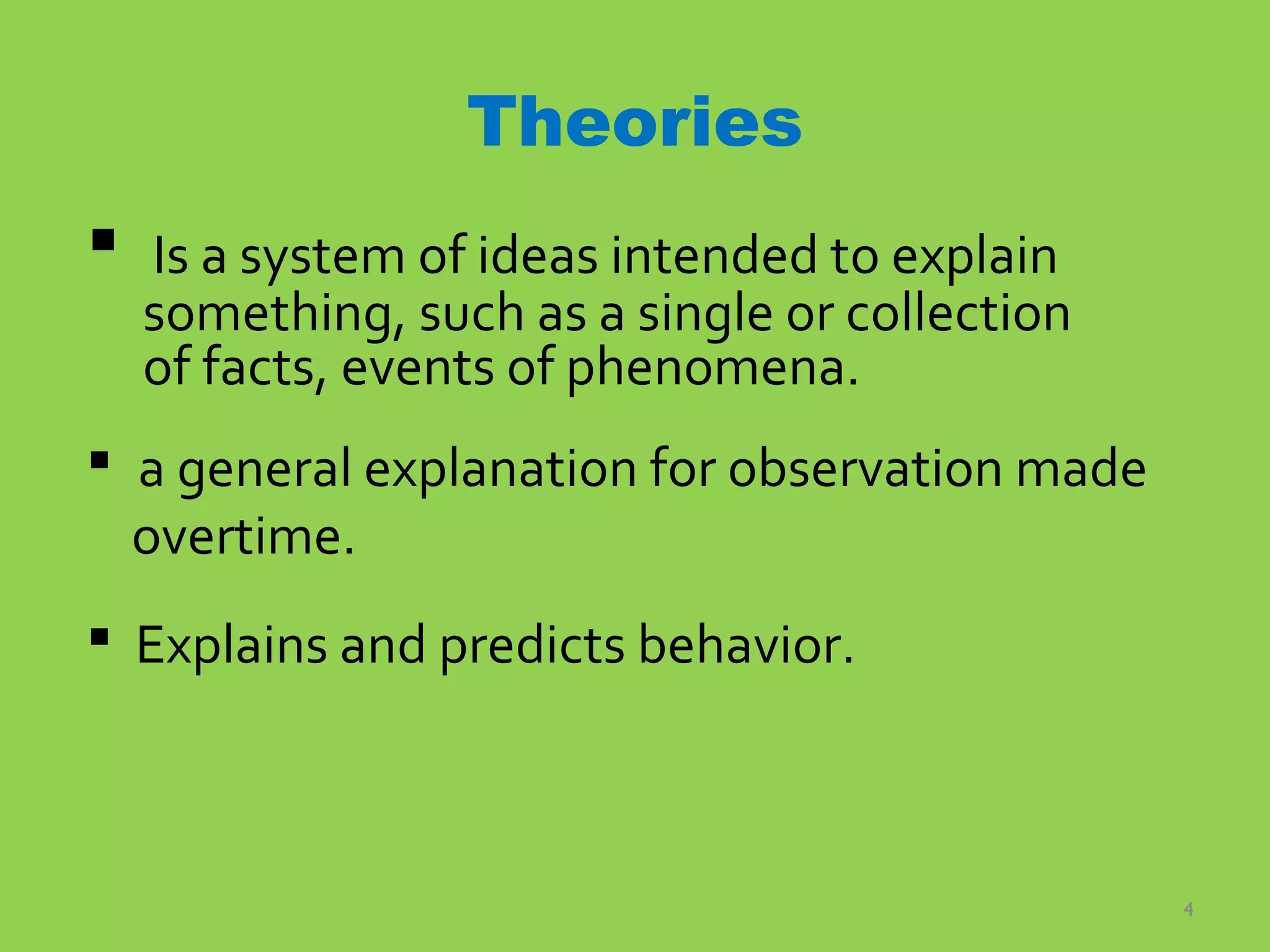
Theories
 Is a system of ideas intended to explain
something, such as a single or collection
of facts, events of phenomena.
 a general explanation for observation made
overtime.
 Explains and predicts behavior.
5
Learning Theories
- Are the conceptual framework that
described how information is
absorbed, process and retaining during
learning.
6
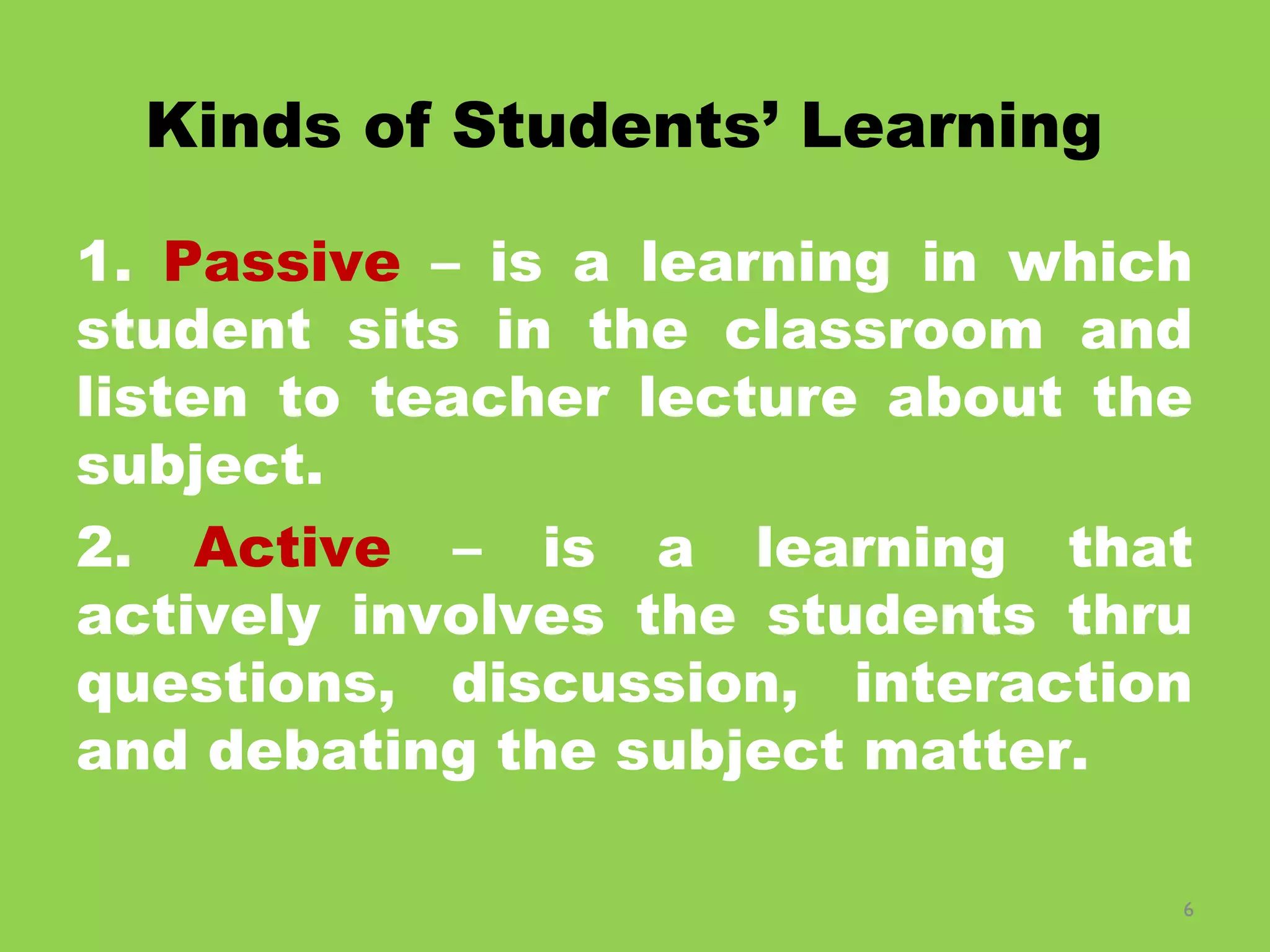
Kinds of Students’ Learning
1. Passive – is a learning in which
student sits in the classroom and
listen to teacher lecture about the
subject.
2. Active – is a learning that
actively involves the students thru
questions, discussion, interaction
and debating the subject matter.
7
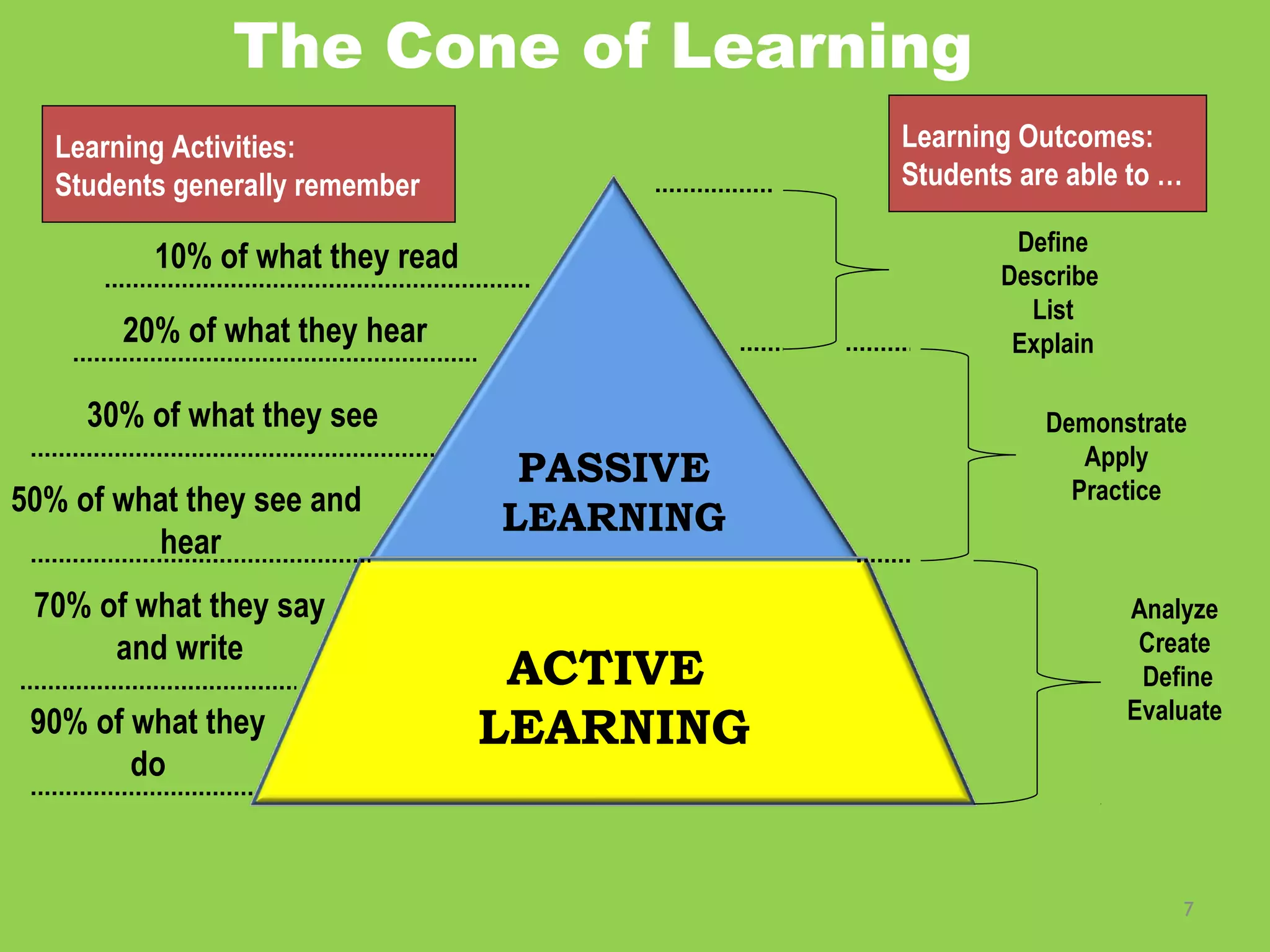
The Cone of Learning
PASSIVE
LEARNING
ACTIVE
LEARNING
10% of what they read
20% of what they hear
30% of what they see
50% of what they see and
hear
70% of what they say
and write
90% of what they
do
Learning Activities:
Students generally remember
Learning Outcomes:
Students are able to …
Analyze
Create
Define
Evaluate
Demonstrate
Apply
Practice
Define
Describe
List
Explain
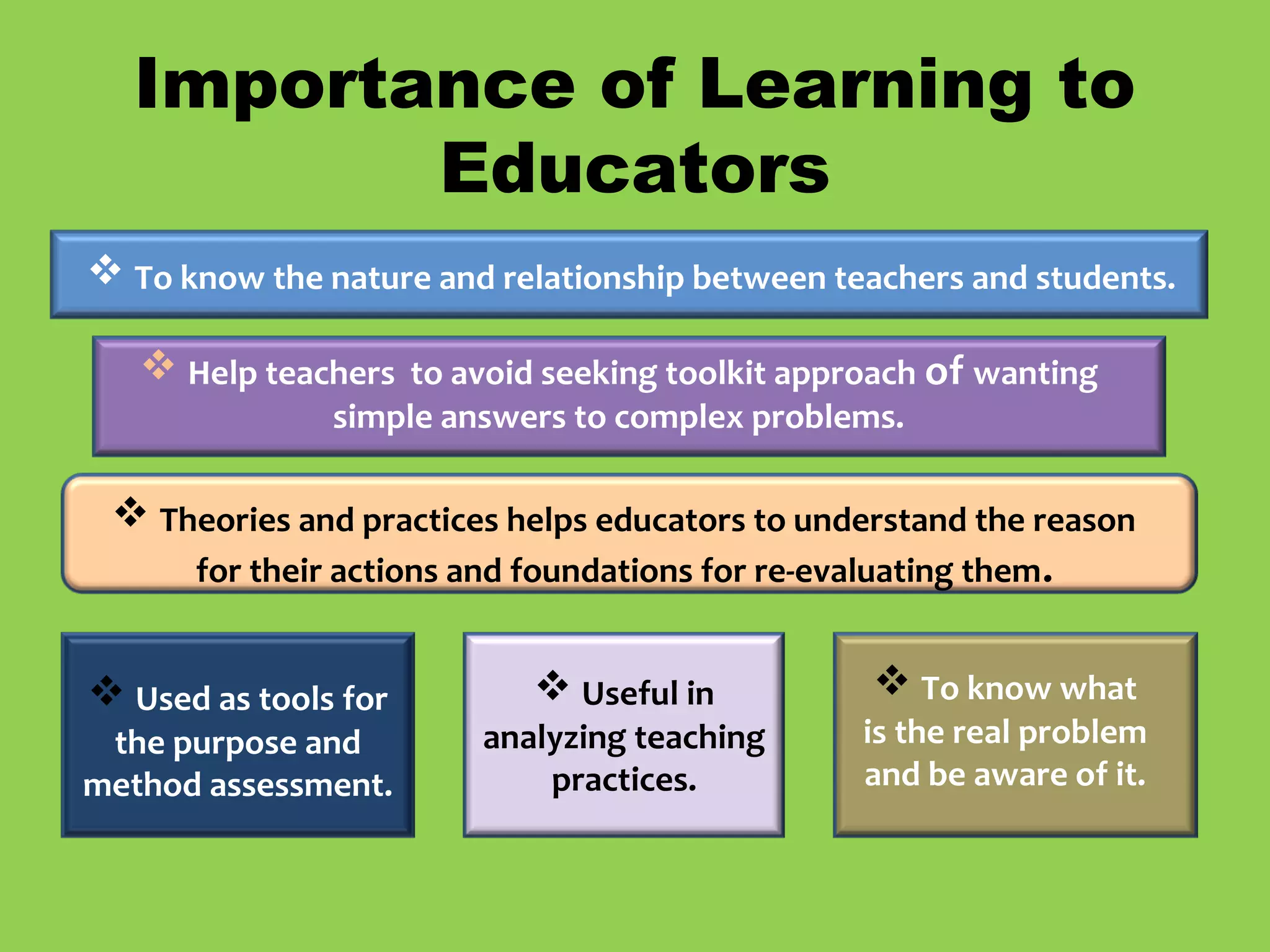
Importance of Learning to
Educators
 To know the nature and relationship between teachers and students.
 Used as tools for
the purpose and
method assessment.
 Help teachers to avoid seeking toolkit approach of wanting
simple answers to complex problems.
 Useful in
analyzing teaching
practices.
 Theories and practices helps educators to understand the reason
for their actions and foundations for re-evaluating them.
 To know what
is the real problem
and be aware of it.
9
Six (6) Learning Theories
Behaviorism
Cognitivism
Social Learning Theory
Social Constructivism
Multiple Intelligence
Brain-based Learning
10
Behaviorism
Theory of Learning
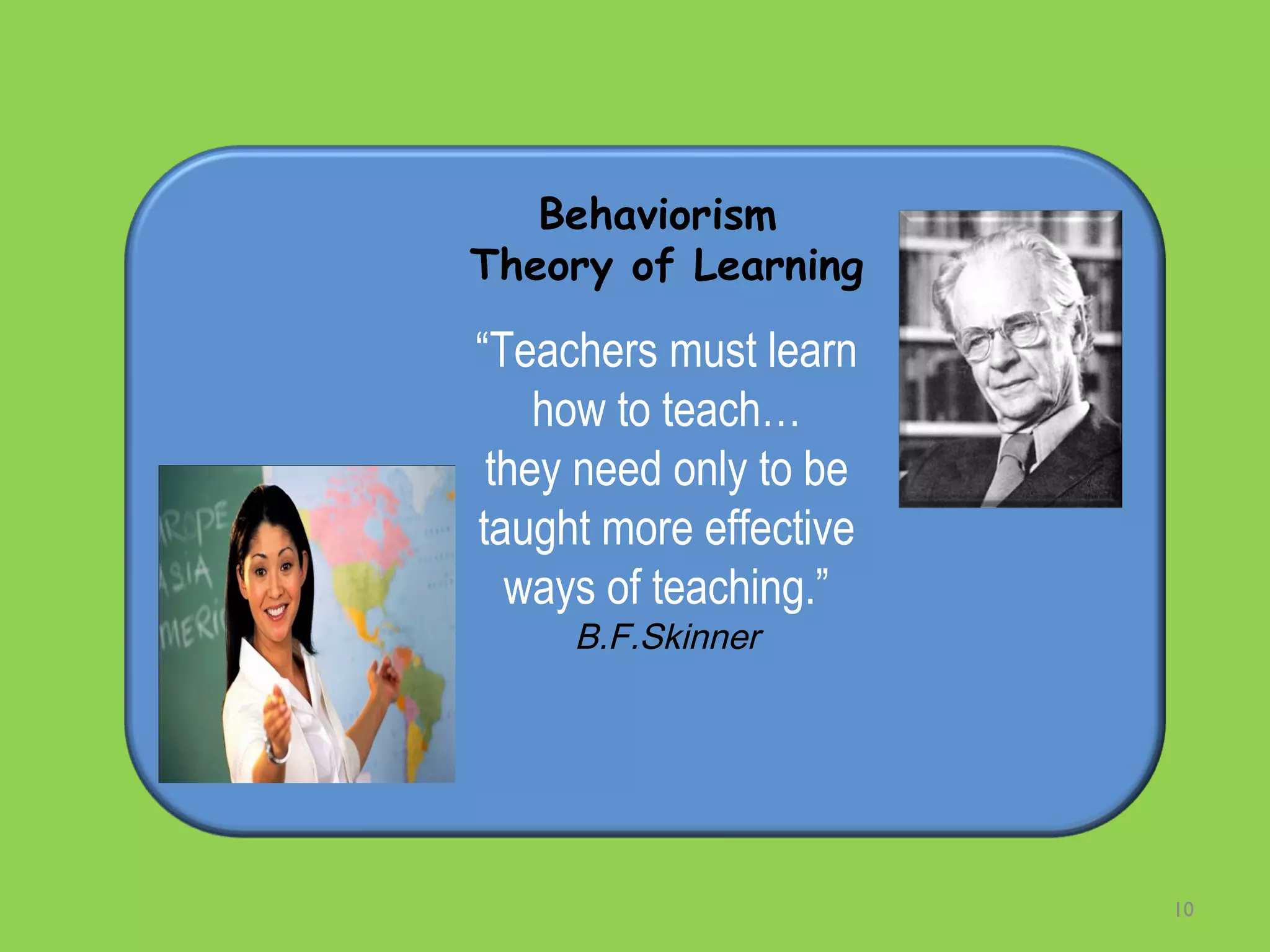
“Teachers must learn
how to teach…
they need only to be
taught more effective
ways of teaching.”
B.F.Skinner
11
Behaviorism
(Ivan Pavlov’s Classical Conditioning
B. F. Skinner’s Operant Conditioning)
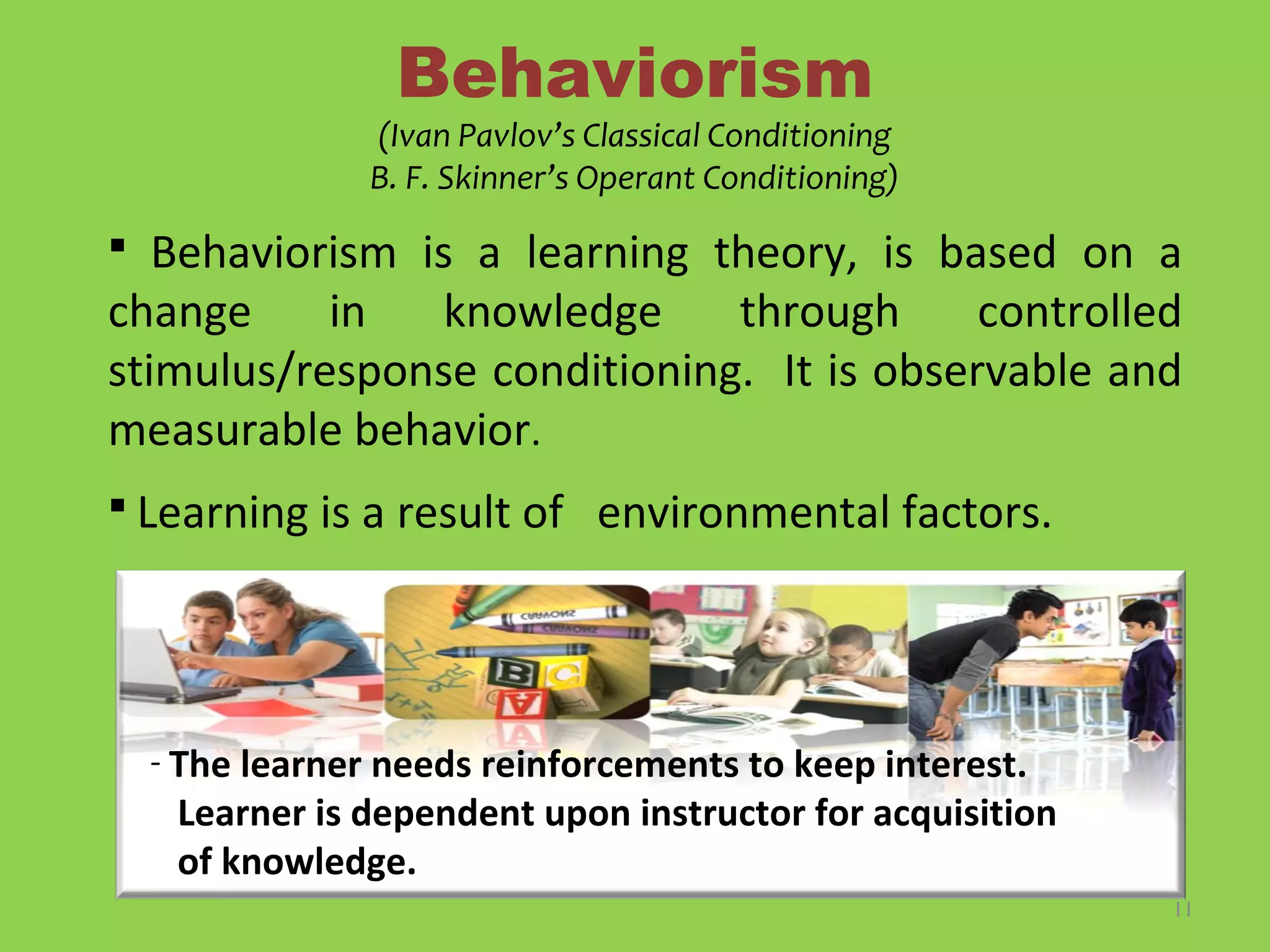
 Behaviorism is a learning theory, is based on a
change in knowledge through controlled
stimulus/response conditioning. It is observable and
measurable behavior.
 Learning is a result of environmental factors.
- The learner needs reinforcements to keep interest.
Learner is dependent upon instructor for acquisition
of knowledge.
12
Cognitivism
(Jean Piaget Theory)
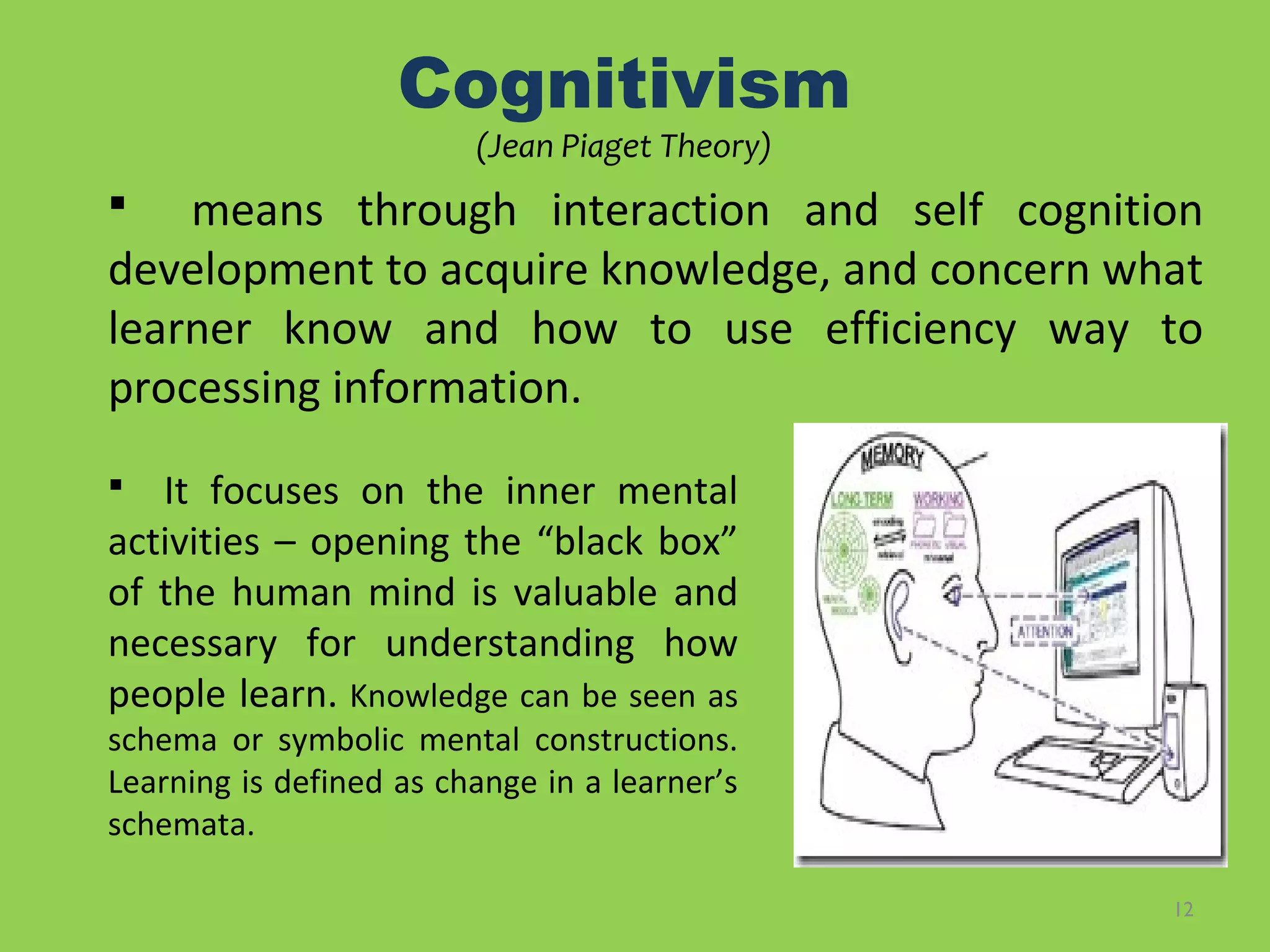
 It focuses on the inner mental
activities – opening the “black box”
of the human mind is valuable and
necessary for understanding how
people learn. Knowledge can be seen as
schema or symbolic mental constructions.
Learning is defined as change in a learner’s
schemata.
 means through interaction and self cognition
development to acquire knowledge, and concern what
learner know and how to use efficiency way to
processing information.
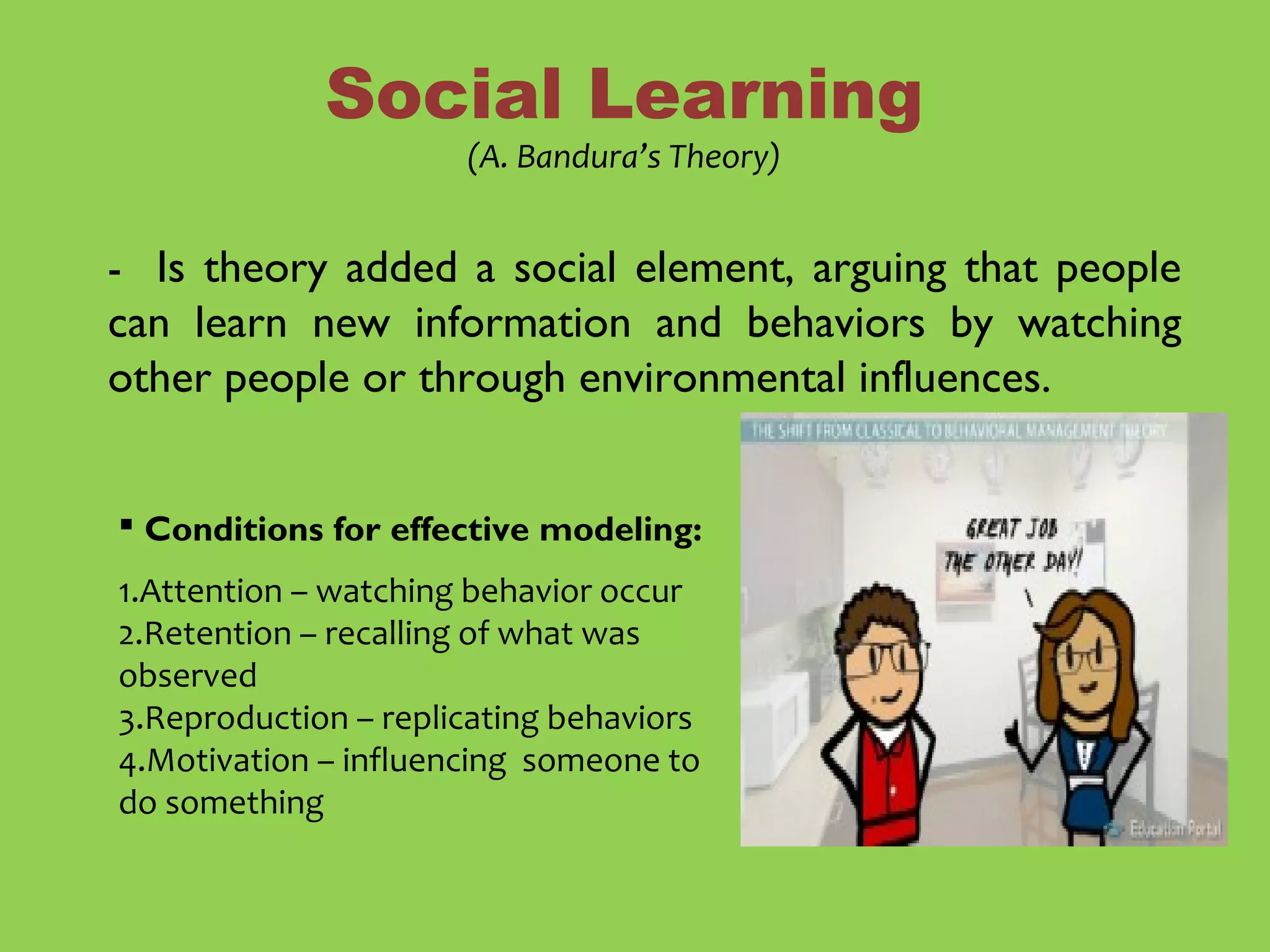
- Is theory added a social element, arguing that people
can learn new information and behaviors by watching
other people or through environmental influences.
Social Learning
(A. Bandura’s Theory)
 Conditions for effective modeling:
1.Attention – watching behavior occur
2.Retention – recalling of what was
observed
3.Reproduction – replicating behaviors
4.Motivation – influencing someone to
do something
14
Social Constructivism
(Led S. Vygotsky Theory)
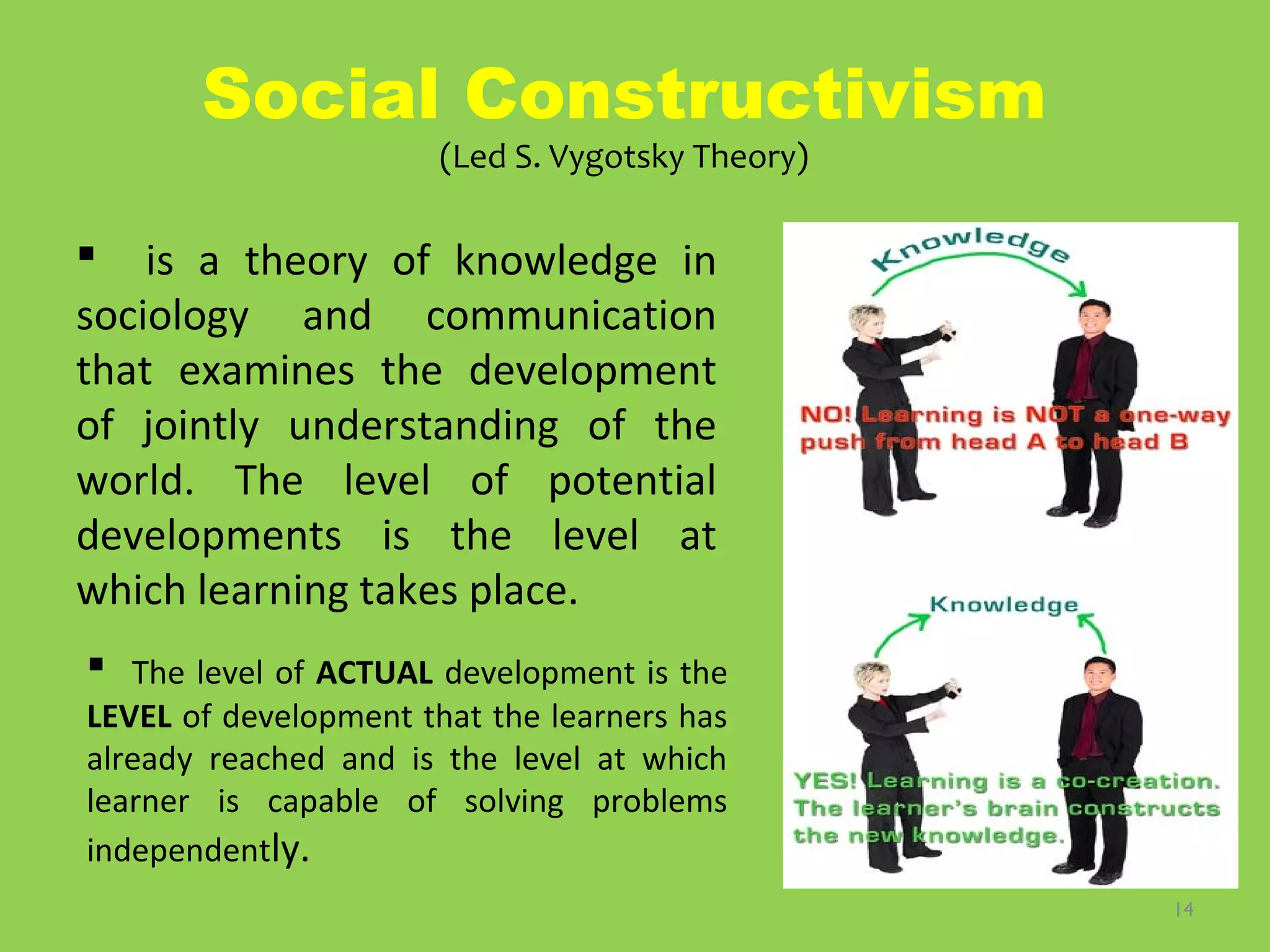
 is a theory of knowledge in
sociology and communication
that examines the development
of jointly understanding of the
world. The level of potential
developments is the level at
which learning takes place.
 The level of ACTUAL development is the
LEVEL of development that the learners has
already reached and is the level at which
learner is capable of solving problems
independently.
15
Multiple Intelligences
(Howard Gardner Theory)
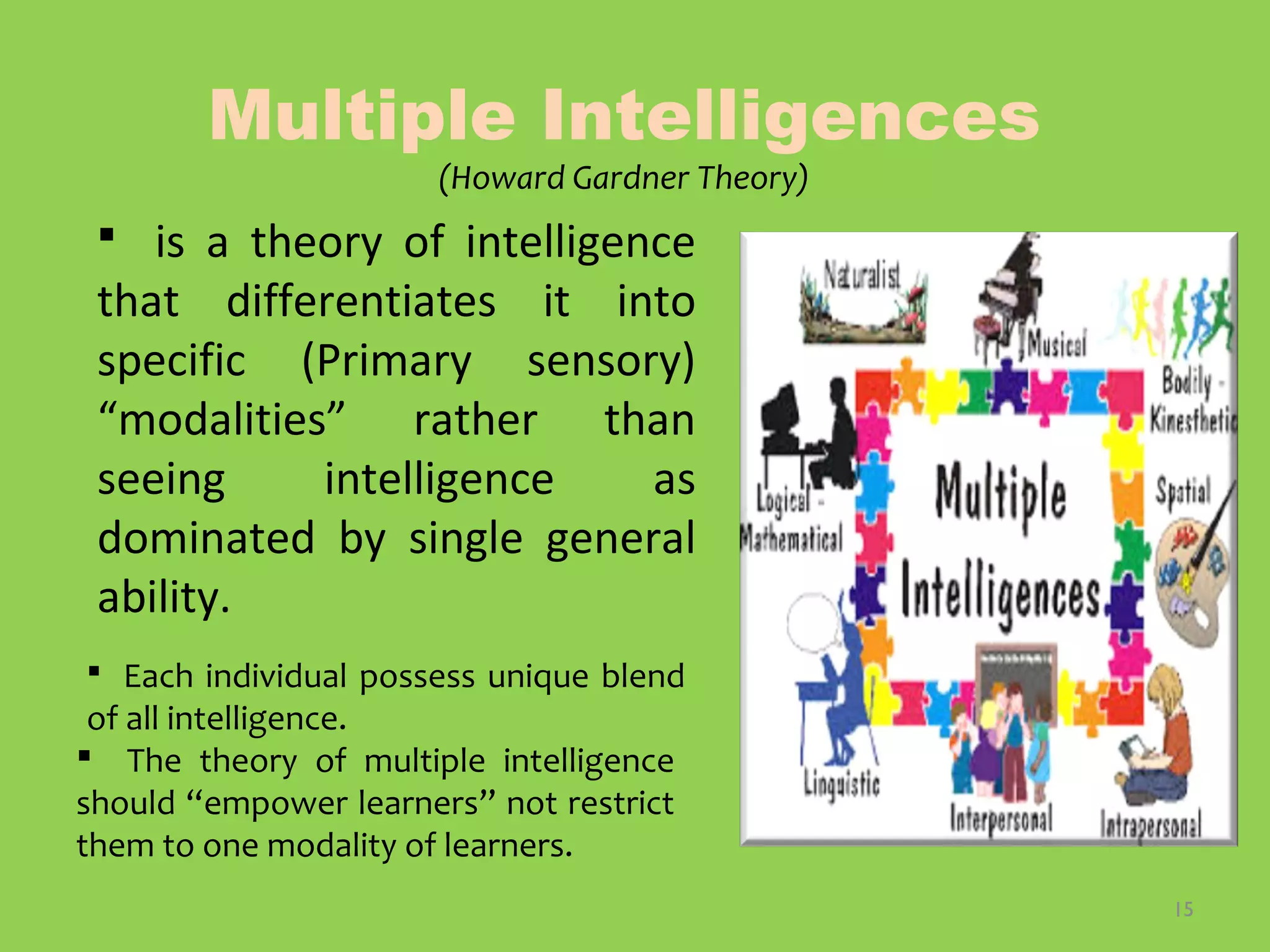
 is a theory of intelligence
that differentiates it into
specific (Primary sensory)
“modalities” rather than
seeing intelligence as
dominated by single general
ability.
 Each individual possess unique blend
of all intelligence.
 The theory of multiple intelligence
should “empower learners” not restrict
them to one modality of learners.
16
Eight (8) types of
Multiple Intelligences
 Musical/rhythmic – ability to produce rhythm, appreciate pitch
and timber.
 Visual/Spatial – capacity to think images and pictures.
 Verbal/Linguistic – sensitivity to the sounds and meaning of words
 Logical/Mathematical – ability to think conceptually and
discern patterns.
 Bodily kinesthetic – ability to handle object skillfully and control
body movements.
 Interpersonal – capacity to respond appropriately to others.
 Intrapersonal – capacity to self-aware and in tune inner feelings.
 Naturalistic – ability to recognize objects, plants in nature.
17
Brain-based Learning
 is a theory based on the
structure and function of the
human brain. It constantly
accessing information and
interpreting its environment
and continuously interacting
with its surrounding to learn
and how to function
appropriately.
 Each brain is unique because it process
information in ways that makes sense to
the one brain may not make sense to
another.
18
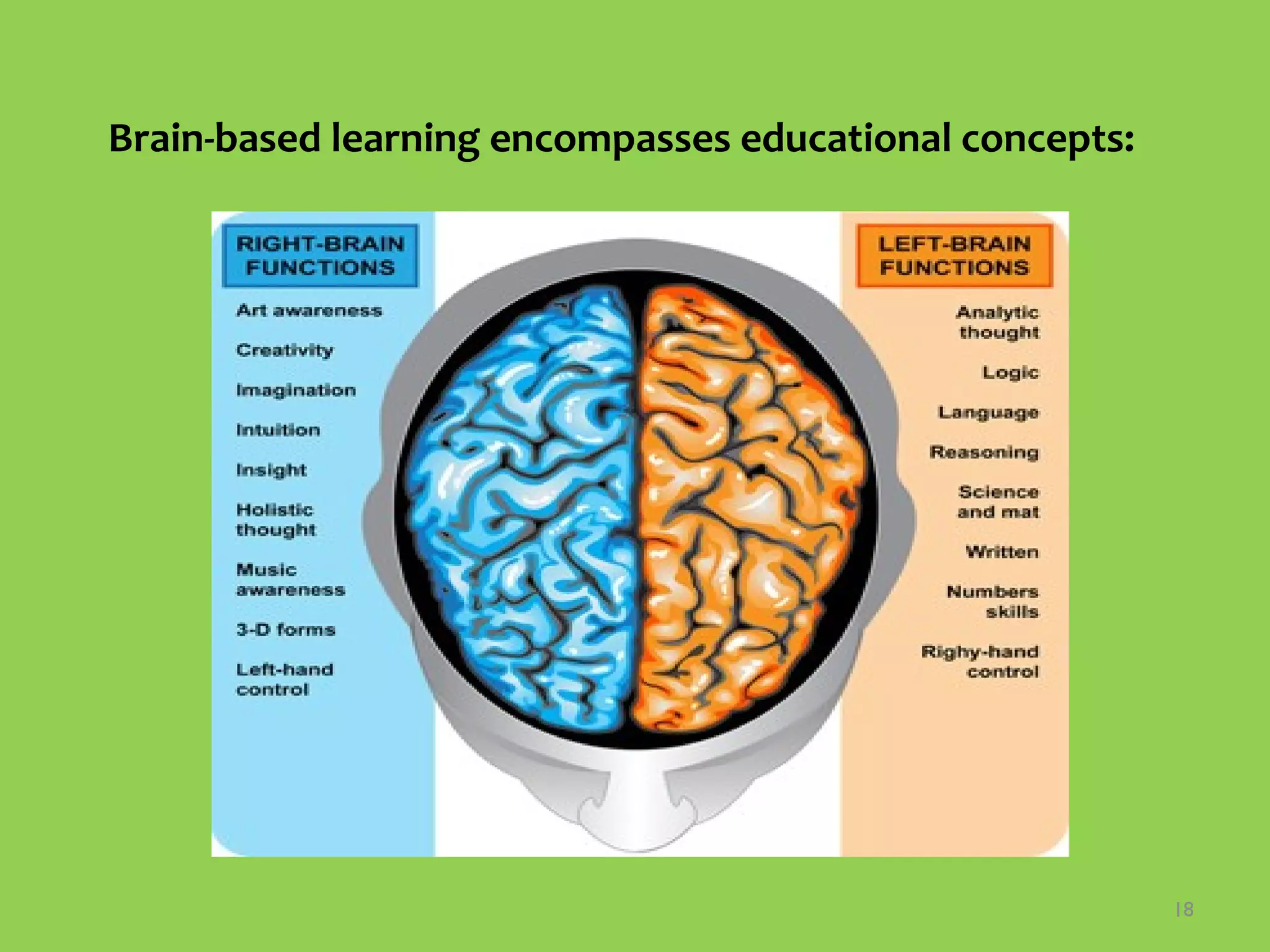
Brain-based learning encompasses educational concepts:
19

Learning Process Theories

  • 1.
    Learning Process Theories By :Malyn C. Singson MaEd GS740
  • 2.
    Topics  Definition ofLearning  Definition of Theories  Importance of Learning Theories to educators  Six (6) main theories of learning process • Behaviorism • Cognitivism • Social Learning • Social Constructivism • Multiple Intelligence • Brain-based learning  Kinds of students’ learning  The Cone of Learning
  • 3.
    3 Learning  the acquisitionof knowledge or skills through experience, study, or by being taught.  The process of gaining knowledge.  acquiring new, or modifying and reinforcing existing knowledge, behavior, skills, values or preferences and may involve synthesizing different types of information.
  • 4.
    4 Theories  Is asystem of ideas intended to explain something, such as a single or collection of facts, events of phenomena.  a general explanation for observation made overtime.  Explains and predicts behavior.
  • 5.
    5 Learning Theories - Arethe conceptual framework that described how information is absorbed, process and retaining during learning.
  • 6.
    6 Kinds of Students’Learning 1. Passive – is a learning in which student sits in the classroom and listen to teacher lecture about the subject. 2. Active – is a learning that actively involves the students thru questions, discussion, interaction and debating the subject matter.
  • 7.
    7 The Cone ofLearning PASSIVE LEARNING ACTIVE LEARNING 10% of what they read 20% of what they hear 30% of what they see 50% of what they see and hear 70% of what they say and write 90% of what they do Learning Activities: Students generally remember Learning Outcomes: Students are able to … Analyze Create Define Evaluate Demonstrate Apply Practice Define Describe List Explain
  • 8.
    Importance of Learningto Educators  To know the nature and relationship between teachers and students.  Used as tools for the purpose and method assessment.  Help teachers to avoid seeking toolkit approach of wanting simple answers to complex problems.  Useful in analyzing teaching practices.  Theories and practices helps educators to understand the reason for their actions and foundations for re-evaluating them.  To know what is the real problem and be aware of it.
  • 9.
    9 Six (6) LearningTheories Behaviorism Cognitivism Social Learning Theory Social Constructivism Multiple Intelligence Brain-based Learning
  • 10.
    10 Behaviorism Theory of Learning “Teachersmust learn how to teach… they need only to be taught more effective ways of teaching.” B.F.Skinner
  • 11.
    11 Behaviorism (Ivan Pavlov’s ClassicalConditioning B. F. Skinner’s Operant Conditioning)  Behaviorism is a learning theory, is based on a change in knowledge through controlled stimulus/response conditioning. It is observable and measurable behavior.  Learning is a result of environmental factors. - The learner needs reinforcements to keep interest. Learner is dependent upon instructor for acquisition of knowledge.
  • 12.
    12 Cognitivism (Jean Piaget Theory) It focuses on the inner mental activities – opening the “black box” of the human mind is valuable and necessary for understanding how people learn. Knowledge can be seen as schema or symbolic mental constructions. Learning is defined as change in a learner’s schemata.  means through interaction and self cognition development to acquire knowledge, and concern what learner know and how to use efficiency way to processing information.
  • 13.
    - Is theoryadded a social element, arguing that people can learn new information and behaviors by watching other people or through environmental influences. Social Learning (A. Bandura’s Theory)  Conditions for effective modeling: 1.Attention – watching behavior occur 2.Retention – recalling of what was observed 3.Reproduction – replicating behaviors 4.Motivation – influencing someone to do something
  • 14.
    14 Social Constructivism (Led S.Vygotsky Theory)  is a theory of knowledge in sociology and communication that examines the development of jointly understanding of the world. The level of potential developments is the level at which learning takes place.  The level of ACTUAL development is the LEVEL of development that the learners has already reached and is the level at which learner is capable of solving problems independently.
  • 15.
    15 Multiple Intelligences (Howard GardnerTheory)  is a theory of intelligence that differentiates it into specific (Primary sensory) “modalities” rather than seeing intelligence as dominated by single general ability.  Each individual possess unique blend of all intelligence.  The theory of multiple intelligence should “empower learners” not restrict them to one modality of learners.
  • 16.
    16 Eight (8) typesof Multiple Intelligences  Musical/rhythmic – ability to produce rhythm, appreciate pitch and timber.  Visual/Spatial – capacity to think images and pictures.  Verbal/Linguistic – sensitivity to the sounds and meaning of words  Logical/Mathematical – ability to think conceptually and discern patterns.  Bodily kinesthetic – ability to handle object skillfully and control body movements.  Interpersonal – capacity to respond appropriately to others.  Intrapersonal – capacity to self-aware and in tune inner feelings.  Naturalistic – ability to recognize objects, plants in nature.
  • 17.
    17 Brain-based Learning  isa theory based on the structure and function of the human brain. It constantly accessing information and interpreting its environment and continuously interacting with its surrounding to learn and how to function appropriately.  Each brain is unique because it process information in ways that makes sense to the one brain may not make sense to another.
  • 18.
  • 19.