Learning from Citizen
Science though several
educational institutions
Kai Pata, Tallinn University
4.05.2022
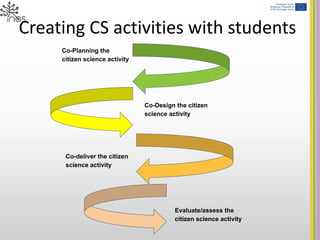
Creating CS activities with students
Co-Planning the
citizen science activity
Co-Design the citizen
science activity
Co-deliver the citizen
science activity
Evaluate/assess the
citizen science activity
Embedding CS into curricula
activities
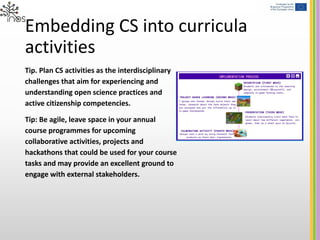
Tip. Plan CS activities as the interdisciplinary
challenges that aim for experiencing and
understanding open science practices and
active citizenship competencies.
Tip: Be agile, leave space in your annual
course programmes for upcoming
collaborative activities, projects and
hackathons that could be used for your course
tasks and may provide an excellent ground to
engage with external stakeholders.
Planning the CS into learning
tasks
Tip: Plan the CS as open knowledge building activities into
problem-solving tasks that last throughout a longer study period to
reach complex challenges with external stakeholders.
Tip: To have more impact on active citizenship competences, plan the
knowledge building activities not as short-term tasks within the higher
education courses, but as longer course-wide sequential tasks that
move towards the final target and cover all the open science process
phases.
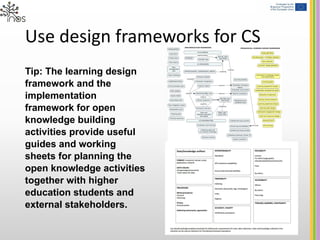
Use design frameworks for CS
Tip: The learning design
framework and the
implementation
framework for open
knowledge building
activities provide useful
guides and working
sheets for planning the
open knowledge activities
together with higher
education students and
external stakeholders.
Engagement and agency
Tip: Inform stakeholders in personal networks, social media
and official channels about the open knowledge building
activities to gain more interest among the external from the
higher education participants.
Tip: To develop agency, involve students and colleagues and
experts as well as external stakeholders into the codesign of
open knowledge-building activities for higher education
students and external stakeholders.
Tip: Develop in your open knowledge building activities the
agency of your students using the codesign approach, and
create giving-forward chains where they can spread this to the
next level stakeholders.
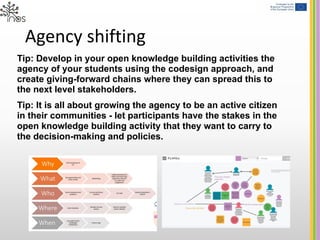
Agency shifting
Tip: Develop in your open knowledge building activities the
agency of your students using the codesign approach, and
create giving-forward chains where they can spread this to
the next level stakeholders.
Tip: It is all about growing the agency to be an active citizen
in their communities - let participants have the stakes in the
open knowledge building activity that they want to carry to
the decision-making and policies.
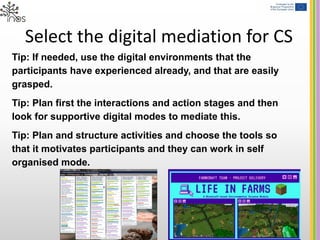
Select the digital mediation for CS
Tip: If needed, use the digital environments that the
participants have experienced already, and that are easily
grasped.
Tip: Plan first the interactions and action stages and then
look for supportive digital modes to mediate this.
Tip: Plan and structure activities and choose the tools so
that it motivates participants and they can work in self
organised mode.
Tips for scaffolding CS
Tip. Use mentors’s tips to shift the agency to the
participants.
Tip: Do not over-facilitate when groups are able to
lead their work.
Tip: Use mentors from experts, alumni, as well as
trust your students to be mentors for external
participants. Digital work in several focus groups
should be mentored by different mentors rather than
one.
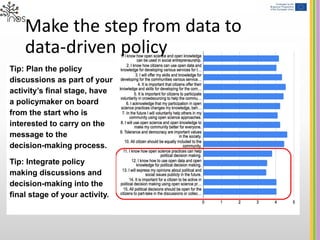
Tip: Plan the policy
discussions as part of your
activity’s final stage, have
a policymaker on board
from the start who is
interested to carry on the
message to the
decision-making process.
Tip: Integrate policy
making discussions and
decision-making into the
final stage of your activity.
Make the step from data to
data-driven policy
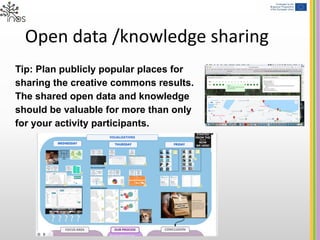
Open data /knowledge sharing
Tip: Plan publicly popular places for
sharing the creative commons results.
The shared open data and knowledge
should be valuable for more than only
for your activity participants.
Motivation of CS
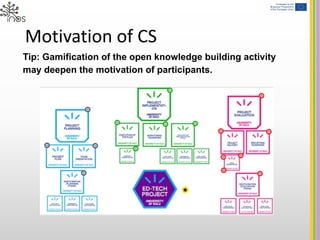
Tip: Gamification of the open knowledge building activity
may deepen the motivation of participants.
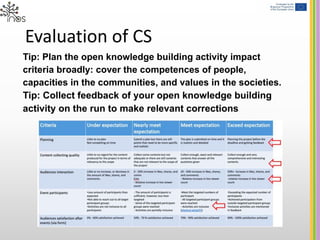
Evaluation of CS
Tip: Plan the open knowledge building activity impact
criteria broadly: cover the competences of people,
capacities in the communities, and values in the societies.
Tip: Collect feedback of your open knowledge building
activity on the run to make relevant corrections

Learning from Citizen Science though several educational institutions.pptx.pdf

  • 1.
    Learning from Citizen Sciencethough several educational institutions Kai Pata, Tallinn University 4.05.2022
  • 2.
    Creating CS activitieswith students Co-Planning the citizen science activity Co-Design the citizen science activity Co-deliver the citizen science activity Evaluate/assess the citizen science activity
  • 3.
    Embedding CS intocurricula activities Tip. Plan CS activities as the interdisciplinary challenges that aim for experiencing and understanding open science practices and active citizenship competencies. Tip: Be agile, leave space in your annual course programmes for upcoming collaborative activities, projects and hackathons that could be used for your course tasks and may provide an excellent ground to engage with external stakeholders.
  • 4.
    Planning the CSinto learning tasks Tip: Plan the CS as open knowledge building activities into problem-solving tasks that last throughout a longer study period to reach complex challenges with external stakeholders. Tip: To have more impact on active citizenship competences, plan the knowledge building activities not as short-term tasks within the higher education courses, but as longer course-wide sequential tasks that move towards the final target and cover all the open science process phases.
  • 5.
    Use design frameworksfor CS Tip: The learning design framework and the implementation framework for open knowledge building activities provide useful guides and working sheets for planning the open knowledge activities together with higher education students and external stakeholders.
  • 6.
    Engagement and agency Tip:Inform stakeholders in personal networks, social media and official channels about the open knowledge building activities to gain more interest among the external from the higher education participants. Tip: To develop agency, involve students and colleagues and experts as well as external stakeholders into the codesign of open knowledge-building activities for higher education students and external stakeholders. Tip: Develop in your open knowledge building activities the agency of your students using the codesign approach, and create giving-forward chains where they can spread this to the next level stakeholders.
  • 7.
    Agency shifting Tip: Developin your open knowledge building activities the agency of your students using the codesign approach, and create giving-forward chains where they can spread this to the next level stakeholders. Tip: It is all about growing the agency to be an active citizen in their communities - let participants have the stakes in the open knowledge building activity that they want to carry to the decision-making and policies.
  • 8.
    Select the digitalmediation for CS Tip: If needed, use the digital environments that the participants have experienced already, and that are easily grasped. Tip: Plan first the interactions and action stages and then look for supportive digital modes to mediate this. Tip: Plan and structure activities and choose the tools so that it motivates participants and they can work in self organised mode.
  • 9.
    Tips for scaffoldingCS Tip. Use mentors’s tips to shift the agency to the participants. Tip: Do not over-facilitate when groups are able to lead their work. Tip: Use mentors from experts, alumni, as well as trust your students to be mentors for external participants. Digital work in several focus groups should be mentored by different mentors rather than one.
  • 10.
    Tip: Plan thepolicy discussions as part of your activity’s final stage, have a policymaker on board from the start who is interested to carry on the message to the decision-making process. Tip: Integrate policy making discussions and decision-making into the final stage of your activity. Make the step from data to data-driven policy
  • 11.
    Open data /knowledgesharing Tip: Plan publicly popular places for sharing the creative commons results. The shared open data and knowledge should be valuable for more than only for your activity participants.
  • 12.
    Motivation of CS Tip:Gamification of the open knowledge building activity may deepen the motivation of participants.
  • 13.
    Evaluation of CS Tip:Plan the open knowledge building activity impact criteria broadly: cover the competences of people, capacities in the communities, and values in the societies. Tip: Collect feedback of your open knowledge building activity on the run to make relevant corrections