Download as PPSX, PPTX




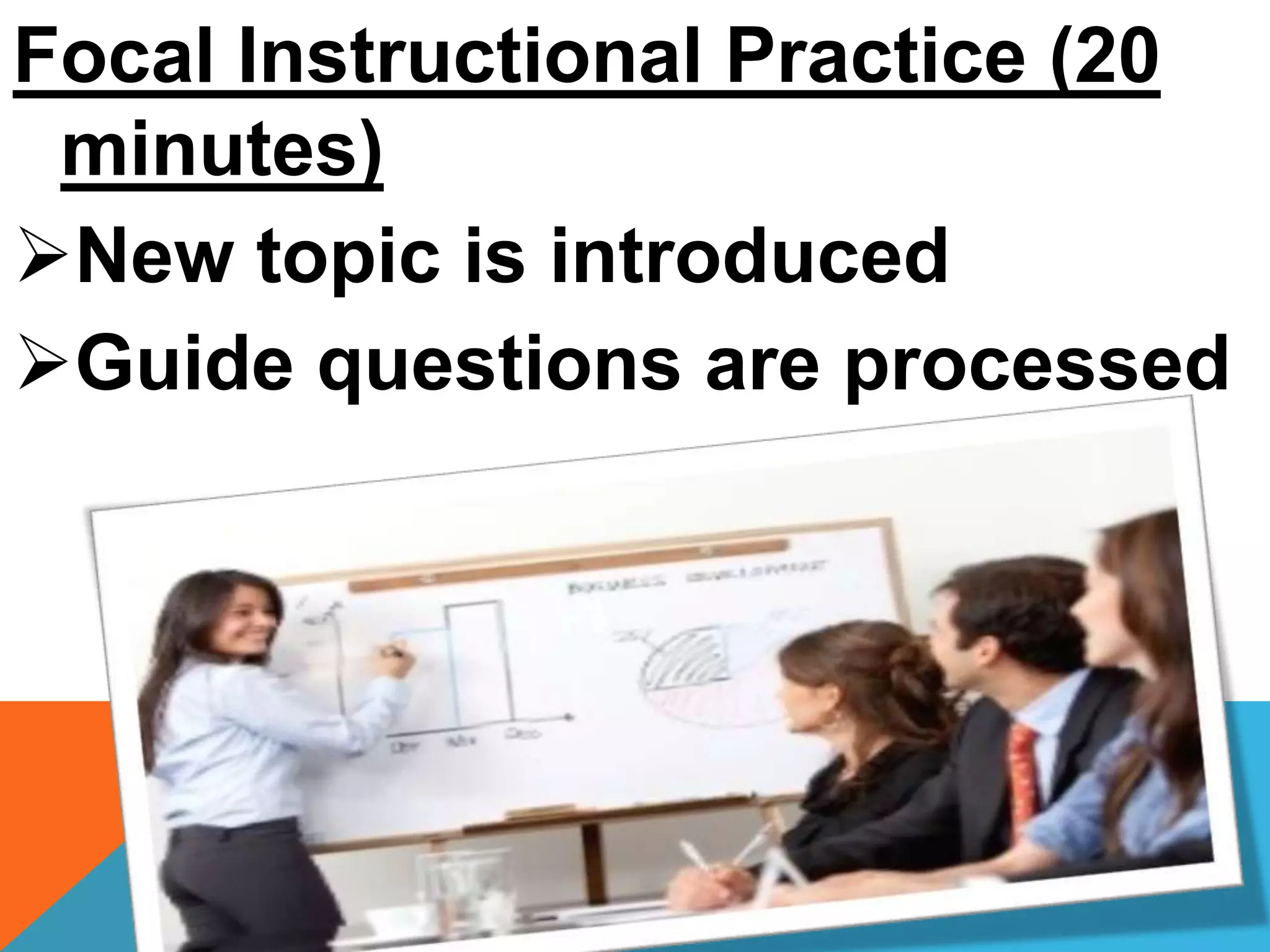












LAC refers to a school-based professional development program where teachers engage in instructional dialogues and team learning. School heads and teachers are responsible for conducting LAC meetings. Meetings typically involve teachers sharing experiences, introducing new instructional topics, preparing instructional materials, and providing feedback to each other. LAC meetings aim to improve teaching quality and are intended to take place weekly or bi-weekly for 2-4 hours with topics focused on curriculum, instruction, assessment, and teacher development. Schools receive funding from their MOOE budgets to support LAC activities. The roles of different educational offices are also outlined to support and monitor LAC implementation across school, district, division, and national levels.
Overview of LAC as a school-based professional and instructional dialogue for teacher training and problem-solving.
Defines school heads and teachers' roles, outlines meeting preparation steps, and sharing methodologies.
Framework for INSET/LACs, planning, follow-up, implementation evaluation, and application of learned skills.
Details on LAC composition based on school types and discusses the frequency and duration of meetings.
Topics include curriculum adaptation, instructional materials, teacher development, assessment, and instructional practices.
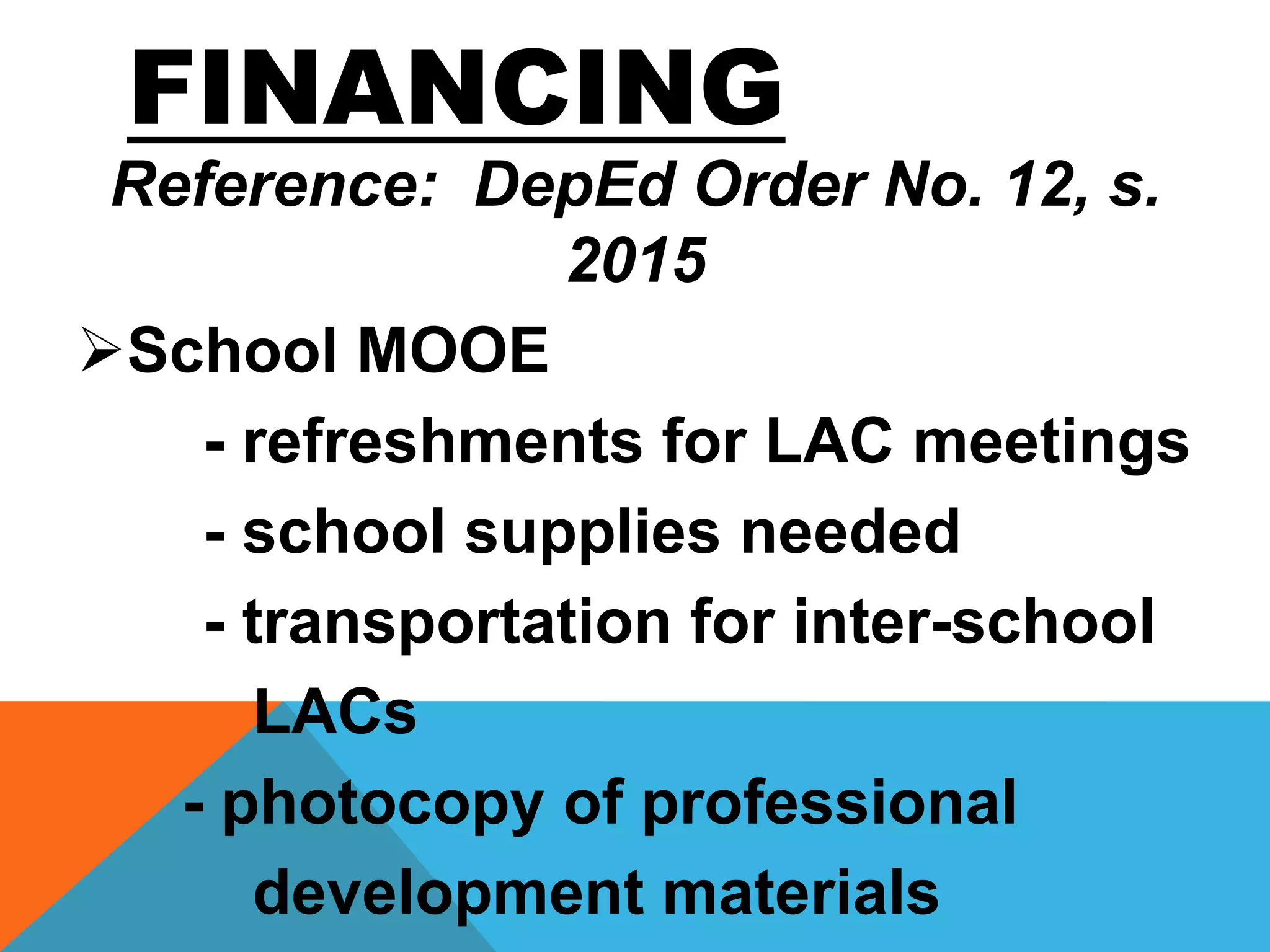
Identifies funding sources for LAC meetings, supplies, transportation, and professional development.
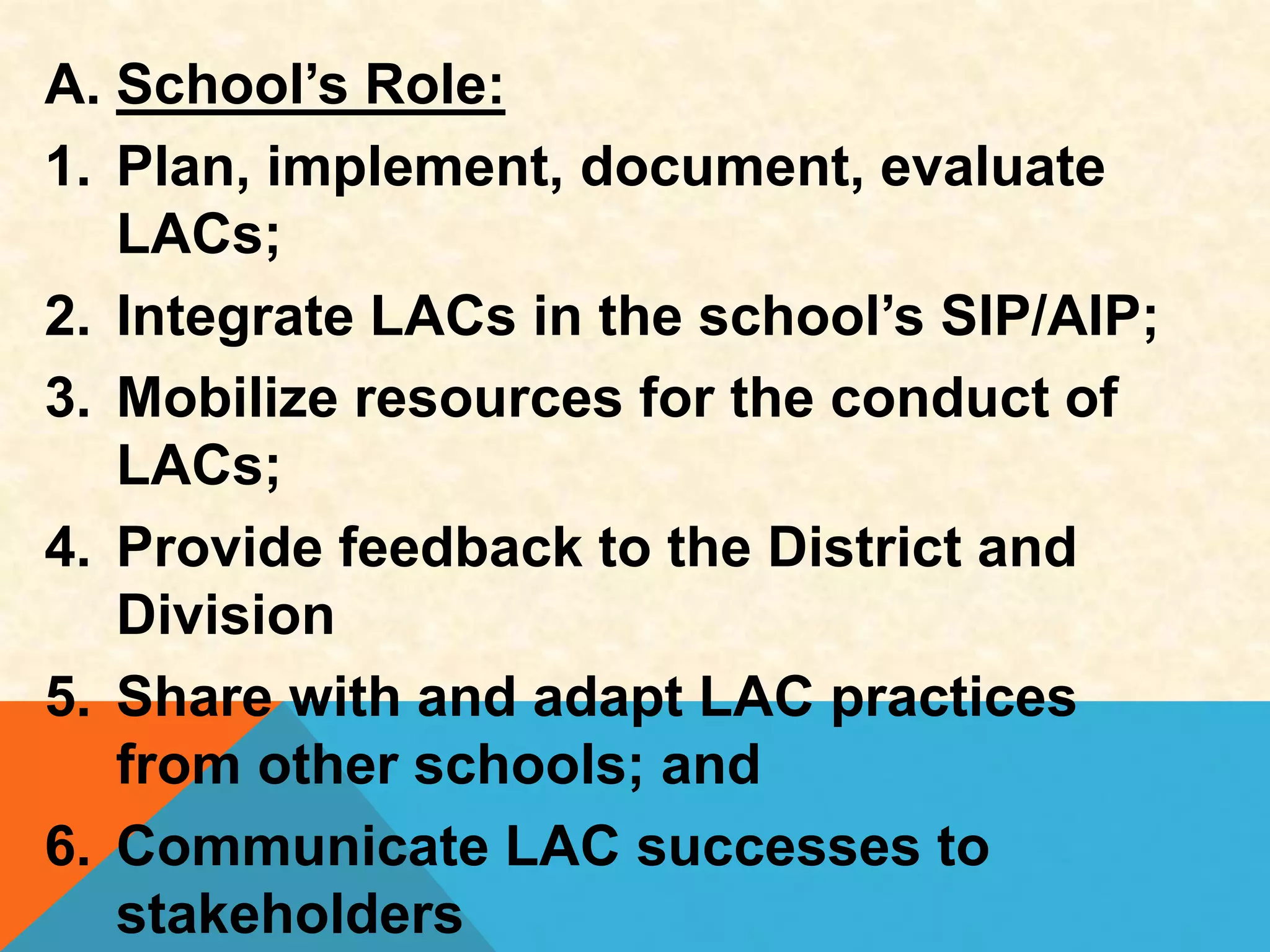
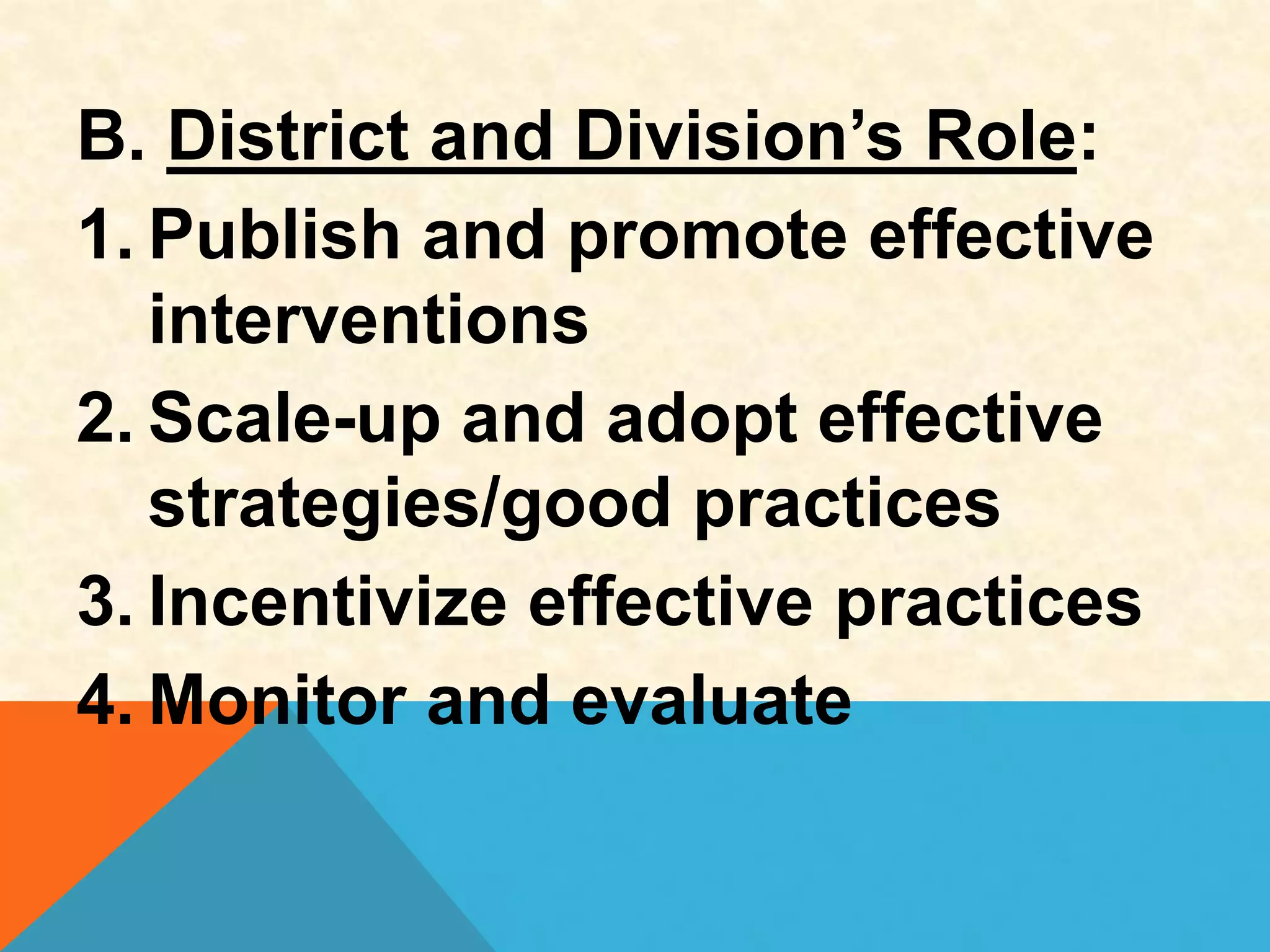
Elaborates on the responsibilities of schools, district, division, region, and central office in supporting LACs.
Motivational message about embracing challenges and innovation in LACs, followed by a concluding thank you.


