Learn ♦ Grow


A project that helps people in developing countries
 learn about and grow the best local foods to meet
                             their nutritional needs.
This Rotary year our International President, D K
Lee, challenged all Rotarians to


“Keep the service emphasis on water, health
and hunger and literacy….but to focus your
efforts in each of these areas on children and
reducing the terrible rate of child mortality in
our world.”

                                                   2
A tangible response to one of his challenges
has emerged from within District 9830.
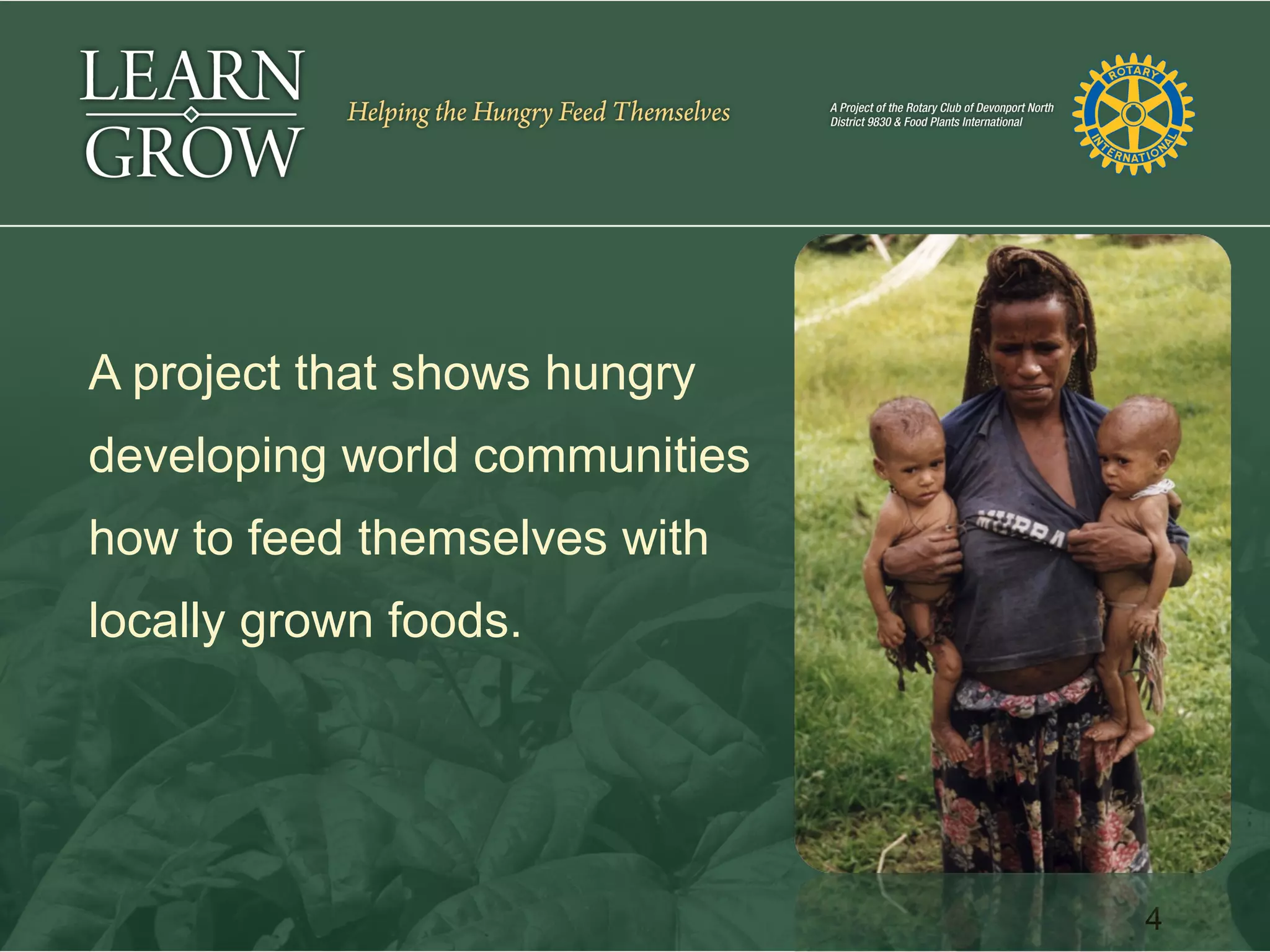
A project that shows hungry
developing world communities
how to feed themselves with
locally grown foods.


                               4
   A project of Rotary District 9830

   Sponsored by the Rotary Club of Devonport North

   In partnership with Food Plants International
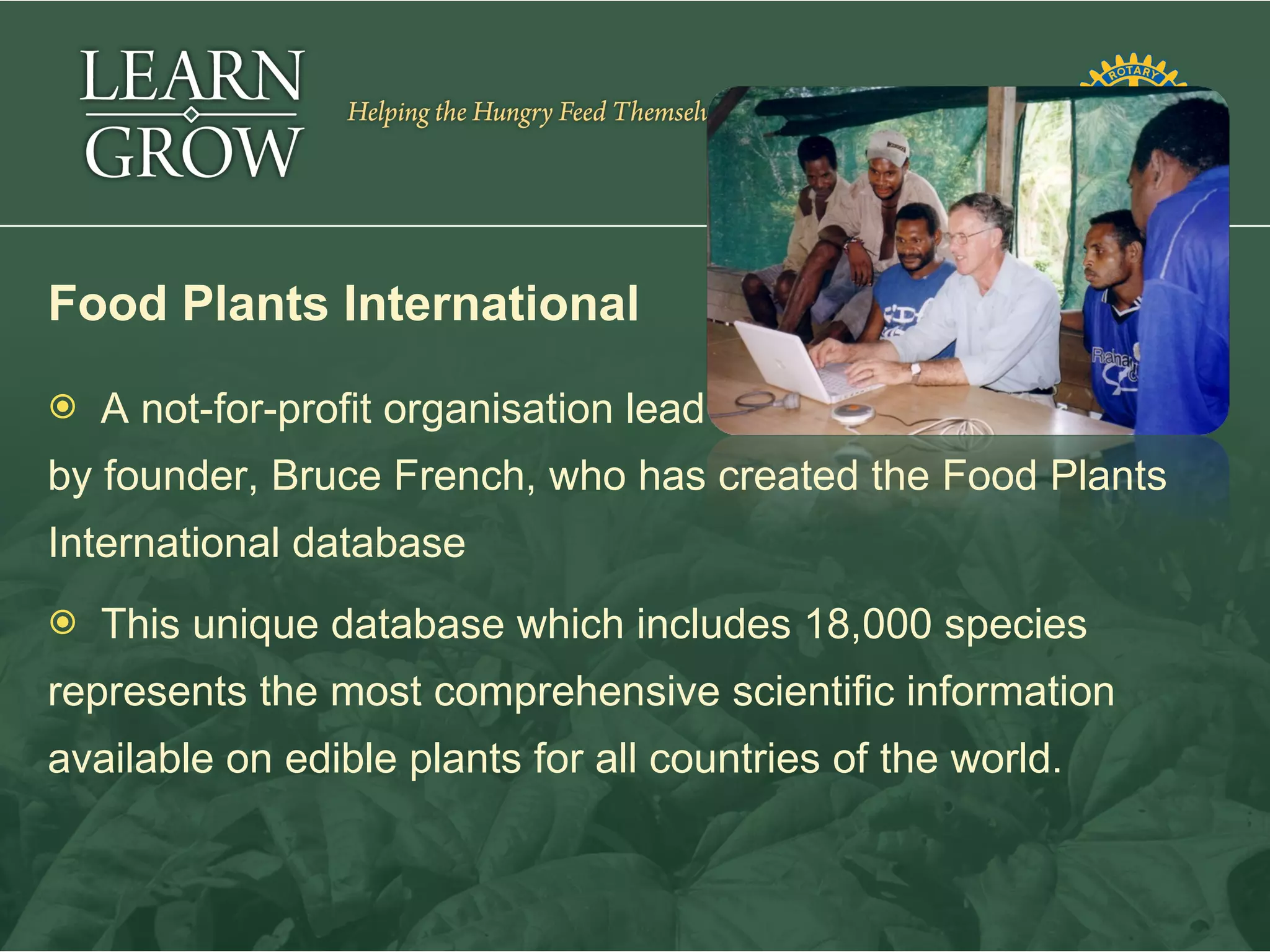
Food Plants International
   A not-for-profit organisation lead
by founder, Bruce French, who has created the Food Plants
International database
   This unique database which includes 18,000 species
represents the most comprehensive scientific information
available on edible plants for all countries of the world.
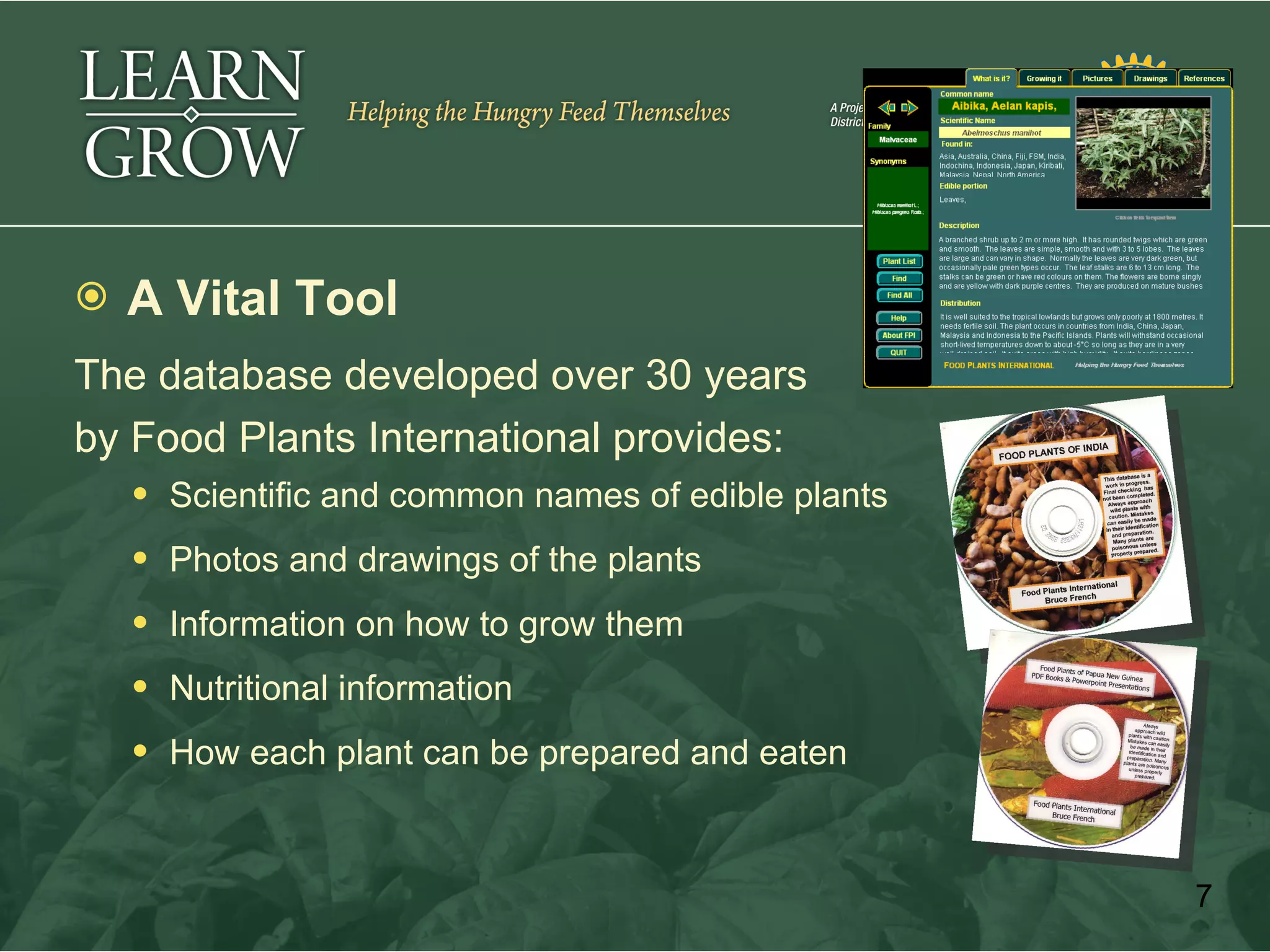
   A Vital Tool
The database developed over 30 years
by Food Plants International provides:
     Scientific and common names of edible plants

     Photos and drawings of the plants

     Information on how to grow them

     Nutritional information

     How each plant can be prepared and eaten


                                                     7
   Aim
To sustainably reduce malnutrition in developing
  countries and reduce
     illness
     disease
     and mortality
…caused by nutritional deficiencies.

                                                   8
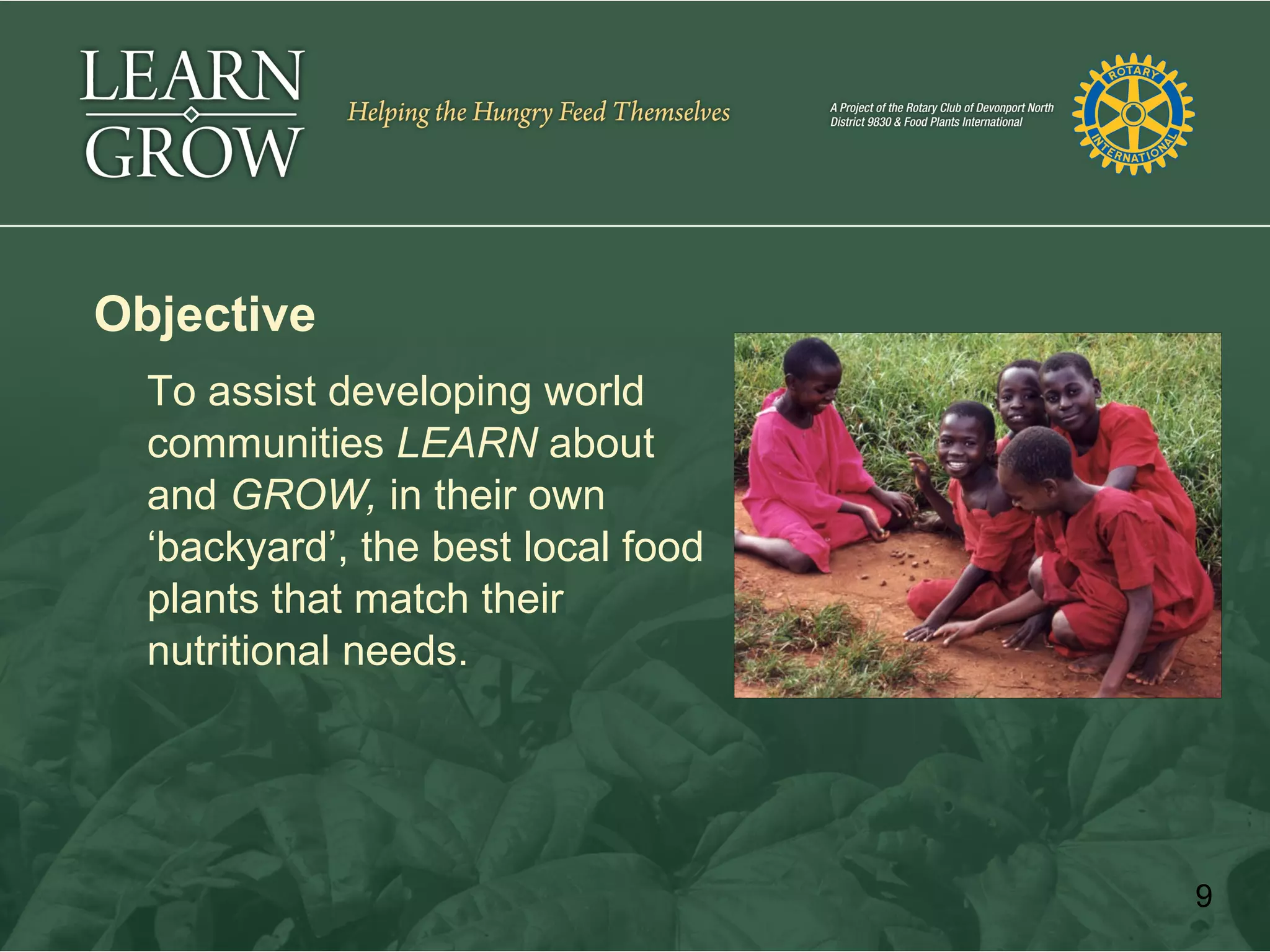
Objective
  To assist developing world
  communities LEARN about
  and GROW, in their own
  ‘backyard’, the best local food
  plants that match their
  nutritional needs.


                                    9
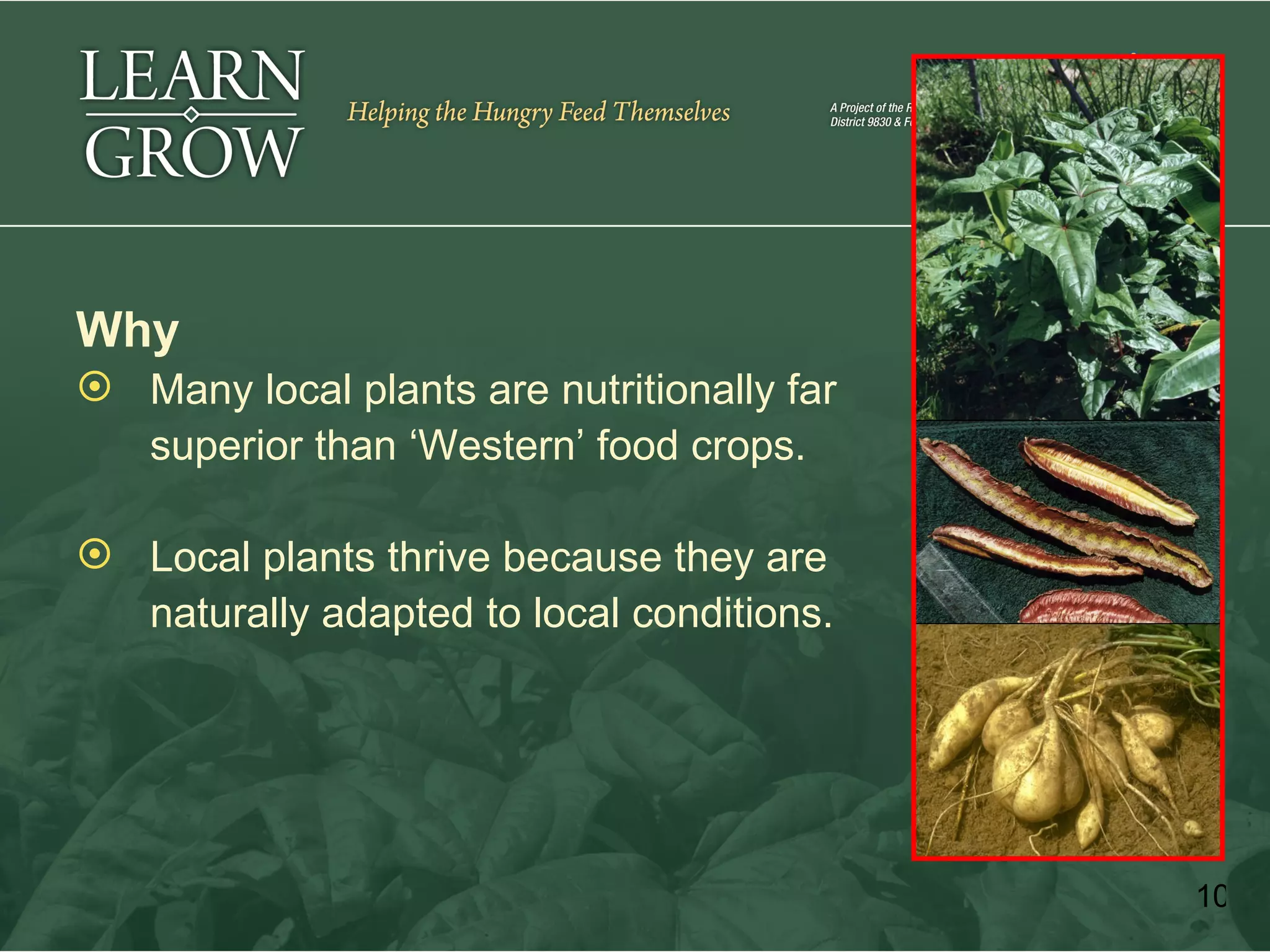
Why
 Many local plants are nutritionally far
  superior than ‘Western’ food crops.

 Local plants thrive because they are
  naturally adapted to local conditions.


                                            10
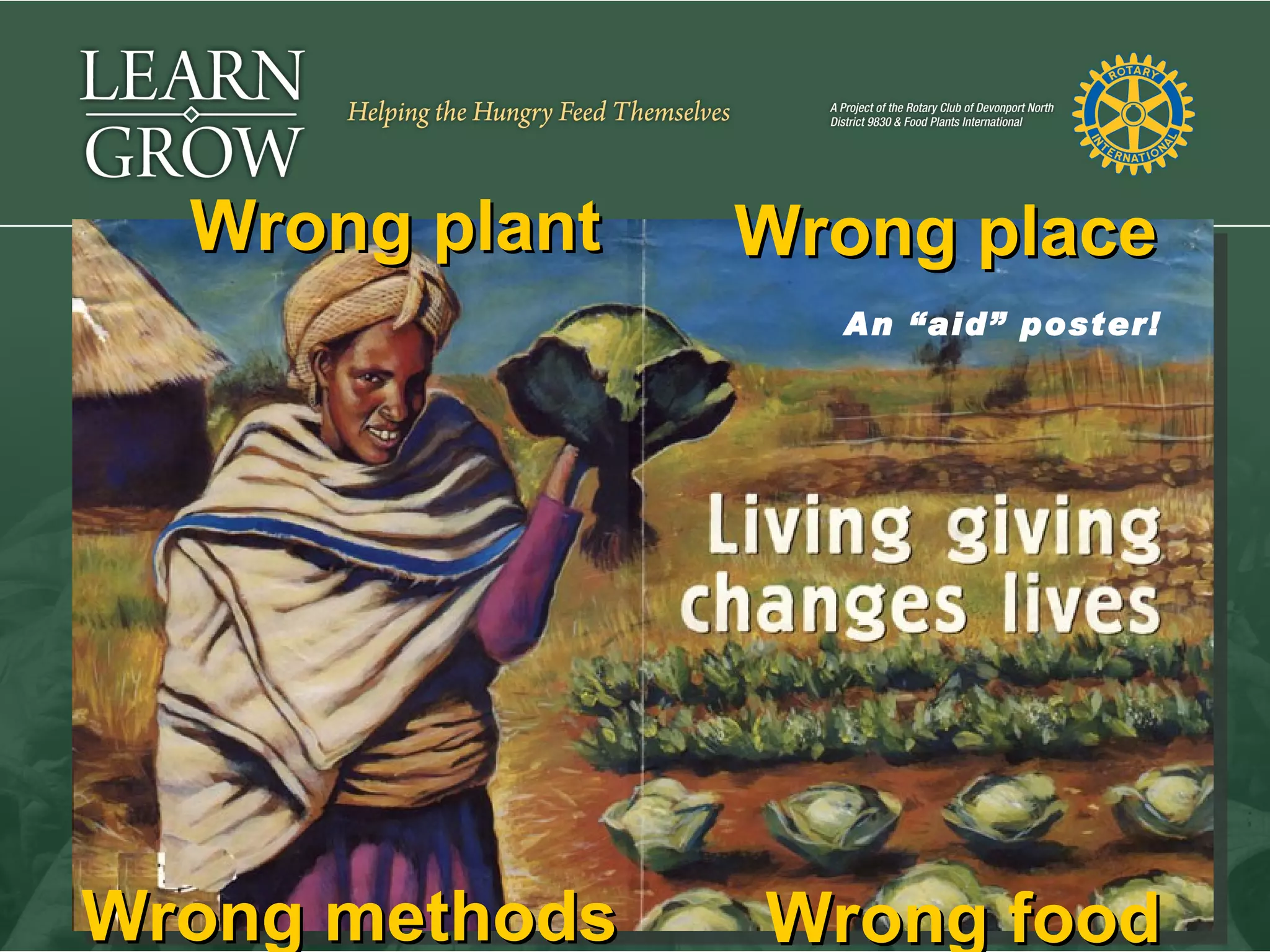
Wrong plant   Wrong place
                  An “aid” poster!


Wrong methods   Wrong food
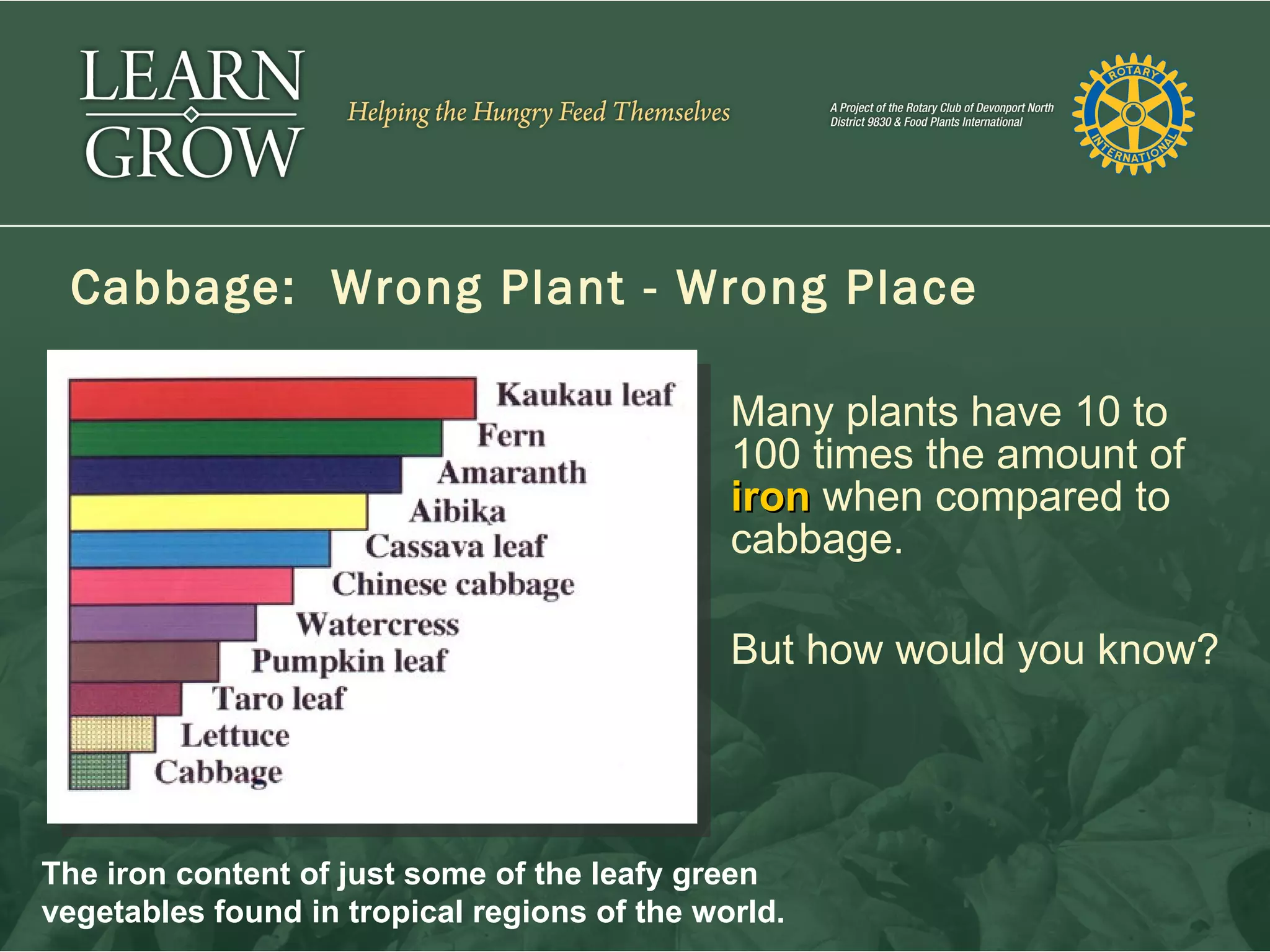
Cabbage: Wrong Plant - Wrong Place

                                              Many plants have 10 to
                                              100 times the amount of
                                              iron when compared to
                                              cabbage.

                                              But how would you know?


The iron content of just some of the leafy green
vegetables found in tropical regions of the world.
Learn ♦ Grow

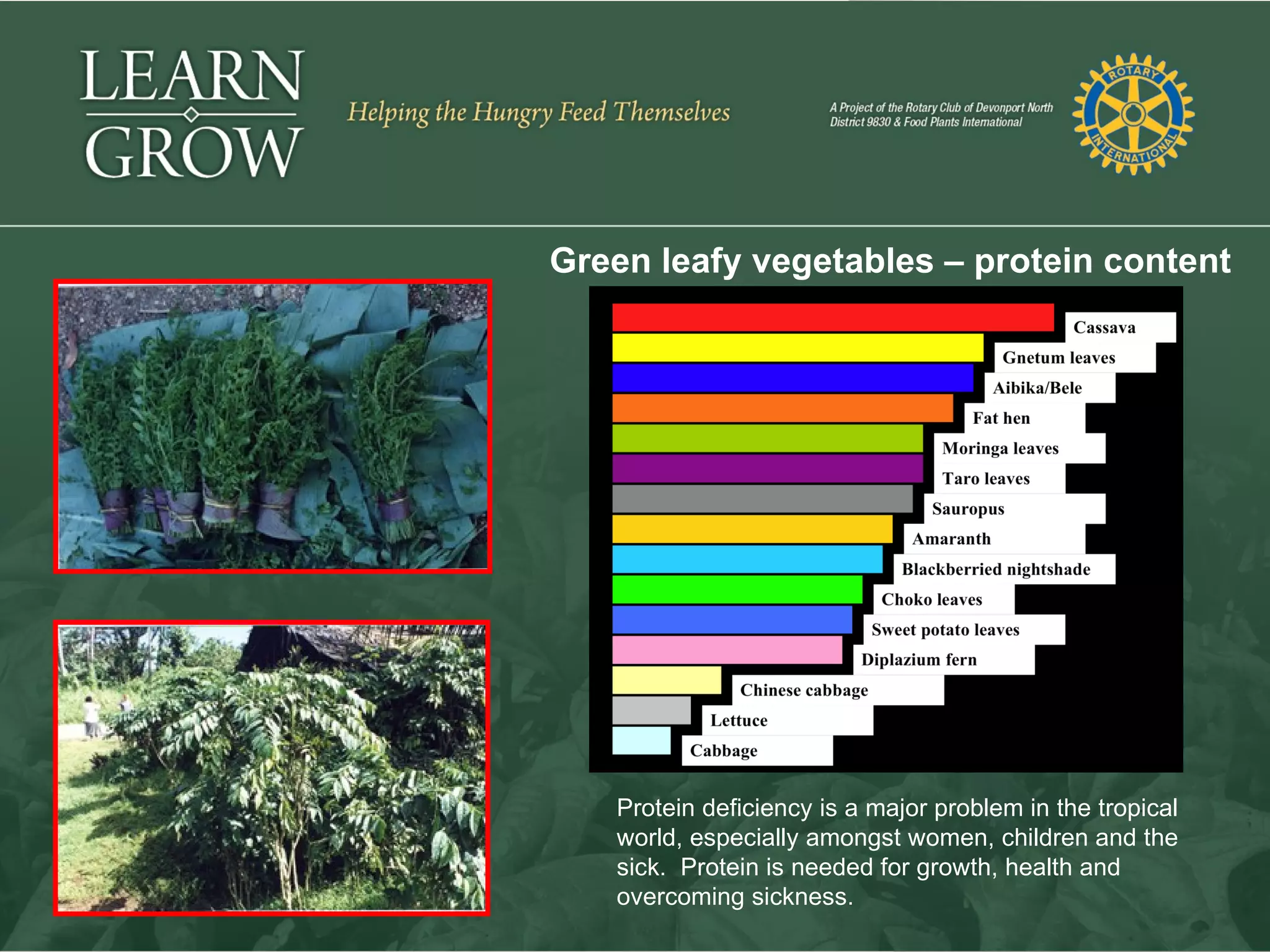
        Green leafy vegetables – protein content


           Protein deficiency is a major problem in the tropical
           world, especially amongst women, children and the
           sick. Protein is needed for growth, health and
           overcoming sickness.
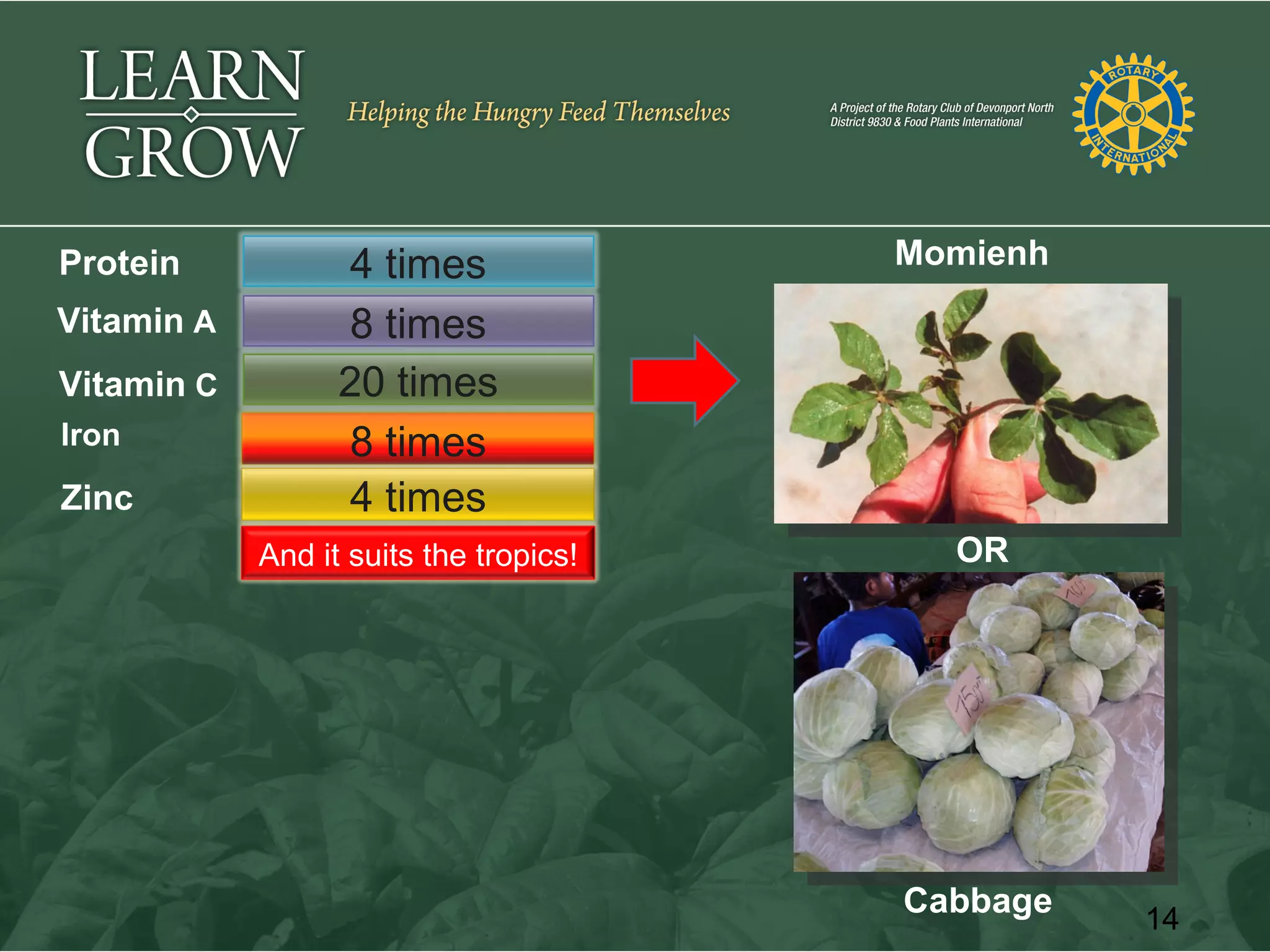
Protein           4 times               Momienh
Vitamin A         8 times
Vitamin C         20 times
Iron              8 times
Zinc              4 times
            And it suits the tropics!     OR


                                        Cabbage   14
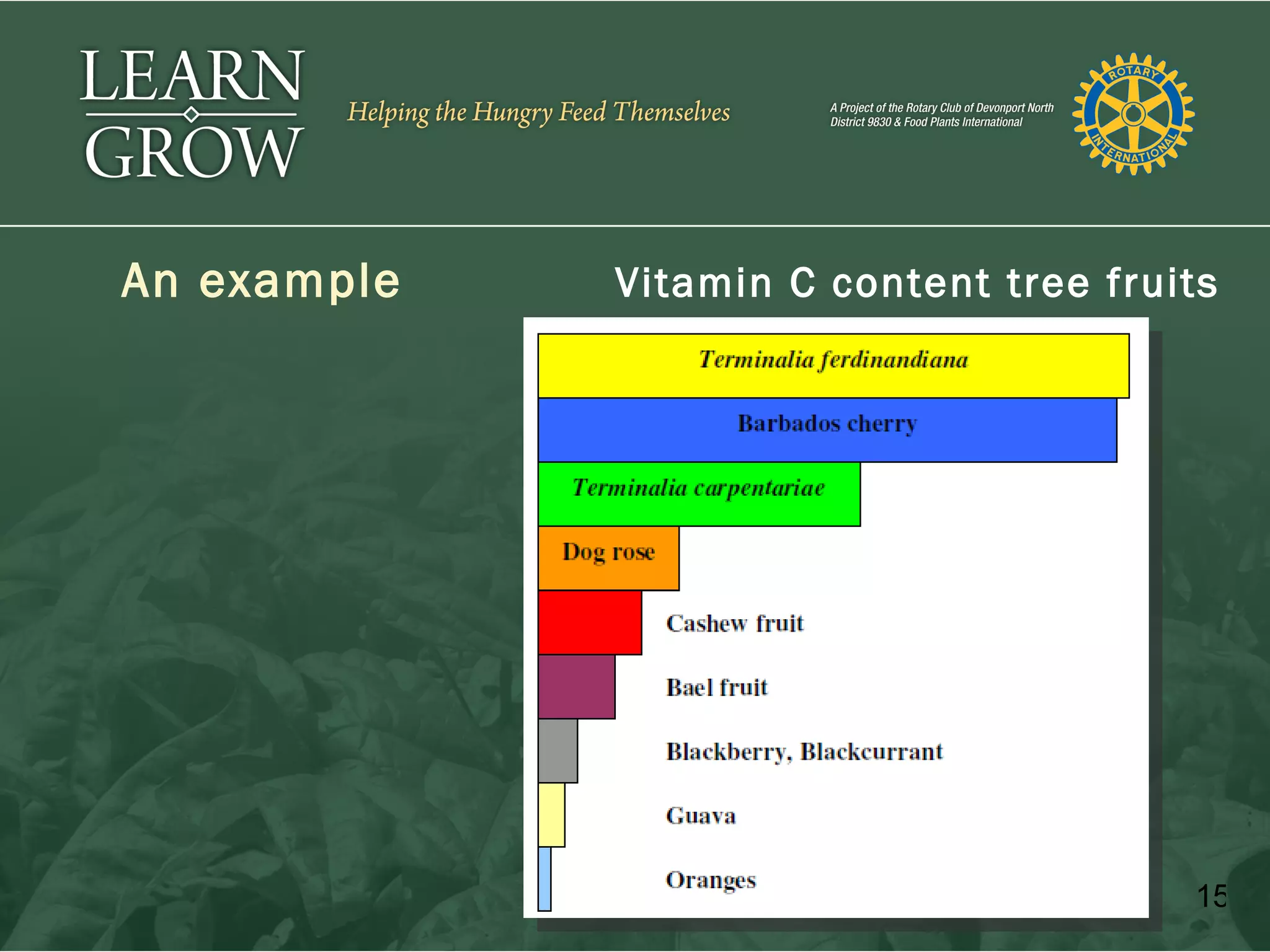
An example   Vitamin C content tree fruits


                                        15
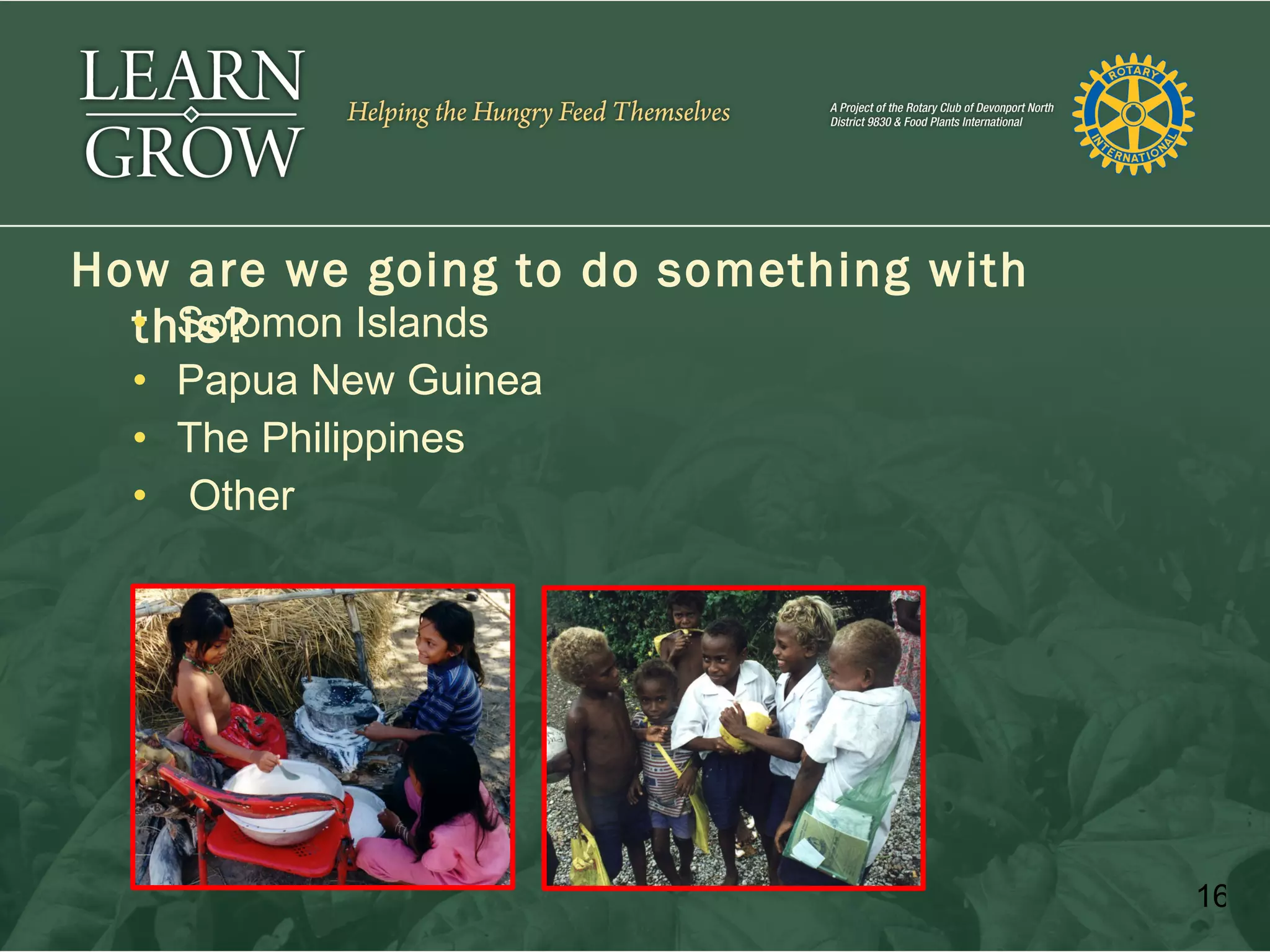
How are we going to do something with
  this?
  • Solomon Islands
  • Papua New Guinea
  • The Philippines
  • Other


                                        16
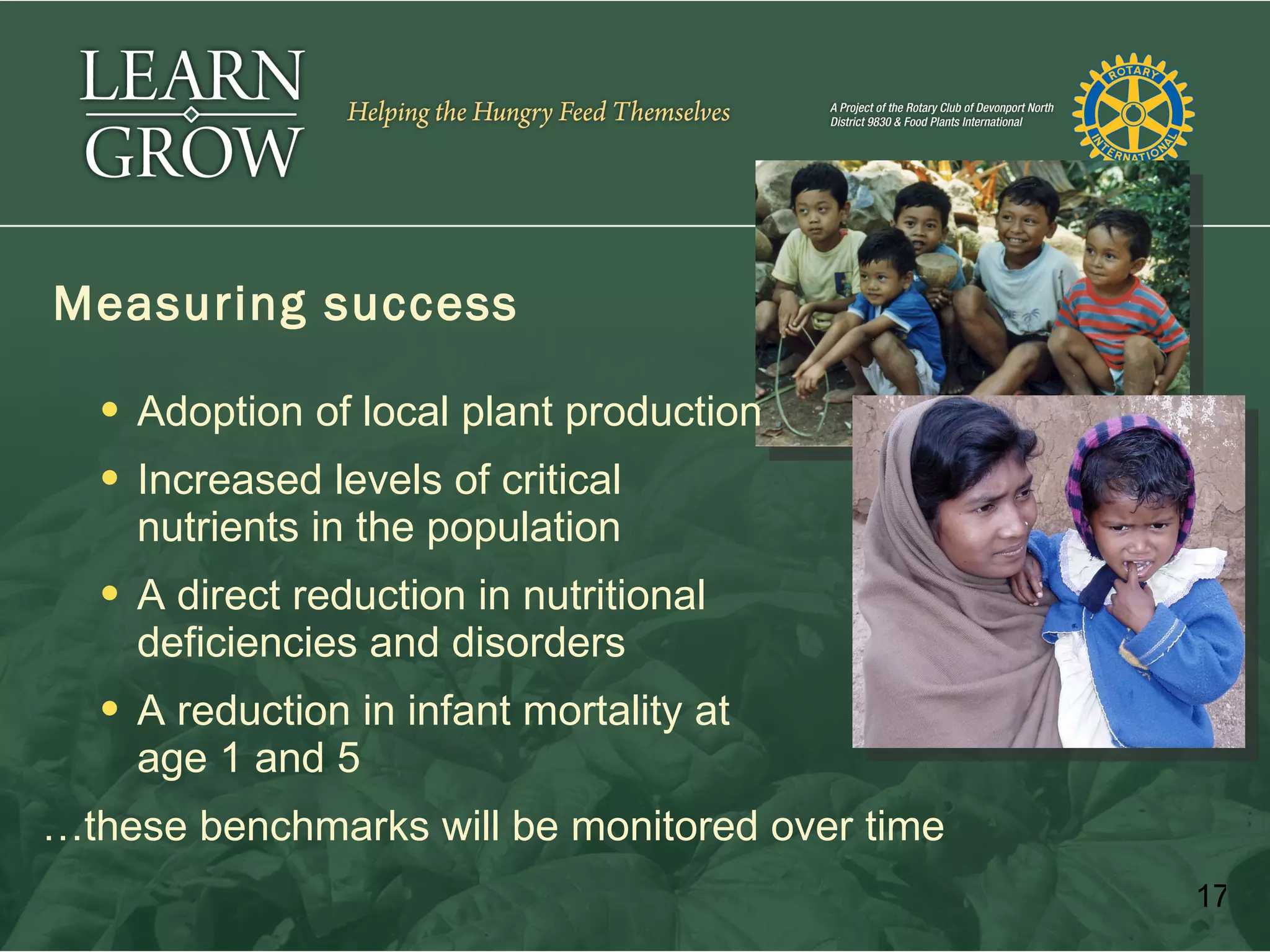
Measuring success

   Adoption of local plant production
   Increased levels of critical
    nutrients in the population
   A direct reduction in nutritional
    deficiencies and disorders
   A reduction in infant mortality at   age 1
    age 1 and 5
…these benchmarks will be monitored over time
                                                 17
The next step - $100,000+
   Deliver the Solomons’ program

   Engage a partner

   Bring external funding providers on board

   Extend this program through Rotary International

   Provide an information support base


                                                       18
Act Directly
   It is simple for any club or district to
    incorporate LEARN ♦ GROW into existing
    or new aid projects – identify the local
    nutritional deficiencies in the population
    and LEARN ♦ GROW can provide the
    information!
Learn ♦ Grow Support Group

   $10,000 = ‘Learn ♦ Grow Champion’

   $1,0000 = ‘Learn ♦ Grow Ally’

   Donation = ‘Learn ♦ Grow Mate’

   ‘Learn ♦ Grow Team’


                                        20
Your help will mean….

“Not only will nutritional food be more
available... but those most at risk will have the
DIGNITY of managing their own needs.”
                        Dr Eileen Gentilcore, RI


                                      21
Learn ♦ Grow


     Rotary CAN make
        a difference.
Ask today how you can help!
     www.learngrow.org

Learn Grow Feb2009

  • 1.
    Learn ♦ Grow Aproject that helps people in developing countries learn about and grow the best local foods to meet their nutritional needs.
  • 2.
    This Rotary yearour International President, D K Lee, challenged all Rotarians to “Keep the service emphasis on water, health and hunger and literacy….but to focus your efforts in each of these areas on children and reducing the terrible rate of child mortality in our world.” 2
  • 3.
    A tangible responseto one of his challenges has emerged from within District 9830.
  • 4.
    A project thatshows hungry developing world communities how to feed themselves with locally grown foods. 4
  • 5.
    A project of Rotary District 9830  Sponsored by the Rotary Club of Devonport North  In partnership with Food Plants International
  • 6.
    Food Plants International  A not-for-profit organisation lead by founder, Bruce French, who has created the Food Plants International database  This unique database which includes 18,000 species represents the most comprehensive scientific information available on edible plants for all countries of the world.
  • 7.
    A Vital Tool The database developed over 30 years by Food Plants International provides:  Scientific and common names of edible plants  Photos and drawings of the plants  Information on how to grow them  Nutritional information  How each plant can be prepared and eaten 7
  • 8.
    Aim To sustainably reduce malnutrition in developing countries and reduce  illness  disease  and mortality …caused by nutritional deficiencies. 8
  • 9.
    Objective Toassist developing world communities LEARN about and GROW, in their own ‘backyard’, the best local food plants that match their nutritional needs. 9
  • 10.
    Why  Many localplants are nutritionally far superior than ‘Western’ food crops.  Local plants thrive because they are naturally adapted to local conditions. 10
  • 11.
    Wrong plant Wrong place An “aid” poster! Wrong methods Wrong food
  • 12.
    Cabbage: Wrong Plant- Wrong Place Many plants have 10 to 100 times the amount of iron when compared to cabbage. But how would you know? The iron content of just some of the leafy green vegetables found in tropical regions of the world.
  • 13.
    Learn ♦ Grow Green leafy vegetables – protein content Protein deficiency is a major problem in the tropical world, especially amongst women, children and the sick. Protein is needed for growth, health and overcoming sickness.
  • 14.
    Protein 4 times Momienh Vitamin A 8 times Vitamin C 20 times Iron 8 times Zinc 4 times And it suits the tropics! OR Cabbage 14
  • 15.
    An example Vitamin C content tree fruits 15
  • 16.
    How are wegoing to do something with this? • Solomon Islands • Papua New Guinea • The Philippines • Other 16
  • 17.
    Measuring success  Adoption of local plant production  Increased levels of critical nutrients in the population  A direct reduction in nutritional deficiencies and disorders  A reduction in infant mortality at age 1 age 1 and 5 …these benchmarks will be monitored over time 17
  • 18.
    The next step- $100,000+  Deliver the Solomons’ program  Engage a partner  Bring external funding providers on board  Extend this program through Rotary International  Provide an information support base 18
  • 19.
    Act Directly  It is simple for any club or district to incorporate LEARN ♦ GROW into existing or new aid projects – identify the local nutritional deficiencies in the population and LEARN ♦ GROW can provide the information!
  • 20.
    Learn ♦ GrowSupport Group  $10,000 = ‘Learn ♦ Grow Champion’  $1,0000 = ‘Learn ♦ Grow Ally’  Donation = ‘Learn ♦ Grow Mate’  ‘Learn ♦ Grow Team’ 20
  • 21.
    Your help willmean…. “Not only will nutritional food be more available... but those most at risk will have the DIGNITY of managing their own needs.” Dr Eileen Gentilcore, RI 21
  • 22.
    Learn ♦ Grow Rotary CAN make a difference. Ask today how you can help! www.learngrow.org