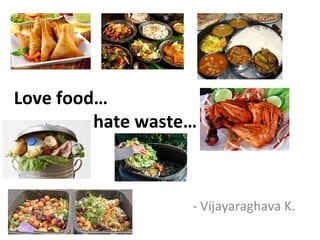
Love food…
hate waste…
- Vijayaraghava K.
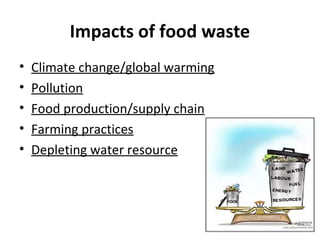
Impacts of food waste
• Climate change/global warming
• Pollution
• Food production/supply chain
• Farming practices
• Depleting water resource
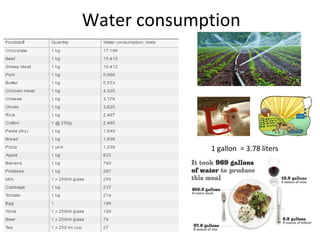
Water consumption
1 gallon = 3.78 liters
Categories of food waste
• Avoidable
– commercial point of view, avoidable food waste may
include damaged/rotten/expired food stock or produce
that has not been used prior to retailing or sold-out
– This may occur due to overproduction, erratic serving
sizes, poor quality, etc
• Unavoidable
– food that cannot be eaten or sold out, includes waste from
poultry, fish bones, fat and skin, shellfish/egg shells, tea
bags and coffee grounds, fruit/vegetable peels, pips and
stones
– But these can be used for composting to be used
as organic fertilizers rather than just to be dumped into
the bins
Steps to avoid/reduce/manage food
waste
• In the households
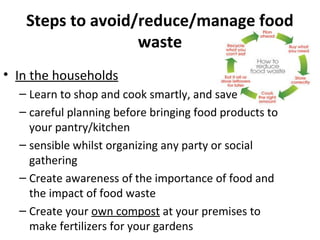
– Learn to shop and cook smartly, and save
– careful planning before bringing food products to
your pantry/kitchen
– sensible whilst organizing any party or social
gathering
– Create awareness of the importance of food and
the impact of food waste
– Create your own compost at your premises to
make fertilizers for your gardens
Love food...Hate waste

Love food...Hate waste

  • 1.
  • 2.
    Impacts of foodwaste • Climate change/global warming • Pollution • Food production/supply chain • Farming practices • Depleting water resource
  • 4.
  • 5.
    Categories of foodwaste • Avoidable – commercial point of view, avoidable food waste may include damaged/rotten/expired food stock or produce that has not been used prior to retailing or sold-out – This may occur due to overproduction, erratic serving sizes, poor quality, etc • Unavoidable – food that cannot be eaten or sold out, includes waste from poultry, fish bones, fat and skin, shellfish/egg shells, tea bags and coffee grounds, fruit/vegetable peels, pips and stones – But these can be used for composting to be used as organic fertilizers rather than just to be dumped into the bins
  • 6.
    Steps to avoid/reduce/managefood waste • In the households – Learn to shop and cook smartly, and save – careful planning before bringing food products to your pantry/kitchen – sensible whilst organizing any party or social gathering – Create awareness of the importance of food and the impact of food waste – Create your own compost at your premises to make fertilizers for your gardens