Nonprofit Collaborative2009 CEO Roundtable WorkshopOctober 5, 2009
Agenda & Ground Rules2 breaks: morning and afternoon
45 minutes for Lunch
Cell phones/Blackberries off or on vibrate (please!)Factors That Drive or Affect Organizational Change
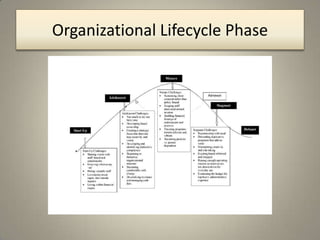
Organizational Lifecycle Phase
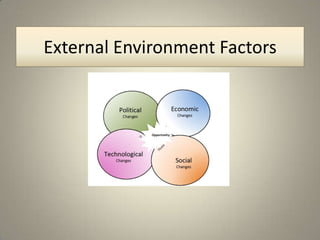
External Environment Factors
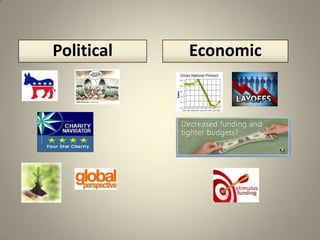
PoliticalEconomic
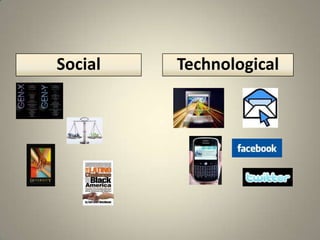
SocialTechnological
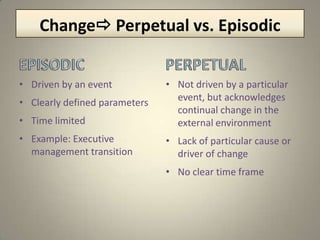
Change Perpetual vs. EpisodicEPISODICDriven by an eventClearly defined parametersTime limitedExample: Executive management transitionPERPETUALNot driven by a particular event, but acknowledges continual change in the external environmentLack of particular cause or driver of changeNo clear time frame
Session OverviewWhy this workshop?
Develop understanding of tools to navigate organizational change and development
Discuss different aspects of capacity building
Case study to try on learnings
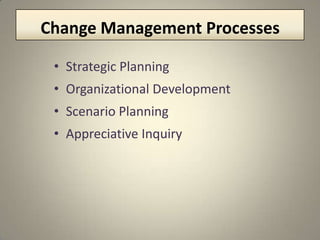
Board capacity buildingChange Management ProcessesStrategic PlanningOrganizational DevelopmentScenario PlanningAppreciative Inquiry
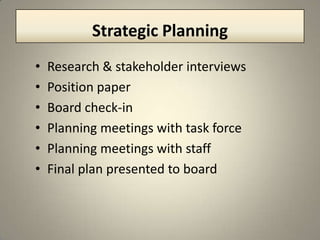
Strategic PlanningResearch & stakeholder interviewsPosition paperBoard check-inPlanning meetings with task forcePlanning meetings with staffFinal plan presented to board
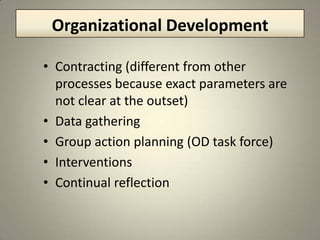
Organizational DevelopmentContracting (different from other processes because exact parameters are not clear at the outset)Data gatheringGroup action planning (OD task force)InterventionsContinual reflection
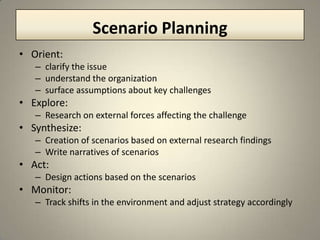
Scenario PlanningOrient:clarify the issue understand the organization surface assumptions about key challengesExplore:Research on external forces affecting the challengeSynthesize:Creation of scenarios based on external research findingsWrite narratives of scenariosAct:Design actions based on the scenariosMonitor:Track shifts in the environment and adjust strategy accordingly
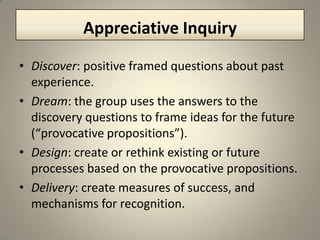
Appreciative InquiryDiscover: positive framed questions about past experience.Dream: the group uses the answers to the discovery questions to frame ideas for the future (“provocative propositions”).Design: create or rethink existing or future processes based on the provocative propositions.Delivery: create measures of success, and mechanisms for recognition.
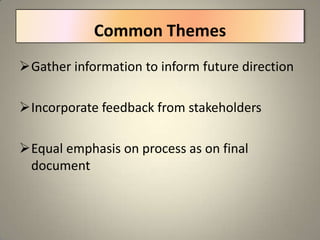
Common ThemesGather information to inform future direction
Incorporate feedback from stakeholders
Equal emphasis on process as on final documentWhich tools do  you find effective?What tools are effective?Which tools have you used?Which are less effective?
Capacity Building in the Context of Perpetual ChangeAssuming the external environment is constantly shifting, how does that affect these capacity building tools, which assume a certain degree of stasis in the environment?Do we need an entirely new kind of tool or do we simply need to adapt these tools to this environment?In what ways do these tools need to change to equip us to manage better in a perpetually shifting context?How might we think differently about managing our organizations?
Diagnostic ToolsLifecycle Phase (Susan Kenney Stevens)Typical characteristics of each suggested interventions McKinsey Capacity AssessmentUsed to identify areas of capacity that need improvementGood to Great Diagnostic Tool (Jim Collins)
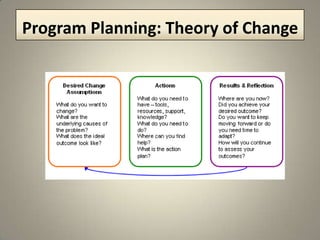
Program Planning: Theory of Change
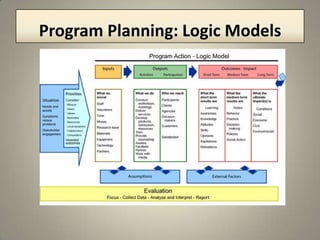
Program Planning: Logic Models
Which tools do  you find effective?What tools are effective?Which tools have you used?Which are less effective?
Building the Capacity of Your Board

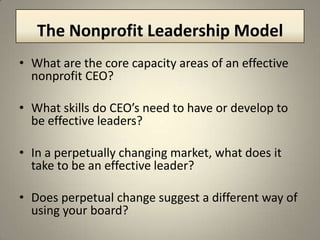
Leadership Workshop

Editor's Notes

  • #7 Political:Democratic President & CongressIraq & Afghanistan warsFocus on environment/sustainabilityNonprofit scrutiny & accountabilityGlobal perspectiveEconomic:Economic crisisJob losses:LayoffsOverqualified job candidatesDecreased fundingStimulus funding driving resource allocation