Enhancing Group  and   Team Leadership Joe, Naomi, Katie, Erica, Lee, and Chris May 5, 2006
Leadership Styles Approach Trait Approach Situational Approach  Paul Hersey and Ken Blanchard Functional Approach Transformational Approach
Three Styles Approach Door number 1 Door   number 2 Door   number 3
Door Number 1:  Authoritarian Who put him in charge? Who makes the decisions? Does anyone get a say?
Door Number 2:   Democratic What do YOU think? Wow!  That was a really good idea! Thank you all for working together!
Door Number 3:   Laissez-faire Bored and unresponsive Whatever attitude Nothing gets accomplished
Leadership   Traits Physical Social Personality
Physical Make a good first impression Appearance isn’t everything
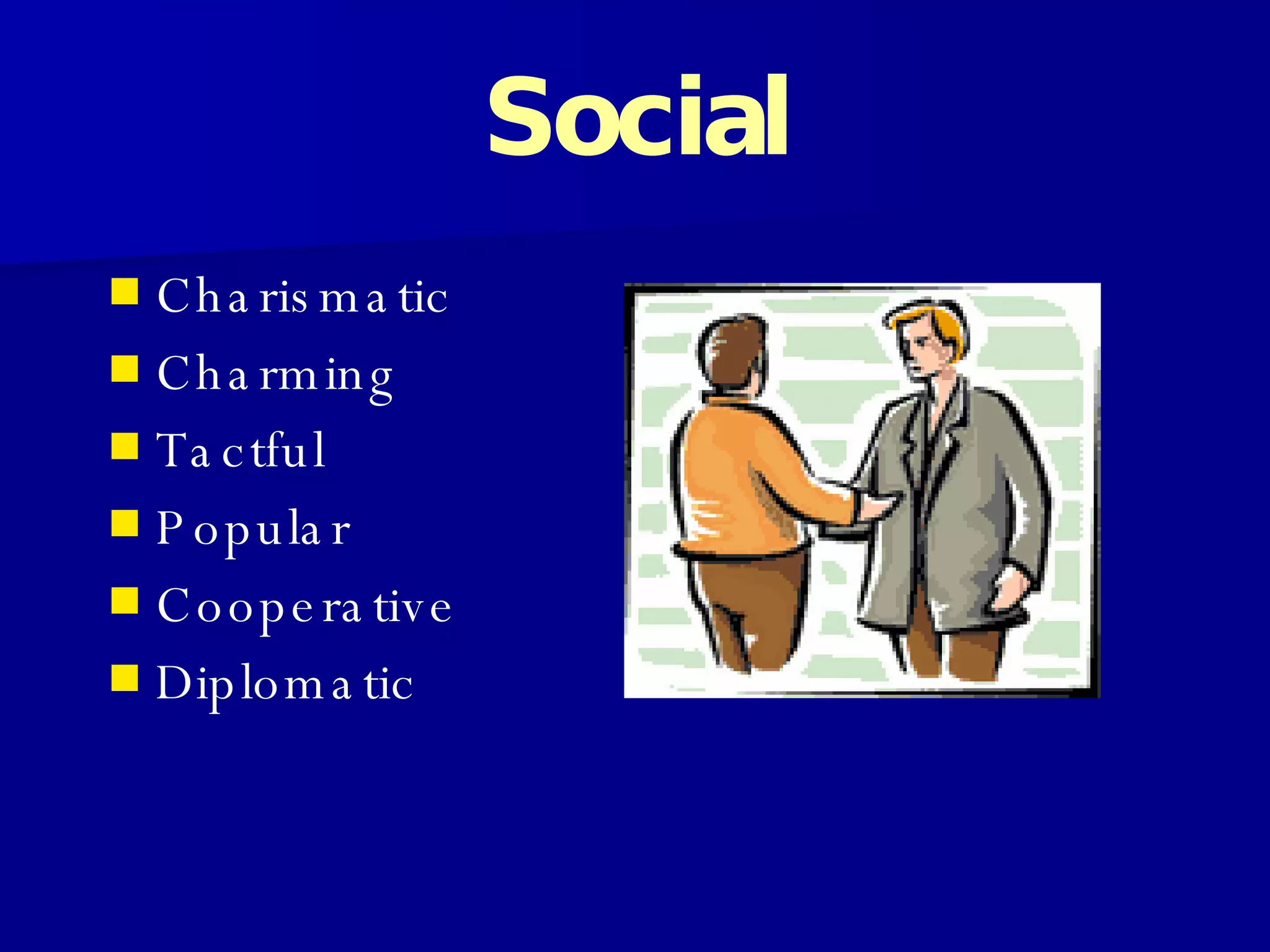
Social Charismatic Charming Tactful  Popular Cooperative Diplomatic
Personality Self confidence Ambition Taking the initiative  Responsibility No guarantees
Situational   Approach Three key factors to determine the most effective leadership style. Most often used to train managers in  corporate settings
Three   Key   Factors Relationship Behavior Task Behavior Maturity
Style   of   Leader Once these factors are considered leaders are able to gauge what style of leadership to use Four styles of leaders Participating Selling Delegating Telling
Leadership   Model
Functional   Approach Task Needs Team Maintenance Needs Individual Needs
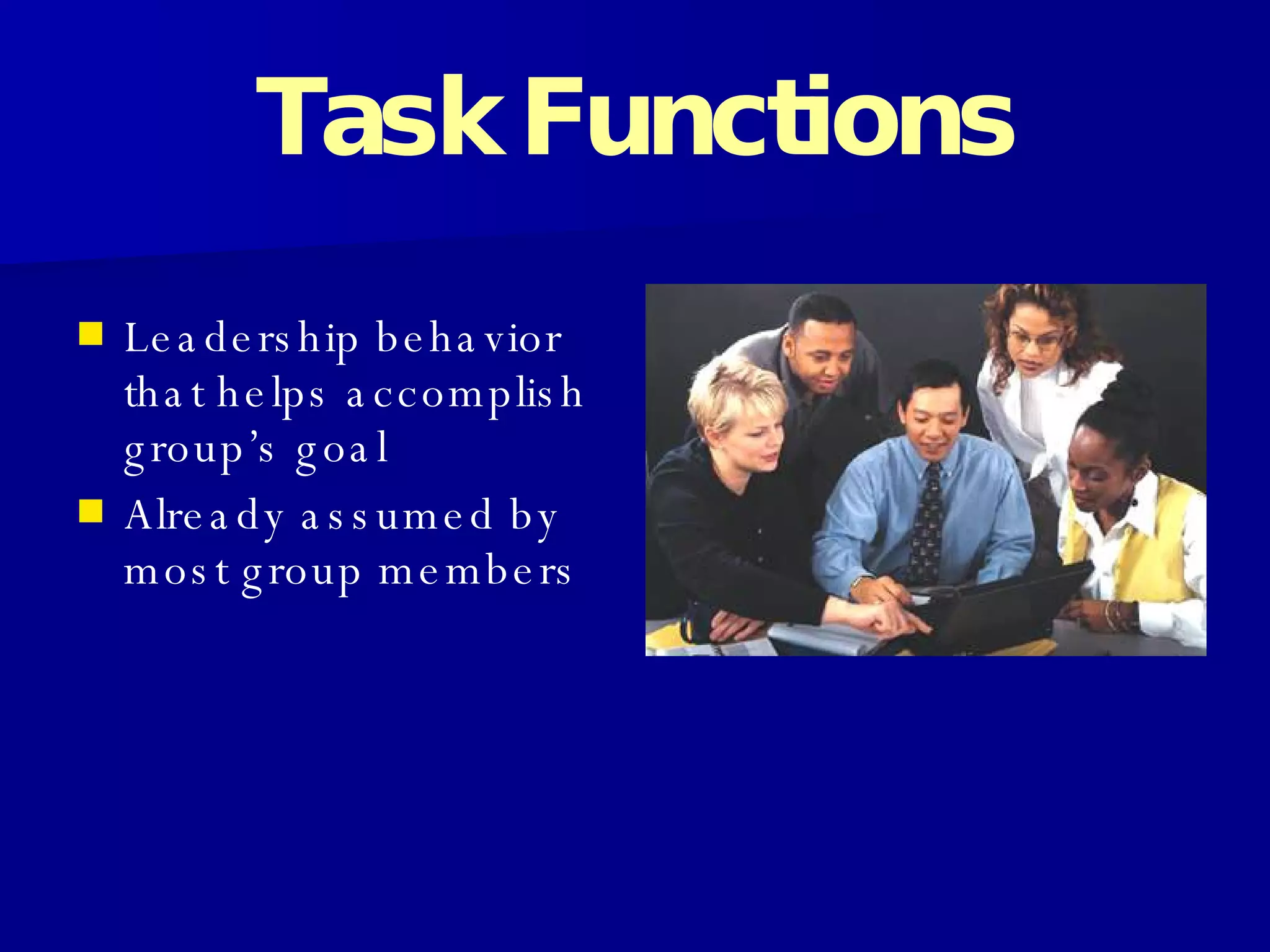
Task   Functions Leadership behavior that helps accomplish group’s goal Already assumed by most group members
Process   Functions Leadership behavior that helps maintain a positive group Usually, process functions are not formally assigned
Transformational Leadership The transformational leader influences the group by transforming the group  giving it a new vision  energizing the culture  giving the group a new structure
Transformational Leadership Peter Senge’s rules in transformational leadership Build a shared vision  Challenge existing ways of thinking  Be a system thinker
Transformational Leadership The transformational leader is unique because of the ability to paint a picture of the future for the group members
Transformational Leadership Establish quality interpersonal relationships with each other    - Provide inspiration - Motivation - Intellectual    stimulation

Leadership Ppt

  • 1.
    Enhancing Group and Team Leadership Joe, Naomi, Katie, Erica, Lee, and Chris May 5, 2006
  • 2.
    Leadership Styles ApproachTrait Approach Situational Approach Paul Hersey and Ken Blanchard Functional Approach Transformational Approach
  • 3.
    Three Styles ApproachDoor number 1 Door number 2 Door number 3
  • 4.
    Door Number 1: Authoritarian Who put him in charge? Who makes the decisions? Does anyone get a say?
  • 5.
    Door Number 2: Democratic What do YOU think? Wow! That was a really good idea! Thank you all for working together!
  • 6.
    Door Number 3: Laissez-faire Bored and unresponsive Whatever attitude Nothing gets accomplished
  • 7.
    Leadership Traits Physical Social Personality
  • 8.
    Physical Make agood first impression Appearance isn’t everything
  • 9.
    Social Charismatic CharmingTactful Popular Cooperative Diplomatic
  • 10.
    Personality Self confidenceAmbition Taking the initiative Responsibility No guarantees
  • 11.
    Situational Approach Three key factors to determine the most effective leadership style. Most often used to train managers in corporate settings
  • 12.
    Three Key Factors Relationship Behavior Task Behavior Maturity
  • 13.
    Style of Leader Once these factors are considered leaders are able to gauge what style of leadership to use Four styles of leaders Participating Selling Delegating Telling
  • 14.
  • 15.
    Functional Approach Task Needs Team Maintenance Needs Individual Needs
  • 16.
    Task Functions Leadership behavior that helps accomplish group’s goal Already assumed by most group members
  • 17.
    Process Functions Leadership behavior that helps maintain a positive group Usually, process functions are not formally assigned
  • 18.
    Transformational Leadership Thetransformational leader influences the group by transforming the group giving it a new vision energizing the culture giving the group a new structure
  • 19.
    Transformational Leadership PeterSenge’s rules in transformational leadership Build a shared vision Challenge existing ways of thinking Be a system thinker
  • 20.
    Transformational Leadership Thetransformational leader is unique because of the ability to paint a picture of the future for the group members
  • 21.
    Transformational Leadership Establishquality interpersonal relationships with each other - Provide inspiration - Motivation - Intellectual stimulation