Launching Krispy Natural:
Cracking the Product
Management Code
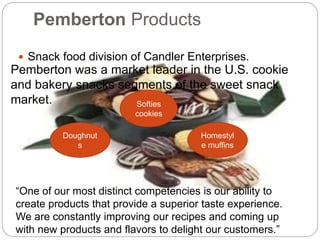
Pemberton Products
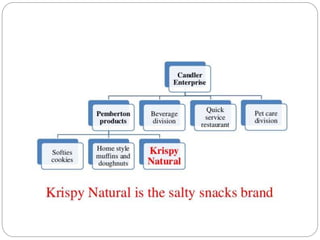
 Snack food division of Candler Enterprises.
Softies
cookies
Homestyl
e muffins
Doughnut
s
Pemberton was a market leader in the U.S. cookie
and bakery snacks segments of the sweet snack
market.
“One of our most distinct competencies is our ability to
create products that provide a superior taste experience.
We are constantly improving our recipes and coming up
with new products and flavors to delight our customers.”
AIMS OF PEMBERTON
 Direct store delivery (DSD) distribution
system cost Pemberton approximately
20 cents of every sales dollar.
 (1) building a collection of attractive,
durable brands
(2) leveraging leading marketing,
sales and DSD systems to increase
revenue and profits;
(3) building or acquiring capabilities in
salty snack categories.
SITUATAION
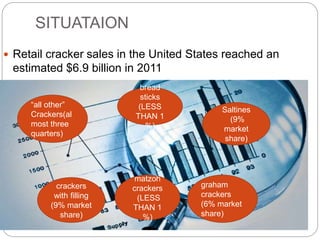
 Retail cracker sales in the United States reached an
estimated $6.9 billion in 2011
“all other”
Crackers(al
most three
quarters)
Saltines
(9%
market
share)
crackers
with filling
(9% market
share)
graham
crackers
(6% market
share)
bread
sticks
(LESS
THAN 1
%)
matzoh
crackers
(LESS
THAN 1
%)
 crackers faced significant competition from
other snack foods alternatives, consumption
of crackers was frequent and regular.
 74% respondents consumed crackers
on a regular basis
34% part of regular weekly diet.
 Top three U.S. cracker manufacturers were
Kraft Food Inc. (Nabisco brands), Kellogg
Co (Sunshine, Keebler, Carrs and Austin
brands), and Pepperidge Farm (Goldfish
brands).
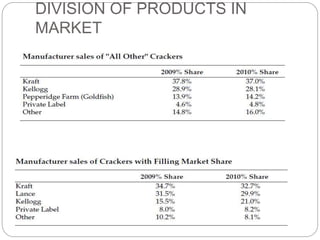
DIVISION OF PRODUCTS IN
MARKET
Challenges Ahead for Pemberton
 Holding the monopoly in market in the U.S. cookie
and bakery snacks segments of the sweet snack
market, entering the cracker industries might appeal
to people but if the performance is unsatisfactory they
might lose their well established market in both the
segments
 Their product line should suit the requirements of
people
 To compete with existing brands, they’d have to
regulate their prices
 Quality and innovation
 Advertisements strategies
WorkFlow of PEMBERTON
 Acquisition of Krispy Inc. that operated three production
plants and competed in the crackers-with-filling and “all
other" cracker segments.
 Krispy was a regional brand with distribution focused
primarily in the Southeastern United States.
 Six round toasted cracker sandwiches with cheese
filling, available in 3 flavor options.
 Offered a flat cracker sold in 1.5 ounce bags with 2
flavor options.
 “Grab and Go” snacks with a strong presence in
vending machines and convenience stores.
But product fell short of management projections
Strategies of Relaunching of
Krispy:
 Market research suggested consumer
dissatisfaction with the flavor and taste
experience of current cracker brands.
 So R&D labs were engaged to improve
the product taste and quality.
 Rebranding of the product to Krispy
Natural.
 Multiple-serving package sizes and
more flavor options to compete with
established brands.
Krispy Natural Marketing Strategy
 Product- increasing
package sizes to multiple-
servings and improving
taste.
 Cracker with filling
White Cheddar, Smoked
Gouda, Chipotle Cheddar,
Creamy Swiss, Tomato
Basil, and Vegetable Herb.
 Flat cracker flavors
Cracked Pepper & Olive
Oil, Sundried Tomato,
Smoked Cheddar, and
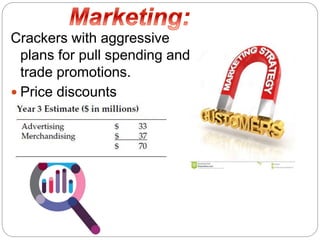
Crackers with aggressive
plans for pull spending and
trade promotions.
 Price discounts
DSD distribution is a critical component in
the overall Krispy Natural program strategy
optimize the system to account for the
longer shelf life of crackers
Retail price for each package would
be similar to competitors in the
category, but there would be less
quantity or weight in the Krispy
Natural package.
What it would mean if one of the
biggest, most successful salty-
snack marketers moved into the
space at the same time?
Having gained the confidence of
people in regional market, Krispy
was gaining popularity.
 Through it’s well designed
advertisements, sampling, dealing,
and coupons, it became a well
known brand but was to compete
with a new range of product line of
Frito-lay which was a well
 Krispy was a new name so people would
have wanted to taste it. It could only compete
with frito if it’s quality, flavors and innovative
ideas could satisfy people.
 This would lead to gaining of popularity of the
product. It should go ahead with it’s strategies
of offer and deals to attract more consumers
and then should assure the quality to be
worth trying again.
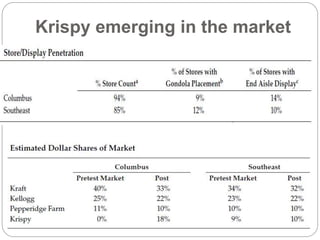
Krispy emerging in the market
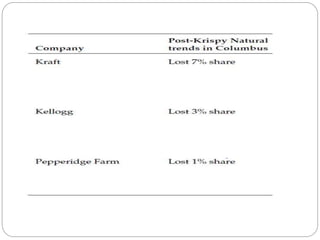
 The data shows that the Krispy
was a potential blockbuster as
it had already begun to disturb
the current markets shares.
 It had increased it’s
appearances in terms of shelf
coverage, market shares and
was a big competition for
leading brands which were
already existing.
 It spend heavily on
advertisement which worked in
it’s favour tremendously.
WHAT SHOULD BE NATIONAL
ROLLOUT STRATEGIES?
 Increase trade spending and
consumer promotions
 Product line improvements
 Quality and brand reputation
 Improve direct store delivery (DSD)
distribution system in which
products were delivered directly to
retail outlets, bypassing retailer’s
warehouses and distribution
centers.
Launching krispy natural

Launching krispy natural

  • 1.
    Launching Krispy Natural: Crackingthe Product Management Code
  • 2.
    Pemberton Products  Snackfood division of Candler Enterprises. Softies cookies Homestyl e muffins Doughnut s Pemberton was a market leader in the U.S. cookie and bakery snacks segments of the sweet snack market. “One of our most distinct competencies is our ability to create products that provide a superior taste experience. We are constantly improving our recipes and coming up with new products and flavors to delight our customers.”
  • 4.
    AIMS OF PEMBERTON Direct store delivery (DSD) distribution system cost Pemberton approximately 20 cents of every sales dollar.  (1) building a collection of attractive, durable brands (2) leveraging leading marketing, sales and DSD systems to increase revenue and profits; (3) building or acquiring capabilities in salty snack categories.
  • 5.
    SITUATAION  Retail crackersales in the United States reached an estimated $6.9 billion in 2011 “all other” Crackers(al most three quarters) Saltines (9% market share) crackers with filling (9% market share) graham crackers (6% market share) bread sticks (LESS THAN 1 %) matzoh crackers (LESS THAN 1 %)
  • 6.
     crackers facedsignificant competition from other snack foods alternatives, consumption of crackers was frequent and regular.  74% respondents consumed crackers on a regular basis 34% part of regular weekly diet.  Top three U.S. cracker manufacturers were Kraft Food Inc. (Nabisco brands), Kellogg Co (Sunshine, Keebler, Carrs and Austin brands), and Pepperidge Farm (Goldfish brands).
  • 7.
  • 8.
    Challenges Ahead forPemberton  Holding the monopoly in market in the U.S. cookie and bakery snacks segments of the sweet snack market, entering the cracker industries might appeal to people but if the performance is unsatisfactory they might lose their well established market in both the segments  Their product line should suit the requirements of people  To compete with existing brands, they’d have to regulate their prices  Quality and innovation  Advertisements strategies
  • 9.
    WorkFlow of PEMBERTON Acquisition of Krispy Inc. that operated three production plants and competed in the crackers-with-filling and “all other" cracker segments.  Krispy was a regional brand with distribution focused primarily in the Southeastern United States.  Six round toasted cracker sandwiches with cheese filling, available in 3 flavor options.  Offered a flat cracker sold in 1.5 ounce bags with 2 flavor options.  “Grab and Go” snacks with a strong presence in vending machines and convenience stores. But product fell short of management projections
  • 10.
    Strategies of Relaunchingof Krispy:  Market research suggested consumer dissatisfaction with the flavor and taste experience of current cracker brands.  So R&D labs were engaged to improve the product taste and quality.  Rebranding of the product to Krispy Natural.  Multiple-serving package sizes and more flavor options to compete with established brands.
  • 11.
    Krispy Natural MarketingStrategy  Product- increasing package sizes to multiple- servings and improving taste.  Cracker with filling White Cheddar, Smoked Gouda, Chipotle Cheddar, Creamy Swiss, Tomato Basil, and Vegetable Herb.  Flat cracker flavors Cracked Pepper & Olive Oil, Sundried Tomato, Smoked Cheddar, and
  • 12.
    Crackers with aggressive plansfor pull spending and trade promotions.  Price discounts
  • 13.
    DSD distribution isa critical component in the overall Krispy Natural program strategy optimize the system to account for the longer shelf life of crackers
  • 14.
    Retail price foreach package would be similar to competitors in the category, but there would be less quantity or weight in the Krispy Natural package.
  • 15.
    What it wouldmean if one of the biggest, most successful salty- snack marketers moved into the space at the same time? Having gained the confidence of people in regional market, Krispy was gaining popularity.  Through it’s well designed advertisements, sampling, dealing, and coupons, it became a well known brand but was to compete with a new range of product line of Frito-lay which was a well
  • 16.
     Krispy wasa new name so people would have wanted to taste it. It could only compete with frito if it’s quality, flavors and innovative ideas could satisfy people.  This would lead to gaining of popularity of the product. It should go ahead with it’s strategies of offer and deals to attract more consumers and then should assure the quality to be worth trying again.
  • 18.
  • 20.
     The datashows that the Krispy was a potential blockbuster as it had already begun to disturb the current markets shares.  It had increased it’s appearances in terms of shelf coverage, market shares and was a big competition for leading brands which were already existing.  It spend heavily on advertisement which worked in it’s favour tremendously.
  • 21.
    WHAT SHOULD BENATIONAL ROLLOUT STRATEGIES?  Increase trade spending and consumer promotions  Product line improvements  Quality and brand reputation  Improve direct store delivery (DSD) distribution system in which products were delivered directly to retail outlets, bypassing retailer’s warehouses and distribution centers.