Intermediate-level Culture         LANGUAGEAnna, Eric, Vasu and Maiko
Slang TermsBy: Eric Heidel
Def. for Slang and its UseSlang is the use of informal words that aren’t standard in one’s language. Who uses it?- Slang can be regionaloften particular to a certain subcultureWhy use it?- Humor- metaphors-Shorten words
Continued…Slangs differences in other culturesDifferent cultures use slang to shorten or cut off different parts of words.
Used everydayNormThe extent of slang- differs widely across…-Social,  ethnic, economic, and geographic section
Problems and Symbols of SlangSlang is symbolic -may be said to stand in an informal way for conventional ideasObject’s and namesProblems or conflicts with slangSlang is also used for terms that deal with…- violence, crimes drugs, and sex.
Tinglish
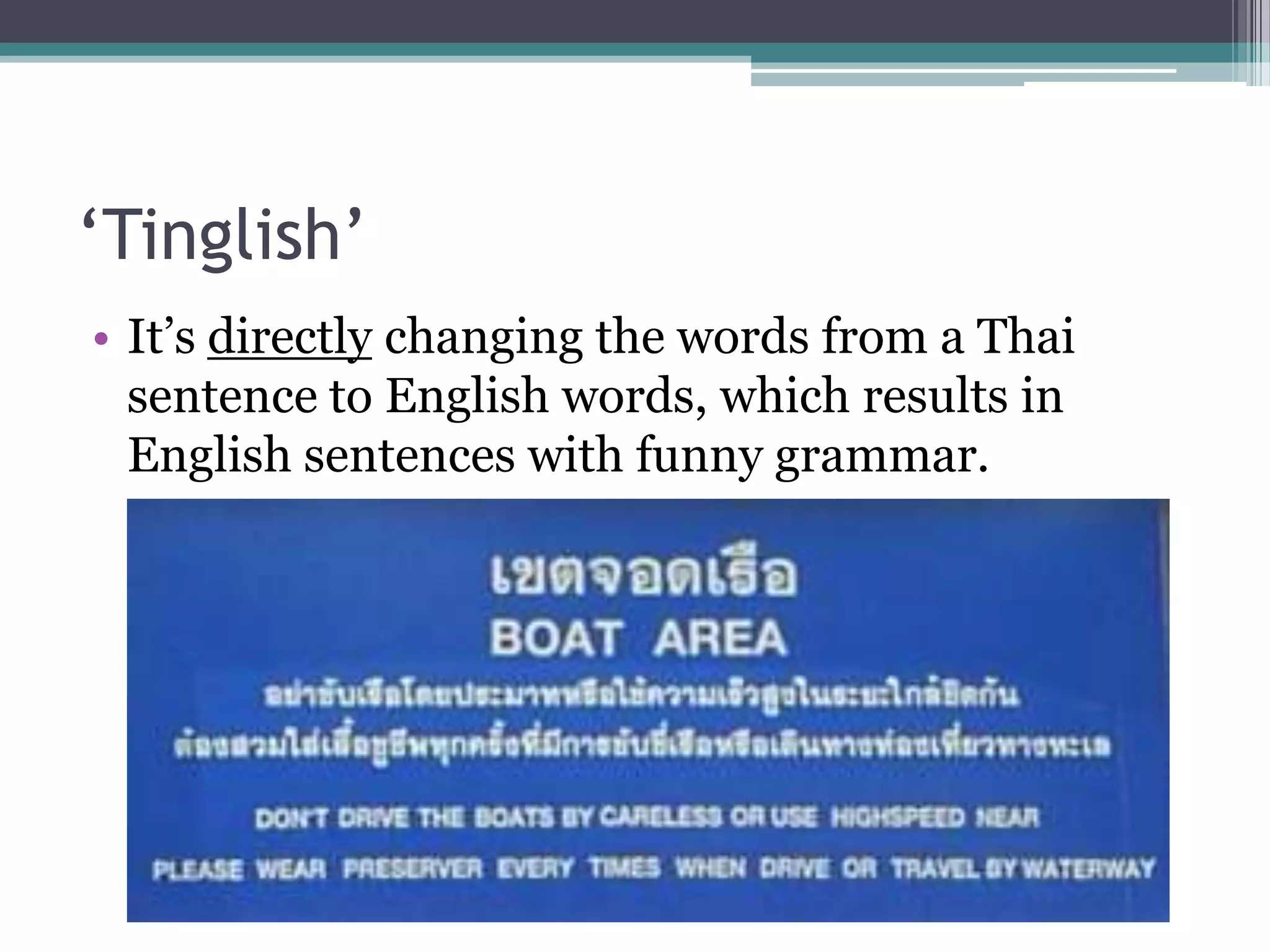
‘Tinglish’It’s directly changing the words from a Thai sentence to English words, which results in English sentences with funny grammar.
‘Tinglish’It’s the Thai’s adaptation to the increase in foreigner from tourism.Lack of EducationSurfaceDeep          Intermediate Tourism         Tinglish 
Possible ConflictsIt causes misunderstandings
Omission of Subject
Because  it contains indirect context basedJapanese
High Context CultureHigh context culture (developed in homogeneous nations) read non verbal expression Values
Example of Conflict Could not do homework because could not go back home yesterday.I could not do my homework because I did not go back to home yesterday.
How to Use Personal Pronouns in Japanese?EnglishJapaneseFather  son/ daughter“Come and play tennis with me.”Son/ daughter  father“Come and play tennis with me.”Father  son/daughter“Come and play tennis with ‘papa’.”Son/daughter  father“Come and play tennis with me.”
Family Tree
Personal Pronouns1.Why is it intermediate level?	It is language.2. Who shares it?	Japanese people3. What does it mean?Shows status/ authority4. What deep level culture aspect could be its source?Cultural value of respect from Confucius 5.How might it cause conflict?	Might cause misunderstanding between Japanese and foreigners

Language CCI ppt

  • 1.
    Intermediate-level Culture LANGUAGEAnna, Eric, Vasu and Maiko
  • 2.
  • 3.
    Def. for Slangand its UseSlang is the use of informal words that aren’t standard in one’s language. Who uses it?- Slang can be regionaloften particular to a certain subcultureWhy use it?- Humor- metaphors-Shorten words
  • 4.
    Continued…Slangs differences inother culturesDifferent cultures use slang to shorten or cut off different parts of words.
  • 5.
    Used everydayNormThe extentof slang- differs widely across…-Social,  ethnic, economic, and geographic section
  • 6.
    Problems and Symbolsof SlangSlang is symbolic -may be said to stand in an informal way for conventional ideasObject’s and namesProblems or conflicts with slangSlang is also used for terms that deal with…- violence, crimes drugs, and sex.
  • 7.
  • 8.
    ‘Tinglish’It’s directly changingthe words from a Thai sentence to English words, which results in English sentences with funny grammar.
  • 9.
    ‘Tinglish’It’s the Thai’sadaptation to the increase in foreigner from tourism.Lack of EducationSurfaceDeep Intermediate Tourism  Tinglish 
  • 10.
  • 11.
  • 12.
    Because itcontains indirect context basedJapanese
  • 13.
    High Context CultureHighcontext culture (developed in homogeneous nations) read non verbal expression Values
  • 14.
    Example of ConflictCould not do homework because could not go back home yesterday.I could not do my homework because I did not go back to home yesterday.
  • 15.
    How to UsePersonal Pronouns in Japanese?EnglishJapaneseFather  son/ daughter“Come and play tennis with me.”Son/ daughter  father“Come and play tennis with me.”Father  son/daughter“Come and play tennis with ‘papa’.”Son/daughter  father“Come and play tennis with me.”
  • 16.
  • 17.
    Personal Pronouns1.Why isit intermediate level? It is language.2. Who shares it? Japanese people3. What does it mean?Shows status/ authority4. What deep level culture aspect could be its source?Cultural value of respect from Confucius 5.How might it cause conflict? Might cause misunderstanding between Japanese and foreigners
  • 18.