How To Revise for
Language Analysis: Unit
3&4 English Exam
43
Three Sections
• Text Response
• Context
• Language Analysis
Language Analysis
What’s the link?
2010: “students who attempted to work laboriously
through every sentence found the task difficult.
Students needed to choose which parts of the material
they would use to explore the way in which language was
being used.”
2010: “Some responses were just simple summaries or
lists of the techniques used, with little development.
These pieces did not score well as they did not fulfil the
task.”
2011: In stronger responses, strategic selection, together
with well-developed précis skills, allowed students to
demonstrate their language analysis skills.
Skills vs.
Knowledge
Language Analysis
• 10-15 minutes of practice every 1-3 days
will make more impact than ‘cramming’ in
SWOTVac.
Language Analysis
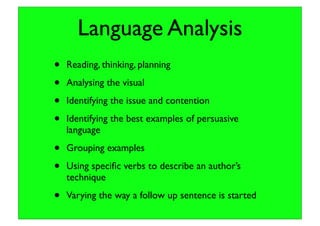
• Reading, thinking, planning
• Analysing the visual
• Identifying the issue and contention
• Identifying the best examples of persuasive
language
• Grouping examples
• Using specific verbs to describe an author’s
technique
• Varying the way a follow up sentence is started
Bring a dictionary
• We must, at the very least, be apprehensive
about this proposal.
Bring a dictionary
• The use of the word “apprehensive” brings
an association of doubt and mistrust in the
reader’s mind towards the idea.
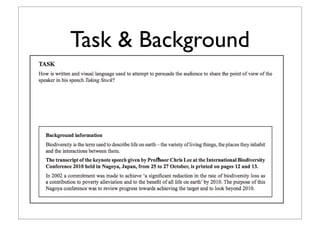
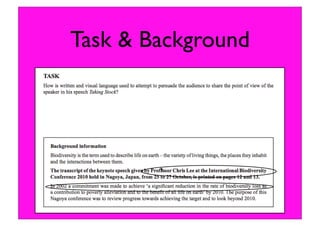
Task & Background
Task & Background
Identify
• Which quote best identifies the contention
• What is one persuasive phrase/sentence
used
Birmingham Library Speech - Malala
Yousafzai
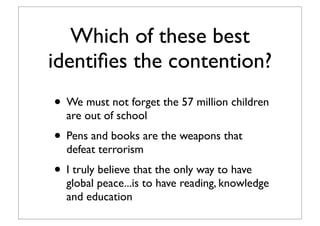
Which of these best
identifies the contention?
• We must not forget the 57 million children
are out of school
• Pens and books are the weapons that
defeat terrorism
• I truly believe that the only way to have
global peace...is to have reading, knowledge
and education
Which of these quotes
is the best example?
• A city without books... is like a graveyard
• We must not forget the 57 million children are out
of school
• We must speak up for peace and development in
Nigeria, Syria and Somalia
• We must speak up for the children of Pakistan,
India and Afghanistan who are suffering from
terrorism, poverty and child labour
Analysing language
• Joe Bloggs uses a rhetorical question when
they say “Are we all stupid”. Rhetorical
questions really only have one answer.
Students overuse these
phrases
• The author writes
• The writer says
• The author uses
• The author argues
• The author thinks
Analysing language
• Joe Bloggs challenges the audience with the
question:“Are we all stupid?” This challenge
confronts us with a black and white choice
- we can either accept that we are stupid,
or think that we are smart by agreeing with
Bloggs’ argument.
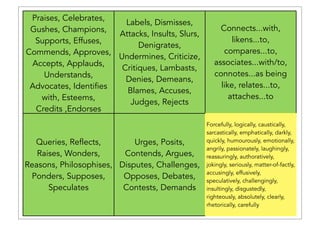
Praises, Celebrates,
Gushes, Champions,
Supports, Effuses,
Commends, Approves,
Accepts, Applauds,
Understands,
Advocates, Identifies
with, Esteems,
Credits ,Endorses
Labels, Dismisses,
Attacks, Insults, Slurs,
Denigrates,
Undermines, Criticize,
Critiques, Lambasts,
Denies, Demeans,
Blames, Accuses,
Judges, Rejects
Connects...with,
likens...to,
compares...to,
associates...with/to,
connotes...as being
like, relates...to,
attaches...to
Queries, Reflects,
Raises, Wonders,
Reasons, Philosophises,
Ponders, Supposes,
Speculates
Urges, Posits,
Contends, Argues,
Disputes, Challenges,
Opposes, Debates,
Contests, Demands
Forcefully, logically, caustically,
sarcastically, emphatically, darkly,
quickly, humourously, emotionally,
angrily, passionately, laughingly,
reassuringly, authoratively,
jokingly, seriously, matter-of-factly,
accusingly, effusively,
speculatively, challengingly,
insultingly, disgustedly,
righteously, absolutely, clearly,
rhetorically, carefully
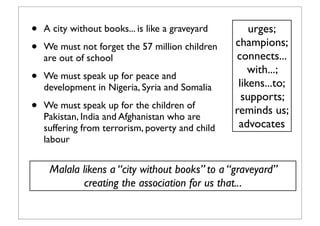
• A city without books... is like a graveyard
• We must not forget the 57 million children
are out of school
• We must speak up for peace and
development in Nigeria, Syria and Somalia
• We must speak up for the children of
Pakistan, India and Afghanistan who are
suffering from terrorism, poverty and child
labour
urges;
champions;
connects...
with...;
likens...to;
supports;
reminds us;
advocates
Malala likens a “city without books” to a “graveyard”
creating the association for us that...
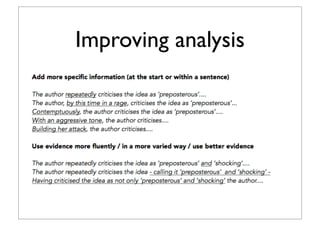
Improving analysis
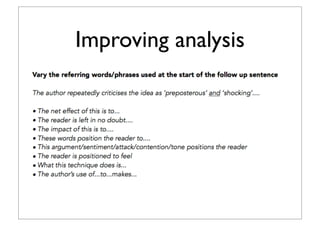
Improving analysis
Visual
• Our focus is captured by the visual when / at...
• The portrayal of...as...focuses our attention
because...
• ...is represented as...
• Re-inforces the point that...
• Supports the contention / argument that...
• The image visually captures the author’s argument
that...
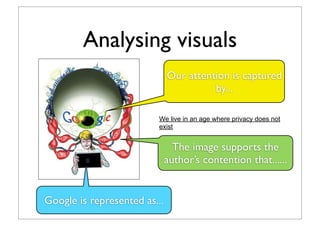
Analysing visuals
We live in an age where privacy does not
exist
Our attention is captured
by...
Google is represented as...
The image supports the
author’s contention that......
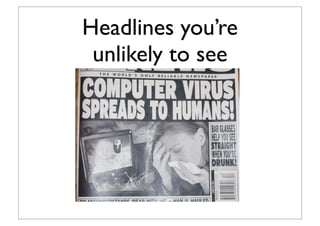
Headlines you’re
unlikely to see

Language analysis exam revision 2013

  • 1.
    How To Revisefor Language Analysis: Unit 3&4 English Exam
  • 2.
  • 3.
    Three Sections • TextResponse • Context • Language Analysis
  • 4.
  • 6.
    What’s the link? 2010:“students who attempted to work laboriously through every sentence found the task difficult. Students needed to choose which parts of the material they would use to explore the way in which language was being used.” 2010: “Some responses were just simple summaries or lists of the techniques used, with little development. These pieces did not score well as they did not fulfil the task.” 2011: In stronger responses, strategic selection, together with well-developed précis skills, allowed students to demonstrate their language analysis skills.
  • 7.
  • 8.
    Language Analysis • 10-15minutes of practice every 1-3 days will make more impact than ‘cramming’ in SWOTVac.
  • 9.
    Language Analysis • Reading,thinking, planning • Analysing the visual • Identifying the issue and contention • Identifying the best examples of persuasive language • Grouping examples • Using specific verbs to describe an author’s technique • Varying the way a follow up sentence is started
  • 10.
    Bring a dictionary •We must, at the very least, be apprehensive about this proposal.
  • 11.
    Bring a dictionary •The use of the word “apprehensive” brings an association of doubt and mistrust in the reader’s mind towards the idea.
  • 12.
  • 13.
  • 14.
    Identify • Which quotebest identifies the contention • What is one persuasive phrase/sentence used
  • 15.
    Birmingham Library Speech- Malala Yousafzai
  • 16.
    Which of thesebest identifies the contention? • We must not forget the 57 million children are out of school • Pens and books are the weapons that defeat terrorism • I truly believe that the only way to have global peace...is to have reading, knowledge and education
  • 17.
    Which of thesequotes is the best example? • A city without books... is like a graveyard • We must not forget the 57 million children are out of school • We must speak up for peace and development in Nigeria, Syria and Somalia • We must speak up for the children of Pakistan, India and Afghanistan who are suffering from terrorism, poverty and child labour
  • 18.
    Analysing language • JoeBloggs uses a rhetorical question when they say “Are we all stupid”. Rhetorical questions really only have one answer.
  • 19.
    Students overuse these phrases •The author writes • The writer says • The author uses • The author argues • The author thinks
  • 20.
    Analysing language • JoeBloggs challenges the audience with the question:“Are we all stupid?” This challenge confronts us with a black and white choice - we can either accept that we are stupid, or think that we are smart by agreeing with Bloggs’ argument.
  • 21.
    Praises, Celebrates, Gushes, Champions, Supports,Effuses, Commends, Approves, Accepts, Applauds, Understands, Advocates, Identifies with, Esteems, Credits ,Endorses Labels, Dismisses, Attacks, Insults, Slurs, Denigrates, Undermines, Criticize, Critiques, Lambasts, Denies, Demeans, Blames, Accuses, Judges, Rejects Connects...with, likens...to, compares...to, associates...with/to, connotes...as being like, relates...to, attaches...to Queries, Reflects, Raises, Wonders, Reasons, Philosophises, Ponders, Supposes, Speculates Urges, Posits, Contends, Argues, Disputes, Challenges, Opposes, Debates, Contests, Demands Forcefully, logically, caustically, sarcastically, emphatically, darkly, quickly, humourously, emotionally, angrily, passionately, laughingly, reassuringly, authoratively, jokingly, seriously, matter-of-factly, accusingly, effusively, speculatively, challengingly, insultingly, disgustedly, righteously, absolutely, clearly, rhetorically, carefully
  • 22.
    • A citywithout books... is like a graveyard • We must not forget the 57 million children are out of school • We must speak up for peace and development in Nigeria, Syria and Somalia • We must speak up for the children of Pakistan, India and Afghanistan who are suffering from terrorism, poverty and child labour urges; champions; connects... with...; likens...to; supports; reminds us; advocates Malala likens a “city without books” to a “graveyard” creating the association for us that...
  • 23.
  • 24.
  • 25.
    Visual • Our focusis captured by the visual when / at... • The portrayal of...as...focuses our attention because... • ...is represented as... • Re-inforces the point that... • Supports the contention / argument that... • The image visually captures the author’s argument that...
  • 26.
    Analysing visuals We livein an age where privacy does not exist Our attention is captured by... Google is represented as... The image supports the author’s contention that......
  • 27.