LANGUAGE ACQUISITION
• Raquel Caiza
• María Fernanda Navarrete
• Melanny Pruna
• Tania Rodriguez
• Fernanda Torres
• Mayta Vazques
CENTRAL UNIVERSITY OF
ECUADOR
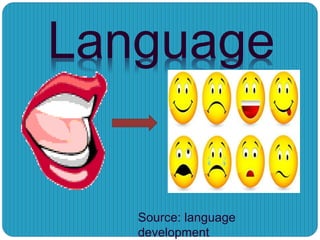
Language
Source: language
development
Acquisition
the act or process of achieving mastery
of a language or a
linguistic rule or element:
Source: Dictionary
reference
Language Acquisition
Refers to the process by which a person
learns a "foreign" language--that is, a
language other than his or her mother
tongue.
Source: Grammar about
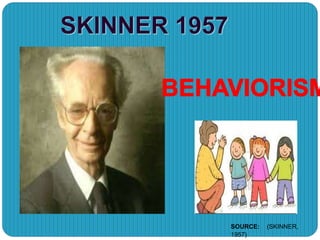
SOURCE: (SKINNER,
1957)
SOURCE:(CHOMSKY, 1965)
SOURCES: (CAMBRIDGE, 2011)
(ROWLAND & & Noble, 2010 )
IT REFERS TO THE MOTHER LANGUAGE
IT IS THE LANGUAGE THAT THE
PARENTS SPEAK IN THEIR HOUSE
MOTHER TONGUE
Stackexchange,2015
NATIVE LANGUAGE
IT IS THE FIRST LANGUAGE
ACQUIRED INTO THE SOCIETY
IT DEPENDS ON THE COUNTRY
Stackexchange,201
EXAMPLE:
A family of immigrants from Mexico to the
United States.
In their house and with family/friends they
may use Spanish. But at school,
restaurants, stores, etc they would use
English. In this case, the NATIVE
LANGUAGE IS ENGLISH and the
MOTHER TONGUE IS SPANISH.
Stackexchange,2
015
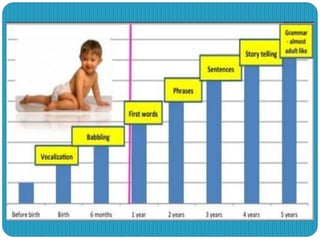
How do children
acquire a language?
Children acquire language
quickly, easily, and without
effort or formal teaching. It
happens automatically.
(Birner, B; LSA)
(Salah, A; 2013)
How do adults acquire a language?
Eslbase. znum16
PASHA, S. (2014) [Image]. Recovered from: http://4.bp.blogspot.com/BM8/eao31-
According to the main
ideas of Krashen "there
are two independent
systems of second
language performance:
the acquired system
and learning system.“
(Krashen, 2009, p. 10)
LANGUAGE
LEARNING
Is a subconscious proc
Conscious
knowledge of a
second
language.
(Krashen, 2009, p. 10)
PERSONAL EXPERIENCE
We as a students join with others creating
groups using some random method. The
advantage of this approach is that it’s a
good option to socialize or share ideas with
our partners. The method is also a good
one to use if you want make a learning
environment. However, it’s not a good
method if you want students working in
groups where there is a diversity of
backgrounds, experiences, and knowledge,
but we could establish a creative and
dynamic relationship between us to make
DIFFICULT TO SPEAK IN ENGLISH
It is a kind of difficult , because it is
depend of the society that we grow,
cultural aspects, in our cases
everybody speak in our tongue
mother that we learnt when we were
child and when we are young or old,
the language could be difficult to
learn.
 Betty Birner; LSA, Linguistic Society of America, s.f.
 http://www.linguisticsociety.org/resource/faq-how-do-we-
learn-language
 Amal Salah; Child and language develop, 2013
 http://www.slideshare.net/LamaAlbabtain/ss-18285383
 Stackexchange,2015
http://english.stackexchange.com/posts/146517/revisios
 Language develoment: language definition,
http://languagedevelopment.tripod.com/id2.html
 Dictionary.com: acquisition definition (linguistic),
http://dictionary.reference.com/browse/acquisition
NETGRAPHY
About education: language acquisition definition,
http://grammar.about.com/od/il/g/languageacquisitionterm.htm
CAMBRIDGE, B., & LIEVEN, E.V.M. (2011). Language Acquisition:
Contrasting theoretical approaches. Cambridge: Cambridge University
Press.
Retrieved from: www.simplypsychology.org/language.html
CHOMSKY, N. (1965). Aspects of the Theory of Syntax. MIT Press.
ROWLAND, C. F.; & Noble, C. L. (2010). The role of syntactic structure in
children’s sentence comprehension: Evidence from the dative. Language
Learning and Development, 7(1): 55-75.
SKINNER, B.F. (1957). Verbal Behavior. Acton, MA: Copley Publishing
Group.
http://www.eslbase.com/teaching/language-acquisition-adult-learners
https://www.um.es/tonosdigital/znum16/secciones/estudios--10-
Ensenanza.htm
Language acquisition by Raquel Caiza

Language acquisition by Raquel Caiza

  • 1.
    LANGUAGE ACQUISITION • RaquelCaiza • María Fernanda Navarrete • Melanny Pruna • Tania Rodriguez • Fernanda Torres • Mayta Vazques CENTRAL UNIVERSITY OF ECUADOR
  • 2.
  • 3.
    Acquisition the act orprocess of achieving mastery of a language or a linguistic rule or element: Source: Dictionary reference
  • 4.
    Language Acquisition Refers tothe process by which a person learns a "foreign" language--that is, a language other than his or her mother tongue. Source: Grammar about
  • 6.
  • 7.
  • 8.
  • 9.
    IT REFERS TOTHE MOTHER LANGUAGE IT IS THE LANGUAGE THAT THE PARENTS SPEAK IN THEIR HOUSE MOTHER TONGUE Stackexchange,2015
  • 10.
    NATIVE LANGUAGE IT ISTHE FIRST LANGUAGE ACQUIRED INTO THE SOCIETY IT DEPENDS ON THE COUNTRY Stackexchange,201
  • 11.
    EXAMPLE: A family ofimmigrants from Mexico to the United States. In their house and with family/friends they may use Spanish. But at school, restaurants, stores, etc they would use English. In this case, the NATIVE LANGUAGE IS ENGLISH and the MOTHER TONGUE IS SPANISH. Stackexchange,2 015
  • 12.
    How do children acquirea language? Children acquire language quickly, easily, and without effort or formal teaching. It happens automatically. (Birner, B; LSA)
  • 13.
  • 14.
    How do adultsacquire a language?
  • 15.
  • 16.
    PASHA, S. (2014)[Image]. Recovered from: http://4.bp.blogspot.com/BM8/eao31-
  • 17.
    According to themain ideas of Krashen "there are two independent systems of second language performance: the acquired system and learning system.“ (Krashen, 2009, p. 10)
  • 18.
    LANGUAGE LEARNING Is a subconsciousproc Conscious knowledge of a second language. (Krashen, 2009, p. 10)
  • 19.
    PERSONAL EXPERIENCE We asa students join with others creating groups using some random method. The advantage of this approach is that it’s a good option to socialize or share ideas with our partners. The method is also a good one to use if you want make a learning environment. However, it’s not a good method if you want students working in groups where there is a diversity of backgrounds, experiences, and knowledge, but we could establish a creative and dynamic relationship between us to make
  • 20.
    DIFFICULT TO SPEAKIN ENGLISH It is a kind of difficult , because it is depend of the society that we grow, cultural aspects, in our cases everybody speak in our tongue mother that we learnt when we were child and when we are young or old, the language could be difficult to learn.
  • 21.
     Betty Birner;LSA, Linguistic Society of America, s.f.  http://www.linguisticsociety.org/resource/faq-how-do-we- learn-language  Amal Salah; Child and language develop, 2013  http://www.slideshare.net/LamaAlbabtain/ss-18285383  Stackexchange,2015 http://english.stackexchange.com/posts/146517/revisios  Language develoment: language definition, http://languagedevelopment.tripod.com/id2.html  Dictionary.com: acquisition definition (linguistic), http://dictionary.reference.com/browse/acquisition NETGRAPHY
  • 22.
    About education: languageacquisition definition, http://grammar.about.com/od/il/g/languageacquisitionterm.htm CAMBRIDGE, B., & LIEVEN, E.V.M. (2011). Language Acquisition: Contrasting theoretical approaches. Cambridge: Cambridge University Press. Retrieved from: www.simplypsychology.org/language.html CHOMSKY, N. (1965). Aspects of the Theory of Syntax. MIT Press. ROWLAND, C. F.; & Noble, C. L. (2010). The role of syntactic structure in children’s sentence comprehension: Evidence from the dative. Language Learning and Development, 7(1): 55-75. SKINNER, B.F. (1957). Verbal Behavior. Acton, MA: Copley Publishing Group. http://www.eslbase.com/teaching/language-acquisition-adult-learners https://www.um.es/tonosdigital/znum16/secciones/estudios--10- Ensenanza.htm