The Journey of
Language Acquisition &
Learning
In this presentation, we'll explore the differences between language
acquisition and language learning, theories behind language acquisition,
and strategies for effective language learning.
KH by Kashif Hussain
Language Acquisition vs.
Language Learning
1 Key Difference 👨👩👧👦
Language acquisition
occurs naturally, while
language learning is a
more structured process.
2 Primary Methods 🔍
Acquisition happens
through immersion and
constant surrounding of the
language, while learning
happens through study and
formal instruction.
3 Efficiency 💪
Acquiring a language is generally more efficient than learning one,
but it is dependent on individual factors.
Theories of Language Acquisition
1 Imitation Theory
Children learn from those around them through imitation, which supports the idea that
language is a learned skill.
2 Nativist Theory
Chomsky proposed that children have an innate ability to learn language and do so
naturally without requiring explicit instruction.
3 Interactionist Theory
Language learning is a social process that occurs through interacting with others, which
combines elements of both the imitation and nativist theories.
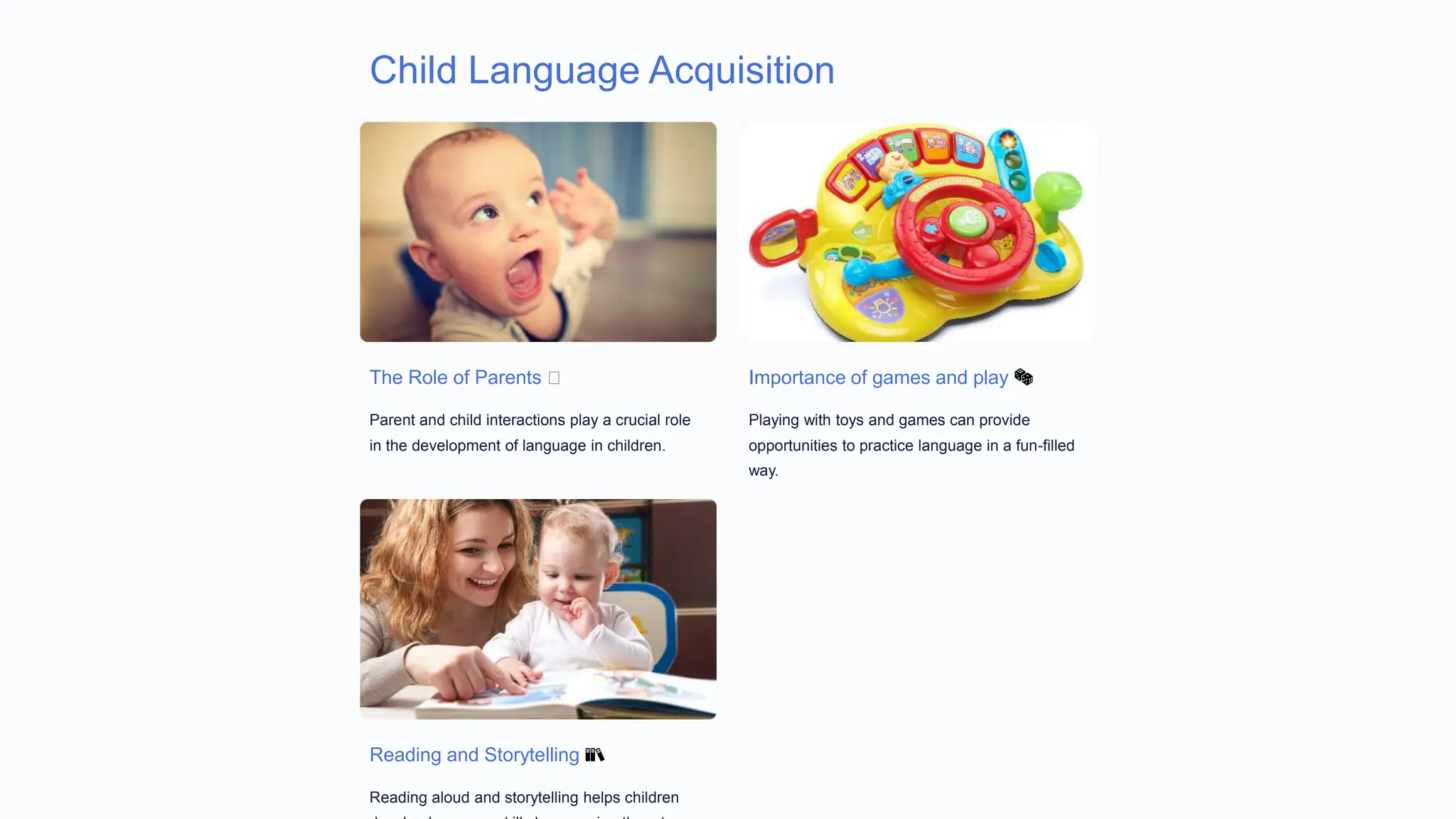
Child Language Acquisition
The Role of Parents 🤱
Parent and child interactions play a crucial role
in the development of language in children.
Importance of games and play 🎲
Playing with toys and games can provide
opportunities to practice language in a fun-filled
way.
Reading and Storytelling 📚
Reading aloud and storytelling helps children
Second Language Acquisition
Immersion 🌍
Being in a situation where the language is
spoken daily can facilitate rapid acquisition.
Practice 🗣🤱
The more opportunities to use the language,
the more fluent a learner will become.
Social Interaction 👥
Interacting with native speakers is crucial to
developing fluency and accuracy in the
language.
Cultural Understanding 🌎
Understanding cultural nuances can help
learners navigate language usage and make
meaningful connections with others.
Factors Influencing Language Acquisition
1 Motivation 🔥
Learners who are motivated to learn
the language tend to show greater
progress and success in their
language journey.
2
Age 🎂
Younger learners have an advantage,
as language learning ability decreases
as one ages. 3 Learning Environment 🏫
The learning environment can impact
motivation, as well as exposure to the
language and opportunities to use it.
Strategies for Language Learning
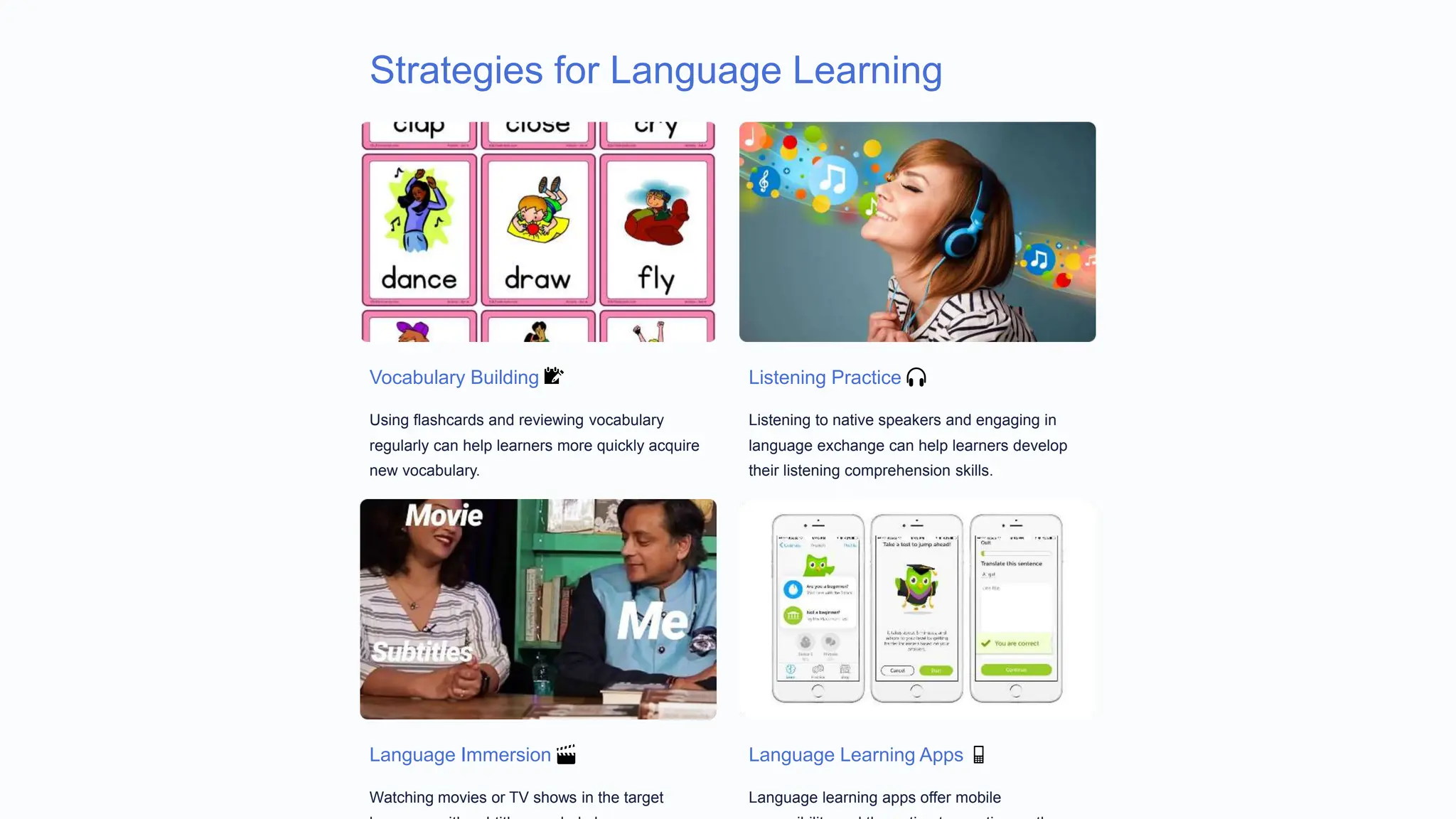
Vocabulary Building 📝
Using flashcards and reviewing vocabulary
regularly can help learners more quickly acquire
new vocabulary.
Listening Practice 🎧
Listening to native speakers and engaging in
language exchange can help learners develop
their listening comprehension skills.
Language Immersion 🎬
Watching movies or TV shows in the target
Language Learning Apps 📱
Language learning apps offer mobile
Conclusion
Language
acquisition is
natural.
It occurs when individuals are
exposed to the target
language regularly.
Language learning
requires structure.
Learners need to build
vocabulary and practice the
language regularly to develop
fluency.
Factors impact
language
acquisition and
learning.
Motivation, age, and learning
environment can all have an
impact on the success of
learners.

The-Journey-of-Language-Acquisition-and-Learning.pptx

  • 1.
    The Journey of LanguageAcquisition & Learning In this presentation, we'll explore the differences between language acquisition and language learning, theories behind language acquisition, and strategies for effective language learning. KH by Kashif Hussain
  • 2.
    Language Acquisition vs. LanguageLearning 1 Key Difference 👨👩👧👦 Language acquisition occurs naturally, while language learning is a more structured process. 2 Primary Methods 🔍 Acquisition happens through immersion and constant surrounding of the language, while learning happens through study and formal instruction. 3 Efficiency 💪 Acquiring a language is generally more efficient than learning one, but it is dependent on individual factors.
  • 3.
    Theories of LanguageAcquisition 1 Imitation Theory Children learn from those around them through imitation, which supports the idea that language is a learned skill. 2 Nativist Theory Chomsky proposed that children have an innate ability to learn language and do so naturally without requiring explicit instruction. 3 Interactionist Theory Language learning is a social process that occurs through interacting with others, which combines elements of both the imitation and nativist theories.
  • 4.
    Child Language Acquisition TheRole of Parents 🤱 Parent and child interactions play a crucial role in the development of language in children. Importance of games and play 🎲 Playing with toys and games can provide opportunities to practice language in a fun-filled way. Reading and Storytelling 📚 Reading aloud and storytelling helps children
  • 5.
    Second Language Acquisition Immersion🌍 Being in a situation where the language is spoken daily can facilitate rapid acquisition. Practice 🗣🤱 The more opportunities to use the language, the more fluent a learner will become. Social Interaction 👥 Interacting with native speakers is crucial to developing fluency and accuracy in the language. Cultural Understanding 🌎 Understanding cultural nuances can help learners navigate language usage and make meaningful connections with others.
  • 6.
    Factors Influencing LanguageAcquisition 1 Motivation 🔥 Learners who are motivated to learn the language tend to show greater progress and success in their language journey. 2 Age 🎂 Younger learners have an advantage, as language learning ability decreases as one ages. 3 Learning Environment 🏫 The learning environment can impact motivation, as well as exposure to the language and opportunities to use it.
  • 7.
    Strategies for LanguageLearning Vocabulary Building 📝 Using flashcards and reviewing vocabulary regularly can help learners more quickly acquire new vocabulary. Listening Practice 🎧 Listening to native speakers and engaging in language exchange can help learners develop their listening comprehension skills. Language Immersion 🎬 Watching movies or TV shows in the target Language Learning Apps 📱 Language learning apps offer mobile
  • 8.
    Conclusion Language acquisition is natural. It occurswhen individuals are exposed to the target language regularly. Language learning requires structure. Learners need to build vocabulary and practice the language regularly to develop fluency. Factors impact language acquisition and learning. Motivation, age, and learning environment can all have an impact on the success of learners.