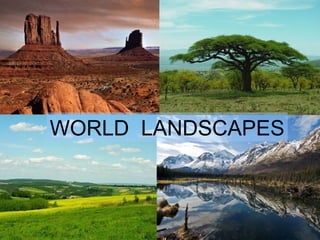
WORLD  LANDSCAPES
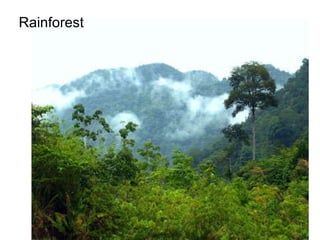
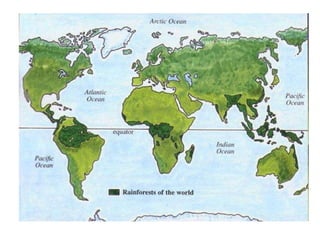
Rainforest
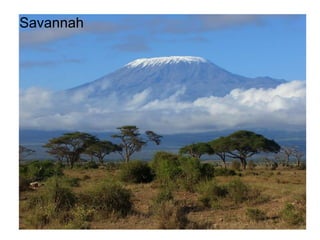
Savannah
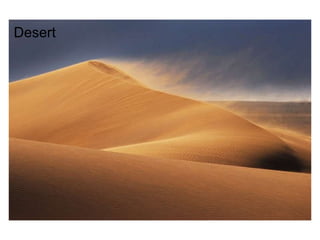
Desert
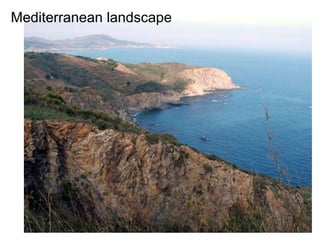
Mediterranean landscape
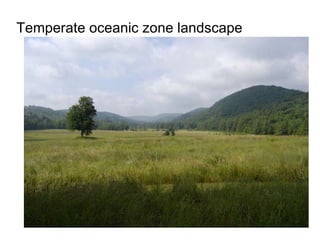
Temperate oceanic zone landscape
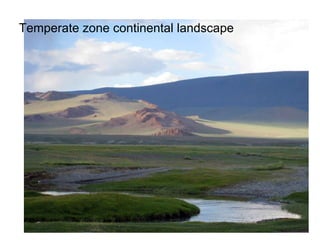
Temperate zone continental landscape
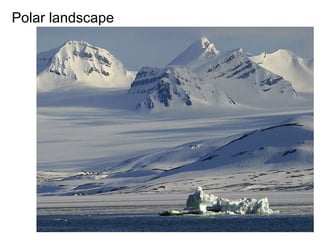
Polar landscape
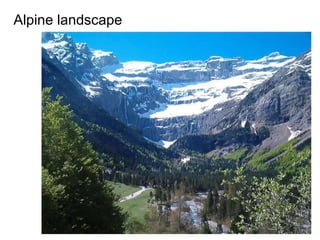
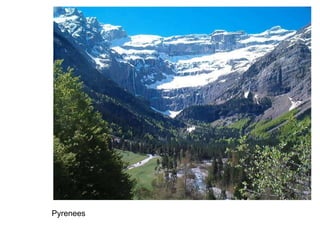
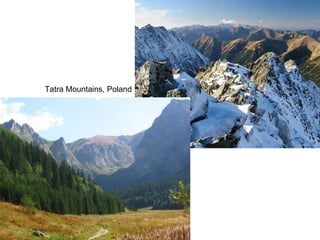
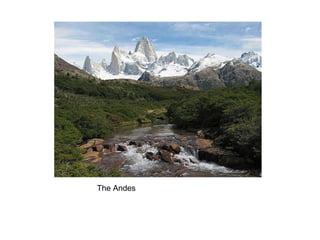
Alpine landscape
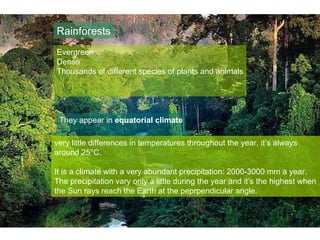
Rainforests Evergreen Dense Thousands of different species of plants and animals They appear in  equatorial climate very little differences in temperatures throughout the year, it’s always  around 25 ° C. It is a climate with a very abundant precipitation: 2000-3000 mm a year. The precipitation vary only a little during the year and it’s the highest when  the Sun rays reach the Earth at the peprpendicular angle.
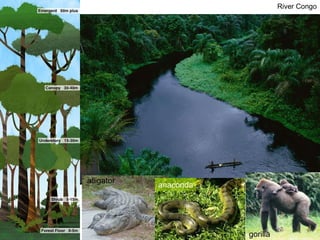
River Congo alligator anaconda gorilla
 
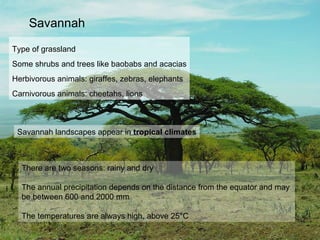
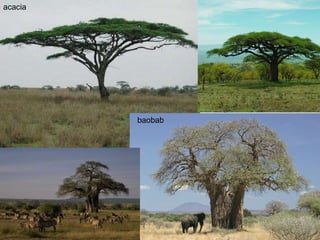
Savannah Type of grassland Some shrubs and trees like baobabs and acacias Herbivorous animals: giraffes, zebras, elephants Carnivorous animals: cheetahs, lions Savannah landscapes appear in  tropical climates There are two seasons: rainy and dry The annual precipitation depends on the distance from the equator and may  be between 600 and 2000 mm The temperatures are always high, above 25 ° C
acacia baobab
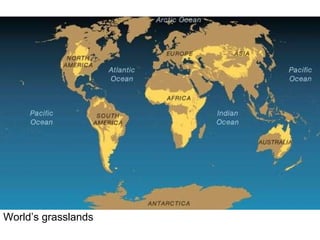
World’s grasslands
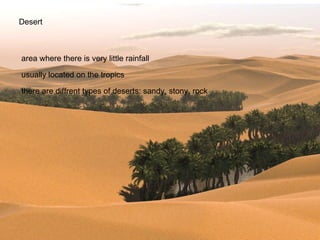
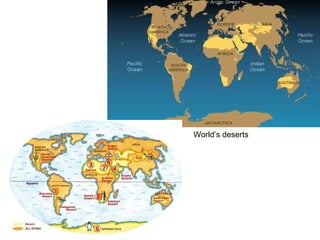
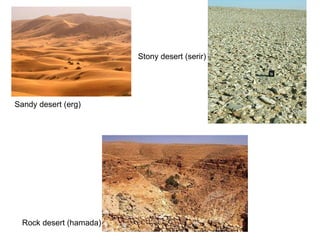
Desert area where there is very little rainfall usually located on the tropics there are diffrent types of deserts: sandy, stony, rock
World’s deserts
Sandy desert (erg) Stony desert (serir) Rock desert (hamada)
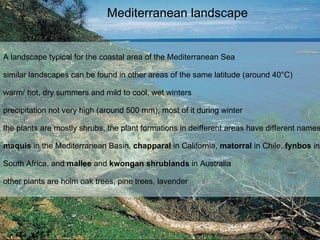
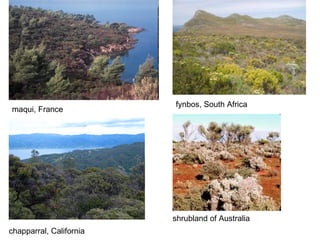
Mediterranean landscape A landscape typical for the coastal area of the Mediterranean Sea similar landscapes can be found in other areas of the same latitude (around 40 ° C) warm/ hot, dry summers and mild to cool, wet winters  precipitation not very high (around 500 mm), most of it during winter the plants are mostly shrubs, the plant formations in deifferent areas have different names: maquis  in the Mediterranean Basin,  chapparal  in California,  matorral  in Chile,  fynbos  in South Africa, and  mallee  and  kwongan shrublands  in Australia  other plants are holm oak trees, pine trees, lavender
fynbos, South Africa maqui, France chapparral, California shrubland of Australia
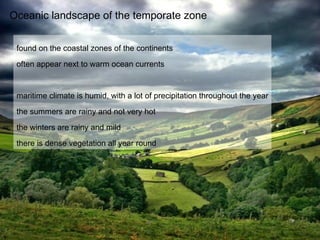
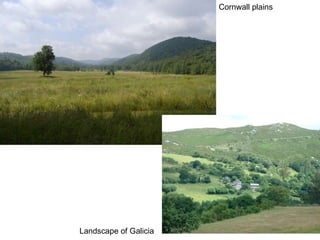
Oceanic landscape of the temporate zone found on the coastal zones of the continents often appear next to warm ocean currents maritime climate is humid, with a lot of precipitation throughout the year the summers are rainy and not very hot the winters are rainy and mild there is dense vegetation all year round
Cornwall plains Landscape of Galicia
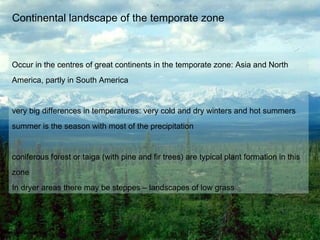
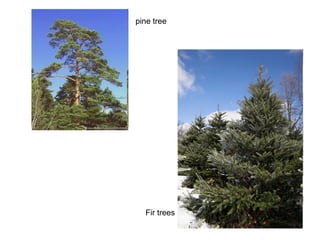
Continental landscape of the temporate zone Occur in the centres of great continents in the temporate zone: Asia and North America, partly in South America very big differences in temperatures: very cold and dry winters and hot summers summer is the season with most of the precipitation  coniferous forest or taiga (with pine and fir trees) are typical plant formation in this zone In dryer areas there may be steppes – landscapes of low grass
pine tree Fir trees
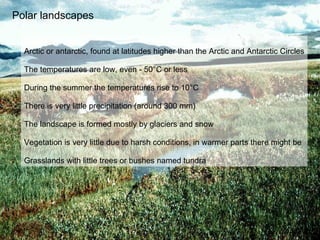
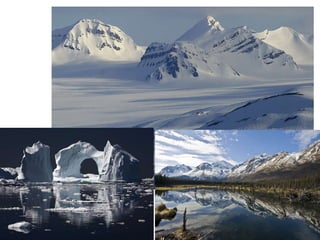
Polar landscapes Arctic or antarctic, found at latitudes higher than the Arctic and Antarctic Circles The temperatures are low, even - 50 ° C or less During the summer the temperatures rise to 10 ° C There is very little precipitation (around 300 mm) The landscape is formed mostly by glaciers and snow Vegetation is very little due to harsh conditions, in warmer parts there might be  Grasslands with little trees or bushes named tundra
 
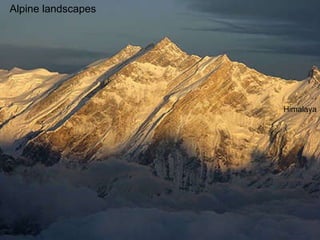
Alpine landscapes Himalaya
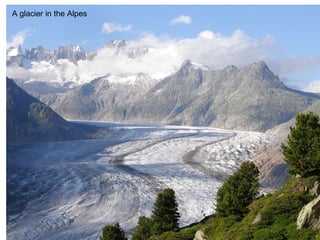
A glacier in the Alpes
Pyrenees
Tatra Mountains, Poland
The Andes

Landscapes

  • 1.
  • 2.
  • 3.
  • 4.
  • 5.
  • 6.
  • 7.
  • 8.
  • 9.
  • 10.
    Rainforests Evergreen DenseThousands of different species of plants and animals They appear in equatorial climate very little differences in temperatures throughout the year, it’s always around 25 ° C. It is a climate with a very abundant precipitation: 2000-3000 mm a year. The precipitation vary only a little during the year and it’s the highest when the Sun rays reach the Earth at the peprpendicular angle.
  • 11.
    River Congo alligatoranaconda gorilla
  • 12.
  • 13.
    Savannah Type ofgrassland Some shrubs and trees like baobabs and acacias Herbivorous animals: giraffes, zebras, elephants Carnivorous animals: cheetahs, lions Savannah landscapes appear in tropical climates There are two seasons: rainy and dry The annual precipitation depends on the distance from the equator and may be between 600 and 2000 mm The temperatures are always high, above 25 ° C
  • 14.
  • 15.
  • 16.
    Desert area wherethere is very little rainfall usually located on the tropics there are diffrent types of deserts: sandy, stony, rock
  • 17.
  • 18.
    Sandy desert (erg)Stony desert (serir) Rock desert (hamada)
  • 19.
    Mediterranean landscape Alandscape typical for the coastal area of the Mediterranean Sea similar landscapes can be found in other areas of the same latitude (around 40 ° C) warm/ hot, dry summers and mild to cool, wet winters precipitation not very high (around 500 mm), most of it during winter the plants are mostly shrubs, the plant formations in deifferent areas have different names: maquis in the Mediterranean Basin, chapparal in California, matorral in Chile, fynbos in South Africa, and mallee and kwongan shrublands in Australia other plants are holm oak trees, pine trees, lavender
  • 20.
    fynbos, South Africamaqui, France chapparral, California shrubland of Australia
  • 21.
    Oceanic landscape ofthe temporate zone found on the coastal zones of the continents often appear next to warm ocean currents maritime climate is humid, with a lot of precipitation throughout the year the summers are rainy and not very hot the winters are rainy and mild there is dense vegetation all year round
  • 22.
  • 23.
    Continental landscape ofthe temporate zone Occur in the centres of great continents in the temporate zone: Asia and North America, partly in South America very big differences in temperatures: very cold and dry winters and hot summers summer is the season with most of the precipitation coniferous forest or taiga (with pine and fir trees) are typical plant formation in this zone In dryer areas there may be steppes – landscapes of low grass
  • 24.
  • 25.
    Polar landscapes Arcticor antarctic, found at latitudes higher than the Arctic and Antarctic Circles The temperatures are low, even - 50 ° C or less During the summer the temperatures rise to 10 ° C There is very little precipitation (around 300 mm) The landscape is formed mostly by glaciers and snow Vegetation is very little due to harsh conditions, in warmer parts there might be Grasslands with little trees or bushes named tundra
  • 26.
  • 27.
  • 28.
    A glacier inthe Alpes
  • 29.
  • 30.
  • 31.