Reading
Strategie
s
MARIEL ANN D. EVANGELISTA
Teacher I
Objectives
:
Determine the
appropriate reading
method for learners to
use in the classroom.
struggling reader in
your class?
As a language teacher,
what method did you
employ?
Reading strategy means…
techniques that teachers use to help students
improve their reading skills.
They target different skill sets and areas of
knowledge that involve reading, such as
vocabulary, spelling ability, comprehension, critical
analysis and language articulation.
Research-Based
Reading Strategies
to Use in Your
Classroom
1. Reading Aloud
 is one of the most important things parents and
teachers can do with children. Reading aloud builds
many important foundational skills, introduces
vocabulary, provides a model of fluent, expressive
reading, and helps children recognize what reading
for pleasure is all about.
 Reading aloud is the foundation for literacy development.
It is the single most important activity for reading success.
success.
(Bredekamp, Copple, & Neuman, 2000).
It provides children with a demonstration of phrased,
fluent reading (Fountas & Pinnell, 1996).
It reveals the rewards of reading, and develops the
listener's interest in books and desire to be a reader
(Mooney, 1990).
Why use read-aloud?
 Reading aloud demonstrates the
relationship between the printed word and
meaning – learners understand that print
tells a story or conveys information – and
invites the listener into a conversation
with the author.
2. Graphic Organizers
 are types of scaffolding that some students require in order
to make sense of what they're reading. They don't have to be
fancy or include funny clipart (in fact, the more streamlined,
the better for some kids!).
 A simple T-chart for problem and solution, for example, along
with keywords students might encounter in that
type of text, are all that is needed to
support some readers.
T - chart samples
3. Shared Reading
 an interactive reading experience that
occurs when students join in or share the
reading of a book or other text while guided
and supported by a teacher.
used individually, small groups and as a
whole class
Shared Reading
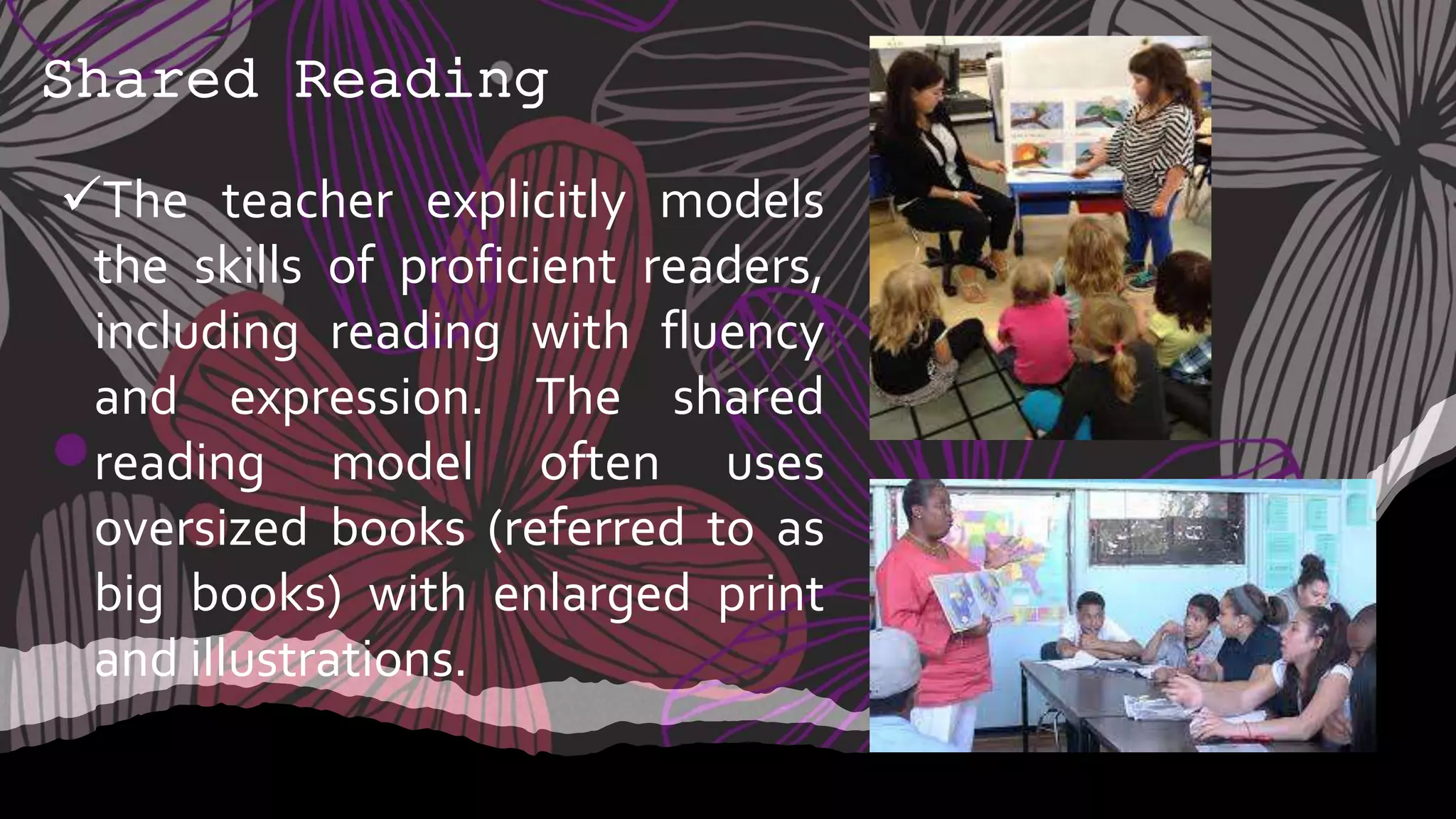
The teacher explicitly models
the skills of proficient readers,
including reading with fluency
and expression. The shared
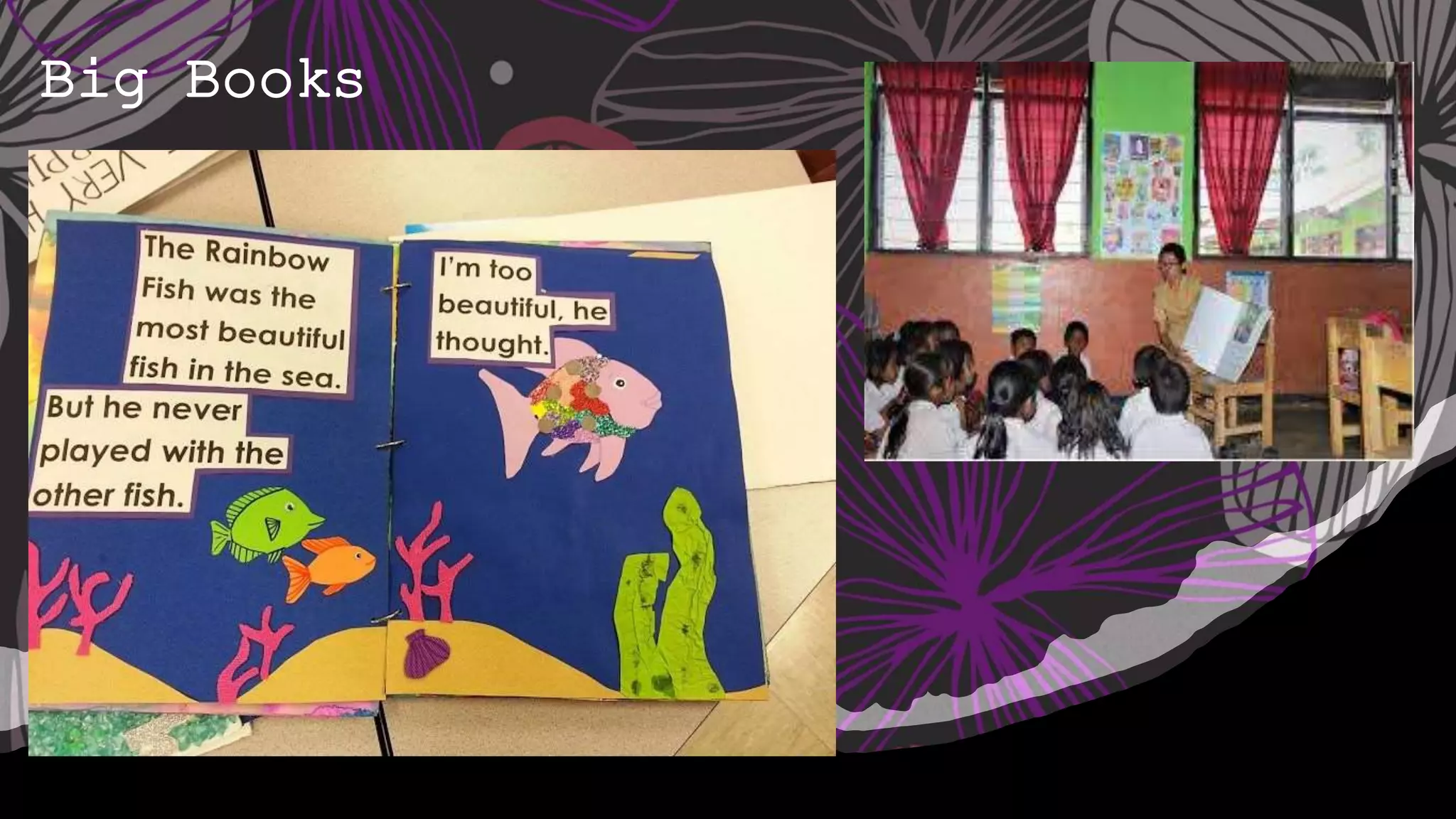
reading model often uses
oversized books (referred to as
big books) with enlarged print
and illustrations.
Big Books
Why use shared reading?
 It provides struggling readers with necessary
support.
 Allows students to enjoy materials that they
may not be able to read on their own.
 Ensures that all students feel successful
by providing support to the entire group.
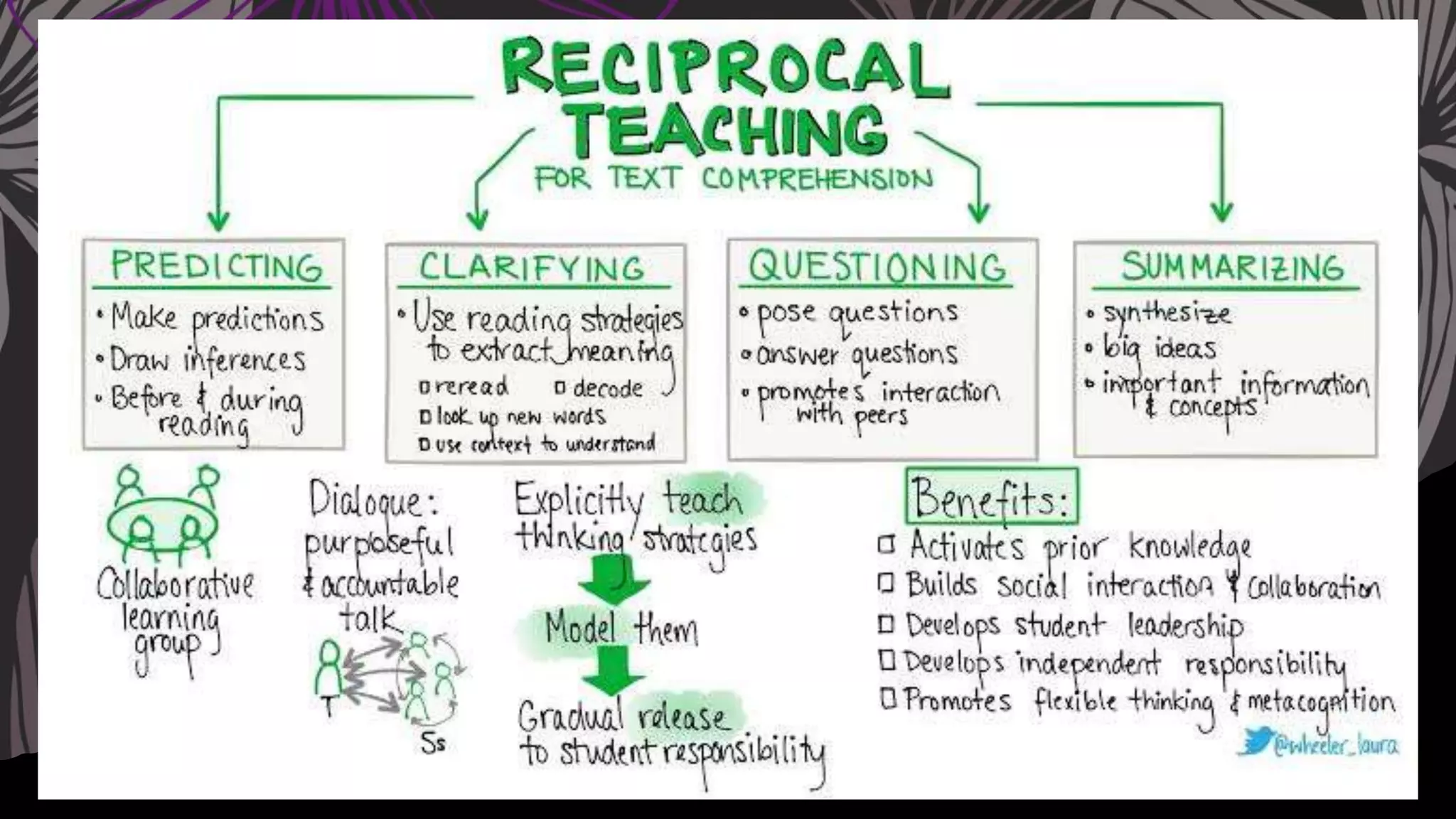
4. Reciprocal
Teaching
refers to an instructional activity in which students become
the teacher in small group reading sessions.
Teachers model, then help students learn to guide group
discussions using four strategies: summarizing, question
generating, clarifying, and predicting.
Once students have learned the strategies, they take turns
assuming the role of teacher in leading a dialogue about
what has been read.
Why use reciprocal teaching?
 It encourages students to think about their own
thought process during reading.
 It helps students learn to be actively involved and
monitor their comprehension as they read.
 It teaches students to ask questions during reading
and helps make the text more comprehensible.
5. Inference
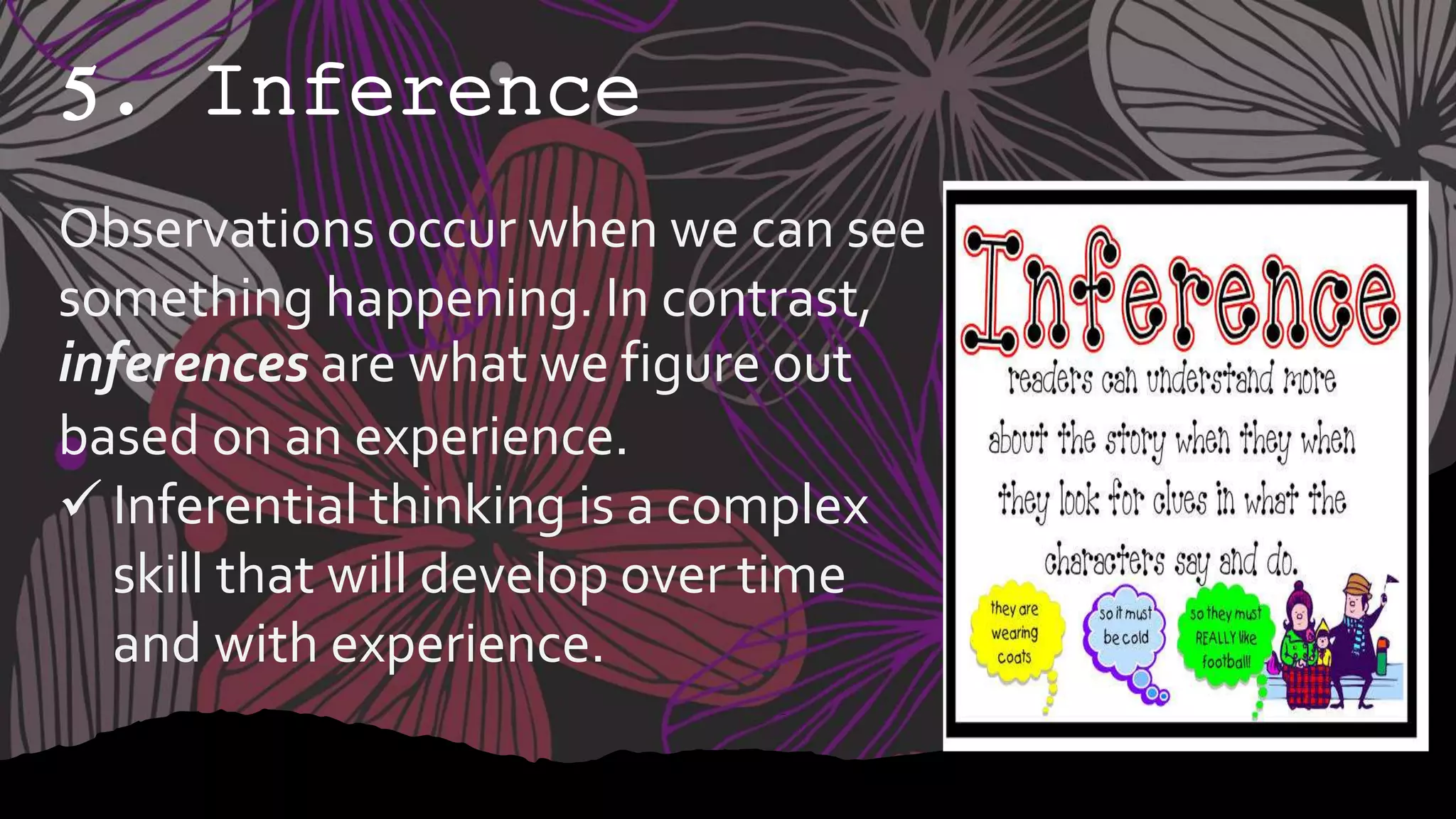
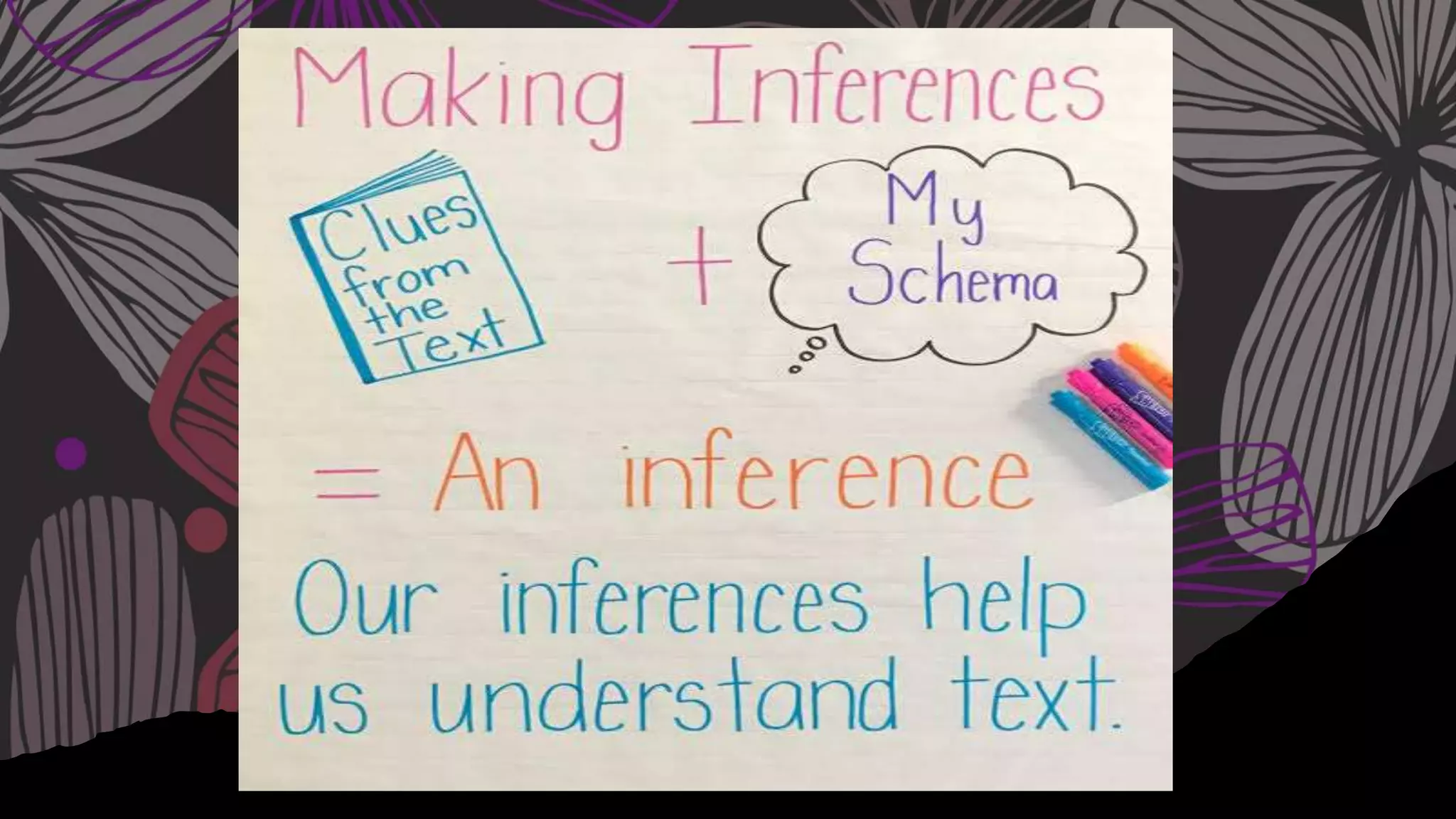
Observations occur when we can see
something happening. In contrast,
inferences are what we figure out
based on an experience.
 Inferential thinking is a complex
skill that will develop over time
and with experience.
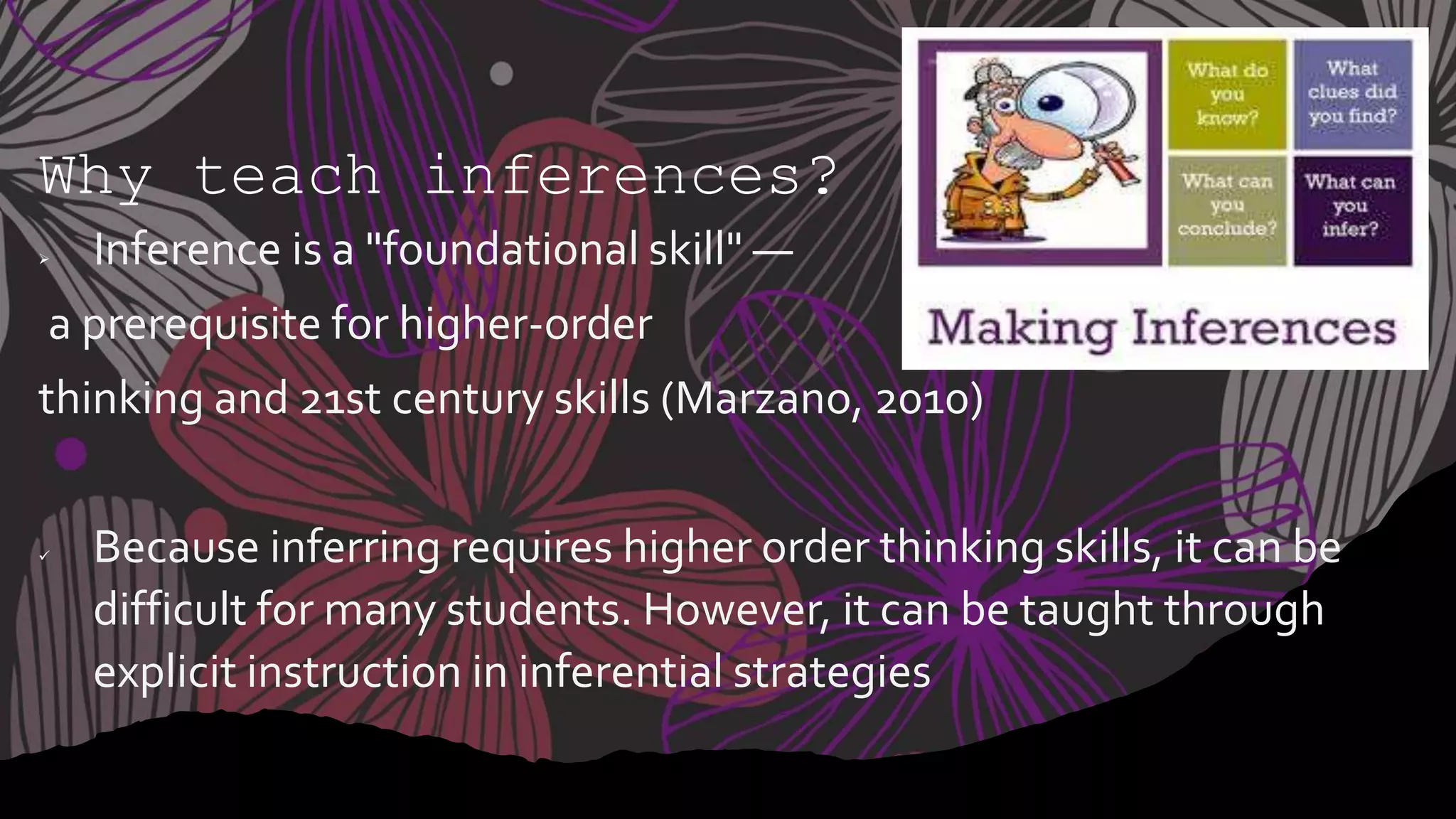
Why teach inferences?
 Inference is a "foundational skill" —
a prerequisite for higher-order
thinking and 21st century skills (Marzano, 2010)
 Because inferring requires higher order thinking skills, it can be
difficult for many students. However, it can be taught through
explicit instruction in inferential strategies
6. Visual Imagery
 The Visual Imagery Strategy is a reading comprehension
strategy for creating mental movies of narrative
passages.
 Students visualize the scenery, characters, and action
and describe the scenes to themselves as they read
each sentence in a passage. Students use the strategy
to improve their understanding and recall of specific
facts and sequences.
Why use visual imagery?
 Generating an image while reading requires
the reader to be actively engaged with the
text.
 Creating mental images while reading can
improve comprehension.
References:
 https://www.teachervision.com/blog/morning-announcements/5-
research-based-reading-comprehension-strategies-to-use-in-your-
classroom
 https://www.readinghorizons.com/reading-strategies/list-of-
reading-strategies
 https://www.readingrockets.org/strategies/inference
Thank you for
listening!
Reading Interventions
for
Struggling Readers
bjective::
Identify the appropriate reading intervention for
struggling readers to reach their full potential.
Defining struggling readers
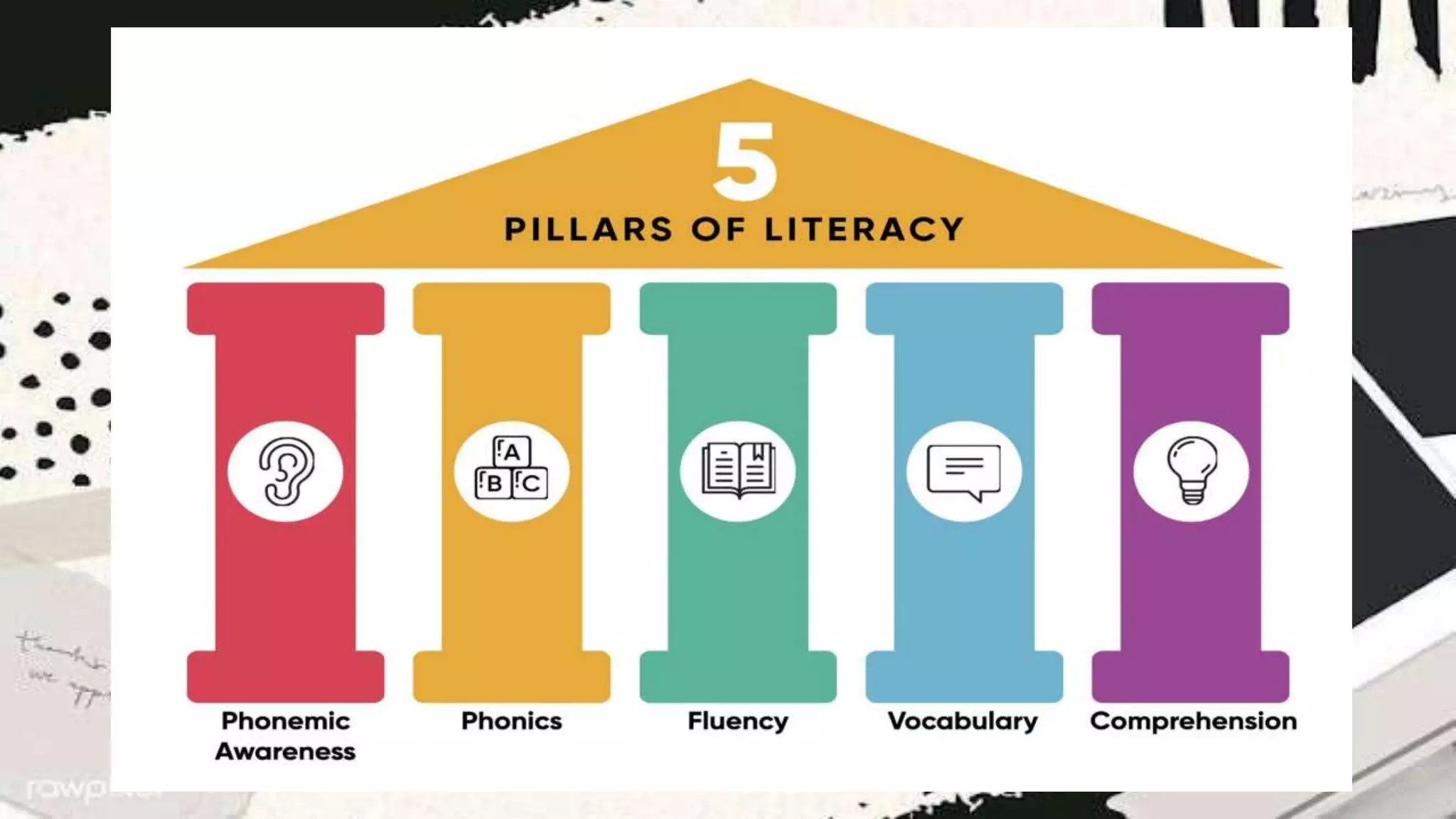
 Struggling readers are students who are lacking skills in one or five pillars of
literacy.
 This deficit negatively affects their academic performance and they would
benefit from remediated instruction or extra practice in an identified area of
weakness.
List of Research-
Based Reading
Interventions
 Reading disabilities include phonological, comprehension and processing deficits.
Although reading delays can hold a child back in comparison to peers, intervention
programs can boost the student's abilities and self-confidence.
 Research-based reading interventions offer techniques and strategies that are
rounded in academic evidence and have been evaluated for effectiveness.
Reading
Intervent
ion:
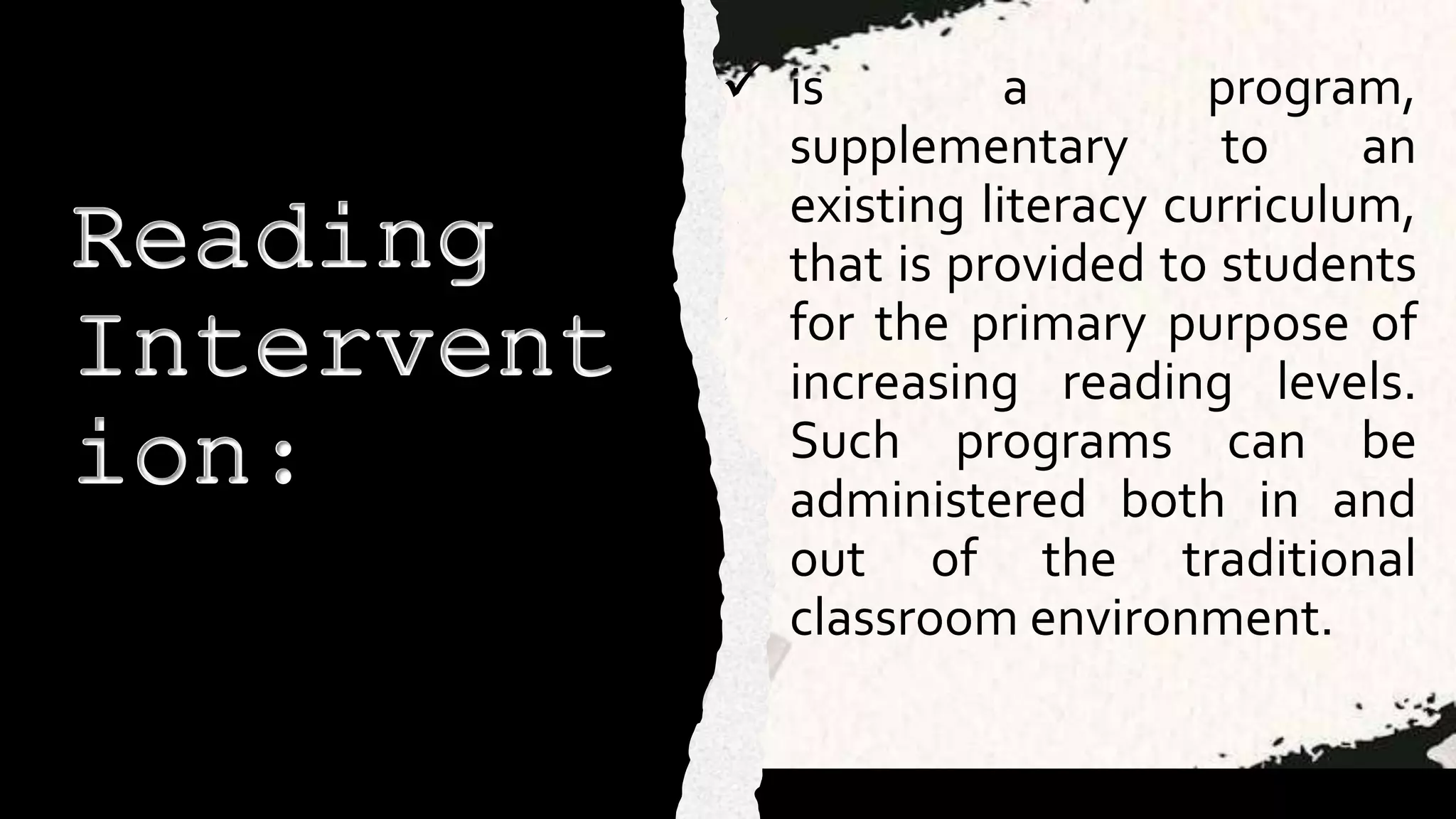
 is a program,
supplementary to an
existing literacy curriculum,
that is provided to students
for the primary purpose of
increasing reading levels.
Such programs can be
administered both in and
out of the traditional
classroom environment.
Computer-Assisted
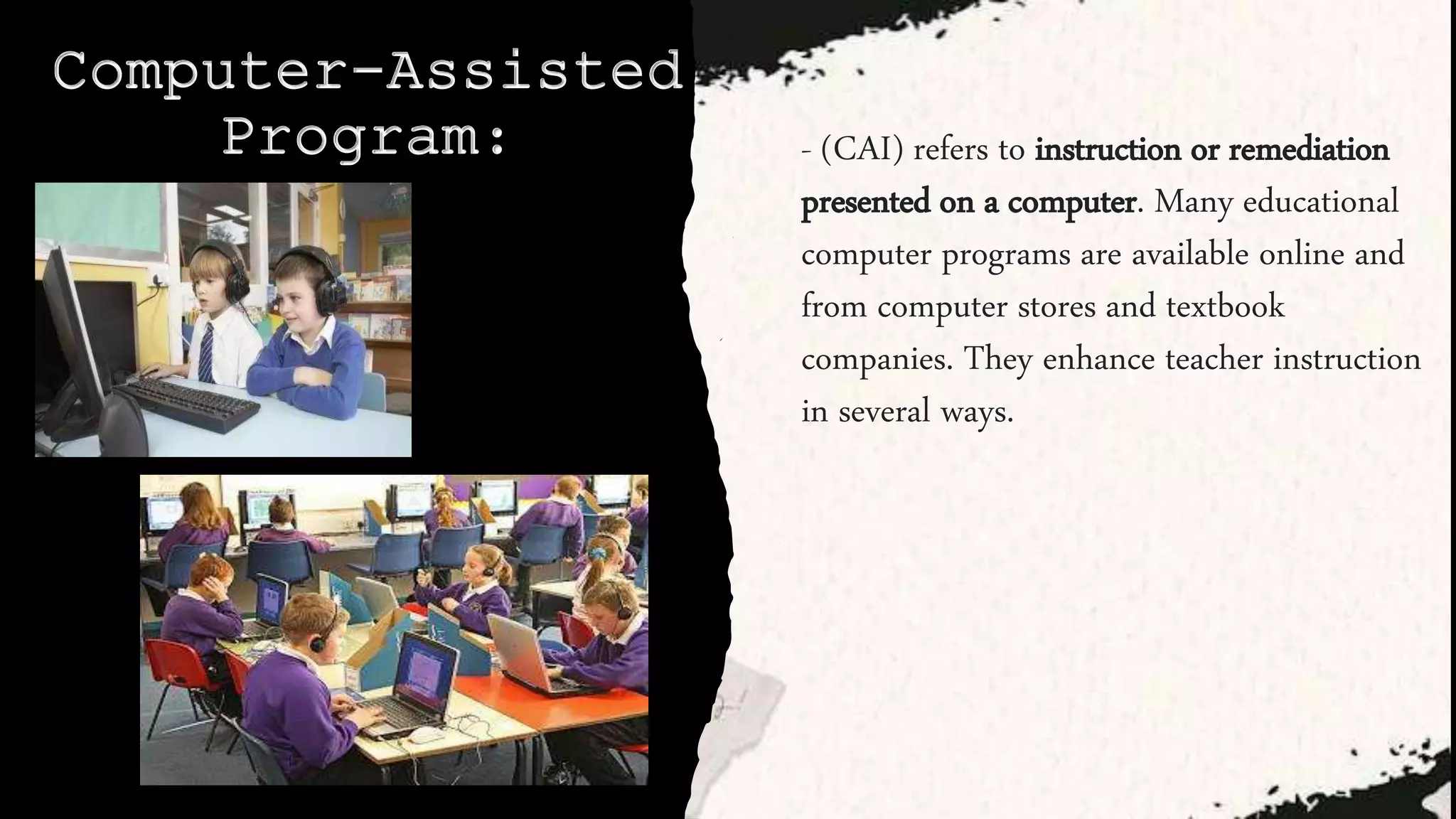
Program: - (CAI) refers to instruction or remediation
presented on a computer. Many educational
computer programs are available online and
from computer stores and textbook
companies. They enhance teacher instruction
in several ways.
Peer Learning:
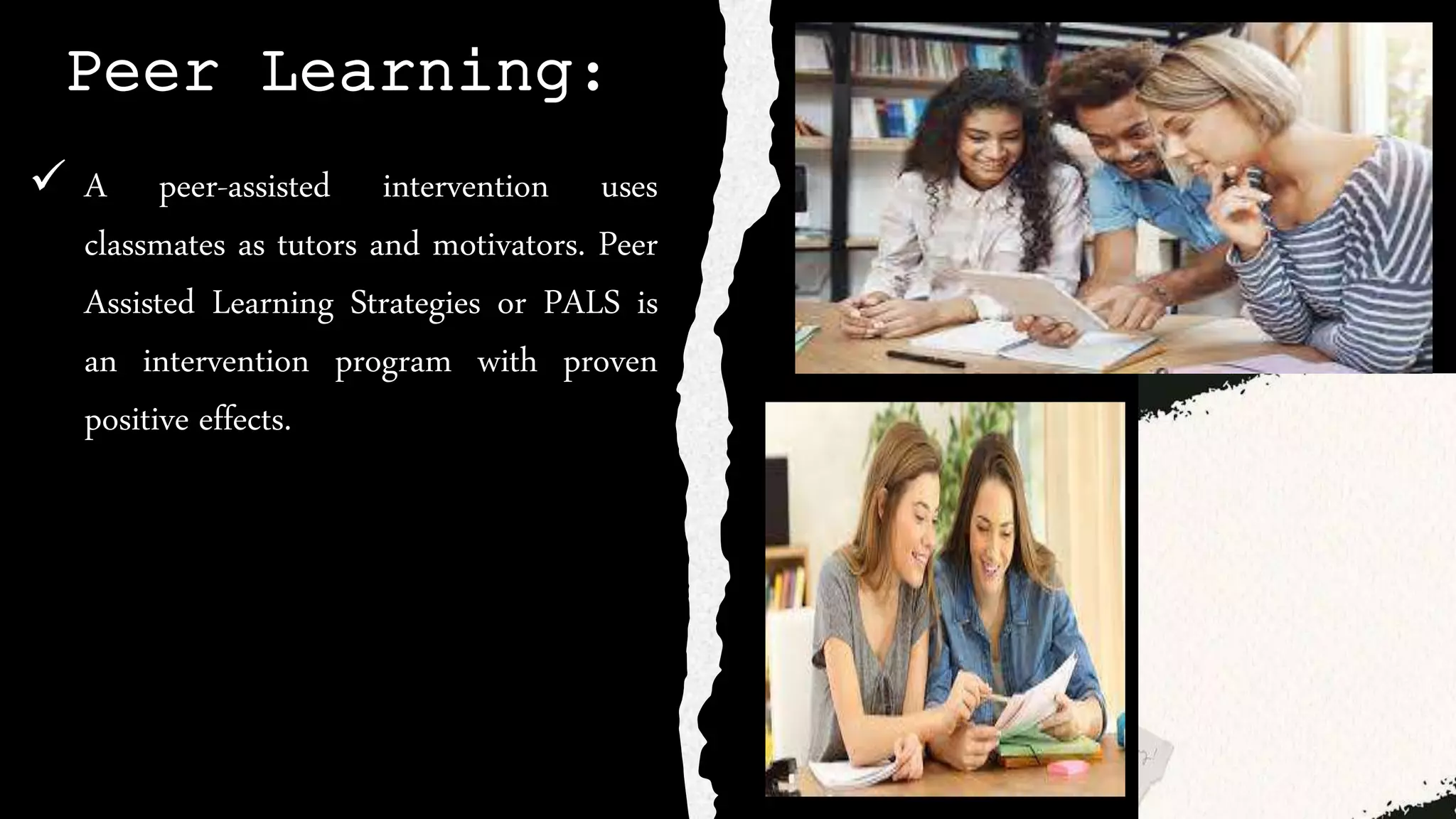
 A peer-assisted intervention uses
classmates as tutors and motivators. Peer
Assisted Learning Strategies or PALS is
an intervention program with proven
positive effects.
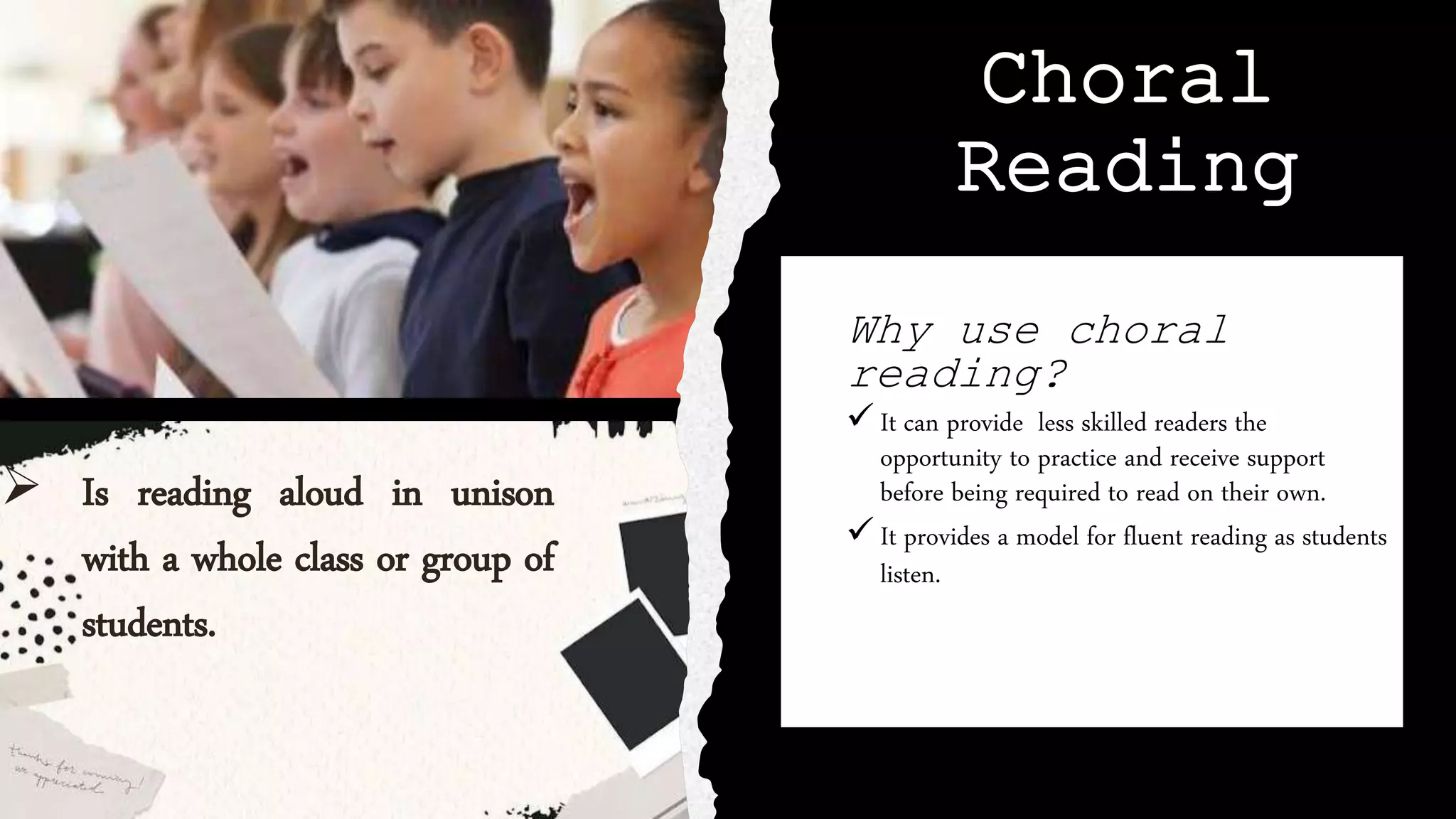
Choral
Reading
Why use choral
reading?
 It can provide less skilled readers the
opportunity to practice and receive support
before being required to read on their own.
 It provides a model for fluent reading as students
listen.as students listen.
 Is reading aloud in unison
with a whole class or group of
students.
References:
 It provides a model for fluent reading as students listen.
https://katelynslearningstudio.com/2019/12/reading-
intervention-strategies.html
http://mavoigt.weebly.com/computer-assisted-reading-
cai.html
https://www.readingrockets.org/strategies/peer_learning
https://www.readingrockets.org/strategies/choral_reading
Thank you
for listening!

LAC on Reading Strategies and Intervention.pptx

  • 1.
    Reading Strategie s MARIEL ANN D.EVANGELISTA Teacher I
  • 2.
    Objectives : Determine the appropriate reading methodfor learners to use in the classroom.
  • 3.
    struggling reader in yourclass? As a language teacher, what method did you employ?
  • 4.
    Reading strategy means… techniquesthat teachers use to help students improve their reading skills. They target different skill sets and areas of knowledge that involve reading, such as vocabulary, spelling ability, comprehension, critical analysis and language articulation.
  • 5.
  • 6.
    1. Reading Aloud is one of the most important things parents and teachers can do with children. Reading aloud builds many important foundational skills, introduces vocabulary, provides a model of fluent, expressive reading, and helps children recognize what reading for pleasure is all about.
  • 7.
     Reading aloudis the foundation for literacy development. It is the single most important activity for reading success. success. (Bredekamp, Copple, & Neuman, 2000). It provides children with a demonstration of phrased, fluent reading (Fountas & Pinnell, 1996). It reveals the rewards of reading, and develops the listener's interest in books and desire to be a reader (Mooney, 1990).
  • 8.
    Why use read-aloud? Reading aloud demonstrates the relationship between the printed word and meaning – learners understand that print tells a story or conveys information – and invites the listener into a conversation with the author.
  • 9.
    2. Graphic Organizers are types of scaffolding that some students require in order to make sense of what they're reading. They don't have to be fancy or include funny clipart (in fact, the more streamlined, the better for some kids!).  A simple T-chart for problem and solution, for example, along with keywords students might encounter in that type of text, are all that is needed to support some readers.
  • 10.
    T - chartsamples
  • 11.
    3. Shared Reading an interactive reading experience that occurs when students join in or share the reading of a book or other text while guided and supported by a teacher. used individually, small groups and as a whole class
  • 12.
    Shared Reading The teacherexplicitly models the skills of proficient readers, including reading with fluency and expression. The shared reading model often uses oversized books (referred to as big books) with enlarged print and illustrations.
  • 13.
  • 14.
    Why use sharedreading?  It provides struggling readers with necessary support.  Allows students to enjoy materials that they may not be able to read on their own.  Ensures that all students feel successful by providing support to the entire group.
  • 15.
    4. Reciprocal Teaching refers toan instructional activity in which students become the teacher in small group reading sessions. Teachers model, then help students learn to guide group discussions using four strategies: summarizing, question generating, clarifying, and predicting. Once students have learned the strategies, they take turns assuming the role of teacher in leading a dialogue about what has been read.
  • 17.
    Why use reciprocalteaching?  It encourages students to think about their own thought process during reading.  It helps students learn to be actively involved and monitor their comprehension as they read.  It teaches students to ask questions during reading and helps make the text more comprehensible.
  • 18.
    5. Inference Observations occurwhen we can see something happening. In contrast, inferences are what we figure out based on an experience.  Inferential thinking is a complex skill that will develop over time and with experience.
  • 19.
    Why teach inferences? Inference is a "foundational skill" — a prerequisite for higher-order thinking and 21st century skills (Marzano, 2010)  Because inferring requires higher order thinking skills, it can be difficult for many students. However, it can be taught through explicit instruction in inferential strategies
  • 21.
    6. Visual Imagery The Visual Imagery Strategy is a reading comprehension strategy for creating mental movies of narrative passages.  Students visualize the scenery, characters, and action and describe the scenes to themselves as they read each sentence in a passage. Students use the strategy to improve their understanding and recall of specific facts and sequences.
  • 22.
    Why use visualimagery?  Generating an image while reading requires the reader to be actively engaged with the text.  Creating mental images while reading can improve comprehension.
  • 23.
  • 25.
  • 26.
  • 27.
    bjective:: Identify the appropriatereading intervention for struggling readers to reach their full potential.
  • 28.
    Defining struggling readers Struggling readers are students who are lacking skills in one or five pillars of literacy.  This deficit negatively affects their academic performance and they would benefit from remediated instruction or extra practice in an identified area of weakness.
  • 30.
    List of Research- BasedReading Interventions
  • 31.
     Reading disabilitiesinclude phonological, comprehension and processing deficits. Although reading delays can hold a child back in comparison to peers, intervention programs can boost the student's abilities and self-confidence.  Research-based reading interventions offer techniques and strategies that are rounded in academic evidence and have been evaluated for effectiveness.
  • 32.
    Reading Intervent ion:  is aprogram, supplementary to an existing literacy curriculum, that is provided to students for the primary purpose of increasing reading levels. Such programs can be administered both in and out of the traditional classroom environment.

  • 33.
    Computer-Assisted Program: - (CAI)refers to instruction or remediation presented on a computer. Many educational computer programs are available online and from computer stores and textbook companies. They enhance teacher instruction in several ways.
  • 34.
    Peer Learning:  Apeer-assisted intervention uses classmates as tutors and motivators. Peer Assisted Learning Strategies or PALS is an intervention program with proven positive effects.
  • 35.
    Choral Reading Why use choral reading? It can provide less skilled readers the opportunity to practice and receive support before being required to read on their own.  It provides a model for fluent reading as students listen.as students listen.  Is reading aloud in unison with a whole class or group of students.
  • 36.
    References:  It providesa model for fluent reading as students listen. https://katelynslearningstudio.com/2019/12/reading- intervention-strategies.html http://mavoigt.weebly.com/computer-assisted-reading- cai.html https://www.readingrockets.org/strategies/peer_learning https://www.readingrockets.org/strategies/choral_reading
  • 38.