Comparative analysis of labor based
and equipment based rural road
construction technology in Nepal
Presented by:-
Tsering Ngutuk Gurung
(PAS076MSIEM017)
outline
background
introduction
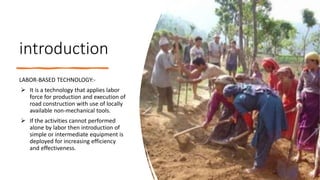
LABOR-BASED TECHNOLOGY:-
 It is a technology that applies labor
force for production and execution of
road construction with use of locally
available non-mechanical tools.
 If the activities cannot performed
alone by labor then introduction of
simple or intermediate equipment is
deployed for increasing efficiency
and effectiveness.
introduction
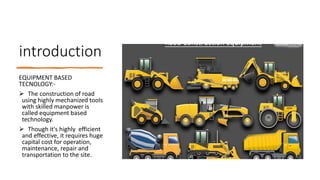
EQUIPMENT BASED
TECNOLOGY:-
 The construction of road
using highly mechanized tools
with skilled manpower is
called equipment based
technology.
 Though it's highly efficient
and effective, it requires huge
capital cost for operation,
maintenance, repair and
transportation to the site.
Objectives of
construction
technology
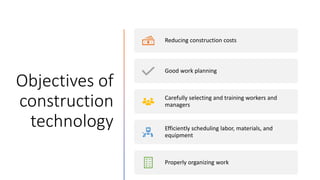
Reducing construction costs
Good work planning
Carefully selecting and training workers and
managers
Efficiently scheduling labor, materials, and
equipment
Properly organizing work
Suitability of two methods in context of rural
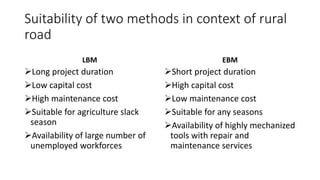
road
LBM
Long project duration
Low capital cost
High maintenance cost
Suitable for agriculture slack
season
Availability of large number of
unemployed workforces
EBM
Short project duration
High capital cost
Low maintenance cost
Suitable for any seasons
Availability of highly mechanized
tools with repair and
maintenance services
Selection criteria for above methods
Available funds for rural road project
Stated project durations
Economic status of project affected people
Prevalent employment opportunities
Condition of human resources; skilled, semi-skilled, unskilled
Geographical situation of related site
Acquaintedness with technology
Gender equality and participatory approach
Sustainability and environment friendly
Is the selected method is sustainable?
Labor-based method is comparatively more sustainable than equipment based method
by following parameters:-
A. Environment sustainability
Minimization of slope cutting preservation of the vegetative cover
Mass balancing
Environment friendly construction method
Proper water management
Bio-engineering
Is the selected method is sustainable?
Labor-based method is comparatively more sustainable than equipment based method
by following parameters:-
B. Sustainable communities
Poverty alleviation through income and employment generation
Decentralization and participatory approach
Local level capacity building
Social equity and gender balance
C. Sustainable economy
Sustainable economic development
Optimum utilization of local resources
Foreign exchange control
Sustainable maintenance
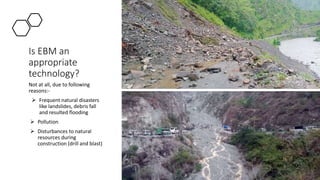
Is EBM an
appropriate
technology?
Not at all, due to following
reasons:-
 Frequent natural disasters
like landslides, debris fall
and resulted flooding
 Pollution
 Disturbances to natural
resources during
construction (drill and blast)
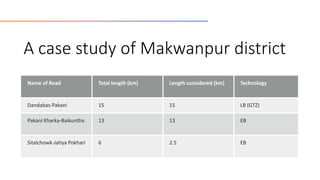
A case study of Makwanpur district
Name of Road Total length (km) Length considered (km) Technology
Dandabas-Pakani 15 15 LB (GTZ)
Pakani Kharka-Baikuntha 13 13 EB
Sitalchowk-Jatiya Pokhari 6 2.5 EB
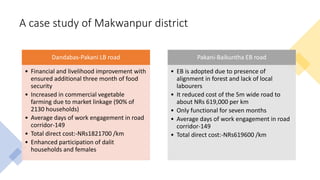
A case study of Makwanpur district
Dandabas-Pakani LB road
• Financial and livelihood improvement with
ensured additional three month of food
security
• Increased in commercial vegetable
farming due to market linkage (90% of
2130 households)
• Average days of work engagement in road
corridor-149
• Total direct cost:-NRs1821700 /km
• Enhanced participation of dalit
households and females
Pakani-Baikuntha EB road
• EB is adopted due to presence of
alignment in forest and lack of local
labourers
• It reduced cost of the 5m wide road to
about NRs 619,000 per km
• Only functional for seven months
• Average days of work engagement in road
corridor-149
• Total direct cost:-NRs619600 /km
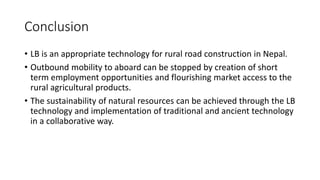
Conclusion
• LB is an appropriate technology for rural road construction in Nepal.
• Outbound mobility to aboard can be stopped by creation of short
term employment opportunities and flourishing market access to the
rural agricultural products.
• The sustainability of natural resources can be achieved through the LB
technology and implementation of traditional and ancient technology
in a collaborative way.
THANK YOU!

Labour Based Method vs Equipment Based Method

  • 1.
    Comparative analysis oflabor based and equipment based rural road construction technology in Nepal Presented by:- Tsering Ngutuk Gurung (PAS076MSIEM017)
  • 2.
  • 3.
  • 5.
    introduction LABOR-BASED TECHNOLOGY:-  Itis a technology that applies labor force for production and execution of road construction with use of locally available non-mechanical tools.  If the activities cannot performed alone by labor then introduction of simple or intermediate equipment is deployed for increasing efficiency and effectiveness.
  • 6.
    introduction EQUIPMENT BASED TECNOLOGY:-  Theconstruction of road using highly mechanized tools with skilled manpower is called equipment based technology.  Though it's highly efficient and effective, it requires huge capital cost for operation, maintenance, repair and transportation to the site.
  • 7.
    Objectives of construction technology Reducing constructioncosts Good work planning Carefully selecting and training workers and managers Efficiently scheduling labor, materials, and equipment Properly organizing work
  • 8.
    Suitability of twomethods in context of rural road LBM Long project duration Low capital cost High maintenance cost Suitable for agriculture slack season Availability of large number of unemployed workforces EBM Short project duration High capital cost Low maintenance cost Suitable for any seasons Availability of highly mechanized tools with repair and maintenance services
  • 9.
    Selection criteria forabove methods Available funds for rural road project Stated project durations Economic status of project affected people Prevalent employment opportunities Condition of human resources; skilled, semi-skilled, unskilled Geographical situation of related site Acquaintedness with technology Gender equality and participatory approach Sustainability and environment friendly
  • 10.
    Is the selectedmethod is sustainable? Labor-based method is comparatively more sustainable than equipment based method by following parameters:- A. Environment sustainability Minimization of slope cutting preservation of the vegetative cover Mass balancing Environment friendly construction method Proper water management Bio-engineering
  • 11.
    Is the selectedmethod is sustainable? Labor-based method is comparatively more sustainable than equipment based method by following parameters:- B. Sustainable communities Poverty alleviation through income and employment generation Decentralization and participatory approach Local level capacity building Social equity and gender balance C. Sustainable economy Sustainable economic development Optimum utilization of local resources Foreign exchange control Sustainable maintenance
  • 12.
    Is EBM an appropriate technology? Notat all, due to following reasons:-  Frequent natural disasters like landslides, debris fall and resulted flooding  Pollution  Disturbances to natural resources during construction (drill and blast)
  • 13.
    A case studyof Makwanpur district Name of Road Total length (km) Length considered (km) Technology Dandabas-Pakani 15 15 LB (GTZ) Pakani Kharka-Baikuntha 13 13 EB Sitalchowk-Jatiya Pokhari 6 2.5 EB
  • 14.
    A case studyof Makwanpur district Dandabas-Pakani LB road • Financial and livelihood improvement with ensured additional three month of food security • Increased in commercial vegetable farming due to market linkage (90% of 2130 households) • Average days of work engagement in road corridor-149 • Total direct cost:-NRs1821700 /km • Enhanced participation of dalit households and females Pakani-Baikuntha EB road • EB is adopted due to presence of alignment in forest and lack of local labourers • It reduced cost of the 5m wide road to about NRs 619,000 per km • Only functional for seven months • Average days of work engagement in road corridor-149 • Total direct cost:-NRs619600 /km
  • 15.
    Conclusion • LB isan appropriate technology for rural road construction in Nepal. • Outbound mobility to aboard can be stopped by creation of short term employment opportunities and flourishing market access to the rural agricultural products. • The sustainability of natural resources can be achieved through the LB technology and implementation of traditional and ancient technology in a collaborative way.
  • 16.