On-Site Lab Design
Water Security Mega Reservoirs
23 July 2013
AIM OF MEETING
Mr. M.ElSirsy (Hyder-Regional Operational Manager) :
• To present a the On-Site Laboratory layouts and
sections incorporating sampling requirements
resulting from meetings with Kahramaa.
• To gain Kahramaa approval of the design to allow the
approval of the detailed design of utilities to
progress.
• To agree any further requirements for approval.
PRESENTATION SUMMARY
• Introduction
• Basis of Design
• Overall layout overview
• Layout
• Suggestions & Comments
• Close
Suggested Parameters to be Analyzed
pH
Turbidity
Dissolved Oxygen
Taste & Odor
Temperature
Iron and Manganese
Color
Conductivity
Oxidation-Reduction potential (ORP)
DBPs
E-coli
Disinfectant Residual
Ct (disinfectant residual x contact time)
Total Organic Carbon (TOC)
Suggested Parameters to be Analyzed
Dissolved Organic Carbon (DOC)
Trihalomethanes (THMs)
Halo-acetic acids (HAAs)
Heterotrophic plate count on agar at 37degrees C
Bromate
Chloride
Chloroform
Flouride
Sulphates
Nitrates
Arsenic
Zinc
Cadmium
Lead
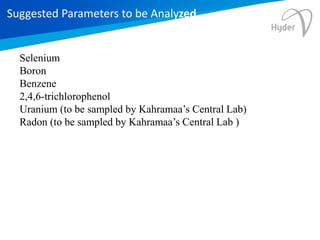
Selenium
Boron
Benzene
2,4,6-trichlorophenol
Uranium (to be sampled by Kahramaa’s Central Lab)
Radon (to be sampled by Kahramaa’s Central Lab )
Suggested Parameters to be Analyzed
Frequency and Min. No. of Samples
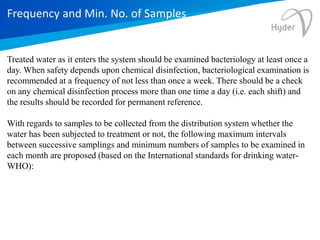
Treated water as it enters the system should be examined bacteriology at least once a
day. When safety depends upon chemical disinfection, bacteriological examination is
recommended at a frequency of not less than once a week. There should be a check
on any chemical disinfection process more than one time a day (i.e. each shift) and
the results should be recorded for permanent reference.
With regards to samples to be collected from the distribution system whether the
water has been subjected to treatment or not, the following maximum intervals
between successive samplings and minimum numbers of samples to be examined in
each month are proposed (based on the International standards for drinking water-
WHO):
Frequency and Min. No. of Samples
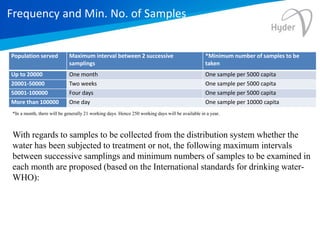
Population served Maximum interval between 2 successive
samplings
*Minimum number of samples to be
taken
Up to 20000 One month One sample per 5000 capita
20001-50000 Two weeks One sample per 5000 capita
50001-100000 Four days One sample per 5000 capita
More than 100000 One day One sample per 10000 capita
*In a month, there will be generally 21 working days. Hence 250 working days will be available in a year.
With regards to samples to be collected from the distribution system whether the
water has been subjected to treatment or not, the following maximum intervals
between successive samplings and minimum numbers of samples to be examined in
each month are proposed (based on the International standards for drinking water-
WHO):
Frequency and Min. No. of Samples
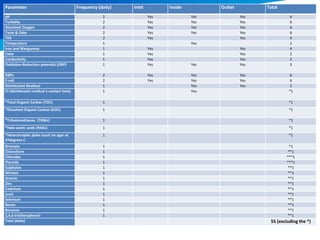
Parameter Frequency (daily) Inlet Inside Outlet Total
pH 2 Yes Yes Yes 6
Turbidity 2 Yes Yes Yes 6
Dissolved Oxygen 2 Yes Yes Yes 6
Taste & Odor 2 Yes Yes Yes 6
TDS 2 Yes Yes 4
Temperature 1 Yes 1
Iron and Manganese 1 Yes Yes 4
Color 1 Yes Yes 2
Conductivity 1 Yes Yes 2
Oxidation-Reduction potential (ORP) 1 Yes Yes Yes 3
DBPs 2 Yes Yes Yes 6
E-coli 2 Yes Yes Yes 6
Disinfectant Residual 1 Yes Yes 2
Ct (disinfectant residual x contact time) 1 Yes *1
*Total Organic Carbon (TOC) 1 *1
*Dissolved Organic Carbon (DOC) 1 *1
*Trihalomethanes (THMs) 1 *1
*Halo-acetic acids (HAAs) 1 *1
*Heterotrophic plate count on agar at
37degrees C
1 *1
Bromate 1 *1
Chloroform 1 **1
Chlorides 1 ***1
Flouride 1 ***1
Sulphates 1 **1
Nitrates 1 **1
Arsenic 1 **1
Zinc 1 **1
Cadmium 1 **1
Lead 1 **1
Selenium 1 **1
Boron 1 **1
Benzene 1 **1
2,4,6-trichlorophenol 1 **1
Total (daily) 55 (excluding the *)
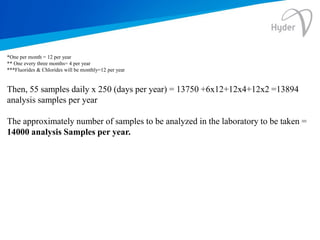
*One per month = 12 per year
** One every three months= 4 per year
***Fluorides & Chlorides will be monthly=12 per year
Then, 55 samples daily x 250 (days per year) = 13750 +6x12+12x4+12x2 =13894
analysis samples per year
The approximately number of samples to be analyzed in the laboratory to be taken =
14000 analysis Samples per year.
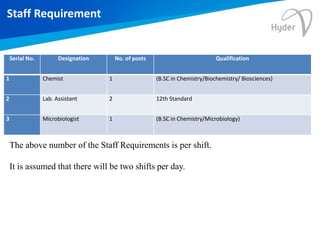
Staff Requirement
Serial No. Designation No. of posts Qualification
1 Chemist 1 (B.SC in Chemistry/Biochemistry/ Biosciences)
2 Lab. Assistant 2 12th Standard
3 Microbiologist 1 (B.SC in Chemistry/Microbiology)
The above number of the Staff Requirements is per shift.
It is assumed that there will be two shifts per day.

Lab Design Presentation

  • 1.
    On-Site Lab Design WaterSecurity Mega Reservoirs 23 July 2013
  • 2.
    AIM OF MEETING Mr.M.ElSirsy (Hyder-Regional Operational Manager) : • To present a the On-Site Laboratory layouts and sections incorporating sampling requirements resulting from meetings with Kahramaa. • To gain Kahramaa approval of the design to allow the approval of the detailed design of utilities to progress. • To agree any further requirements for approval.
  • 3.
    PRESENTATION SUMMARY • Introduction •Basis of Design • Overall layout overview • Layout • Suggestions & Comments • Close
  • 4.
    Suggested Parameters tobe Analyzed pH Turbidity Dissolved Oxygen Taste & Odor Temperature Iron and Manganese Color Conductivity Oxidation-Reduction potential (ORP) DBPs E-coli Disinfectant Residual Ct (disinfectant residual x contact time) Total Organic Carbon (TOC)
  • 5.
    Suggested Parameters tobe Analyzed Dissolved Organic Carbon (DOC) Trihalomethanes (THMs) Halo-acetic acids (HAAs) Heterotrophic plate count on agar at 37degrees C Bromate Chloride Chloroform Flouride Sulphates Nitrates Arsenic Zinc Cadmium Lead
  • 6.
    Selenium Boron Benzene 2,4,6-trichlorophenol Uranium (to besampled by Kahramaa’s Central Lab) Radon (to be sampled by Kahramaa’s Central Lab ) Suggested Parameters to be Analyzed
  • 7.
    Frequency and Min.No. of Samples Treated water as it enters the system should be examined bacteriology at least once a day. When safety depends upon chemical disinfection, bacteriological examination is recommended at a frequency of not less than once a week. There should be a check on any chemical disinfection process more than one time a day (i.e. each shift) and the results should be recorded for permanent reference. With regards to samples to be collected from the distribution system whether the water has been subjected to treatment or not, the following maximum intervals between successive samplings and minimum numbers of samples to be examined in each month are proposed (based on the International standards for drinking water- WHO):
  • 8.
    Frequency and Min.No. of Samples Population served Maximum interval between 2 successive samplings *Minimum number of samples to be taken Up to 20000 One month One sample per 5000 capita 20001-50000 Two weeks One sample per 5000 capita 50001-100000 Four days One sample per 5000 capita More than 100000 One day One sample per 10000 capita *In a month, there will be generally 21 working days. Hence 250 working days will be available in a year. With regards to samples to be collected from the distribution system whether the water has been subjected to treatment or not, the following maximum intervals between successive samplings and minimum numbers of samples to be examined in each month are proposed (based on the International standards for drinking water- WHO):
  • 9.
    Frequency and Min.No. of Samples Parameter Frequency (daily) Inlet Inside Outlet Total pH 2 Yes Yes Yes 6 Turbidity 2 Yes Yes Yes 6 Dissolved Oxygen 2 Yes Yes Yes 6 Taste & Odor 2 Yes Yes Yes 6 TDS 2 Yes Yes 4 Temperature 1 Yes 1 Iron and Manganese 1 Yes Yes 4 Color 1 Yes Yes 2 Conductivity 1 Yes Yes 2 Oxidation-Reduction potential (ORP) 1 Yes Yes Yes 3 DBPs 2 Yes Yes Yes 6 E-coli 2 Yes Yes Yes 6 Disinfectant Residual 1 Yes Yes 2 Ct (disinfectant residual x contact time) 1 Yes *1 *Total Organic Carbon (TOC) 1 *1 *Dissolved Organic Carbon (DOC) 1 *1 *Trihalomethanes (THMs) 1 *1 *Halo-acetic acids (HAAs) 1 *1 *Heterotrophic plate count on agar at 37degrees C 1 *1 Bromate 1 *1 Chloroform 1 **1 Chlorides 1 ***1 Flouride 1 ***1 Sulphates 1 **1 Nitrates 1 **1 Arsenic 1 **1 Zinc 1 **1 Cadmium 1 **1 Lead 1 **1 Selenium 1 **1 Boron 1 **1 Benzene 1 **1 2,4,6-trichlorophenol 1 **1 Total (daily) 55 (excluding the *)
  • 10.
    *One per month= 12 per year ** One every three months= 4 per year ***Fluorides & Chlorides will be monthly=12 per year Then, 55 samples daily x 250 (days per year) = 13750 +6x12+12x4+12x2 =13894 analysis samples per year The approximately number of samples to be analyzed in the laboratory to be taken = 14000 analysis Samples per year.
  • 11.
    Staff Requirement Serial No.Designation No. of posts Qualification 1 Chemist 1 (B.SC in Chemistry/Biochemistry/ Biosciences) 2 Lab. Assistant 2 12th Standard 3 Microbiologist 1 (B.SC in Chemistry/Microbiology) The above number of the Staff Requirements is per shift. It is assumed that there will be two shifts per day.