 Introduction to
basic life support
 Prepared
by
 Amina Dahir
Ahmed
What is first aid
 It is the immediate assistance or care
given some one who has been injured
or suddenly become ill, from moment
of accident until availability of
specialized medical care.
Main objectives
 To preserve the life
 To prevent the victim condition from
worsening
 To promote recovery
 To protect further injury
 To restore and maintain vital function
 To reassure the victim
Objectives of first aid/guiding
principle:
 • The key guiding principles and
purpose of first aid, is often given in
the mnemonic "3 Ps". These three
points govern all the actions
undertaken by a first aider. •
 Prevent further injury
 • Preserve life
 • Promote recovery
Philosophy of First Aid
 • In the pre-hospital setting, the key
contributors to survival and recovery
from illness and injury are prompt and
effective maintenance of the body’s
primary functions:
 1. Airway
 2. Breathing
 3. Circulation
 4. Bleeding control (life threatening)

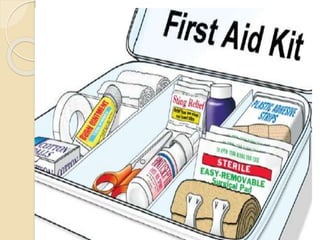
First aid kit
 Content of first aid kit
 Cotton
 tape
 Bandage
 Sterile dressing
 Thermometer
 Scissors
 Gloves
 Soap
 Pain relief
 ORS packets
Help! Emergency!
Minutes could
make a
difference
© Business & Legal Reports, Inc. 1110
Basic question for first
aider
 Who will do first aid for causality who is in
emergency condition? Any first aider who is
equipped with principle of first aid
management
 Why? To save life
 When? At any time when injury occurs
 Where? Any where or place
 To whom it is applied? To all who needs
to be helped
Qualities of a First Aider
 A First Aider must be:
 • Highly Trained
 • Tested and regularly re-tested to
maintain standard
 • Up-to-date in knowledge and skills
Evaluate the scene
Assess safety
Prioritize care
Check for medical alert tags
Do head-to-toe check
Move only if necessary
Evaluate the scene
Assess safety
Prioritize care
Check for medical alert tags
Do head-to-toe check
Move only if necessary
Assess the Scene
© Business & Legal Reports, Inc. 1110
Action plan
 This action plan is a vital aid to the
first aider in assessing whether the
victim has any life threatening
condition and of any immediate first
aid is necessary. They are DRABC.
 D-check for DANGER
 To you
 To others
 To victim
Cont….
 R- check RESPONSE
 Is victim conscious?
 Is victim un conscious?
 A- Check the AIRWAY
 Is air way clear of objective ?
 Is air way open ?
 B- check for BREATHING
 Is check rising or falling ?
 Can you hear victims breathing.
Cont ….
 C- check for CIRCULATION.
 Can you feel a pulse?
 Can you see any obvious signs of life
?.
Responsibility of first aider
 Assess the situation quickly and safely
and call for appropriate help.
 identify the level of injury or the
nature of illness affecting the victim.
 Give immediate and appropriate
treatment to the victim .
 To make and pass on a report, give a
further help if its required.
Assessing the skills of a first
aider
 Observer
 Listen
 Feel
 Talk
 Touch
 Provide
 Build trust
PRINCIPLES OF FIRST AID
(4Cs)
 Call for help
 Calmly take charge
 Check the scene& the victim
 Carefully apply
22

L1 introduction to basic life support.pptx

  • 1.
     Introduction to basiclife support  Prepared by  Amina Dahir Ahmed
  • 2.
    What is firstaid  It is the immediate assistance or care given some one who has been injured or suddenly become ill, from moment of accident until availability of specialized medical care.
  • 4.
    Main objectives  Topreserve the life  To prevent the victim condition from worsening  To promote recovery  To protect further injury  To restore and maintain vital function  To reassure the victim
  • 5.
    Objectives of firstaid/guiding principle:  • The key guiding principles and purpose of first aid, is often given in the mnemonic "3 Ps". These three points govern all the actions undertaken by a first aider. •  Prevent further injury  • Preserve life  • Promote recovery
  • 6.
    Philosophy of FirstAid  • In the pre-hospital setting, the key contributors to survival and recovery from illness and injury are prompt and effective maintenance of the body’s primary functions:  1. Airway  2. Breathing  3. Circulation  4. Bleeding control (life threatening) 
  • 8.
    First aid kit Content of first aid kit  Cotton  tape  Bandage  Sterile dressing  Thermometer  Scissors  Gloves  Soap  Pain relief  ORS packets
  • 10.
    Help! Emergency! Minutes could makea difference © Business & Legal Reports, Inc. 1110
  • 11.
    Basic question forfirst aider  Who will do first aid for causality who is in emergency condition? Any first aider who is equipped with principle of first aid management  Why? To save life  When? At any time when injury occurs  Where? Any where or place  To whom it is applied? To all who needs to be helped
  • 12.
    Qualities of aFirst Aider  A First Aider must be:  • Highly Trained  • Tested and regularly re-tested to maintain standard  • Up-to-date in knowledge and skills
  • 13.
    Evaluate the scene Assesssafety Prioritize care Check for medical alert tags Do head-to-toe check Move only if necessary Evaluate the scene Assess safety Prioritize care Check for medical alert tags Do head-to-toe check Move only if necessary Assess the Scene © Business & Legal Reports, Inc. 1110
  • 14.
    Action plan  Thisaction plan is a vital aid to the first aider in assessing whether the victim has any life threatening condition and of any immediate first aid is necessary. They are DRABC.  D-check for DANGER  To you  To others  To victim
  • 15.
    Cont….  R- checkRESPONSE  Is victim conscious?  Is victim un conscious?  A- Check the AIRWAY  Is air way clear of objective ?  Is air way open ?  B- check for BREATHING  Is check rising or falling ?  Can you hear victims breathing.
  • 17.
    Cont ….  C-check for CIRCULATION.  Can you feel a pulse?  Can you see any obvious signs of life ?.
  • 19.
    Responsibility of firstaider  Assess the situation quickly and safely and call for appropriate help.  identify the level of injury or the nature of illness affecting the victim.  Give immediate and appropriate treatment to the victim .  To make and pass on a report, give a further help if its required.
  • 20.
    Assessing the skillsof a first aider  Observer  Listen  Feel  Talk  Touch  Provide  Build trust
  • 21.
    PRINCIPLES OF FIRSTAID (4Cs)  Call for help  Calmly take charge  Check the scene& the victim  Carefully apply
  • 22.

Editor's Notes

  • #11 Slide Show Notes Just imagine: A co-worker is hurt in an accident and blood is gushing from the wound. One of your friends chokes on a piece of food and can’t breathe. Someone goes into cardiac arrest right at his workstation. Any one of these things is possible, and it could happen any time. If it did, you’d have to act fast. A few critical minutes one way or the other could make the difference between life and death. Would you be ready to act with speed and competence in a workplace medical emergency? There are medical emergencies in workplaces across the country every day. Situations calling for first aid range from burns to cuts and amputations, eye injuries, chemical overexposures, and much more. Do you know how to report a workplace medical emergency? Besides calling 911, you also need to notify a supervisor or manager and provide as much information as you can about the accident. Describe the procedure for reporting workplace accidents and the information trainees should be prepared to provide about the incident.