Implementation of Measurement Frameworks for Sustained Performance
Description
• TheMeasurementFrameworkdescribesthe
overallgovernanceandmonitoring structureof
performance
• It establisheshowto measureperformance,
benchmarksforsuccess,andhow we are
performingagainstbenchmarks
• It reportsandhighlightsissuesof performance
deviation,initiatesrootcauseanalysis,and applies
continuouslearningandimprovement
(2) PerformanceMonitoring&Forecasting
(1) DefinitionofBusinessValuesandKPIs
 Analyzessuccessand
failureof initiatives
 Generatesinsightsaimed
at the CustomerValue
Creationand
performance
improvement
 Identifiesissues,analyzes
causesanddetermines
solutions
 Setsbusinessvaluetargetstomeasurethesuccess
ofinitiatives
 DefinesKPIsandtheirbenchmarkstomonitor
performancebasedondefinedtargets
 Monitorsperformanceacrossall units
 Forecastsresultsof Implementation
 Producesreportingforallrelevantstakeholders
(3) ContinuousLearning
Management
Framework
Measurement Framework:
(2) Performance Monitoring & Forecasting
CapabilityDescription
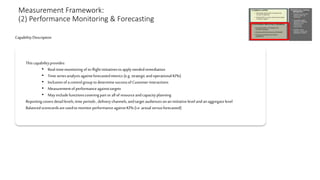
Thiscapabilityprovides:
• Real-timemonitoring of in-flightinitiativesto applyneededremediation
• Time seriesanalysisagainstforecastedmetrics (e.g. strategicandoperationalKPIs)
• Inclusionof a controlgroupto determinesuccessof Customerinteractions
• Measurementof performanceagainsttargets
• Mayincludefunctionscovering part or allof resourceandcapacityplanning
Reportingcoversdetaillevels,time periods, deliverychannels,andtarget audiencesonan initiativelevel andan aggregatelevel
Balancedscorecardsare usedto monitorperformanceagainstKPIs(i.e. actualversusforecasted)
Measurement Framework:
(3) Continuous Learning Management
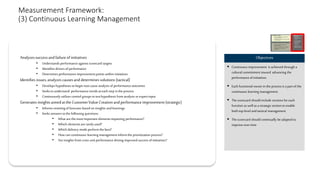
 Continuous improvement is achieved through a
cultural commitment toward advancing the
performance ofinitiatives
 Each functional ownerin theprocess is a partof the
continuous learning management
 Thescorecard should include sections for each
function as well asa strategicsection to enable
both top-level and tactical management
 Thescorecard should continually beadapted to
improve overtime
ObjectivesAnalyzessuccessandfailureof initiatives
• Understands performanceagainst scorecard targets
• Identifies drivers of performance
• Determinesperformance improvementpoints within initiatives
Identifiesissues,analyzescausesand determinessolutions(tactical)
• Develops hypothesesto begin root cause analysis of performanceoutcomes
• Seeksto understand performancetrendsat each stepin theprocess
• Continuously utilizes control groups to testhypothesis fromanalysis or expertinput
Generatesinsightsaimedat the CustomerValue Creationandperformanceimprovement(strategic)
• Informs resettingofforecasts based on insights and learnings
• Seeksanswers to thefollowing questions:
• What arethemostimportant elementsimpacting performance?
• Which elementsarerarelyused?
• Which delivery modeperformthebest?
• How can continuous learning managementinform theprioritization process?
• Areinsights from cross unit performance driving improved success of initiatives?
Thank you

KPI Frameworks those can evolve themselves

  • 2.
    Implementation of MeasurementFrameworks for Sustained Performance Description • TheMeasurementFrameworkdescribesthe overallgovernanceandmonitoring structureof performance • It establisheshowto measureperformance, benchmarksforsuccess,andhow we are performingagainstbenchmarks • It reportsandhighlightsissuesof performance deviation,initiatesrootcauseanalysis,and applies continuouslearningandimprovement (2) PerformanceMonitoring&Forecasting (1) DefinitionofBusinessValuesandKPIs  Analyzessuccessand failureof initiatives  Generatesinsightsaimed at the CustomerValue Creationand performance improvement  Identifiesissues,analyzes causesanddetermines solutions  Setsbusinessvaluetargetstomeasurethesuccess ofinitiatives  DefinesKPIsandtheirbenchmarkstomonitor performancebasedondefinedtargets  Monitorsperformanceacrossall units  Forecastsresultsof Implementation  Producesreportingforallrelevantstakeholders (3) ContinuousLearning Management Framework
  • 3.
    Measurement Framework: (2) PerformanceMonitoring & Forecasting CapabilityDescription Thiscapabilityprovides: • Real-timemonitoring of in-flightinitiativesto applyneededremediation • Time seriesanalysisagainstforecastedmetrics (e.g. strategicandoperationalKPIs) • Inclusionof a controlgroupto determinesuccessof Customerinteractions • Measurementof performanceagainsttargets • Mayincludefunctionscovering part or allof resourceandcapacityplanning Reportingcoversdetaillevels,time periods, deliverychannels,andtarget audiencesonan initiativelevel andan aggregatelevel Balancedscorecardsare usedto monitorperformanceagainstKPIs(i.e. actualversusforecasted)
  • 4.
    Measurement Framework: (3) ContinuousLearning Management  Continuous improvement is achieved through a cultural commitment toward advancing the performance ofinitiatives  Each functional ownerin theprocess is a partof the continuous learning management  Thescorecard should include sections for each function as well asa strategicsection to enable both top-level and tactical management  Thescorecard should continually beadapted to improve overtime ObjectivesAnalyzessuccessandfailureof initiatives • Understands performanceagainst scorecard targets • Identifies drivers of performance • Determinesperformance improvementpoints within initiatives Identifiesissues,analyzescausesand determinessolutions(tactical) • Develops hypothesesto begin root cause analysis of performanceoutcomes • Seeksto understand performancetrendsat each stepin theprocess • Continuously utilizes control groups to testhypothesis fromanalysis or expertinput Generatesinsightsaimedat the CustomerValue Creationandperformanceimprovement(strategic) • Informs resettingofforecasts based on insights and learnings • Seeksanswers to thefollowing questions: • What arethemostimportant elementsimpacting performance? • Which elementsarerarelyused? • Which delivery modeperformthebest? • How can continuous learning managementinform theprioritization process? • Areinsights from cross unit performance driving improved success of initiatives?
  • 5.