KNOWLEDGE MANAGEMENT
MODEL IN TCS
Submitted by:
Shivangi Singh
D-51
INTRODUCTION
 Enterprises generate content about project
plans,proposals,costing etc.
 This content generated by organization forms the
knowledge bank of the organization
 Enterprise content management(ECM):aims at
 Managing all the unstructured or content in an
enterprise
 It also helps in creating content with common
desktop applications like Microsoft word
ECM has several components that help organizations
to manage content efficiently and effectively
They are as following:
 Document management system
 Business process management
 Forms processing
 Enterprise report management
 Digital asset management
 Records management
KM TOOLs USED
BSC [Balanced Score Card]
 Takes into account both financial and non
financial factors
 Required to execute business vision and
strategy
 It integrates various functions like finance,
customer, learning , growth and business
processes for decision making
EVA [Economic Value Add]
 Measures the value created by company for its
shareholders
 Determines the total value created after taking
into account the cost of capital
 Encourages companies to review low returns
projects and invest in maximize return projects
FISHNET MODEL –
 It’s an organizational structure which is flexible, adaptable
 It can form and reform varied patterns of connection
 It rearranges itself quickly while retaining its inherent
strength
 Such organizations allow employees full flexibility.
KBASES AND GROUPWARE
 It is a knowledge repository in the corporate and branch
servers
 Accessible to all employees through the intranet
 It contains wide range of information regarding processes,
line of technology and the line of business
 The groupware is a body which automates various in-house
systems such as training and many other functions
TRAINING:
PROPEL –
 It’s a movement consisting of conferences and camps
 These helped employees in
 Conducting group meeting
 Transferring their learning and knowledge to other employees
TBEM -
 Through this model employees learnt about
 managing data
 process orientation and motivating
 energizing people
 TBEM is all about quality of management.
COP’s – [Community of practices ]
 It is a forum of organizational memory where teams all over
the organization at different times zones communicated and
documented the best practices.
PAL – [Process Asset Libraries ]
 It is an information database related to technology,
processes and case studies.
 These were made available to all development centers of
TCS through the intranet.
KM solutions using documentum, FileNet, lotus
hummingbird, liver link MS Outlook.
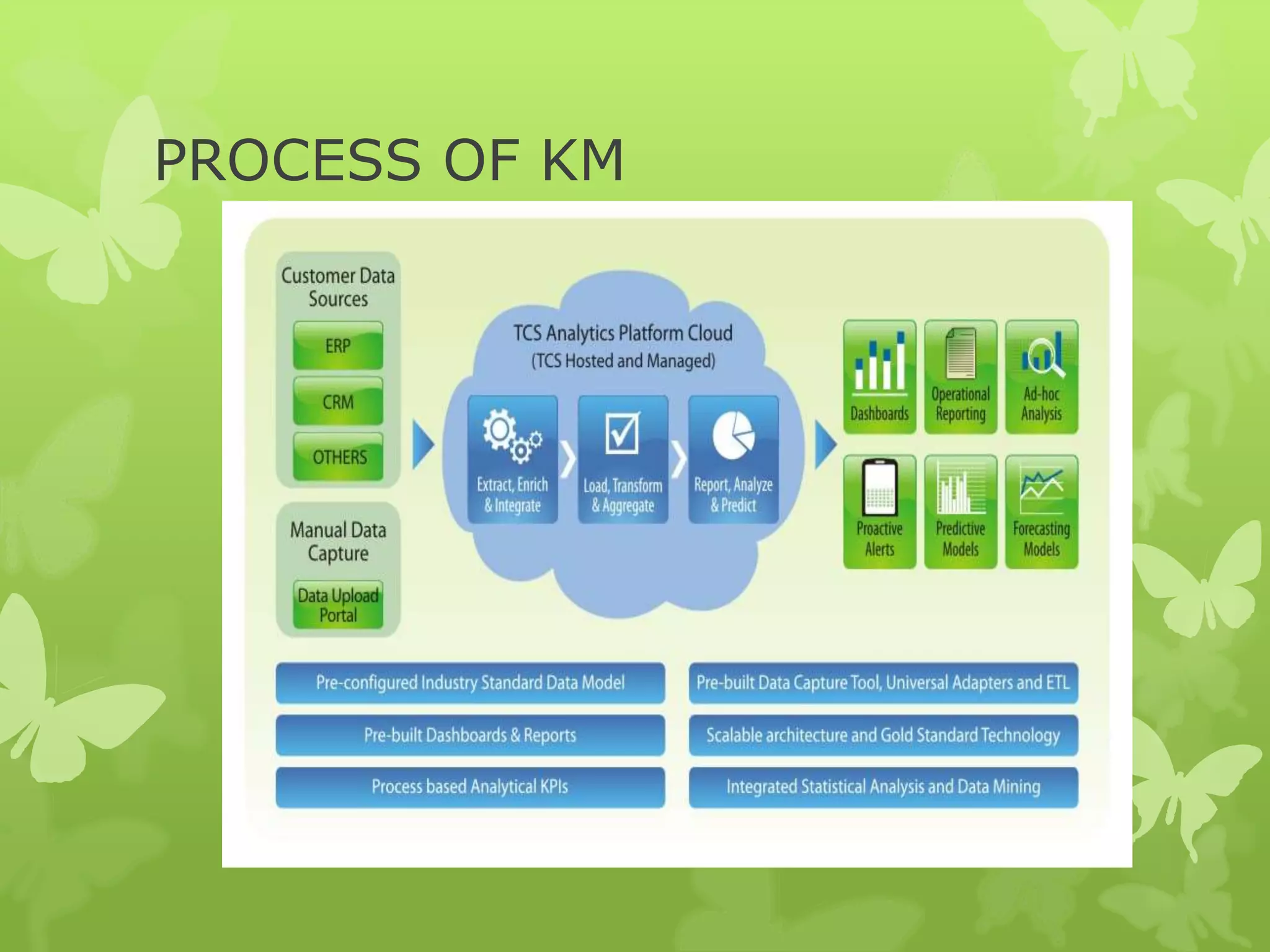
PROCESS OF KM
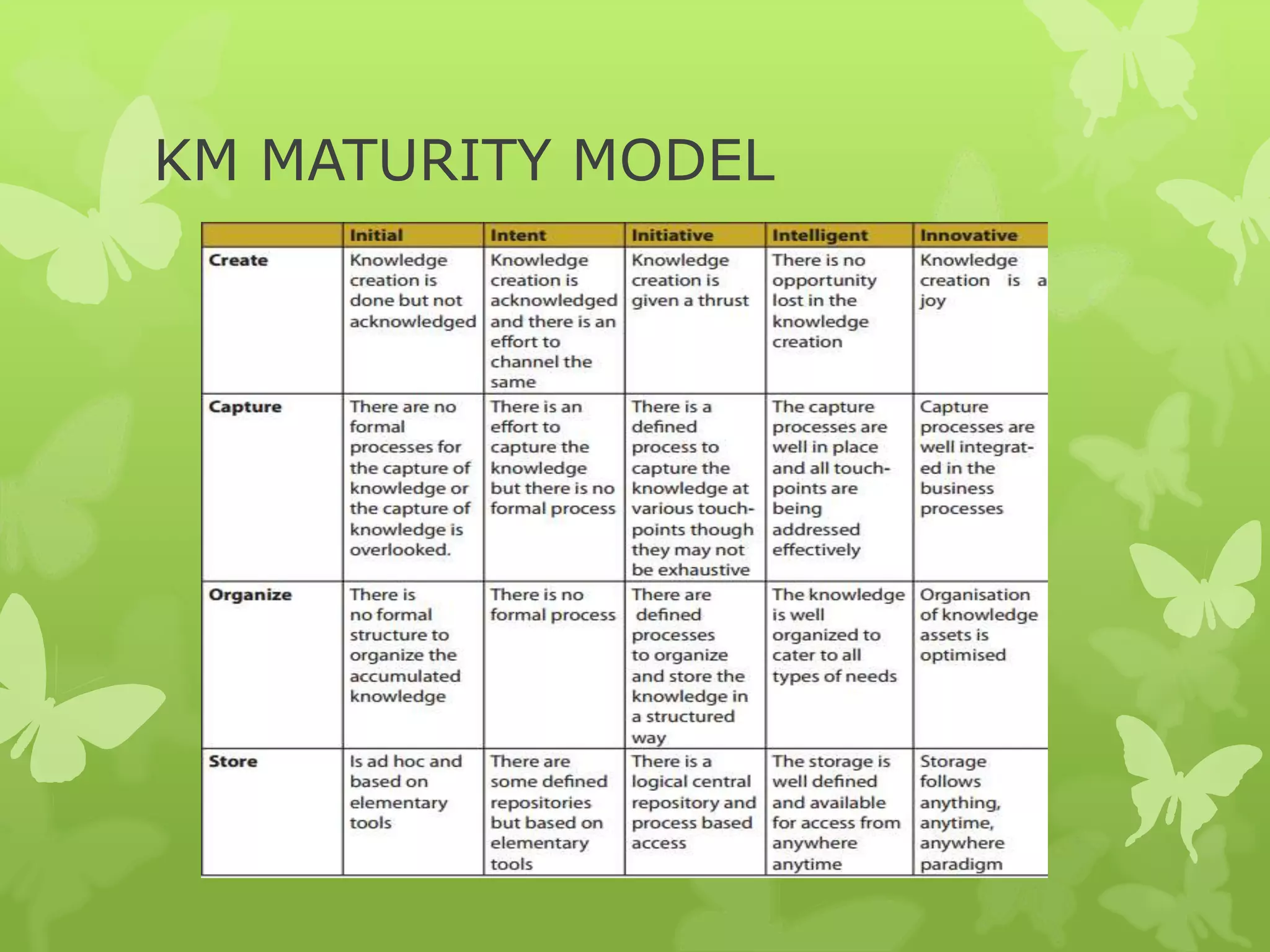
KM MATURITY MODEL
THANKYOU

Knowledge management in TCS

  • 1.
    KNOWLEDGE MANAGEMENT MODEL INTCS Submitted by: Shivangi Singh D-51
  • 2.
    INTRODUCTION  Enterprises generatecontent about project plans,proposals,costing etc.  This content generated by organization forms the knowledge bank of the organization  Enterprise content management(ECM):aims at  Managing all the unstructured or content in an enterprise  It also helps in creating content with common desktop applications like Microsoft word
  • 3.
    ECM has severalcomponents that help organizations to manage content efficiently and effectively They are as following:  Document management system  Business process management  Forms processing  Enterprise report management  Digital asset management  Records management
  • 4.
    KM TOOLs USED BSC[Balanced Score Card]  Takes into account both financial and non financial factors  Required to execute business vision and strategy  It integrates various functions like finance, customer, learning , growth and business processes for decision making EVA [Economic Value Add]  Measures the value created by company for its shareholders  Determines the total value created after taking into account the cost of capital  Encourages companies to review low returns projects and invest in maximize return projects
  • 5.
    FISHNET MODEL – It’s an organizational structure which is flexible, adaptable  It can form and reform varied patterns of connection  It rearranges itself quickly while retaining its inherent strength  Such organizations allow employees full flexibility. KBASES AND GROUPWARE  It is a knowledge repository in the corporate and branch servers  Accessible to all employees through the intranet  It contains wide range of information regarding processes, line of technology and the line of business  The groupware is a body which automates various in-house systems such as training and many other functions
  • 6.
    TRAINING: PROPEL –  It’sa movement consisting of conferences and camps  These helped employees in  Conducting group meeting  Transferring their learning and knowledge to other employees TBEM -  Through this model employees learnt about  managing data  process orientation and motivating  energizing people  TBEM is all about quality of management.
  • 7.
    COP’s – [Communityof practices ]  It is a forum of organizational memory where teams all over the organization at different times zones communicated and documented the best practices. PAL – [Process Asset Libraries ]  It is an information database related to technology, processes and case studies.  These were made available to all development centers of TCS through the intranet. KM solutions using documentum, FileNet, lotus hummingbird, liver link MS Outlook.
  • 8.
  • 9.
  • 10.