Blast research


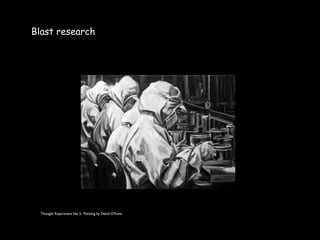
  Thought Experiment No 5. Painting by David O'Kane
Blast research


1. AHRC Knowledge Exchange Programme. BBC / Bristol & London City Unis
   Alone Together? Social learning in BBC Blast, 2008
   www.bbc.co.uk/blogs/knowledgeexchange/bristol.pdf


 - How much learning is taking place within Blast?

 - How can we recognise it?

 - How can we optimise for it?
Blast research


2. AHRC Knowledge Infusion Programme. BBC / London City Uni
   Engagement in Social Learning Spaces: patterns & motivations, 2009


 - Beyond Blast: who else is trying to do this, and with what success?

 - What should online social learning spaces look like? What do we know?

 - What motivates young people to contribute. What holds them back?
We wanted to


- broaden our understanding of the process of engagement with social
  learning. (Review of existing research and case studies of other learning
  environments.)


- deepen our understanding of teenage perceptions of creativity,
  authorship, and the relationship between creativity and learning. (Review
  of existing research plus interviews with Blast Tour participants.)
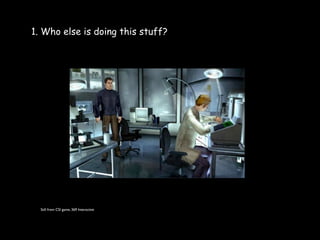
1. Who else is doing this stuff?


  Still from CSI game, 369 Interactive
1. Who else is doing this stuff?


Survey of 23 comparable websites:


www.activeworlds.com www.boom.mtv.co.uk www.deviantart.com www.flickr.com
www.goldstarcafe.net www.moshimonsters.com www.ning.com www.plings.co.uk
www.schoolnetglobal.com www.scratch.mit.edu www.myspace.com www.youtube.com
www.superclubplus.com www.schoolofeverything.com www.notschool.net
www.mylanguageexchange.com www.totalkiss.com www.facebook.com
www.community.brighton.ac.uk www.bebo.com www.4talent.channel4.com www.videojug.com


?? showcasing creative work - social dimension - offline dimension -
expert help - tips & tools - media richness/interactivity - learning
intent ??
Survey findings


1. While some of these sites are hugely successful, none of them are that similar to
Blast. Its range of content, its aim to embed learning with creativity, and its numerous
offline opportunities make Blast unique.


2. Offline practice seems to be as important as online presence, with many of the most
successful sites supporting offline as well as online communities.


3. Size is important. You need a critical mass of users to come together before
productive social learning can take place at scale. A core group of dedicated regulars is
good, but doesn't produce the network effect of large numbers.


4. Details of a site's design seem less important than its ethos - ease of use, welcoming
quality, accessibility, familiarity etc. Look may be less important than feel...
2. What do we know about how learning communities work?


  Einstein: ImageShack
2. What do we know about how learning communities work?


Review of existing theoretical models of engagement in communities of learners


- What different stages and levels of participation are there?
  eg Lurkers or visitors -> Novices -> Regulars -> Leaders -> Elders (Amy-Jo Kim)


- Jakob Nielsen's Participation Inequality Rule ( 1% - 9% - 90% ) and 2 things that
  follow from it


- What design features might optimise for engagement?


- What motivates people to participate in a learning community? $ 64,000
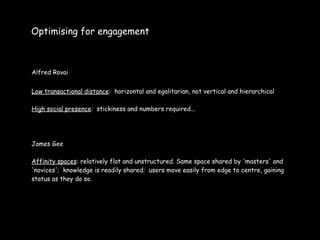
Optimising for engagement


Alfred Rovai


Low transactional distance: horizontal and egalitarian, not vertical and hierarchical

High social presence: stickiness and numbers required...


James Gee

Affinity spaces: relatively flat and unstructured. Same space shared by 'masters' and
'novices'; knowledge is readily shared; users move easily from edge to centre, gaining
status as they do so.
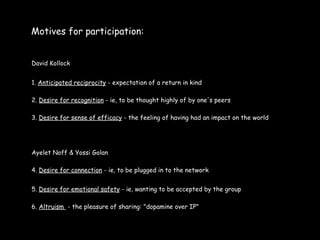
Motives for participation:


David Kollock


1. Anticipated reciprocity - expectation of a return in kind

2. Desire for recognition - ie, to be thought highly of by one's peers

3. Desire for sense of efficacy - the feeling of having had an impact on the world


Ayelet Noff & Yossi Golan

4. Desire for connection - ie, to be plugged in to the network


5. Desire for emotional safety - ie, wanting to be accepted by the group

6. Altruism - the pleasure of sharing: "dopamine over IP"
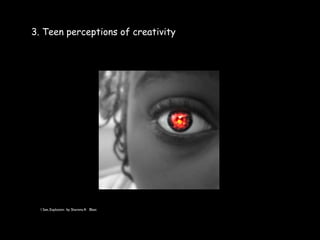
3. Teen perceptions of creativity


  I See, Explosion by Sharona A Blast
3. Teen perceptions of creativity


Interviews with Blast on Tour participants


- Creativity in an educational context perceived very differently from creativity in a
leisure context


- Creativity in an educational setting has only extrinsic value to do with educational or
career aspirations


- Creative work produced in a leisure setting has intrinsic value to do with authorship,
self-expression and peer approval


- Peer group validation of their own creative work - whether offline or online - is
enormously important to teens.
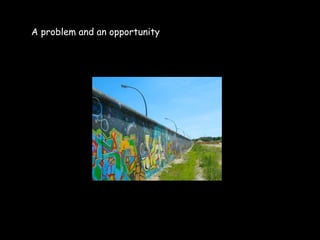
A problem and an opportunity

Knowledge infusion

  • 1.
    Blast research Thought Experiment No 5. Painting by David O'Kane
  • 2.
    Blast research 1. AHRCKnowledge Exchange Programme. BBC / Bristol & London City Unis Alone Together? Social learning in BBC Blast, 2008 www.bbc.co.uk/blogs/knowledgeexchange/bristol.pdf - How much learning is taking place within Blast? - How can we recognise it? - How can we optimise for it?
  • 3.
    Blast research 2. AHRCKnowledge Infusion Programme. BBC / London City Uni Engagement in Social Learning Spaces: patterns & motivations, 2009 - Beyond Blast: who else is trying to do this, and with what success? - What should online social learning spaces look like? What do we know? - What motivates young people to contribute. What holds them back?
  • 4.
    We wanted to -broaden our understanding of the process of engagement with social learning. (Review of existing research and case studies of other learning environments.) - deepen our understanding of teenage perceptions of creativity, authorship, and the relationship between creativity and learning. (Review of existing research plus interviews with Blast Tour participants.)
  • 5.
    1. Who elseis doing this stuff? Still from CSI game, 369 Interactive
  • 6.
    1. Who elseis doing this stuff? Survey of 23 comparable websites: www.activeworlds.com www.boom.mtv.co.uk www.deviantart.com www.flickr.com www.goldstarcafe.net www.moshimonsters.com www.ning.com www.plings.co.uk www.schoolnetglobal.com www.scratch.mit.edu www.myspace.com www.youtube.com www.superclubplus.com www.schoolofeverything.com www.notschool.net www.mylanguageexchange.com www.totalkiss.com www.facebook.com www.community.brighton.ac.uk www.bebo.com www.4talent.channel4.com www.videojug.com ?? showcasing creative work - social dimension - offline dimension - expert help - tips & tools - media richness/interactivity - learning intent ??
  • 7.
    Survey findings 1. Whilesome of these sites are hugely successful, none of them are that similar to Blast. Its range of content, its aim to embed learning with creativity, and its numerous offline opportunities make Blast unique. 2. Offline practice seems to be as important as online presence, with many of the most successful sites supporting offline as well as online communities. 3. Size is important. You need a critical mass of users to come together before productive social learning can take place at scale. A core group of dedicated regulars is good, but doesn't produce the network effect of large numbers. 4. Details of a site's design seem less important than its ethos - ease of use, welcoming quality, accessibility, familiarity etc. Look may be less important than feel...
  • 8.
    2. What dowe know about how learning communities work? Einstein: ImageShack
  • 9.
    2. What dowe know about how learning communities work? Review of existing theoretical models of engagement in communities of learners - What different stages and levels of participation are there? eg Lurkers or visitors -> Novices -> Regulars -> Leaders -> Elders (Amy-Jo Kim) - Jakob Nielsen's Participation Inequality Rule ( 1% - 9% - 90% ) and 2 things that follow from it - What design features might optimise for engagement? - What motivates people to participate in a learning community? $ 64,000
  • 10.
    Optimising for engagement AlfredRovai Low transactional distance: horizontal and egalitarian, not vertical and hierarchical High social presence: stickiness and numbers required... James Gee Affinity spaces: relatively flat and unstructured. Same space shared by 'masters' and 'novices'; knowledge is readily shared; users move easily from edge to centre, gaining status as they do so.
  • 11.
    Motives for participation: DavidKollock 1. Anticipated reciprocity - expectation of a return in kind 2. Desire for recognition - ie, to be thought highly of by one's peers 3. Desire for sense of efficacy - the feeling of having had an impact on the world Ayelet Noff & Yossi Golan 4. Desire for connection - ie, to be plugged in to the network 5. Desire for emotional safety - ie, wanting to be accepted by the group 6. Altruism - the pleasure of sharing: "dopamine over IP"
  • 12.
    3. Teen perceptionsof creativity I See, Explosion by Sharona A Blast
  • 13.
    3. Teen perceptionsof creativity Interviews with Blast on Tour participants - Creativity in an educational context perceived very differently from creativity in a leisure context - Creativity in an educational setting has only extrinsic value to do with educational or career aspirations - Creative work produced in a leisure setting has intrinsic value to do with authorship, self-expression and peer approval - Peer group validation of their own creative work - whether offline or online - is enormously important to teens.
  • 14.
    A problem andan opportunity

Editor's Notes

  • #2 Blast is interesting to researchers because it's an experiment. From a research POV it's one of the most interesting things the BBC does, because it's trying to do a really, really profound and difficult thing: trying to harness young people's creative instincts to help them to learn - from experts and from each other.
  • #3 I've now been involved in two pieces of research. The first, Alone Together: Social Learning in BBC Blast was published at the end of 2008. You can read or download it from this url. It ask these questions.... and its recommendations influenced the thinking that went into reshaping of both the Blast website and this year's Blast Tour.
  • #4 The 2nd research project, now nearing completion,
  • #6 First off, the case studies...