BOT3015L
Fungi
Presentation created by Danielle Sherdan
All photos from Raven et al. Biology of Plants except when otherwise noted
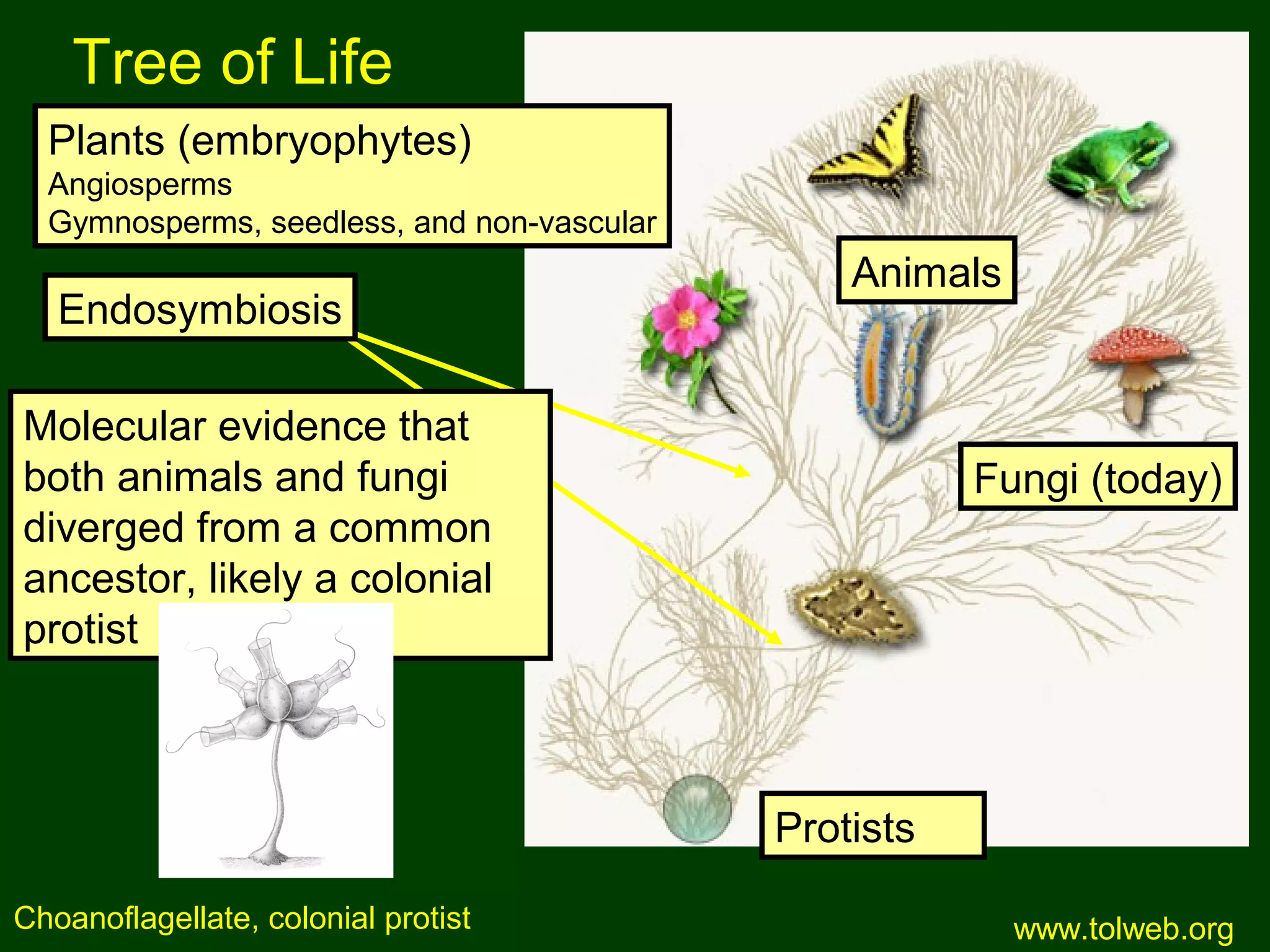
Tree of Life
www.tolweb.org
Plants (embryophytes)
Angiosperms
Gymnosperms, seedless, and non-vascular
Animals
Fungi (today)
Protists
Endosymbiosis
Molecular evidence that
both animals and fungi
diverged from a common
ancestor, likely a colonial
protist
Choanoflagellate, colonial protist
Today
Importance of fungi
Kingdom Fungi
Classification
Characteristics
Zygomycetes
Ascomycetes
Basidiomycetes
Today
Importance of fungi
Kingdom Fungi
Classification
Characteristics
Zygomycetes
Ascomycetes
Basidiomycetes
Fungi are important
Cooking and baking
Beer and wine production
Cheese production
Antibiotics
Toxic waste cleanup
Antibiotic production (cyclosporin, penicillin)
Medical benefits (anti-cancer, anti-inflammatory)
Parasites and diseases in animals (ringworm, aflatoxins)
Parasites and diseases in plants (powdery mildew, smuts, rot)
Decomposition and nutrient cycling
Mycorrhizal associations
Today
Importance of fungi
Kingdom Fungi
Classification
Characteristics
Zygomycetes
Ascomycetes
Basidiomycetes
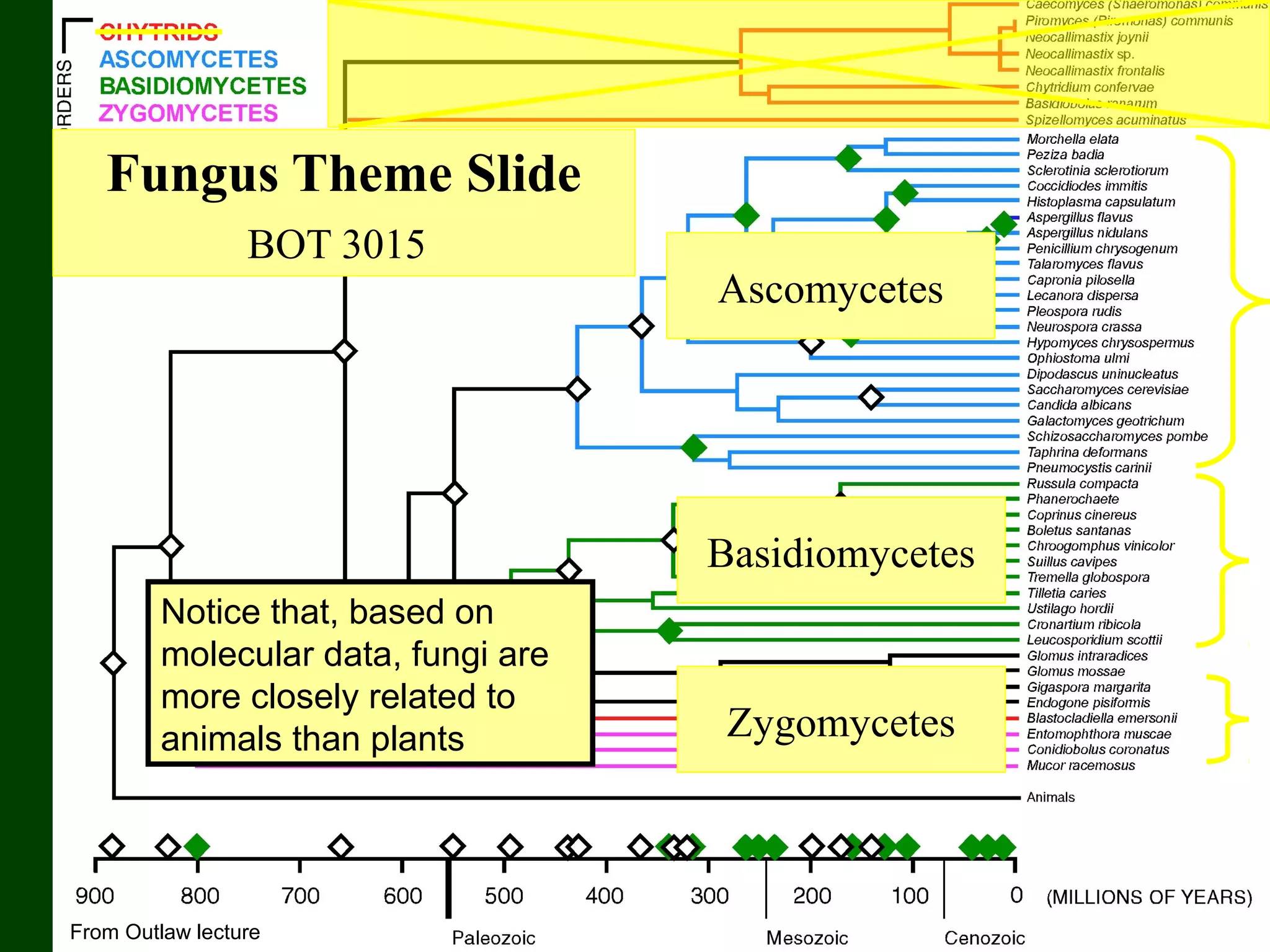
Fungus Theme Slide
BOT 3015
Ascomycetes
Basidiomycetes
Zygomycetes
From Outlaw lecture
Notice that, based on
molecular data, fungi are
more closely related to
animals than plants
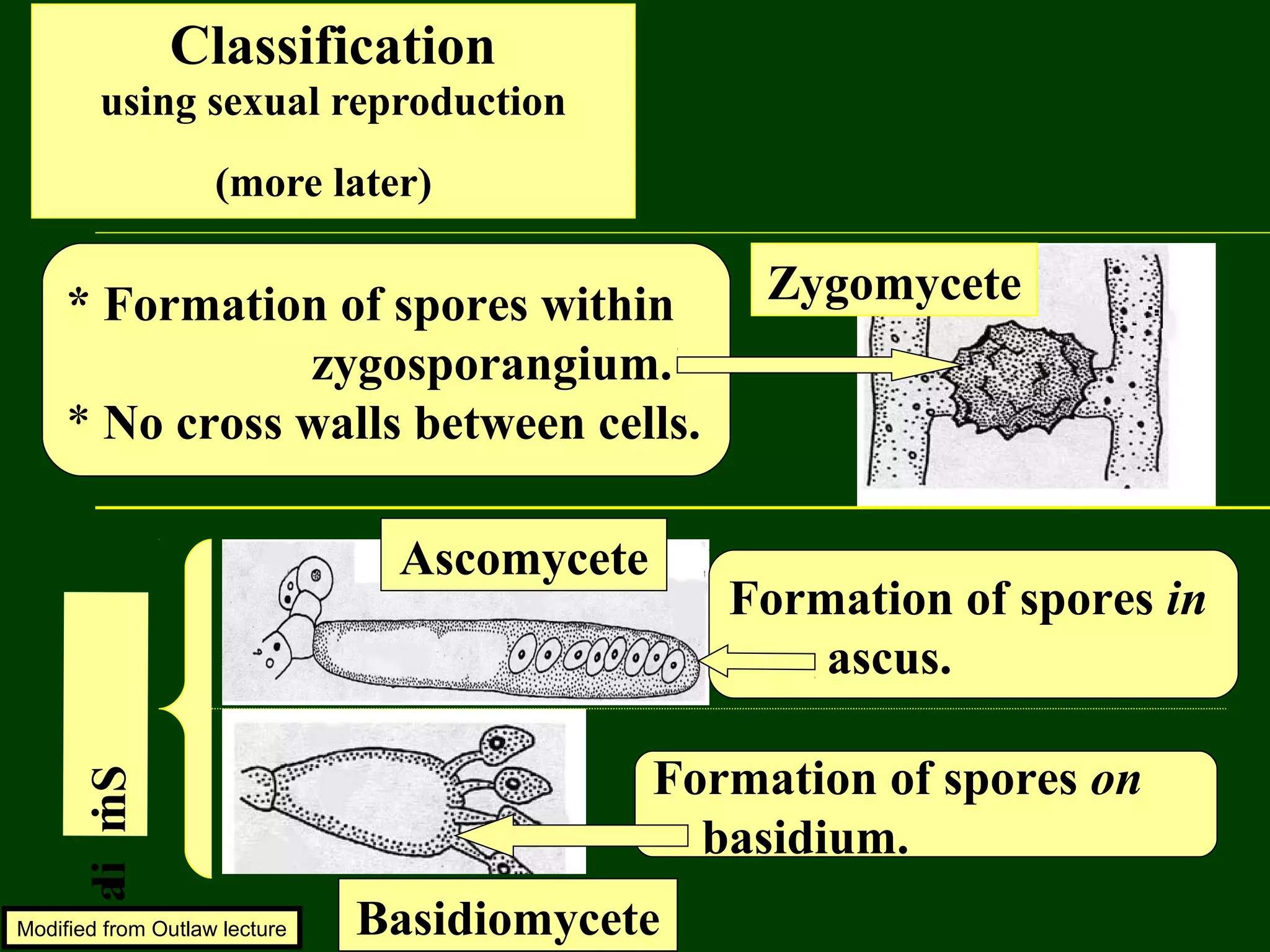
Zygomycete
Basidiomycete
Ascomycete
Similar
* Formation of spores within
zygosporangium.
* No cross walls between cells.
Formation of spores in
ascus.
Formation of spores on
basidium.
Classification
using sexual reproduction
(more later)
Modified from Outlaw lecture
Some important characteristics of fungi
• Eukaryotes
• Cell walls of chitin (not found in plants, found in animals)
• Heterotrophic absorption
• Secretion of digestive enzymes
• Active transport
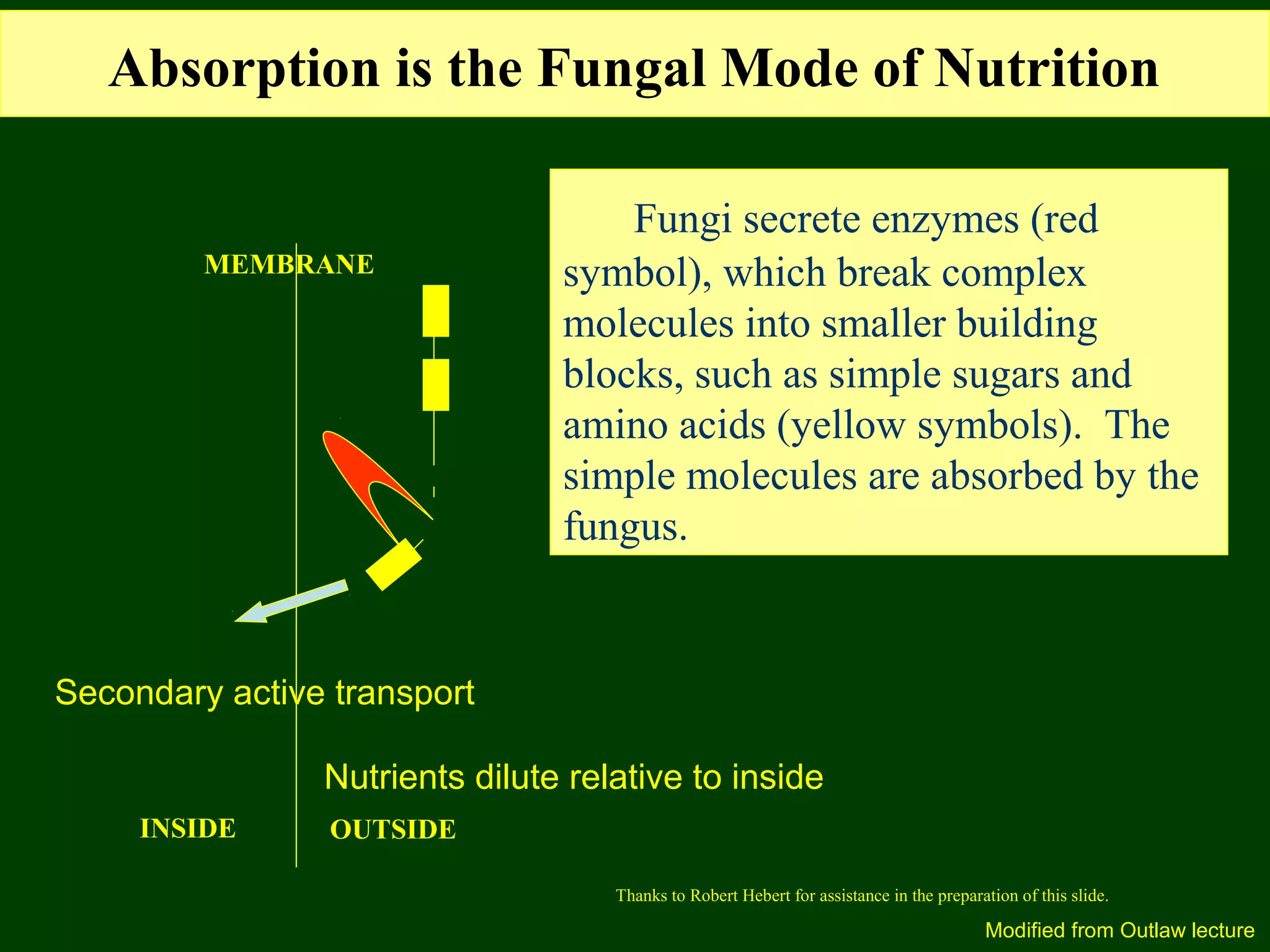
Fungi secrete enzymes (red
symbol), which break complex
molecules into smaller building
blocks, such as simple sugars and
amino acids (yellow symbols). The
simple molecules are absorbed by the
fungus.
MEMBRANE
INSIDE OUTSIDE
Absorption is the Fungal Mode of Nutrition
Thanks to Robert Hebert for assistance in the preparation of this slide.
Nutrients dilute relative to inside
Secondary active transport
Modified from Outlaw lecture
Some important characteristics of fungi
• Eukaryotes
• Cell walls of chitin (not found in plants, found in animals)
• Heterotrophic absorption
• Secretion of digestive enzymes
• Active transport
• Filamentous hyphae (some unicellular forms)
Rhizopus (zygomycete) on strawberries
Filamentous hyphae
Mycelium - mass of hyphae
Growth occurs at tips of hyphae
Some have partitions called septa
May be specialized
e.g. rhizoids anchor to
substrate and haustoria
absorb from living cells
Some important characteristics of fungi
• Eukaryotes
• Cell walls of chitin (not found in plants, found in animals)
• Heterotrophic absorption
• Secretion of digestive enzymes
• Active transport
• Filamentous hyphae (some unicellular forms)
• Spores produced sexually and asexually
• Sexual reproduction by zygotic meiosis
Characteristics of phyla of fungi
Phylum
Type of sexual
spores
Representatives
Common plant
diseases
Zygomycota
Zygospore in
zygosporangium
Bread mold,
endomycorrhizal
fungi
Soft rot
Ascomycota
Ascospore in
ascus as part of
ascocarp
Powdery
mildews,
morels, truffles
Powdery
mildew,
chestnut blight,
Dutch elm
disease
Basidiomycota
Basidiospore in
basidium as part
of basidiocarp
Mushrooms,
stinkhorns,
puffballs, shelf
fungi, rusts,
smuts
Black stem rust
of cereals, corn
smut, root rot
Today
Importance of fungi
Kingdom Fungi
Classification
Characteristics
Zygomycetes
Ascomycetes
Basidiomycetes
Zygomycete life cycle
Zygospore, distinguishing characteristic, is only diploid cellModified from Outlaw lecture
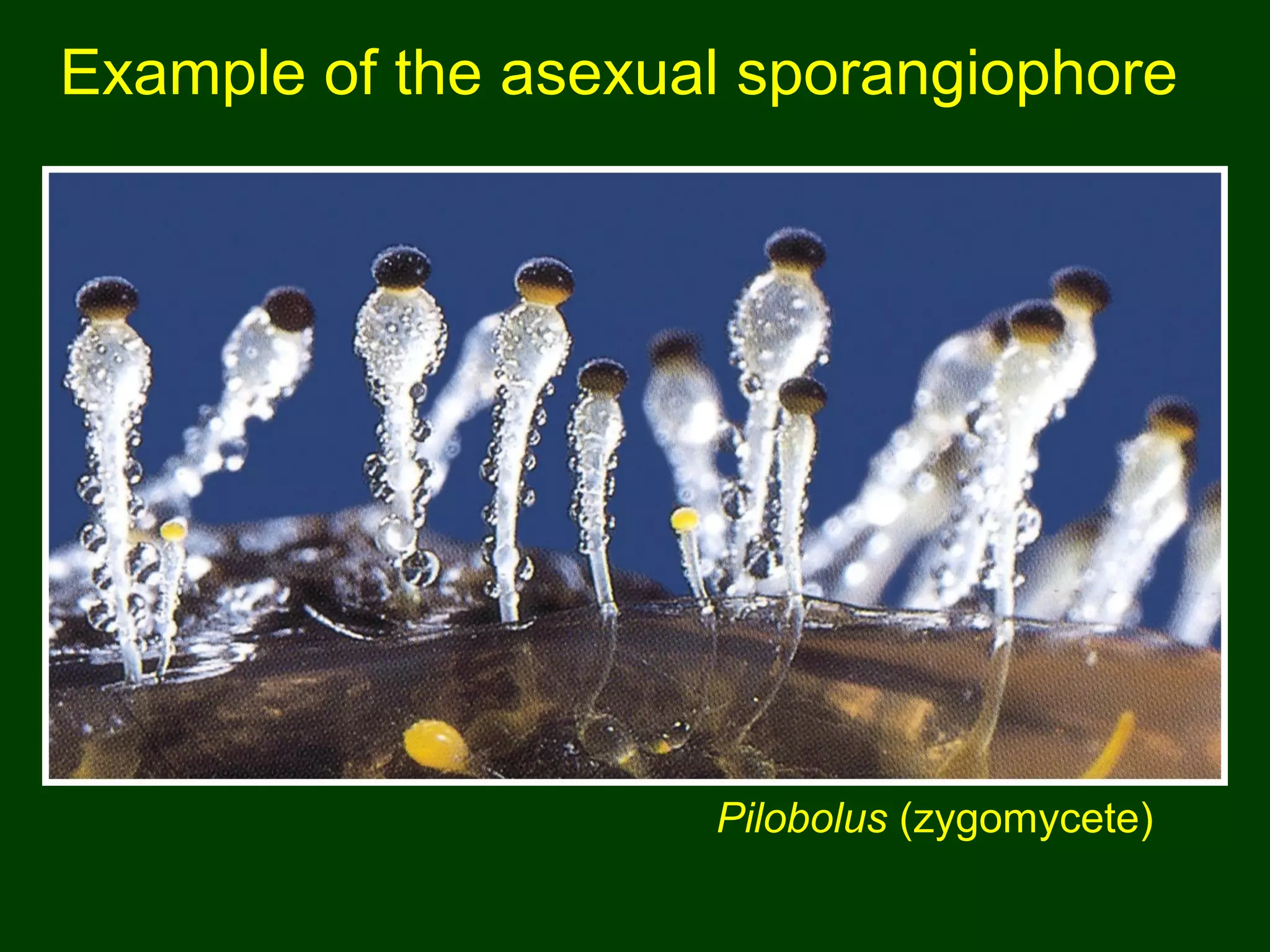
Example of the asexual sporangiophore
Pilobolus (zygomycete)
Zygospores of Rhizopus nigricans
Thanks to Robert Hebert and Kim Riddle for this image.
Gametangia
Zygospores
Today
Importance of fungi
Kingdom Fungi
Classification
Characteristics
Zygomycetes
Ascomycetes
Basidiomycetes
Ascomycete life cycle
Distinguishing characteristics
Plasmogamy
Karyogamy
Conidia of Nomuraea
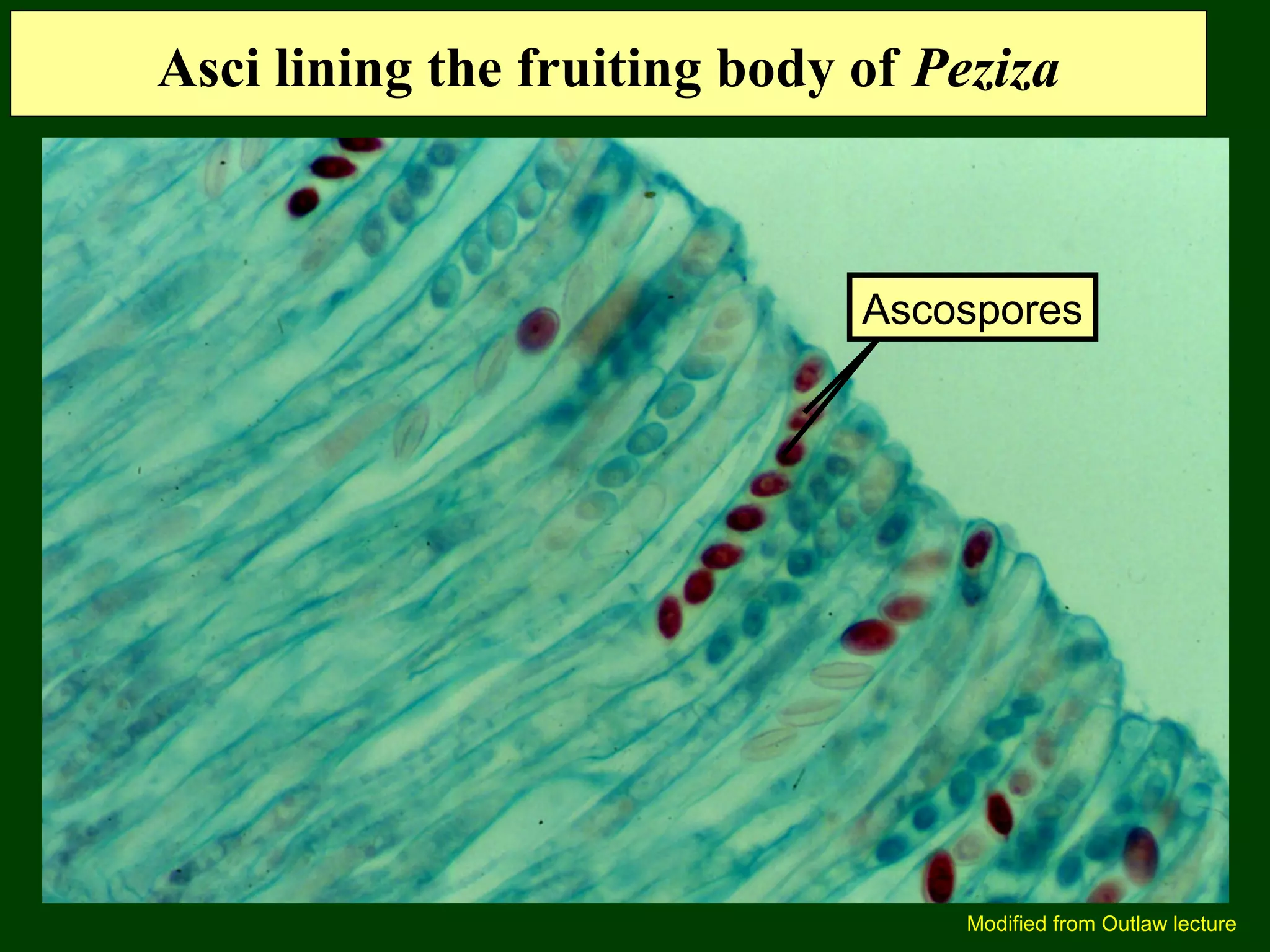
Asci lining the fruiting body of Peziza
Ascospores
Modified from Outlaw lecture
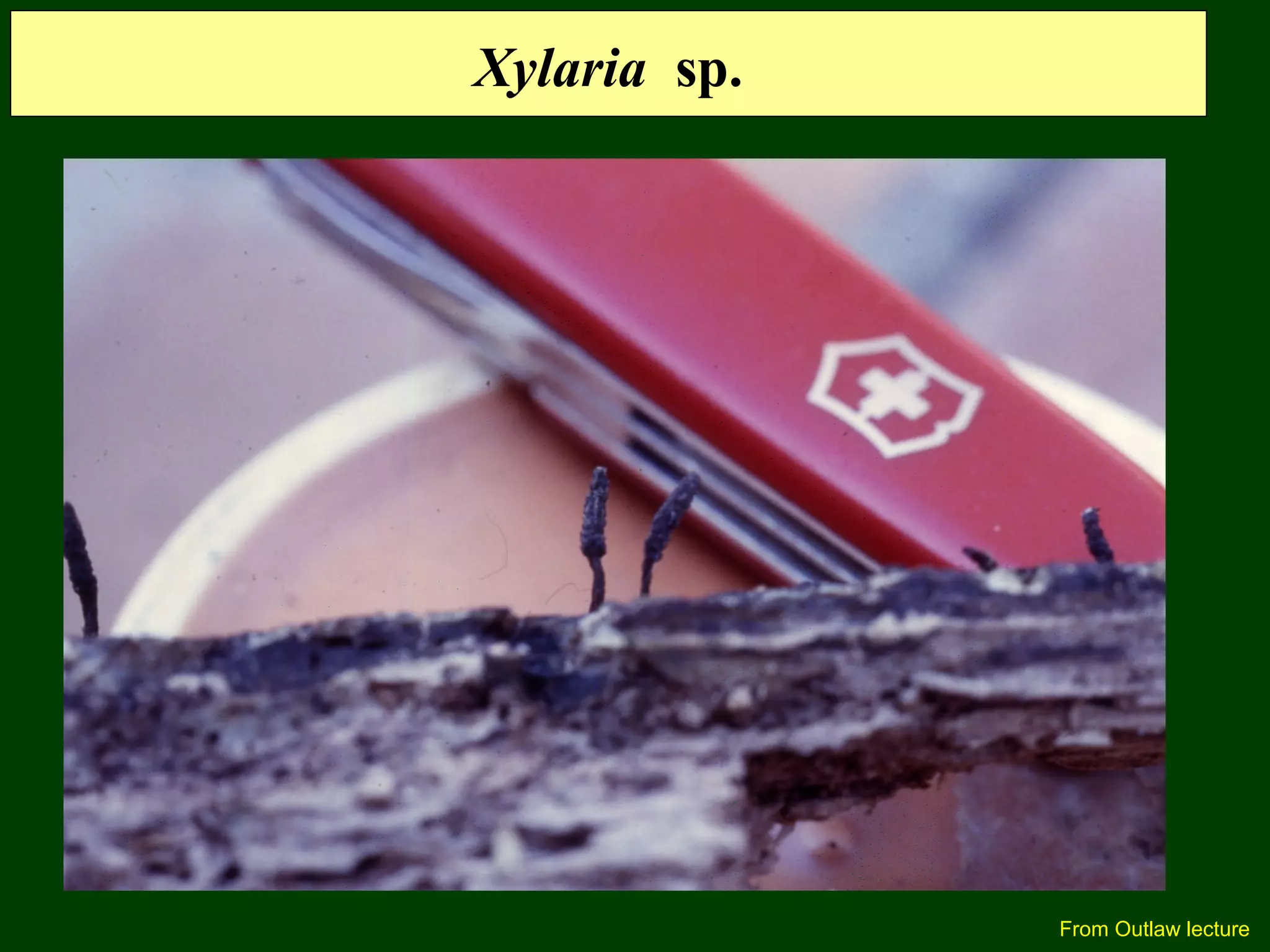
Appearance of prototypical ascomycete
From Outlaw lecture
Xylaria sp.
From Outlaw lecture
Common edible morel, Morchella esculenta (ascomycete)
World’s most expensive truffle
White Alba
Almost 3 pounds
$112, 000
Photo from Wikipedia
Truffles
Black truffle
(Tuber melanosporum)
ascocarp (pictured) found beneath the soil surface
Botryosphaeria dothidea on Adina apple
Thanks to Robert Hebert and Kim Riddle for this image.
From Outlaw lecture
Today
Importance of fungi
Kingdom Fungi
Classification
Characteristics
Zygomycetes
Ascomycetes
Basidiomycetes
Basidiomycete life cycle
From Outlaw lecture
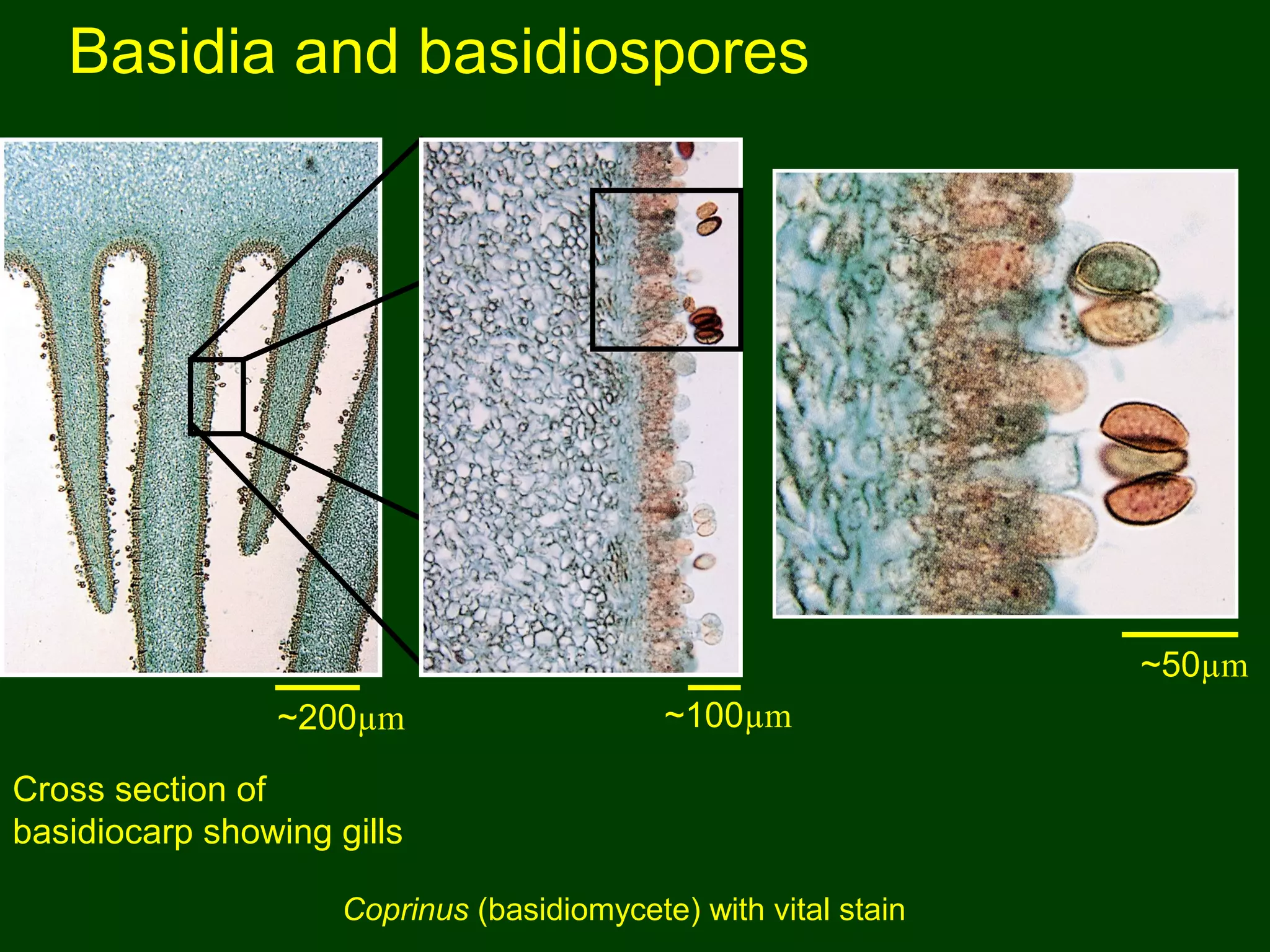
Basidia and basidiospores
Cross section of
basidiocarp showing gills
Coprinus (basidiomycete) with vital stain
~200µm ~100µm
~50µm
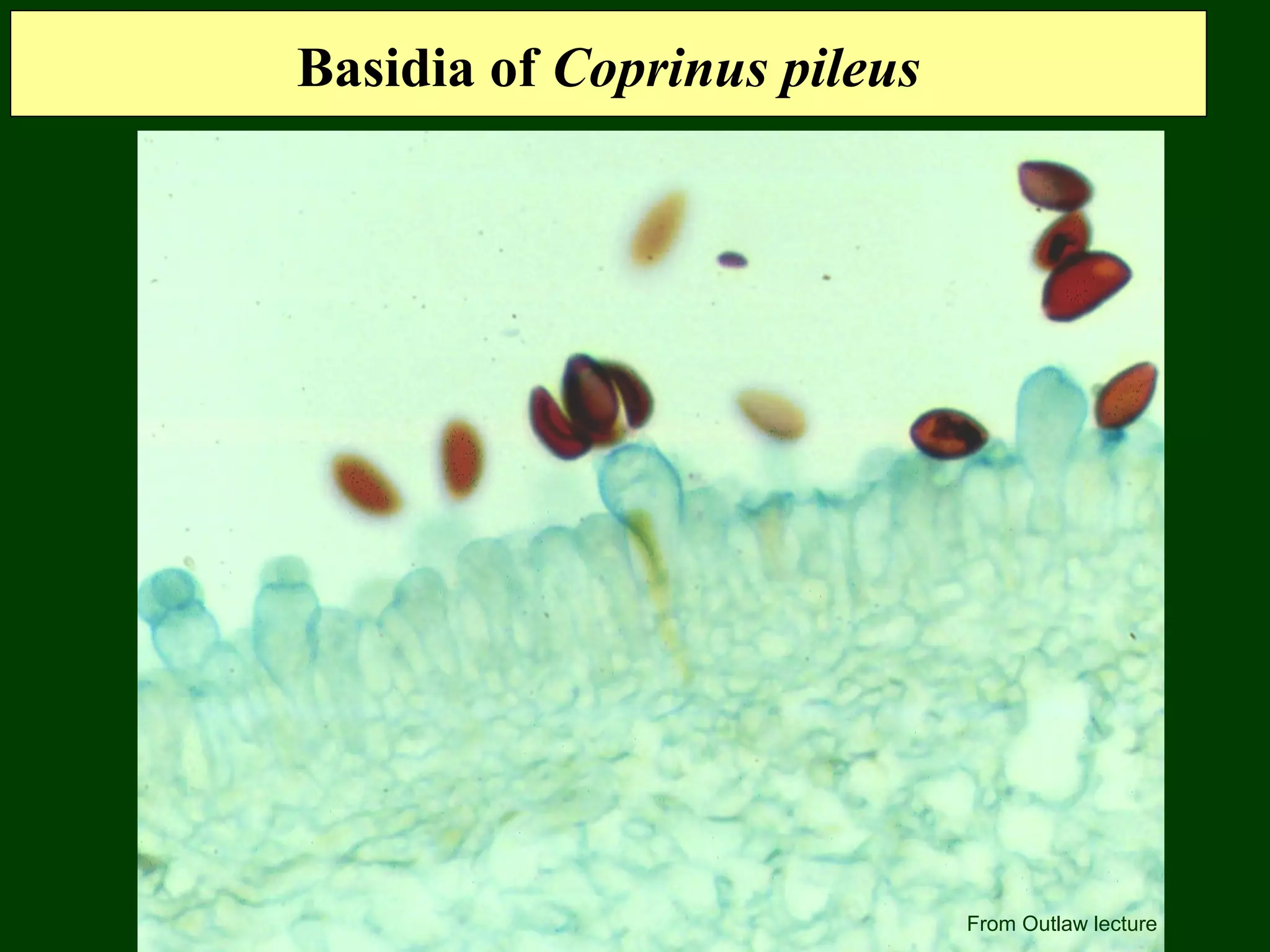
Basidia of Coprinus pileus
From Outlaw lecture
SEM inky cap mushroom, Coprinus cinereus (basidiomycete)
Basidia at time of
basidospore release
Basidia and basidiospores
4 basidiospores atop
a single basidium
~25µm
~10µm
Polypore example
Polyporus arcularius
Shelf fungus example
Ganoderma applanatum
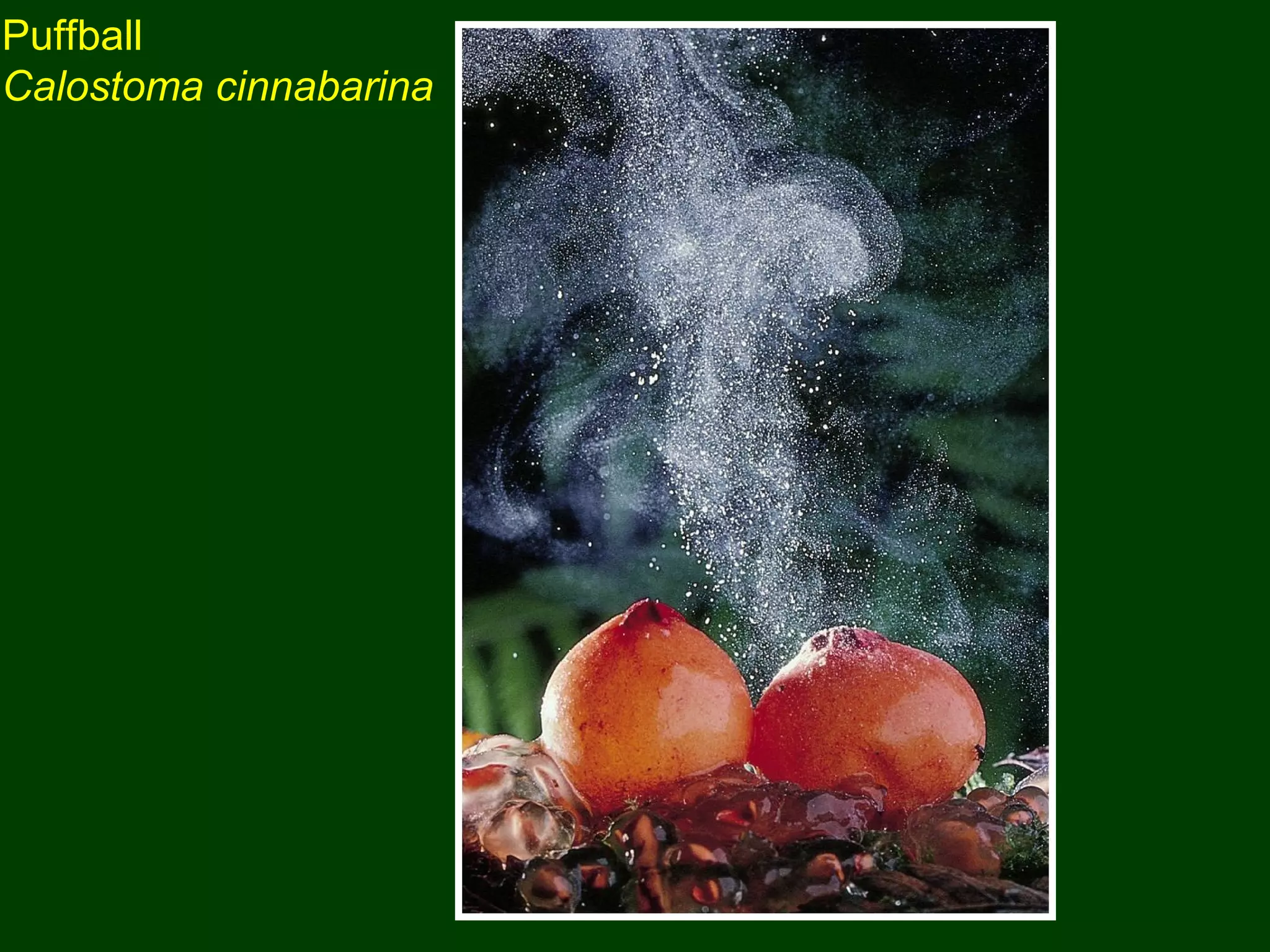
Puffball
Calostoma cinnabarina
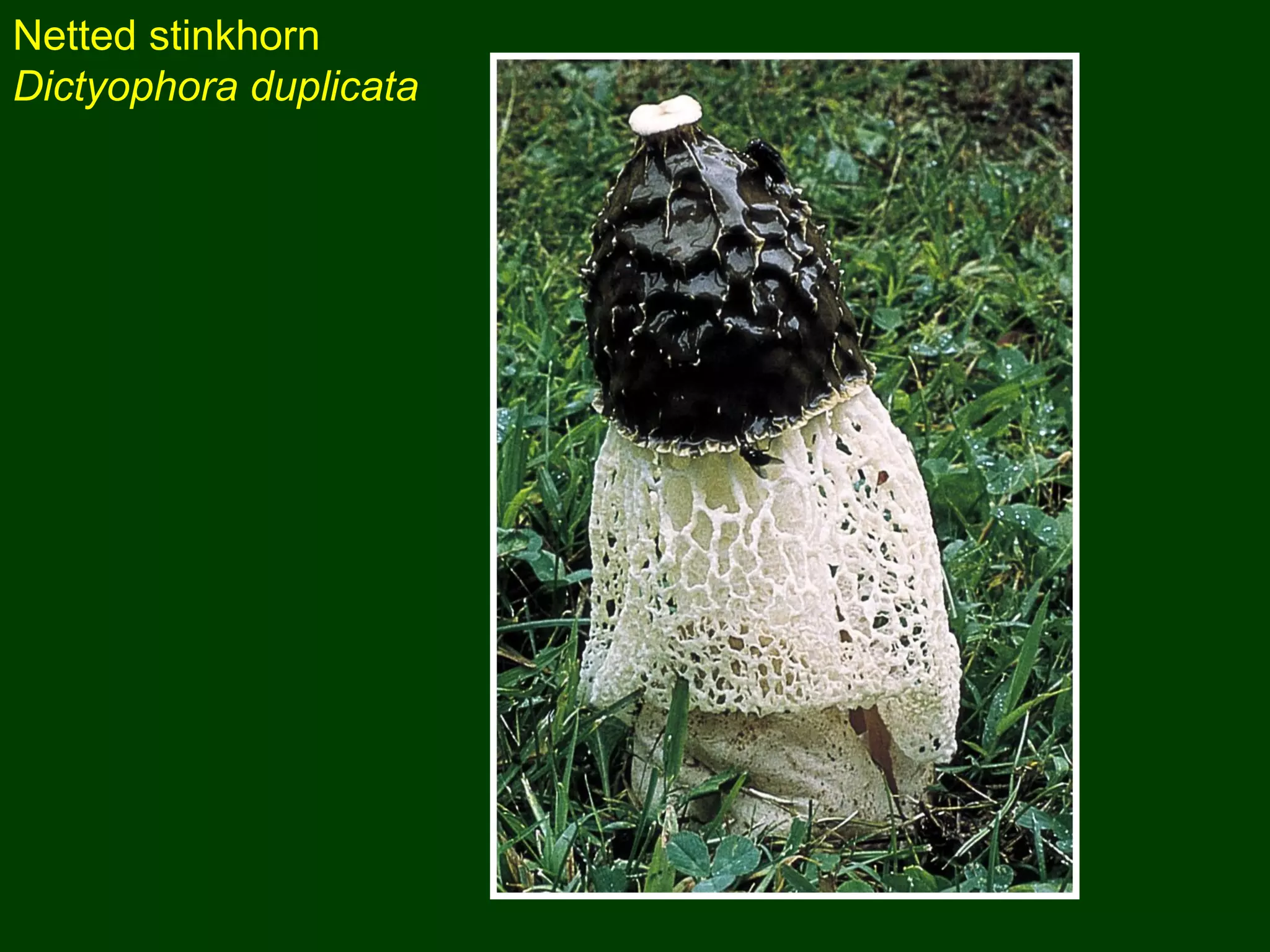
Netted stinkhorn
Dictyophora duplicata
White-egg bird’s-nest
Crucibulum laeve
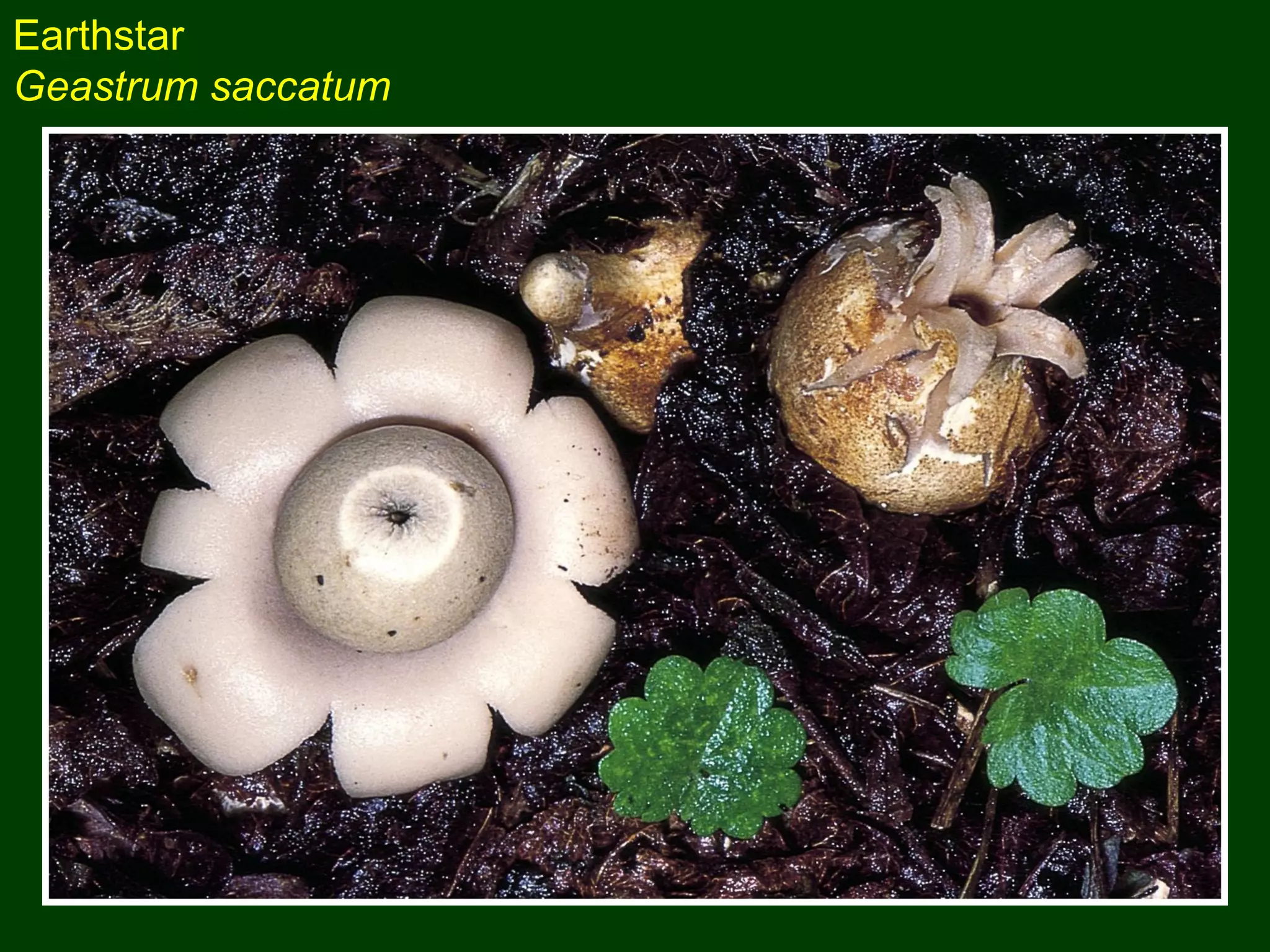
Earthstar
Geastrum saccatum
Corn smut
Ustilago maydis
For a local collection go to Outlaw’s collection in the
lecture series
The yeast growth form
Present in ascomycetes, zygomycetes, and basidiosmycetes
Saccharomyces cerevisiae (ascomycete)
Single-cell formFilamentous form
Budding, a form of asexual reproduction
~25µm ~2.5µm

10 -fungi

  • 1.
    BOT3015L Fungi Presentation created byDanielle Sherdan All photos from Raven et al. Biology of Plants except when otherwise noted
  • 2.
    Tree of Life www.tolweb.org Plants(embryophytes) Angiosperms Gymnosperms, seedless, and non-vascular Animals Fungi (today) Protists Endosymbiosis Molecular evidence that both animals and fungi diverged from a common ancestor, likely a colonial protist Choanoflagellate, colonial protist
  • 3.
    Today Importance of fungi KingdomFungi Classification Characteristics Zygomycetes Ascomycetes Basidiomycetes
  • 4.
    Today Importance of fungi KingdomFungi Classification Characteristics Zygomycetes Ascomycetes Basidiomycetes
  • 5.
    Fungi are important Cookingand baking Beer and wine production Cheese production Antibiotics Toxic waste cleanup Antibiotic production (cyclosporin, penicillin) Medical benefits (anti-cancer, anti-inflammatory) Parasites and diseases in animals (ringworm, aflatoxins) Parasites and diseases in plants (powdery mildew, smuts, rot) Decomposition and nutrient cycling Mycorrhizal associations
  • 6.
    Today Importance of fungi KingdomFungi Classification Characteristics Zygomycetes Ascomycetes Basidiomycetes
  • 7.
    Fungus Theme Slide BOT3015 Ascomycetes Basidiomycetes Zygomycetes From Outlaw lecture Notice that, based on molecular data, fungi are more closely related to animals than plants
  • 8.
    Zygomycete Basidiomycete Ascomycete Similar * Formation ofspores within zygosporangium. * No cross walls between cells. Formation of spores in ascus. Formation of spores on basidium. Classification using sexual reproduction (more later) Modified from Outlaw lecture
  • 9.
    Some important characteristicsof fungi • Eukaryotes • Cell walls of chitin (not found in plants, found in animals) • Heterotrophic absorption • Secretion of digestive enzymes • Active transport
  • 10.
    Fungi secrete enzymes(red symbol), which break complex molecules into smaller building blocks, such as simple sugars and amino acids (yellow symbols). The simple molecules are absorbed by the fungus. MEMBRANE INSIDE OUTSIDE Absorption is the Fungal Mode of Nutrition Thanks to Robert Hebert for assistance in the preparation of this slide. Nutrients dilute relative to inside Secondary active transport Modified from Outlaw lecture
  • 11.
    Some important characteristicsof fungi • Eukaryotes • Cell walls of chitin (not found in plants, found in animals) • Heterotrophic absorption • Secretion of digestive enzymes • Active transport • Filamentous hyphae (some unicellular forms)
  • 12.
    Rhizopus (zygomycete) onstrawberries Filamentous hyphae Mycelium - mass of hyphae Growth occurs at tips of hyphae Some have partitions called septa May be specialized e.g. rhizoids anchor to substrate and haustoria absorb from living cells
  • 13.
    Some important characteristicsof fungi • Eukaryotes • Cell walls of chitin (not found in plants, found in animals) • Heterotrophic absorption • Secretion of digestive enzymes • Active transport • Filamentous hyphae (some unicellular forms) • Spores produced sexually and asexually • Sexual reproduction by zygotic meiosis
  • 14.
    Characteristics of phylaof fungi Phylum Type of sexual spores Representatives Common plant diseases Zygomycota Zygospore in zygosporangium Bread mold, endomycorrhizal fungi Soft rot Ascomycota Ascospore in ascus as part of ascocarp Powdery mildews, morels, truffles Powdery mildew, chestnut blight, Dutch elm disease Basidiomycota Basidiospore in basidium as part of basidiocarp Mushrooms, stinkhorns, puffballs, shelf fungi, rusts, smuts Black stem rust of cereals, corn smut, root rot
  • 15.
    Today Importance of fungi KingdomFungi Classification Characteristics Zygomycetes Ascomycetes Basidiomycetes
  • 16.
    Zygomycete life cycle Zygospore,distinguishing characteristic, is only diploid cellModified from Outlaw lecture
  • 17.
    Example of theasexual sporangiophore Pilobolus (zygomycete)
  • 18.
    Zygospores of Rhizopusnigricans Thanks to Robert Hebert and Kim Riddle for this image. Gametangia Zygospores
  • 19.
    Today Importance of fungi KingdomFungi Classification Characteristics Zygomycetes Ascomycetes Basidiomycetes
  • 20.
    Ascomycete life cycle Distinguishingcharacteristics Plasmogamy Karyogamy Conidia of Nomuraea
  • 21.
    Asci lining thefruiting body of Peziza Ascospores Modified from Outlaw lecture
  • 22.
    Appearance of prototypicalascomycete From Outlaw lecture
  • 23.
  • 24.
    Common edible morel,Morchella esculenta (ascomycete)
  • 25.
    World’s most expensivetruffle White Alba Almost 3 pounds $112, 000 Photo from Wikipedia Truffles Black truffle (Tuber melanosporum) ascocarp (pictured) found beneath the soil surface
  • 26.
    Botryosphaeria dothidea onAdina apple Thanks to Robert Hebert and Kim Riddle for this image. From Outlaw lecture
  • 27.
    Today Importance of fungi KingdomFungi Classification Characteristics Zygomycetes Ascomycetes Basidiomycetes
  • 28.
  • 29.
    Basidia and basidiospores Crosssection of basidiocarp showing gills Coprinus (basidiomycete) with vital stain ~200µm ~100µm ~50µm
  • 30.
    Basidia of Coprinuspileus From Outlaw lecture
  • 31.
    SEM inky capmushroom, Coprinus cinereus (basidiomycete) Basidia at time of basidospore release Basidia and basidiospores 4 basidiospores atop a single basidium ~25µm ~10µm
  • 32.
  • 33.
  • 34.
  • 35.
  • 36.
  • 37.
  • 38.
  • 39.
    For a localcollection go to Outlaw’s collection in the lecture series
  • 40.
    The yeast growthform Present in ascomycetes, zygomycetes, and basidiosmycetes Saccharomyces cerevisiae (ascomycete) Single-cell formFilamentous form Budding, a form of asexual reproduction ~25µm ~2.5µm