OBJECTIVE
List types of induction therapy and their mechanism of
action.
List common viral infections post- transplant,
specifically cytomegalovirus (CMV), Epstein-Barr virus
(EBV) and BK virus and compare their risk factors.
Interpret and compare available literature around
potential risk of viral infection associated with various
induction therapy.
Discuss updated literature and integrate into practice.
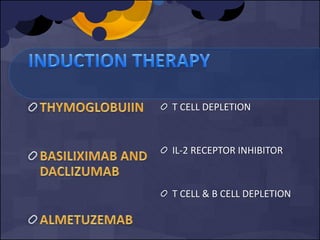
T CELL DEPLETION
IL-2 RECEPTOR INHIBITOR
T CELL & B CELL DEPLETION
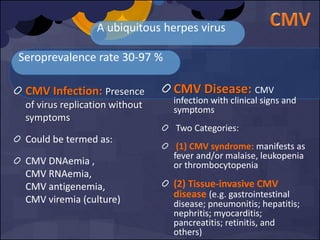
Seroprevalence rate 30-97 %
CMV Infection: Presence
of virus replication without
symptoms
Could be termed as:
CMV DNAemia ,
CMV RNAemia,
CMV antigenemia,
CMV viremia (culture)
A ubiquitous herpes virus
CMV Disease: CMV
infection with clinical signs and
symptoms
Two Categories:
(1) CMV syndrome: manifests as
fever and/or malaise, leukopenia
or thrombocytopenia
(2) Tissue-invasive CMV
disease (e.g. gastrointestinal
disease; pneumonitis; hepatitis;
nephritis; myocarditis;
pancreatitis; retinitis, and
others)
CMV donor +, recipient – [D+R–]
Use of lymphocyte-depleting agents
Immunosuppressive protocol ( type of drug, dose, timing,
duration)
Transplant Recipient factors (e.g. age, comorbidity,
leukopenia and lymphopenia, genetic factors, cold
ischemia time, critical illness, stress)
Transplant type. E.g. Lung and small intestinal
Confections with human herpes virus (HHV)-6 and HHV-7
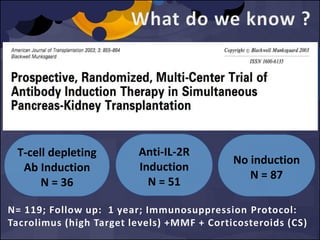
Anti-IL-2R
Induction
N = 51
No induction
N = 87
T-cell depleting
Ab Induction
N = 36
N= 119; Follow up: 1 year; Immunosuppression Protocol:
Tacrolimus (high Target levels) +MMF + Corticosteroids (CS)
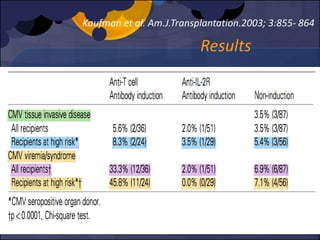
Kaufman et al. Am.J.Transplantation.2003; 3:855- 864
Results
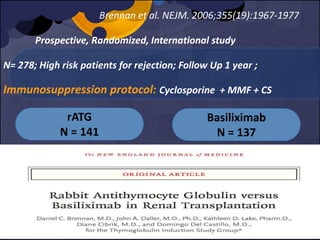
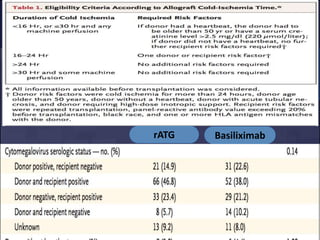
Brennan et al. NEJM. 2006;355(19):1967-1977
Prospective, Randomized, International study
N= 278; High risk patients for rejection; Follow Up 1 year ;
Immunosuppression protocol: Cyclosporine + MMF + CS
rATG
N = 141
Basiliximab
N = 137
rATG Basiliximab
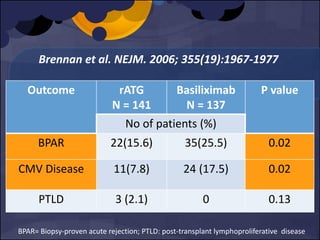
Brennan et al. NEJM. 2006; 355(19):1967-1977
Outcome rATG
N = 141
Basiliximab
N = 137
P value
No of patients (%)
BPAR 22(15.6) 35(25.5) 0.02
CMV Disease 11(7.8) 24 (17.5) 0.02
PTLD 3 (2.1) 0 0.13
BPAR= Biopsy-proven acute rejection; PTLD: post-transplant lymphoproliferative disease
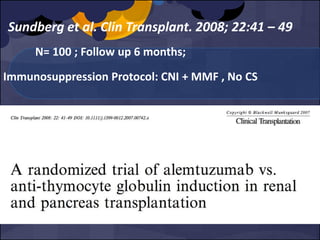
Sundberg et al. Clin Transplant. 2008; 22:41 – 49
N= 100 ; Follow up 6 months;
Immunosuppression Protocol: CNI + MMF , No CS
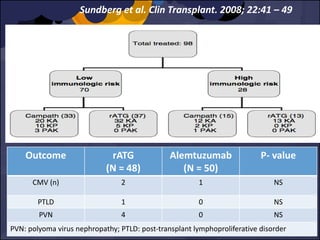
Sundberg et al. Clin Transplant. 2008; 22:41 – 49
Outcome rATG
(N = 48)
Alemtuzumab
(N = 50)
P- value
CMV (n) 2 1 NS
PTLD 1 0 NS
PVN 4 0 NS
PVN: polyoma virus nephropathy; PTLD: post-transplant lymphoproliferative disorder
Annals of Surgery. 2014; 259: 888-893
N= 200
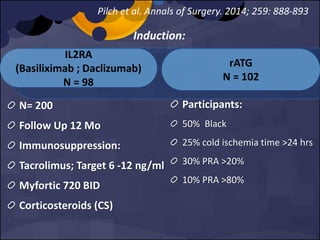
Pilch et al. Annals of Surgery. 2014; 259: 888-893
Induction:
IL2RA
(Basiliximab ; Daclizumab)
N = 98
N= 200
Follow Up 12 Mo
Immunosuppression:
Tacrolimus; Target 6 -12 ng/ml
Myfortic 720 BID
Corticosteroids (CS)
rATG
N = 102
Participants:
50% Black
25% cold ischemia time >24 hrs
30% PRA >20%
10% PRA >80%
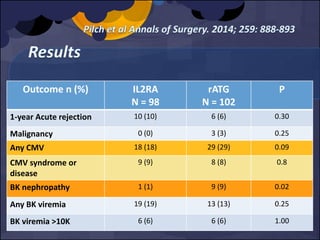
Outcome n (%) IL2RA
N = 98
rATG
N = 102
P
1-year Acute rejection 10 (10) 6 (6) 0.30
Malignancy 0 (0) 3 (3) 0.25
Any CMV 18 (18) 29 (29) 0.09
CMV syndrome or
disease
9 (9) 8 (8) 0.8
BK nephropathy 1 (1) 9 (9) 0.02
Any BK viremia 19 (19) 13 (13) 0.25
BK viremia >10K 6 (6) 6 (6) 1.00
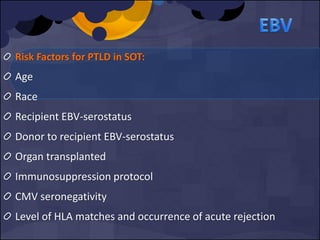
Risk Factors for PTLD in SOT:
Age
Race
Recipient EBV-serostatus
Donor to recipient EBV-serostatus
Organ transplanted
Immunosuppression protocol
CMV seronegativity
Level of HLA matches and occurrence of acute rejection
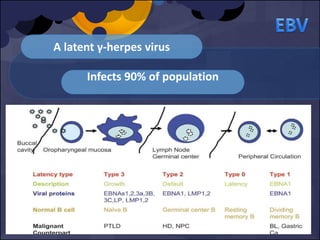
A latent γ-herpes virus
Infects 90% of population
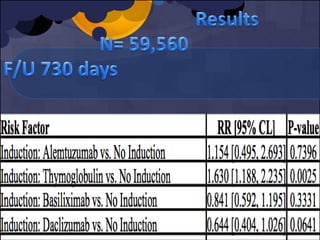
Kirk et al. Am J Transplant. 20077(11): 2619–2625.
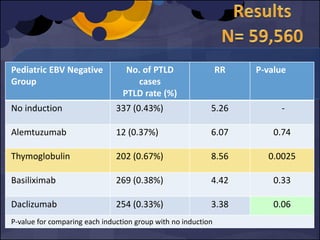
Pediatric EBV Negative
Group
No. of PTLD
cases
PTLD rate (%)
RR P-value
No induction 337 (0.43%) 5.26 -
Alemtuzumab 12 (0.37%) 6.07 0.74
Thymoglobulin 202 (0.67%) 8.56 0.0025
Basiliximab 269 (0.38%) 4.42 0.33
Daclizumab 254 (0.33%) 3.38 0.06
P-value for comparing each induction group with no induction
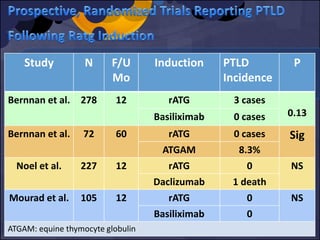
PTLD Incidence with rATG
Study N F/U
Mo
Induction PTLD
Incidence
P
Bernnan et al. 278 12 rATG 3 cases
0.13Basiliximab 0 cases
Bernnan et al. 72 60 rATG 0 cases Sig
ATGAM 8.3%
Noel et al. 227 12 rATG 0 NS
Daclizumab 1 death
Mourad et al. 105 12 rATG 0 NS
Basiliximab 0
ATGAM: equine thymocyte globulin
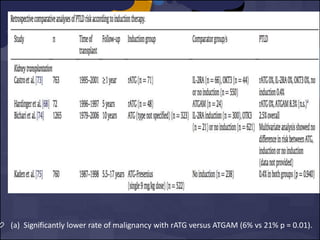
(a) Significantly lower rate of malignancy with rATG versus ATGAM (6% vs 21% p = 0.01).
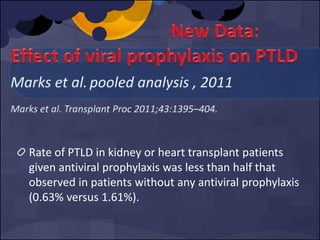
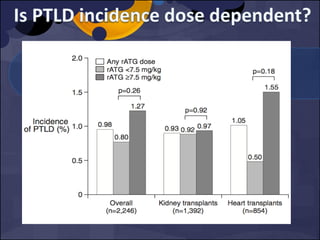
Rate of PTLD in kidney or heart transplant patients
given antiviral prophylaxis was less than half that
observed in patients without any antiviral prophylaxis
(0.63% versus 1.61%).
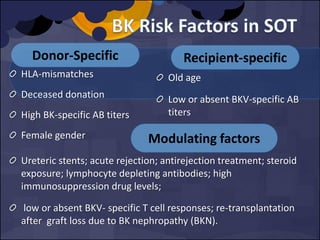
Donor-Specific
HLA-mismatches
Deceased donation
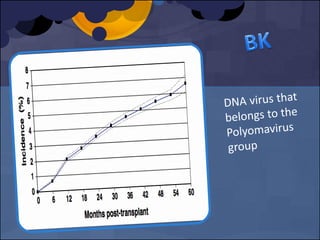
High BK-specific AB titers
Female gender
Recipient-specific
Old age
Low or absent BKV-specific AB
titers
Modulating factors
Ureteric stents; acute rejection; antirejection treatment; steroid
exposure; lymphocyte depleting antibodies; high
immunosuppression drug levels;
low or absent BKV- specific T cell responses; re-transplantation
after graft loss due to BK nephropathy (BKN).
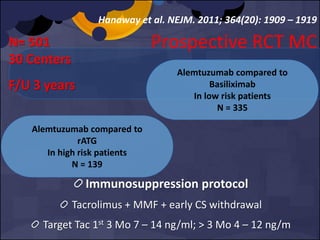
Hanaway et al. NEJM. 2011; 364(20): 1909 – 1919
Prospective RCT MC
Alemtuzumab compared to
Basiliximab
In low risk patients
N = 335
Immunosuppression protocol
Tacrolimus + MMF + early CS withdrawal
Target Tac 1st 3 Mo 7 – 14 ng/ml; > 3 Mo 4 – 12 ng/m
Alemtuzumab compared to
rATG
In high risk patients
N = 139
N= 501
30 Centers
F/U 3 years
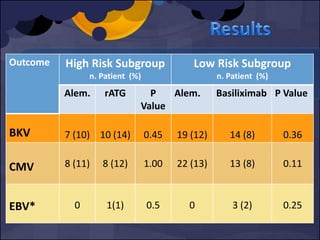
Outcome High Risk Subgroup
n. Patient (%)
Low Risk Subgroup
n. Patient (%)
Alem. rATG P
Value
Alem. Basiliximab P Value
BKV 7 (10) 10 (14) 0.45 19 (12) 14 (8) 0.36
CMV 8 (11) 8 (12) 1.00 22 (13) 13 (8) 0.11
EBV* 0 1(1) 0.5 0 3 (2) 0.25
MA of 10 RCTs, N = 1223 patients
Morgan et al. Transplantation 2012; 93: 1179 -1188
MA of 10 RCTs, N = 1223 patients
Morgan et al. Transplantation 2012; 93: 1179 -1188
[6 RCT]
Only One Study showed Sig
higher incidence of CMV
infection with Alemtuzumab
vs no induction (28% vs 12%,
p= 0.03)
No tissue invasive episodes
in alemtuzumab.
6 RCT
4 RCT  No PTLD cases in alemtuzumab or control gps.
[max. F/U 5 years]
1 RCT  1 PTLD case in alemtuzumab gp vs. none in
control gp. [F/U 36 Mo]
1 RCT  Two PTLD cases in alemtuzumab gp vs. one
in basiliximab. [ F/U 12 Mo]
MA of 10 RCTs, N = 1223 patients
Morgan et al. Transplantation 2012; 93: 1179 -1188
Conclusion
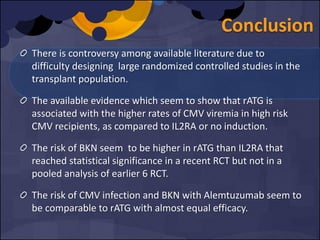
There is controversy among available literature due to
difficulty designing large randomized controlled studies in the
transplant population.
The available evidence which seem to show that rATG is
associated with the higher rates of CMV viremia in high risk
CMV recipients, as compared to IL2RA or no induction.
The risk of BKN seem to be higher in rATG than IL2RA that
reached statistical significance in a recent RCT but not in a
pooled analysis of earlier 6 RCT.
The risk of CMV infection and BKN with Alemtuzumab seem to
be comparable to rATG with almost equal efficacy.
Conclusion
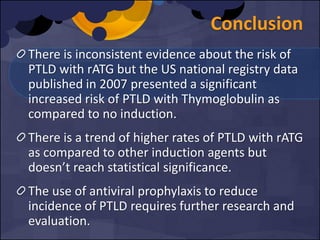
There is inconsistent evidence about the risk of
PTLD with rATG but the US national registry data
published in 2007 presented a significant
increased risk of PTLD with Thymoglobulin as
compared to no induction.
There is a trend of higher rates of PTLD with rATG
as compared to other induction agents but
doesn’t reach statistical significance.
The use of antiviral prophylaxis to reduce
incidence of PTLD requires further research and
evaluation.
The real challenge is to individualize
immunosuppression regimen to reach that
balance between risk of rejection and risk of
infection.
We are in the era of personalized
immunosuppression which demands some art
along with involved talented care provider.
1. Kaufmana et al. .American Journal of Transplantation 2003; 3: 855–864.
2. Brennan et al. NEJM. 2006;355(19):1967-1977.
3. Sundberg et al. Clin Transplant. 2008; 22:41 – 49.
3. Pilch, NA et al. Annals of Surgery. 2014; 259: 888-893.
4. Kirk et al. Am J Transplant. 2007; 7(11): 2619–2625.
5. Hertig, A; Zuckermann, A. Transplant Immunology 32 (2015) 179–187.
6. Marks et al. Transplant Proc 2011;43:1395–404.
7. Hanaway et al. NEJM. 2011; 364(20): 1909 – 1919.
8. Morgan et al. Transplantation 2012; 93: 1179 -1188.

FINAL_INDUCTION_VIRAL INF_PRESENTATION

  • 3.
    OBJECTIVE List types ofinduction therapy and their mechanism of action. List common viral infections post- transplant, specifically cytomegalovirus (CMV), Epstein-Barr virus (EBV) and BK virus and compare their risk factors. Interpret and compare available literature around potential risk of viral infection associated with various induction therapy. Discuss updated literature and integrate into practice.
  • 4.
    T CELL DEPLETION IL-2RECEPTOR INHIBITOR T CELL & B CELL DEPLETION
  • 6.
    Seroprevalence rate 30-97% CMV Infection: Presence of virus replication without symptoms Could be termed as: CMV DNAemia , CMV RNAemia, CMV antigenemia, CMV viremia (culture) A ubiquitous herpes virus CMV Disease: CMV infection with clinical signs and symptoms Two Categories: (1) CMV syndrome: manifests as fever and/or malaise, leukopenia or thrombocytopenia (2) Tissue-invasive CMV disease (e.g. gastrointestinal disease; pneumonitis; hepatitis; nephritis; myocarditis; pancreatitis; retinitis, and others)
  • 7.
    CMV donor +,recipient – [D+R–] Use of lymphocyte-depleting agents Immunosuppressive protocol ( type of drug, dose, timing, duration) Transplant Recipient factors (e.g. age, comorbidity, leukopenia and lymphopenia, genetic factors, cold ischemia time, critical illness, stress) Transplant type. E.g. Lung and small intestinal Confections with human herpes virus (HHV)-6 and HHV-7
  • 8.
    Anti-IL-2R Induction N = 51 Noinduction N = 87 T-cell depleting Ab Induction N = 36 N= 119; Follow up: 1 year; Immunosuppression Protocol: Tacrolimus (high Target levels) +MMF + Corticosteroids (CS)
  • 9.
    Kaufman et al.Am.J.Transplantation.2003; 3:855- 864 Results
  • 10.
    Brennan et al.NEJM. 2006;355(19):1967-1977 Prospective, Randomized, International study N= 278; High risk patients for rejection; Follow Up 1 year ; Immunosuppression protocol: Cyclosporine + MMF + CS rATG N = 141 Basiliximab N = 137
  • 11.
  • 12.
    Brennan et al.NEJM. 2006; 355(19):1967-1977 Outcome rATG N = 141 Basiliximab N = 137 P value No of patients (%) BPAR 22(15.6) 35(25.5) 0.02 CMV Disease 11(7.8) 24 (17.5) 0.02 PTLD 3 (2.1) 0 0.13 BPAR= Biopsy-proven acute rejection; PTLD: post-transplant lymphoproliferative disease
  • 13.
    Sundberg et al.Clin Transplant. 2008; 22:41 – 49 N= 100 ; Follow up 6 months; Immunosuppression Protocol: CNI + MMF , No CS
  • 14.
    Sundberg et al.Clin Transplant. 2008; 22:41 – 49 Outcome rATG (N = 48) Alemtuzumab (N = 50) P- value CMV (n) 2 1 NS PTLD 1 0 NS PVN 4 0 NS PVN: polyoma virus nephropathy; PTLD: post-transplant lymphoproliferative disorder
  • 15.
    Annals of Surgery.2014; 259: 888-893 N= 200
  • 16.
    Pilch et al.Annals of Surgery. 2014; 259: 888-893 Induction: IL2RA (Basiliximab ; Daclizumab) N = 98 N= 200 Follow Up 12 Mo Immunosuppression: Tacrolimus; Target 6 -12 ng/ml Myfortic 720 BID Corticosteroids (CS) rATG N = 102 Participants: 50% Black 25% cold ischemia time >24 hrs 30% PRA >20% 10% PRA >80%
  • 17.
    Outcome n (%)IL2RA N = 98 rATG N = 102 P 1-year Acute rejection 10 (10) 6 (6) 0.30 Malignancy 0 (0) 3 (3) 0.25 Any CMV 18 (18) 29 (29) 0.09 CMV syndrome or disease 9 (9) 8 (8) 0.8 BK nephropathy 1 (1) 9 (9) 0.02 Any BK viremia 19 (19) 13 (13) 0.25 BK viremia >10K 6 (6) 6 (6) 1.00
  • 19.
    Risk Factors forPTLD in SOT: Age Race Recipient EBV-serostatus Donor to recipient EBV-serostatus Organ transplanted Immunosuppression protocol CMV seronegativity Level of HLA matches and occurrence of acute rejection
  • 20.
    A latent γ-herpesvirus Infects 90% of population
  • 21.
    Kirk et al.Am J Transplant. 20077(11): 2619–2625.
  • 23.
    Pediatric EBV Negative Group No.of PTLD cases PTLD rate (%) RR P-value No induction 337 (0.43%) 5.26 - Alemtuzumab 12 (0.37%) 6.07 0.74 Thymoglobulin 202 (0.67%) 8.56 0.0025 Basiliximab 269 (0.38%) 4.42 0.33 Daclizumab 254 (0.33%) 3.38 0.06 P-value for comparing each induction group with no induction
  • 24.
  • 25.
    Study N F/U Mo InductionPTLD Incidence P Bernnan et al. 278 12 rATG 3 cases 0.13Basiliximab 0 cases Bernnan et al. 72 60 rATG 0 cases Sig ATGAM 8.3% Noel et al. 227 12 rATG 0 NS Daclizumab 1 death Mourad et al. 105 12 rATG 0 NS Basiliximab 0 ATGAM: equine thymocyte globulin
  • 26.
    (a) Significantly lowerrate of malignancy with rATG versus ATGAM (6% vs 21% p = 0.01).
  • 27.
    Rate of PTLDin kidney or heart transplant patients given antiviral prophylaxis was less than half that observed in patients without any antiviral prophylaxis (0.63% versus 1.61%).
  • 31.
    Donor-Specific HLA-mismatches Deceased donation High BK-specificAB titers Female gender Recipient-specific Old age Low or absent BKV-specific AB titers Modulating factors Ureteric stents; acute rejection; antirejection treatment; steroid exposure; lymphocyte depleting antibodies; high immunosuppression drug levels; low or absent BKV- specific T cell responses; re-transplantation after graft loss due to BK nephropathy (BKN).
  • 32.
    Hanaway et al.NEJM. 2011; 364(20): 1909 – 1919
  • 33.
    Hanaway et al.NEJM. 2011; 364(20): 1909 – 1919 Prospective RCT MC Alemtuzumab compared to Basiliximab In low risk patients N = 335 Immunosuppression protocol Tacrolimus + MMF + early CS withdrawal Target Tac 1st 3 Mo 7 – 14 ng/ml; > 3 Mo 4 – 12 ng/m Alemtuzumab compared to rATG In high risk patients N = 139 N= 501 30 Centers F/U 3 years
  • 34.
    Outcome High RiskSubgroup n. Patient (%) Low Risk Subgroup n. Patient (%) Alem. rATG P Value Alem. Basiliximab P Value BKV 7 (10) 10 (14) 0.45 19 (12) 14 (8) 0.36 CMV 8 (11) 8 (12) 1.00 22 (13) 13 (8) 0.11 EBV* 0 1(1) 0.5 0 3 (2) 0.25
  • 35.
    MA of 10RCTs, N = 1223 patients Morgan et al. Transplantation 2012; 93: 1179 -1188
  • 36.
    MA of 10RCTs, N = 1223 patients Morgan et al. Transplantation 2012; 93: 1179 -1188 [6 RCT] Only One Study showed Sig higher incidence of CMV infection with Alemtuzumab vs no induction (28% vs 12%, p= 0.03) No tissue invasive episodes in alemtuzumab.
  • 37.
    6 RCT 4 RCT No PTLD cases in alemtuzumab or control gps. [max. F/U 5 years] 1 RCT  1 PTLD case in alemtuzumab gp vs. none in control gp. [F/U 36 Mo] 1 RCT  Two PTLD cases in alemtuzumab gp vs. one in basiliximab. [ F/U 12 Mo] MA of 10 RCTs, N = 1223 patients Morgan et al. Transplantation 2012; 93: 1179 -1188
  • 39.
    Conclusion There is controversyamong available literature due to difficulty designing large randomized controlled studies in the transplant population. The available evidence which seem to show that rATG is associated with the higher rates of CMV viremia in high risk CMV recipients, as compared to IL2RA or no induction. The risk of BKN seem to be higher in rATG than IL2RA that reached statistical significance in a recent RCT but not in a pooled analysis of earlier 6 RCT. The risk of CMV infection and BKN with Alemtuzumab seem to be comparable to rATG with almost equal efficacy.
  • 40.
    Conclusion There is inconsistentevidence about the risk of PTLD with rATG but the US national registry data published in 2007 presented a significant increased risk of PTLD with Thymoglobulin as compared to no induction. There is a trend of higher rates of PTLD with rATG as compared to other induction agents but doesn’t reach statistical significance. The use of antiviral prophylaxis to reduce incidence of PTLD requires further research and evaluation.
  • 41.
    The real challengeis to individualize immunosuppression regimen to reach that balance between risk of rejection and risk of infection. We are in the era of personalized immunosuppression which demands some art along with involved talented care provider.
  • 42.
    1. Kaufmana etal. .American Journal of Transplantation 2003; 3: 855–864. 2. Brennan et al. NEJM. 2006;355(19):1967-1977. 3. Sundberg et al. Clin Transplant. 2008; 22:41 – 49. 3. Pilch, NA et al. Annals of Surgery. 2014; 259: 888-893. 4. Kirk et al. Am J Transplant. 2007; 7(11): 2619–2625. 5. Hertig, A; Zuckermann, A. Transplant Immunology 32 (2015) 179–187. 6. Marks et al. Transplant Proc 2011;43:1395–404. 7. Hanaway et al. NEJM. 2011; 364(20): 1909 – 1919. 8. Morgan et al. Transplantation 2012; 93: 1179 -1188.

Editor's Notes

  • #3 Two events can occur early in the post-Tx period, acute rejection, and delayed graft function which negatively affect graft survival. There is a surge of immunologic molecules during brain death and during subsequent procurement of organs that predispose allograft from a deceased donors to acute rejection and delayed function. Therefore, induction therapy is given at the time of transplant to lower the incidence of acute rejection or to prevent or treat delayed graft function.
  • #5  Thymoglobulin (AKA rabbit antithymocyte globulin) , a lymphocyte-depleting polyclonal antibody that targets multiple immunologic epitopes. Basiliximab (simulect) or Daclizumab ( zenapax) , non-lymphocyte-depleting monoclonal antibodies that target the interleukin-2 receptor. Alemtuzumab is an effective T cell depleting agent, it is unique in that it also depletes B cells.
  • #6 Our focus will be on these three virauses
  • #7 CMV is a ubiquitousherpes virus that infects majority of humans. CMV is a major cause of morbidity and a preventable cause of mortality in (SOT). Primary infection manifests as an asymptomatic or self-limited febrile illness in immunocompetent individuals after which CMV becomes latent life-long in various cells. These cells serve as a reservoir for reactivation and as carrier of infection to others. Definitions: CMV infection can be termed as CMV DNAemia or RNAemia (NAT), CMV antigenemia (viral antigen testing) and CMV viremia (culture) CMV Disease: CMV infection accompanied by clinical signs and symptoms. CMV disease is categorized into: (1) CMV syndrome, which manifests as fever and/or malaise, leukopenia or thrombocytopenia, and (2) tissue-invasive CMV disease (e.g. gastrointestinal disease; pneumonitis; hepatitis; nephritis; myocarditis; pancreatitis; retinitis, others) Without a prevention strategy, CMV disease typically occurs during the first 3 months after SOT; this onset has been delayed in SOT patients receiving CMV prophylaxis
  • #8 CMV has a tendency to invade the allograft, likely in part due to aberrant immune response within the allograft It also has numerous indirect effects due to its ability to modulate the immune system. CMV has been associated with other infections such as bacteremia, invasive fungal disease and EBV- PTLD. CMV infection is an important contributor to acute and chronic allograft injury, including chronic allograft nephropathy (or tubulo- interstitial fibrosis in kidney recipients, bronchiolitis obliterans (lung recipients; and coronary vasculopathy (heart recipients;). CMV donor- seropositive, recipient-seronegative (D+R–) patient. Use of lymphocyte-depleting agents such as antilymphocyte antibodies is associated with CMV disease, particularly when these are used for rejection therapy. Overall state of immunosuppression as determined by the immunosuppressive protocol (e.g. type of drug, dose, timing, duration),e.g mTOR inhibitors (everolimus, sirolimus) is associated with a lower risk of CMV disease Host factors (e.g. age, comorbidity, leukopenia and lymphopenia, genetic factors) and others (e.g. cold ischemia time, critical illness, stress; Ref.21). The risk of CMV disease varies by the transplant type, likely in part due to the amount of lymphoid tissue in transplanted organs and the intensity of immunosuppression. Lung and small intestinal recipients are considered at high- est risk among SOT recipients. Coinfections with human herpes virus (HHV)-6 and HHV-7 have been suggested as risk factors .
  • #9 Done in 18 centers in USA Jadad score = 3 Lost one point for lack of blindness and one point of incomplete follow up. Antibody induction was mostly Equin and Muromonab-CD3. Only 2 pts received rATG as it wasn’t FDA approved till Dec 1998. Tacrolimus Targets: Day 1 – 14----- 12 – 25 ng/ml Day 15-90------ 12- 20 ng/ml After day 90 --- 10 – 15 ng/ml Achieved Targets: 11 – 16 ng/ml In summary : They included low risk for rejection patients but about 40% of recipients in each group were high risk for CMV ( i.e. CMV D+/R_– all pts received CMV phx x 3 Mo. INCLUSION: LOW RISK PATIENTS > 12 yrs old with type I or II DM receiving PK from cadaveric donor. Exclusion criteria were: (1) current panel reactive antibody (PRA) levels >20%; Recipients with delayed graft function were also excluded from the study after randomization upon determination post-transplant that the serum creatinine had failed to decrease by 20% within the first 24 h. 2) recipient of pediatric enbloc kidneys; (3) previous organ transplant; (4) recipient of another organ in addition to the pancreas and kidney allografts; (5) recipient of a living donor kidney transplant; (6) recipient of organs from a nonheart beating donor; (7) ABO incompatible blood type with donor; (8) bone marrow or stem cell infusions in conjunction with the transplant; (9) known hypersensitivity to tacrolimus, MMF, Cremophor, and/or HCO-60; (10) recipient of investigational immunosuppressants; (11) pregnancy or lactation; (12) a known carrier of any of the human immunodeficiency viruses.
  • #10 CMV viremia/syndrome was defined as isolation or identification of CMV from any site (blood, urine, sputum, or stool) or positive seroconversion (presence of CMV IgM or fourfold increase in CMV IgG titers). CMV tissue invasive disease was defined as invasive or symptomatic CMV infection with histological evidence of viral cytopathic effect or a positive CMV culture from a deep tissue specimen in the setting of suggestive clinical manifestations The incidence of CMV tissue invasive disease was 3.5% (3/87 recipients) in both the induction and noninduction treatment arms and was not affected by the type of induction therapy given. However, a greater proportion of recipients in the induction group developed CMV viremia/syndrome (14.9%) when compared with the noninduction group (6.9%) (p = 0.09). In recipients at high risk to acquire CMV (donor CMV seropositive), 20.8% of recipients that received induction developed CMV viremia/syndrome compared with 7.1% in the noninduction group (p = 0.04). When the high-risk cohort was stratified according to the induction agent received, there was a statistically significant difference in the incidence of CMV viremia/syndrome among recipients who received anti-T-cell antibody induction agents (45.8%) vs. IL-2 receptor antibodies (0.0%) or no induction (7.1%) (p < 0.0001. The study had an enrollment not sufficiently powered to generate statistical significance of endpoints with relatively rare occurrence. With respect to infectious complications, the rate of CMV viremia/syndrome was higher in recipients that received T-cell-depleting induction agents, particularly in recipients receiving cadaveric organs from donors previously exposed to CMV according to serologic evaluation. This is a potentially important observation, as acquisition of CMV infection has been associated with decreased patient survival in SPK transplantation (16). Longer-term follow up will be required to determine its consequences in these study cohorts, and whether it will become an endpoint useful in distinguishing among the different classes of induction agents. It is important to note that the T-cell-depleting antibodies employed in this study overwhelmingly included muromonab-CD3 and equine antithymocyte globulin (collective use 34/36 cases) with only two cases of rabbit antithymocyte globulin use. Furthermore, the study was designed to examine the concept of induction therapy in general terms, rather than assess the risks and benefits according to a particular class of agents.
  • #11 Jadad = 4 Lost 1 point for lack of blindness Multicenter 11 European centers and 17 U.S. centers. Only adults with deceased donor were considered for enrollment. Eligibility was determined according to the duration of cold ischemia and other donor and recipient risk factors (Table 1). One or more of these factors, which put the recipient at high risk for acute rejection or delayed graft function, were required for eligibility.
  • #12  These are the eligibility criteria according to allograft cold ischemia time. Patients who were seropositive for cytomegalovi- rus (CMV) before transplantation and patients who received an organ from a donor who was seroposi- tive for CMV received CMV phx x 3 Mo. The use of maintenance immunosuppressive therapy in the two groups was generally similar. However, at 12 months, more patients in the antithymocyte globulin group than in the basilix- imab group were receiving mycophenolate mofetil (20.2% vs. 10.3%, P=0.05)
  • #13  In terms of efficacy: Less AGR with thymoglobulin ( sig) but similar DGF and slow GF rates in both induction groups. The incidence of CMV disease was lower in the antithymocyte globulin group than in the basiliximab group (7.8% vs. 17.5%, P = 0.02). This may have been due to the greater incidence of rejection episodes, and a greater need for antibody therapy to treat rejection, in the basiliximab group. There were more cases of cancer in the antithymocyte globulin group, but not significantly more. A small French, multicenter study compared rabbit antithymocyte globulin and basiliximab in patients at low risk for acute rejection or de- layed graft function (50 patients per group). No antiviral prophylaxis was used, but the incidences of clinical CMV disease in the antithymocyte globulin group (12%) and the basiliximab group (6%) did not differ significantly. A French study at three centers compared rabbit antithymocyte globulin (in 53 patients) and basiliximab (in 52 patients); all the patients were at low risk for acute rejection and delayed graft function and were undergoing a standard main- tenance regimen of cyclosporine, mycophenolate mofetil, and corticosteroids. No specific prophylaxis against CMV disease was used. Cytomegalovirus infection was more common in the rabbit antithymocyte globulin group than in the basiliximab group (41.5% vs. 21.2% of patients).
  • #14 A small prospective randomized single center study at the univ of Wisonsin. Jadad score 3. Lost one point for lack of blinding and one for missing the description of randomization. Median F/U = 6 Mo ( range 1- 16 Mo) Jadad In this study they followed exactly our protocol dosing and duration of valcyte for CMV phx. Target CNI levels were two tiered (low and high) depending on transplant type, immunological risk, and time post-transplant. Similar to the steroid stratifica- tion scheme, subjects with a PRA titer >20%, re-transplants, and African American recipients <40 yr of age were considered at high immunolo- gical risk and CNI goal levels were higher. For the first three months post-transplant, high immunological risk kidney recipients and pancreas recipients had target levels of either TAC (10–12 ng/mL) or CYA (250–350 ng/mL). Then, goal levels for TAC declined to 8–10 ng/mL and corresponding CYA levels to 150–250 ng/mL thereafter. Low immunological risk individuals had target TAC levels of 8–10 ng/mL (CYA 250–325 ng/mL) for the first three months after transplant, and 6–8 ng/mL (CYA 150–250 ng/mL) thereafter.
  • #15 High immunologic risk was defined as meeting one of three criteria: panel reactive antibody (PRA) level >20%, re-transplant, or African Americans <40 yr old. Transplant recipients deemed at high risk for rejection were placed on a rapid taper of steroids, achieving 5 mg/d at two months after transplantation. All other transplant recipients were stratified to the early steroid withdrawal and received steroids for six doses only, including the day of transplant, and then were steroid free. a slightly higher incidence of viral infection with rATG, but the difference was not significant. Overall, one case of PTLD has occurred (an rATG induction recipient).
  • #16 Single center, In Medical University, south Carolina.
  • #17 Achieved Tac level 5-10 ng/ml Daclizumab was administered at a dose of 1 mg/kg on post- operative days 0 and 7. Daclizumab became unavailable in January 2010; therefore, the protocol was amended using basiliximab in at a dose of 20 mg on postoperative days 0 and 4. Rabbit antithymo- cyte globulin was administered on postoperative days 0, 1, 2, 3, and 4 at a dose of 1.5 mg/kg. Doses were adjusted per package insert recommendations (total dose of 7.5 mg/kg) Followed our protocol for CMV phx but had were seropositive for CMV at the time of transplant received valganciclovir for 90 days adjusted for renal function based on package insert guidelines. Those patients not at risk for CMV received acyclovir for prevention of other herpes viruses.
  • #18 The incidence of CMV infection and CMV syndrome or disease was similar between groups. Both agents were fairly well tolerated. More patients in the RATG group developed biopsy-proven BKN versus the IL2RA group. BK nephropathy did not follow rejections in any case but was noted to be concurrent with rejection in one patient in the RATG group. One patient in the IL2RA and 3 patients in the RATG developed BKN subsequent to a borderline rejection episode. A Priori Subanalysis by Race and cPRA showed that Black patients who received IL2RA had more bacterial infections, but there were no differences in the rates of CMV or BK viremia or BKN The rate of BKN was higher in the nonblack patients who received RATG (P = 0.06). more low-cPRA patients who received RATG experienced BKN or malignancy
  • #19 RISK OF CMV VIREMIA/CMV SYNDROME : Alemtuzumab = rATG > IL2RA but in many prospective RCT doesn’t reach statistical significance. RISK OF CMV INVASIVE TISSUE DISEASE: NS DIFFERENCE BETWEEN INDUCTION THERAPY VS NON-INDUCTION. NO SIG DIFFERENCE AMONG VARIOUS INDUCTION THERAPY.
  • #20 Studies of EBV infection in the healthy population report that EBV seroconversion occurs by age 5 in 50%, and that by adulthood 90–95% have evidence of past EBV infection age 􏰄< 20 years, Pediatric patients are known to be at risk for lymphoma, as they are frequently EBV-seronegative (17). Opelz showed similar results demonstrating an increased risk of PTLD in the youngest and oldest patients. Recipient history of pretransplant malignancy and malignant cause of ESRD, recipient EBV-seronegativity, increase risk of PTLD by 20 folds. Organ transplanted ( higher risk with lung, intestinal and heart) CMV seronegativity at the time of transplant. level of HLA matches and occurrence of acute rejection in the first year posttransplantation were the main epidemiologic factors associated with an increased risk of PTLD. Probably because they were associated with a greater amount of immunosuppression. Nevertheless, the higher risk persists after adjusting by rejection occurrence and immunosuppressive medications, suggesting that other factors could be involved such as reduced MHC-restricted antigen-specific antiviral activity or amplified latent viral reactivation in the face of increased al- loreactivity. After splitting the analysis according to induction or rejection usage of these drugs, we found that antirejection treatment was more deleterious than induction therapy, especially for OKT3. This could be explained by utilization of a higher cumulative dose of these antibodies for this purpose. Significantly higher levels of EBV were observed when sequential courses of antilymphocyte globulins were used after kidney or cardiac transplantation. Thymoglobulin was not associated with an increased risk of PTLD in our series. This could be due to a lack of statistical power or a short follow-up of patients treated with this antibody . In the US registry analysis described by Kirk et al., a subpopulation analysis showed that relative risk of PTLD was found to be particularly high in the EBV-seronegative children given rATG (8.56), a group that appears vulnerable to over-immunosuppression. Opelz et al 2004 and Caillard et al. 2005 retrospective analysis 2005 showed that deceased-donor kidney recipients had a twofold greater risk of developing lymphoma with tacrolimus than with cyclosporine, limited to the group of patients without induction therapy . In the same latter analysis and other UNOS report treatment with antimetabolites—mycophenolate or azathioprine—was associated with a lower risk of PTLD. sirolimus with standard-exposure CNI, a combination which has been associated with an unacceptably high rate of PTLD in children undergoing kidney tranplantation. Cherick reported as well a reduced risk of PTLD associated with mycophenolate, as this was suggested a few years ago with MMF in association with acyclovir in a monocentric series A 2005 multivariate analysis by Caillard et al. after adjusting for all these confounding factors, MMF remained associated with a 40% decreased risk of PTLD in adjusted analysis. A direct inhibition of B cell proliferation by MMF could be an explanation as this drug is more potent on B cell suppression than the other immunosuppressive drugs.
  • #21  EBV is highly immunogenic. During primary infection, normal persons mount a humoral and cellular immune response that control both primary infection and the periodic reactivations that occur in all EBV-seropositive persons. Up to 1-5% of Circulating T cells are EBV-specific T cell in seropositive normal person. Although transplant recipients usually maintain some level of EBV-specific cytotoxic CD8+ T-cells, this can vary and regimens which more intensively suppress T-cell count or function would be expected to increase the risk of PTLD. Virus enters though mucosal routes (shown is the buccal cavity), then infects normal naive B cells circulating through mucosal sites. Virus expresses type 3 latency, which drives B-cell proliferation and expands the infected memory pool. In SOT recipients, the severe impairment of T-Cell function as a result of immunosuppression place these pts at risk for the development of PLTD. Most PTLD occurs in the first year after SOT, and cases occurring later may be EBV-negative and have cytogenic abnormalities. Nearly 50% of SOT recipients may have an elevated EBV-DNA after transplant, only a much smaller subset will develop PTLD. B-cell differentiation into the memory compartments occurs in germinal centers driven by type 2 latency proteins. Infected memory B cells exiting the germinal center down-regulate viral proteins and are invisible to the immune response. EBNA1 is expressed during homeostatic proliferation to maintain the latent viral episome. Virus replication is induced at mucosal sites, and virus is released into the saliva. PTLD indicates posttransplantation lymphoproliferative disease; HD, Hodgkin disease; NPC, nasopharyngeal cancer, and BL, Burkitt lymphoma.
  • #22 The is study is from the OPTN/UNOS database from 2000- 2004. The authors performed a univariate and multivariate cox regression analysis to examine the association between induction regimen and PTLD. alemtuzumab, Thymoglobulin, basiliximab, daclizumab, or no induction (Table 1). OKT3 is known to give a higher risk of PTLD Patients receiving two or more of the induction strategies (e.g. alemtuzumab and Thymoglobulin) were excluded from study
  • #23 The study included 59,560 primary transplant recipients recorded in the OPTN/UNOS database 200-2004. This table explains the risk factors of PTLD within 730 days of transplants presented as adjusted relative risk. Baseline recipient had the following characteristics: adult, non-White, with no induction, not on TOR-i, not on TAC, not on MMF, no acute rejection at discharge, EBV positive, CMV positive with CMV positive donor, and received a deceased donor transplant in 2000 Multivariate Cox analysis indicated that, compared to no induction, alemtuzumab was not associated with an increased risk of PTLD (p=0.74, RR=1.15). The anti-IL-2 approaches using daclizumab and basiliximab were also not associated with increased PTLD risk (p=0.06, RR=0.64 and p=0.33, RR=0.84, respectively), with daclizumab trending toward a protective association. Conversely, as has been reported in the analysis of an earlier experience [5], Thymoglobulin was associated with an increased risk of PTLD (p<0.01, RR=1.63). Thus, the use a depletional agent was not independently associated with an increased risk of PTLD. Rather, the risk stratified with a particular depletion agent, or associated aspects of the regimen.
  • #24 This Table depicts Risk factors of PTLD within 730 days of transplants by induction strategy presented as adjusted RR for pediatric pts with EBV negative at transplant. EBV seronegative pediatric patients not on induction were about 5 times more likely to develop PTLD as compared with EBV seropositive pediatric patients with no induction (p<0.0001, RR=5.26), whereas those on Thymoglobulin were almost 9 times more likely to develop PTLD (p<0.0001, RR=8.56). It is challenging to identify the contribution of a single agent such as rabbit antithymocyte globulin (rATG) in the setting of multidrug therapy. Registry analyses can be helpful but are limited by methodological restrictions and inclusion of historical patient cohorts. These are typically from eras when rATG dosing was markedly higher than current dosing (e.g. total dose 14 mg/kg versus 6 mg/kg now), accompanied by higher exposure to maintenance therapies, and often an absence of antiviral prophylaxis.
  • #25 It is challenging to identify the contribution of a single agent such as rabbit antithymocyte globulin (rATG) in the setting of multidrug therapy. Registry analyses can be helpful but are limited by methodological restrictions and inclusion of historical patient cohorts.
  • #26 No prospective study of rATG in solid organ transplantation, either as induction or anti-rejection therapy, is adequately large to provide interpretable data on the risk of PTLD. As shown in Table 3, reports of PTLD are extremely rare in randomized trials. In the largest trial, by Brennan et al., 278 kidney transplant patients were randomized to a cumulative rATG dose of 7.5 mg/kg or basiliximab (40 mg in total), both with cyclosporine, MMF and steroids. At one year, there were three cases of PTLD in the rATG group and none in the basiliximab group, a difference that was not significant. No other cases of PTLD have been reported in randomized trials of rATG after solid organ transplantation. Three randomized trials [59,61,63] followed patients to five years after kidney transplantation. In one of these, involving 72 patients [59], there were no cases of PTLD in the rATG cohort compared to an incidence of 8.3% in the ATGAM cohort at the end of five years' follow-up [68]. The second trial, which enrolled a larger cohort of 227 kidney transplant patients [63], reported one death from PTLD in the daclizumab group with none in the rATG arm, by five years' follow-up [69]. In the third study [61], the five-year incidence of PTLD was similar in the cohort treated with rATG (1/91, 1.2%) or basiliximab (0%; p = n.s.) [70]. No robust conclusions can be drawn other than that prospective trials do not provide data to indicate a higher rate of PTLD following rATG induction in solid organ transplant patients.
  • #27 1. One large analysis of 763 patients undergoing kidney transplantation during 1995 to 2001 found no cases of PTLD in any induction-treated patient, but only 213 individ- uals received induction and only 71 were given rATG. 2. Two other large retrospective analyses did not specifically consider rATG, but found no effect of ATG preparations in general [74,75] on the risk of PTLD.
  • #28 In the pooled analysis undertaken by Marks et al., the rate of PTLD in kidney or heart transplant patients given antiviral prophylaxis was less than half that observed in patients without any antiviral prophylaxis (0.63% versus 1.61%). Interestingly, in the group who received antiviral prophylaxis (n = 1438), the rate of PTLD was low regardless of whether rATG dose was <7.5 mg/kg (0.72%) or ≥7.5 mg/kg (0.30). The greatest influence on PTLD risk was absence of antiviral prophylaxis, not use of induction therapy. These data merit further exploration. Acyclovir, ganciclovir and valganciclovir are pro-drugs that require phosphorylation to become active. Phosphoryla- tion occurs by the action of viral thymidine kinases which are supposed- ly inactive in EBV-infected B-cells during the latency program of the virus. However, these thymidine kinases are active during the lytic phase, and by reducing the dissemination of the virus, they may reduce the pool of EBV-infected B-cells, the source of PTLD. This could explain why acyclovir and ganciclovir have been found to exert a dramatic pre- ventative effect on early PTLD in kidney recipient
  • #29 In a 2011 pooled analysis of clinical trials by Marks et al. evaluated the rate of PTLD according to the cumulative dose of rATG (Fig.1) they used a cut-off point of 7.5 mg/kg. Overall, patients receiving less than this dose had a lower observed rate of PTLD (0.80% versus 1.27% in those given 7.5 mg/kg or more), but this difference was largely confined to heart transplant recipients (Fig. 1) and all differences were non-significant. Contemporary regimens now typically apply a total rATG dose of 6 mg/kg, below the cut-off used by Marks and colleagues. it would seem reasonable to employ the lowest dose of rATG compatible with effective induction, particularly in EBV-seronegative recipients and other high- risk groups such as heart–lung transplant recipients.
  • #30 The incidence of PTLD in SOT is as low as 0.3% that only registry data analysis provide us with significant difference among induction groups. It seems that rATG has the higher incidence of PTLD that reach statistical significance only in registry data analysis as compared to no induction. Some controversy around the risk of PTLD with Thymo as compared to other induction agents, it seems higher but doesn’t reach statistical significance due to rarity of the disease. A retrospective Analysis of United States Renal Data System (USRDS) by Caillard et al. 2005 showed that IL2RA are not assoc. with increased risk of PTLD. In contrast, Using the SRTR database, Bustami reported an increased risk of PTLD in patients treated with daclizumab or basiliximab. This discrepancy was explained by different source of data and statistical methods. Sirolimus is a potent inhibitor of cytokine and growth factor-mediated cellular proliferation. Several studies support its anti-neoplastic effect in transplant recipients, showing a decrease in the incidence of malignancies using a sirolimus/CSA combination compared to sirolimus alone or CSA/azathioprine (18,19). However, a recent study of the United Network for Organ Sharing database observed that maintenance therapy using mTOR inhibitors was strongly associated with PTLD. National registry data showed the highest rate of PTLD with mTori (0.76%) which require further evaluation.
  • #31 Similar to the herpes viruses, CMV, and EBV, the first exposure to the BK virus typically occurs in childhood as a non-specific viral illness, followed by long-lived colonization of the renourinary tract as the main site of latency in the human host. Fig. Cumulative Kaplan-Meier incidence of treatment for BK virus, from UNOS/OPTN data 2004-2007. Though prospective series with short-term follow-up suggest that most BK viremia will occur within the first year post-transplant, these data suggest a rising cumulative incidence out to year five post-transplant (from [10] reproduced with permission)
  • #32 * High BK-specific antibody titers indicate higher recent BK exposure and possible graft load. * Among risk factors for BK tacrolimus-mycophenolic acid regimen compared to cyclosporine-mycophenolic acid or to mTOR inhibitor-combinations,
  • #34 A high risk defined by a repeat transplant, a peak or current value of panel-reactive antibodies of 20% or more, or black race. CS withdrawal by day 5. CMV phx followed institutional protocol. Efficacy outcome: Among low-risk patients, the rate of efficacy at 3 years was 85% with alemtuzumab as compared with 76% with basiliximab (P = 0.04). Among high-risk patients, the rate of efficacy at 3 years was 76% with alemtuzumab and 70% with rabbit antithymocyte globlin (P = 0.42)
  • #35 Safety Outcome: The 3-year rates of CMV and BK virus infections, and PTLD in low risk and high risk patients were similar among the treatment groups.
  • #36 Cannon et el Univ of Kentucky did an analysis of BK viral infection after alemtuzumab induction for 456 renal transplants recipients receiving alemtuzumab induction, the BK viremia rate was established at 6.6%. This rate is within what has been reported in the literature, and some- what better than the 10.9% incidence reported by Almeras et al. using ATG induction.
  • #37 BK: The Incidence of BK infection and BKN was reported in 6 RCT. No study reported a statistically significant difference in n the incidence of BK virus infection after alemtuzumab induction compared with rATG, IL-2RAs, or no induction. Of note this MA didn’t include the RCT published in 2014 by – that reported Sig difference in BKN in rATG as compared to Basiliximab. CMV: Six RCTs reported cytomegalovirus (CMV) infection as defined by CMV viremia or tissue-invasive CMV disease. Only one study reported a statistically significant increased risk of CMV with Alemtuzumab as compared to no induction. (28% vs 12%, p= 0.03). The author note, however, that no episode of CMV infection in the Alemtuzumab group was tissue invasive, whereas 3 episodes (38%) in the control group were.
  • #39 It seems that the rate of (BK viremia/ BKN )is higher with rATG ~10.9%/ 8.3%, respectively; followed by Alemutuzumab ~ 6.6% but it never reached statistical significance due to rarity of the event. When comparing rATG to IL2RA, the rates of BKN are higher with rATG and reaches statistical significance in one study. When comparing Alemtuzumab with IL2RA, NS difference in the rates of BKV infection including BKN. Having said that, there is a final confounding factor that may exist in BKN cases : AR may be overdiagnosed in cases of BK viremia owing to the tubulitis and interstitial infiltrate observed in both cases BKN and AR.
  • #40 With that in mind, clinicians make their best judgment based on the available evidence which seem to show that rATG is associated with the highest rates of CMV infection, and BKN as compared to IL2RA or no induction.
  • #41 There is a trend of higher rates of PTLD associated with rATG as compared to other induction agents but doesn’t reach statistical significance.