CMV IN RENAL TRANSPLANT
PRESENTED BY
Dr.C.MALSAWMKIMA
DM NEPHROLOGY STUDENT
DEPTT OF NEPHROLOGY
AIIMS JODHPUR
 Introduction
 Definition/Epidemiology/Risk factors/Pathogenesis
 Clinical presentation
 Diagnosis
 Prevention-prophylaxis vs preemptive
 Treatment
 Drug resistance
 New drugs
 First isolated in 1956 from two dying infant’s salivary
glands and kidneys
 “Salivary gland virus”
 Wellar et al coined the name ‘Cytomegalovirus’ in 1960
(Greek; cyto ‘cell’, megalo ‘large’)
 First isolated from renal transplant patient in 1965
 Human herpes virus type 5(HHV-5)
 Largest of Herpesvirus
Clin Microbiol Rev.2009;22(1):76-98
 Active CMV infection: evidence of CMV replication
regardless of symptoms
 CMV disease: evidence of CMV infection with
attributable symptoms
 Latent infection: CMV seropositive after resolution of
acute infection
 Super infection: new virus in seropositive recipient
Serostatus CMV infection CMV disease
D+/R- 69% 56%
D+/R+ 67% 20%
D-/R- <5% <5%
 Without preventive therapy
Transplantation. 2006;82(2 Suppl):S15.
J Med Virol. 2013 May;85(5):893-8.
Am J Transplant. 2006;6(9):2134.
 Donor and recipient serostatus
 Use of lymphocyte-depleting agents
 MMF >3g/d
 Acute cellular rejection therapy-lymphocyte depleting agent
or high dose glucocorticoids
 Neutropenia
 Blood product from CMV+
 Lack of CMV-specific CD4+ and CD8+
 Concommitant HHV-6, HHV-7 infection
 Immune modulation
 Dysregulation of helper and suppressor T cells
 Direct effect -cytopathic effects on kidney allograft cells
-graft nephropathy and graft loss
 Indirect effect-upregulation of HLAs and adhesion
molecules that can promote acute rejection and graft loss
 WBCs and CD13+ cells are reservoir cells
 Enter host cell by Fusion or Phagocytosis
 Viral particles are formed and assembled in nucleus, attain
Envelope by budding via inner nuclear membrane
 Replication produces Intermediate early(IE), Early and Late
antigens
 IE(nucleus)- directs production of viral and cellular genes
 Early(cytoplasm)- directs viral DNA synthesis
 Late(nucleus+cytoplasm)-directs production of structural
nucleocapsid proteins
J Am Soc Nephrol 2001;12: 848–855
 IE genes uprugulates transcription and expression of IL-2 and
IL-2 receptors
 IE and Early genes upregulates adhesion molecules like
ICAM-1 and LFA-3
 Downregulation of class I MHC-allow evasion and
recognition by cytotoxic T lymphocytes
 Upregulates non-classical class I MHC HLA-E
 HLA-E inhibits NK cell mediated lysis
J Am Soc Nephrol 2001;12: 848–855
 CMV syndrome
 Flu like syndrome(fever, malaise,
arthralgia)
 Leukopenia, thrombocytopenia
 Absence of tissue invasive disease
 Presence of detectable viral replication
in blood
 Tissue-invasive CMV disease
 Enteritis, colitis, esophagitis
 Hepatitis
 Nephritis
 Pneumonitis/pneumonia
 Carditis
 Chorioretinitis
 Meningitis, encephalitis
 Otitis
 Pancreatitis
 Presentation depends on
 Organ involved
 Non specific
GIT RENAL CNS EYE HEART
LUNG
LIVER
 Esophagitis, Enteritis and/or colitis
 Most common tissue-invasive manifestation in KTR
Nausea
Vomiting
Diarrhea
Pain abdomen
 Hepatitis
 Pancreatitis
Elevated AST,ALT
With CMV viremia
Without other cause
Pain abdomen
Elevated amylase, lipase
With CMV viremia
 Pneumonitis/pneumonia
Cough
SOB
Pulmonary infiltrates
BAL-CMV+
 Allograft injury/rejection:
 Late acute rejection
 Chronic allograft injury
 Glomerular disease:
 Transplant glomerulopathy
 Nephrotic syndrome like FSGS
 Tubulo-interstitium:
 AIN/ATIN
 Vascular:
 TMA
 RAS (atherosclerosis), Restenosis of RAS
Renal dysfunction
With kidney biopsy
evidence of CMV
infection(histology+micro
biology)
 Direct effect -cytopathic effects on kidney allograft cells
-graft nephropathy and graft loss
 Indirect effect-upregulation of HLAs and adhesion
molecules that can promote acute rejection and graft loss
 Risk of acute allograft rejection:
 Active CMV infection-1.4 fold increased risk
 Active CMV disease-2.5 fold
 Meningoencephalitis
 Very rare in SOTR
Headache
Nuchal rigidity
Altered mental status
Paralysis
CSF-CMV+
 Chorioretinitis
Retinal
edema/haemorrhage/
necrosis
The most frequent presentation of frosted branch angitis is
bilateral venous sheathing resembling frosted branches of tree
faint granular opacification brush fire
 Indirect effects -are generally immune effects including:
 Immune suppression and predisposition to opportunistic infection
(eg, Aspergillus after CMV infection or RSV pneumonia, Pneumocystis after CMV
infection). CMV coinfection has been implicated in the accelerated course of HCV
infection with cirrhosis and graft loss
 Graft rejection that is thought to be mediated by proinflammatory cytokine
release and/or upregulation of HLA or adhesion proteins
 Oncogenesis –increased risk for EBV associated PTLD (usually B cell lymphoma)
 General
 Infection-viral, bacterial,
fungal
 PTLD
 Acute rejection
 NODAT
 CV events (accelerated
atherogenesis)
 Mortality
 Transplant-specific
 Allograft injury
 Allograft rejection
Snydman DR et al. Clin Infect Dis.2008
Uptodate
 Pretransplant testing
 Posttransplant testing
Transplantation 2018;102:9000
 Serostatus:
 Key predictor of posttransplant CMV risk
 Guide antiviral prophylaxis or preemptive therapy
 Serology :
 CMV specific IgG in donor and recipient(strong, high)
 IgM not recommended (strong, low)
 If preTx serology negative, repeat at time of Tx
 Serology:
 No role in Dx of active CMV replication and disease
in postTx
 May be used to determine ongoing susceptibility in
patient with preTx seronegative who remained free of
infection and disease postTx
 QNAT (=quantitative PCR)-choice/recommended
 Specimen-plasma or whole blood
 Weekly –to monitor response to antiviral therapy(srong,
moderate)
 Report in IU/ml but no specific cut off across centres/labs
(variation in reagent, procedures)
 No universal threshold for therapy or treatment endpoint
 Centre should have own threshold and audit the clinical
outcomes of the threshold used
 Clinically significant: change in viral load >3 fold (>0.5log10
IU/ml)
 Use highly sensitive QNAT (LLOQ <200IU/ml)
 When to discontinue therapy?
 Highly sensitive QNAT: 1 negative result <LLOQ
 Not highly sensitive QNAT: 2 consecutive negative results
needed
 Confirmatory test-1 week after discontinuation
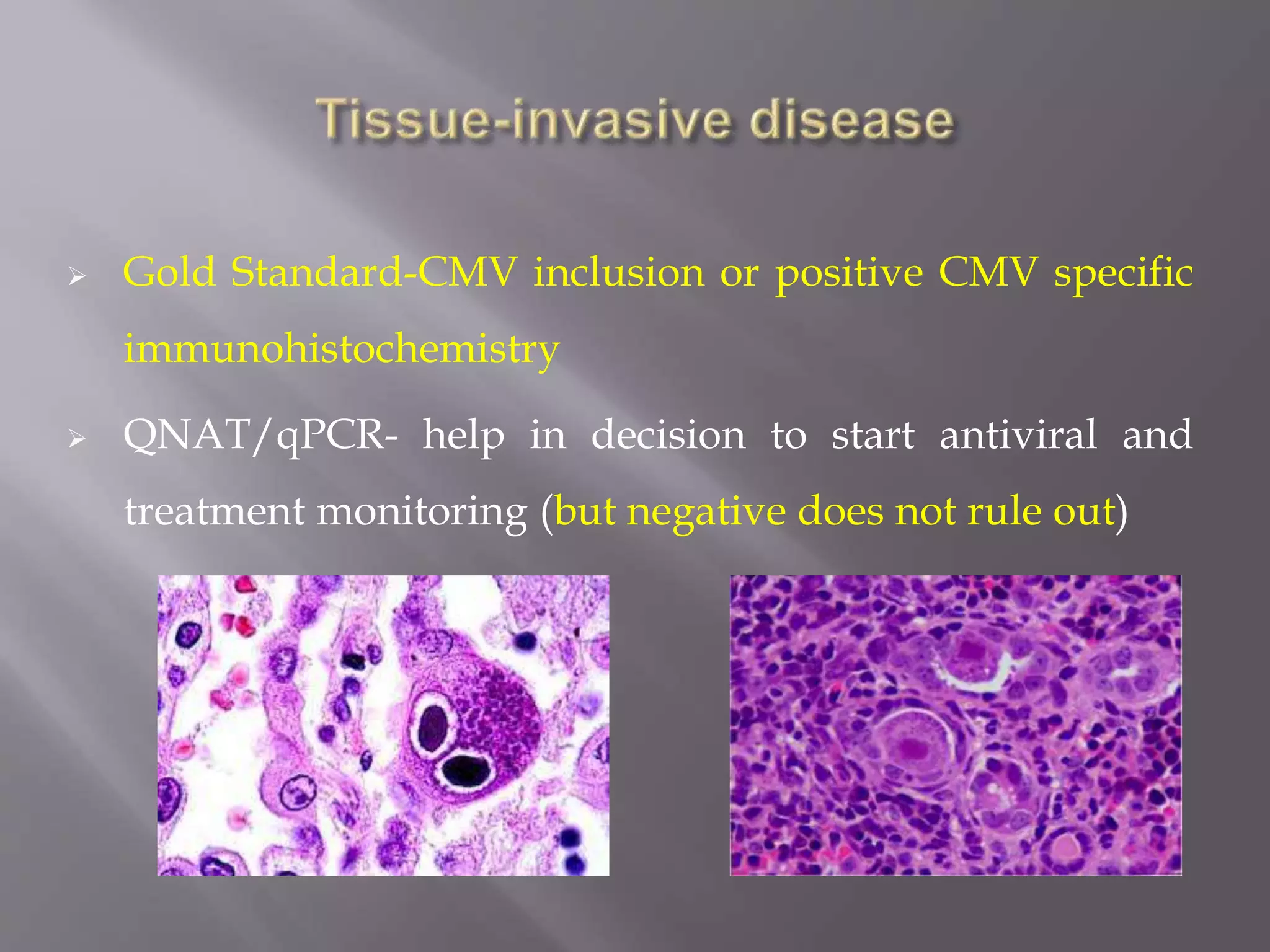
 Histology+IHC for CMV in tissue-invasive disease
 Gold Standard-CMV inclusion or positive CMV specific
immunohistochemistry
 QNAT/qPCR- help in decision to start antiviral and
treatment monitoring (but negative does not rule out)
 GI disease:
 CMV DNA PCR sometimes negative
 Multiple biopsies from different sites (can be focal and
patchy
Durand et al.Clin Infect Dis
 Pneumonitis:
 BAL or lung biopsy
 Identification of CMV inclusion
 CNS disease:
 CSF for CMV DNA or Antigen detection
Copyrights apply
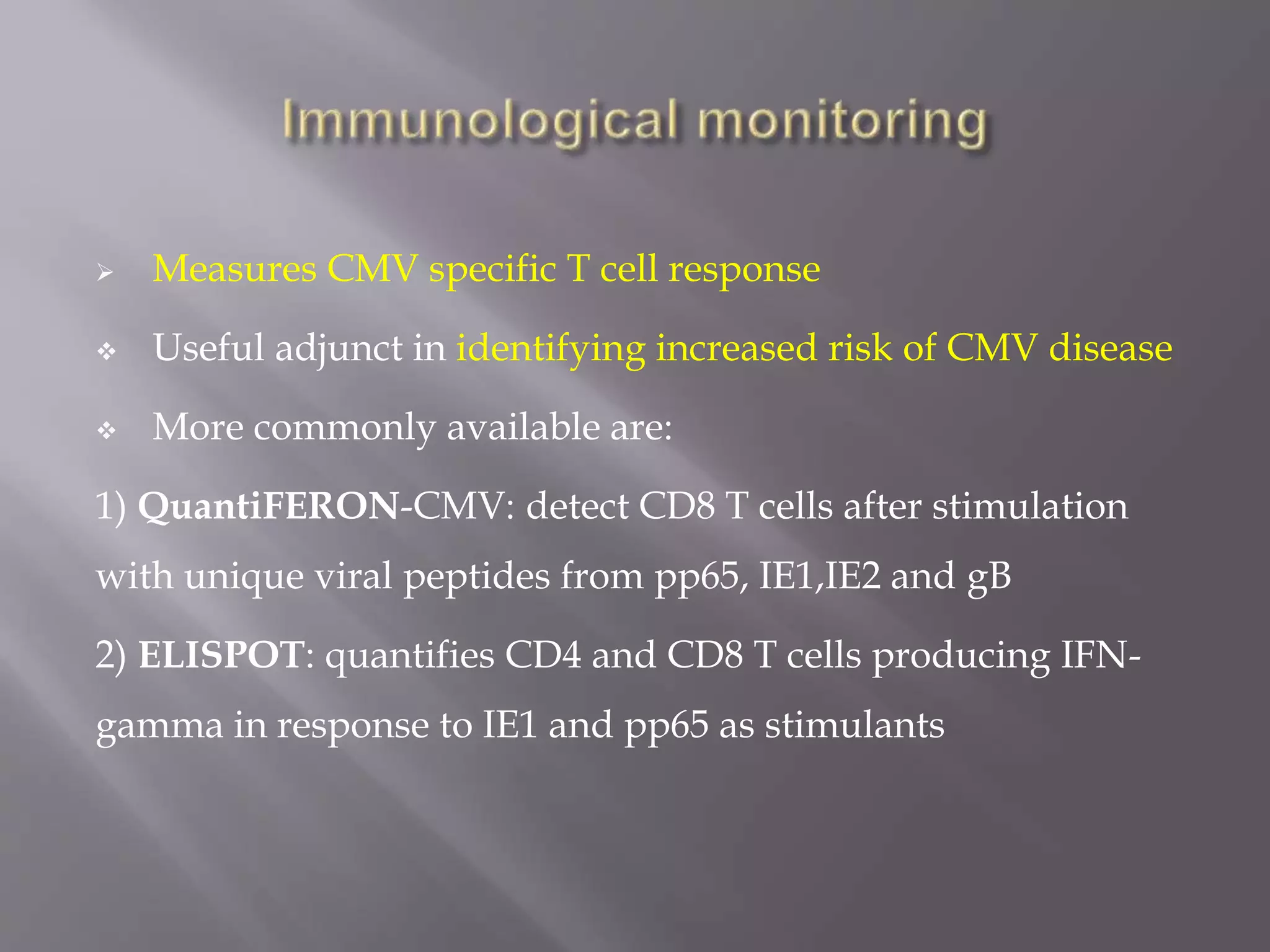
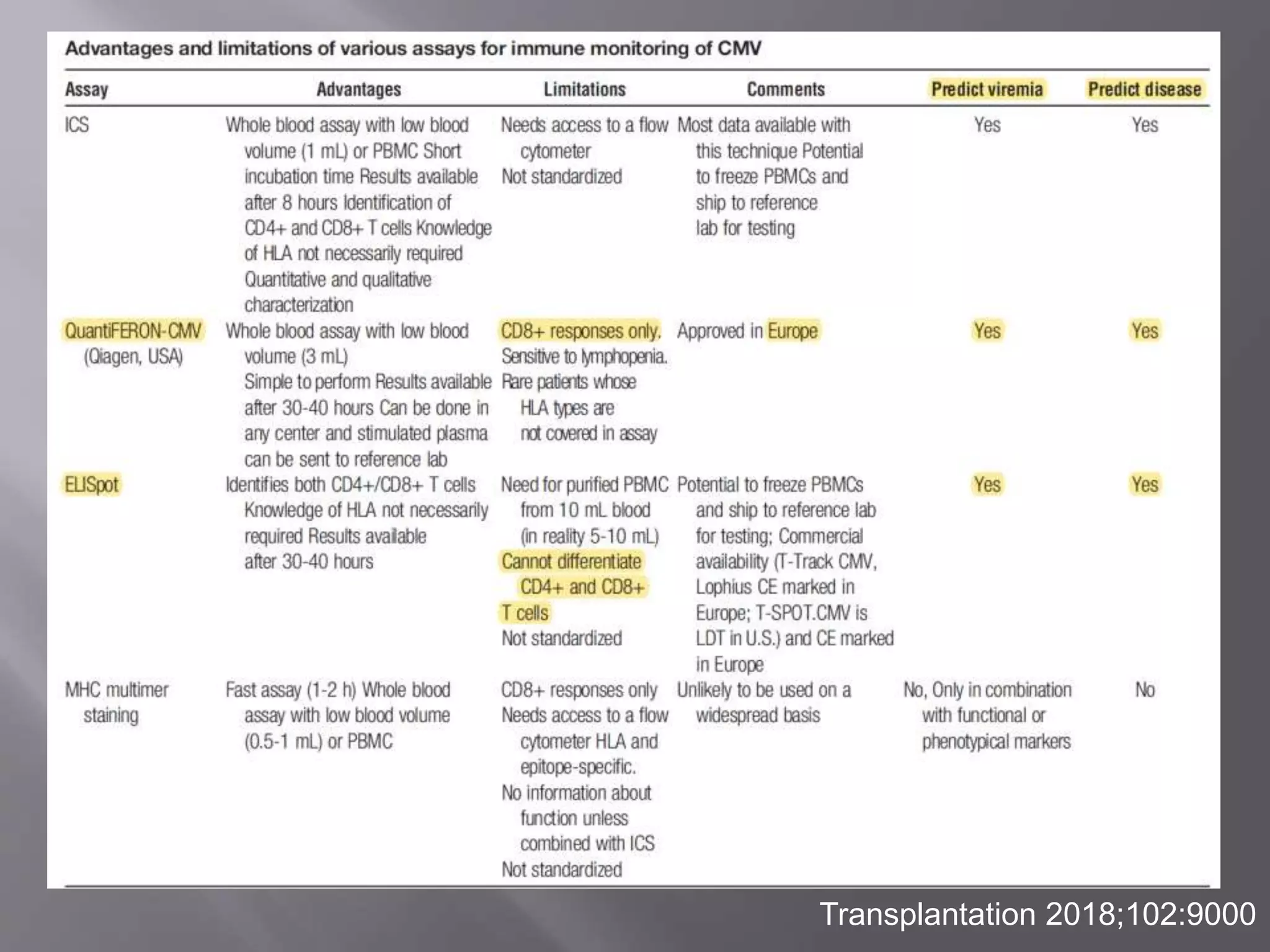
 Measures CMV specific T cell response
 Useful adjunct in identifying increased risk of CMV disease
 More commonly available are:
1) QuantiFERON-CMV: detect CD8 T cells after stimulation
with unique viral peptides from pp65, IE1,IE2 and gB
2) ELISPOT: quantifies CD4 and CD8 T cells producing IFN-
gamma in response to IE1 and pp65 as stimulants
Transplantation 2018;102:9000
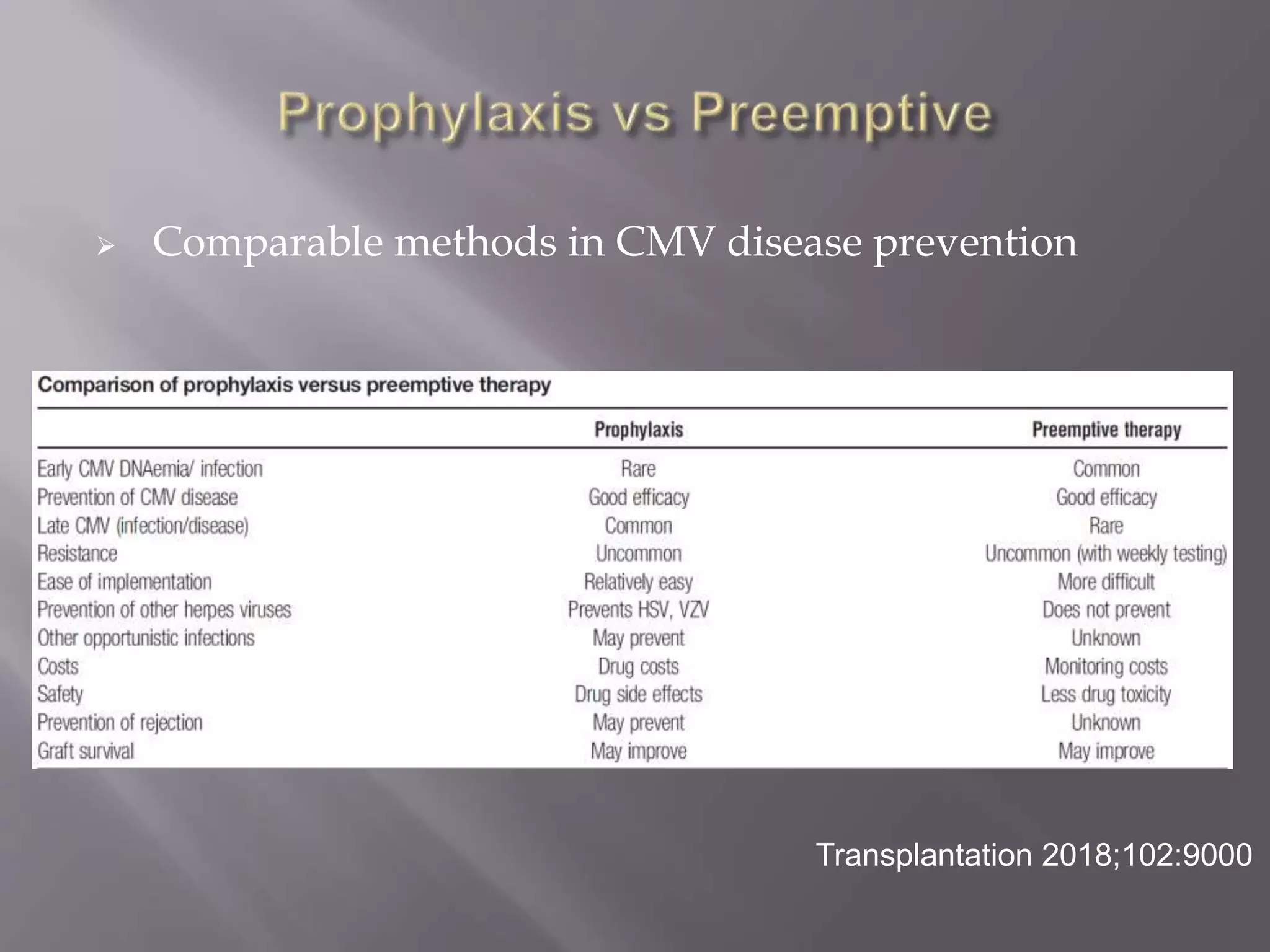
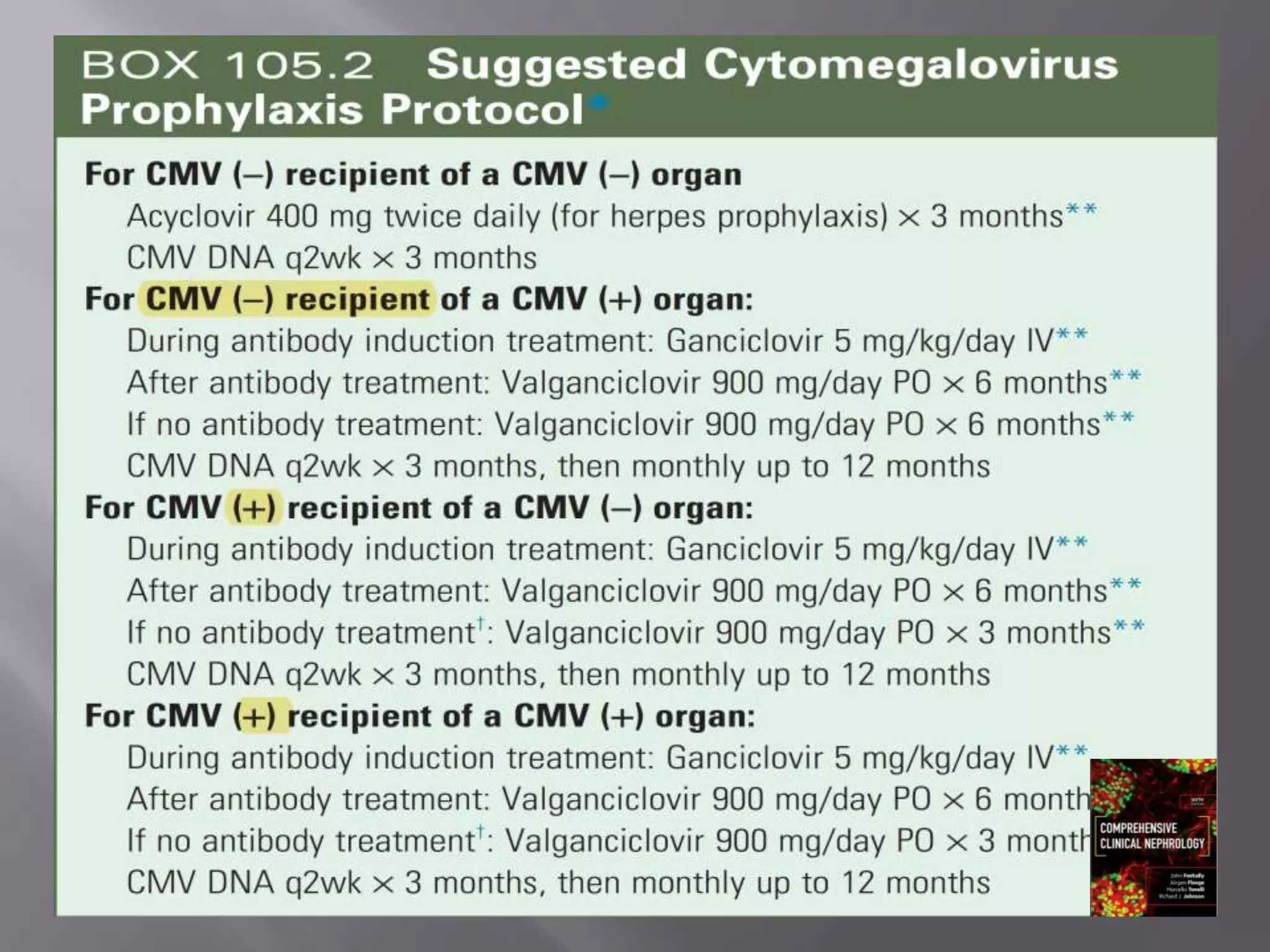
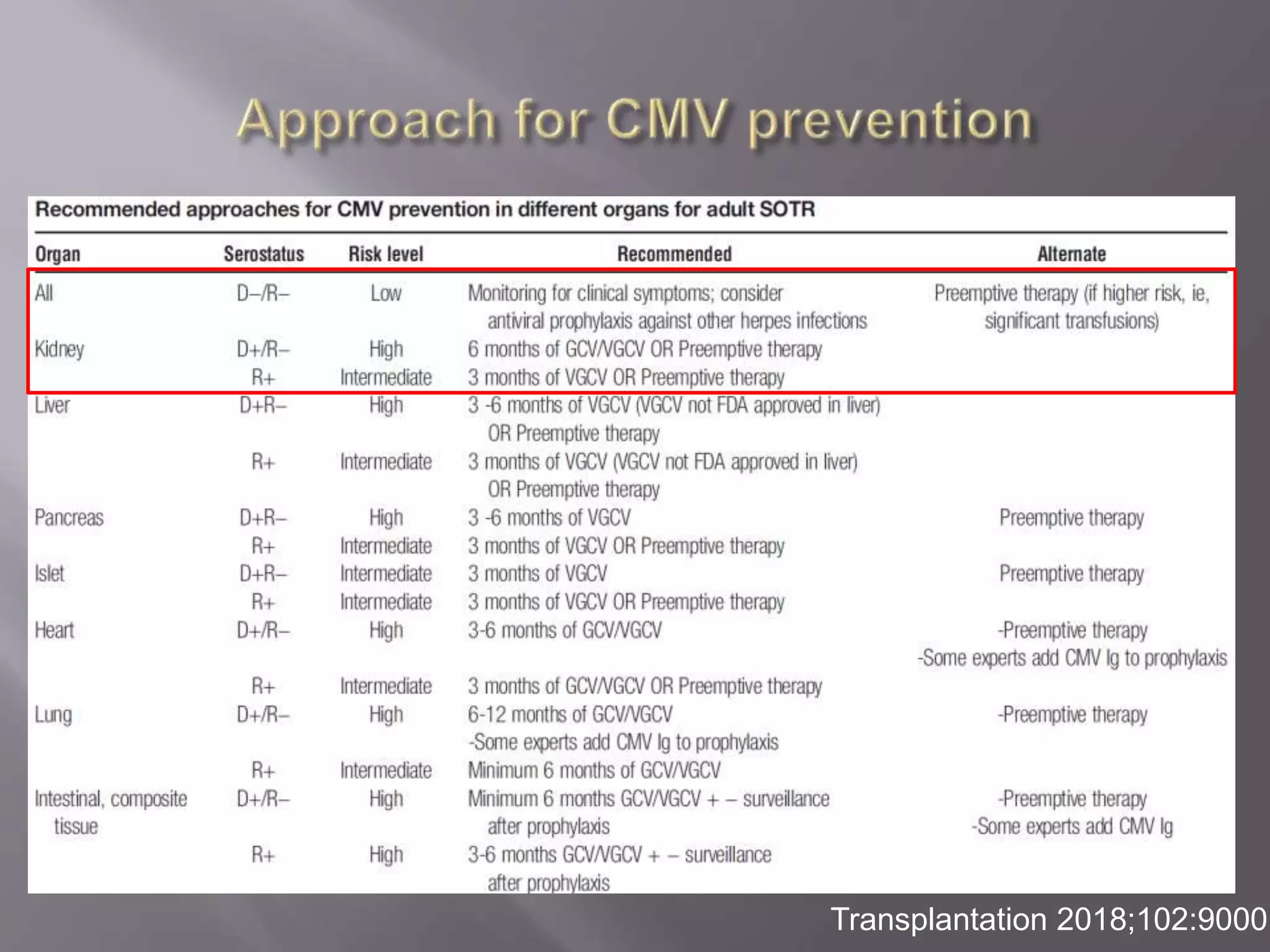
 Universal prophylaxis
 To all or at risk
 Within 10 days after Tx and continue for 3-6m
 Valgancyclovir most commonly used
 Pre-emptive therapy(PET)
 Before symptoms+
 Weekly monitoring of blood CMV x 3-6m
 To detect early viral replication
 Once predetermined threshold achieved, antiviral therapy to
prevent disease
Transplantation 2018;102:9000
 Blood Transfusion in D-/R-
 Use LDPRBC or CMV seronegative blood
 During Rejection treatment
 Preemptive therapy x 1-3months
 Comparable methods in CMV disease prevention
Transplantation 2018;102:9000
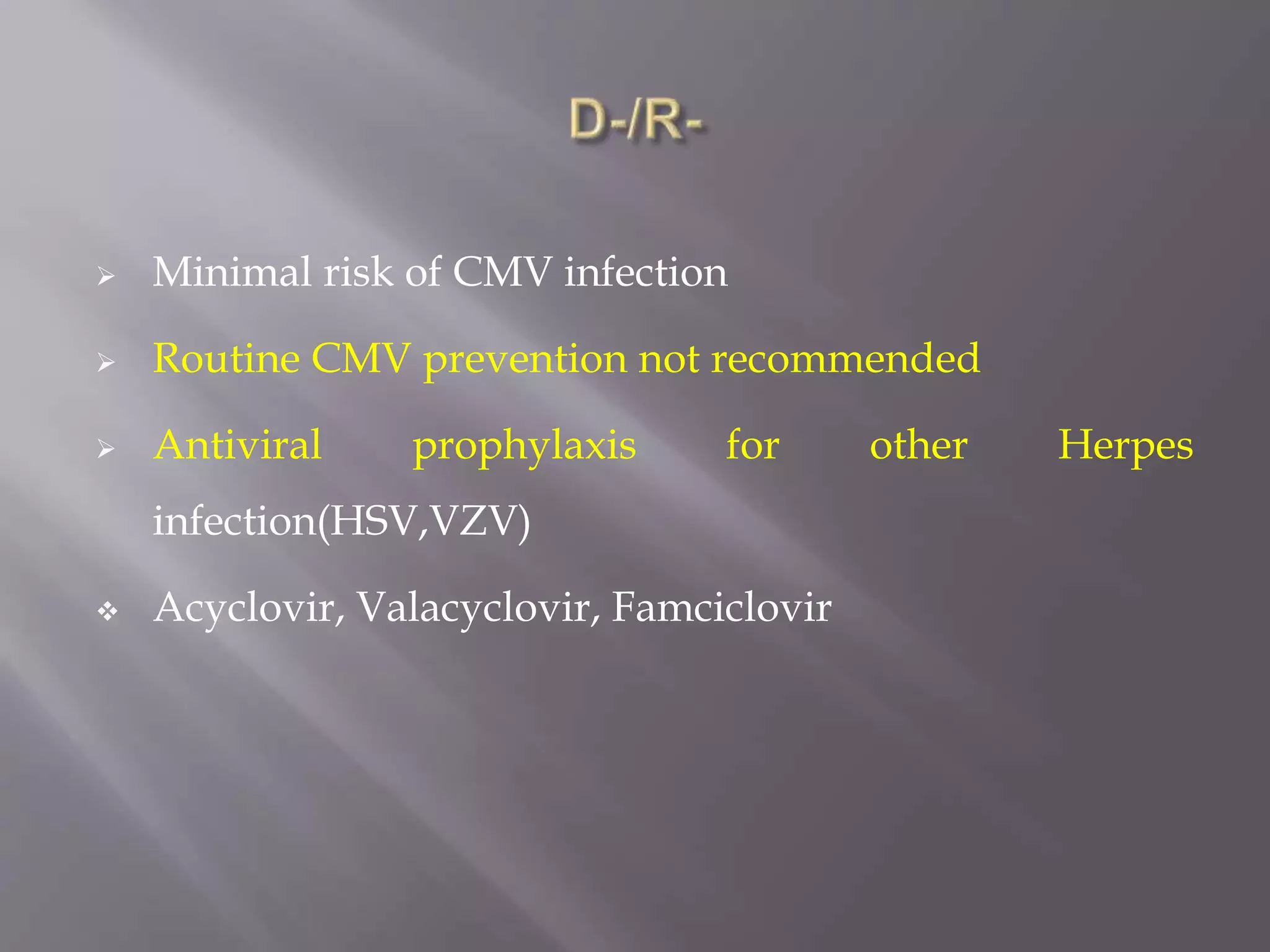
 Minimal risk of CMV infection
 Routine CMV prevention not recommended
 Antiviral prophylaxis for other Herpes
infection(HSV,VZV)
 Acyclovir, Valacyclovir, Famciclovir
Transplantation 2018;102:9000
 Four drugs:
-Ganciclovir(IV)
-Valganciclovir(PO)
-Foscarnet(IV)
-Cidofovir(IV)
 All interfere viral replication by targeting CMV DNA polymerase
 Cross resistance can occur due to similar mechanism of action
 Initial and recurrent episodes of CMV disease
 First line/DOC
 Valganciclovir 900mg PO BD (12 hourly)
 Ganciclovir 5mg/kg iv BD (12 hourly)
Q. Choice between the two?
 Mild to moderate CMV disease/tolerate and can adhere to
oral-VGCV (strong, moderate)
 Life-threatening and severe-GCV (strong, low)
 Once clinical response+ and tolerate oral- iv GCV change to
oral VGCV
 Reduction of IST in absence of concomitant rejection
considered in (weak, very low):
 Severe CMV disease
 Inadequate clinical response
 High viral loads
 Cytopenia
#Some expert stop antimetabolite(MMF,AZA) until
symptoms resolved and PCR negative. Restart at lower dose
for high risk rejection. Then PCR weekly for 4 wks and if
CMV recurs, stop indefinitely.
Q. What if Leukopenia+?
 G-CSF and/or discontinue other IST
 Do not change (Val)ganciclovir to other agent before
the above measures (strong, low)
 Avoid prompt stopping of antiviral(increase resistance)
Q. Intolerant to (Val)ganciclovir?
 Foscarnet(FOS) is 2nd line (strong, very low)
 Weekly plasma CMV DNA test(QNAT/qPCR) with
assay calibrated to WHO standard
 Frequent KFT monitoring to guide drug dose
adjustment
 Until……….
 Minimum of 2 weeks (typical duration 21 days)
 Resolution of all clinical signs of CMV disease and
 Eradication of CMV DNAemia
#Eradication defined as…
Highly sensitive assay: <LLOQ on 1 test (LLOQ<200 IU/ml)
Less sensitive assay: lack of detection on 2 consecutive test
#Longer course may be needed in tissue-invasive/GI
Clin Infect Dis
2017;65:2000
 Definition: viral genetic alteration that decrease susceptibility
to ≥1 antiviral drugs
 Manifest as persistent or increasing viral load or symptomatic
disease after a normally effective dosage and duration of
antiviral therapy
 Incidence: 5-12% after GCV therapy
0-3% after 100-200 days of GCV or VGCV
prophylaxis in D+/R- KTR
 Risk factors:
 Prolonged antiviral exposure (median 5m for GCV)
 Lack of prior CMV immunity (D+/R-)
 Strongly IST
 Inadequate antiviral therapy
Q. When to suspect and test??
 Persistent or recurrent DNAemia
 Disease during prolonged antiviral therapy
#prolonged means….
 Cumulative GCV exposure ≥6 weeks
 On going full dose GCV or VGCV> 2 weeks
Q. How to test??
 Genotypic assay(automated sequencing) for viral drug
resistance mutation
 Viral sequences amplified directly from blood(whole
blood, plasma, leukocytes), fluids(urine, CSF, lung, eye) or
tissue specimens
 Results more reliable if CMV copy >1000 IU/ml in the
specimen
Q. Gene regions to test??
 UL97 gene(phosphotrasferase) and UL54 gene(DNA
polymerase)
 Ideally test the entire coding sequence
 But many lab limit the test to codon range
 450-650 for UL97
 300-1000 for UL54
 UL97 kinase gene mutation:
 Prevents phosphorylation of GCV to active form
 Confers GCV resistance
 Appear first in 90% cases
 UL54 DNA polymerase gene mutation:
 Encodes for DNA polymerase which is target of all the current anti-CMV drugs
 Confer Cidofovir(CDV) and Foscarnet(FOS) resistance or cossresistance among
GCV, CDV and FOS
 Appears later conferring increased GCV resistance
 UL97 +UL54 gene mutation-high level GCV resistance
 Interpretation of Genotypic data:
 Level of resistance reported as EC50(half maximal Effective Concentration)-the
concentration that reduces viral growth by 50%
 CGV resistance graded as…
1) Insignificant resistance: <2x increase in EC50
2) Low grade: 2-5x
3) Moderate resistance : 5-15x
4) High level resistance: >15x
#FOS-R confer 2-5x increase in EC50
#UL97 mutation confers 5-10x increase in EC50(occ. <5x)
#UL54 mutation confers 10-20x increase in EC50
 IST reduced to lowest possible
 Drug -choice depends on genotype and level of resistance
 Adjunct therapy
 UL97 mutation:
 Alone confers low level GCV resistance
 Amenable with ‘Double the std dose’ of GCV
 GCV 10 mg/kg every 12h
 UL97 + UL54 or high level GCV resistance:
 Confer hight level GCV-R and CDV cross-R
 FOS 1st choice
 CDV if dual resistance to GCV and FOS+
 FOS+high dose GCV if FOS-R and CDV-R+
 No specific anti-CMV activity
 Not been adequately evaluated(case reports, case series)
 May improve antiviral host defences
 Include:
1) Cytomegalovirus Ig or IVIG
2) CMV specific T cells infusion
3) mTOR (sirolimus, everolimus)
4) Leflunomide
5) Artesunate
 US FDA approved in HSCT
 Phase III trial in KTR ongoing
Clin Infect Dis. 2019 Apr 15; 68(8): 1255–1264
 Not US FDA approved
 Promising future option
Biol Blood Marrow Transplant 25 (2019) 369-38
 Not yet approved by US FDA
 Not been fully evaluated in KTR
 Phase III trial in KTR discontinued due to significant
side effects
thanks

CMV in Renal Transplant

  • 1.
    CMV IN RENALTRANSPLANT PRESENTED BY Dr.C.MALSAWMKIMA DM NEPHROLOGY STUDENT DEPTT OF NEPHROLOGY AIIMS JODHPUR
  • 2.
     Introduction  Definition/Epidemiology/Riskfactors/Pathogenesis  Clinical presentation  Diagnosis  Prevention-prophylaxis vs preemptive  Treatment  Drug resistance  New drugs
  • 3.
     First isolatedin 1956 from two dying infant’s salivary glands and kidneys  “Salivary gland virus”  Wellar et al coined the name ‘Cytomegalovirus’ in 1960 (Greek; cyto ‘cell’, megalo ‘large’)  First isolated from renal transplant patient in 1965
  • 4.
     Human herpesvirus type 5(HHV-5)  Largest of Herpesvirus Clin Microbiol Rev.2009;22(1):76-98
  • 5.
     Active CMVinfection: evidence of CMV replication regardless of symptoms  CMV disease: evidence of CMV infection with attributable symptoms  Latent infection: CMV seropositive after resolution of acute infection  Super infection: new virus in seropositive recipient
  • 6.
    Serostatus CMV infectionCMV disease D+/R- 69% 56% D+/R+ 67% 20% D-/R- <5% <5%  Without preventive therapy Transplantation. 2006;82(2 Suppl):S15. J Med Virol. 2013 May;85(5):893-8. Am J Transplant. 2006;6(9):2134.
  • 7.
     Donor andrecipient serostatus  Use of lymphocyte-depleting agents  MMF >3g/d  Acute cellular rejection therapy-lymphocyte depleting agent or high dose glucocorticoids  Neutropenia  Blood product from CMV+  Lack of CMV-specific CD4+ and CD8+  Concommitant HHV-6, HHV-7 infection
  • 8.
     Immune modulation Dysregulation of helper and suppressor T cells  Direct effect -cytopathic effects on kidney allograft cells -graft nephropathy and graft loss  Indirect effect-upregulation of HLAs and adhesion molecules that can promote acute rejection and graft loss
  • 9.
     WBCs andCD13+ cells are reservoir cells  Enter host cell by Fusion or Phagocytosis  Viral particles are formed and assembled in nucleus, attain Envelope by budding via inner nuclear membrane  Replication produces Intermediate early(IE), Early and Late antigens  IE(nucleus)- directs production of viral and cellular genes  Early(cytoplasm)- directs viral DNA synthesis  Late(nucleus+cytoplasm)-directs production of structural nucleocapsid proteins J Am Soc Nephrol 2001;12: 848–855
  • 10.
     IE genesuprugulates transcription and expression of IL-2 and IL-2 receptors  IE and Early genes upregulates adhesion molecules like ICAM-1 and LFA-3  Downregulation of class I MHC-allow evasion and recognition by cytotoxic T lymphocytes  Upregulates non-classical class I MHC HLA-E  HLA-E inhibits NK cell mediated lysis J Am Soc Nephrol 2001;12: 848–855
  • 13.
     CMV syndrome Flu like syndrome(fever, malaise, arthralgia)  Leukopenia, thrombocytopenia  Absence of tissue invasive disease  Presence of detectable viral replication in blood  Tissue-invasive CMV disease  Enteritis, colitis, esophagitis  Hepatitis  Nephritis  Pneumonitis/pneumonia  Carditis  Chorioretinitis  Meningitis, encephalitis  Otitis  Pancreatitis
  • 14.
     Presentation dependson  Organ involved  Non specific GIT RENAL CNS EYE HEART LUNG LIVER
  • 15.
     Esophagitis, Enteritisand/or colitis  Most common tissue-invasive manifestation in KTR Nausea Vomiting Diarrhea Pain abdomen
  • 16.
     Hepatitis  Pancreatitis ElevatedAST,ALT With CMV viremia Without other cause Pain abdomen Elevated amylase, lipase With CMV viremia
  • 17.
  • 18.
     Allograft injury/rejection: Late acute rejection  Chronic allograft injury  Glomerular disease:  Transplant glomerulopathy  Nephrotic syndrome like FSGS  Tubulo-interstitium:  AIN/ATIN  Vascular:  TMA  RAS (atherosclerosis), Restenosis of RAS Renal dysfunction With kidney biopsy evidence of CMV infection(histology+micro biology)
  • 19.
     Direct effect-cytopathic effects on kidney allograft cells -graft nephropathy and graft loss  Indirect effect-upregulation of HLAs and adhesion molecules that can promote acute rejection and graft loss  Risk of acute allograft rejection:  Active CMV infection-1.4 fold increased risk  Active CMV disease-2.5 fold
  • 20.
     Meningoencephalitis  Veryrare in SOTR Headache Nuchal rigidity Altered mental status Paralysis CSF-CMV+
  • 21.
  • 22.
    The most frequentpresentation of frosted branch angitis is bilateral venous sheathing resembling frosted branches of tree
  • 23.
  • 24.
     Indirect effects-are generally immune effects including:  Immune suppression and predisposition to opportunistic infection (eg, Aspergillus after CMV infection or RSV pneumonia, Pneumocystis after CMV infection). CMV coinfection has been implicated in the accelerated course of HCV infection with cirrhosis and graft loss  Graft rejection that is thought to be mediated by proinflammatory cytokine release and/or upregulation of HLA or adhesion proteins  Oncogenesis –increased risk for EBV associated PTLD (usually B cell lymphoma)
  • 25.
     General  Infection-viral,bacterial, fungal  PTLD  Acute rejection  NODAT  CV events (accelerated atherogenesis)  Mortality  Transplant-specific  Allograft injury  Allograft rejection Snydman DR et al. Clin Infect Dis.2008 Uptodate
  • 26.
     Pretransplant testing Posttransplant testing Transplantation 2018;102:9000
  • 27.
     Serostatus:  Keypredictor of posttransplant CMV risk  Guide antiviral prophylaxis or preemptive therapy  Serology :  CMV specific IgG in donor and recipient(strong, high)  IgM not recommended (strong, low)  If preTx serology negative, repeat at time of Tx
  • 28.
     Serology:  Norole in Dx of active CMV replication and disease in postTx  May be used to determine ongoing susceptibility in patient with preTx seronegative who remained free of infection and disease postTx
  • 29.
     QNAT (=quantitativePCR)-choice/recommended  Specimen-plasma or whole blood  Weekly –to monitor response to antiviral therapy(srong, moderate)  Report in IU/ml but no specific cut off across centres/labs (variation in reagent, procedures)  No universal threshold for therapy or treatment endpoint  Centre should have own threshold and audit the clinical outcomes of the threshold used
  • 30.
     Clinically significant:change in viral load >3 fold (>0.5log10 IU/ml)  Use highly sensitive QNAT (LLOQ <200IU/ml)  When to discontinue therapy?  Highly sensitive QNAT: 1 negative result <LLOQ  Not highly sensitive QNAT: 2 consecutive negative results needed  Confirmatory test-1 week after discontinuation  Histology+IHC for CMV in tissue-invasive disease
  • 31.
     Gold Standard-CMVinclusion or positive CMV specific immunohistochemistry  QNAT/qPCR- help in decision to start antiviral and treatment monitoring (but negative does not rule out)
  • 32.
     GI disease: CMV DNA PCR sometimes negative  Multiple biopsies from different sites (can be focal and patchy
  • 33.
  • 34.
     Pneumonitis:  BALor lung biopsy  Identification of CMV inclusion  CNS disease:  CSF for CMV DNA or Antigen detection
  • 35.
  • 36.
     Measures CMVspecific T cell response  Useful adjunct in identifying increased risk of CMV disease  More commonly available are: 1) QuantiFERON-CMV: detect CD8 T cells after stimulation with unique viral peptides from pp65, IE1,IE2 and gB 2) ELISPOT: quantifies CD4 and CD8 T cells producing IFN- gamma in response to IE1 and pp65 as stimulants
  • 37.
  • 38.
     Universal prophylaxis To all or at risk  Within 10 days after Tx and continue for 3-6m  Valgancyclovir most commonly used  Pre-emptive therapy(PET)  Before symptoms+  Weekly monitoring of blood CMV x 3-6m  To detect early viral replication  Once predetermined threshold achieved, antiviral therapy to prevent disease
  • 40.
  • 41.
     Blood Transfusionin D-/R-  Use LDPRBC or CMV seronegative blood  During Rejection treatment  Preemptive therapy x 1-3months
  • 42.
     Comparable methodsin CMV disease prevention Transplantation 2018;102:9000
  • 43.
     Minimal riskof CMV infection  Routine CMV prevention not recommended  Antiviral prophylaxis for other Herpes infection(HSV,VZV)  Acyclovir, Valacyclovir, Famciclovir
  • 45.
  • 47.
     Four drugs: -Ganciclovir(IV) -Valganciclovir(PO) -Foscarnet(IV) -Cidofovir(IV) All interfere viral replication by targeting CMV DNA polymerase  Cross resistance can occur due to similar mechanism of action
  • 48.
     Initial andrecurrent episodes of CMV disease  First line/DOC  Valganciclovir 900mg PO BD (12 hourly)  Ganciclovir 5mg/kg iv BD (12 hourly) Q. Choice between the two?  Mild to moderate CMV disease/tolerate and can adhere to oral-VGCV (strong, moderate)  Life-threatening and severe-GCV (strong, low)  Once clinical response+ and tolerate oral- iv GCV change to oral VGCV
  • 52.
     Reduction ofIST in absence of concomitant rejection considered in (weak, very low):  Severe CMV disease  Inadequate clinical response  High viral loads  Cytopenia #Some expert stop antimetabolite(MMF,AZA) until symptoms resolved and PCR negative. Restart at lower dose for high risk rejection. Then PCR weekly for 4 wks and if CMV recurs, stop indefinitely.
  • 53.
    Q. What ifLeukopenia+?  G-CSF and/or discontinue other IST  Do not change (Val)ganciclovir to other agent before the above measures (strong, low)  Avoid prompt stopping of antiviral(increase resistance) Q. Intolerant to (Val)ganciclovir?  Foscarnet(FOS) is 2nd line (strong, very low)
  • 54.
     Weekly plasmaCMV DNA test(QNAT/qPCR) with assay calibrated to WHO standard  Frequent KFT monitoring to guide drug dose adjustment
  • 55.
     Until……….  Minimumof 2 weeks (typical duration 21 days)  Resolution of all clinical signs of CMV disease and  Eradication of CMV DNAemia #Eradication defined as… Highly sensitive assay: <LLOQ on 1 test (LLOQ<200 IU/ml) Less sensitive assay: lack of detection on 2 consecutive test #Longer course may be needed in tissue-invasive/GI
  • 57.
  • 58.
     Definition: viralgenetic alteration that decrease susceptibility to ≥1 antiviral drugs  Manifest as persistent or increasing viral load or symptomatic disease after a normally effective dosage and duration of antiviral therapy  Incidence: 5-12% after GCV therapy 0-3% after 100-200 days of GCV or VGCV prophylaxis in D+/R- KTR
  • 59.
     Risk factors: Prolonged antiviral exposure (median 5m for GCV)  Lack of prior CMV immunity (D+/R-)  Strongly IST  Inadequate antiviral therapy
  • 60.
    Q. When tosuspect and test??  Persistent or recurrent DNAemia  Disease during prolonged antiviral therapy #prolonged means….  Cumulative GCV exposure ≥6 weeks  On going full dose GCV or VGCV> 2 weeks
  • 61.
    Q. How totest??  Genotypic assay(automated sequencing) for viral drug resistance mutation  Viral sequences amplified directly from blood(whole blood, plasma, leukocytes), fluids(urine, CSF, lung, eye) or tissue specimens  Results more reliable if CMV copy >1000 IU/ml in the specimen
  • 62.
    Q. Gene regionsto test??  UL97 gene(phosphotrasferase) and UL54 gene(DNA polymerase)  Ideally test the entire coding sequence  But many lab limit the test to codon range  450-650 for UL97  300-1000 for UL54
  • 63.
     UL97 kinasegene mutation:  Prevents phosphorylation of GCV to active form  Confers GCV resistance  Appear first in 90% cases  UL54 DNA polymerase gene mutation:  Encodes for DNA polymerase which is target of all the current anti-CMV drugs  Confer Cidofovir(CDV) and Foscarnet(FOS) resistance or cossresistance among GCV, CDV and FOS  Appears later conferring increased GCV resistance  UL97 +UL54 gene mutation-high level GCV resistance
  • 64.
     Interpretation ofGenotypic data:  Level of resistance reported as EC50(half maximal Effective Concentration)-the concentration that reduces viral growth by 50%  CGV resistance graded as… 1) Insignificant resistance: <2x increase in EC50 2) Low grade: 2-5x 3) Moderate resistance : 5-15x 4) High level resistance: >15x #FOS-R confer 2-5x increase in EC50 #UL97 mutation confers 5-10x increase in EC50(occ. <5x) #UL54 mutation confers 10-20x increase in EC50
  • 65.
     IST reducedto lowest possible  Drug -choice depends on genotype and level of resistance  Adjunct therapy
  • 66.
     UL97 mutation: Alone confers low level GCV resistance  Amenable with ‘Double the std dose’ of GCV  GCV 10 mg/kg every 12h  UL97 + UL54 or high level GCV resistance:  Confer hight level GCV-R and CDV cross-R  FOS 1st choice  CDV if dual resistance to GCV and FOS+  FOS+high dose GCV if FOS-R and CDV-R+
  • 67.
     No specificanti-CMV activity  Not been adequately evaluated(case reports, case series)  May improve antiviral host defences  Include: 1) Cytomegalovirus Ig or IVIG 2) CMV specific T cells infusion 3) mTOR (sirolimus, everolimus) 4) Leflunomide 5) Artesunate
  • 72.
     US FDAapproved in HSCT  Phase III trial in KTR ongoing
  • 74.
    Clin Infect Dis.2019 Apr 15; 68(8): 1255–1264
  • 75.
     Not USFDA approved  Promising future option
  • 76.
    Biol Blood MarrowTransplant 25 (2019) 369-38
  • 77.
     Not yetapproved by US FDA  Not been fully evaluated in KTR  Phase III trial in KTR discontinued due to significant side effects
  • 78.