Key Stages in Systematic
Review
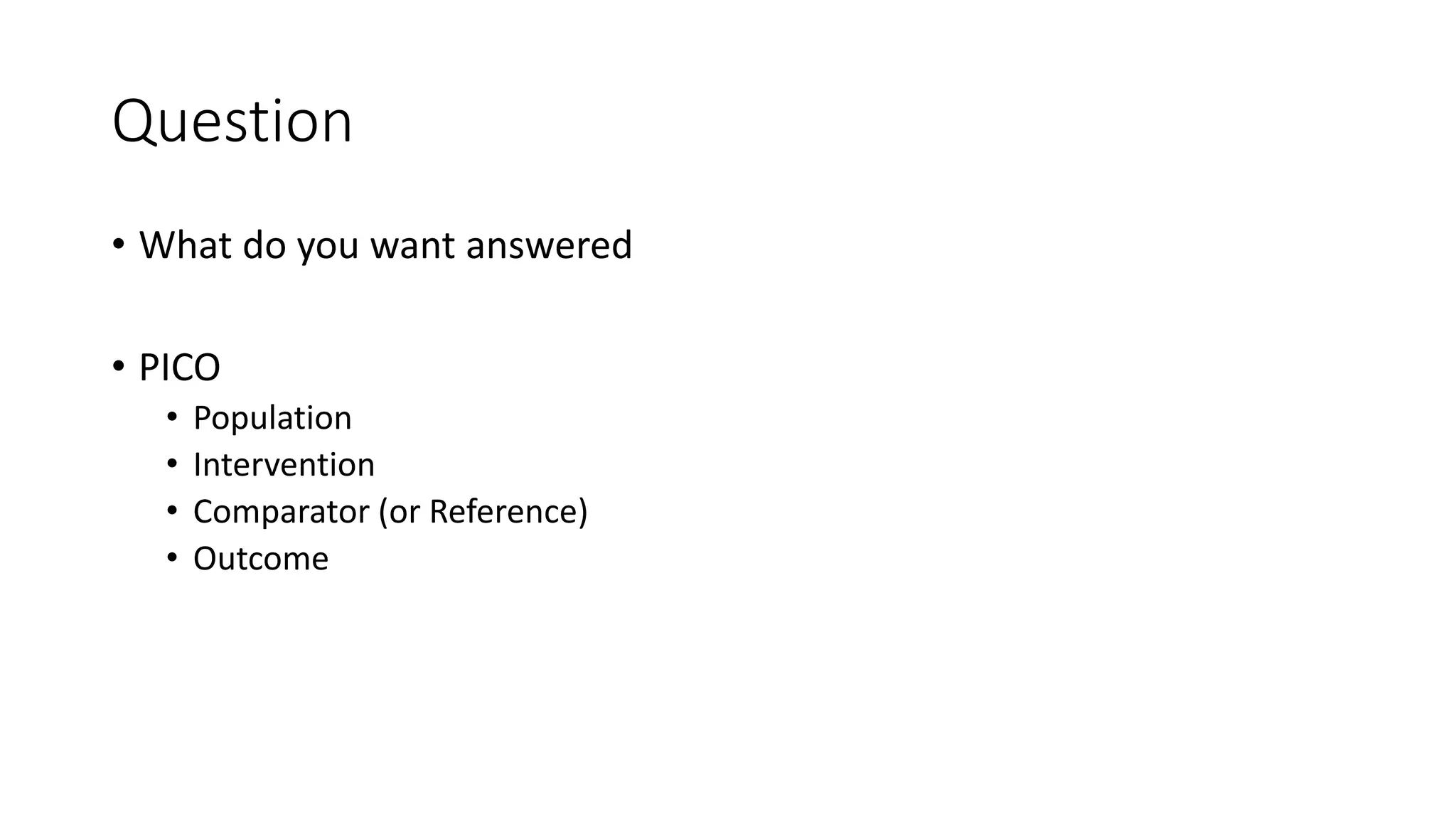
Question
• What do you want answered
• PICO
• Population
• Intervention
• Comparator (or Reference)
• Outcome
Question
In those suspected of having PCD [Population] what is the
effectiveness of nasal nitric oxide [Intervention] in diagnosing PCD
[Outcome] compared to those diagnosed by a combination of
genetic, high speed video and electron microscopy [Reference]
Questions
• Other examples could be –
• [Exposure] as a risk factor for [outcome] in [population]
• Different interventions and comparators such as models of
care/compound measure.
Protocol
• Important document the pre-specifies facets of the review
• Background (the why?)
• Question (PICO)
• Aims
• Search strategy (databases, search terms)
• Detailed inclusion/exclusion criteria
• Statistical analysis
Example of protocol
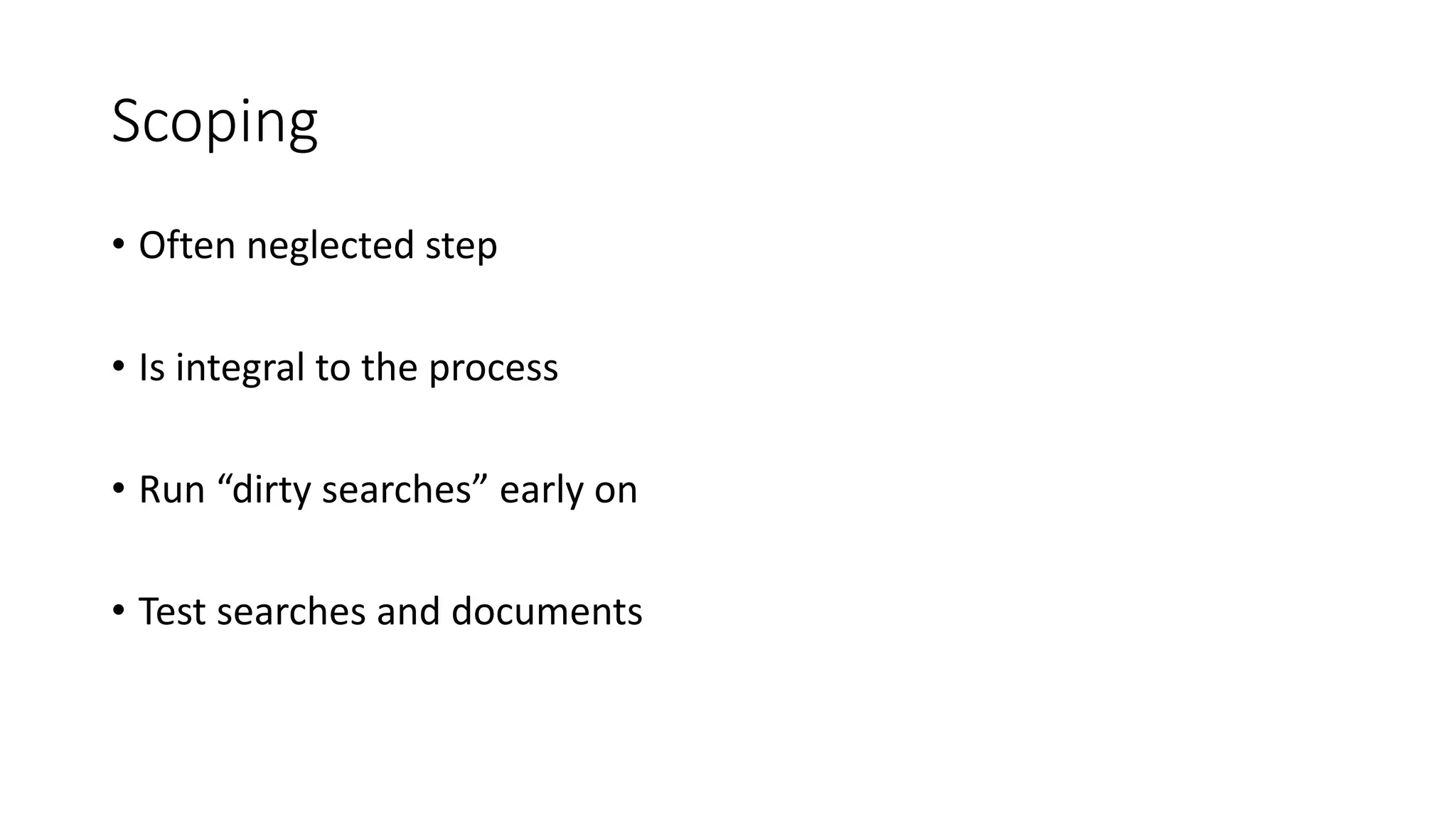
Scoping
• Often neglected step
• Is integral to the process
• Run “dirty searches” early on
• Test searches and documents
Searching
• Very important to capture all relevant literature
• May not necessarily get every piece of evidence (additional sources
etc.)
• However, properly specify so thorough but not excessive
Extraction
• Initial screening of titles/abstracts
• Full text review (look at inclusion/exclusion)
• Extract data from all included texts
• Extraction form should be pre-specified but can scope with few
papers
Analysis
• If other steps are done well, this is the easiest step
• Protocol should make it easy to decide what should be included and
what the quality of that evidence is
• May end up with no included studies – this is still a valid result
Write-up
• Balance between detail and making it readable
• Still need to have a main message and back this up
• Make use of supplementary files to show protocol, search results and
to be transparent about why evidence was included/excluded
• Meta-analysis can make paper more publishable but can draw
dangerous conclusions if done inappropriately – state why not
appropriate.

Key stages of systematic review

  • 1.
    Key Stages inSystematic Review
  • 2.
    Question • What doyou want answered • PICO • Population • Intervention • Comparator (or Reference) • Outcome
  • 3.
    Question In those suspectedof having PCD [Population] what is the effectiveness of nasal nitric oxide [Intervention] in diagnosing PCD [Outcome] compared to those diagnosed by a combination of genetic, high speed video and electron microscopy [Reference]
  • 4.
    Questions • Other examplescould be – • [Exposure] as a risk factor for [outcome] in [population] • Different interventions and comparators such as models of care/compound measure.
  • 5.
    Protocol • Important documentthe pre-specifies facets of the review • Background (the why?) • Question (PICO) • Aims • Search strategy (databases, search terms) • Detailed inclusion/exclusion criteria • Statistical analysis
  • 6.
  • 7.
    Scoping • Often neglectedstep • Is integral to the process • Run “dirty searches” early on • Test searches and documents
  • 8.
    Searching • Very importantto capture all relevant literature • May not necessarily get every piece of evidence (additional sources etc.) • However, properly specify so thorough but not excessive
  • 9.
    Extraction • Initial screeningof titles/abstracts • Full text review (look at inclusion/exclusion) • Extract data from all included texts • Extraction form should be pre-specified but can scope with few papers
  • 10.
    Analysis • If othersteps are done well, this is the easiest step • Protocol should make it easy to decide what should be included and what the quality of that evidence is • May end up with no included studies – this is still a valid result
  • 11.
    Write-up • Balance betweendetail and making it readable • Still need to have a main message and back this up • Make use of supplementary files to show protocol, search results and to be transparent about why evidence was included/excluded • Meta-analysis can make paper more publishable but can draw dangerous conclusions if done inappropriately – state why not appropriate.