DEVELOPMENT OF THE DIGITAL COMPETENCE Oliver Buček, prof., SLOVENIA
http://www.google.com/profiles/108441178938227114322 http://www.myspace.com/oliverbucek http://www.etwinning.net/en/pub/index.htm# http://www.zbor-talum.com/ http://www2.arnes.si/~obucek/ http://www.os-breg.si/ http://www.os-breg.si/eucilnica/ http://www.os-breg.si/zbornica/ http://www.os-breg.si/ekosola/ http://groups.google.com/group/obucek?hl=sl http://www.e-sola.mladinska.com/ http://www.vrtec-ptuj.si/ http://www.eucenje.org/ http://www.eucenje.net/ http://www.express-band.com/ http://www.studiogirs.com/ Oliver Buček, prof. Elementary School Breg Ptuj – Slovenia
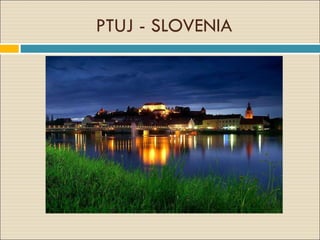
PTUJ - SLOVENIA
Elementary School Breg - Ptuj www.os-breg.si
Key Competences for Lifelong Learning   Competences are online behavior, skills and attitudes that enable successful integration of children into the world of work and learning.
Key Competences for Lifelong Learning Key competences for lifelong learning - European frame of reference: communication in mother language, communication in foreign languages, mathematical competence and basic competences in science and technology , digital literacy, learning to learn, social and civic competences, etc ...
Competence digital literacy The development of competence includes  cognitive  (acquiring knowledge),  functional  (skills development) and  educational  -  social  aspect (relationship to others, community and environment, development of responsibility and autonomy).
E-learning Is a way of education with help of new methods of knowledge transver: with computer network, with multi-presentational applications, with portals including study, bibliographic and informational contents, with “smart” search tools, with digital libraries, distance learning, virtual study rooms.
Competence digital literacy V irtual classroom for the music http://www.e-sola.mladinska.com/ V irtual classroom  of Elementary School Breg http://www.os-breg.si/eucilnica/ Online   classroom   allows children to develop skills such as:  collection,  analysis and organization of information,  mediation  of ideas and information, planning and organization activities,  working with others and teamwork
ICT resources for teaching music ICT resources that are eligible for teaching music education: computer,  internet, projector, digital camera, interactive whiteboard, video, radio with CD player.
Integrating ICT in primary education programs for teaching music education. A lone and together with the teacher students learn ICT resources, their use, handling and correlation. S tudents assume a more  active role . Benefits of e-learning & Weaknesses of e-learning
E-MATERIALS Teachers and students use various e-materials for teaching and learning: didactic software, CDs and DVDs, e-material on the Internet (websites, web classroom, web applications) manuals, guides, instructions for work.
Teacher competences  &  the competences of students TEACHERS using ICT as a  instrument  or tool for teaching, administration (data collection and processing),  communication with pupils, parents and other teachers,  preparing materials, planning lessons,  distance learning,  find different sources of information PUPILS It is a question of how and where to obtain information and how to utilize and critically evaluate
Key competencies include : work ing   with  sources  ( organizing  time, money, materials,  place and employed), Inter - personal skills  ( cooperation  in groups, teaching others, lead ing , negotiat ing , intercultural  manners), work with data  ( searching ,  assessing  and us age  o f  data, organization and maintenance of documentation, presentation skills, use of information technology ), understanding of system  (understanding of social, organizational and technological systems, accompanying and changing of productivity, desiging and improving systems), use of technology  ( choise  and use of  suitable  technologies for  particular  tasks and their maintenance ).
These competencies are based on : basic skills  ( like  reading, writing, arithmetic and math,  speaking  and listening ), mental skills  ( like  creative thinking,  solving  problem s , know ing the laws of learning , search ing  and  accepting decisions), personal characteristics  ( like  personal responsibility, self- image , socia bility, self-organizacion and  integrity ).
Developing digital compentency in Slovenian Education computer science became an optional subjects in Slovenian secondary schools in the school year 1971/1972 10 years later in all middle school in Slovenia (students lern about computers programing in Fortan, Pascal) curriculum changed many times
Developing digital compentency in Slovenian Education major curriculum  have been made in the year 1995 middle school  – subject rename to Informatics elementary school  – optional three years subjects vith names (Dataprocessing, Multimedia and Computer Networks) in the last three years of basich schools
E-staff room http://www.os-breg.si/zbornica/ Virtual center teaching corps, which provides IT support staff in their professional work. The classroom is also aimed at non-formal activities . replacement teachers, absence of teachers, cooperation with parents, etc ...
Conclusion Teachers' skills?  ( the main question is whether our teachers are qualified to develop digital skills ) requirements and needs an effective way of teaching can be followed only by  qualified teachers
I change the world through m yself , I'm not perfect, but I'm better every day. Thank you

Key Competences for Lifelong Learning

  • 1.
    DEVELOPMENT OF THEDIGITAL COMPETENCE Oliver Buček, prof., SLOVENIA
  • 2.
    http://www.google.com/profiles/108441178938227114322 http://www.myspace.com/oliverbucek http://www.etwinning.net/en/pub/index.htm#http://www.zbor-talum.com/ http://www2.arnes.si/~obucek/ http://www.os-breg.si/ http://www.os-breg.si/eucilnica/ http://www.os-breg.si/zbornica/ http://www.os-breg.si/ekosola/ http://groups.google.com/group/obucek?hl=sl http://www.e-sola.mladinska.com/ http://www.vrtec-ptuj.si/ http://www.eucenje.org/ http://www.eucenje.net/ http://www.express-band.com/ http://www.studiogirs.com/ Oliver Buček, prof. Elementary School Breg Ptuj – Slovenia
  • 3.
  • 4.
    Elementary School Breg- Ptuj www.os-breg.si
  • 5.
    Key Competences forLifelong Learning Competences are online behavior, skills and attitudes that enable successful integration of children into the world of work and learning.
  • 6.
    Key Competences forLifelong Learning Key competences for lifelong learning - European frame of reference: communication in mother language, communication in foreign languages, mathematical competence and basic competences in science and technology , digital literacy, learning to learn, social and civic competences, etc ...
  • 7.
    Competence digital literacyThe development of competence includes cognitive (acquiring knowledge), functional (skills development) and educational - social aspect (relationship to others, community and environment, development of responsibility and autonomy).
  • 8.
    E-learning Is away of education with help of new methods of knowledge transver: with computer network, with multi-presentational applications, with portals including study, bibliographic and informational contents, with “smart” search tools, with digital libraries, distance learning, virtual study rooms.
  • 9.
    Competence digital literacyV irtual classroom for the music http://www.e-sola.mladinska.com/ V irtual classroom of Elementary School Breg http://www.os-breg.si/eucilnica/ Online classroom allows children to develop skills such as: collection, analysis and organization of information, mediation of ideas and information, planning and organization activities, working with others and teamwork
  • 10.
    ICT resources forteaching music ICT resources that are eligible for teaching music education: computer, internet, projector, digital camera, interactive whiteboard, video, radio with CD player.
  • 11.
    Integrating ICT inprimary education programs for teaching music education. A lone and together with the teacher students learn ICT resources, their use, handling and correlation. S tudents assume a more active role . Benefits of e-learning & Weaknesses of e-learning
  • 12.
    E-MATERIALS Teachers andstudents use various e-materials for teaching and learning: didactic software, CDs and DVDs, e-material on the Internet (websites, web classroom, web applications) manuals, guides, instructions for work.
  • 13.
    Teacher competences & the competences of students TEACHERS using ICT as a instrument or tool for teaching, administration (data collection and processing), communication with pupils, parents and other teachers, preparing materials, planning lessons, distance learning, find different sources of information PUPILS It is a question of how and where to obtain information and how to utilize and critically evaluate
  • 14.
    Key competencies include: work ing with sources ( organizing time, money, materials, place and employed), Inter - personal skills ( cooperation in groups, teaching others, lead ing , negotiat ing , intercultural manners), work with data ( searching , assessing and us age o f data, organization and maintenance of documentation, presentation skills, use of information technology ), understanding of system (understanding of social, organizational and technological systems, accompanying and changing of productivity, desiging and improving systems), use of technology ( choise and use of suitable technologies for particular tasks and their maintenance ).
  • 15.
    These competencies arebased on : basic skills ( like reading, writing, arithmetic and math, speaking and listening ), mental skills ( like creative thinking, solving problem s , know ing the laws of learning , search ing and accepting decisions), personal characteristics ( like personal responsibility, self- image , socia bility, self-organizacion and integrity ).
  • 16.
    Developing digital compentencyin Slovenian Education computer science became an optional subjects in Slovenian secondary schools in the school year 1971/1972 10 years later in all middle school in Slovenia (students lern about computers programing in Fortan, Pascal) curriculum changed many times
  • 17.
    Developing digital compentencyin Slovenian Education major curriculum have been made in the year 1995 middle school – subject rename to Informatics elementary school – optional three years subjects vith names (Dataprocessing, Multimedia and Computer Networks) in the last three years of basich schools
  • 18.
    E-staff room http://www.os-breg.si/zbornica/Virtual center teaching corps, which provides IT support staff in their professional work. The classroom is also aimed at non-formal activities . replacement teachers, absence of teachers, cooperation with parents, etc ...
  • 19.
    Conclusion Teachers' skills? ( the main question is whether our teachers are qualified to develop digital skills ) requirements and needs an effective way of teaching can be followed only by qualified teachers
  • 20.
    I change theworld through m yself , I'm not perfect, but I'm better every day. Thank you

Editor's Notes

  • #6 Beginning course details and/or books/materials needed for a class/project.
  • #7 Beginning course details and/or books/materials needed for a class/project.
  • #8 Beginning course details and/or books/materials needed for a class/project.
  • #10 Beginning course details and/or books/materials needed for a class/project.
  • #11 Beginning course details and/or books/materials needed for a class/project.
  • #12 Beginning course details and/or books/materials needed for a class/project.
  • #13 Beginning course details and/or books/materials needed for a class/project.
  • #14 Beginning course details and/or books/materials needed for a class/project.
  • #16 Beginning course details and/or books/materials needed for a class/project.
  • #19 Beginning course details and/or books/materials needed for a class/project.
  • #20 Beginning course details and/or books/materials needed for a class/project.