Conservation Tech
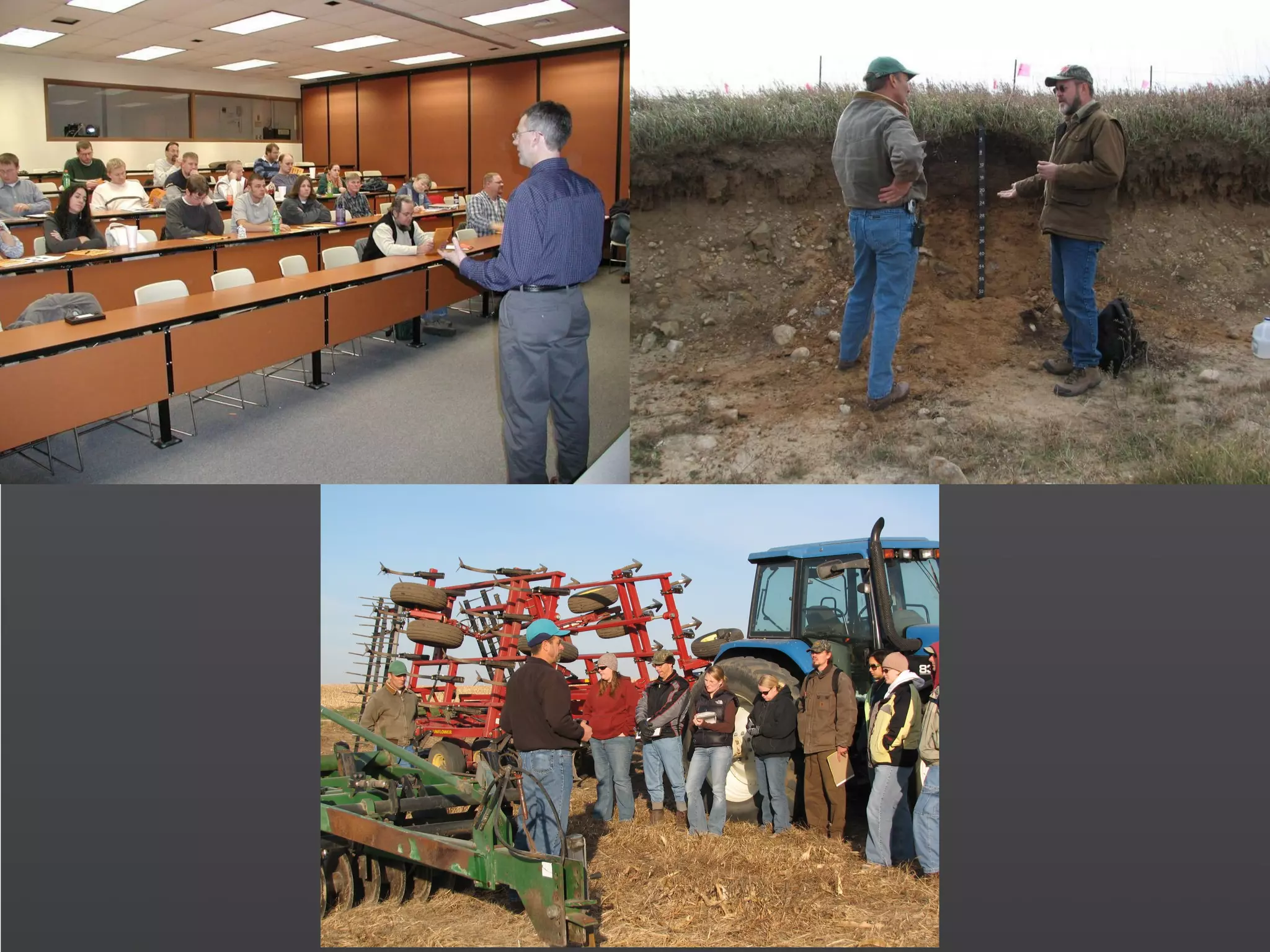
The goal of the Conservation Professional
Development and Training Program is to
provide research-based knowledge and skills
training to CCAs, agency staff (Extension,
NRCS, LCD, DNR, DATCP) and consultants
working with landowners to implement
conservation practices.
Conservation Tech
Conservation Tech
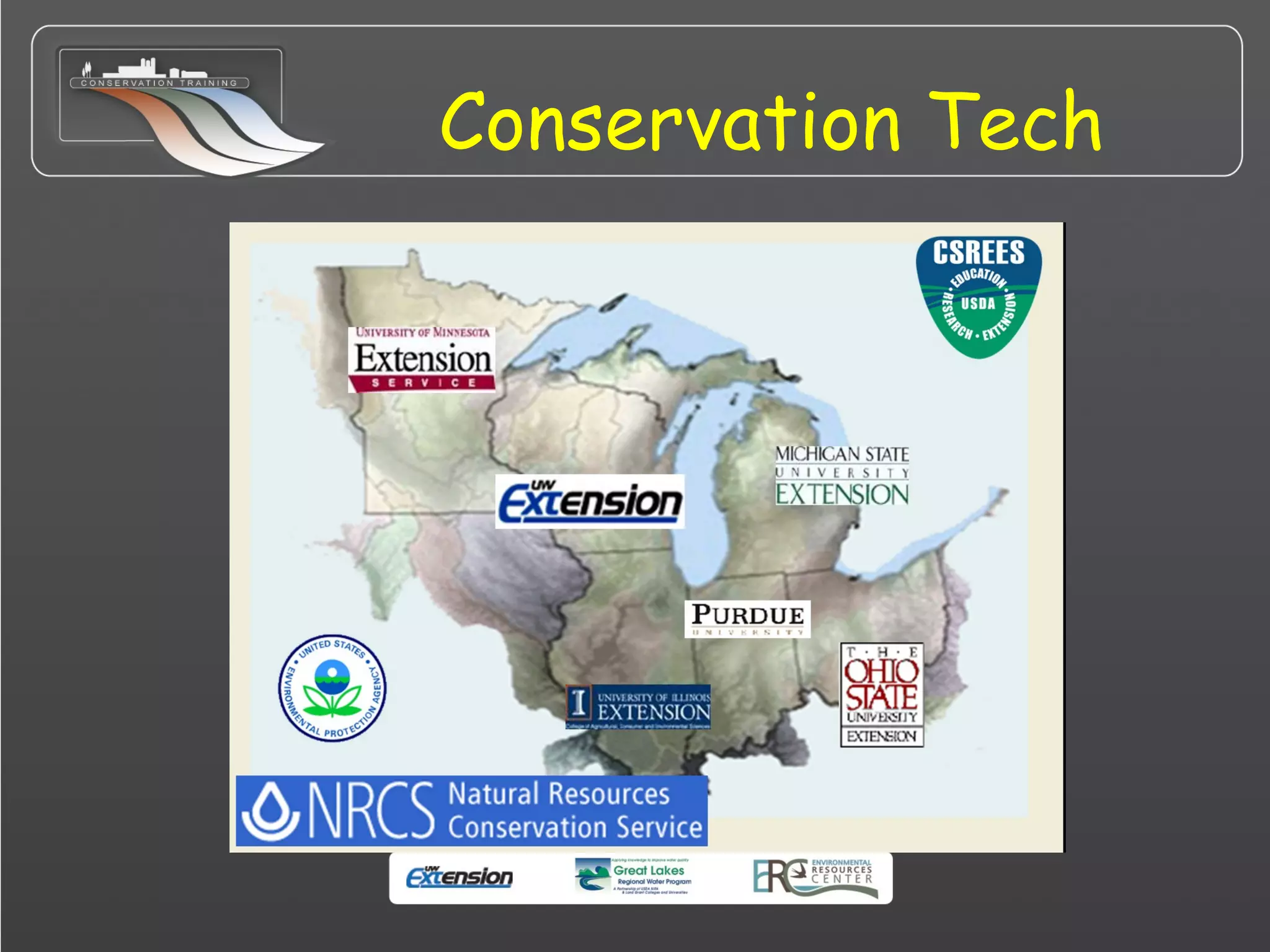
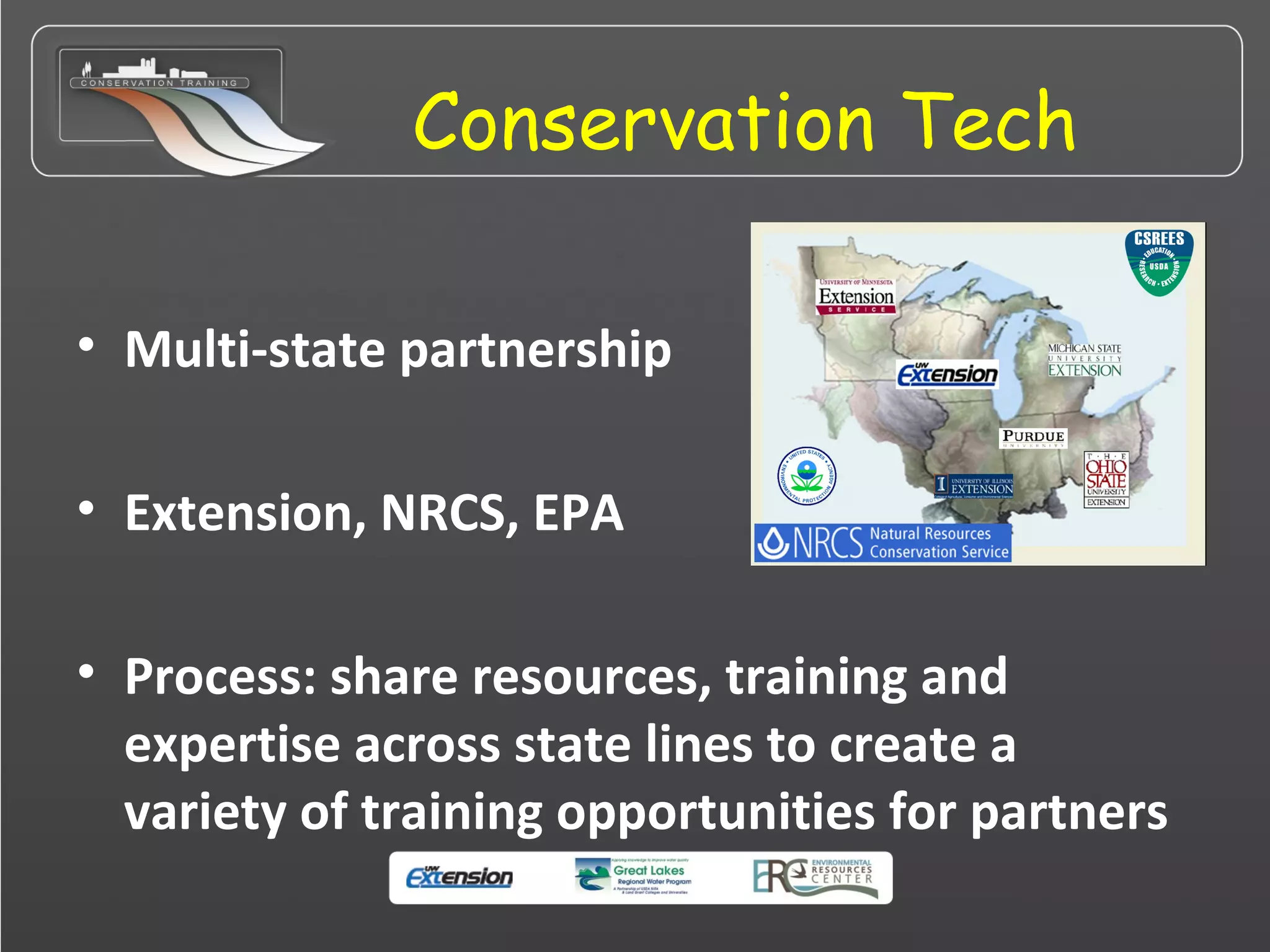
• Multi-state partnership
• Extension, NRCS, EPA
• Process: share resources, training and
expertise across state lines to create a
variety of training opportunities for partners
Research Based Focus
• Old model: Agency staff internal training
• New Model: Expose CCA, agency staff to
researchers and the latest information and
approaches, train all to same competency
Resource Sharing
• As budgets shrink, specialists are not replaced.
• State by state inventory of training and
resources being developed
• Distance technology + resource sharing
= a better trained workforce/more
conservation
Training Focus
• Traditional Conservation
– Conservation Plans, CNMPs, 590’s
• Emerging Issues
– Organic transition, Energy audits, CAPs
• Policy/staff skills
– Conflict management, sales skills
Conservation Planning
• Joint WI / MN Conservation Planning
Curriculum
– Core Conservation modules
– TSP/CCA Introduction to Cons Planning
– Conservation Planning modules
Core Conservation
• Integrating agency staff and UW resources
– Agency policy
• Cultural Resources, NEPA, state regulations
– Technical knowledge
• Agronomic
• Water Resources/Limnology
• BMP Effectiveness (Discovery Farms)
• Social Sciences / Rural Sociology
Impacts
• WI, MI, MN have trained >400 CNMP plan
writers
• 20+ businesses created/strengthened now
offering CNMP planning
• Farmers have greater access to trained
professionals
Impacts
Resource Concern Recognition
– “I see problems where I didn’t see them before. I
now have a new toolbox to work with my clients
even if they choose not to sign up for cost share -
we can work on small problems before they
become big ones.”
~ Wisconsin Conservation Planning TSP, Manitowoc County
Local Benefits
• Bringing experts from upper midwest to
Wisconsin to address local issues
– Tile Smoking/Preferential Flow (OH)
– Native Pollinators (OR)
– Hoop House Production (MI)
– Greenhouse gasses from livestock (MI, IL)
Opportunities
• Localized Delivery
– Using our programs to train local audiences
• Teaching/Research Sharing
– Sharing your expertise/experience to a
statewide/multi-state audience
– Technological Upgrades
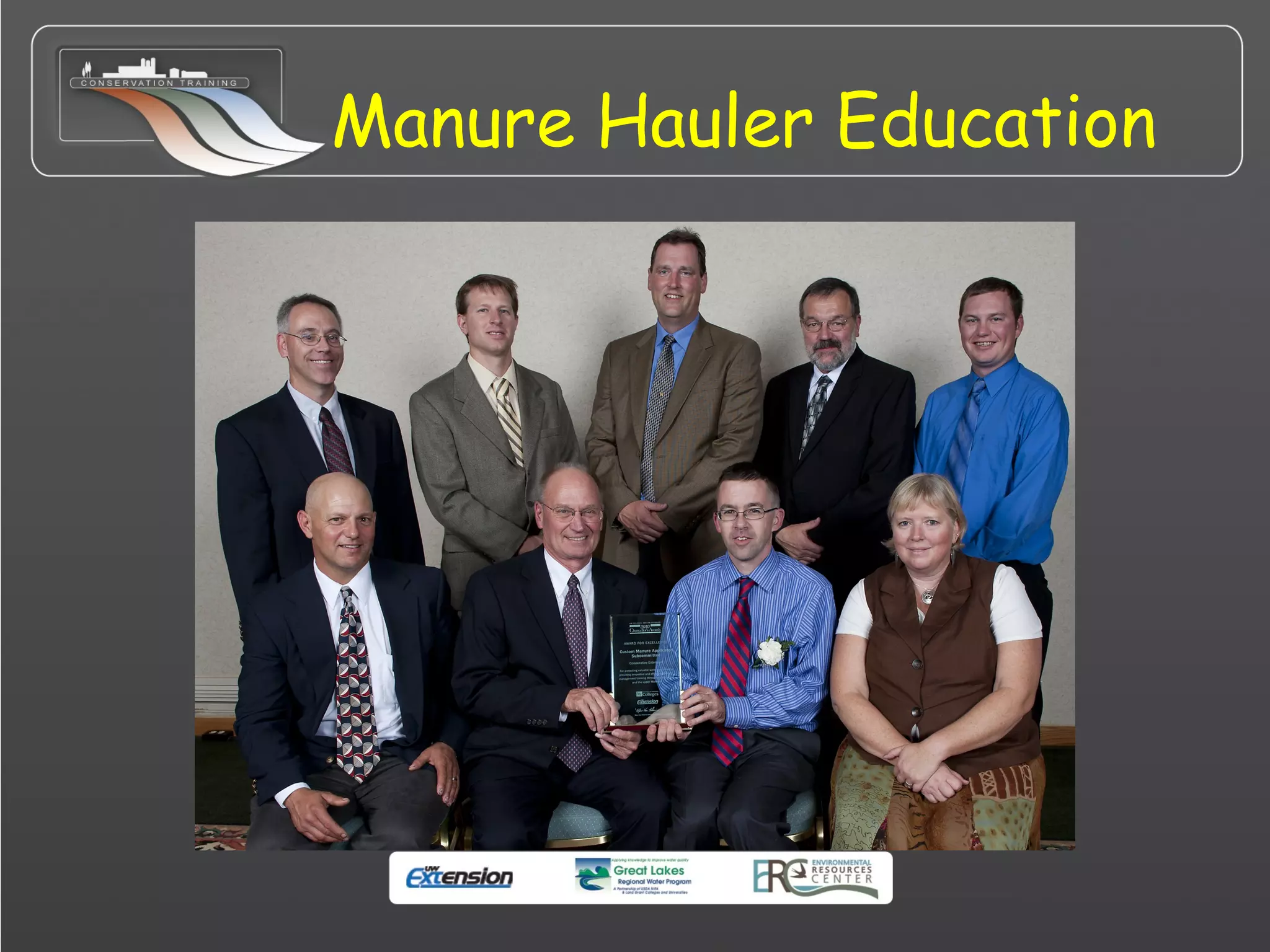
Manure Hauler Education
What is it?
An integrated, multi-state educational program
that includes:
• Direct training & train-the trainer methods
• Leadership development/empowerment
What is it?
• Programs built on client need
• Market-based incentives
• Integration of research
• Specialists/County Staff as equal partners
Key History
• Realization that commercial manure
applicators were key to nutrient
management implementation (1992)
• Empowerment of ANRE Teams to allow
specialists and county staff to work together.
Key History
• Connections with Extension staff in other
states to share resources, needs, ideas
• Identification of key industry players and
grooming/encouraging them to take on
leadership roles
Key History
• Flexible, multi-state funding opportunity.
• Very healthy does of good luck and timing.
Extension involvement
• County/multi county meetings for
applicators
– “get your act together”
Extension involvement
• County/multi county meetings for
applicators
– “get your act together”
• “Road show” of same program at 3 locations
around the state
– “we need to work together”
Extension involvement
• County/multi county meetings for
applicators
– “get your act together”
• “Road show” of same program at 3 locations
around the state
– “we need to work together”
– 2-3 key industry people identified at each session
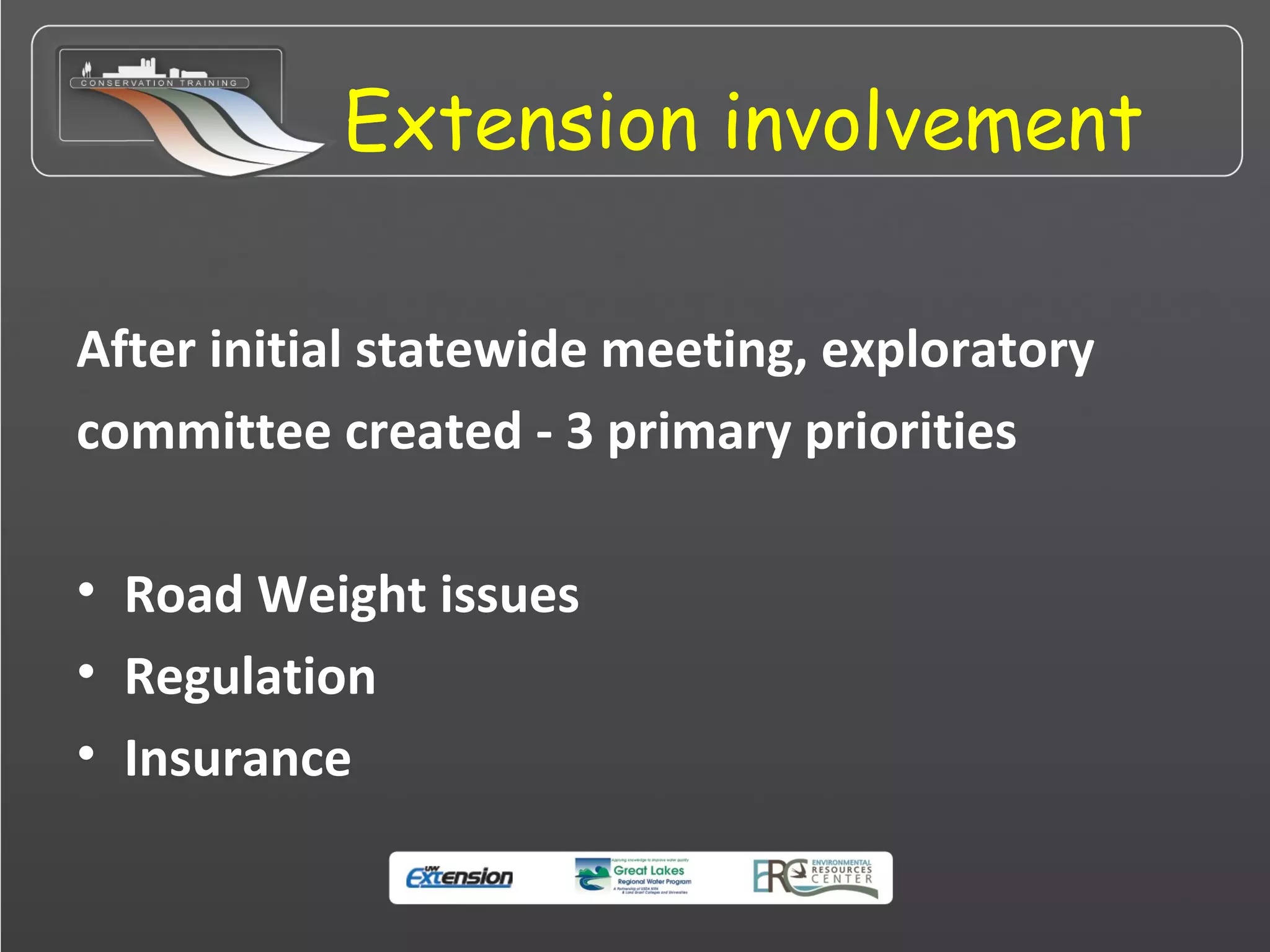
Extension involvement
After initial statewide meeting, exploratory
committee created - 3 primary priorities
• Road Weight issues
• Regulation
• Insurance
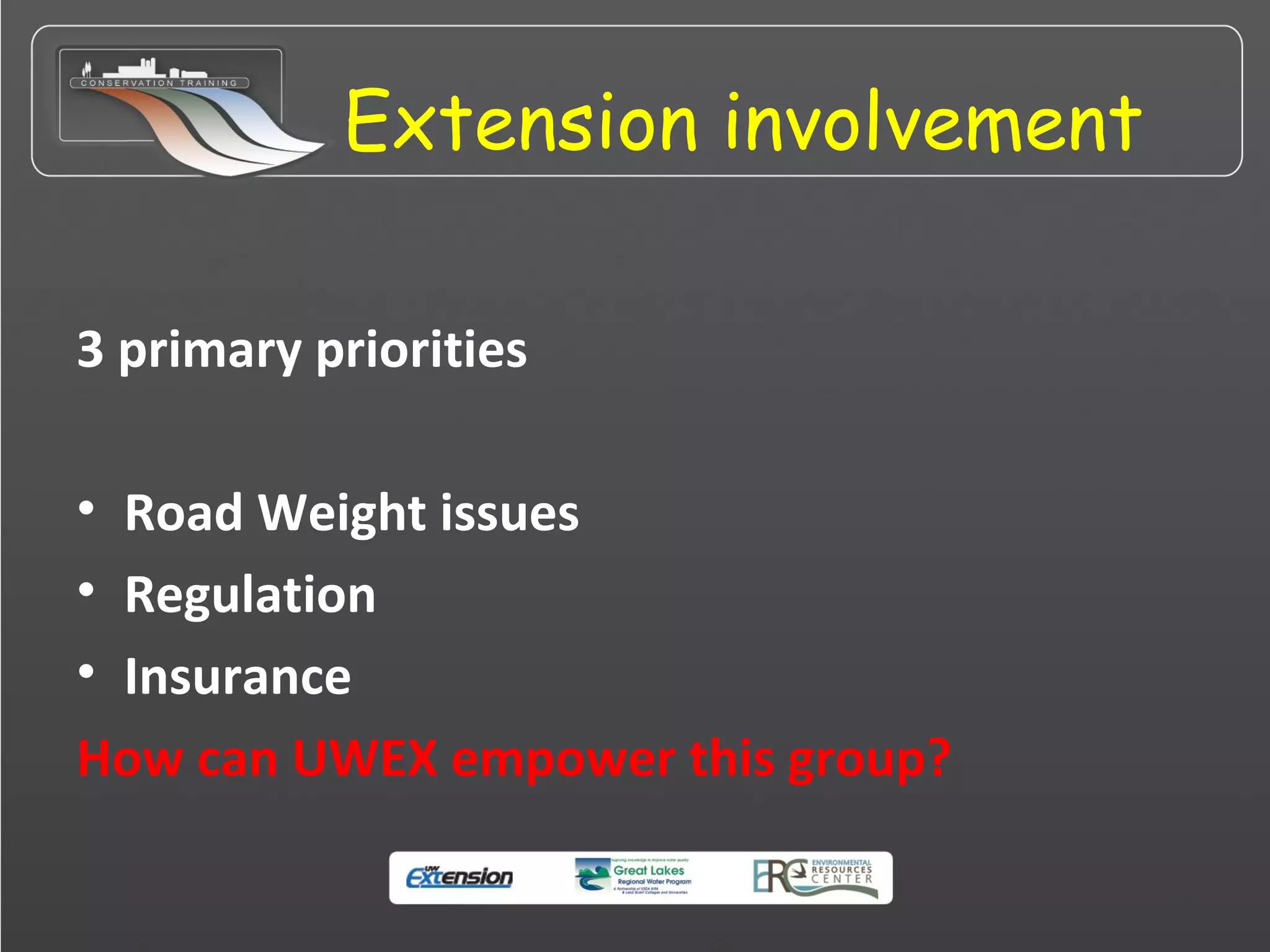
Extension involvement
3 primary priorities
• Road Weight issues
• Regulation
• Insurance
How can UWEX empower this group?
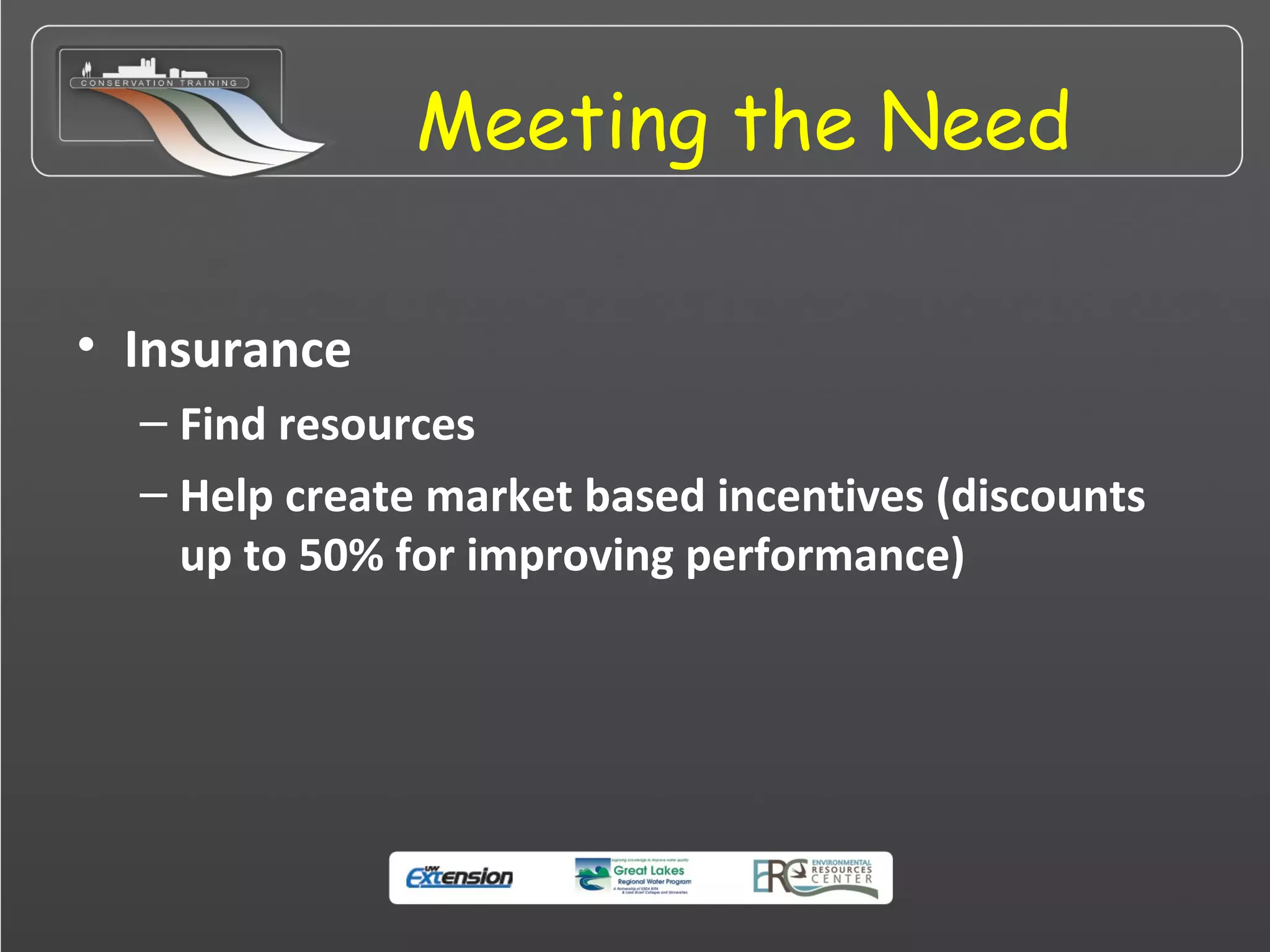
Meeting the Need
• Insurance
– Find resources
– Help create market based incentives (discounts
up to 50% for improving performance)
Meeting the Need
• Regulation
– Introduction to agencies, key players
– Empower to become involved
Meeting the Need
• Road Weight
– Connections with stakeholders
– Facilitate resource identification
• MN Road Research facility
• Industry
Training Program
• Evaluated/summarized other programs
• Identified barriers to successful
implementation
– Part time help/staff turnover
– Programs not meeting their needs
Training Program
• Brought in outside resources
Leadership Development
How do you get fierce competitors to work
together?
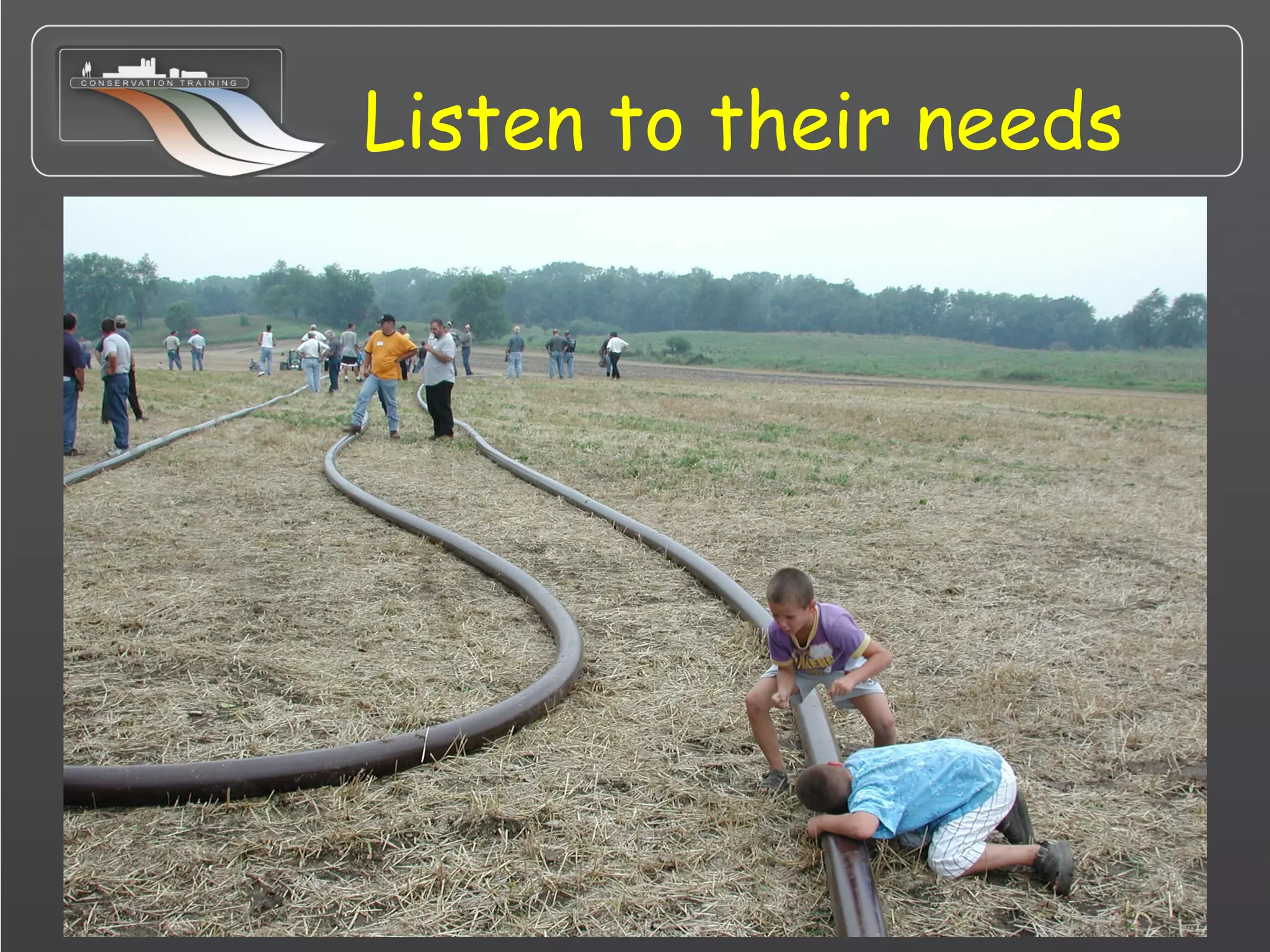
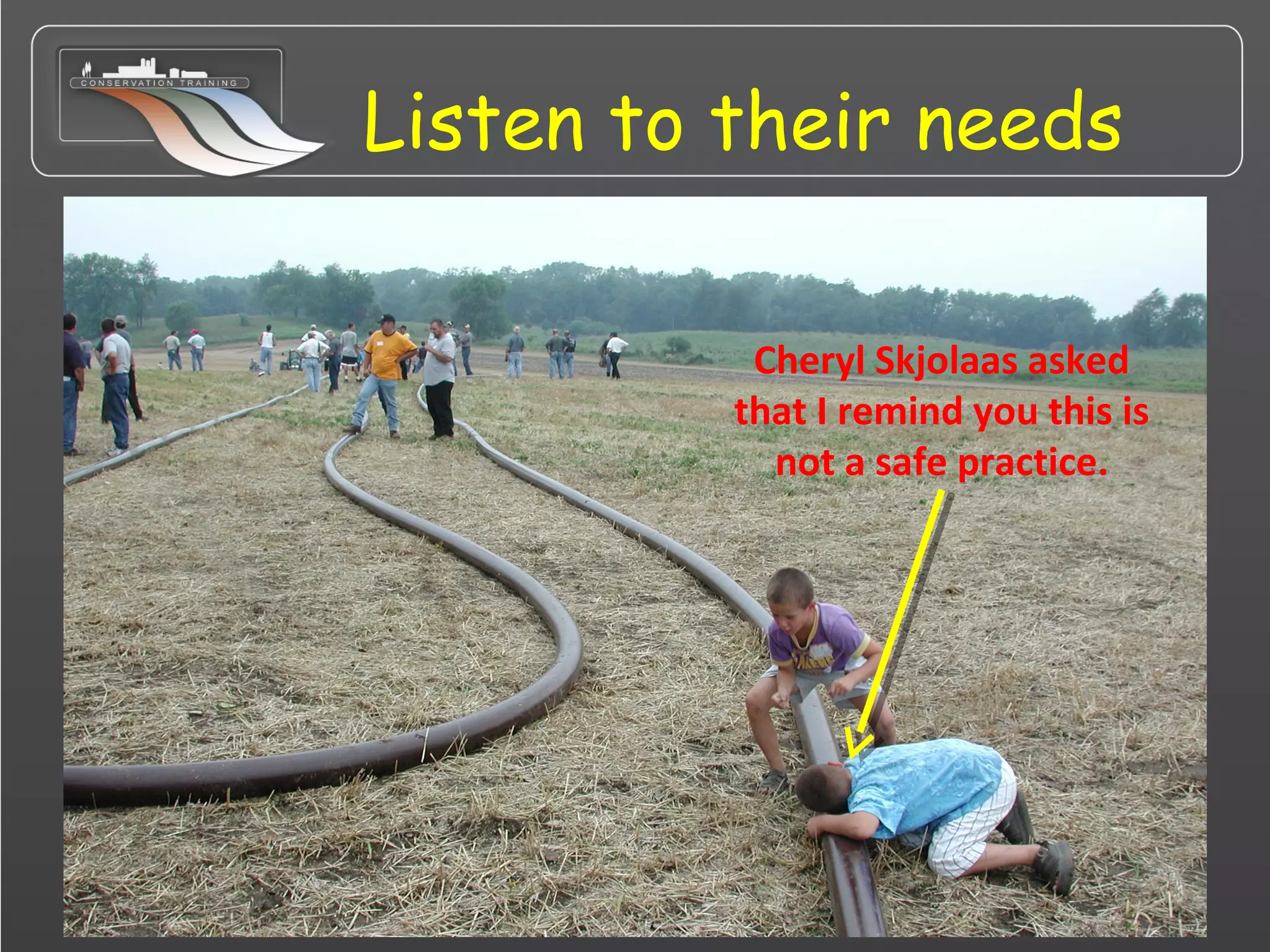
Listen to their needs
Cheryl Skjolaas asked
that I remind you this is
not a safe practice.
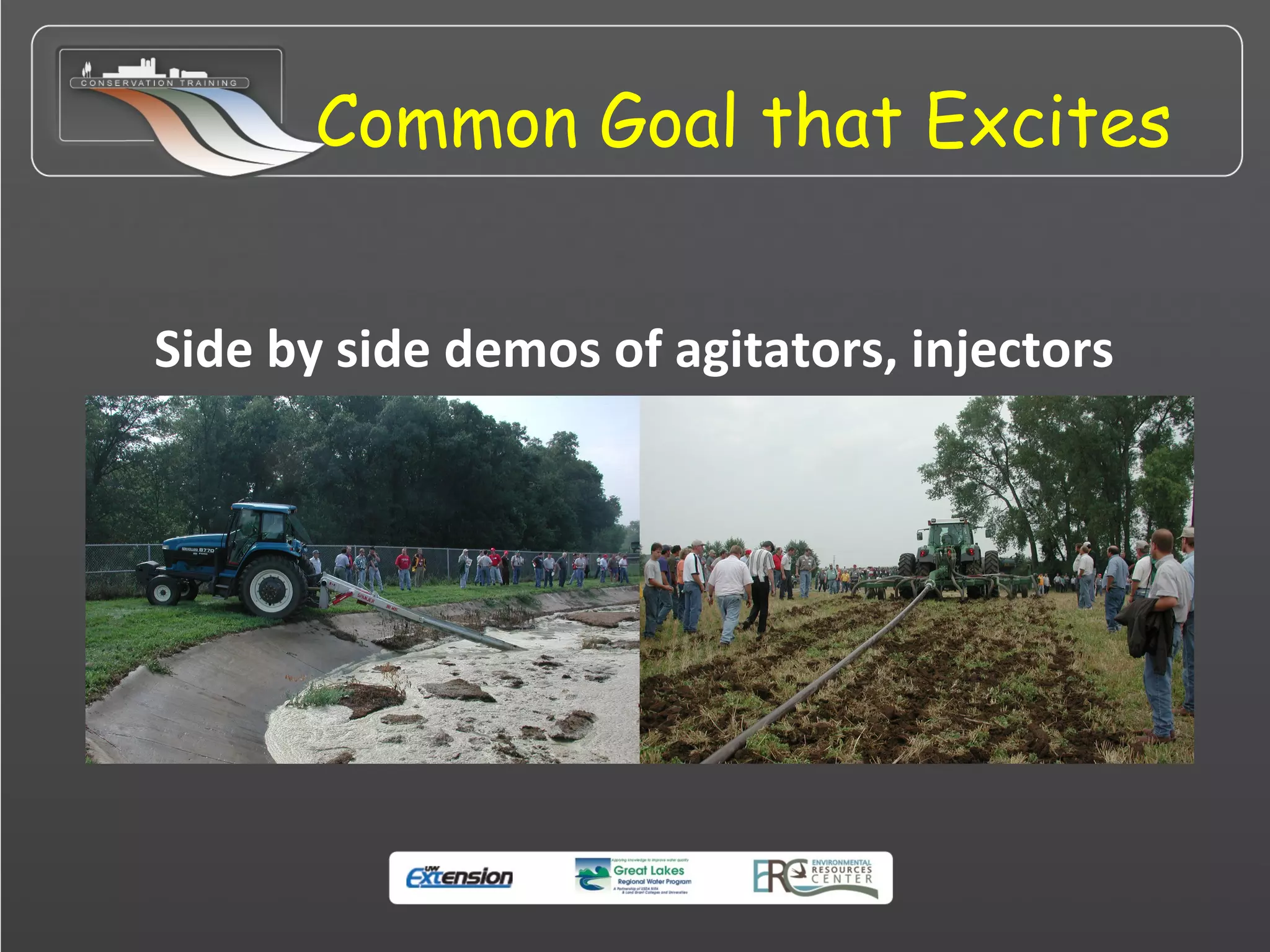
Common Goal that Excites
Side by side demos of agitators, injectors
Common Goal that Excites
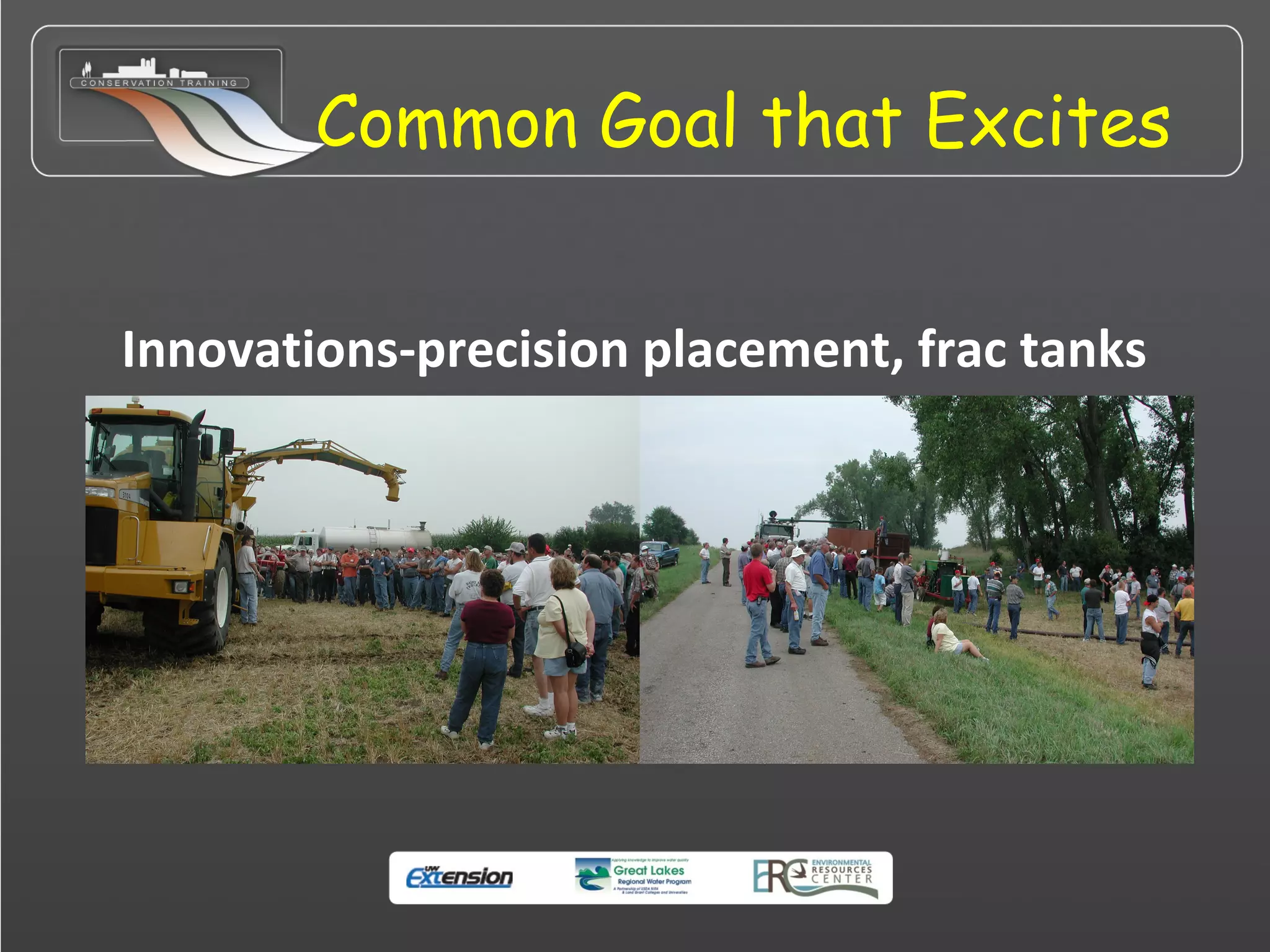
Innovations-precision placement, frac tanks
Impacts
Active, independent stakeholder association
Growing demand for training and education
Increased compliance with spill reporting,
other regulations
Opportunities: Training
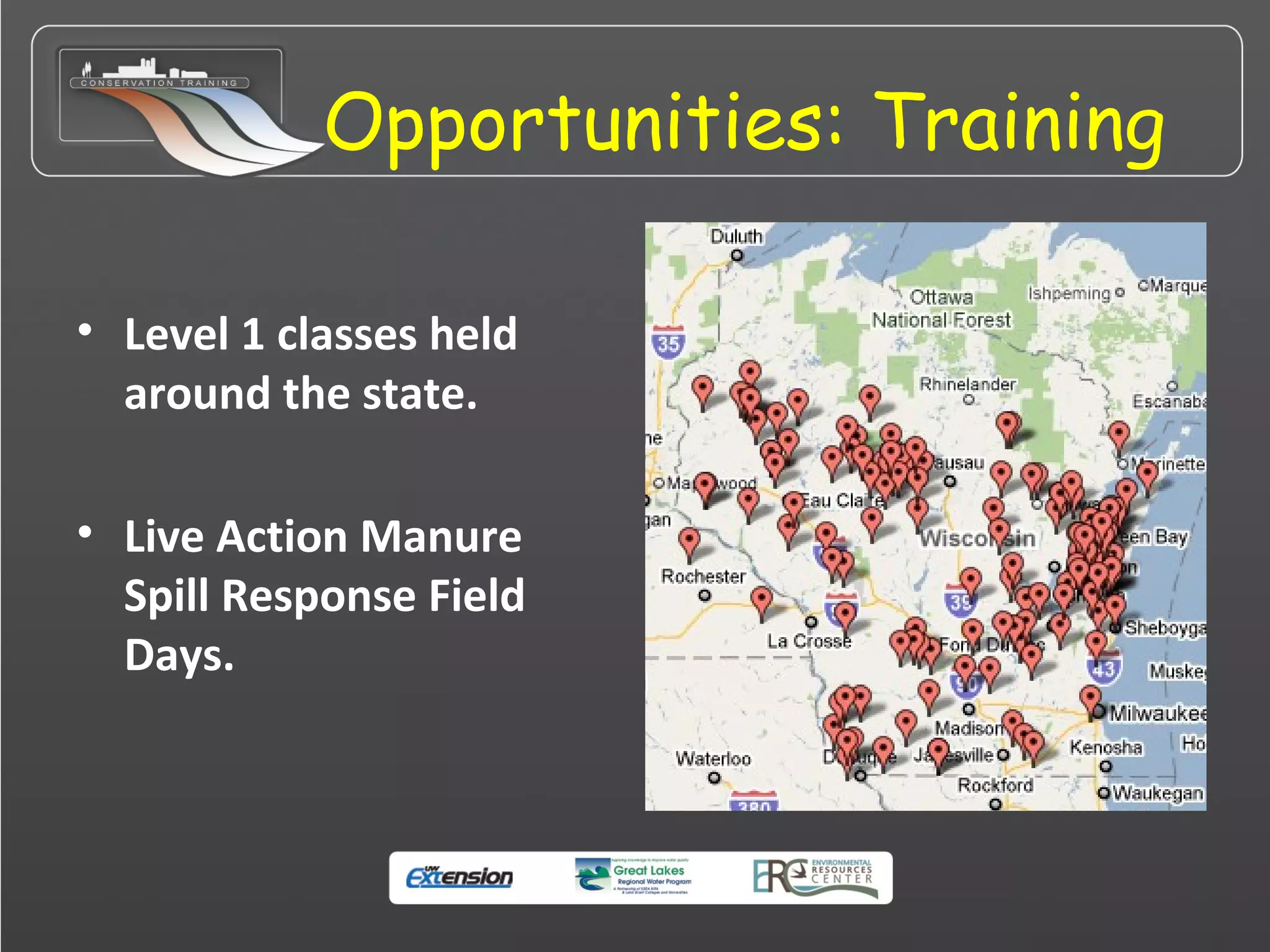
• Level 1 classes held
around the state.
• Live Action Manure
Spill Response Field
Days.
Opportunities: Training
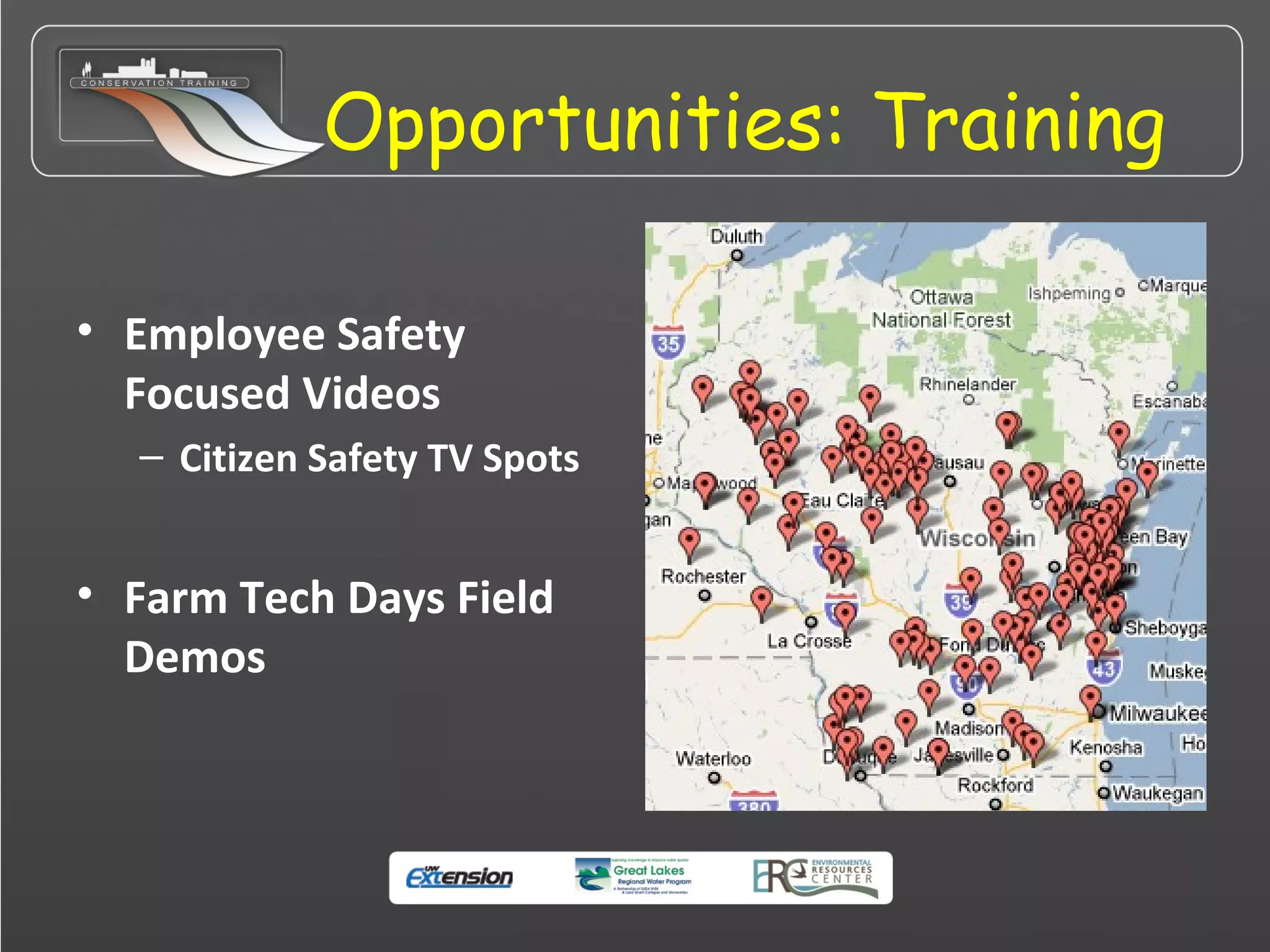
• Employee Safety
Focused Videos
– Citizen Safety TV Spots
• Farm Tech Days Field
Demos
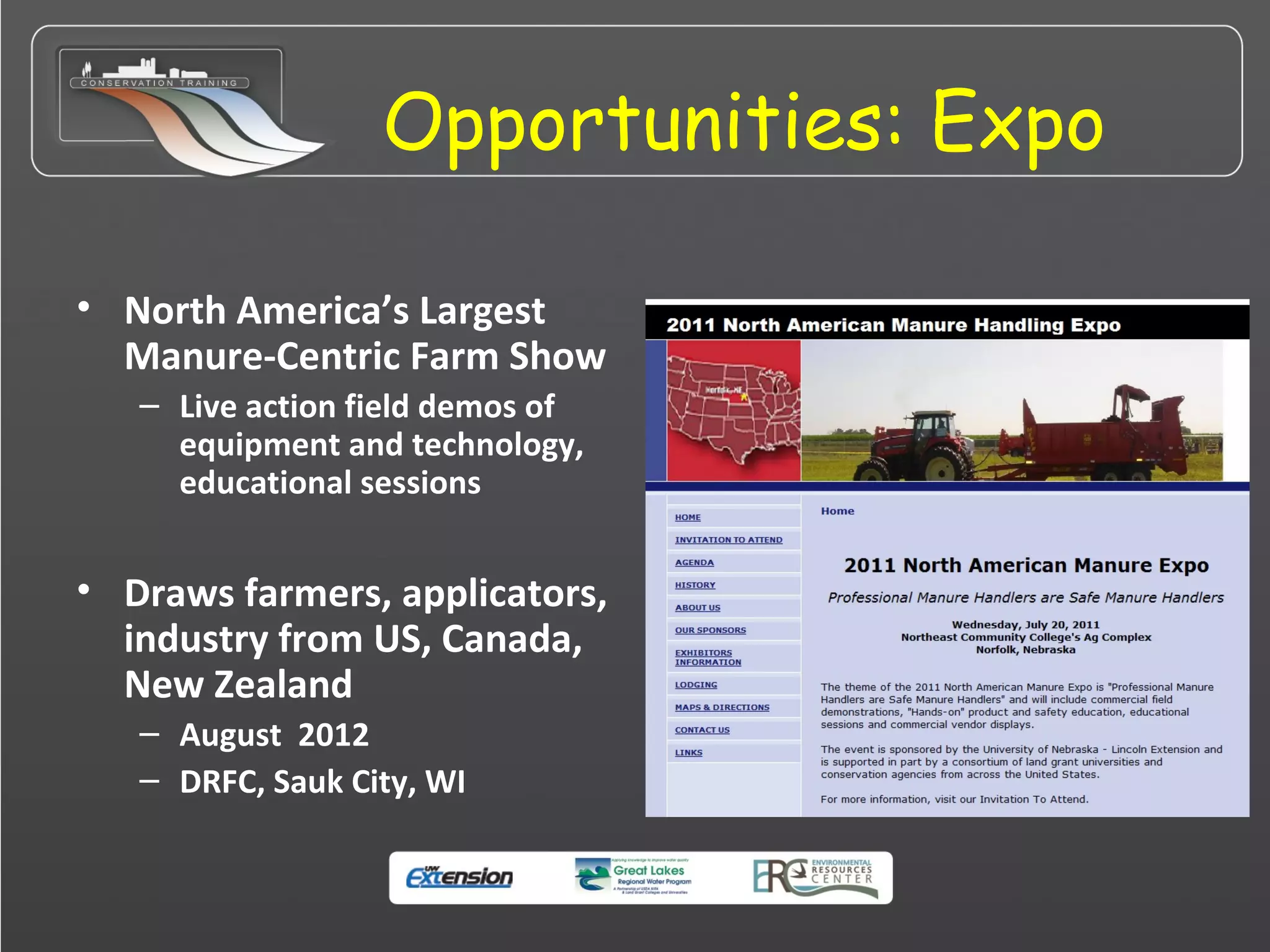
Opportunities: Expo
• North America’s Largest
Manure-Centric Farm Show
– Live action field demos of
equipment and technology,
educational sessions
• Draws farmers, applicators,
industry from US, Canada,
New Zealand
– August 2012
– DRFC, Sauk City, WI

Conservation Tech

  • 1.
    Conservation Tech The goalof the Conservation Professional Development and Training Program is to provide research-based knowledge and skills training to CCAs, agency staff (Extension, NRCS, LCD, DNR, DATCP) and consultants working with landowners to implement conservation practices.
  • 2.
  • 3.
    Conservation Tech • Multi-statepartnership • Extension, NRCS, EPA • Process: share resources, training and expertise across state lines to create a variety of training opportunities for partners
  • 4.
    Research Based Focus •Old model: Agency staff internal training • New Model: Expose CCA, agency staff to researchers and the latest information and approaches, train all to same competency
  • 5.
    Resource Sharing • Asbudgets shrink, specialists are not replaced. • State by state inventory of training and resources being developed • Distance technology + resource sharing = a better trained workforce/more conservation
  • 6.
    Training Focus • TraditionalConservation – Conservation Plans, CNMPs, 590’s • Emerging Issues – Organic transition, Energy audits, CAPs • Policy/staff skills – Conflict management, sales skills
  • 7.
    Conservation Planning • JointWI / MN Conservation Planning Curriculum – Core Conservation modules – TSP/CCA Introduction to Cons Planning – Conservation Planning modules
  • 8.
    Core Conservation • Integratingagency staff and UW resources – Agency policy • Cultural Resources, NEPA, state regulations – Technical knowledge • Agronomic • Water Resources/Limnology • BMP Effectiveness (Discovery Farms) • Social Sciences / Rural Sociology
  • 10.
    Impacts • WI, MI,MN have trained >400 CNMP plan writers • 20+ businesses created/strengthened now offering CNMP planning • Farmers have greater access to trained professionals
  • 11.
    Impacts Resource Concern Recognition –“I see problems where I didn’t see them before. I now have a new toolbox to work with my clients even if they choose not to sign up for cost share - we can work on small problems before they become big ones.” ~ Wisconsin Conservation Planning TSP, Manitowoc County
  • 12.
    Local Benefits • Bringingexperts from upper midwest to Wisconsin to address local issues – Tile Smoking/Preferential Flow (OH) – Native Pollinators (OR) – Hoop House Production (MI) – Greenhouse gasses from livestock (MI, IL)
  • 13.
    Opportunities • Localized Delivery –Using our programs to train local audiences • Teaching/Research Sharing – Sharing your expertise/experience to a statewide/multi-state audience – Technological Upgrades
  • 14.
  • 15.
    What is it? Anintegrated, multi-state educational program that includes: • Direct training & train-the trainer methods • Leadership development/empowerment
  • 16.
    What is it? •Programs built on client need • Market-based incentives • Integration of research • Specialists/County Staff as equal partners
  • 17.
    Key History • Realizationthat commercial manure applicators were key to nutrient management implementation (1992) • Empowerment of ANRE Teams to allow specialists and county staff to work together.
  • 18.
    Key History • Connectionswith Extension staff in other states to share resources, needs, ideas • Identification of key industry players and grooming/encouraging them to take on leadership roles
  • 19.
    Key History • Flexible,multi-state funding opportunity. • Very healthy does of good luck and timing.
  • 20.
    Extension involvement • County/multicounty meetings for applicators – “get your act together”
  • 21.
    Extension involvement • County/multicounty meetings for applicators – “get your act together” • “Road show” of same program at 3 locations around the state – “we need to work together”
  • 22.
    Extension involvement • County/multicounty meetings for applicators – “get your act together” • “Road show” of same program at 3 locations around the state – “we need to work together” – 2-3 key industry people identified at each session
  • 23.
    Extension involvement After initialstatewide meeting, exploratory committee created - 3 primary priorities • Road Weight issues • Regulation • Insurance
  • 24.
    Extension involvement 3 primarypriorities • Road Weight issues • Regulation • Insurance How can UWEX empower this group?
  • 25.
    Meeting the Need •Insurance – Find resources – Help create market based incentives (discounts up to 50% for improving performance)
  • 26.
    Meeting the Need •Regulation – Introduction to agencies, key players – Empower to become involved
  • 27.
    Meeting the Need •Road Weight – Connections with stakeholders – Facilitate resource identification • MN Road Research facility • Industry
  • 28.
    Training Program • Evaluated/summarizedother programs • Identified barriers to successful implementation – Part time help/staff turnover – Programs not meeting their needs
  • 29.
    Training Program • Broughtin outside resources
  • 30.
    Leadership Development How doyou get fierce competitors to work together?
  • 31.
  • 32.
    Listen to theirneeds Cheryl Skjolaas asked that I remind you this is not a safe practice.
  • 33.
    Common Goal thatExcites Side by side demos of agitators, injectors
  • 34.
    Common Goal thatExcites Innovations-precision placement, frac tanks
  • 35.
    Impacts Active, independent stakeholderassociation Growing demand for training and education Increased compliance with spill reporting, other regulations
  • 36.
    Opportunities: Training • Level1 classes held around the state. • Live Action Manure Spill Response Field Days.
  • 37.
    Opportunities: Training • EmployeeSafety Focused Videos – Citizen Safety TV Spots • Farm Tech Days Field Demos
  • 38.
    Opportunities: Expo • NorthAmerica’s Largest Manure-Centric Farm Show – Live action field demos of equipment and technology, educational sessions • Draws farmers, applicators, industry from US, Canada, New Zealand – August 2012 – DRFC, Sauk City, WI