What Do You Get When You Cross a Logic ModelWhat Do You Get When You Cross a Logic Model
with Transdisciplinary Action- Research?:
A User-Friendly Methodology fory gy
Documenting Intangible Outcomes!
Susan Thering Ph DSusan Thering, Ph.D.
Department of Landscape Architecture
University of Wisconsin-Madison and UW-Extension
sathering@wisc.edu
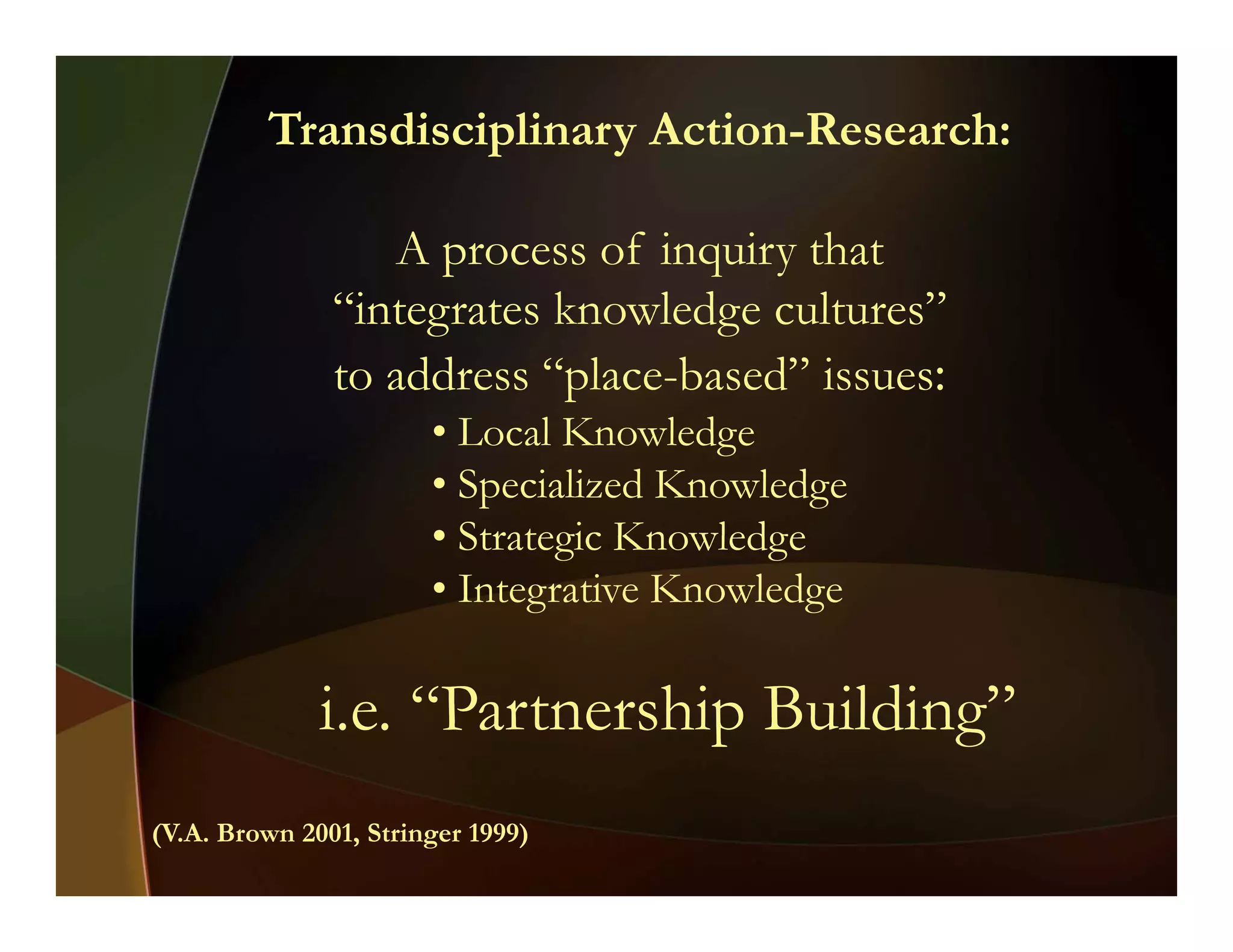
Transdisciplinary Action-Research:
A process of inquiry that
“i k l d l ”“integrates knowledge cultures”
to address “place-based” issues:
• Local Knowledge
• Specialized Knowledge
• Strategic Knowledge• Strategic Knowledge
• Integrative Knowledge
i.e. “Partnership Building”
(V.A. Brown 2001, Stringer 1999)
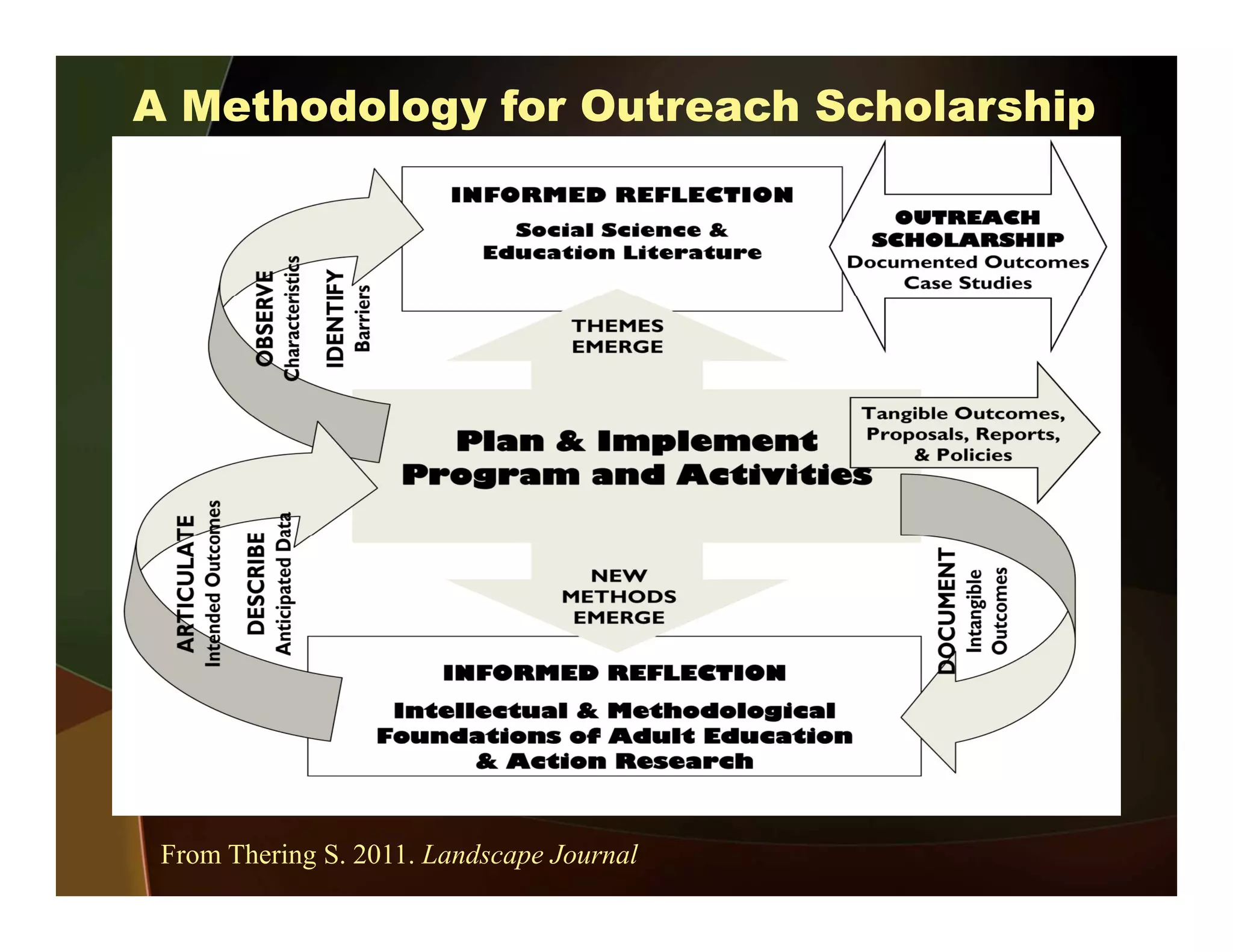
A Methodology for Outreach Scholarship
From Thering S. 2011. Landscape Journal
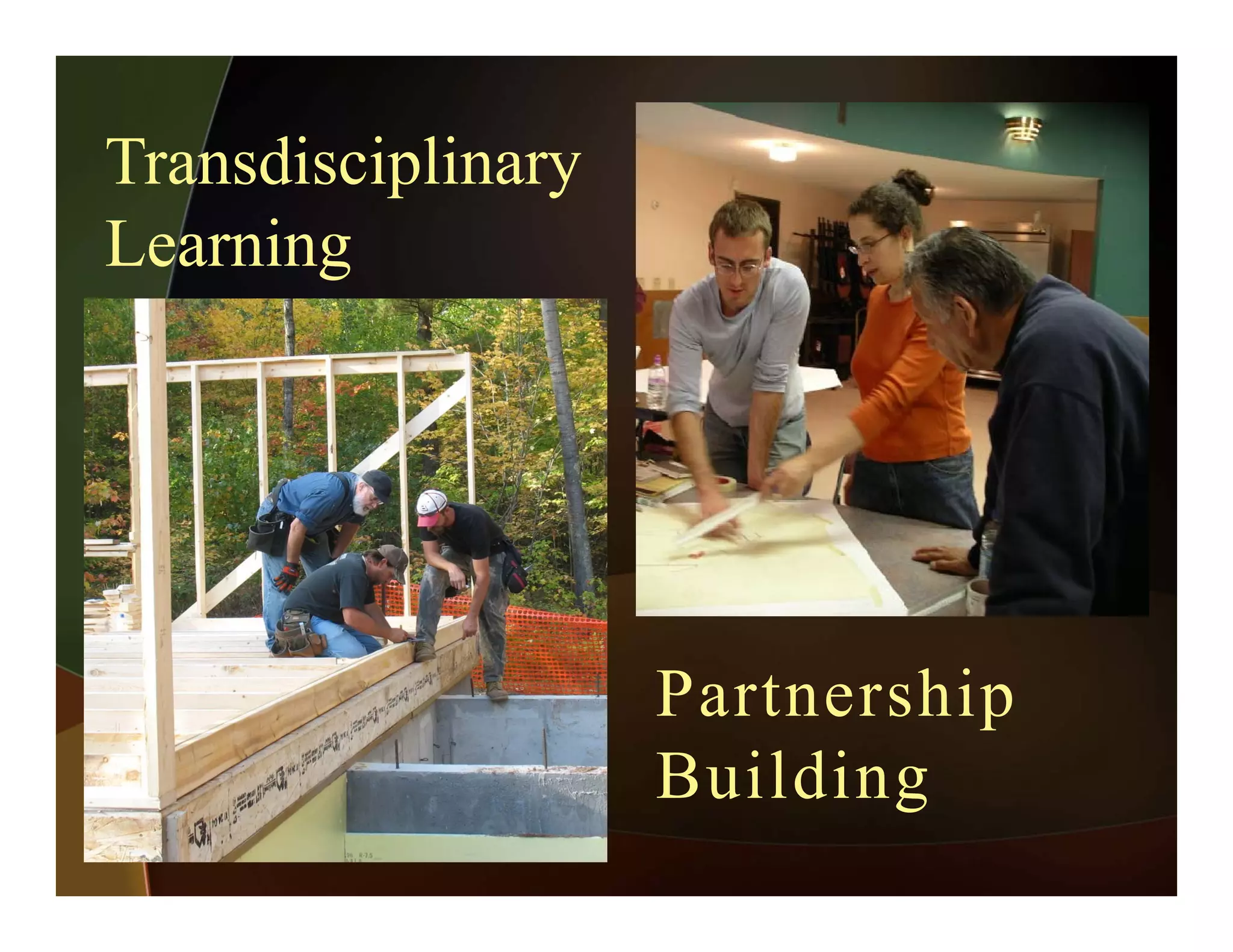
TransdisciplinaryTransdisciplinary
Learning
Partnership
BuildingBuilding
Learning to Evaluate
Transdisciplinary LearningTransdisciplinary Learning
““Nothing as practical as good theory”
(Weiss 1999)
The Research Question:
H l h hi b ildiHow can we evaluate the partnership building aspects
of Extension programming?
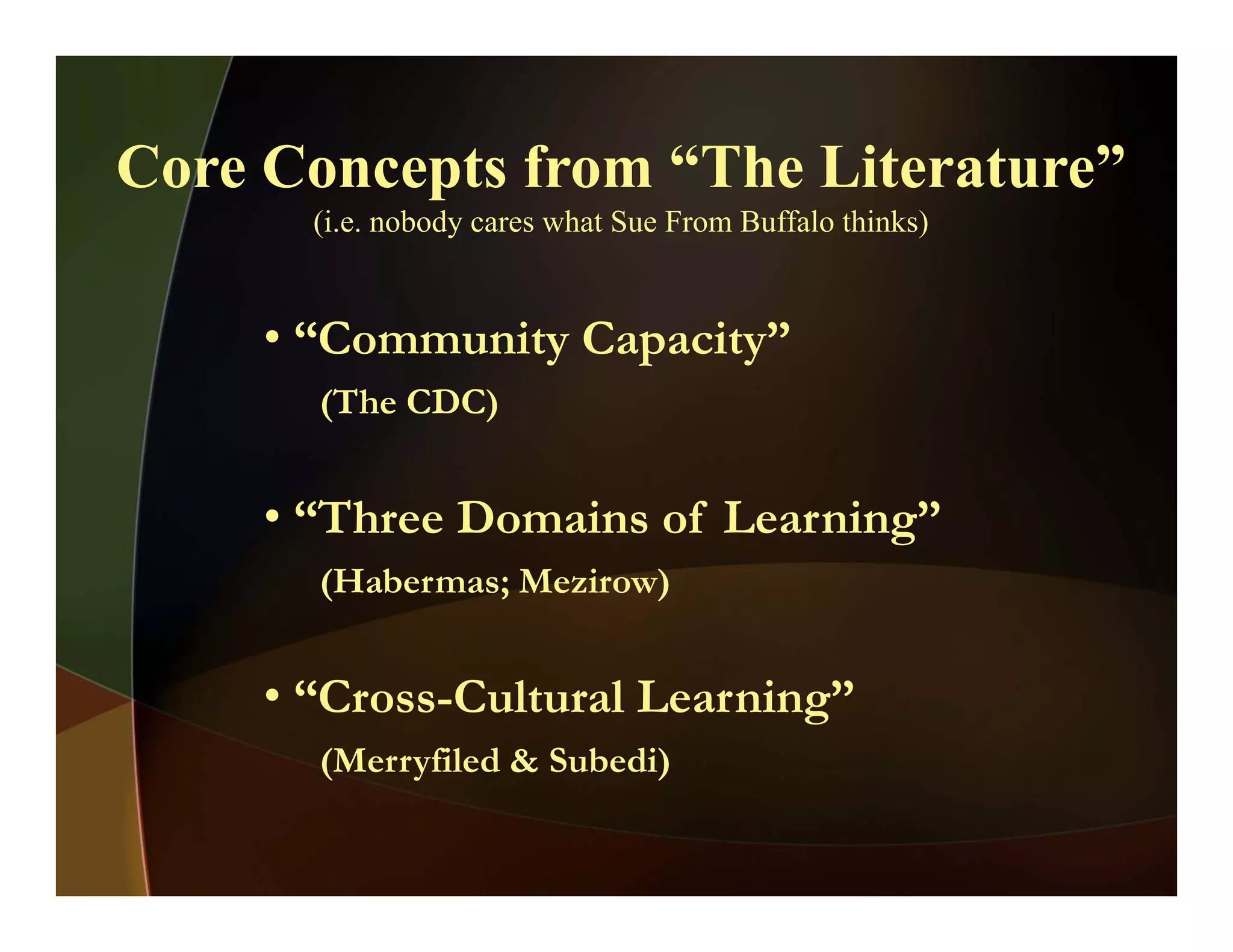
Core Concepts from “The Literature”Core Concepts from The Literature
(i.e. nobody cares what Sue From Buffalo thinks)
• “Community Capacity”
(The CDC)( )
• “Three Domains of Learning”g
(Habermas; Mezirow)
• “Cross-Cultural Learning”
(Merryfiled & Subedi)( y )
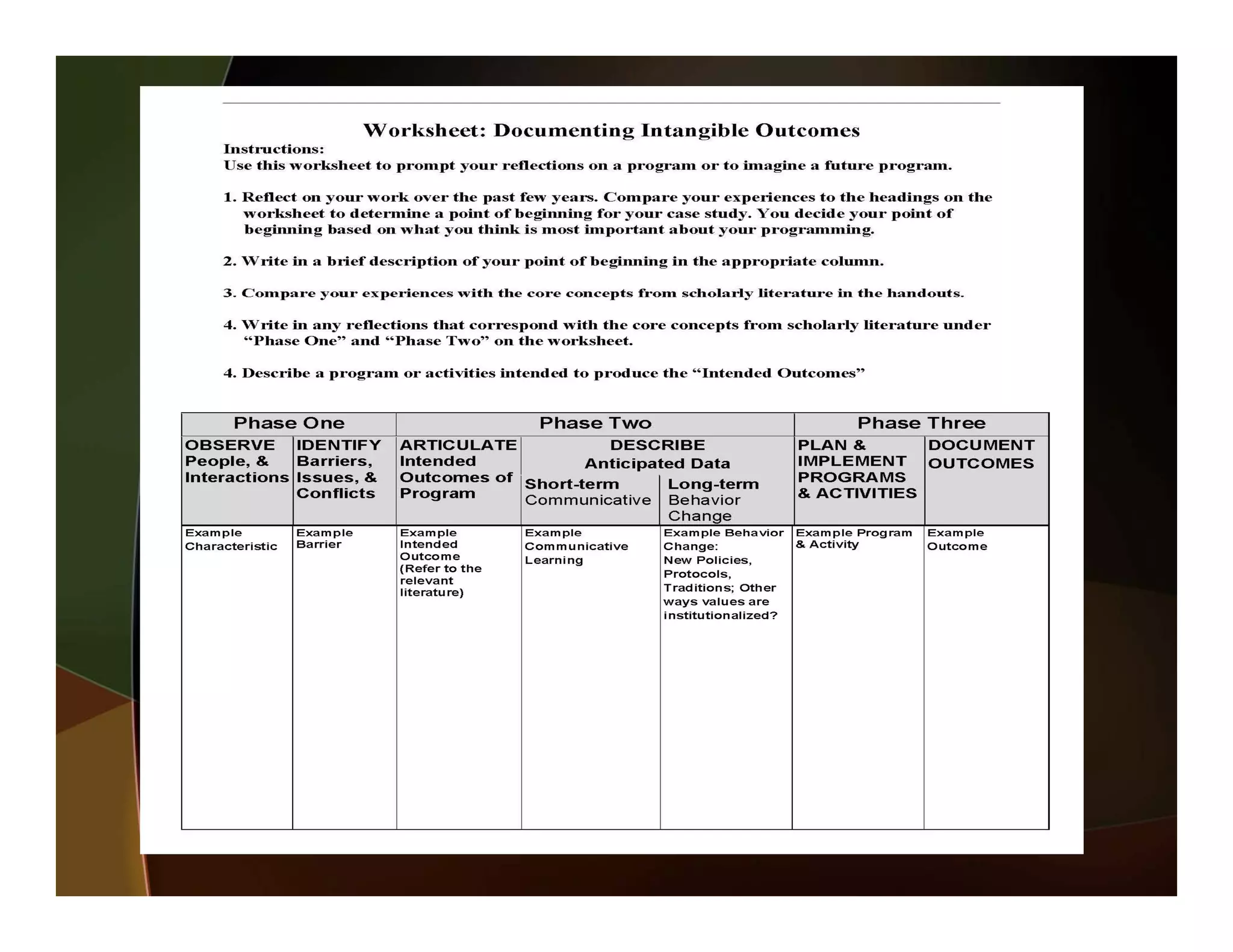
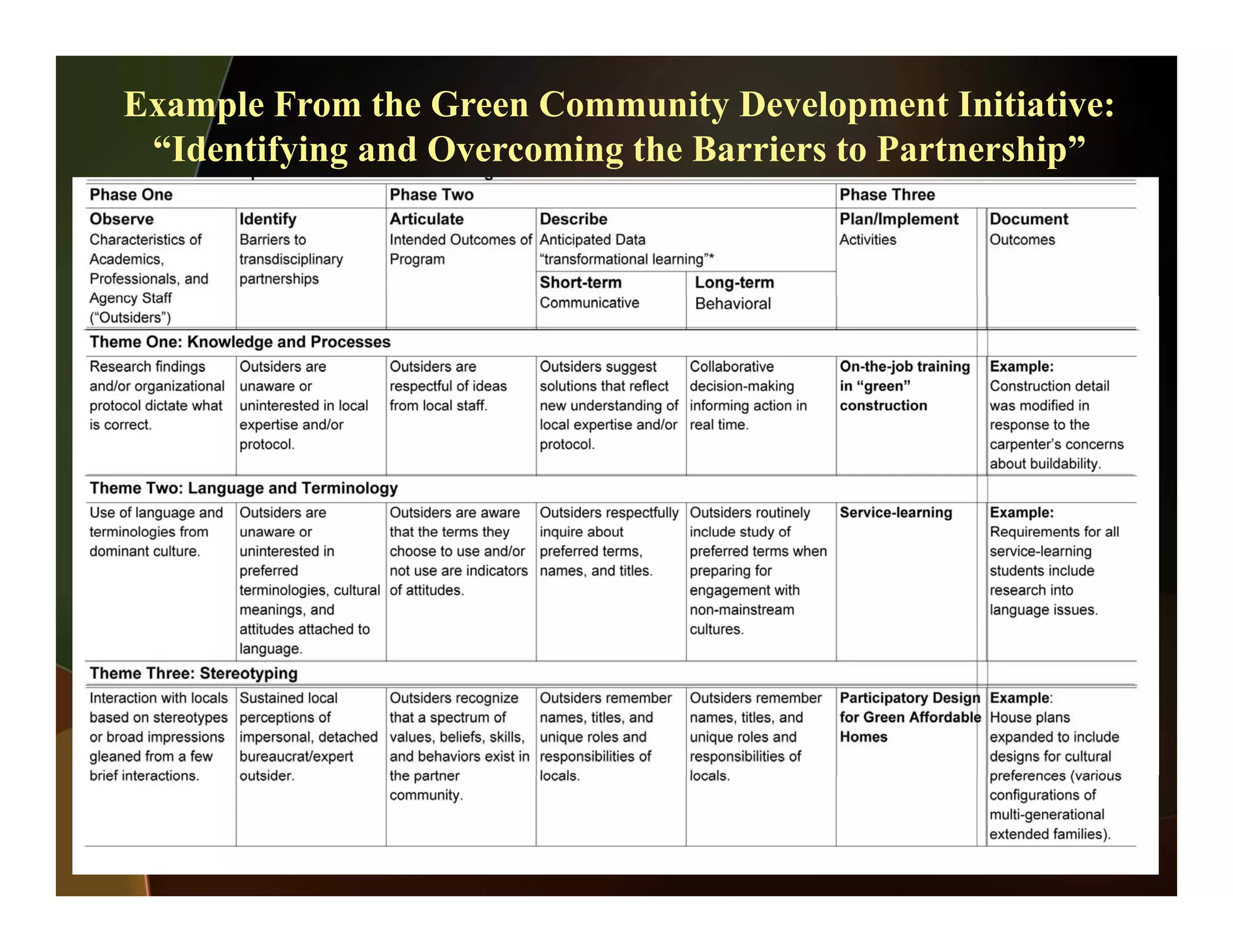
Example From the Green Community Development Initiative:
“Identifying and Overcoming the Barriers to Partnership”
What Do You Get When You Cross a Logic Model
with Transdisciplinary Action- Research?:
A User-Friendly Methodology for
Documenting Intangible Outcomes!
Please fill out your evaluation forms
Thank you!Thank you!
Susan Thering, Ph.D.
Department of Landscape Architecture
University of Wisconsin-Madison and UW-Extension
sathering@wisc.edu

What Do You Get When You Cross a Logic Model with Transdisciplinary Action-Research?: A User-Friendly Methodology for Documenting Intangible Outcomes!

  • 1.
    What Do YouGet When You Cross a Logic ModelWhat Do You Get When You Cross a Logic Model with Transdisciplinary Action- Research?: A User-Friendly Methodology fory gy Documenting Intangible Outcomes! Susan Thering Ph DSusan Thering, Ph.D. Department of Landscape Architecture University of Wisconsin-Madison and UW-Extension sathering@wisc.edu
  • 2.
    Transdisciplinary Action-Research: A processof inquiry that “i k l d l ”“integrates knowledge cultures” to address “place-based” issues: • Local Knowledge • Specialized Knowledge • Strategic Knowledge• Strategic Knowledge • Integrative Knowledge i.e. “Partnership Building” (V.A. Brown 2001, Stringer 1999)
  • 3.
    A Methodology forOutreach Scholarship From Thering S. 2011. Landscape Journal
  • 4.
  • 5.
    Learning to Evaluate TransdisciplinaryLearningTransdisciplinary Learning ““Nothing as practical as good theory” (Weiss 1999)
  • 6.
    The Research Question: Hl h hi b ildiHow can we evaluate the partnership building aspects of Extension programming?
  • 7.
    Core Concepts from“The Literature”Core Concepts from The Literature (i.e. nobody cares what Sue From Buffalo thinks) • “Community Capacity” (The CDC)( ) • “Three Domains of Learning”g (Habermas; Mezirow) • “Cross-Cultural Learning” (Merryfiled & Subedi)( y )
  • 9.
    Example From theGreen Community Development Initiative: “Identifying and Overcoming the Barriers to Partnership”
  • 10.
    What Do YouGet When You Cross a Logic Model with Transdisciplinary Action- Research?: A User-Friendly Methodology for Documenting Intangible Outcomes! Please fill out your evaluation forms Thank you!Thank you! Susan Thering, Ph.D. Department of Landscape Architecture University of Wisconsin-Madison and UW-Extension sathering@wisc.edu