Safe School Learning Sharing
14 January 2019
Presentation by
National Disaster Risk Reduction Centre (NDRC) Nepal
National Initiative on Comprehensive School Safety
“Ensuring resilience in education system through dissemination of the Comprehensive
School Safety (CSS) Master Plan and implementation of the CSS Minimum Package”
A joint venture of UNICEF and NDRC Nepal to provide technical assistance to MOEST on Comprehensive School Safety, funded by USAID
Efforts on School Based (SB) DRR/
School Safety
• Safe School Campaign
• Safer city
• Building community resilience in
earthquake affected communities
• Promotion of resilient and sustainable
urban growth through DRR
What are the major accomplishments?
• CSS/School Based (SB) DRR Knowledge
Attitude and Practice (KAP) studies
• Capacity building – School teachers, students
• SBDRR Assessments and Planning – CSS Action
planning
• School Retrofitting Demonstration
• Awareness and sensitization campaigns –
journalists, LG representatives, national level
stakeholders
• CSS Advocacy – CSS champions, trainers
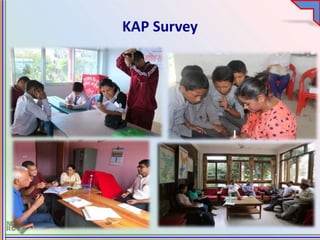
KAP Survey
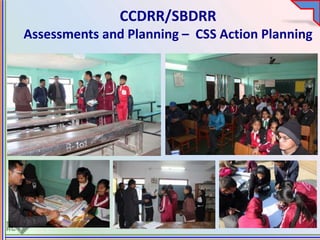
CCDRR/SBDRR
Assessments and Planning – CSS Action Planning
Capacity building, Risk assessment and
School retrofitting pilot & demonstration
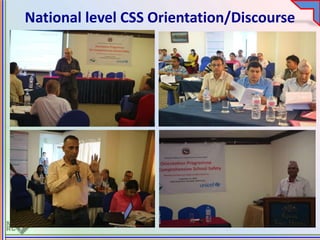
National level CSS Orientation/Discourse
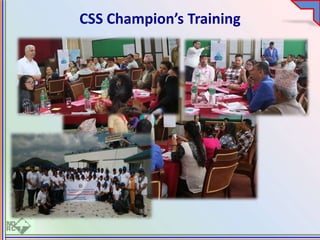
CSS Champion’s Training
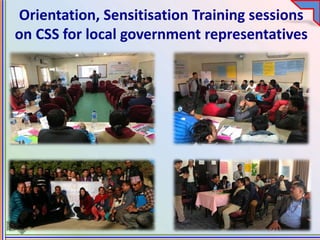
Orientation, Sensitisation Training sessions
on CSS for local government representatives
Orientation, Sensitisation Training
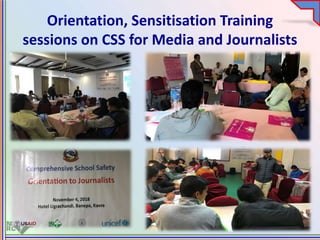
sessions on CSS for Media and Journalists
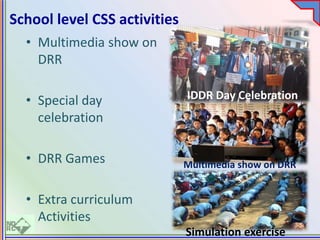
• Multimedia show on
DRR
• Special day
celebration
• DRR Games
• Extra curriculum
Activities
School level CSS activities
IDDR Day Celebration
Multimedia show on DRR
Simulation exercise
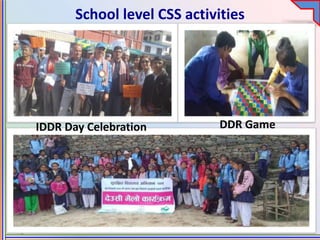
School level CSS activities
IDDR Day Celebration DDR Game
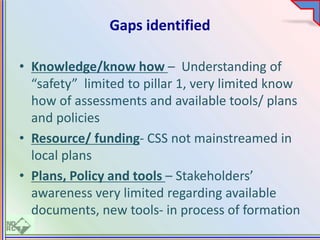
Gaps identified
• Knowledge/know how – Understanding of
“safety” limited to pillar 1, very limited know
how of assessments and available tools/ plans
and policies
• Resource/ funding- CSS not mainstreamed in
local plans
• Plans, Policy and tools – Stakeholders’
awareness very limited regarding available
documents, new tools- in process of formation
Gaps identified …
• Capacity – Scattered and limited capacity
development programs
• Technical backstopping – Government
backstopping for DRR focused on community
based DRR only
• Monitoring and follow up – Not focused on
school safety per se
What are the key recommendations?
• Awareness on available policies and tools –
At schools and different government levels
• Resource/ funding – Mainstream in local
annual plans, encourage private investment
through dialogues, more discourse and
discussion to attract funds
• Tools – Maintain national standard, wider
dissemination of available tools
What are the key recommendations?
• Capacity – Specific programs at different levels
(government, institutions)
• Technical backstopping – Separate focal
persons for CSS at governments and schools
• Monitoring and follow up – Strengthen CSS
specific monitoring and follow-up from local
governments
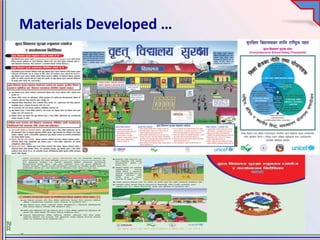
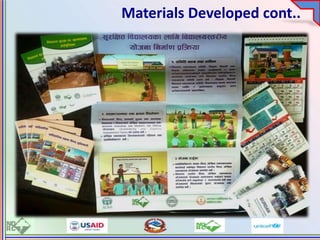
Materials/tools developed so far
• Safe school toolkit
• School safety audit booklet
• IEC posters/ pamphlets/ stickers
• SBDRR Behavior Change Communication
guideline
• CSS Implementation guideline
• CSS Communication and Dissemination
Strategy
• DRR Awareness visuals
• CSS Radio jingles/ PSAs
Materials Developed …
Materials Developed cont..
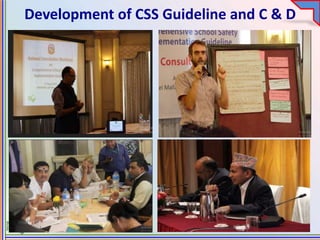
Development of CSS Guideline and C & D
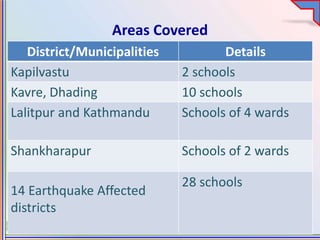
Areas Covered
District/Municipalities Details
Kapilvastu 2 schools
Kavre, Dhading 10 schools
Lalitpur and Kathmandu Schools of 4 wards
Shankharapur Schools of 2 wards
14 Earthquake Affected
districts
28 schools

NDRC NICSS Safe School Learning Sharing 2019

  • 1.
    Safe School LearningSharing 14 January 2019 Presentation by National Disaster Risk Reduction Centre (NDRC) Nepal National Initiative on Comprehensive School Safety “Ensuring resilience in education system through dissemination of the Comprehensive School Safety (CSS) Master Plan and implementation of the CSS Minimum Package” A joint venture of UNICEF and NDRC Nepal to provide technical assistance to MOEST on Comprehensive School Safety, funded by USAID
  • 2.
    Efforts on SchoolBased (SB) DRR/ School Safety • Safe School Campaign • Safer city • Building community resilience in earthquake affected communities • Promotion of resilient and sustainable urban growth through DRR
  • 3.
    What are themajor accomplishments? • CSS/School Based (SB) DRR Knowledge Attitude and Practice (KAP) studies • Capacity building – School teachers, students • SBDRR Assessments and Planning – CSS Action planning • School Retrofitting Demonstration • Awareness and sensitization campaigns – journalists, LG representatives, national level stakeholders • CSS Advocacy – CSS champions, trainers
  • 4.
  • 5.
    CCDRR/SBDRR Assessments and Planning– CSS Action Planning
  • 6.
    Capacity building, Riskassessment and School retrofitting pilot & demonstration
  • 7.
    National level CSSOrientation/Discourse
  • 8.
  • 9.
    Orientation, Sensitisation Trainingsessions on CSS for local government representatives
  • 10.
    Orientation, Sensitisation Training sessionson CSS for Media and Journalists
  • 11.
    • Multimedia showon DRR • Special day celebration • DRR Games • Extra curriculum Activities School level CSS activities IDDR Day Celebration Multimedia show on DRR Simulation exercise
  • 12.
    School level CSSactivities IDDR Day Celebration DDR Game
  • 13.
    Gaps identified • Knowledge/knowhow – Understanding of “safety” limited to pillar 1, very limited know how of assessments and available tools/ plans and policies • Resource/ funding- CSS not mainstreamed in local plans • Plans, Policy and tools – Stakeholders’ awareness very limited regarding available documents, new tools- in process of formation
  • 14.
    Gaps identified … •Capacity – Scattered and limited capacity development programs • Technical backstopping – Government backstopping for DRR focused on community based DRR only • Monitoring and follow up – Not focused on school safety per se
  • 15.
    What are thekey recommendations? • Awareness on available policies and tools – At schools and different government levels • Resource/ funding – Mainstream in local annual plans, encourage private investment through dialogues, more discourse and discussion to attract funds • Tools – Maintain national standard, wider dissemination of available tools
  • 16.
    What are thekey recommendations? • Capacity – Specific programs at different levels (government, institutions) • Technical backstopping – Separate focal persons for CSS at governments and schools • Monitoring and follow up – Strengthen CSS specific monitoring and follow-up from local governments
  • 17.
    Materials/tools developed sofar • Safe school toolkit • School safety audit booklet • IEC posters/ pamphlets/ stickers • SBDRR Behavior Change Communication guideline • CSS Implementation guideline • CSS Communication and Dissemination Strategy • DRR Awareness visuals • CSS Radio jingles/ PSAs
  • 18.
  • 19.
  • 20.
    Development of CSSGuideline and C & D
  • 21.
    Areas Covered District/Municipalities Details Kapilvastu2 schools Kavre, Dhading 10 schools Lalitpur and Kathmandu Schools of 4 wards Shankharapur Schools of 2 wards 14 Earthquake Affected districts 28 schools