http://www.slideshare.net/mzkagan/what-the-fk-social-media
BLOGS
What is a blog?A blog is a special kind of website that organizes articles or “posts” by date or subject, and allows readers to commentBlogs are usually less formal and more dynamic that a normal websiteGood blogs invite comments and discussion and repeat visitsSearch engines like blogs!
Let’s hear it for the bloghttp://www.openforum.com/marketing/video_hearitfortheblog.htmlwww.concern.net
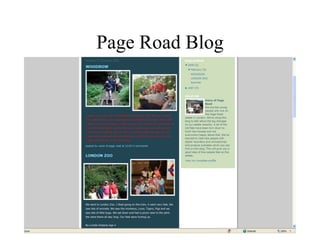
Page Road Blog
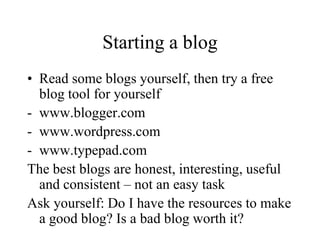
Starting a blogRead some blogs yourself, then try a free blog tool for yourselfwww.blogger.com
www.wordpress.com
www.typepad.comThe best blogs are honest, interesting, useful and consistent – not an easy taskAsk yourself: Do I have the resources to make a good blog? Is a bad blog worth it?
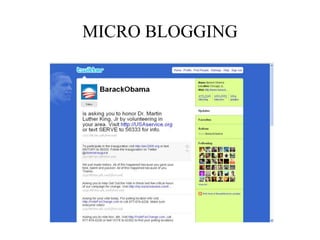
MICRO BLOGGING
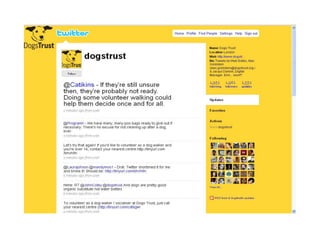
What is Twitterwww.twitter.com“Twitter is a service for friends, family and co-workers to communicate and stay connected through the exchange of quick, frequent answers to one simple question: What are you doing?”Yeah – I didn’t get it either – at first
Twitter is a lot of conversations
Why is Twitter popular?It’s like instant messaging or text messaging but to a huge groupOddly enough, communication happens and communities form in tiny burstsIt’s quite addictive…
Starting with TwitterSign up, it’s freeAt first, you’ll see almost nothingStart “following” peopleParticipate – say something, ask a question, respond to others’ questions
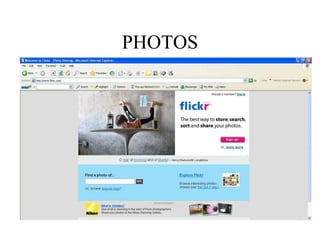
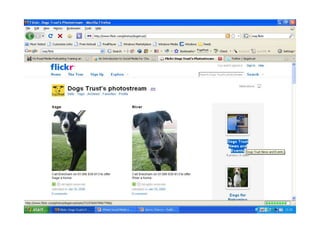
PHOTOS
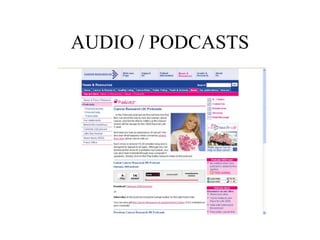
AUDIO / PODCASTS
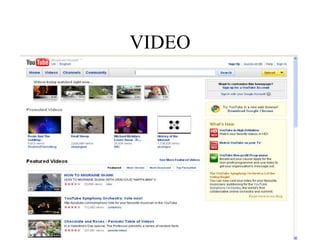
VIDEO
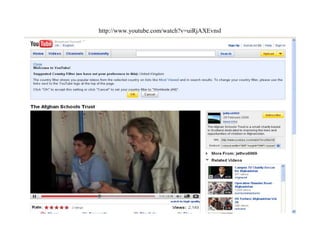
http://www.youtube.com/watch?v=uiRjAXEvnsI
SOCIAL NETWORKS
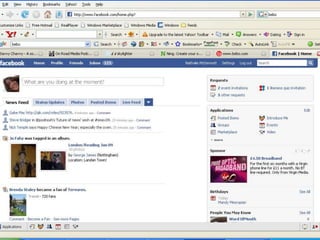
What is Facebook?Facebook is a “social utility”People “live” online thereIt’s not just for kids (half of you are there!)The average Facebook user views 45 pages during a sessionThere are different kinds of FB pages: personal, groups, companies or organisations like yours
Starting with FacebookSign up for a personal accountFind your friends, look at what they are doing Join some groupsSearch with keywords relating to your organisation’s missionStart contributing and creating
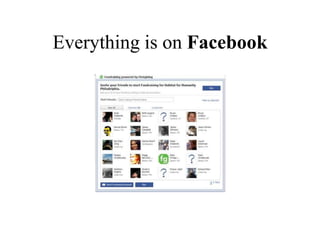
Everything is on Facebook
RSS – Really Simple SyndicationThis is what powers social media technology
To keep in the game, organisations MUST:Let goFacilitate conversations, don’t control themInvolve supporters, don’t ‘own’ your causeAllow employees to get involved: Employee on social network does not equal messer!Try things and be patientAggregate content for your supporters
What’s so different about web 2.0?It is fundamentally different from previous forms of mediaSocial media platforms provide a framework for people to connect directly to each other – the architecture has permanently changed, though technologies will continue to evolvePeople are using social media to glean information from each other without relying on organisationsThis shift is permanent! Get involved or lose out!
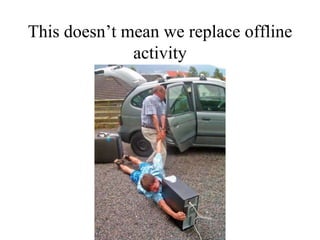
This doesn’t mean we replace offline activity
The best organisations blend online and offline activityExample: If you’re running an awareness event for your organisationCreate a network or start a group around the eventWrite blog posts in the run up to the eventInvite people to post their own photos onto your site, ask them to post their feedback etcThose who took part will feel like part of a teamThose who couldn’t be there will feel like they haven’t missed out
Setting expectationsSocial media isn’t a miracle cureIt may take a long time for your social media investment to pay offIt might even never pay off
Social Media is one toolDon’t overinvest in social mediaKnow your audiences (current and future) and court them appropriatelyIf you neglect conventional media, you might leave out your core supportersDon’t underinvest in social media either
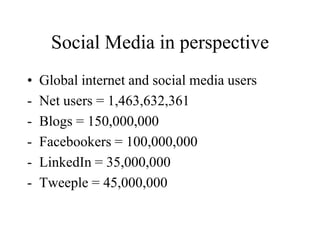
Social Media in perspectiveGlobal internet and social media usersNet users = 1,463,632,361
Blogs = 150,000,000
Facebookers = 100,000,000
LinkedIn = 35,000,000
Tweeple = 45,000,000One more warningIn social media, you might be the topic of discussion but you’re not always the centre or the master of itYou will have to give up some control to gain more followers and influence. This is OK.
Relaxing your gripIt’s the nature of social media that not all information is exactly right but the bulk of it is generally right (see wikipedia)Not all comments will be favourableHow you react to unfavourable comments says a lot about youPick your battles and don’t be afraid to apologise when you’re wrong
Keys to successSocial Media is just one piece of the puzzle, don’t neglect the restOne size doesn’t fit all, do what’s right for your organisation and your peopleKeep experimenting and always testYou will give up some control – learn to live with it and learn to love it
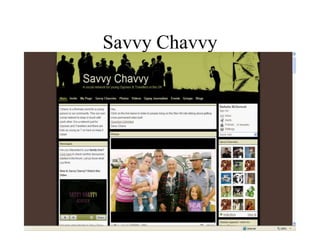
Savvy Chavvy
Savvy ChavvyA social network for young Gypsies and Travellers in the UK3500 membersWon the first Catalyst Communities award in July 2008‘Chavvy’ is a Romany word for ‘child’
Savvy ChavvyYoung Travellers use the network as a safe place to learn, have discussions, find family members, make friends and arrange events
Rosina Hughes is 17 from Wareham, Dorset. She says:"It's great to have a site where you feel comfortable and safe discussing these things”"They have Gypsy hate groups, so it's important that we have our own space."“You're all dirty” and “you're all scum”, are some of the racist responses she says she has received on other social networking sites.
You can set up your own network for your community or organisation by using free networks like:www.ning.comwww.webjam.comWe set Savvy Chavvy up using Ning
TOP TEN TIPSto set up a network on NingFirstly, you need to consider the purpose of your network – who will be your members and why will they use this website above others? What need does your network address?
Set UpGo to www.ning.com and set up your network, choosing a catchy name and Ning web address. It’s very simple; all you need is an email address and it takes a couple of minutes
PrivacyChoose how public or private it is going to be – can everyone on the web see and contribute to your network or will it be closed and private for your members only?
TaglineGive your network a tagline and short description - what’s it all about? The tagline should consist of one pithy sentence, E.g. www.savvychavvy.com: ‘A social network for young Gypsies and Travellers in the UK’
FeaturesNext, add features to your network. You can drag and drop functions like ‘forum’, ‘chat’, ‘blog’, ‘video’ & ‘photos’ into the front page. You might, for example, place the ‘forum’ function prominently in the middle of the page if having discussions is the main purpose of your network
DesignChoose a design – Ning will give you lots of templates to choose from and you can customize one with your own choice of images, fonts and colours
ContentYour network is now ready for content – help to define the network’s identity by starting discussions, posting photos, adding videos etc that are relevant to the purpose of the website

Kerry presentation

  • 1.
  • 5.
  • 6.
    What is ablog?A blog is a special kind of website that organizes articles or “posts” by date or subject, and allows readers to commentBlogs are usually less formal and more dynamic that a normal websiteGood blogs invite comments and discussion and repeat visitsSearch engines like blogs!
  • 8.
    Let’s hear itfor the bloghttp://www.openforum.com/marketing/video_hearitfortheblog.htmlwww.concern.net
  • 9.
  • 10.
    Starting a blogReadsome blogs yourself, then try a free blog tool for yourselfwww.blogger.com
  • 11.
  • 12.
    www.typepad.comThe best blogsare honest, interesting, useful and consistent – not an easy taskAsk yourself: Do I have the resources to make a good blog? Is a bad blog worth it?
  • 13.
  • 14.
    What is Twitterwww.twitter.com“Twitteris a service for friends, family and co-workers to communicate and stay connected through the exchange of quick, frequent answers to one simple question: What are you doing?”Yeah – I didn’t get it either – at first
  • 15.
    Twitter is alot of conversations
  • 16.
    Why is Twitterpopular?It’s like instant messaging or text messaging but to a huge groupOddly enough, communication happens and communities form in tiny burstsIt’s quite addictive…
  • 17.
    Starting with TwitterSignup, it’s freeAt first, you’ll see almost nothingStart “following” peopleParticipate – say something, ask a question, respond to others’ questions
  • 19.
  • 21.
  • 24.
  • 25.
  • 26.
  • 29.
    What is Facebook?Facebookis a “social utility”People “live” online thereIt’s not just for kids (half of you are there!)The average Facebook user views 45 pages during a sessionThere are different kinds of FB pages: personal, groups, companies or organisations like yours
  • 30.
    Starting with FacebookSignup for a personal accountFind your friends, look at what they are doing Join some groupsSearch with keywords relating to your organisation’s missionStart contributing and creating
  • 31.
  • 33.
    RSS – ReallySimple SyndicationThis is what powers social media technology
  • 34.
    To keep inthe game, organisations MUST:Let goFacilitate conversations, don’t control themInvolve supporters, don’t ‘own’ your causeAllow employees to get involved: Employee on social network does not equal messer!Try things and be patientAggregate content for your supporters
  • 35.
    What’s so differentabout web 2.0?It is fundamentally different from previous forms of mediaSocial media platforms provide a framework for people to connect directly to each other – the architecture has permanently changed, though technologies will continue to evolvePeople are using social media to glean information from each other without relying on organisationsThis shift is permanent! Get involved or lose out!
  • 36.
    This doesn’t meanwe replace offline activity
  • 37.
    The best organisationsblend online and offline activityExample: If you’re running an awareness event for your organisationCreate a network or start a group around the eventWrite blog posts in the run up to the eventInvite people to post their own photos onto your site, ask them to post their feedback etcThose who took part will feel like part of a teamThose who couldn’t be there will feel like they haven’t missed out
  • 38.
    Setting expectationsSocial mediaisn’t a miracle cureIt may take a long time for your social media investment to pay offIt might even never pay off
  • 39.
    Social Media isone toolDon’t overinvest in social mediaKnow your audiences (current and future) and court them appropriatelyIf you neglect conventional media, you might leave out your core supportersDon’t underinvest in social media either
  • 40.
    Social Media inperspectiveGlobal internet and social media usersNet users = 1,463,632,361
  • 41.
  • 42.
  • 43.
  • 44.
    Tweeple = 45,000,000Onemore warningIn social media, you might be the topic of discussion but you’re not always the centre or the master of itYou will have to give up some control to gain more followers and influence. This is OK.
  • 45.
    Relaxing your gripIt’sthe nature of social media that not all information is exactly right but the bulk of it is generally right (see wikipedia)Not all comments will be favourableHow you react to unfavourable comments says a lot about youPick your battles and don’t be afraid to apologise when you’re wrong
  • 46.
    Keys to successSocialMedia is just one piece of the puzzle, don’t neglect the restOne size doesn’t fit all, do what’s right for your organisation and your peopleKeep experimenting and always testYou will give up some control – learn to live with it and learn to love it
  • 47.
  • 48.
    Savvy ChavvyA socialnetwork for young Gypsies and Travellers in the UK3500 membersWon the first Catalyst Communities award in July 2008‘Chavvy’ is a Romany word for ‘child’
  • 49.
    Savvy ChavvyYoung Travellersuse the network as a safe place to learn, have discussions, find family members, make friends and arrange events
  • 50.
    Rosina Hughes is17 from Wareham, Dorset. She says:"It's great to have a site where you feel comfortable and safe discussing these things”"They have Gypsy hate groups, so it's important that we have our own space."“You're all dirty” and “you're all scum”, are some of the racist responses she says she has received on other social networking sites.
  • 51.
    You can setup your own network for your community or organisation by using free networks like:www.ning.comwww.webjam.comWe set Savvy Chavvy up using Ning
  • 52.
    TOP TEN TIPStoset up a network on NingFirstly, you need to consider the purpose of your network – who will be your members and why will they use this website above others? What need does your network address?
  • 53.
    Set UpGo towww.ning.com and set up your network, choosing a catchy name and Ning web address. It’s very simple; all you need is an email address and it takes a couple of minutes
  • 54.
    PrivacyChoose how publicor private it is going to be – can everyone on the web see and contribute to your network or will it be closed and private for your members only?
  • 55.
    TaglineGive your networka tagline and short description - what’s it all about? The tagline should consist of one pithy sentence, E.g. www.savvychavvy.com: ‘A social network for young Gypsies and Travellers in the UK’
  • 56.
    FeaturesNext, add featuresto your network. You can drag and drop functions like ‘forum’, ‘chat’, ‘blog’, ‘video’ & ‘photos’ into the front page. You might, for example, place the ‘forum’ function prominently in the middle of the page if having discussions is the main purpose of your network
  • 57.
    DesignChoose a design– Ning will give you lots of templates to choose from and you can customize one with your own choice of images, fonts and colours
  • 58.
    ContentYour network isnow ready for content – help to define the network’s identity by starting discussions, posting photos, adding videos etc that are relevant to the purpose of the website
  • 59.
    PeopleInvite people tothe network – start by inviting relevant people and welcoming them by writing a note on their pages. If you’re trying to attract a certain community don’t send out blanket invites to attract a volume of members – the quality and relevance of your members is what will help it grow and develop into a sustainable space. You can support this by writing your own relevant joining up questions
  • 60.
    EngageKeep the communityactive and interested – once you have a working network, keep your members engaged by making small changes to the site, adding new content and sending them relevant information (without spamming them with constant messages!)
  • 61.
    ExtrasNing is freebut you can purchase optional services like the removal of ads, the ability to use your own domain name and extra storage
  • 62.
    A social networkfor Irish charities that want to learn about social mediahttp://socialanimalsireland.ning.com
  • 63.