


Kanban as a Business
Analysis Tool
A Case-study
Introduction
Clarinha Prado
• Consultant in business analysis and
information technology.
• 20 years of experience in companies
from various branches, mainly in the
financial sector.
• Graduated in computer engineering,
with postgraduate studies in business
administration.
clarinha.prado@giganteconsultoria.com.br
Introduction
• Gigante Consultoria is a consulting company that
works with:
–
–
–
–

Business Analysis
Project Management
System Analysis
Training

• This presentation refers to one of our projects,
where we worked to improve the procurement
process of one customer.
Objective
• Present the Kanban as a tool to support business
analysis.
• Describe the introduction of Kanban in the
procurement process of Poiesis – a Culture, Language
and Literature Support Institute.
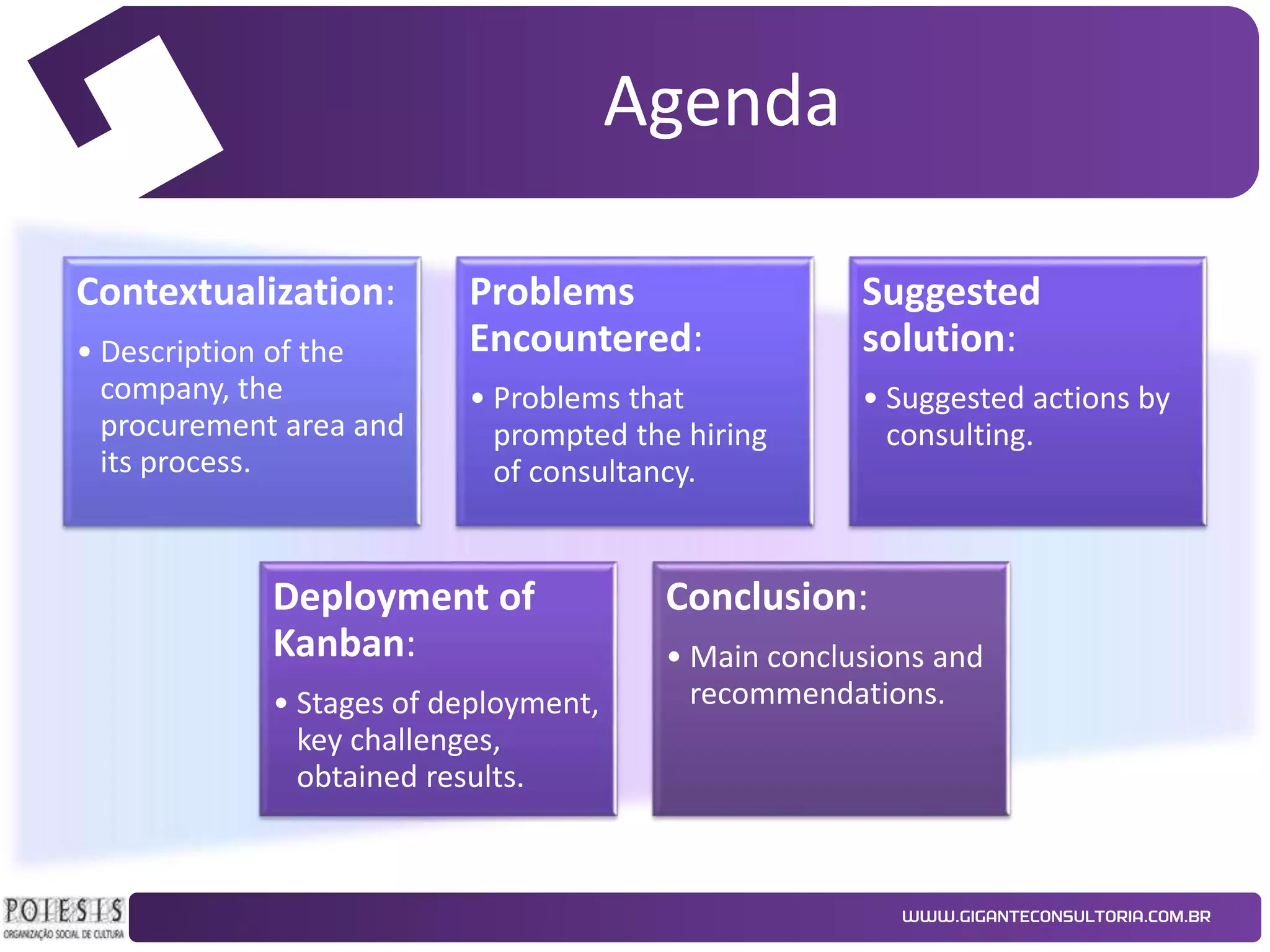
Agenda
Contextualization:
• Description of the
company, the
procurement area and
its process.

Problems
Encountered:

Suggested
solution:

• Problems that
prompted the hiring
of consultancy.

• Suggested actions by
consulting.

Deployment of
Kanban:
• Stages of deployment,
key challenges,
obtained results.

Conclusion:
• Main conclusions and
recommendations.
Contextualization
Poiesis - Culture, Language and
Literature Support Institute
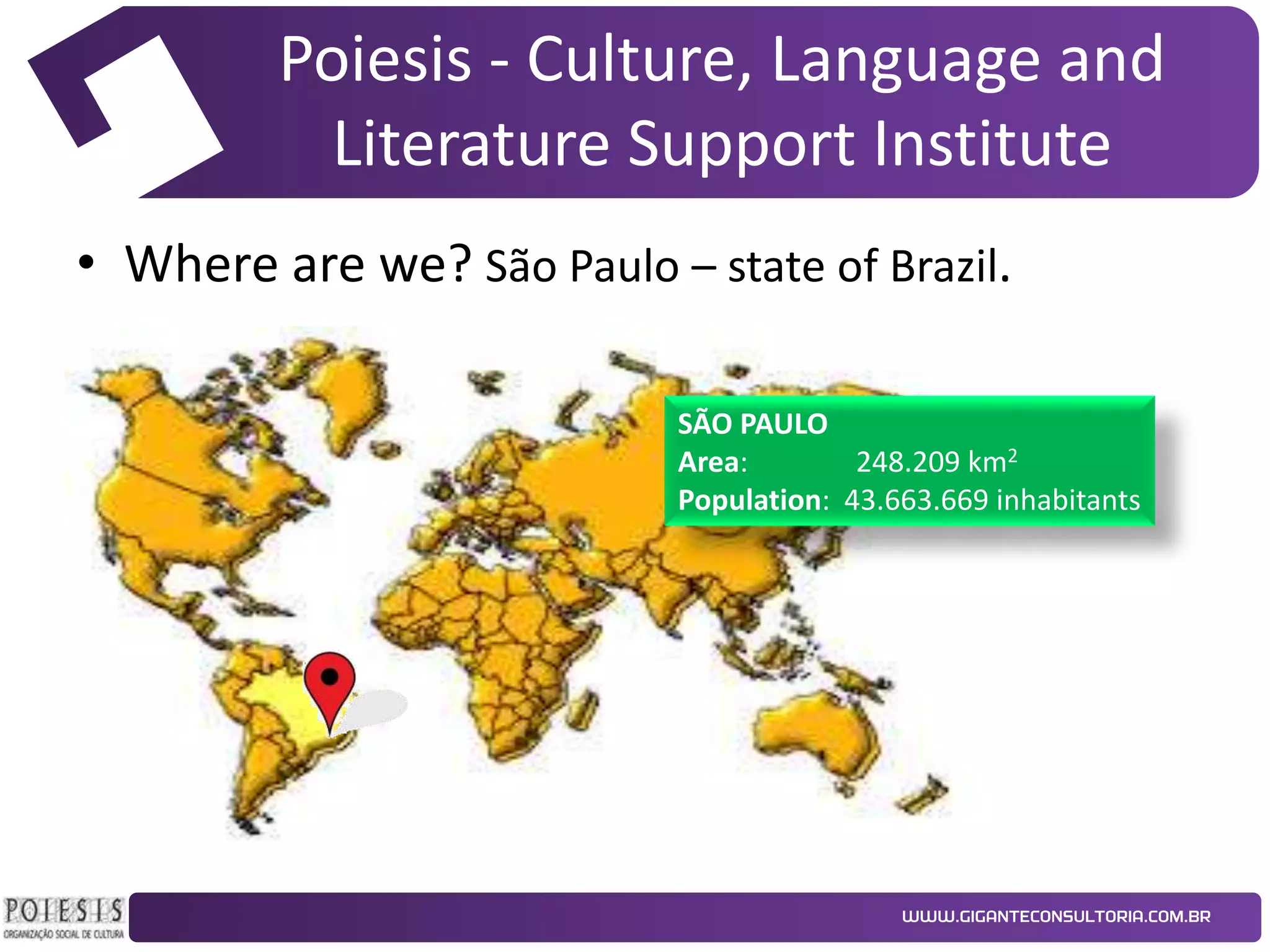
• Where are we? São Paulo – state of Brazil.
SÃO PAULO
Area:
248.209 km2
Population: 43.663.669 inhabitants
Poiesis - Culture, Language and
Literature Support Institute
• Non-governmental organization, qualified by the State
Government of São Paulo.
• Promotes socio-cultural and educational development,
focused on project management in cultural spaces.
• Develops programs and research in cultural spaces geared to
the training of students and the general public.
Poiesis - Culture, Language and
Literature Support Institute
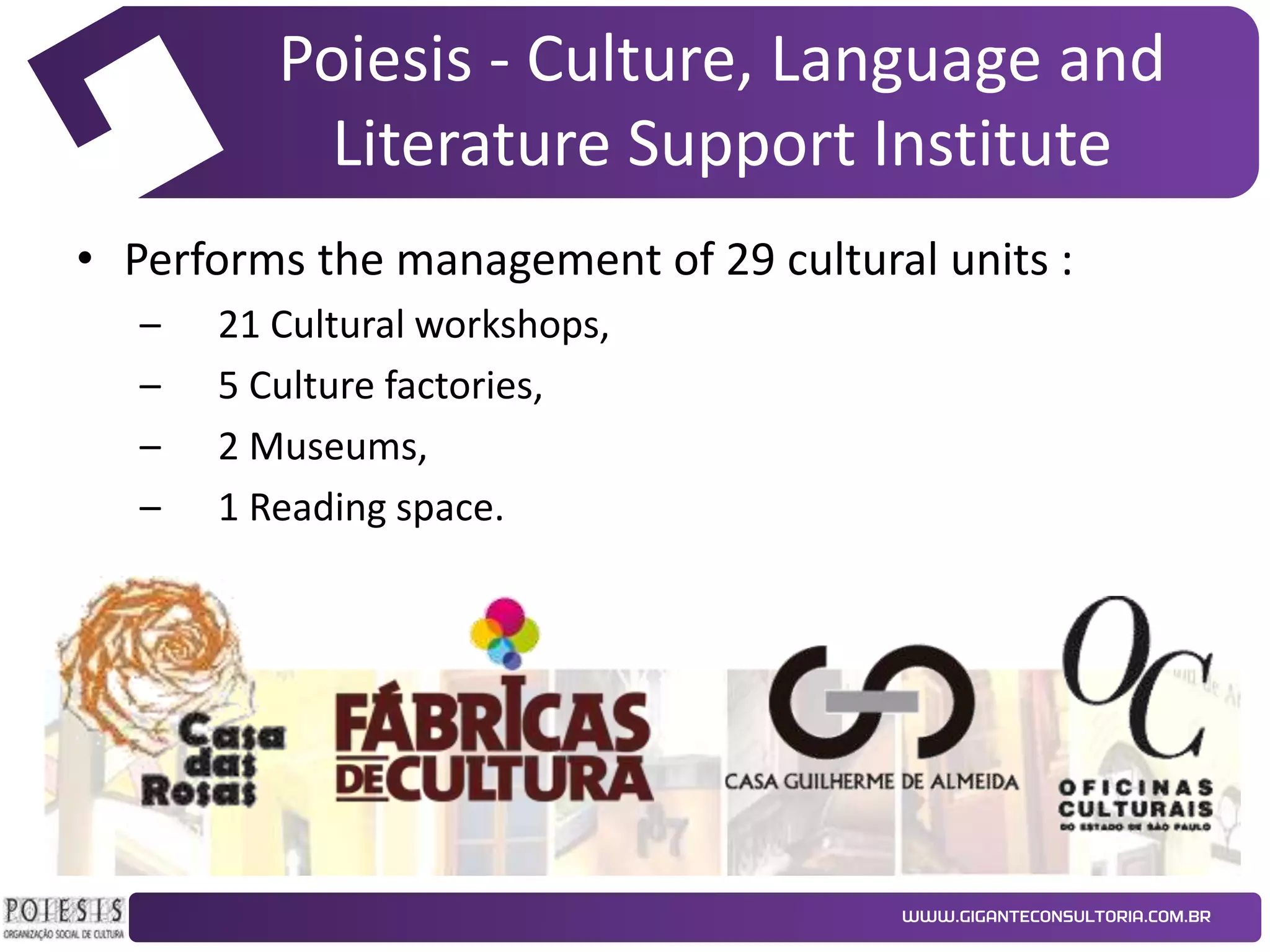
• Performs the management of 29 cultural units :
–
–
–
–

21 Cultural workshops,
5 Culture factories,
2 Museums,
1 Reading space.
Procurement Department
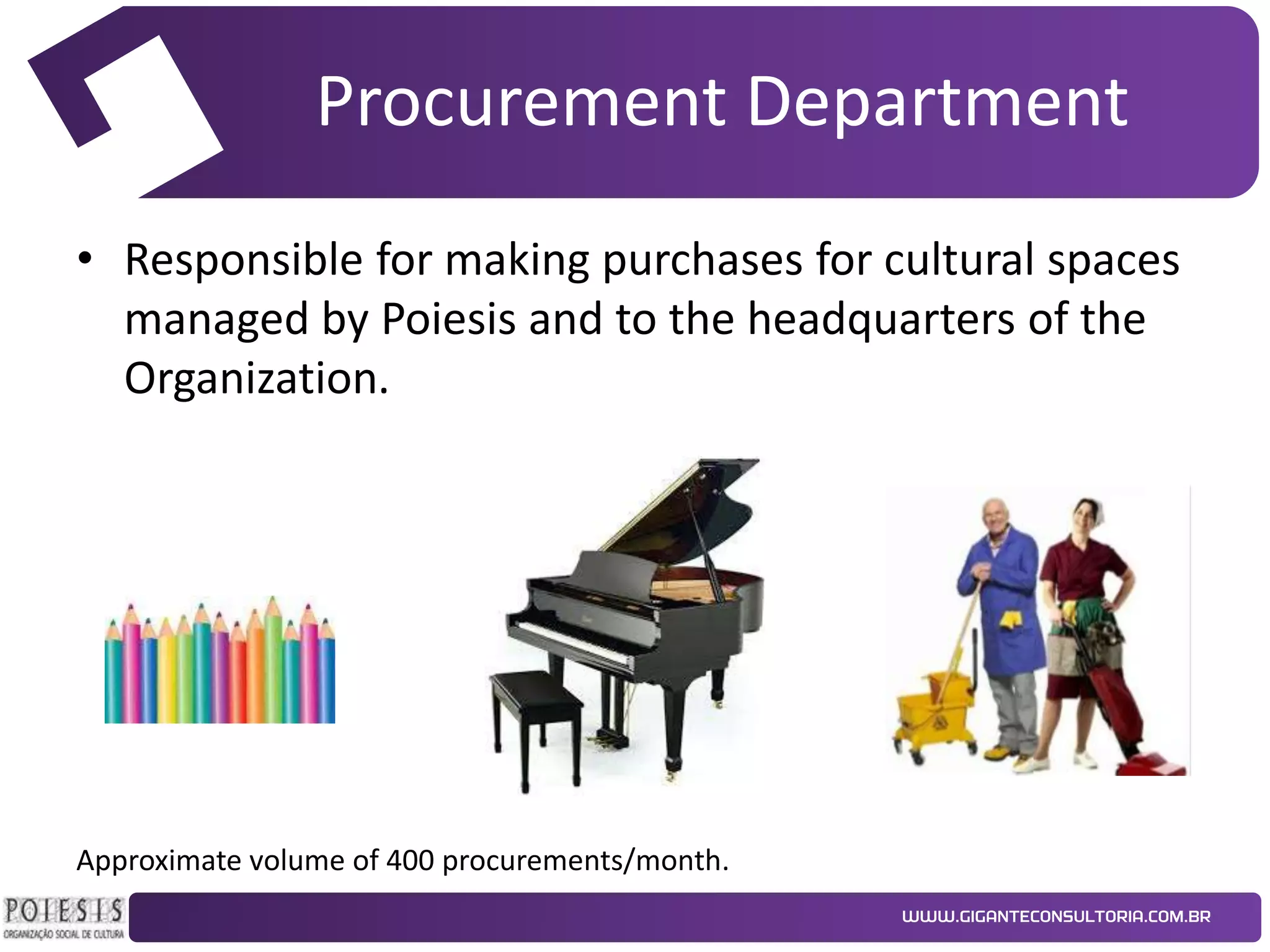
• Responsible for making purchases for cultural spaces
managed by Poiesis and to the headquarters of the
Organization.

Approximate volume of 400 procurements/month.
Procurement Department
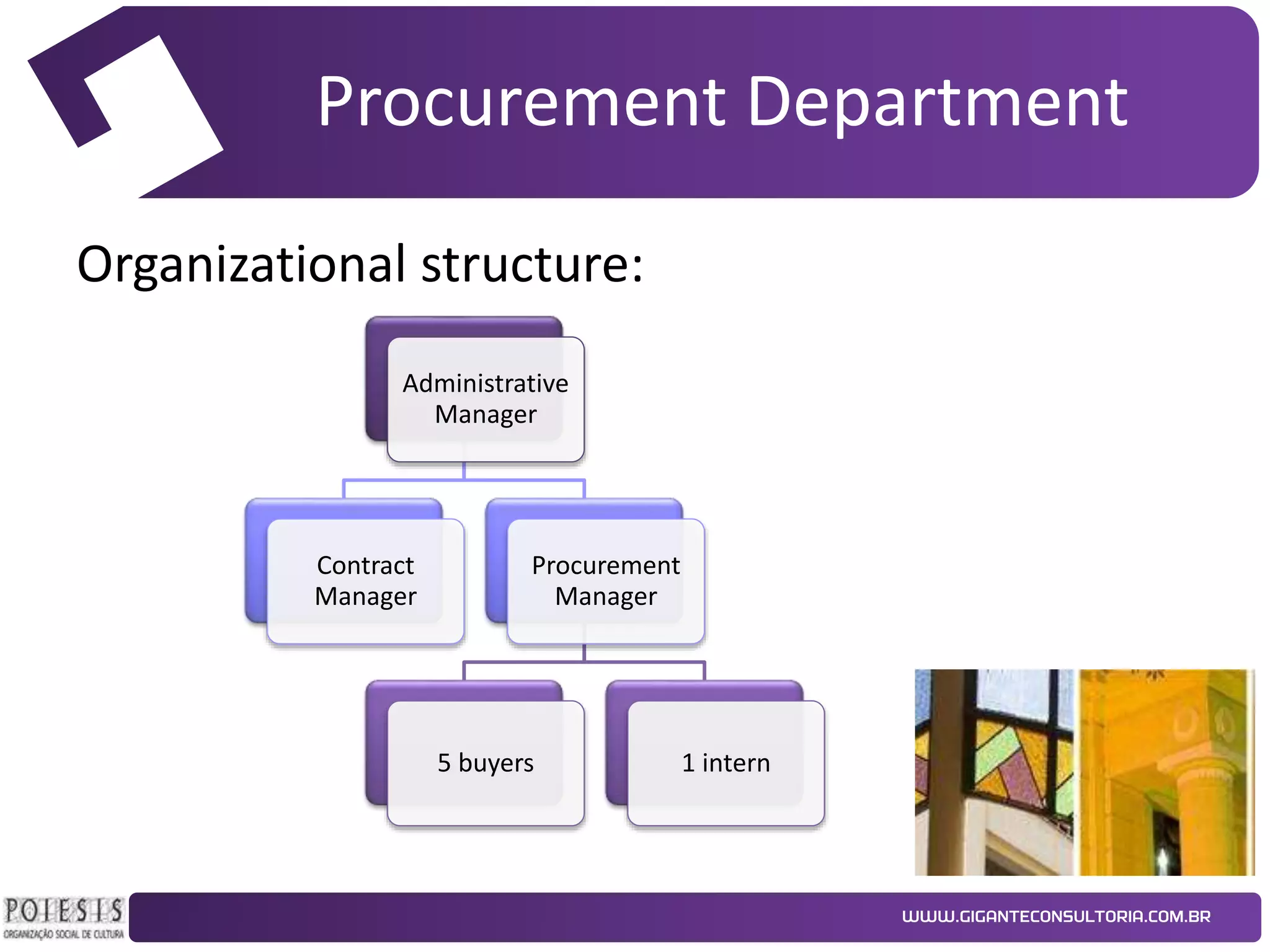
Organizational structure:
Administrative
Manager

Contract
Manager

Procurement
Manager

5 buyers

1 intern
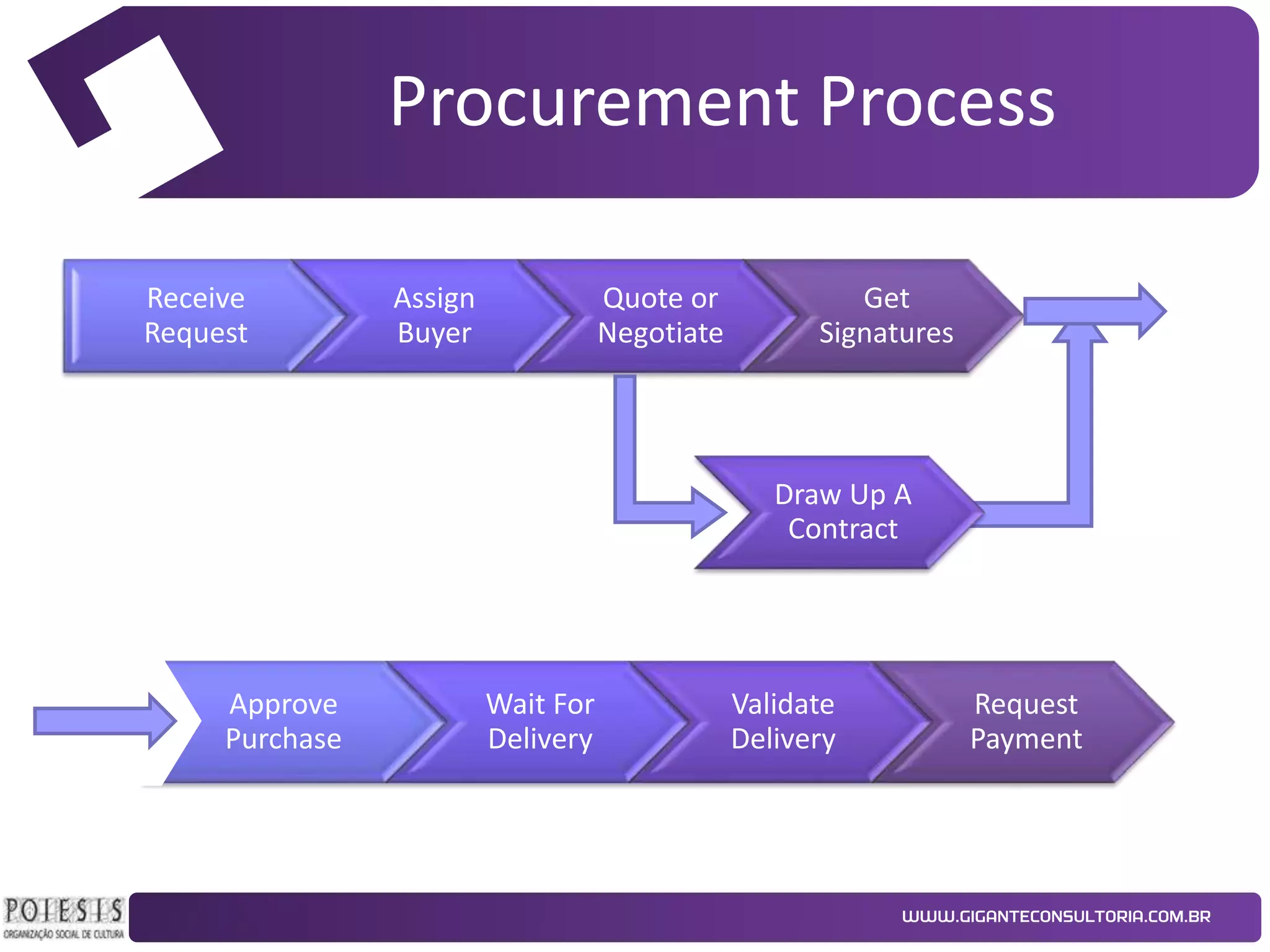
Procurement Process
Receive
Request

Assign
Buyer

Quote or
Negotiate

Get
Signatures

Draw Up A
Contract

Approve
Purchase

Wait For
Delivery

Validate
Delivery

Request
Payment
Motivation to Contract
Business Analysis
Problems Faced by Poiesis
• Lack of transparency to solicitants.
• Process time consuming, complex and bureaucratic.
• Lack of clarity in the distribution of responsibilities.

• Lack of knowledge of business rules.
• Problems in the purchases prioritization.
• Uneven distribution of workload between buyers.
• Lack of management information.
The Business Analysis
• The consulting company Gigante held a job of
diagnosing problems and proposal for
improvements.
• Several actions were proposed to address the
problems singled out, among them the introduction
of a Kanban.
The Kanban Proposal
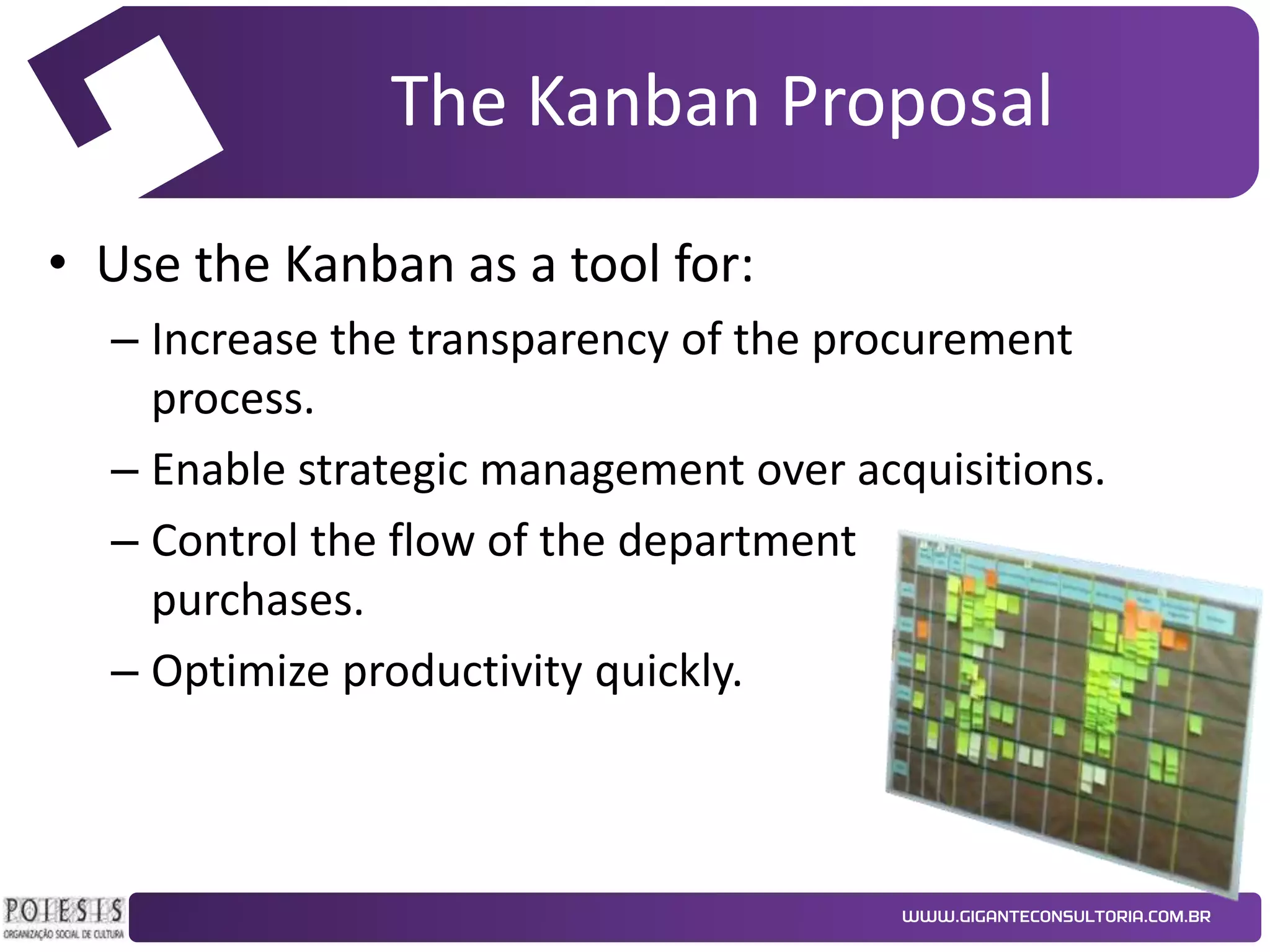
• Use the Kanban as a tool for:
– Increase the transparency of the procurement
process.
– Enable strategic management over acquisitions.
– Control the flow of the department
purchases.
– Optimize productivity quickly.
The Kanban Proposal
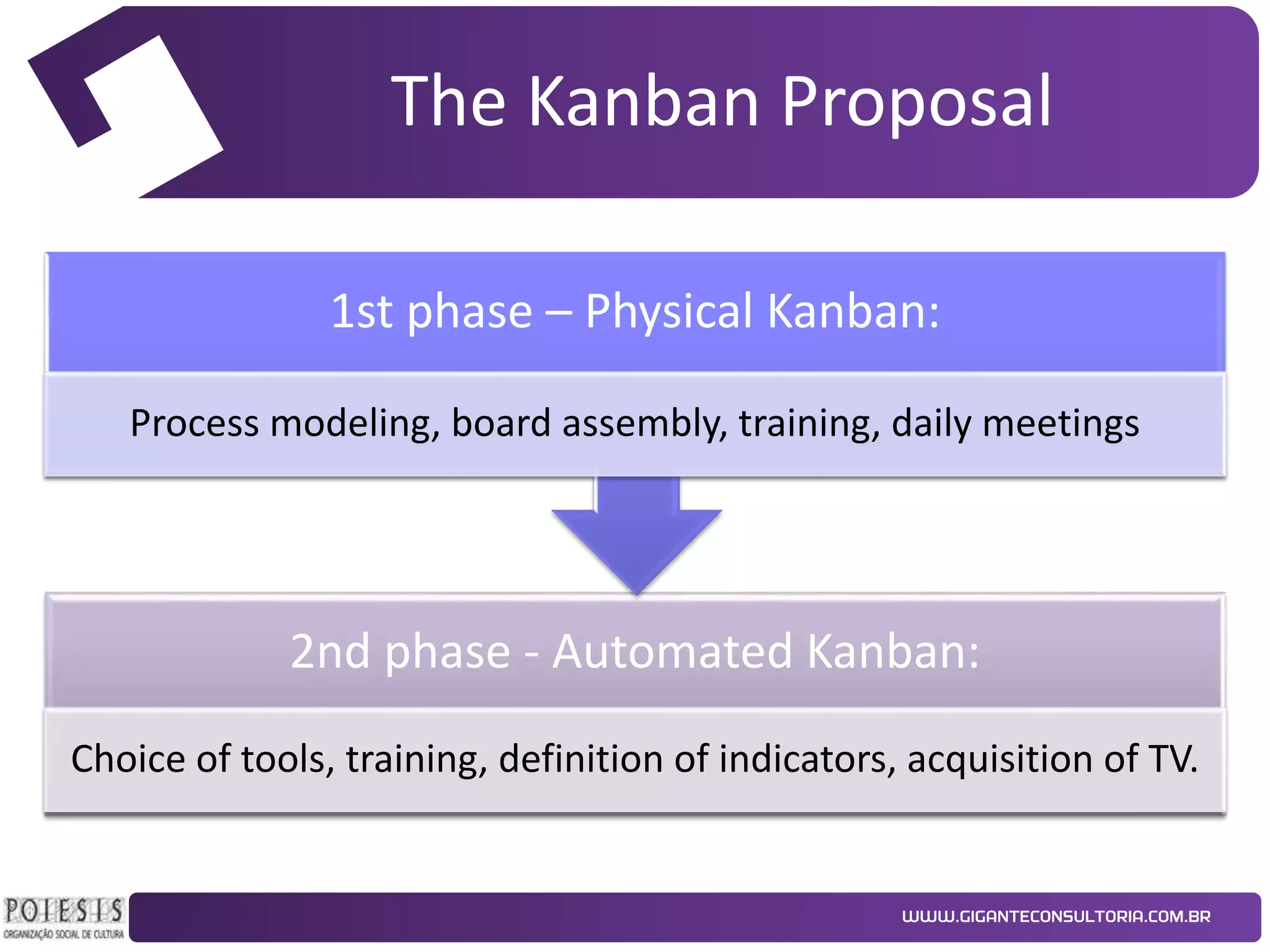
1st phase – Physical Kanban:
Process modeling, board assembly, training, daily meetings

2nd phase - Automated Kanban:
Choice of tools, training, definition of indicators, acquisition of TV.
1st phase – Physical
Kanban
Deployment of Kanban
1st phase – Physical Kanban
• Start: May 14, 2013.
• Used for about 2 months.
• Deployment steps:
– Process modeling with managers.
– Team training.
– Monitoring the deployment.
– Use of available materials: brown paper, masking
tape, post-its, A4 sheet.
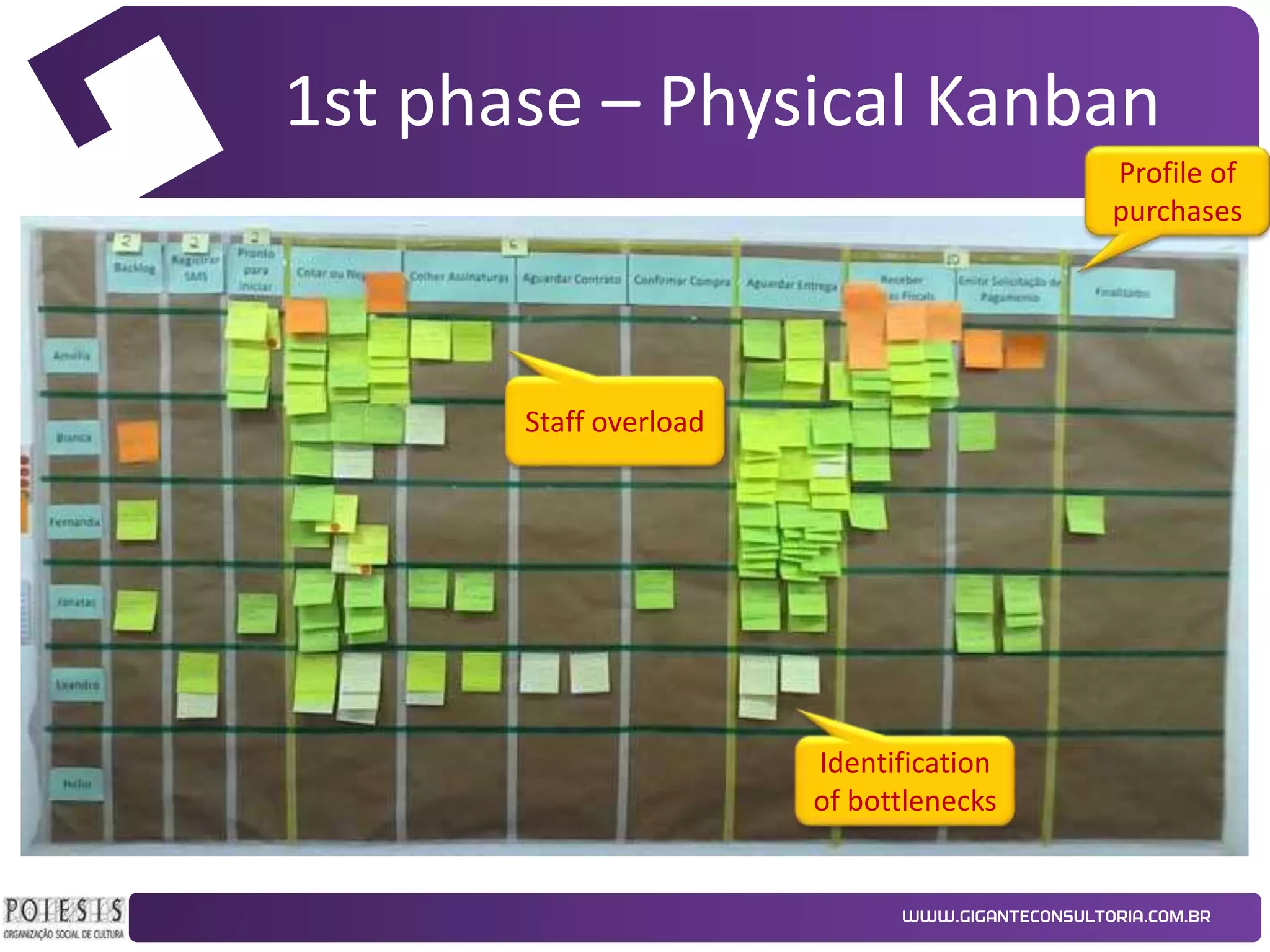
1st phase – Physical Kanban
Profile of
purchases

Staff overload

Identification
of bottlenecks
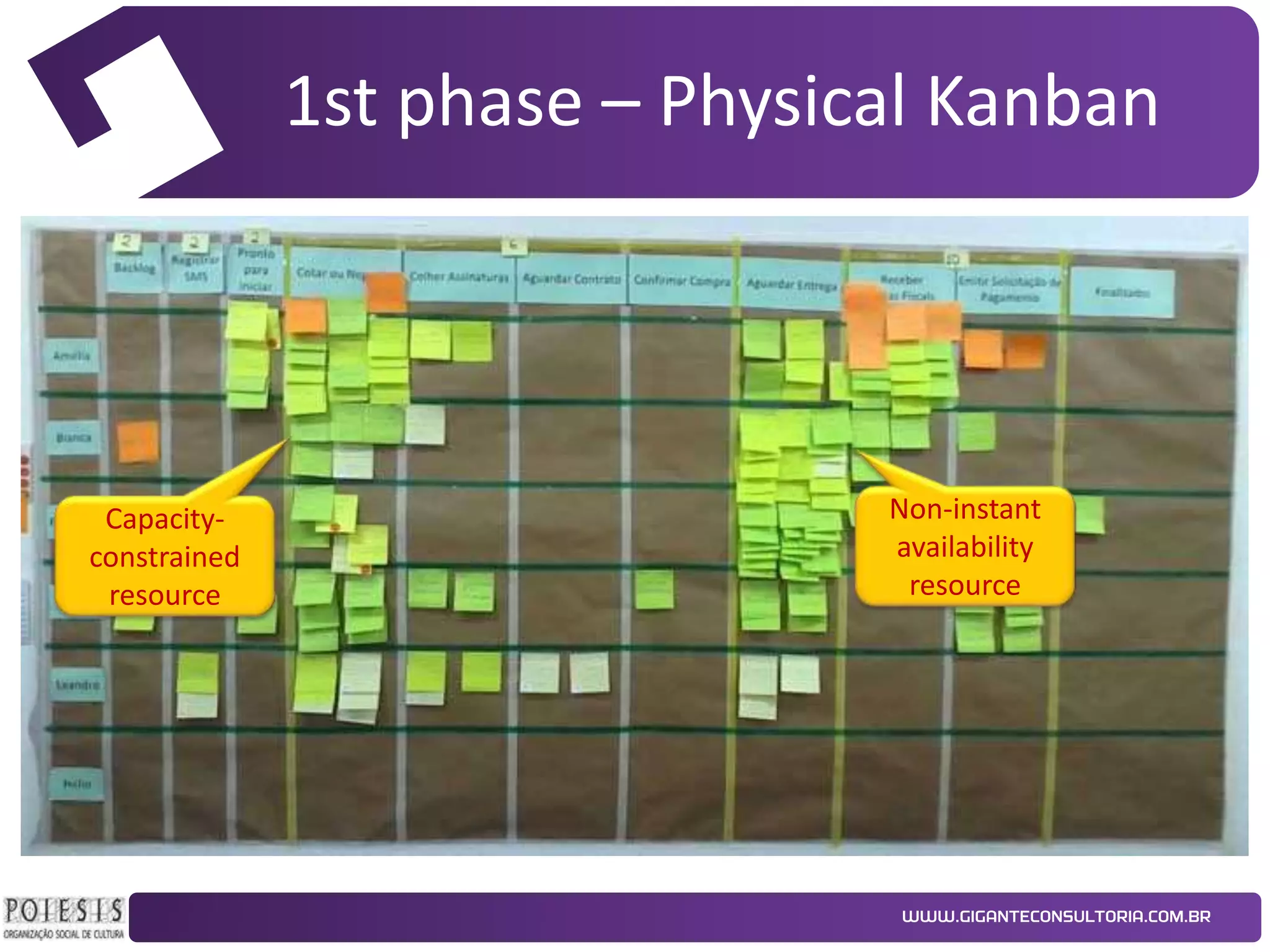
1st phase – Physical Kanban

Capacityconstrained
resource

Non-instant
availability
resource
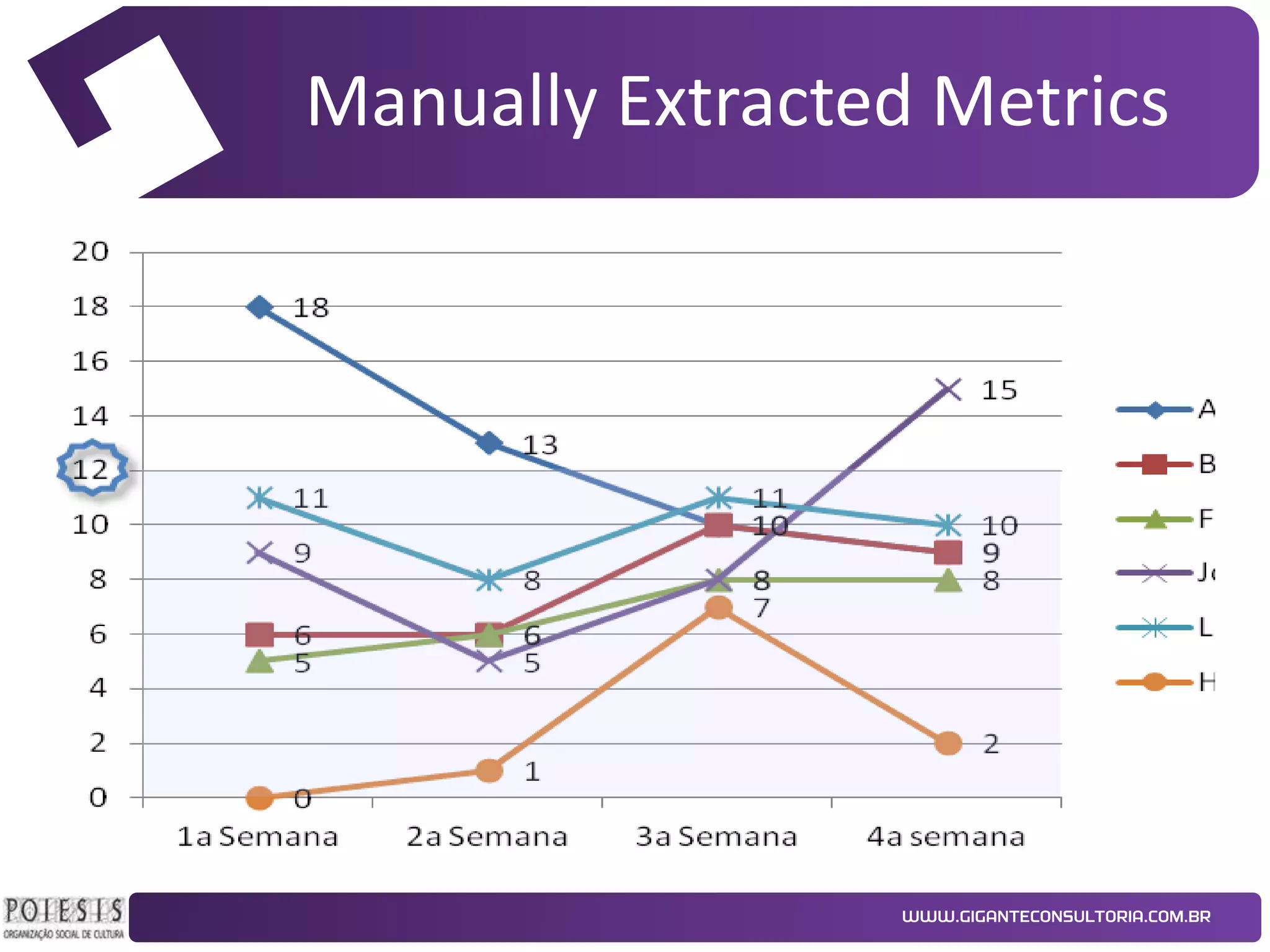
Manually Extracted Metrics
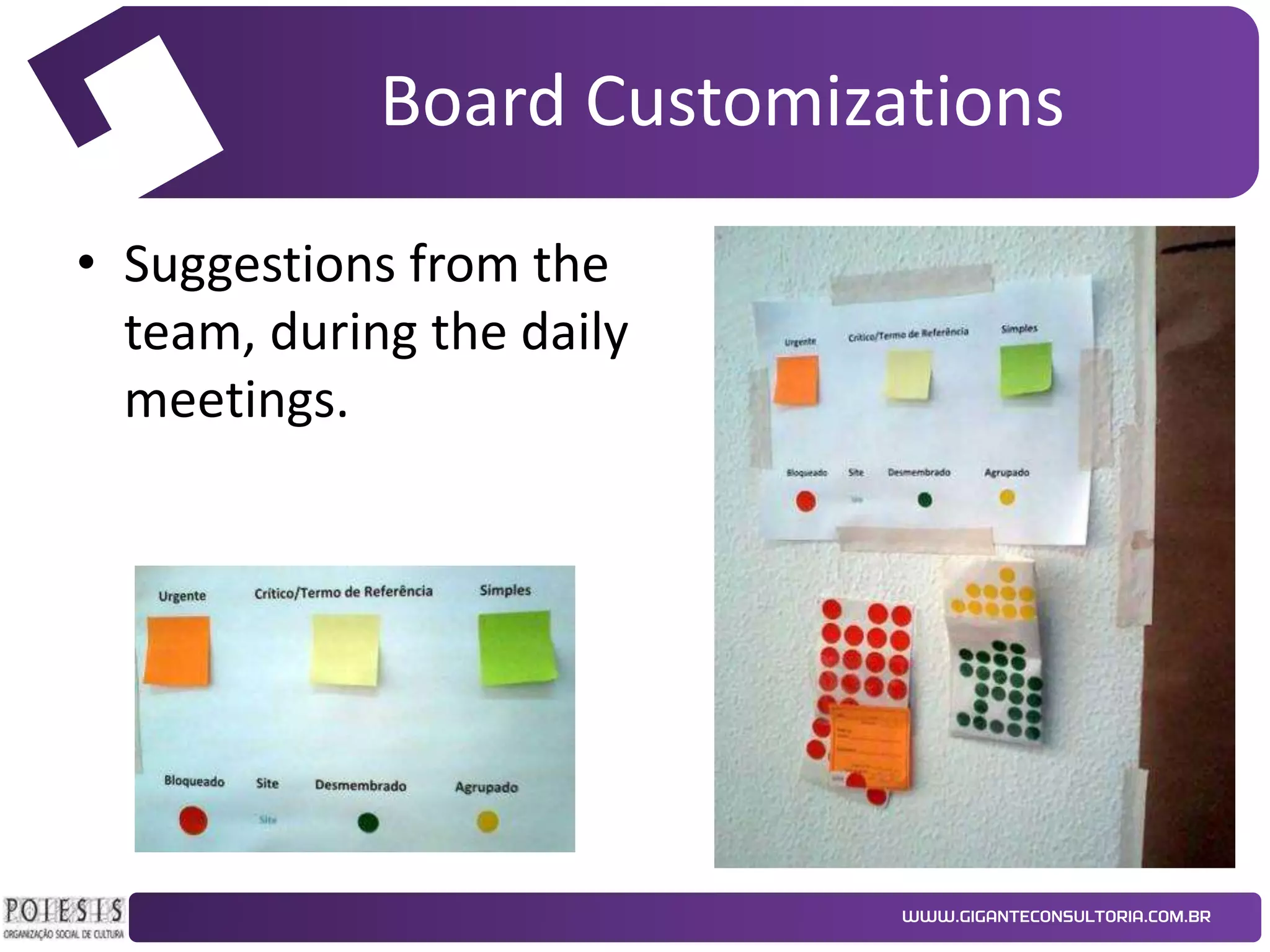
Board Customizations
• Suggestions from the
team, during the daily
meetings.
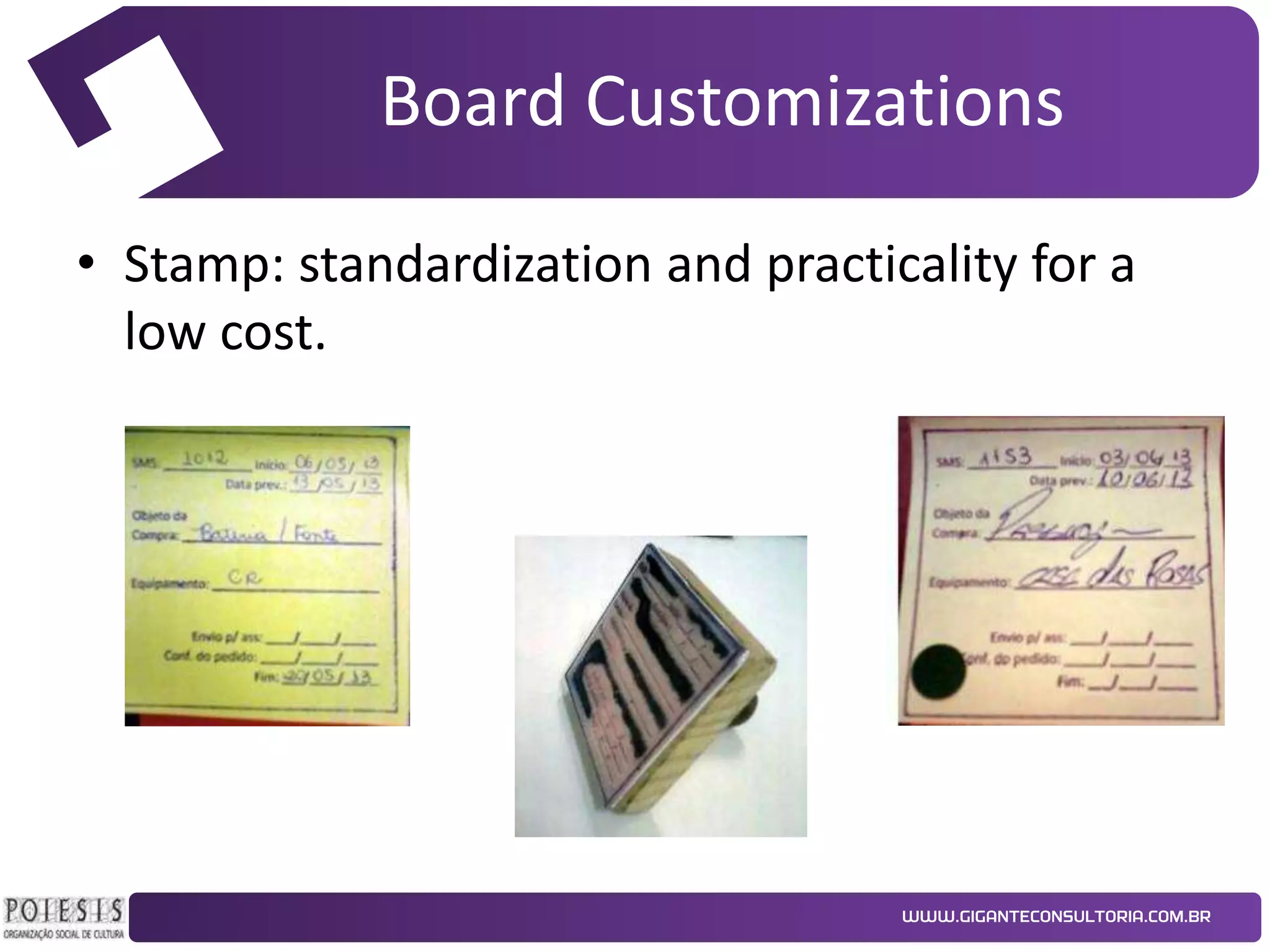
Board Customizations
• Stamp: standardization and practicality for a
low cost.
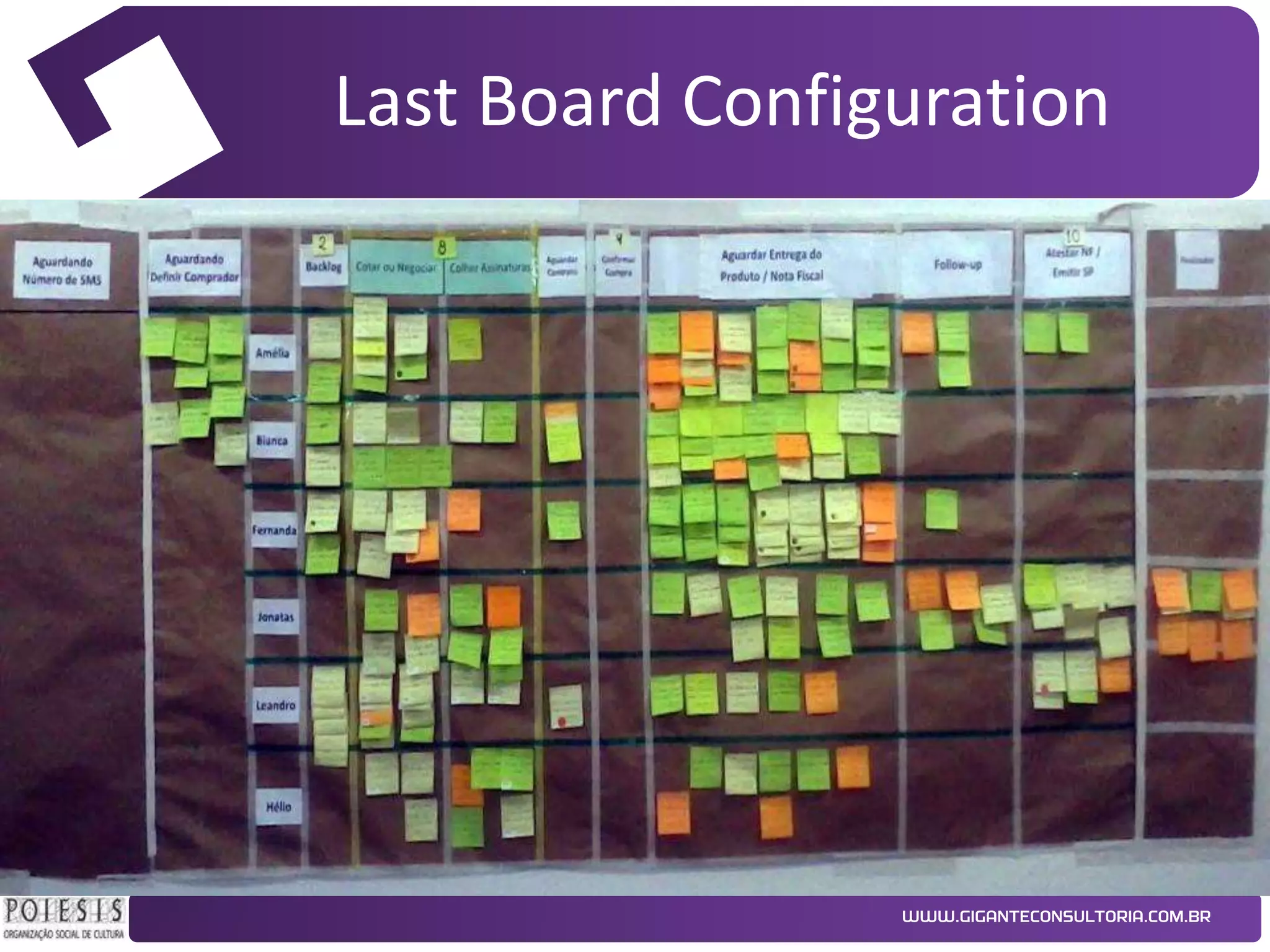
Last Board Configuration
Main Challenges
• Fixing the frame and the cards.
• Motivation for the team to use the new tool.
• Establishment of new concepts.
• Manual generation of metrics.
• Maintaining the daily meeting.
Obtained Results
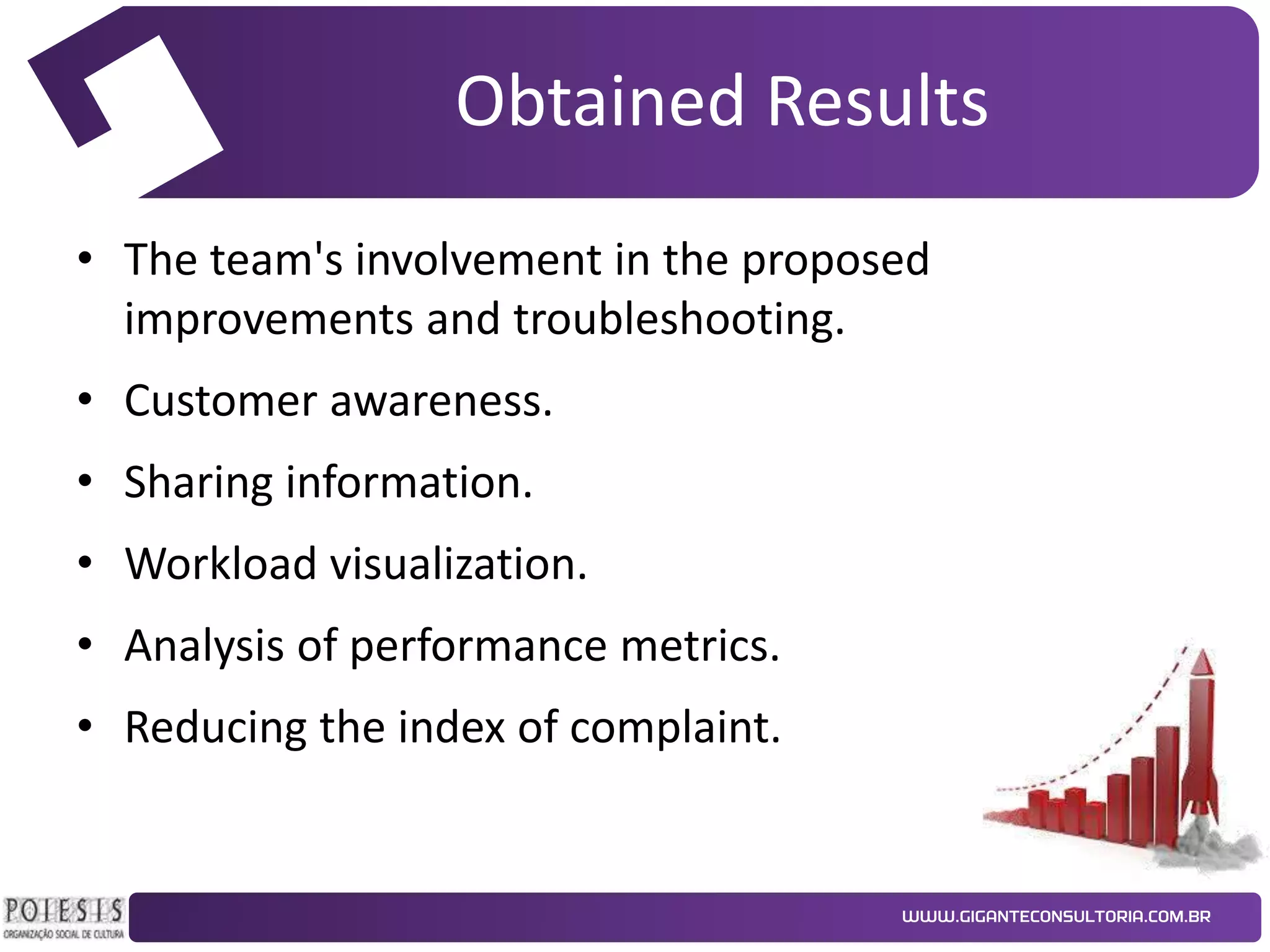
• The team's involvement in the proposed
improvements and troubleshooting.
• Customer awareness.

• Sharing information.
• Workload visualization.
• Analysis of performance metrics.

• Reducing the index of complaint.
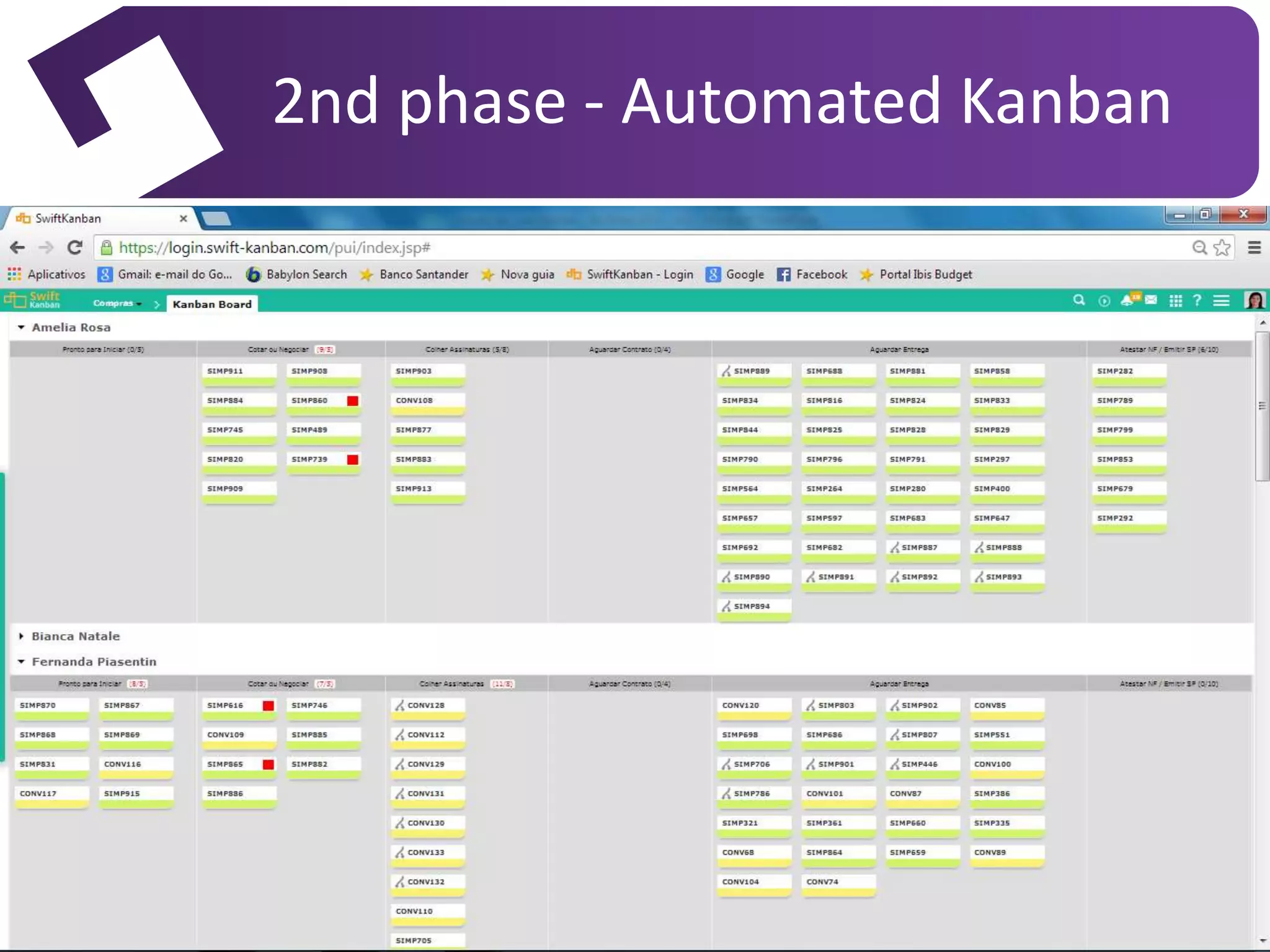
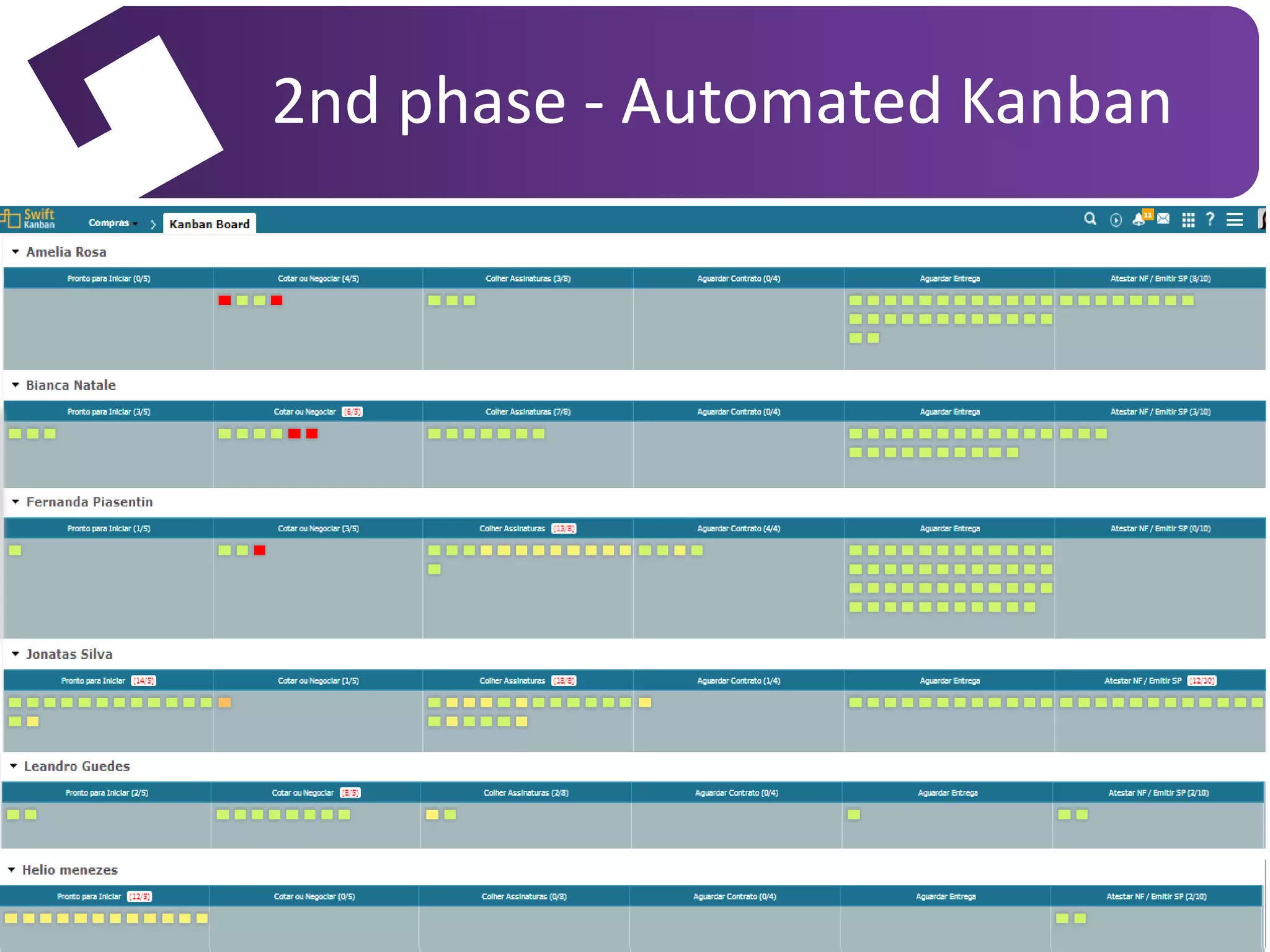
2nd phase - Automated
Kanban
Deployment of Kanban
2nd phase - Automated Kanban
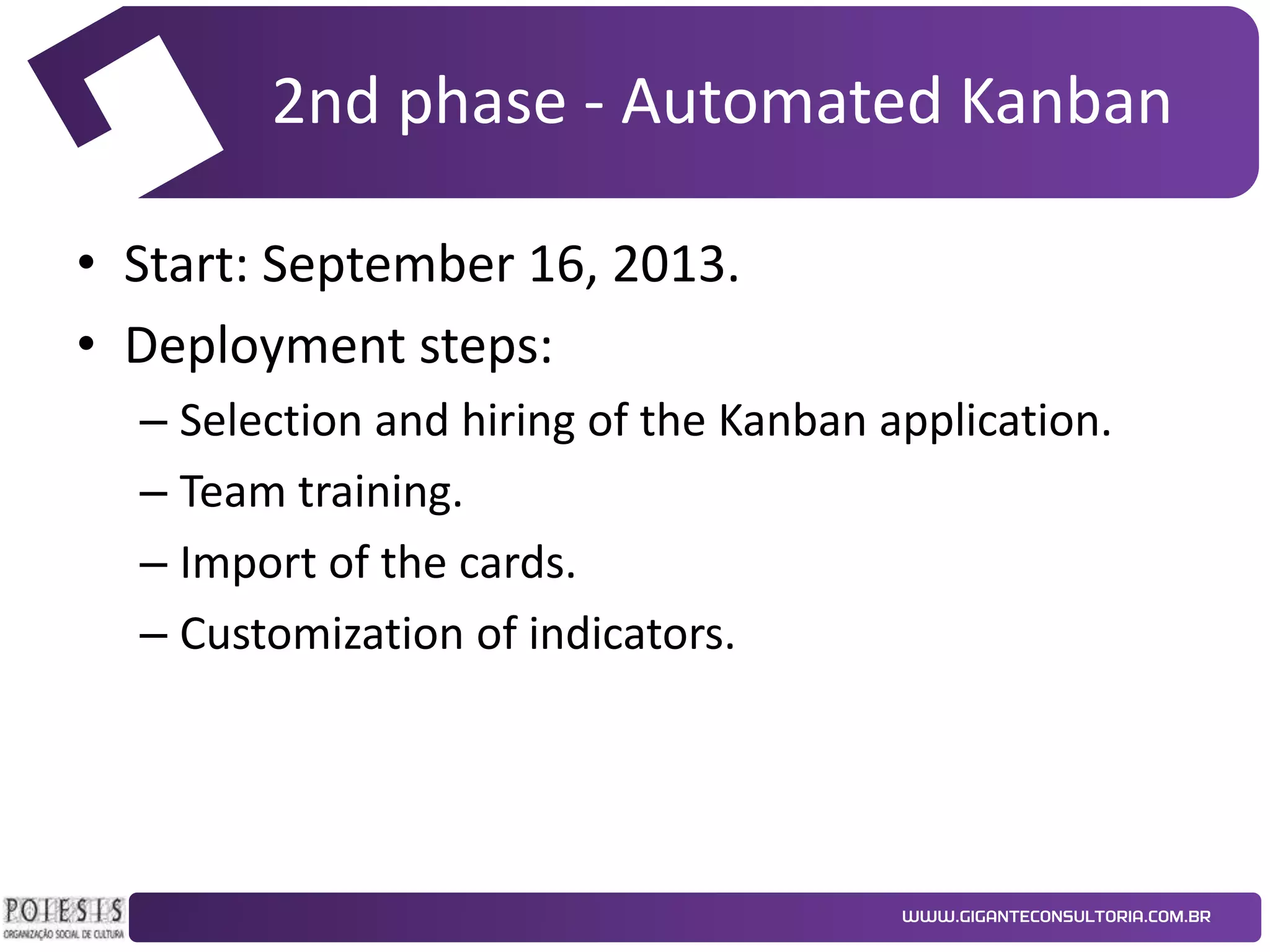
• Start: September 16, 2013.
• Deployment steps:
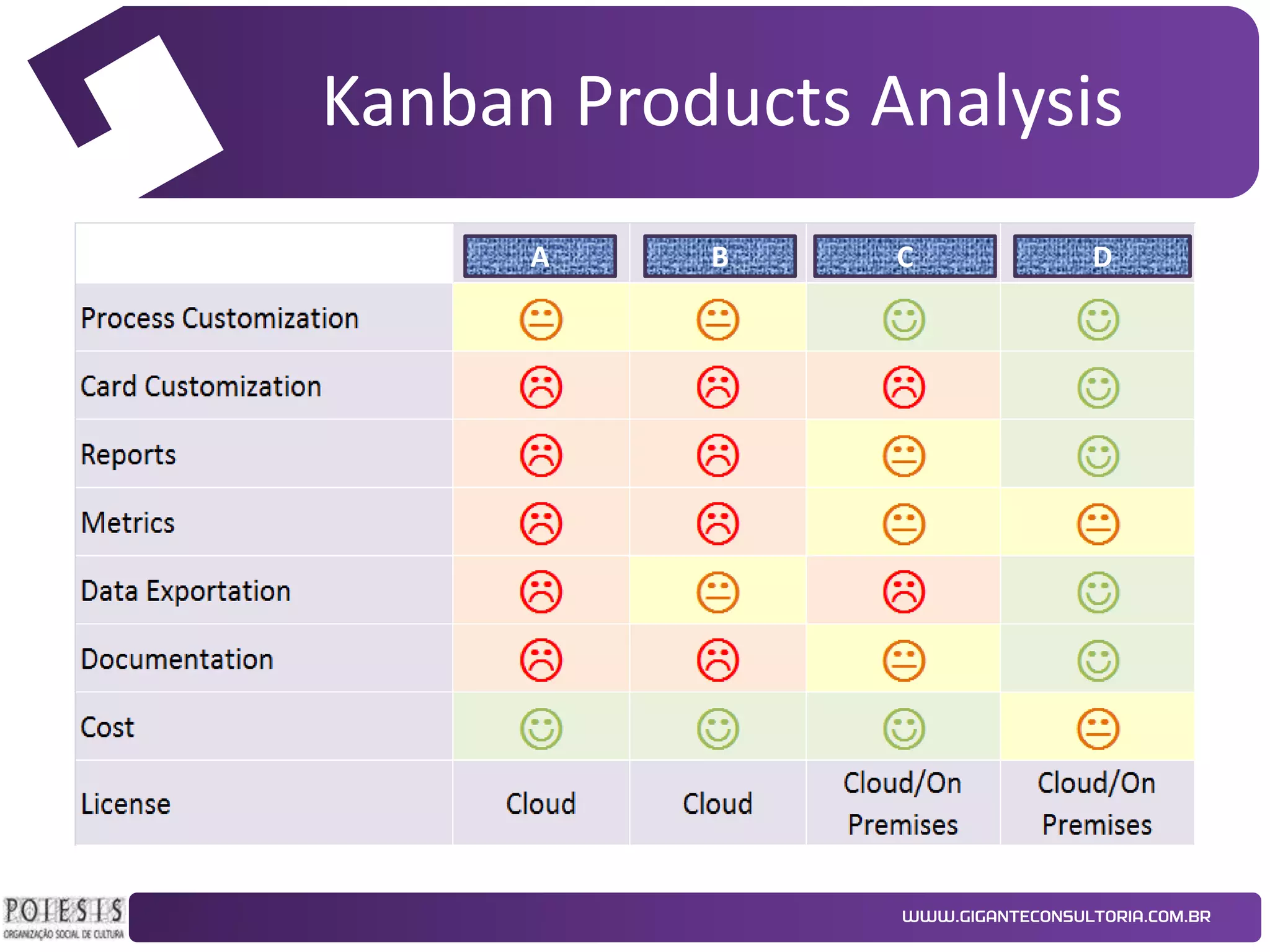
– Selection and hiring of the Kanban application.
– Team training.
– Import of the cards.
– Customization of indicators.
Kanban Products Analysis
A

B

C

D
2nd phase - Automated Kanban
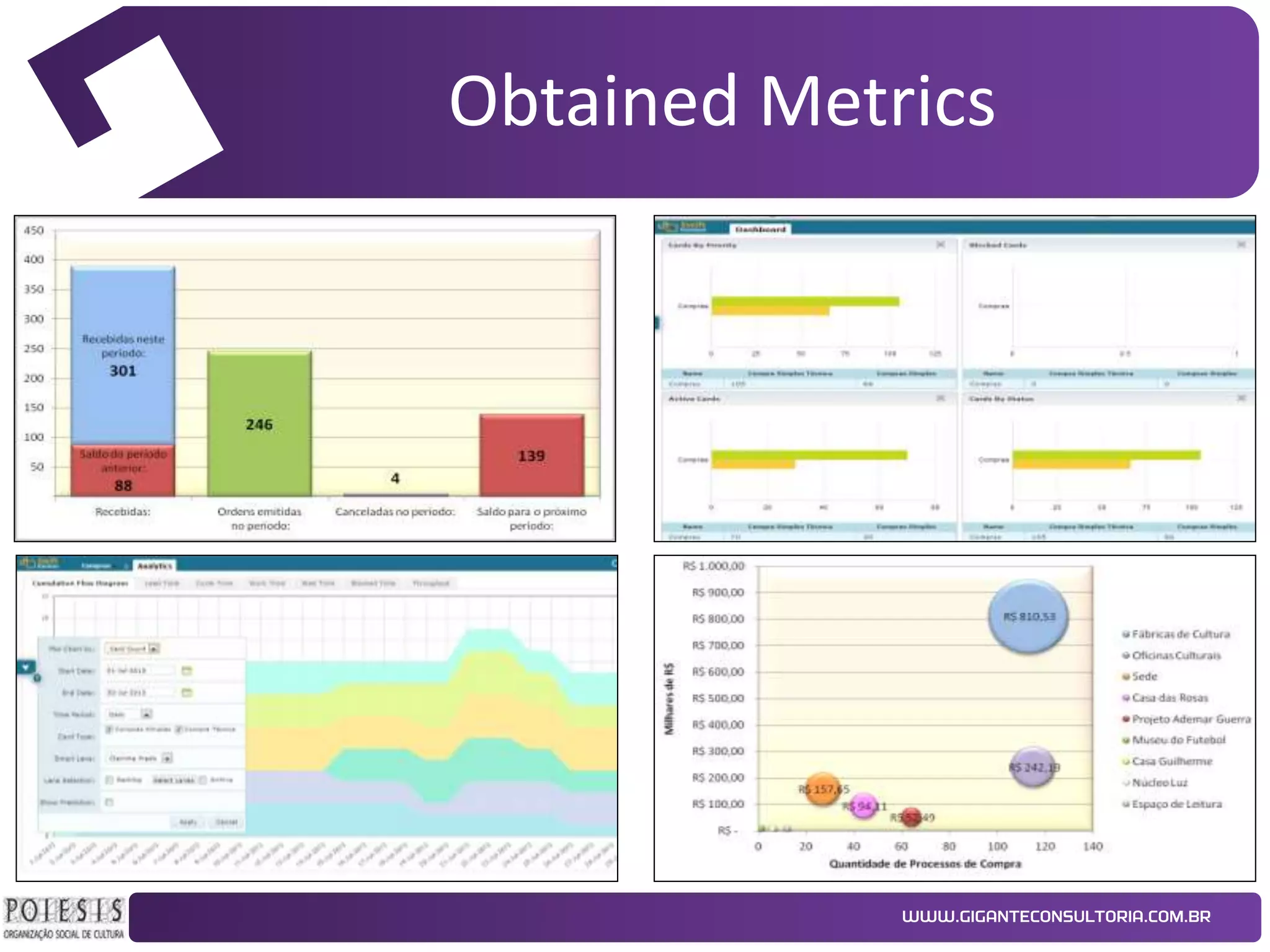
Obtained Metrics
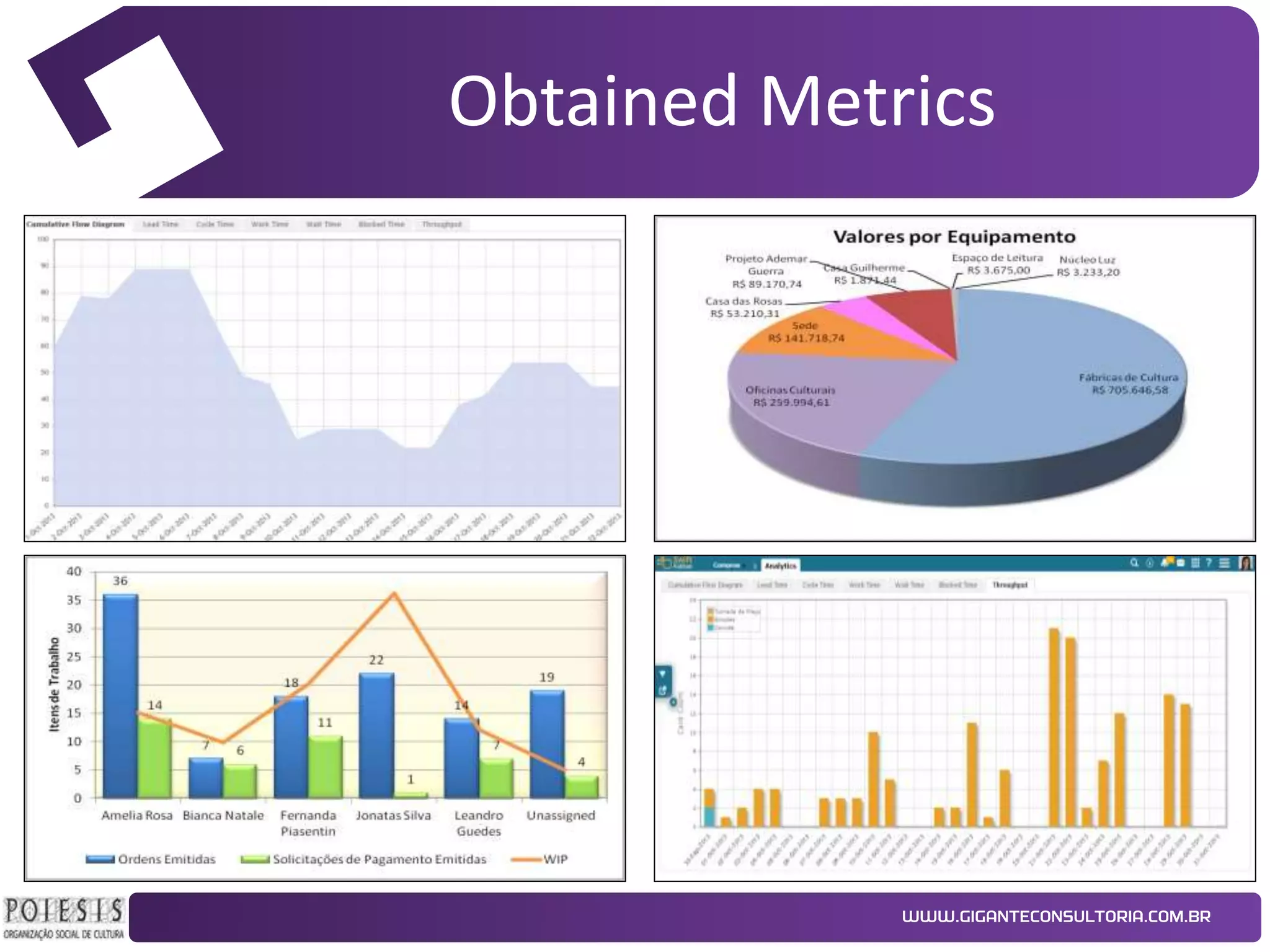
Obtained Metrics
Main Challenges
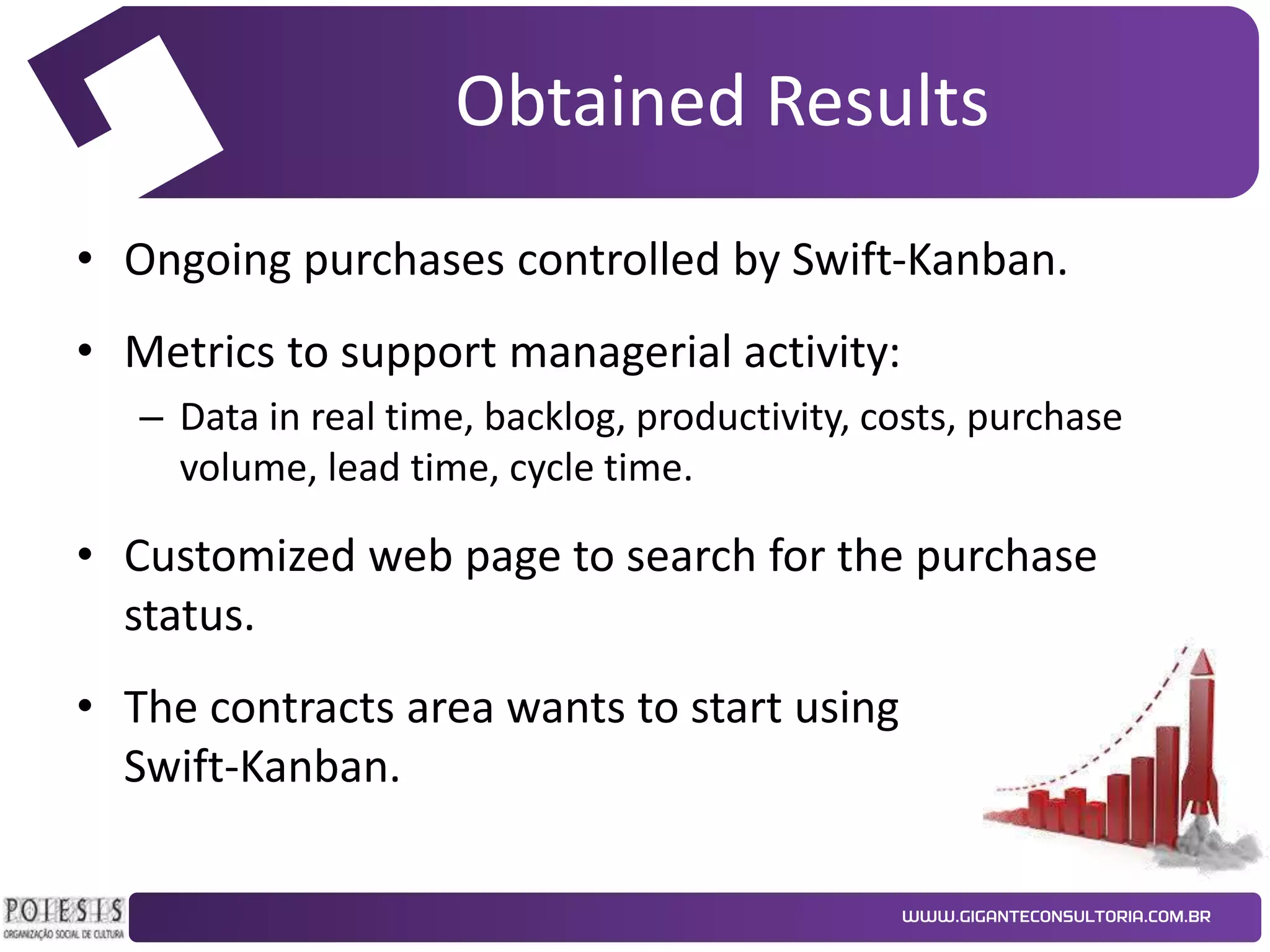
• Choice of the Kanban tool.
• Two months interval between automated and
physical Kanban.

• Adaptation of the team to the new system.
• Loss of board visibility, that used to be displayed on
the Department wall.
Obtained Results
• Ongoing purchases controlled by Swift-Kanban.
• Metrics to support managerial activity:
– Data in real time, backlog, productivity, costs, purchase
volume, lead time, cycle time.

• Customized web page to search for the purchase
status.

• The contracts area wants to start using
Swift-Kanban.
Conclusion
Conclusions
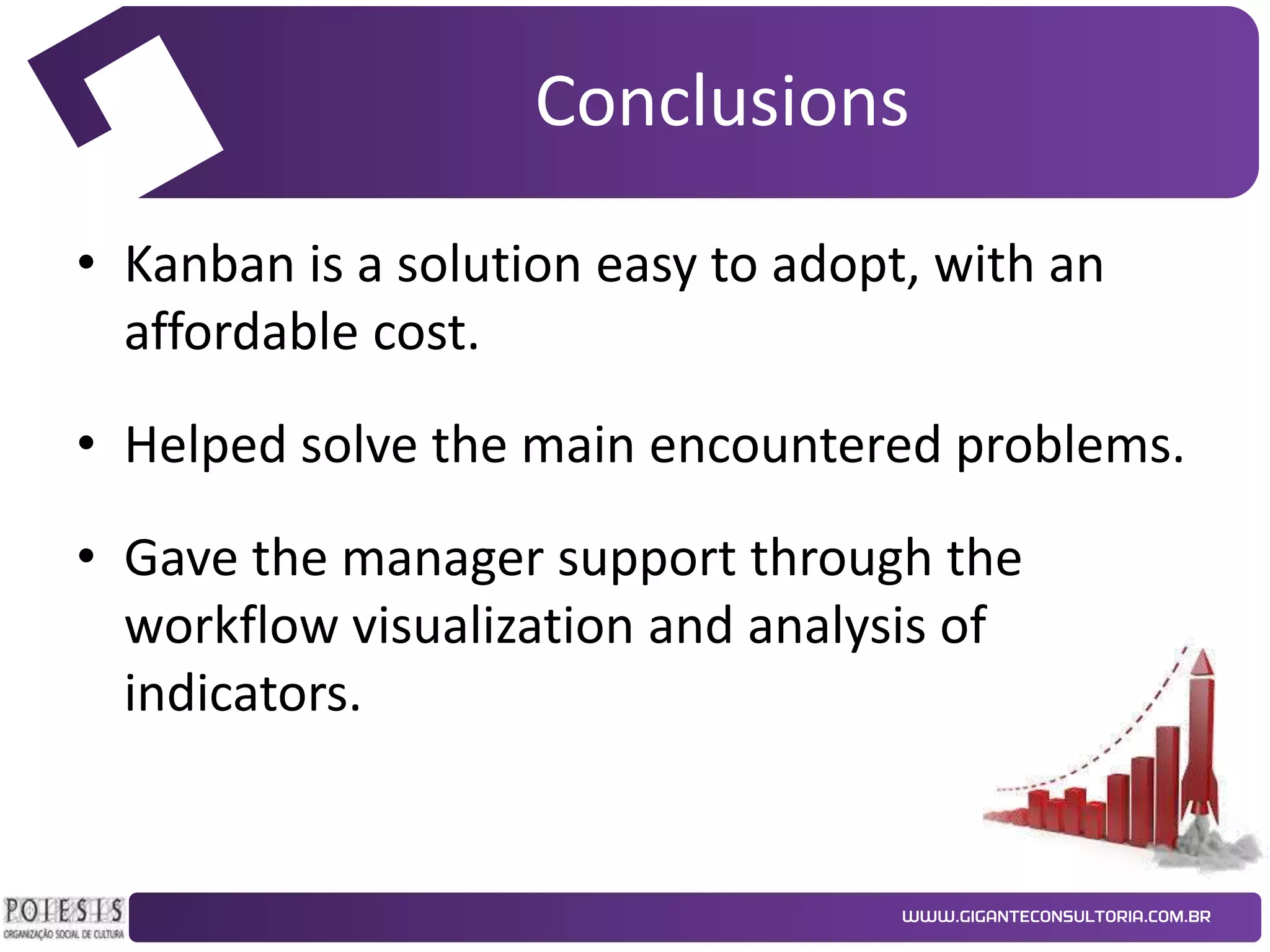
• Kanban is a solution easy to adopt, with an
affordable cost.
• Helped solve the main encountered problems.
• Gave the manager support through the
workflow visualization and analysis of
indicators.
Kanban as a Business
Analysis Tool
A Case-study

Kanban for Procurement - A SwiftKanban Customer Case Study

  • 1.
    Kanban as aBusiness Analysis Tool A Case-study
  • 2.
    Introduction Clarinha Prado • Consultantin business analysis and information technology. • 20 years of experience in companies from various branches, mainly in the financial sector. • Graduated in computer engineering, with postgraduate studies in business administration. clarinha.prado@giganteconsultoria.com.br
  • 3.
    Introduction • Gigante Consultoriais a consulting company that works with: – – – – Business Analysis Project Management System Analysis Training • This presentation refers to one of our projects, where we worked to improve the procurement process of one customer.
  • 4.
    Objective • Present theKanban as a tool to support business analysis. • Describe the introduction of Kanban in the procurement process of Poiesis – a Culture, Language and Literature Support Institute.
  • 5.
    Agenda Contextualization: • Description ofthe company, the procurement area and its process. Problems Encountered: Suggested solution: • Problems that prompted the hiring of consultancy. • Suggested actions by consulting. Deployment of Kanban: • Stages of deployment, key challenges, obtained results. Conclusion: • Main conclusions and recommendations.
  • 6.
  • 7.
    Poiesis - Culture,Language and Literature Support Institute • Where are we? São Paulo – state of Brazil. SÃO PAULO Area: 248.209 km2 Population: 43.663.669 inhabitants
  • 8.
    Poiesis - Culture,Language and Literature Support Institute • Non-governmental organization, qualified by the State Government of São Paulo. • Promotes socio-cultural and educational development, focused on project management in cultural spaces. • Develops programs and research in cultural spaces geared to the training of students and the general public.
  • 9.
    Poiesis - Culture,Language and Literature Support Institute • Performs the management of 29 cultural units : – – – – 21 Cultural workshops, 5 Culture factories, 2 Museums, 1 Reading space.
  • 10.
    Procurement Department • Responsiblefor making purchases for cultural spaces managed by Poiesis and to the headquarters of the Organization. Approximate volume of 400 procurements/month.
  • 11.
  • 12.
    Procurement Process Receive Request Assign Buyer Quote or Negotiate Get Signatures DrawUp A Contract Approve Purchase Wait For Delivery Validate Delivery Request Payment
  • 13.
  • 14.
    Problems Faced byPoiesis • Lack of transparency to solicitants. • Process time consuming, complex and bureaucratic. • Lack of clarity in the distribution of responsibilities. • Lack of knowledge of business rules. • Problems in the purchases prioritization. • Uneven distribution of workload between buyers. • Lack of management information.
  • 15.
  • 16.
    The Business Analysis •The consulting company Gigante held a job of diagnosing problems and proposal for improvements. • Several actions were proposed to address the problems singled out, among them the introduction of a Kanban.
  • 17.
    The Kanban Proposal •Use the Kanban as a tool for: – Increase the transparency of the procurement process. – Enable strategic management over acquisitions. – Control the flow of the department purchases. – Optimize productivity quickly.
  • 18.
    The Kanban Proposal 1stphase – Physical Kanban: Process modeling, board assembly, training, daily meetings 2nd phase - Automated Kanban: Choice of tools, training, definition of indicators, acquisition of TV.
  • 19.
    1st phase –Physical Kanban Deployment of Kanban
  • 20.
    1st phase –Physical Kanban • Start: May 14, 2013. • Used for about 2 months. • Deployment steps: – Process modeling with managers. – Team training. – Monitoring the deployment. – Use of available materials: brown paper, masking tape, post-its, A4 sheet.
  • 21.
    1st phase –Physical Kanban Profile of purchases Staff overload Identification of bottlenecks
  • 22.
    1st phase –Physical Kanban Capacityconstrained resource Non-instant availability resource
  • 23.
  • 24.
    Board Customizations • Suggestionsfrom the team, during the daily meetings.
  • 25.
    Board Customizations • Stamp:standardization and practicality for a low cost.
  • 26.
  • 27.
    Main Challenges • Fixingthe frame and the cards. • Motivation for the team to use the new tool. • Establishment of new concepts. • Manual generation of metrics. • Maintaining the daily meeting.
  • 28.
    Obtained Results • Theteam's involvement in the proposed improvements and troubleshooting. • Customer awareness. • Sharing information. • Workload visualization. • Analysis of performance metrics. • Reducing the index of complaint.
  • 29.
    2nd phase -Automated Kanban Deployment of Kanban
  • 30.
    2nd phase -Automated Kanban • Start: September 16, 2013. • Deployment steps: – Selection and hiring of the Kanban application. – Team training. – Import of the cards. – Customization of indicators.
  • 31.
  • 32.
    2nd phase -Automated Kanban
  • 33.
    2nd phase -Automated Kanban
  • 34.
  • 35.
  • 36.
    Main Challenges • Choiceof the Kanban tool. • Two months interval between automated and physical Kanban. • Adaptation of the team to the new system. • Loss of board visibility, that used to be displayed on the Department wall.
  • 37.
    Obtained Results • Ongoingpurchases controlled by Swift-Kanban. • Metrics to support managerial activity: – Data in real time, backlog, productivity, costs, purchase volume, lead time, cycle time. • Customized web page to search for the purchase status. • The contracts area wants to start using Swift-Kanban.
  • 38.
  • 39.
    Conclusions • Kanban isa solution easy to adopt, with an affordable cost. • Helped solve the main encountered problems. • Gave the manager support through the workflow visualization and analysis of indicators.
  • 40.
    Kanban as aBusiness Analysis Tool A Case-study