Capacity Development for Enhanced
Sustainability and Impact
Patrick P. Kalas
FAO Capacity Development Officer
patrick.kalas@fao.org
http://www.fao.org/capacitydevelopment/en/
Social Protection and Agriculture Workshop
Ghana, September 2013
What is Capacity Development?

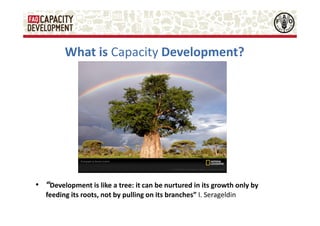
• “Development is like a tree: it can be nurtured in its growth only by
feeding its roots, not by pulling on its branches” I. Serageldin
What is Capacity Development?
Capacity
Development
support

Existing
capacities

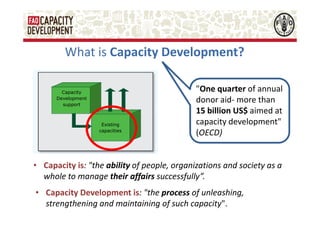
"One quarter of annual
donor aid- more than
15 billion US$ aimed at
capacity development"
(OECD)

• Capacity is: "the ability of people, organizations and society as a
whole to manage their affairs successfully”.
• Capacity Development is: "the process of unleashing,
strengthening and maintaining of such capacity".
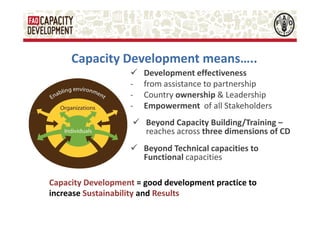
Capacity Development means…..
-

Development effectiveness
from assistance to partnership
Country ownership & Leadership
Empowerment of all Stakeholders
Beyond Capacity Building/Training –
reaches across three dimensions of CD
Beyond Technical capacities to
Functional capacities

Capacity Development = good development practice to
increase Sustainability and Results
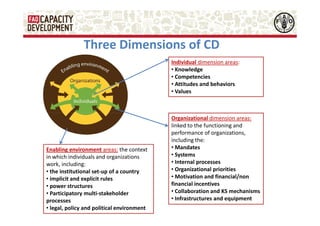
Three Dimensions of CD
Individual dimension areas:
• Knowledge
• Competencies
• Attitudes and behaviors
• Values

Enabling environment areas: the context
in which individuals and organizations
work, including:
• the institutional set-up of a country
• implicit and explicit rules
• power structures
• Participatory multi-stakeholder
processes
• legal, policy and political environment

Organizational dimension areas:
linked to the functioning and
performance of organizations,
including the:
• Mandates
• Systems
• Internal processes
• Organizational priorities
• Motivation and financial/non
financial incentives
• Collaboration and KS mechanisms
• Infrastructures and equipment
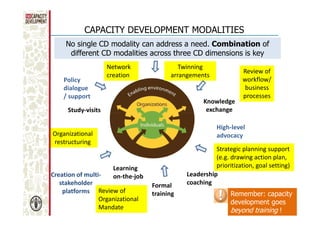
CAPACITY DEVELOPMENT MODALITIES
No single CD modality can address a need. Combination of
different CD modalities across three CD dimensions is key

Policy
dialogue
/ support

Network
creation

Twinning
arrangements

Knowledge
exchange

Study-visits

Review of
workflow/
business
processes

High-level
advocacy

Organizational
restructuring

Learning
on-the-job

Creation of multistakeholder
platforms Review of
Organizational
Mandate

Formal
training

Strategic planning support
(e.g. drawing action plan,
prioritization, goal setting)
Leadership
coaching
Remember: capacity
development goes
beyond training !
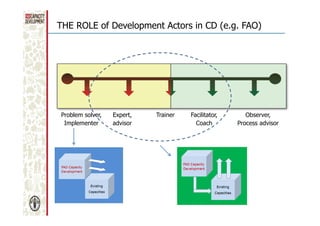
THE ROLE of Development Actors in CD (e.g. FAO)

Problem solver,
Implementer

Expert,
advisor

Trainer

Facilitator,
Coach

Observer,
Process advisor
Evaluation of FAO CD Activities in Africa
(2000-2010)
• Many CD interventions relevant but few sustainable
(shooting star syndrome- light up sky, fade away quickly)
• FAO has intervened unevenly across CD dimensions and
with little systemic interconnections
(Individuals 80%, Organizations 25%, Enabling Env. 50%)
• Limited local ownership and institutionalization of
initiatives into local systems needed to provide services and
funding for scaling-up
• “Good Capacity Development is not only
about ‘what’ we do, but primarily ‘how’ we
engage in it”
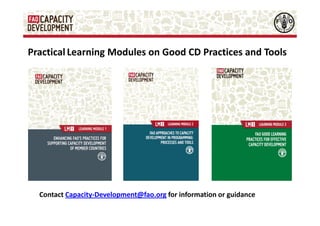
Practical Learning Modules on Good CD Practices and Tools

Contact Capacity-Development@fao.org for information or guidance
Relevance to Social Protection and
Agriculture?
Synergies and coordination between social
protection and agriculture……..
may require strengthening country-level capacities
among all stakeholders across all CD dimensions
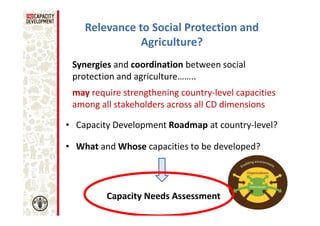
• Capacity Development Roadmap at country-level?
• What and Whose capacities to be developed?

Capacity Needs Assessment
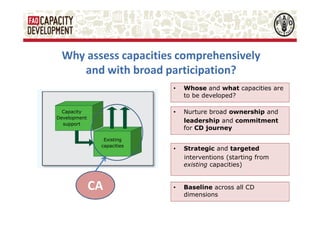
Why assess capacities comprehensively
and with broad participation?
•

•

Capacity
Development
support
Existing
capacities

CA

Whose and what capacities are
to be developed?
Nurture broad ownership and
leadership and commitment
for CD journey

•

Strategic and targeted
interventions (starting from
existing capacities)

•

Baseline across all CD
dimensions
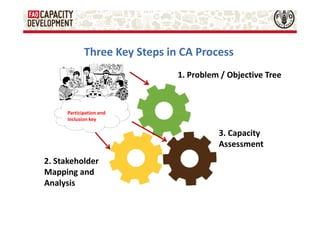
Three Key Steps in CA Process
1. Problem / Objective Tree

Participation and
Inclusion key

3. Capacity
Assessment
2. Stakeholder
Mapping and
Analysis
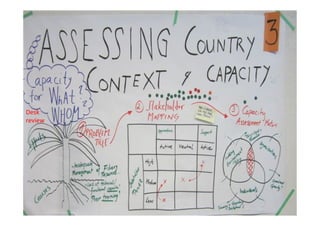
Desk
review
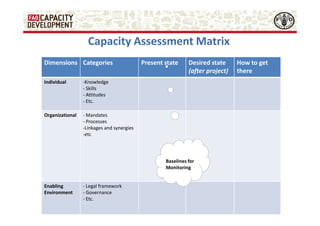
Capacity Assessment Matrix
Dimensions Categories
Individual

Desired state
(after project)

-Knowledge
- Skills
- Attitudes
- Etc.

Organizational

Present state

- Mandates
- Processes
-Linkages and synergies
-etc

Baselines for
Monitoring

Enabling
Environment

- Legal framework
- Governance
- Etc.

How to get
there
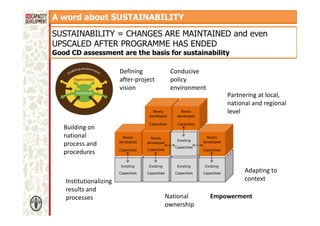
A word about SUSTAINABILITY
SUSTAINABILITY = CHANGES ARE MAINTAINED and even
UPSCALED AFTER PROGRAMME HAS ENDED
Good CD assessment are the basis for sustainability
Defining
after-project
vision

Conducive
policy
environment

Newly
developed

Building on
national
process and
procedures

Newly
developed

Capacities

Partnering at local,
national and regional
level

Capacities

Newly
developed

Capacities

Capacities

Existing

Existing

Existing

Existing

Capacities

Institutionalizing
results and
processes

Newly
developed

Capacities

Capacities

Capacities

Existing
Capacities

National
ownership

Newly
developed
Capacities

Adapting to
context

Empowerment
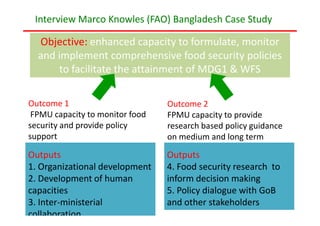
Interview Marco Knowles (FAO) Bangladesh Case Study

Objective: enhanced capacity to formulate, monitor
and implement comprehensive food security policies
to facilitate the attainment of MDG1 & WFS
Outcome 1
FPMU capacity to monitor food
security and provide policy
support

Outcome 2
FPMU capacity to provide
research based policy guidance
on medium and long term

Outputs
1. Organizational development
2. Development of human
capacities
3. Inter-ministerial
collaboration

Outputs
4. Food security research to
inform decision making
5. Policy dialogue with GoB
and other stakeholders

Capacity Development for Enhanced Sustainability and Impact

  • 1.
    Capacity Development forEnhanced Sustainability and Impact Patrick P. Kalas FAO Capacity Development Officer patrick.kalas@fao.org http://www.fao.org/capacitydevelopment/en/ Social Protection and Agriculture Workshop Ghana, September 2013
  • 2.
    What is CapacityDevelopment? • “Development is like a tree: it can be nurtured in its growth only by feeding its roots, not by pulling on its branches” I. Serageldin
  • 3.
    What is CapacityDevelopment? Capacity Development support Existing capacities "One quarter of annual donor aid- more than 15 billion US$ aimed at capacity development" (OECD) • Capacity is: "the ability of people, organizations and society as a whole to manage their affairs successfully”. • Capacity Development is: "the process of unleashing, strengthening and maintaining of such capacity".
  • 4.
    Capacity Development means….. - Developmenteffectiveness from assistance to partnership Country ownership & Leadership Empowerment of all Stakeholders Beyond Capacity Building/Training – reaches across three dimensions of CD Beyond Technical capacities to Functional capacities Capacity Development = good development practice to increase Sustainability and Results
  • 5.
    Three Dimensions ofCD Individual dimension areas: • Knowledge • Competencies • Attitudes and behaviors • Values Enabling environment areas: the context in which individuals and organizations work, including: • the institutional set-up of a country • implicit and explicit rules • power structures • Participatory multi-stakeholder processes • legal, policy and political environment Organizational dimension areas: linked to the functioning and performance of organizations, including the: • Mandates • Systems • Internal processes • Organizational priorities • Motivation and financial/non financial incentives • Collaboration and KS mechanisms • Infrastructures and equipment
  • 6.
    CAPACITY DEVELOPMENT MODALITIES Nosingle CD modality can address a need. Combination of different CD modalities across three CD dimensions is key Policy dialogue / support Network creation Twinning arrangements Knowledge exchange Study-visits Review of workflow/ business processes High-level advocacy Organizational restructuring Learning on-the-job Creation of multistakeholder platforms Review of Organizational Mandate Formal training Strategic planning support (e.g. drawing action plan, prioritization, goal setting) Leadership coaching Remember: capacity development goes beyond training !
  • 7.
    THE ROLE ofDevelopment Actors in CD (e.g. FAO) Problem solver, Implementer Expert, advisor Trainer Facilitator, Coach Observer, Process advisor
  • 8.
    Evaluation of FAOCD Activities in Africa (2000-2010) • Many CD interventions relevant but few sustainable (shooting star syndrome- light up sky, fade away quickly) • FAO has intervened unevenly across CD dimensions and with little systemic interconnections (Individuals 80%, Organizations 25%, Enabling Env. 50%) • Limited local ownership and institutionalization of initiatives into local systems needed to provide services and funding for scaling-up • “Good Capacity Development is not only about ‘what’ we do, but primarily ‘how’ we engage in it”
  • 9.
    Practical Learning Moduleson Good CD Practices and Tools Contact Capacity-Development@fao.org for information or guidance
  • 10.
    Relevance to SocialProtection and Agriculture? Synergies and coordination between social protection and agriculture…….. may require strengthening country-level capacities among all stakeholders across all CD dimensions • Capacity Development Roadmap at country-level? • What and Whose capacities to be developed? Capacity Needs Assessment
  • 11.
    Why assess capacitiescomprehensively and with broad participation? • • Capacity Development support Existing capacities CA Whose and what capacities are to be developed? Nurture broad ownership and leadership and commitment for CD journey • Strategic and targeted interventions (starting from existing capacities) • Baseline across all CD dimensions
  • 12.
    Three Key Stepsin CA Process 1. Problem / Objective Tree Participation and Inclusion key 3. Capacity Assessment 2. Stakeholder Mapping and Analysis
  • 13.
  • 14.
    Capacity Assessment Matrix DimensionsCategories Individual Desired state (after project) -Knowledge - Skills - Attitudes - Etc. Organizational Present state - Mandates - Processes -Linkages and synergies -etc Baselines for Monitoring Enabling Environment - Legal framework - Governance - Etc. How to get there
  • 15.
    A word aboutSUSTAINABILITY SUSTAINABILITY = CHANGES ARE MAINTAINED and even UPSCALED AFTER PROGRAMME HAS ENDED Good CD assessment are the basis for sustainability Defining after-project vision Conducive policy environment Newly developed Building on national process and procedures Newly developed Capacities Partnering at local, national and regional level Capacities Newly developed Capacities Capacities Existing Existing Existing Existing Capacities Institutionalizing results and processes Newly developed Capacities Capacities Capacities Existing Capacities National ownership Newly developed Capacities Adapting to context Empowerment
  • 16.
    Interview Marco Knowles(FAO) Bangladesh Case Study Objective: enhanced capacity to formulate, monitor and implement comprehensive food security policies to facilitate the attainment of MDG1 & WFS Outcome 1 FPMU capacity to monitor food security and provide policy support Outcome 2 FPMU capacity to provide research based policy guidance on medium and long term Outputs 1. Organizational development 2. Development of human capacities 3. Inter-ministerial collaboration Outputs 4. Food security research to inform decision making 5. Policy dialogue with GoB and other stakeholders