Project 
On: 
Newton’s 1st, 2nd, and 3rd laws, Force, Inertia, Balanced/ unbalanced 
forces, friction, Net force, Mass, Acceleration, Force diagrams
Newton’s 1st Law 
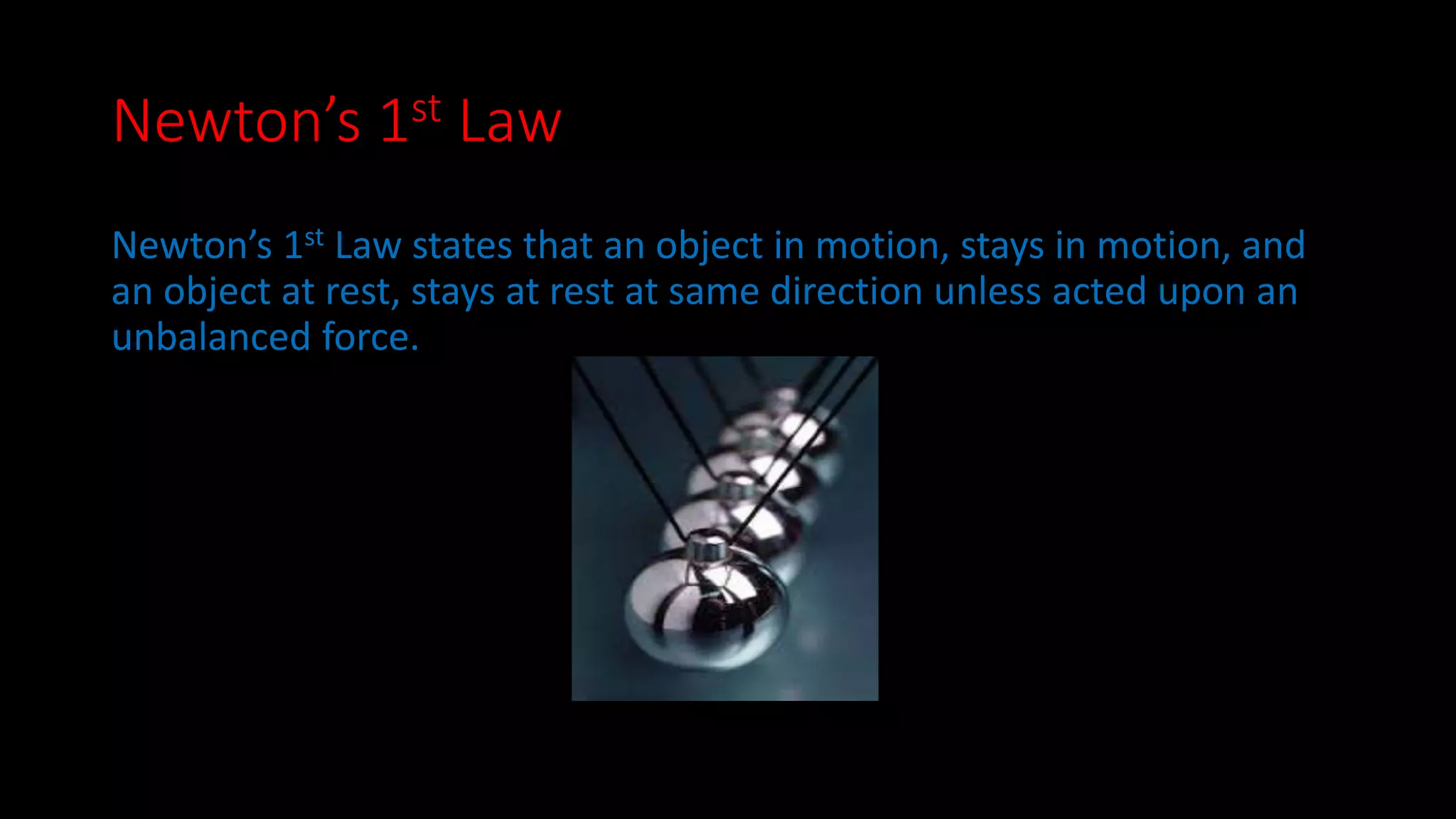
Newton’s 1st Law states that an object in motion, stays in motion, and 
an object at rest, stays at rest at same direction unless acted upon an 
unbalanced force.
Newton’s 2nd Law 
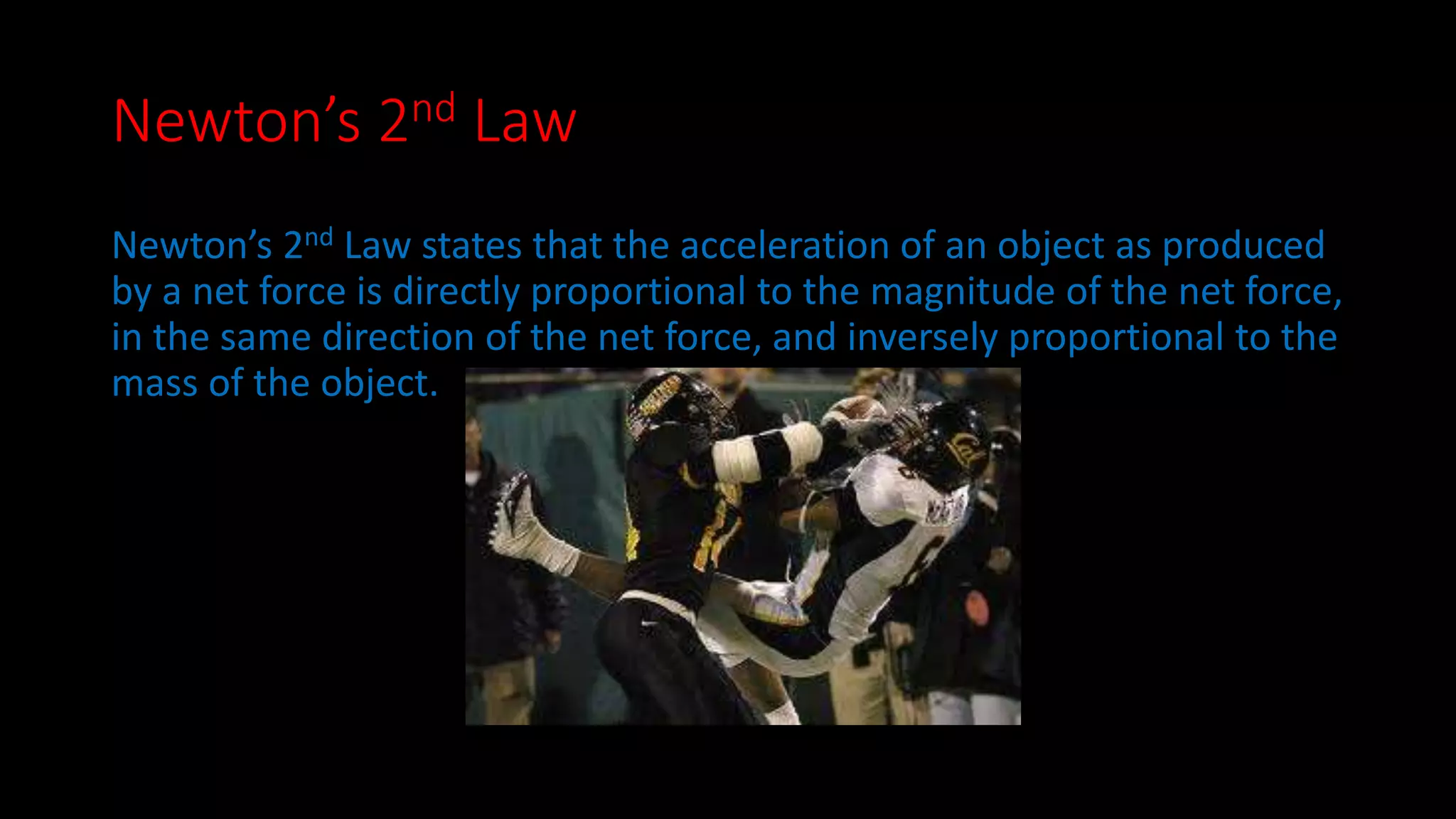
Newton’s 2nd Law states that the acceleration of an object as produced 
by a net force is directly proportional to the magnitude of the net force, 
in the same direction of the net force, and inversely proportional to the 
mass of the object.
Newton’s Third Law 
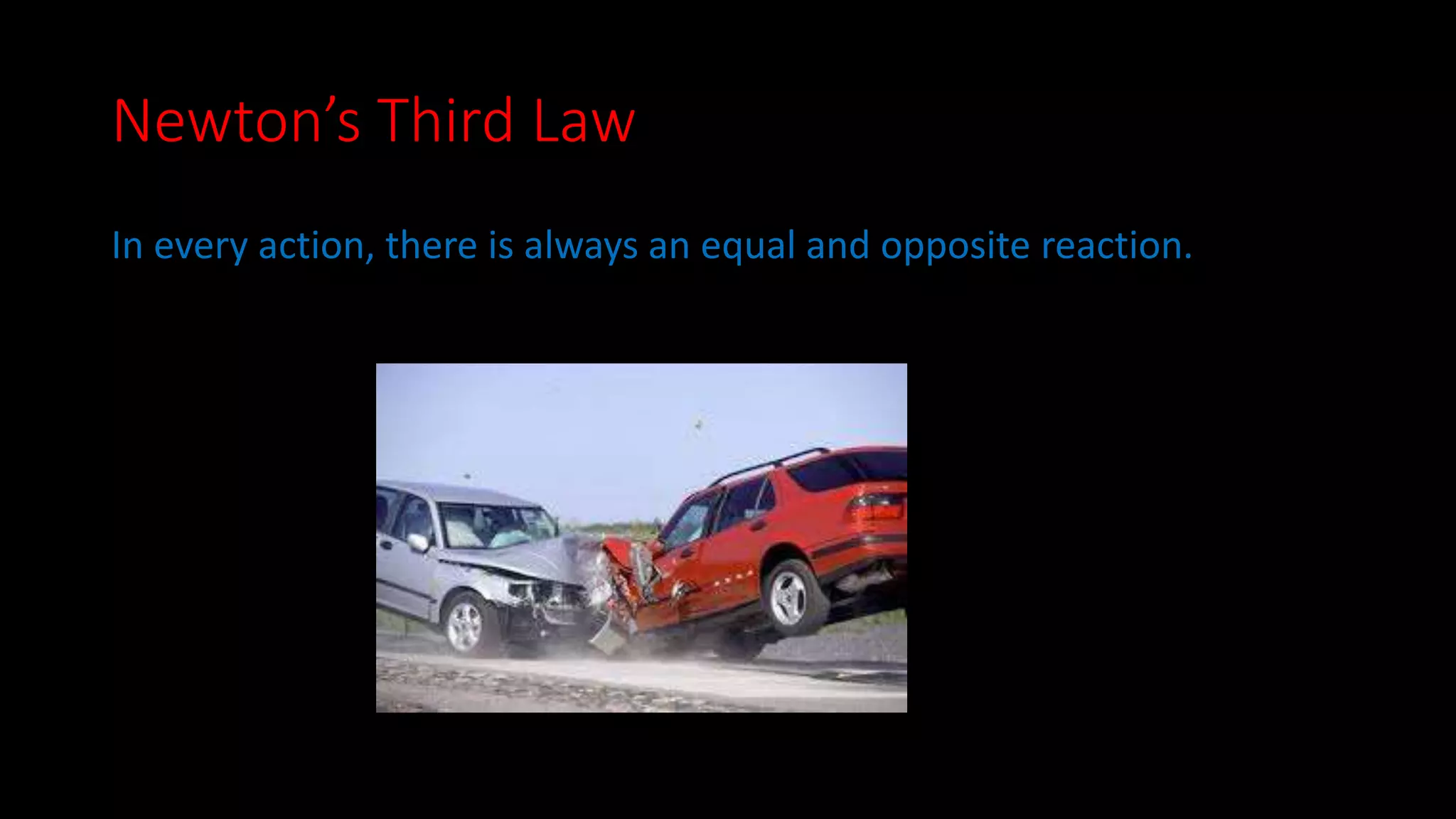
In every action, there is always an equal and opposite reaction.
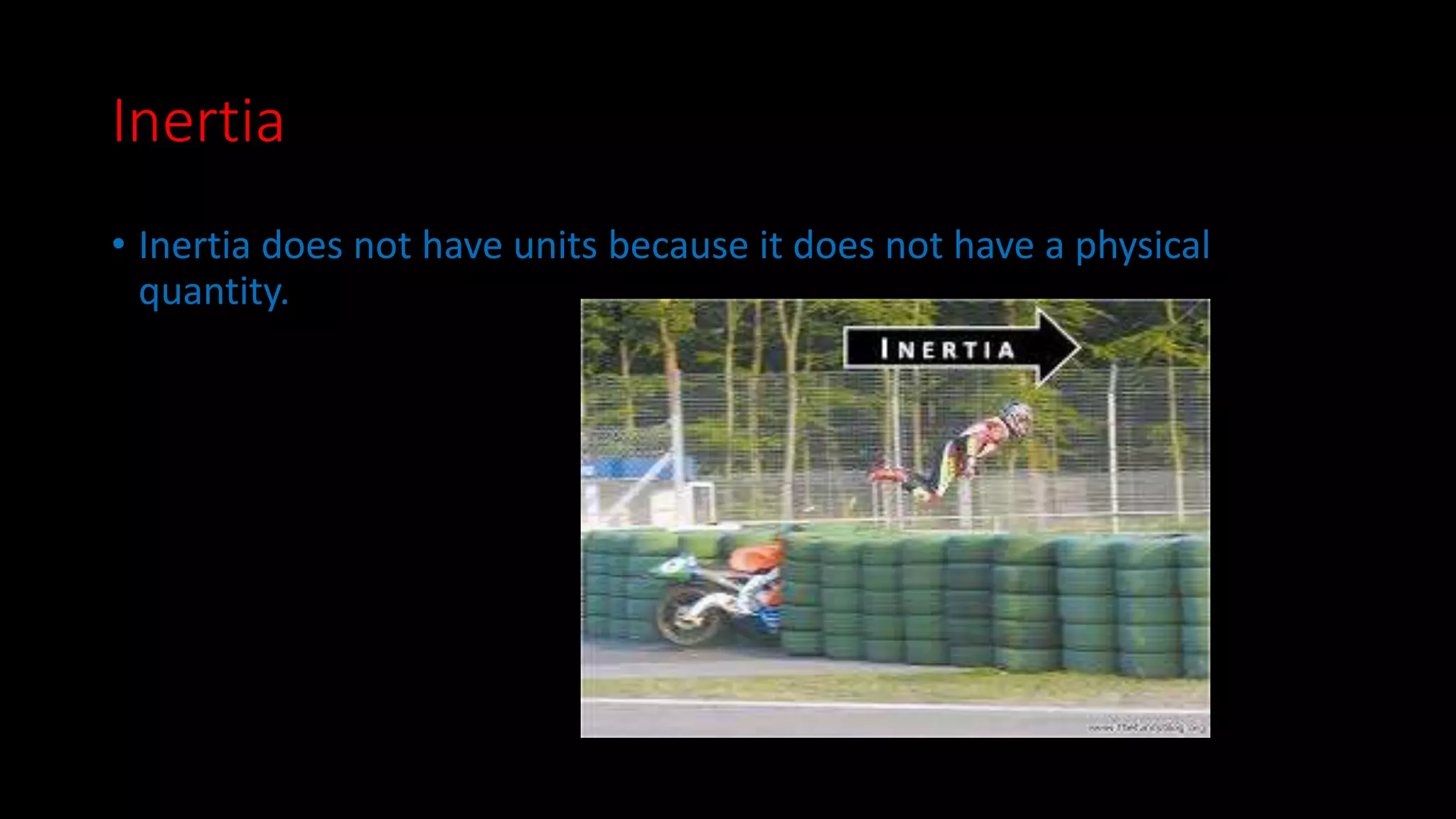
Inertia 
• Inertia does not have units because it does not have a physical 
quantity.
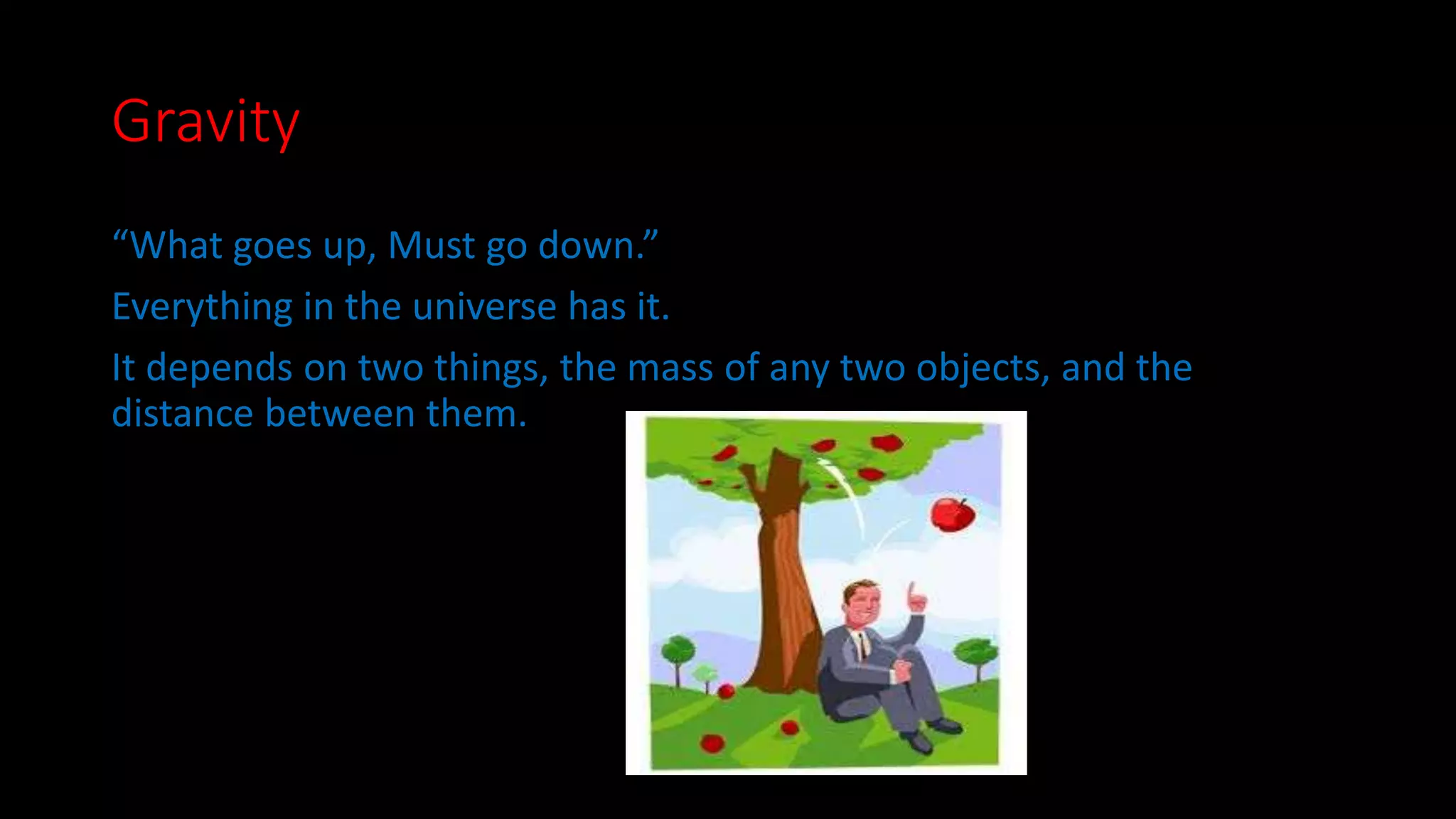
Gravity 
“What goes up, Must go down.” 
Everything in the universe has it. 
It depends on two things, the mass of any two objects, and the 
distance between them.
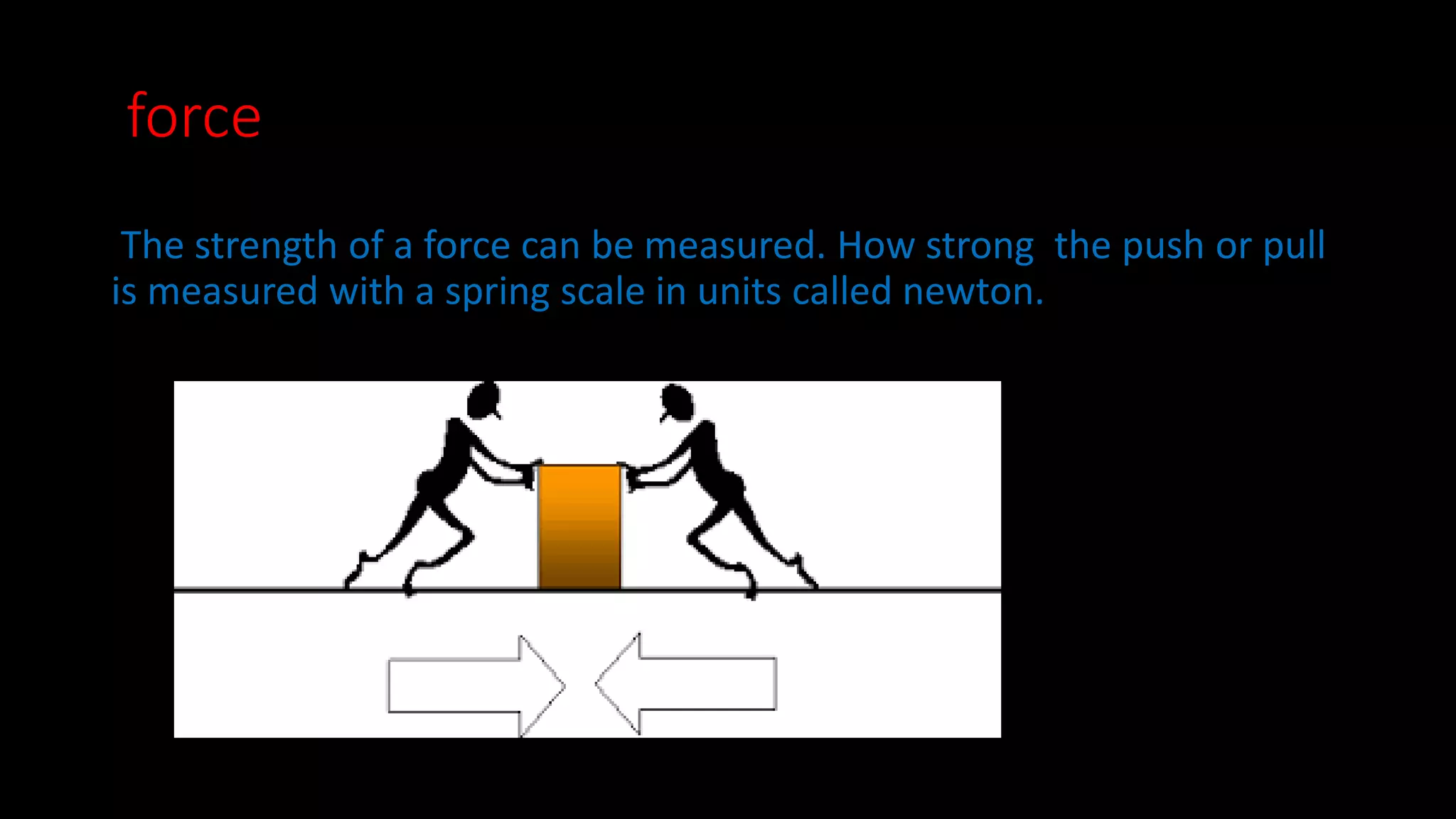
force 
The strength of a force can be measured. How strong the push or pull 
is measured with a spring scale in units called newton.
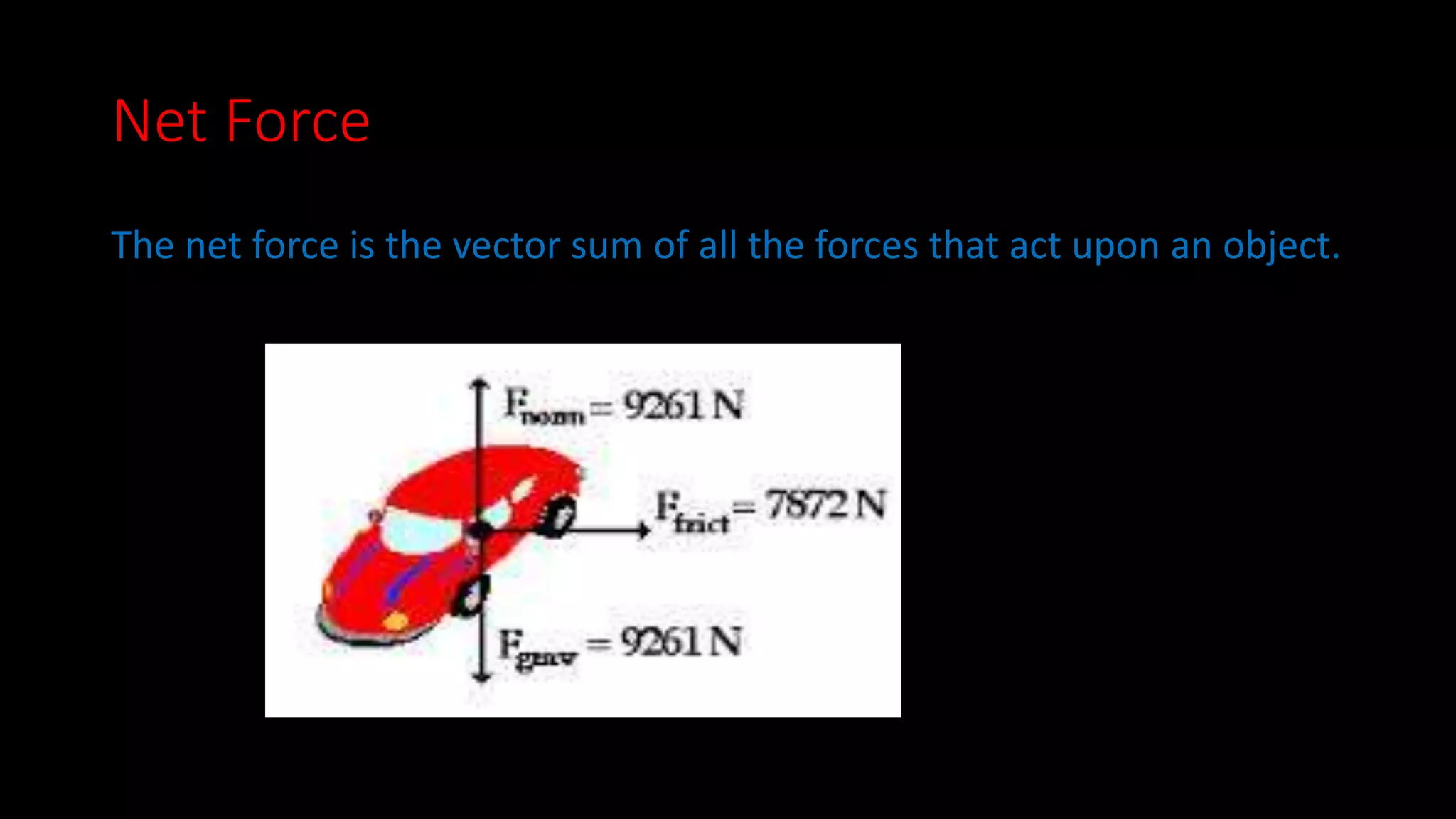
Net Force 
The net force is the vector sum of all the forces that act upon an object.
Acceleration 
Acceleration is the rate of change of velocity.
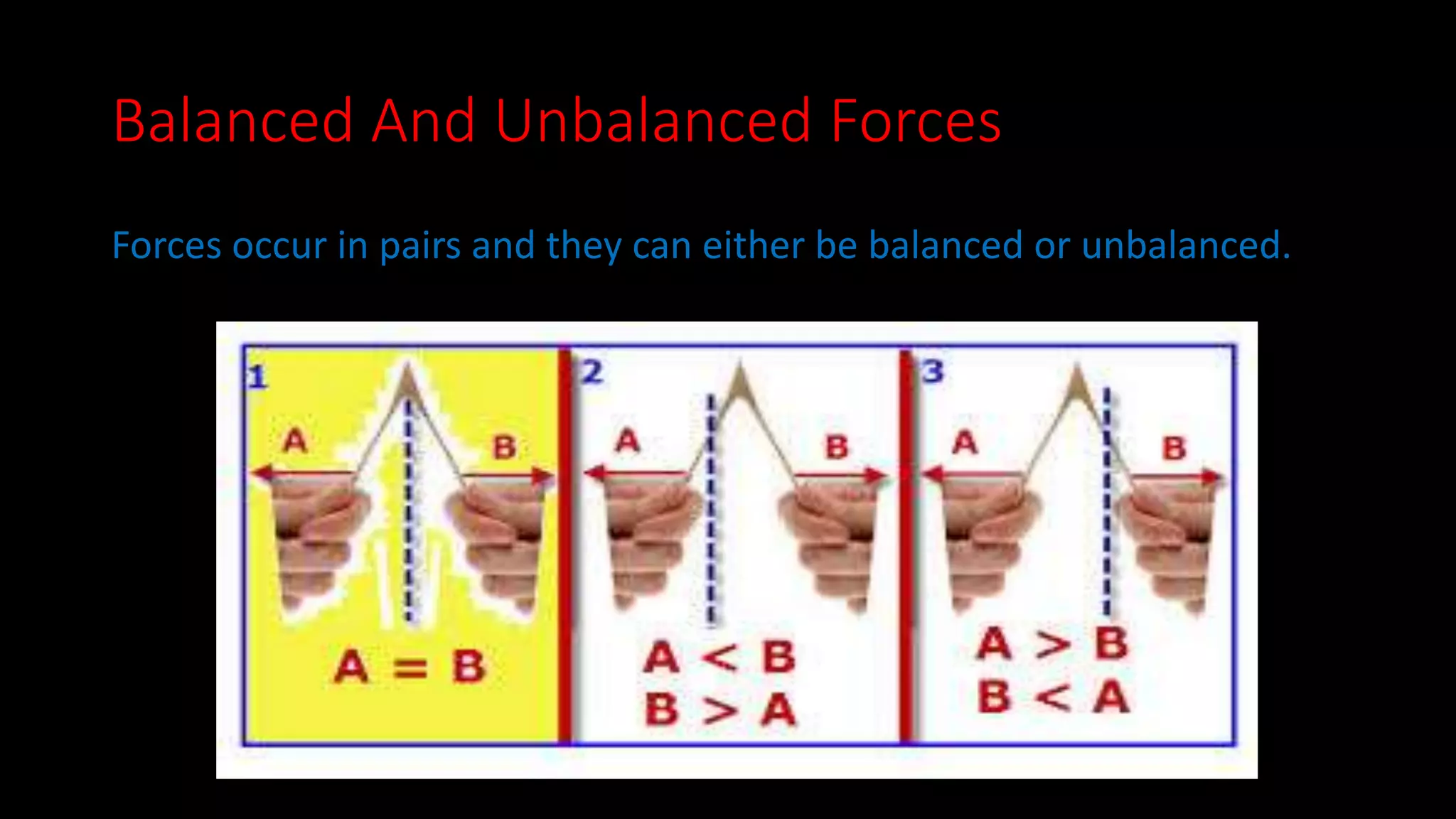
Balanced And Unbalanced Forces 
Forces occur in pairs and they can either be balanced or unbalanced.
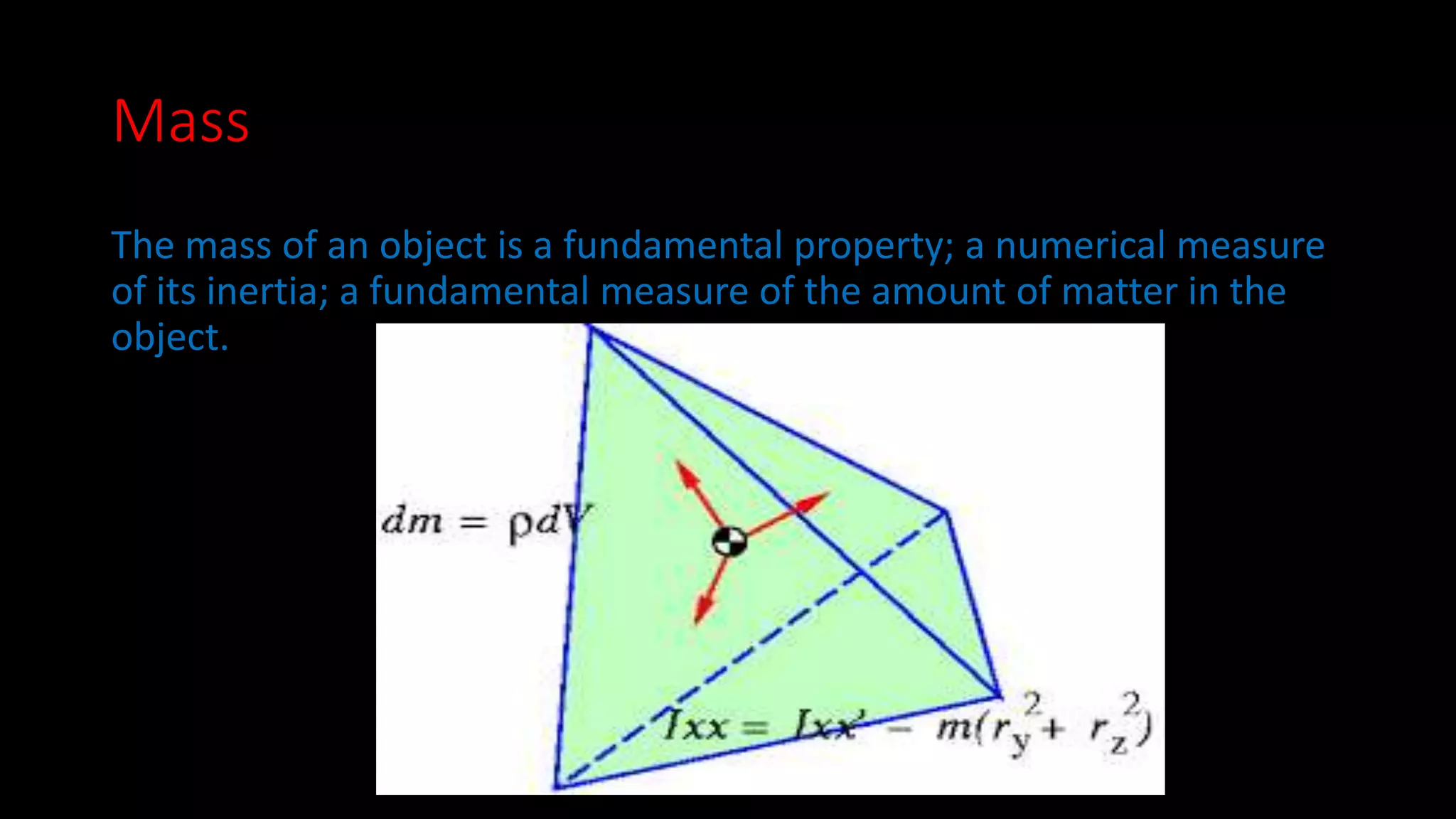
Mass 
The mass of an object is a fundamental property; a numerical measure 
of its inertia; a fundamental measure of the amount of matter in the 
object.
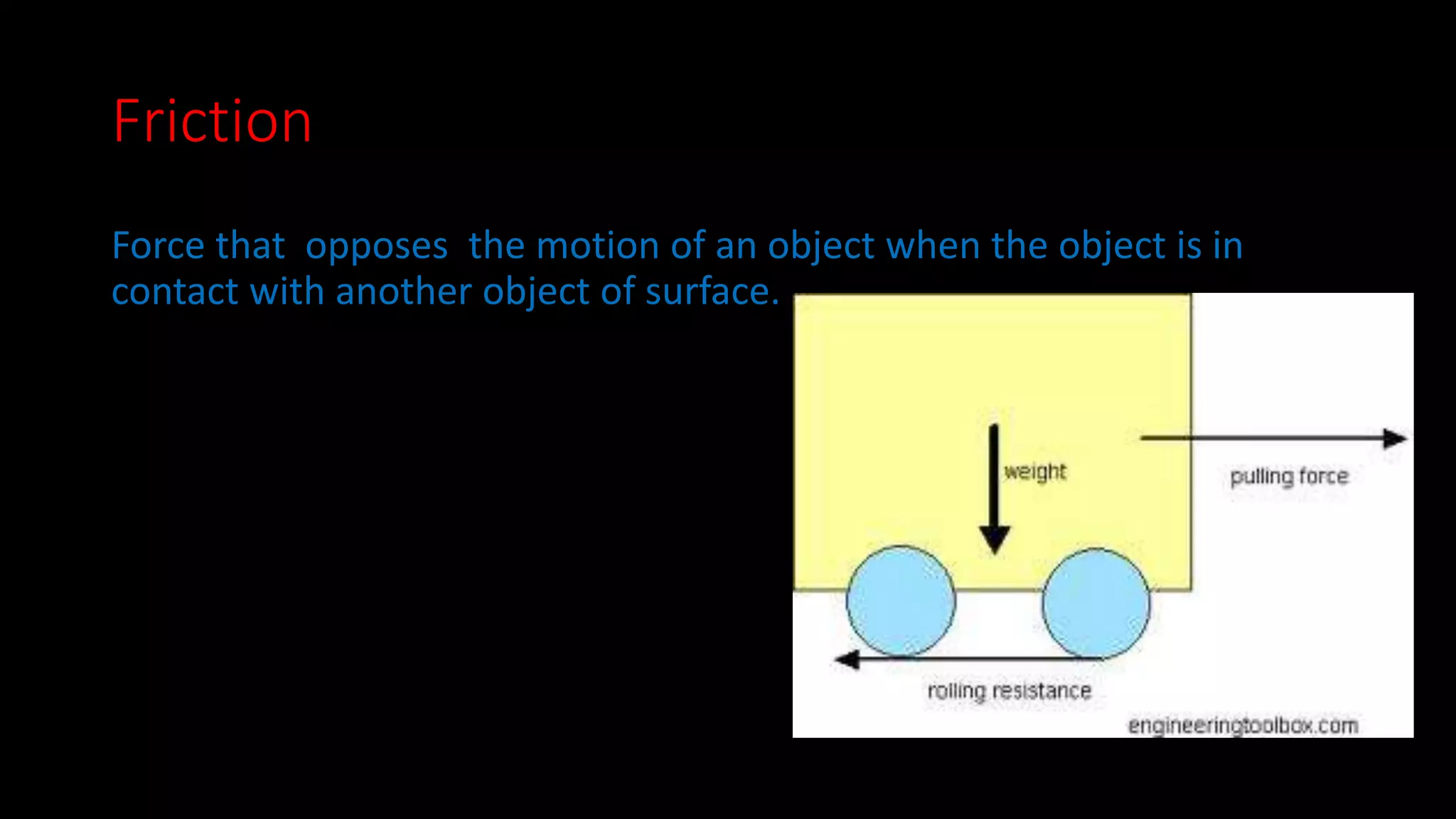
Friction 
Force that opposes the motion of an object when the object is in 
contact with another object of surface.
Hints 
• By the way, if you haven’t noticed, I have been using cubs colors.
Sites 
• slideshare.net 
• TTTTHHHHHEEEE EEEENNNNDDDD!!!!!!!!!

Justin crews, terry riggs pp

  • 1.
    Project On: Newton’s1st, 2nd, and 3rd laws, Force, Inertia, Balanced/ unbalanced forces, friction, Net force, Mass, Acceleration, Force diagrams
  • 2.
    Newton’s 1st Law Newton’s 1st Law states that an object in motion, stays in motion, and an object at rest, stays at rest at same direction unless acted upon an unbalanced force.
  • 3.
    Newton’s 2nd Law Newton’s 2nd Law states that the acceleration of an object as produced by a net force is directly proportional to the magnitude of the net force, in the same direction of the net force, and inversely proportional to the mass of the object.
  • 4.
    Newton’s Third Law In every action, there is always an equal and opposite reaction.
  • 5.
    Inertia • Inertiadoes not have units because it does not have a physical quantity.
  • 6.
    Gravity “What goesup, Must go down.” Everything in the universe has it. It depends on two things, the mass of any two objects, and the distance between them.
  • 7.
    force The strengthof a force can be measured. How strong the push or pull is measured with a spring scale in units called newton.
  • 8.
    Net Force Thenet force is the vector sum of all the forces that act upon an object.
  • 9.
    Acceleration Acceleration isthe rate of change of velocity.
  • 10.
    Balanced And UnbalancedForces Forces occur in pairs and they can either be balanced or unbalanced.
  • 11.
    Mass The massof an object is a fundamental property; a numerical measure of its inertia; a fundamental measure of the amount of matter in the object.
  • 12.
    Friction Force thatopposes the motion of an object when the object is in contact with another object of surface.
  • 13.
    Hints • Bythe way, if you haven’t noticed, I have been using cubs colors.
  • 14.
    Sites • slideshare.net • TTTTHHHHHEEEE EEEENNNNDDDD!!!!!!!!!