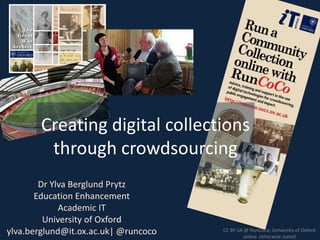
Creating digital collections
through crowdsourcing
Dr Ylva Berglund Prytz
Education Enhancement
Academic IT
University of Oxford
ylva.berglund@it.ox.ac.uk| @runcoco CC BY-SA @ RunCoCo, University of Oxford
unless otherwise stated
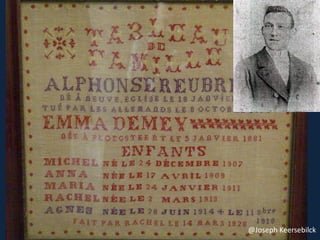
@Joseph Keersebilck
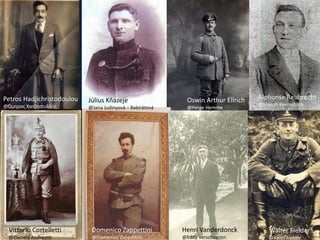
Petros Hadjichristodoulou
@Όμηρος Χατζηστυλλής
Július Kňazeje
@Jana Judinyová – Babirátová
Vittorio Cortelletti
@Daniela Andreotti
Domenico Zappettini
@Domenico Zappettini
Alphonse Reubrecht
@Joseph Keersebilck
Oswin Arthur Ellrich
@Helge Hemme
Henri Vanderdonck
@Eddy Verschueren
Walter Fielder
@Keith Fielder
Image by Martin Dennis Fryatt CC BY-SA
http://europeana1914-1918.eu/en/contributions/11231
Community Collection
material shared by the general public
or a particular community
(usually through crowdsourcing)
Crowdsourcing
“asking the general public to help contribute to
shared goals” (Ridge 2014)
“a convenient label for a diverse range of
activities and projects involving the public doing
something to, or with, content.” (Dunn and Hedges 2014)
CC BY-SA-NC Media Specialist
http://www.flickr.com/photos/mediaspecialist/3741404691/
crowdsourcing online
+
targeted interaction
Oxford Community Collection Model
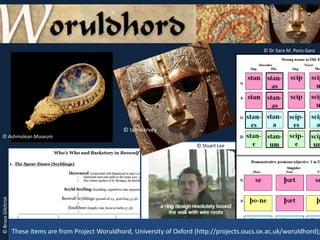
© Stuart Lee
© Ashmolean Museum
©BruceGilchrist
© Ian Harvey
© Dr Sara M. Pons-Sanz
These items are from Project Woruldhord, University of Oxford (http://projects.oucs.ox.ac.uk/woruldhord);
All items from
© The Warden and Fellows of Merton College
© Barry Press
© Chris Madell
Merton@750: An Anniversary Collection
at http://share.merton.ox.ac.uk
These items are from The Great War Archive, University of Oxford (www.oucs.ox.ac.uk/ww1lit/gwa)
made available under the JISC Model Licence (use for educational, non-commercial purposes)
@Tony Carr
@Robert Johnson
@ Janet Mercer
Collection
Attention
Engagement
© Age Exchange
“Since we cannot experience everything, other
people’s experiences, and hence other people,
become the surrogate for knowledge.”
Stephenson (1998)
© Age Exchange
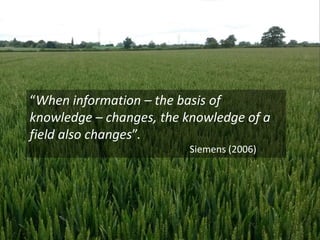
“When information – the basis of
knowledge – changes, the knowledge of a
field also changes”.
Siemens (2006)
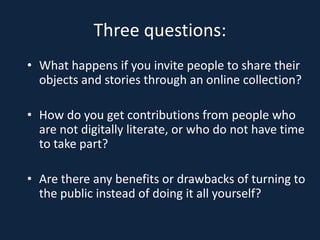
Three questions:
• What happens if you invite people to share their
objects and stories through an online collection?
• How do you get contributions from people who
are not digitally literate, or who do not have time
to take part?
• Are there any benefits or drawbacks of turning to
the public instead of doing it all yourself?
Contact us:
RunCoCo , University of Oxford
http://runcoco.oucs.ox.ac.uk/
Email: runcoco@it.ox.ac.uk
Tel: 01865 283 686
@runcoco
RunCoCo, University of Oxford
Creating digital collections
through crowdsourcing
Dr Ylva Berglund Prytz
Education Enhancement
Academic IT
University of Oxford
ylva.berglund@it.ox.ac.uk| @runcoco CC BY-SA @ RunCoCo, University of Oxford
unless otherwise stated
http://youtu.be/wsUnCAPwv90
Further context.
Video interview (3 min 13) illustrating what we
do and why we are doing it

Creating Digital Collections Through Crowdsourcing

  • 1.
    Creating digital collections throughcrowdsourcing Dr Ylva Berglund Prytz Education Enhancement Academic IT University of Oxford ylva.berglund@it.ox.ac.uk| @runcoco CC BY-SA @ RunCoCo, University of Oxford unless otherwise stated
  • 2.
  • 3.
    Petros Hadjichristodoulou @Όμηρος Χατζηστυλλής JúliusKňazeje @Jana Judinyová – Babirátová Vittorio Cortelletti @Daniela Andreotti Domenico Zappettini @Domenico Zappettini Alphonse Reubrecht @Joseph Keersebilck Oswin Arthur Ellrich @Helge Hemme Henri Vanderdonck @Eddy Verschueren Walter Fielder @Keith Fielder
  • 4.
    Image by MartinDennis Fryatt CC BY-SA http://europeana1914-1918.eu/en/contributions/11231 Community Collection material shared by the general public or a particular community (usually through crowdsourcing)
  • 5.
    Crowdsourcing “asking the generalpublic to help contribute to shared goals” (Ridge 2014) “a convenient label for a diverse range of activities and projects involving the public doing something to, or with, content.” (Dunn and Hedges 2014)
  • 6.
    CC BY-SA-NC MediaSpecialist http://www.flickr.com/photos/mediaspecialist/3741404691/
  • 7.
  • 10.
    © Stuart Lee ©Ashmolean Museum ©BruceGilchrist © Ian Harvey © Dr Sara M. Pons-Sanz These items are from Project Woruldhord, University of Oxford (http://projects.oucs.ox.ac.uk/woruldhord);
  • 12.
    All items from ©The Warden and Fellows of Merton College © Barry Press © Chris Madell Merton@750: An Anniversary Collection at http://share.merton.ox.ac.uk
  • 13.
    These items arefrom The Great War Archive, University of Oxford (www.oucs.ox.ac.uk/ww1lit/gwa) made available under the JISC Model Licence (use for educational, non-commercial purposes) @Tony Carr @Robert Johnson @ Janet Mercer Collection
  • 14.
  • 15.
  • 16.
    © Age Exchange “Sincewe cannot experience everything, other people’s experiences, and hence other people, become the surrogate for knowledge.” Stephenson (1998)
  • 17.
    © Age Exchange “Wheninformation – the basis of knowledge – changes, the knowledge of a field also changes”. Siemens (2006)
  • 18.
    Three questions: • Whathappens if you invite people to share their objects and stories through an online collection? • How do you get contributions from people who are not digitally literate, or who do not have time to take part? • Are there any benefits or drawbacks of turning to the public instead of doing it all yourself?
  • 19.
    Contact us: RunCoCo ,University of Oxford http://runcoco.oucs.ox.ac.uk/ Email: runcoco@it.ox.ac.uk Tel: 01865 283 686 @runcoco RunCoCo, University of Oxford
  • 20.
    Creating digital collections throughcrowdsourcing Dr Ylva Berglund Prytz Education Enhancement Academic IT University of Oxford ylva.berglund@it.ox.ac.uk| @runcoco CC BY-SA @ RunCoCo, University of Oxford unless otherwise stated
  • 21.
    http://youtu.be/wsUnCAPwv90 Further context. Video interview(3 min 13) illustrating what we do and why we are doing it