UWE Bristol
Knowledge, skills and reskilling –
where does the MSc fit in?
Judith Stewart
Associate Lecturer, UWE.
Aliss One Day Summer Conference 2014: Developing Staff:
Innovation and Creativity
The next 45 minutes
Why we need to consider this?
What questions does it raise?
What skills will you need in the future?
How do you make your MSc fit what
you predict you will need or want?
The knowledge and skills debate
Education - or training?
Subject knowledge
Professional skills
Personal or key or transferable skills
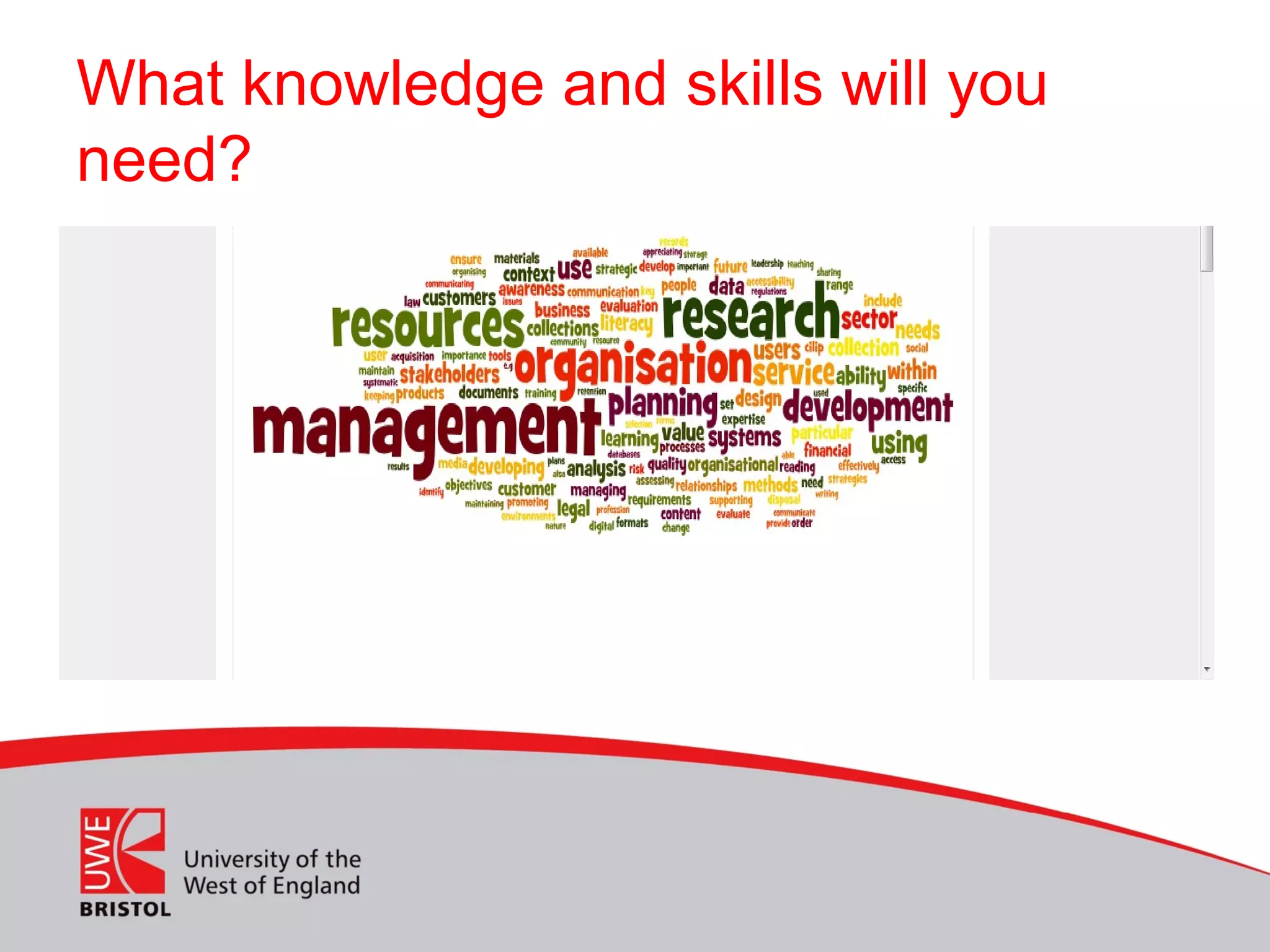
What knowledge and skills will you
need?
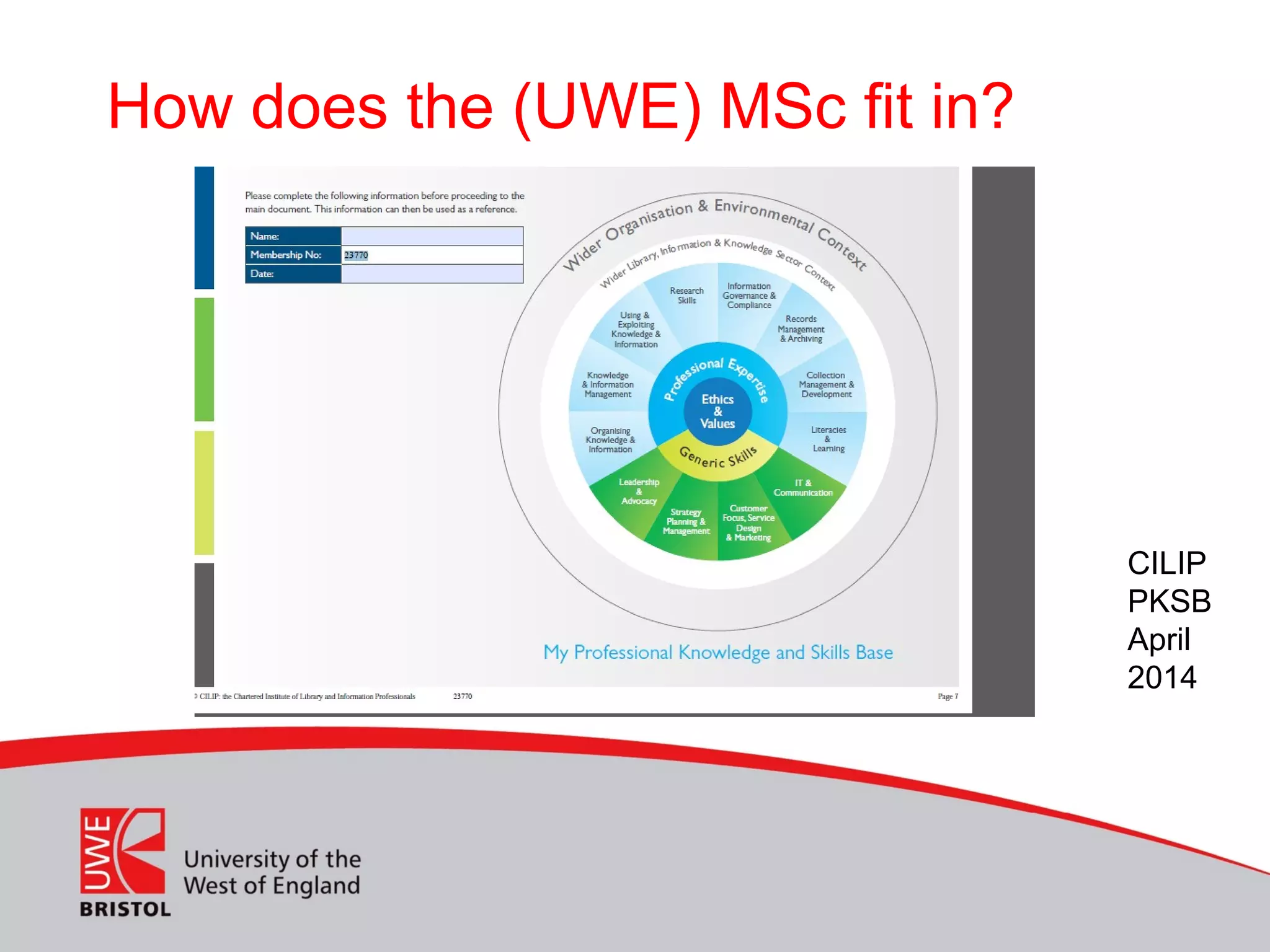
How does the (UWE) MSc fit in?
CILIP
PKSB
April
2014
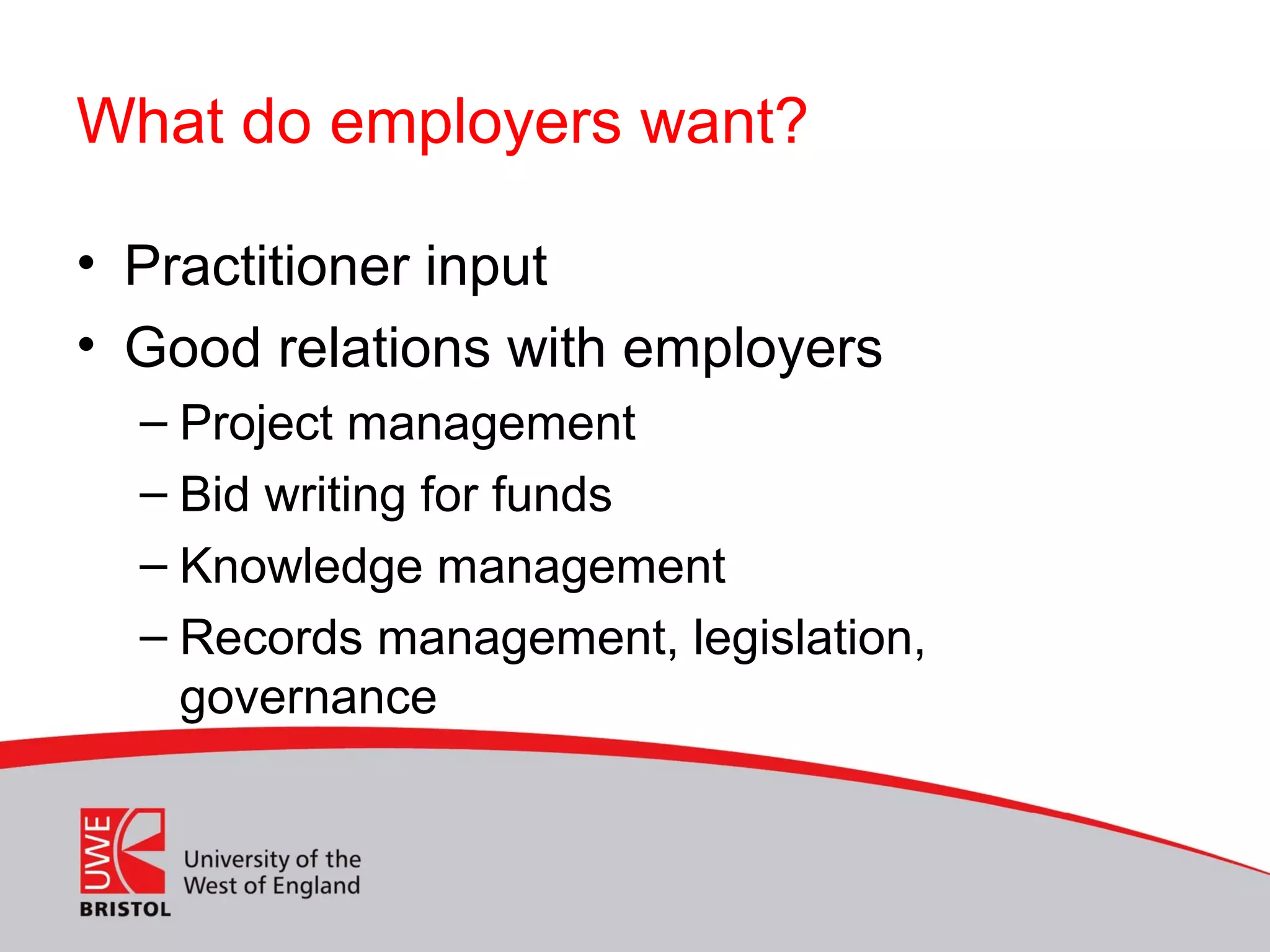
What do employers want?
• Practitioner input
• Good relations with employers
– Project management
– Bid writing for funds
– Knowledge management
– Records management, legislation,
governance
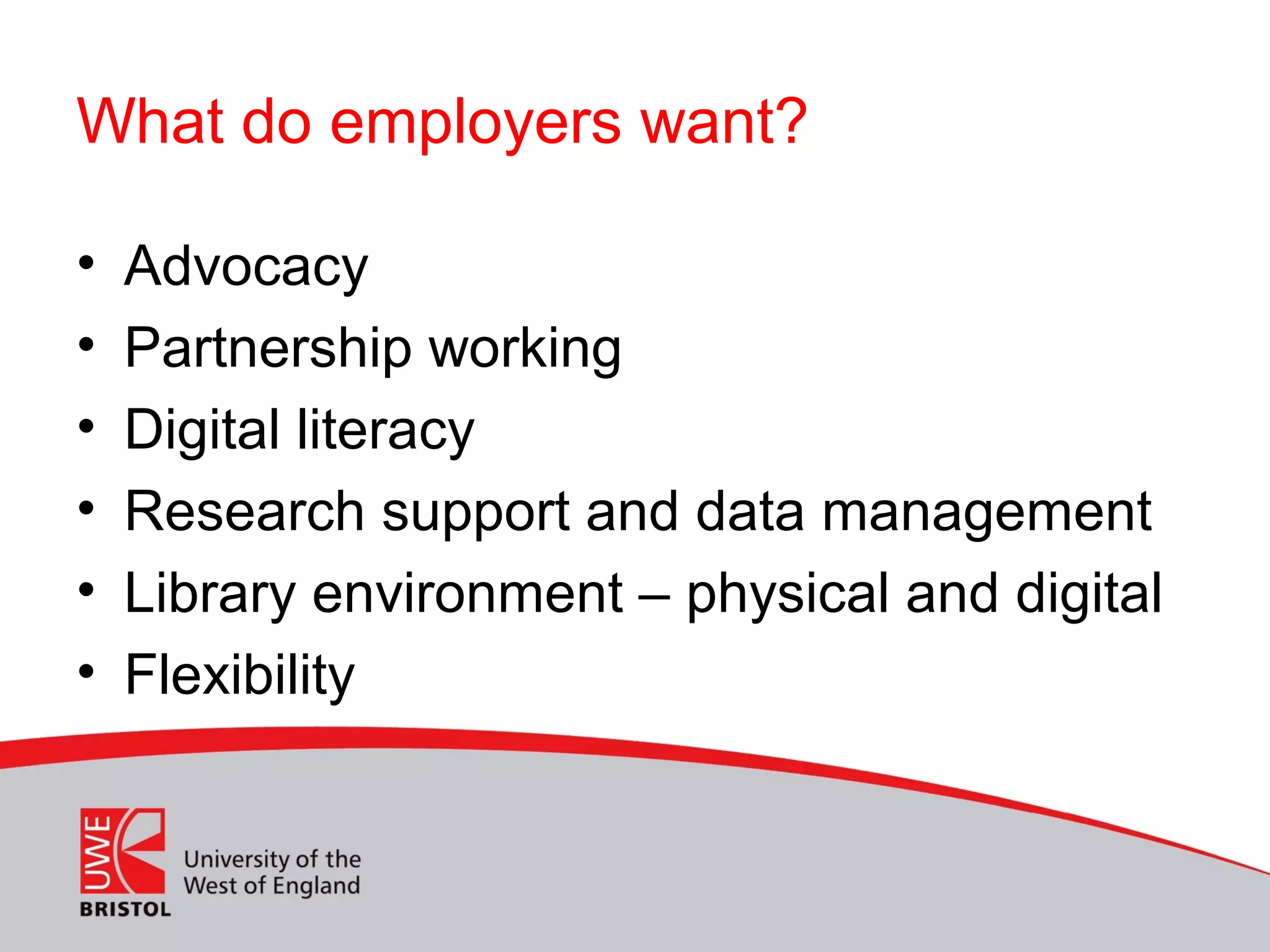
What do employers want?
• Advocacy
• Partnership working
• Digital literacy
• Research support and data management
• Library environment – physical and digital
• Flexibility
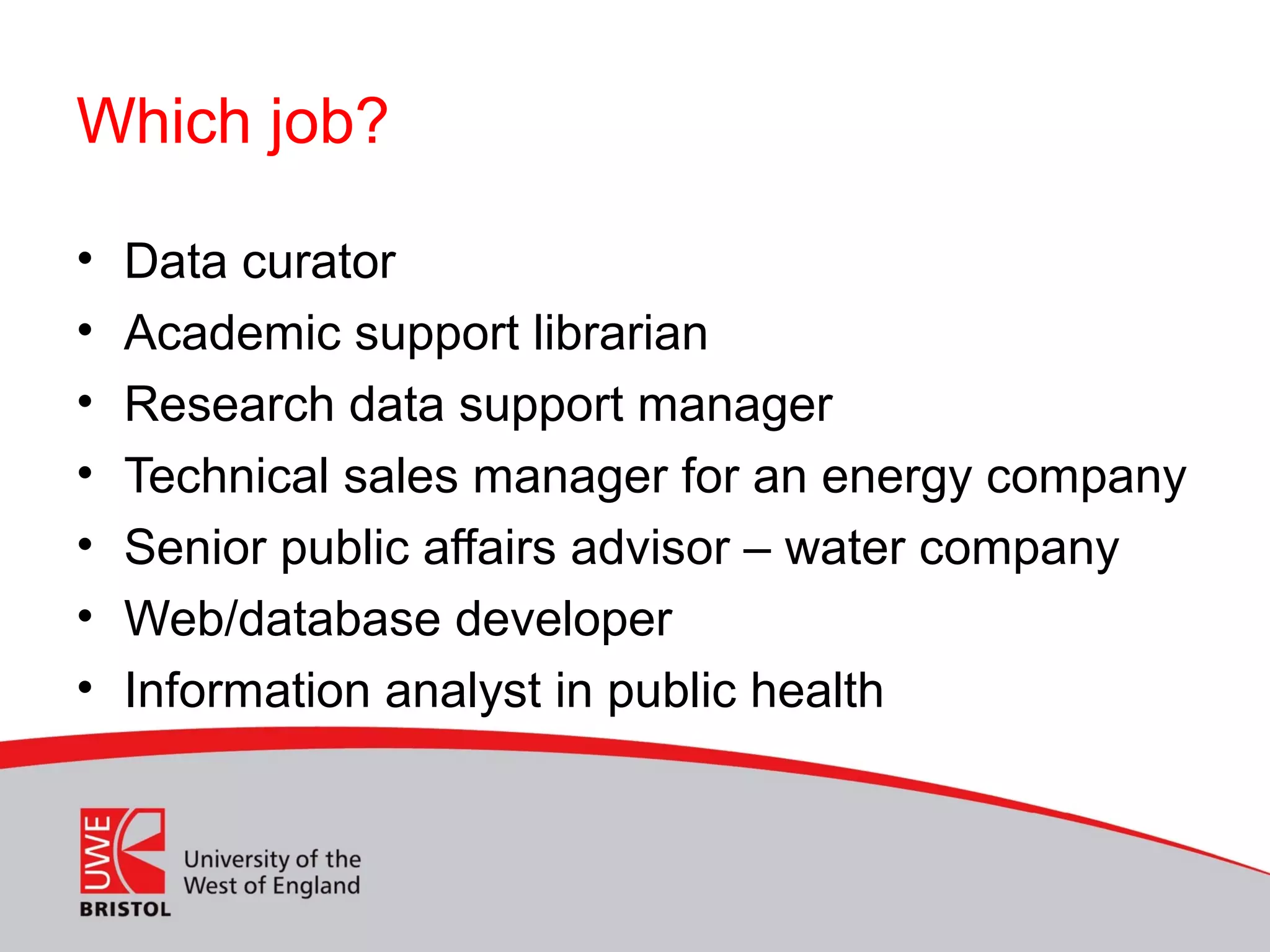
Which job?
• Data curator
• Academic support librarian
• Research data support manager
• Technical sales manager for an energy company
• Senior public affairs advisor – water company
• Web/database developer
• Information analyst in public health
We are all in this together
The process of developing innovative, visionary and
successful library and information professionals is not
the sole responsibility of the LIS educator but must be
viewed as a career long process that involves the
individual, universities, training providers, employers
and professional associations.
Hallam (2007) Education for library and information service. IN S. Ferguson, ed. Libraries
in the Twenty-First Century: Charting New Directions in Information Services. Wagga
Wagga. Charles Sturt University.
We are all in this together
The process of developing innovative, visionary and
successful library and information professionals is not
the sole responsibility of the LIS educator but must be
viewed as a career long process that involves the
individual, universities, training providers, employers
and professional associations.
Hallam (2007) Education for library and information service. IN S. Ferguson, ed. Libraries
in the Twenty-First Century: Charting New Directions in Information Services. Wagga
Wagga. Charles Sturt University.

Knowledge, skills and reskilling – where does the MSc fit in?

  • 1.
    UWE Bristol Knowledge, skillsand reskilling – where does the MSc fit in? Judith Stewart Associate Lecturer, UWE. Aliss One Day Summer Conference 2014: Developing Staff: Innovation and Creativity
  • 2.
    The next 45minutes Why we need to consider this? What questions does it raise? What skills will you need in the future? How do you make your MSc fit what you predict you will need or want?
  • 3.
    The knowledge andskills debate Education - or training? Subject knowledge Professional skills Personal or key or transferable skills
  • 4.
    What knowledge andskills will you need?
  • 5.
    How does the(UWE) MSc fit in? CILIP PKSB April 2014
  • 6.
    What do employerswant? • Practitioner input • Good relations with employers – Project management – Bid writing for funds – Knowledge management – Records management, legislation, governance
  • 7.
    What do employerswant? • Advocacy • Partnership working • Digital literacy • Research support and data management • Library environment – physical and digital • Flexibility
  • 8.
    Which job? • Datacurator • Academic support librarian • Research data support manager • Technical sales manager for an energy company • Senior public affairs advisor – water company • Web/database developer • Information analyst in public health
  • 9.
    We are allin this together The process of developing innovative, visionary and successful library and information professionals is not the sole responsibility of the LIS educator but must be viewed as a career long process that involves the individual, universities, training providers, employers and professional associations. Hallam (2007) Education for library and information service. IN S. Ferguson, ed. Libraries in the Twenty-First Century: Charting New Directions in Information Services. Wagga Wagga. Charles Sturt University.
  • 10.
    We are allin this together The process of developing innovative, visionary and successful library and information professionals is not the sole responsibility of the LIS educator but must be viewed as a career long process that involves the individual, universities, training providers, employers and professional associations. Hallam (2007) Education for library and information service. IN S. Ferguson, ed. Libraries in the Twenty-First Century: Charting New Directions in Information Services. Wagga Wagga. Charles Sturt University.