WHAT IS CROWDSOURCING?
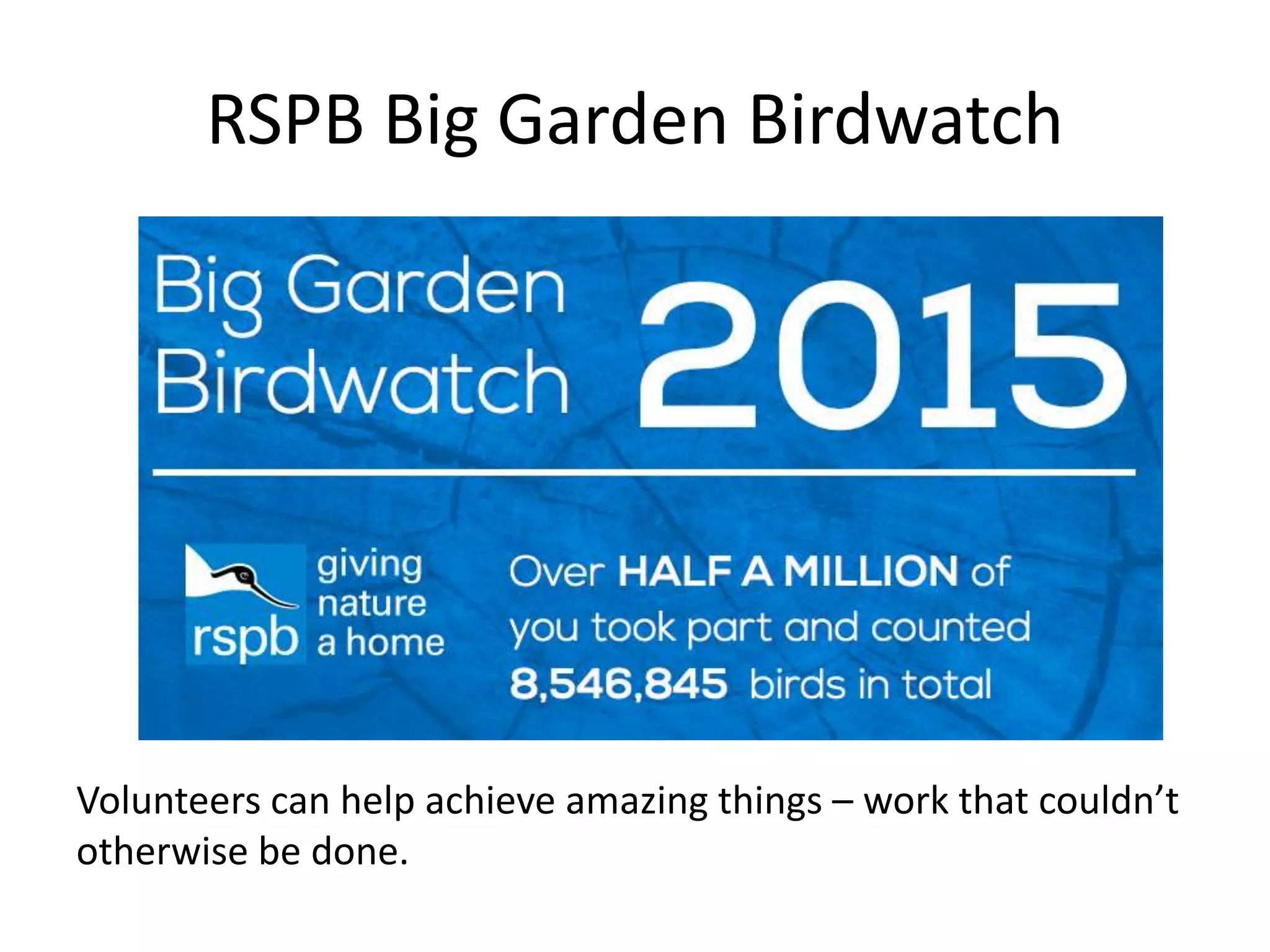
RSPB Big Garden Birdwatch
Volunteers can help achieve amazing things – work that couldn’t
otherwise be done.
Crowdsourcing 1.0
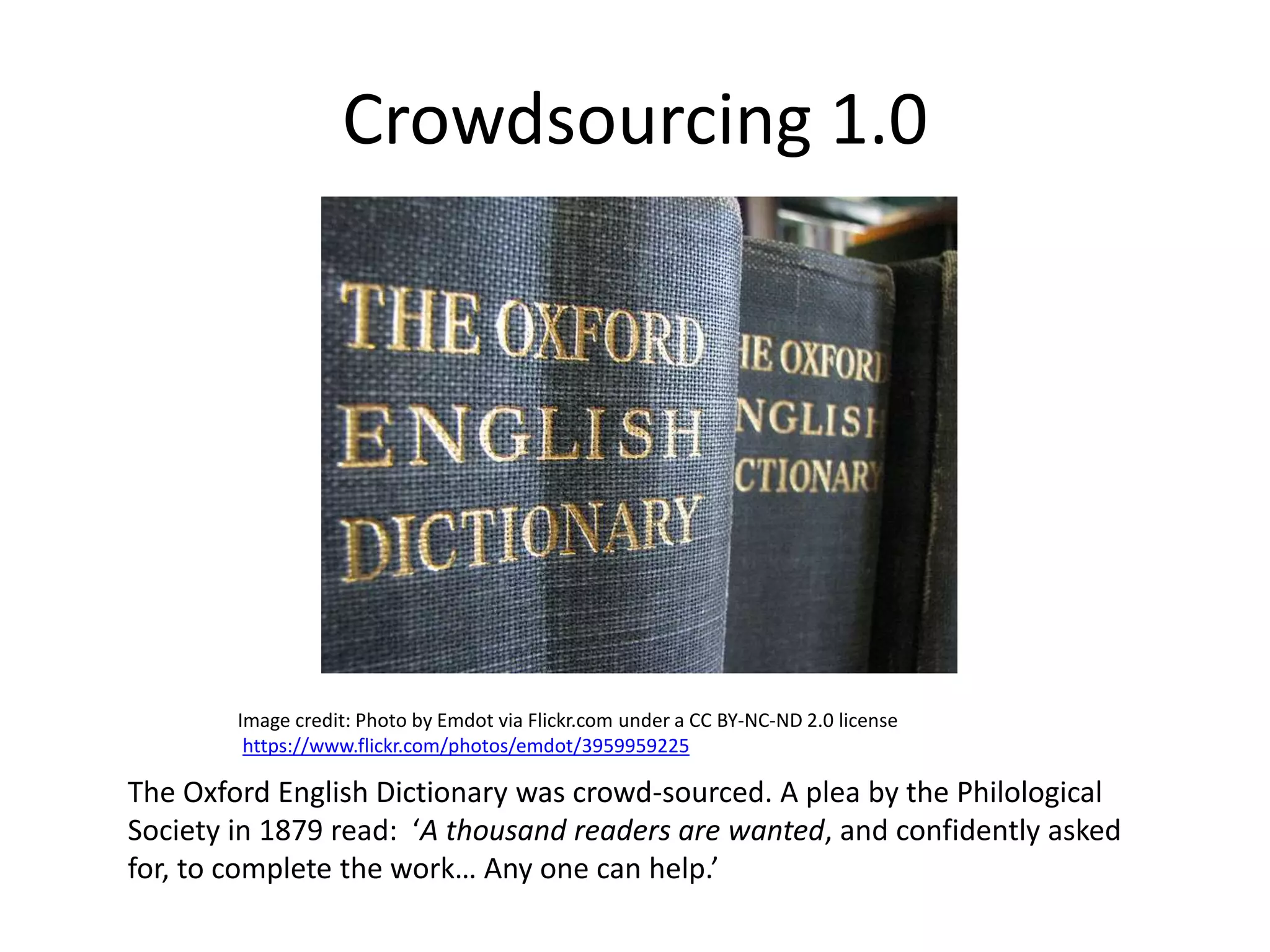
The Oxford English Dictionary was crowd-sourced. A plea by the Philological
Society in 1879 read: ‘A thousand readers are wanted, and confidently asked
for, to complete the work… Any one can help.’
Image credit: Photo by Emdot via Flickr.com under a CC BY-NC-ND 2.0 license
https://www.flickr.com/photos/emdot/3959959225
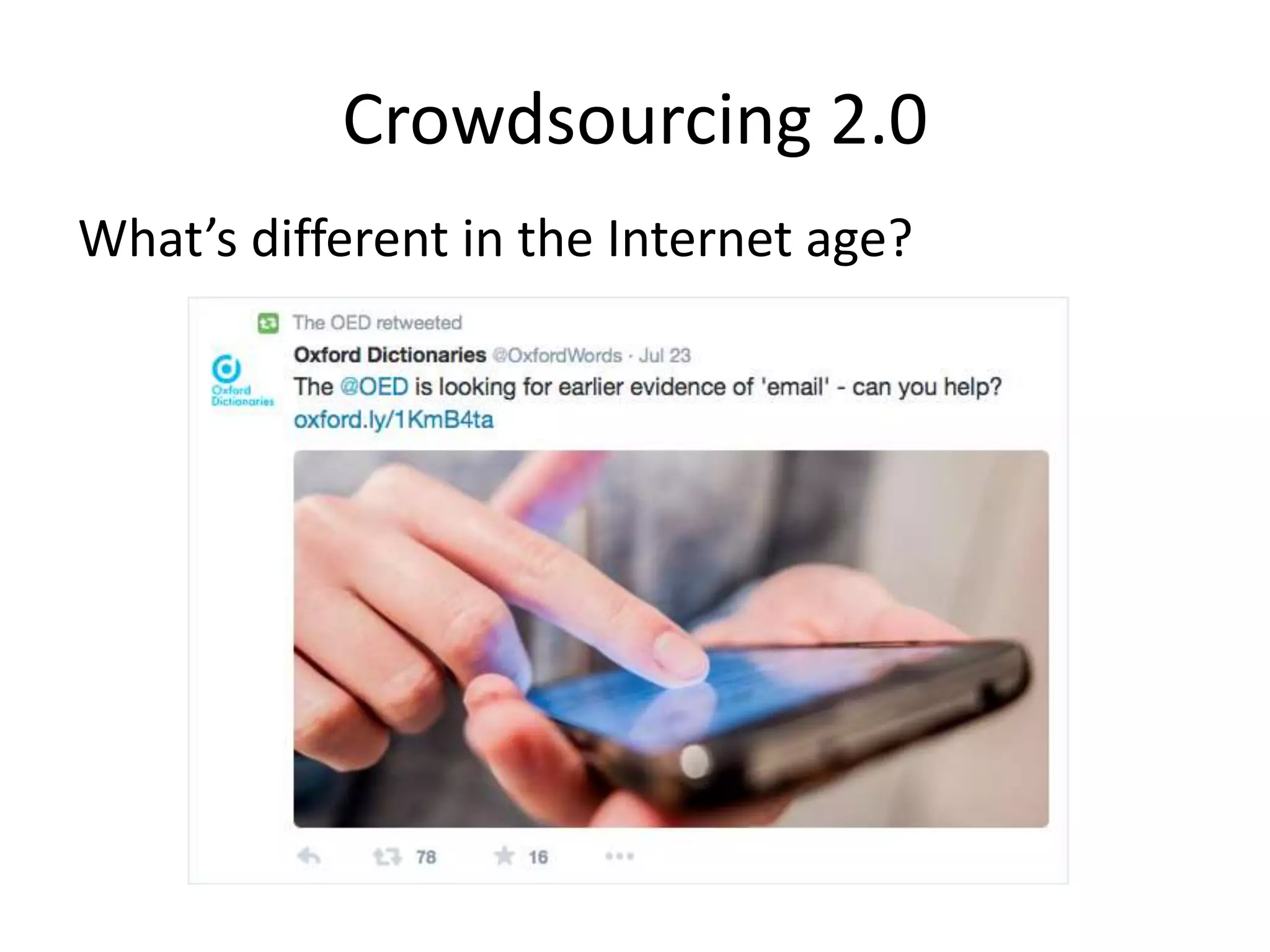
Crowdsourcing 2.0
What’s different in the Internet age?
Crowdsourcing 2.0: Wikipedia
Launched in 2001
470 million unique visitors monthly
4,460,985 articles in English
Currently more than 76,000 active
contributors working on more than
31,000,000 articles in 285 languages
HOW DOES IT WORK?
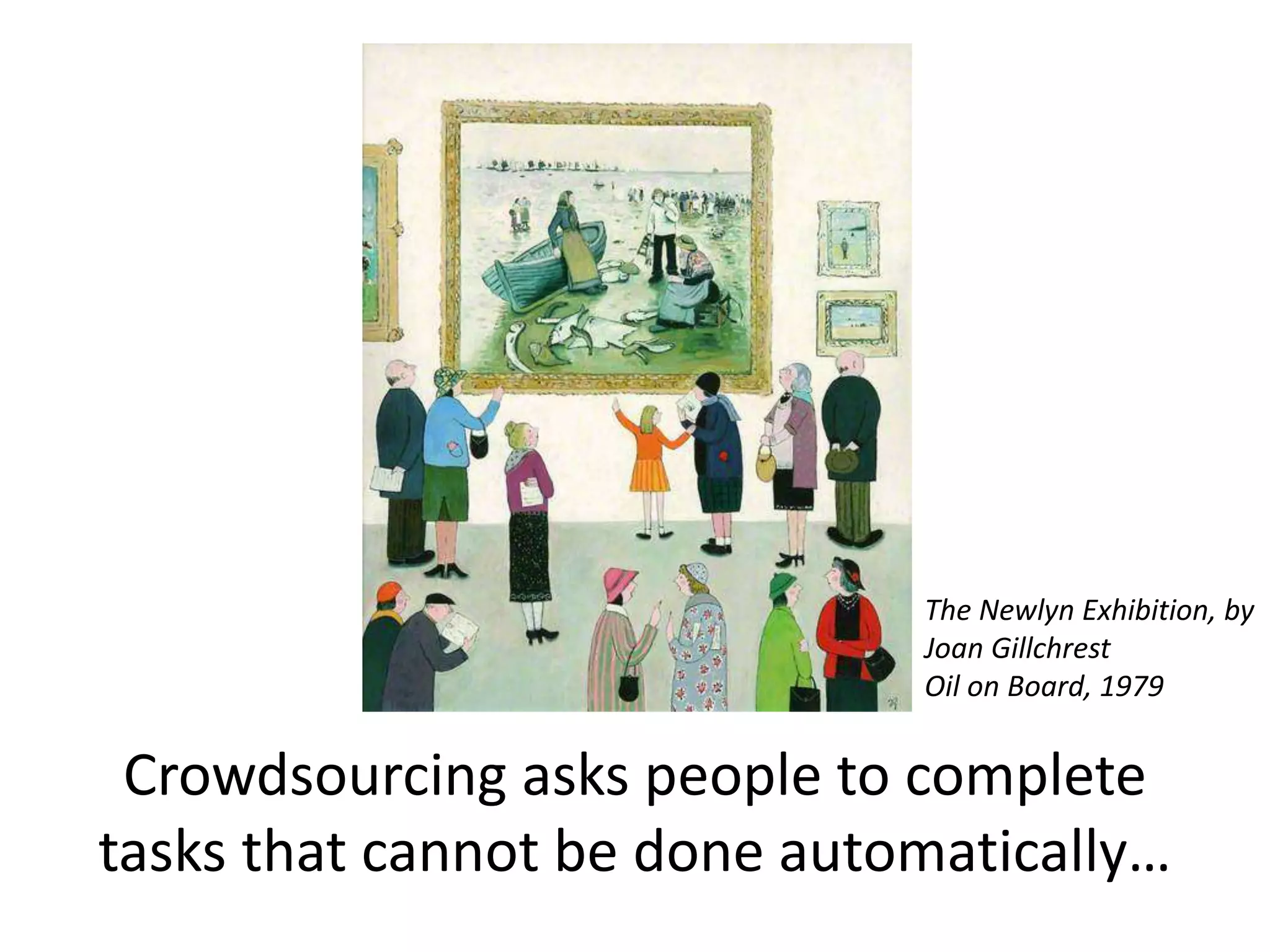
Crowdsourcing asks people to complete
tasks that cannot be done automatically…
The Newlyn Exhibition, by
Joan Gillchrest
Oil on Board, 1979
What can be done?
• Transcribing hand-written text into digital form
• Tagging images to aid discovery and preservation
• Tagging audio files to aid discovery and re-use
• Commenting on content or participating in
discussions in online communities
• Recording experiences or memories as oral
history
• Scanning or photographing important historical
objects from a personal or family collection
Why crowdsource?
• Add content
• Add value
• Analyse large data sets
• Open up discussion
• Educate
• Create or widen networks
• Encourage participation
• Transform access to resources
• Enable new research questions
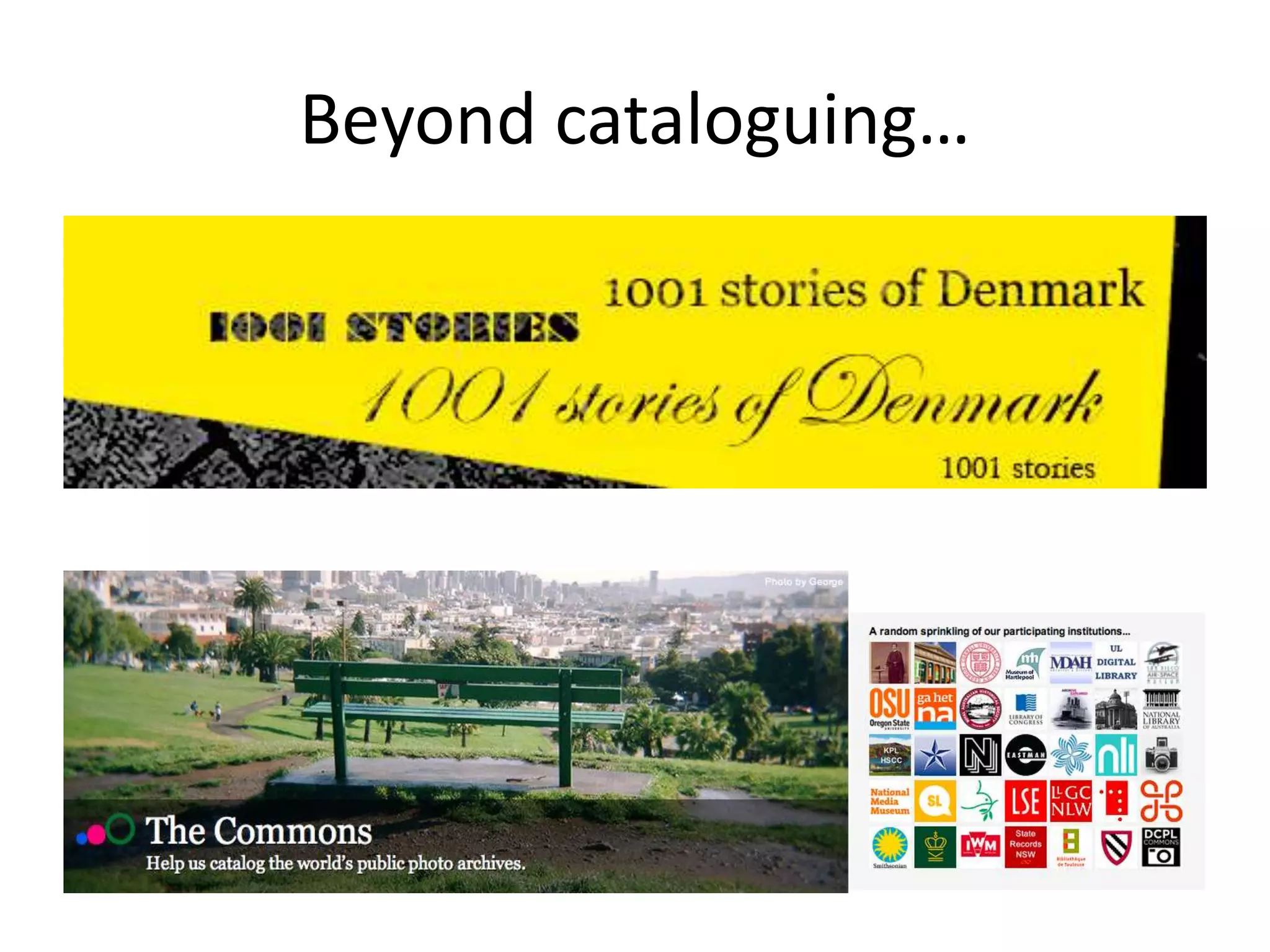
Beyond cataloguing…
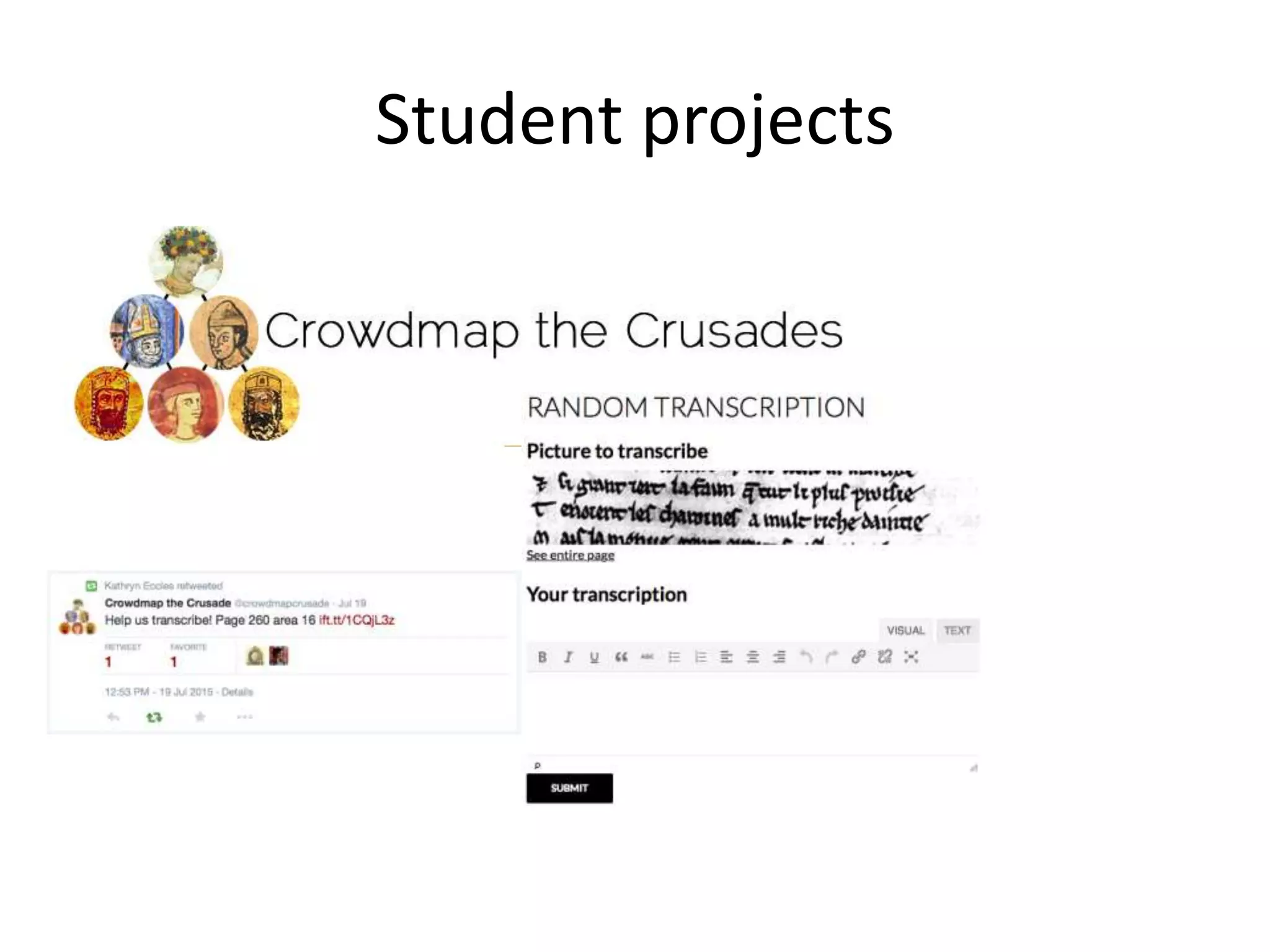
Student projects
WHAT CAN CROWDSOURCING DO
FOR YOU?
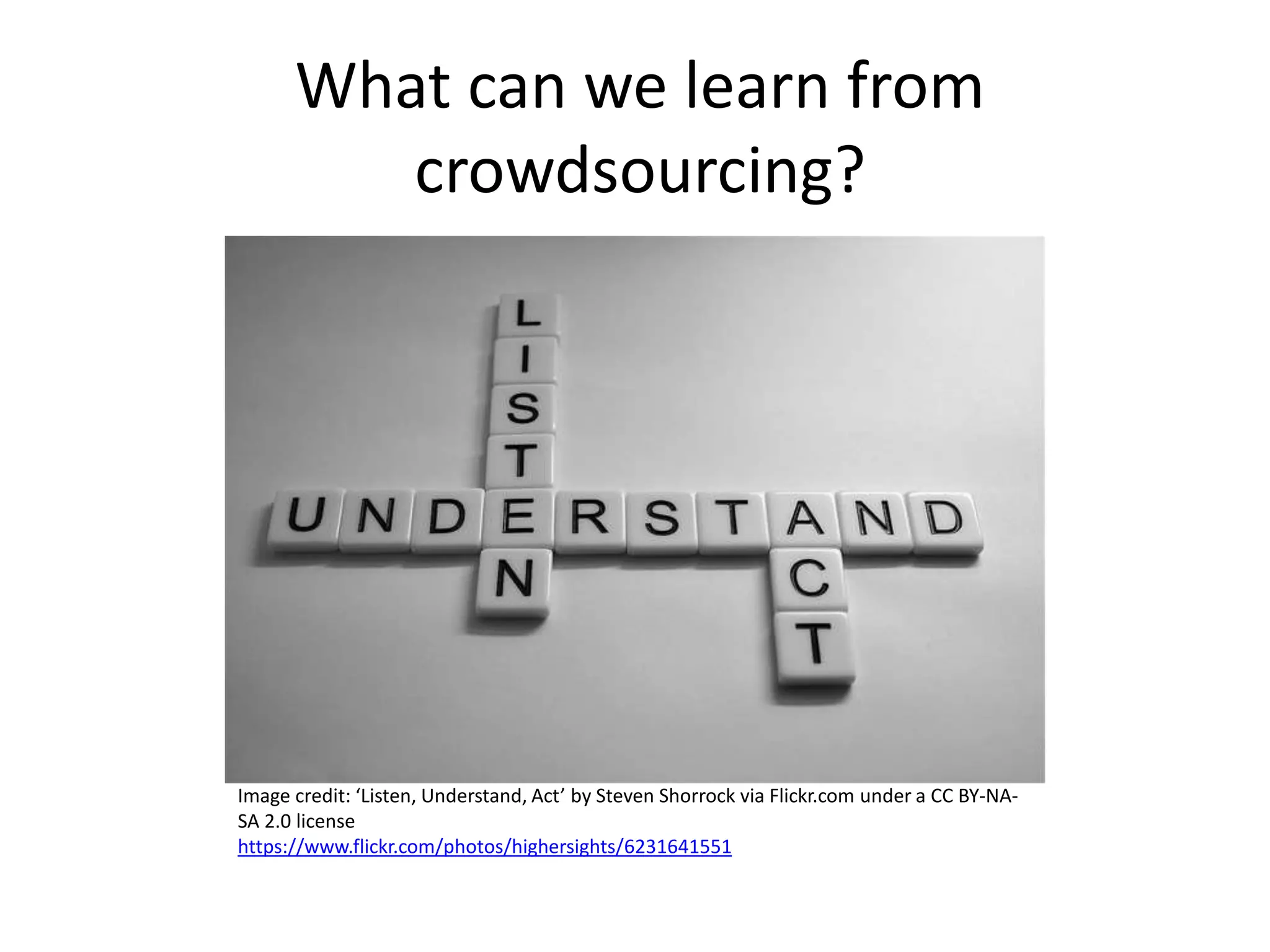
What can we learn from
crowdsourcing?
Image credit: ‘Listen, Understand, Act’ by Steven Shorrock via Flickr.com under a CC BY-NA-
SA 2.0 license
https://www.flickr.com/photos/highersights/6231641551
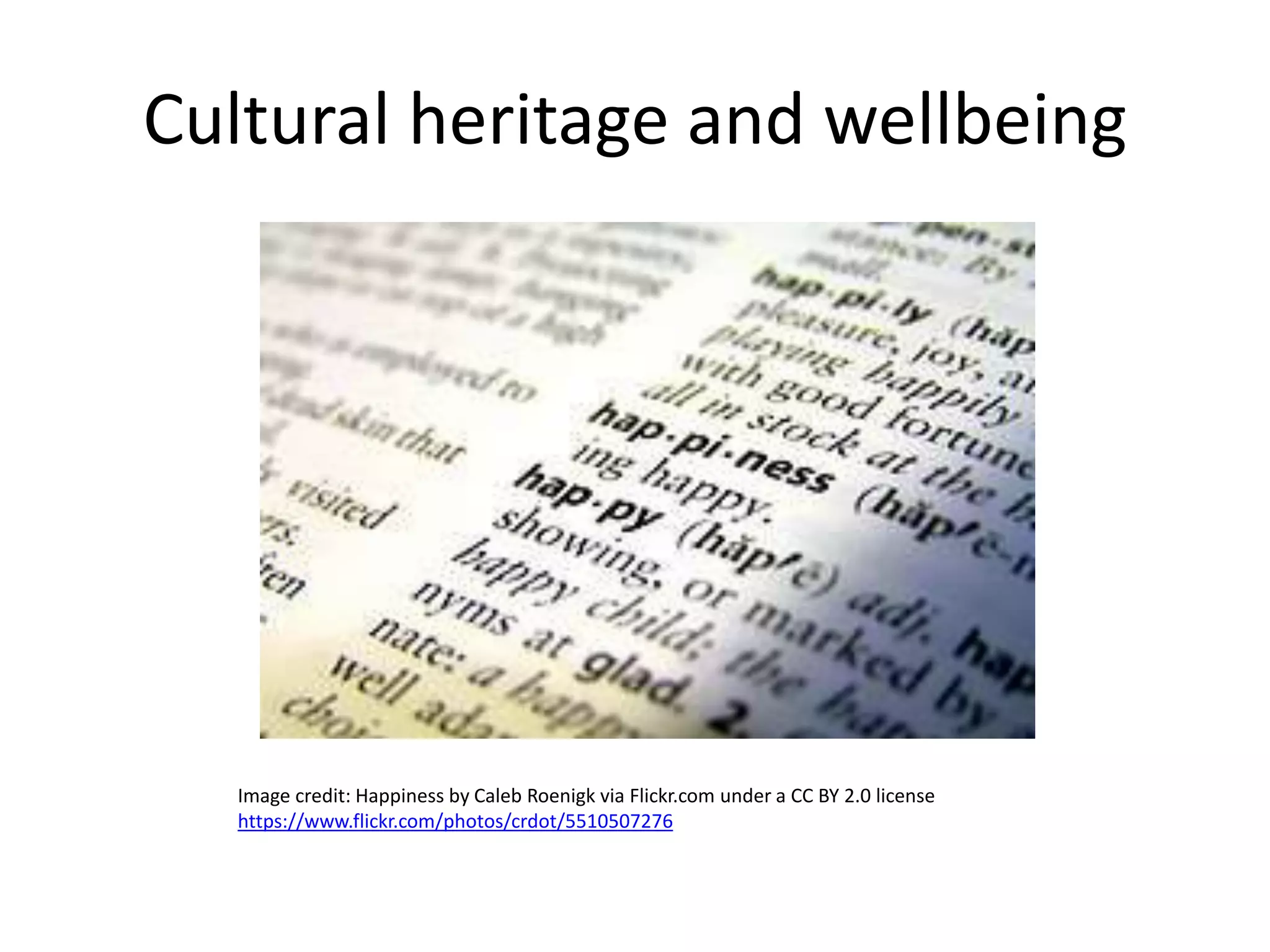
Cultural heritage and wellbeing
Image credit: Happiness by Caleb Roenigk via Flickr.com under a CC BY 2.0 license
https://www.flickr.com/photos/crdot/5510507276
Contact me:
Dr Kathryn Eccles
Digital Humanities Champion, University of Oxford
http://digital.humanities.ox.ac.uk
Research Fellow, Oxford Internet Institute
http://www.oii.ox.ac.uk
Email me:
kathryn.eccles@oii.ox.ac.uk
Follow me on Twitter:
@KathrynEccles

What is crowdsourcing?

  • 1.
  • 2.
    RSPB Big GardenBirdwatch Volunteers can help achieve amazing things – work that couldn’t otherwise be done.
  • 3.
    Crowdsourcing 1.0 The OxfordEnglish Dictionary was crowd-sourced. A plea by the Philological Society in 1879 read: ‘A thousand readers are wanted, and confidently asked for, to complete the work… Any one can help.’ Image credit: Photo by Emdot via Flickr.com under a CC BY-NC-ND 2.0 license https://www.flickr.com/photos/emdot/3959959225
  • 4.
  • 5.
    Crowdsourcing 2.0: Wikipedia Launchedin 2001 470 million unique visitors monthly 4,460,985 articles in English Currently more than 76,000 active contributors working on more than 31,000,000 articles in 285 languages
  • 6.
  • 7.
    Crowdsourcing asks peopleto complete tasks that cannot be done automatically… The Newlyn Exhibition, by Joan Gillchrest Oil on Board, 1979
  • 8.
    What can bedone? • Transcribing hand-written text into digital form • Tagging images to aid discovery and preservation • Tagging audio files to aid discovery and re-use • Commenting on content or participating in discussions in online communities • Recording experiences or memories as oral history • Scanning or photographing important historical objects from a personal or family collection
  • 9.
    Why crowdsource? • Addcontent • Add value • Analyse large data sets • Open up discussion • Educate • Create or widen networks • Encourage participation • Transform access to resources • Enable new research questions
  • 10.
  • 11.
  • 13.
  • 14.
    What can welearn from crowdsourcing? Image credit: ‘Listen, Understand, Act’ by Steven Shorrock via Flickr.com under a CC BY-NA- SA 2.0 license https://www.flickr.com/photos/highersights/6231641551
  • 15.
    Cultural heritage andwellbeing Image credit: Happiness by Caleb Roenigk via Flickr.com under a CC BY 2.0 license https://www.flickr.com/photos/crdot/5510507276
  • 16.
    Contact me: Dr KathrynEccles Digital Humanities Champion, University of Oxford http://digital.humanities.ox.ac.uk Research Fellow, Oxford Internet Institute http://www.oii.ox.ac.uk Email me: kathryn.eccles@oii.ox.ac.uk Follow me on Twitter: @KathrynEccles