Download to read offline





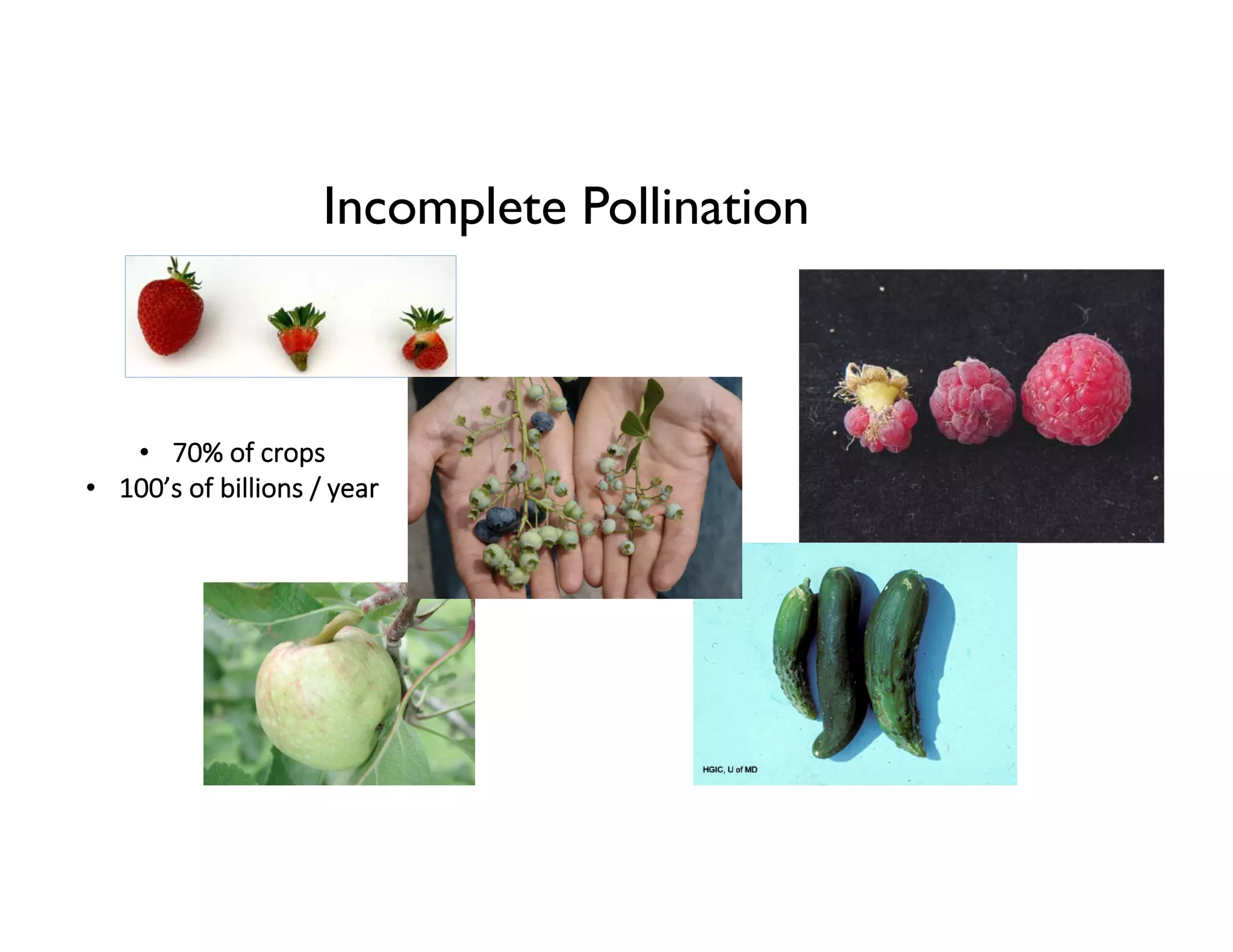

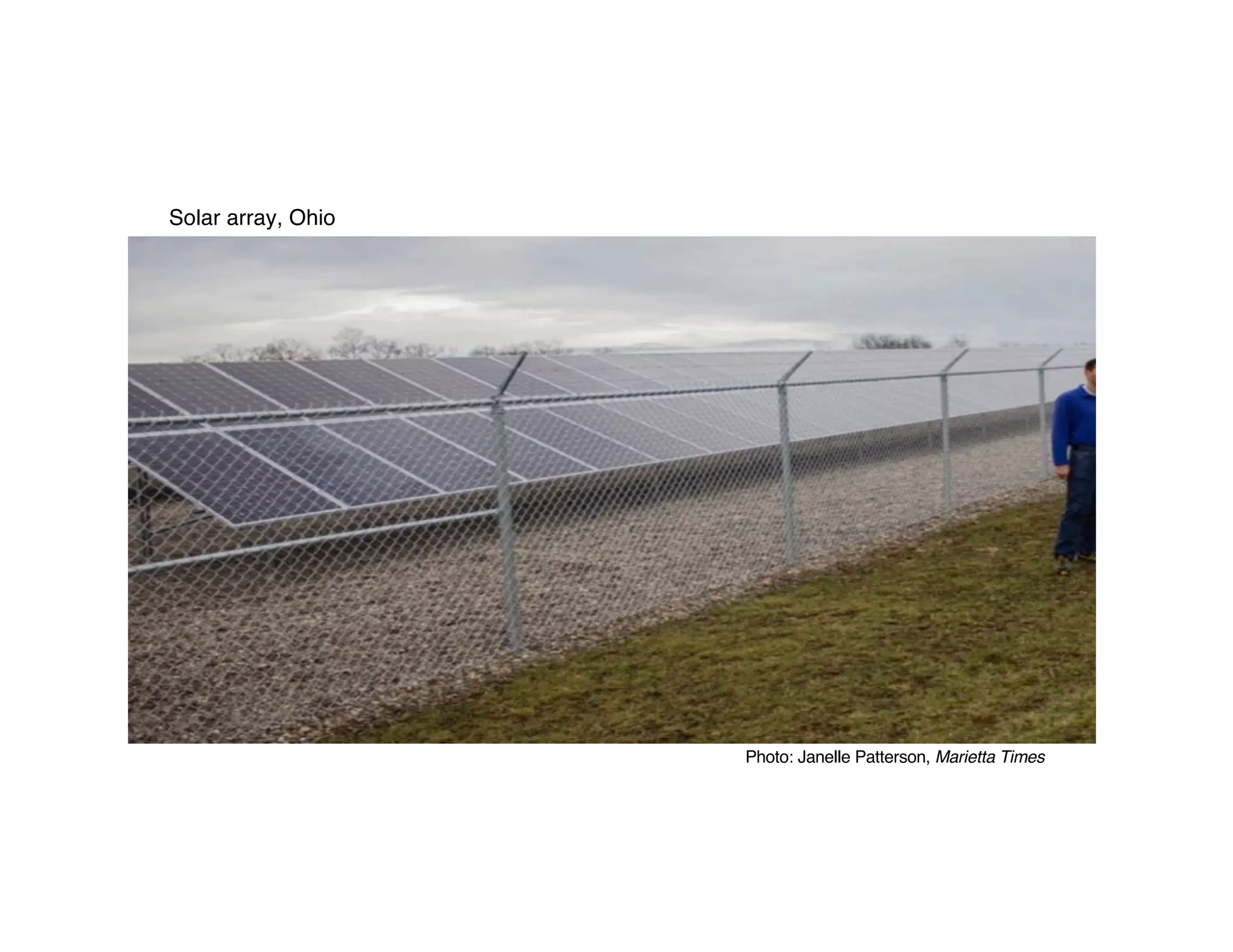




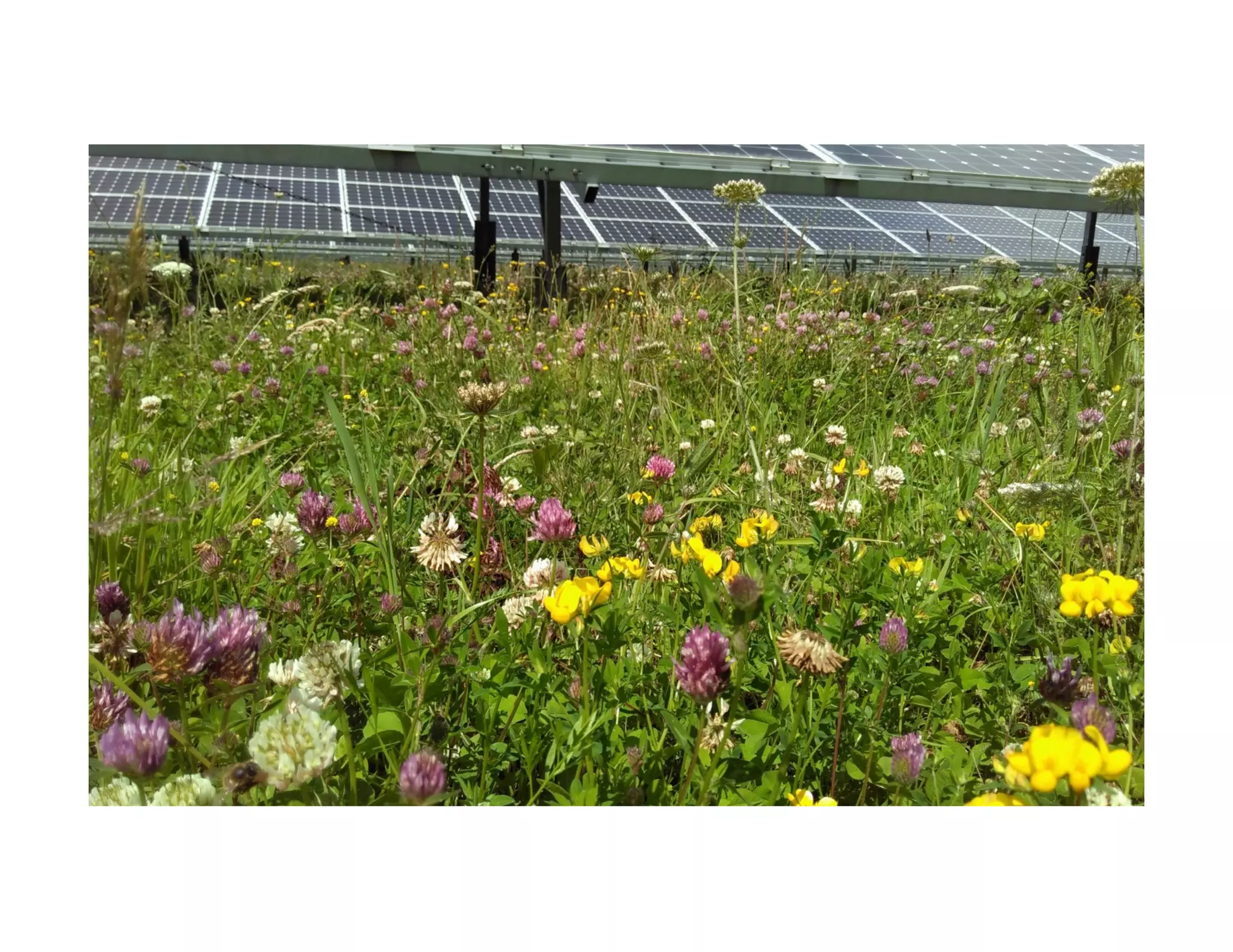

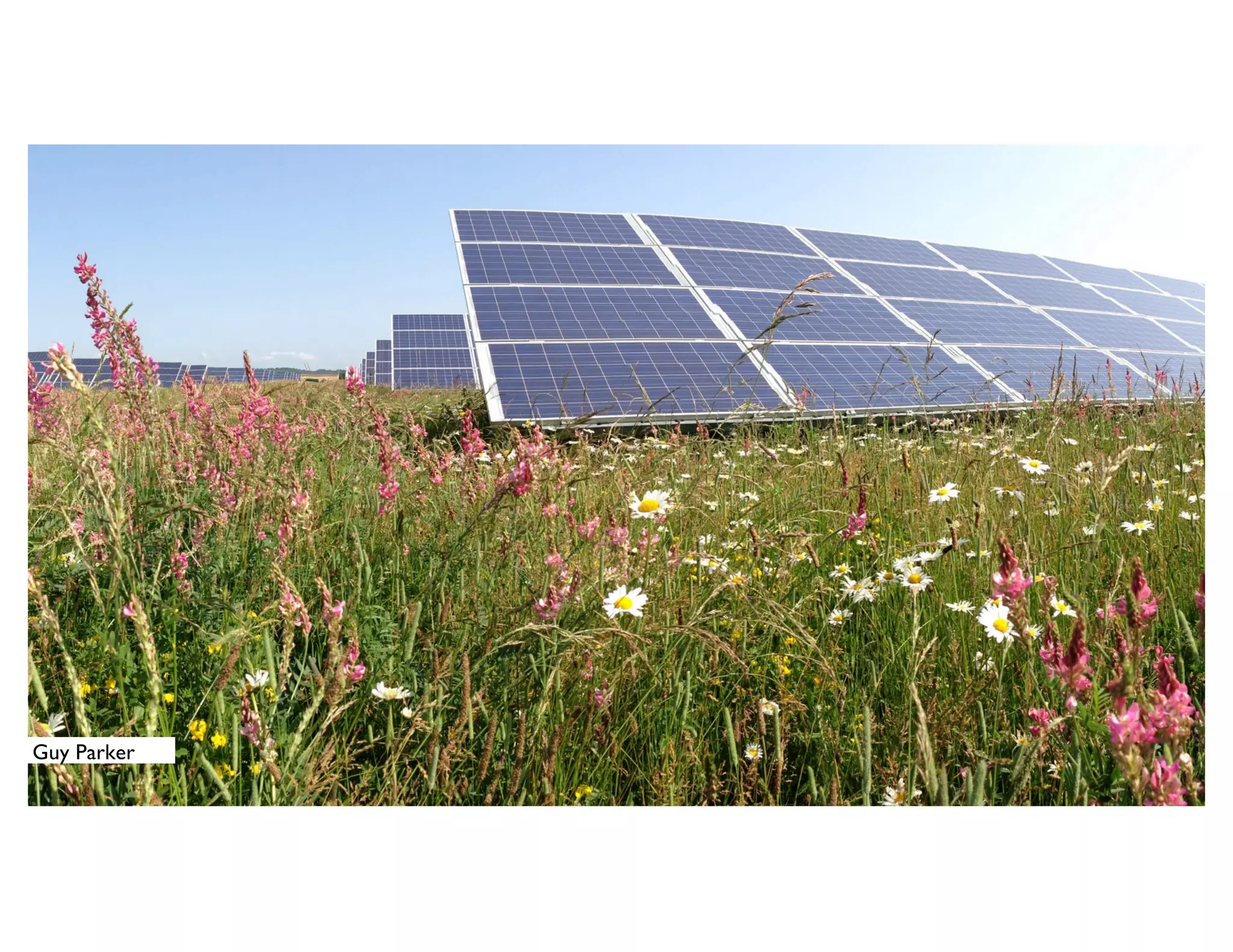

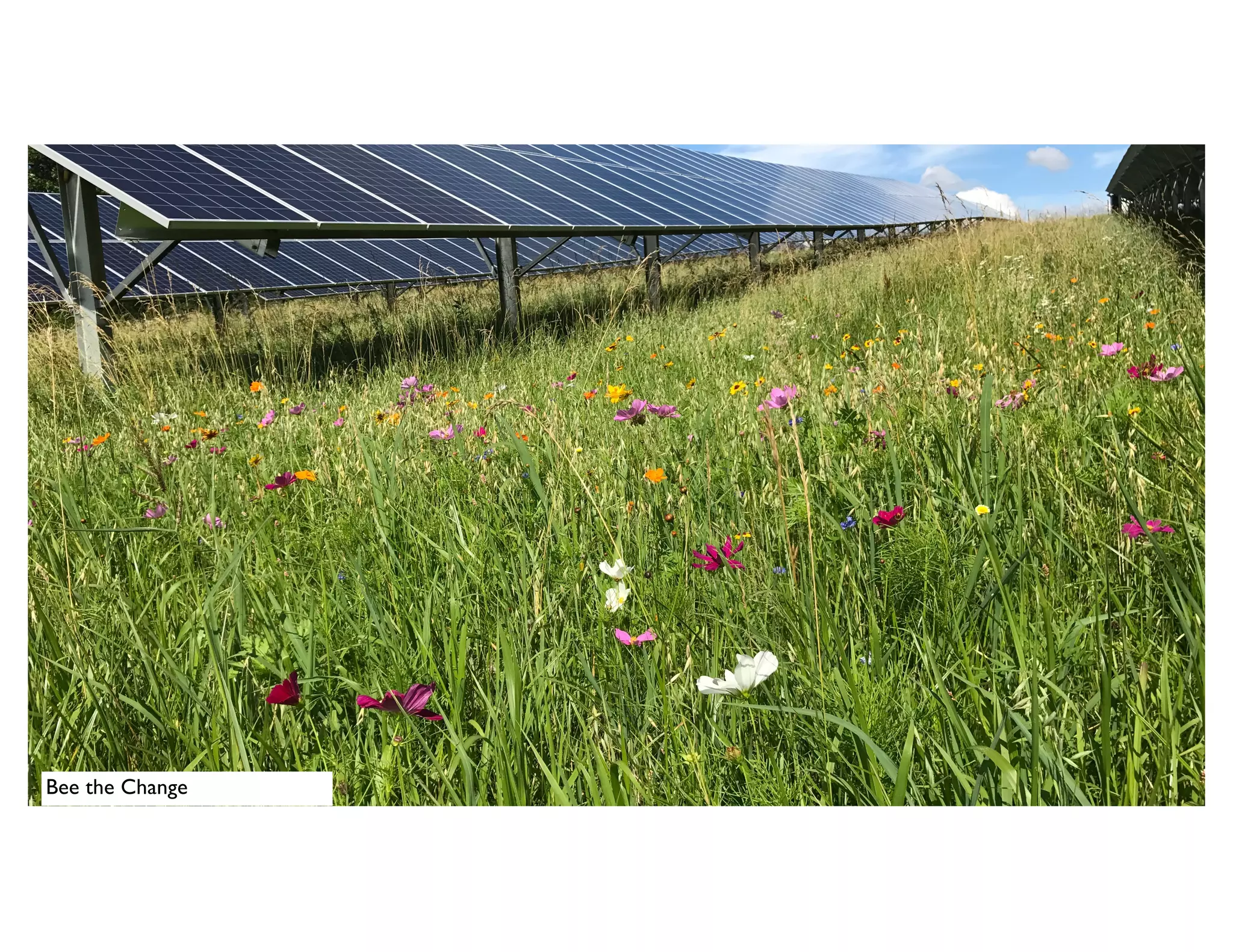


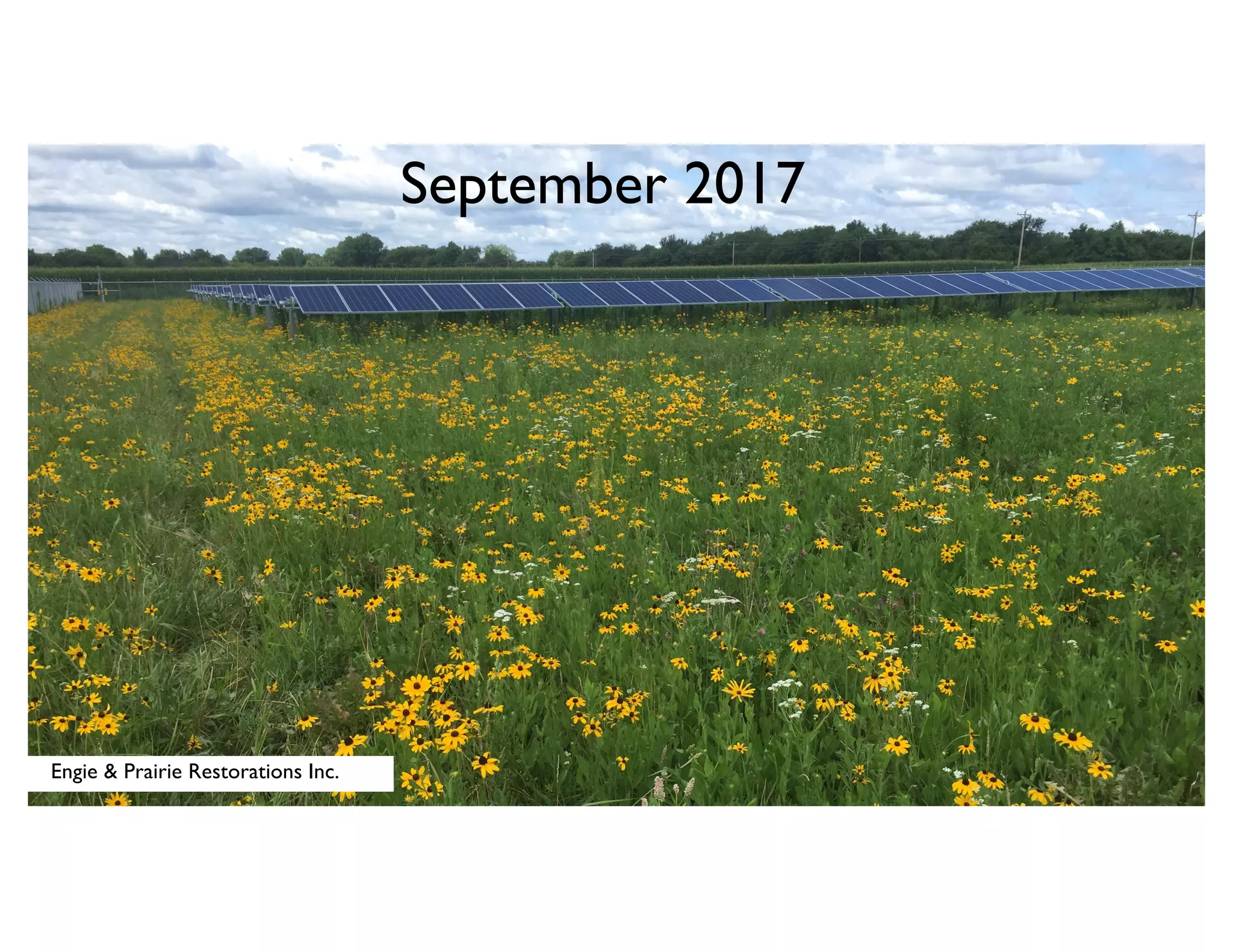
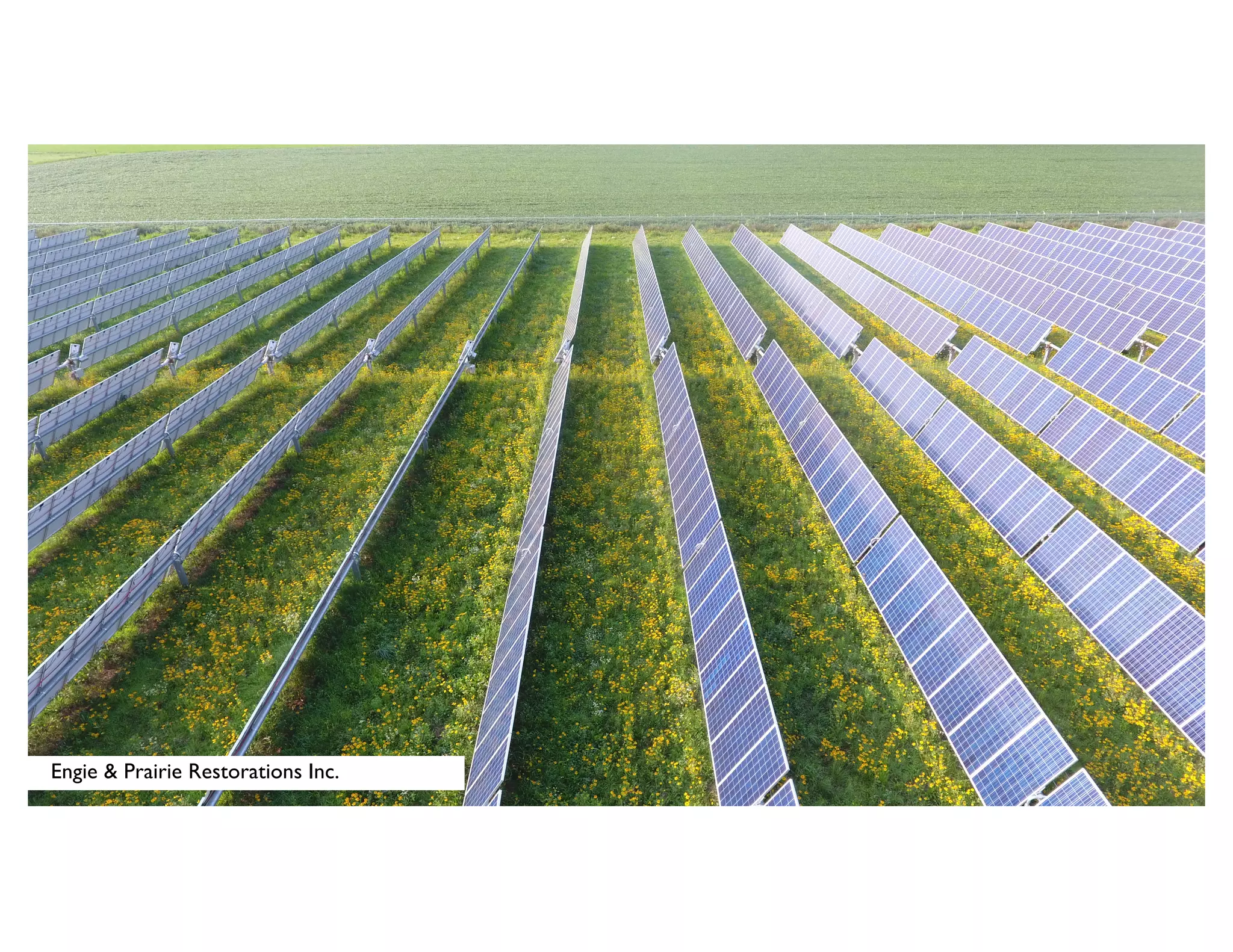

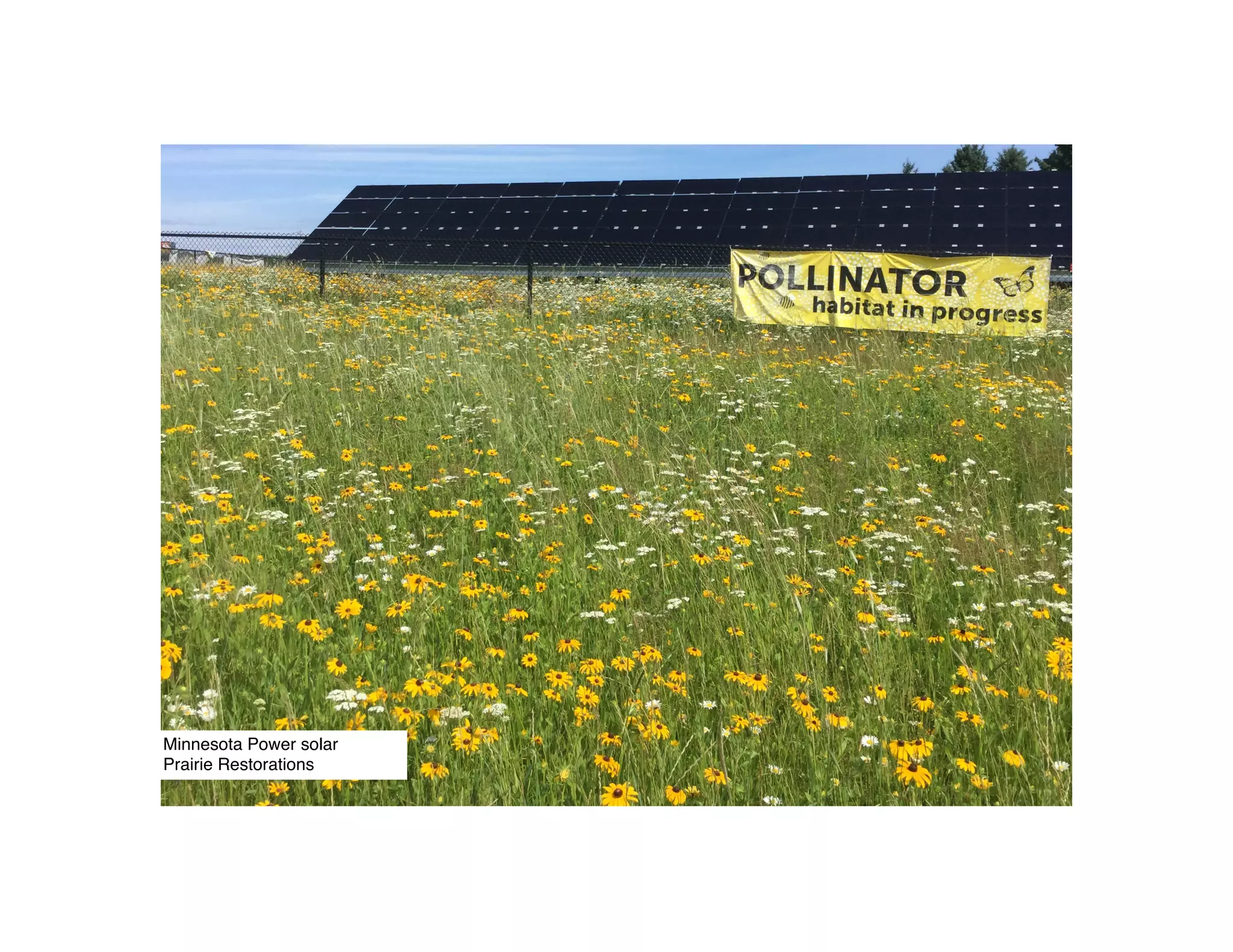


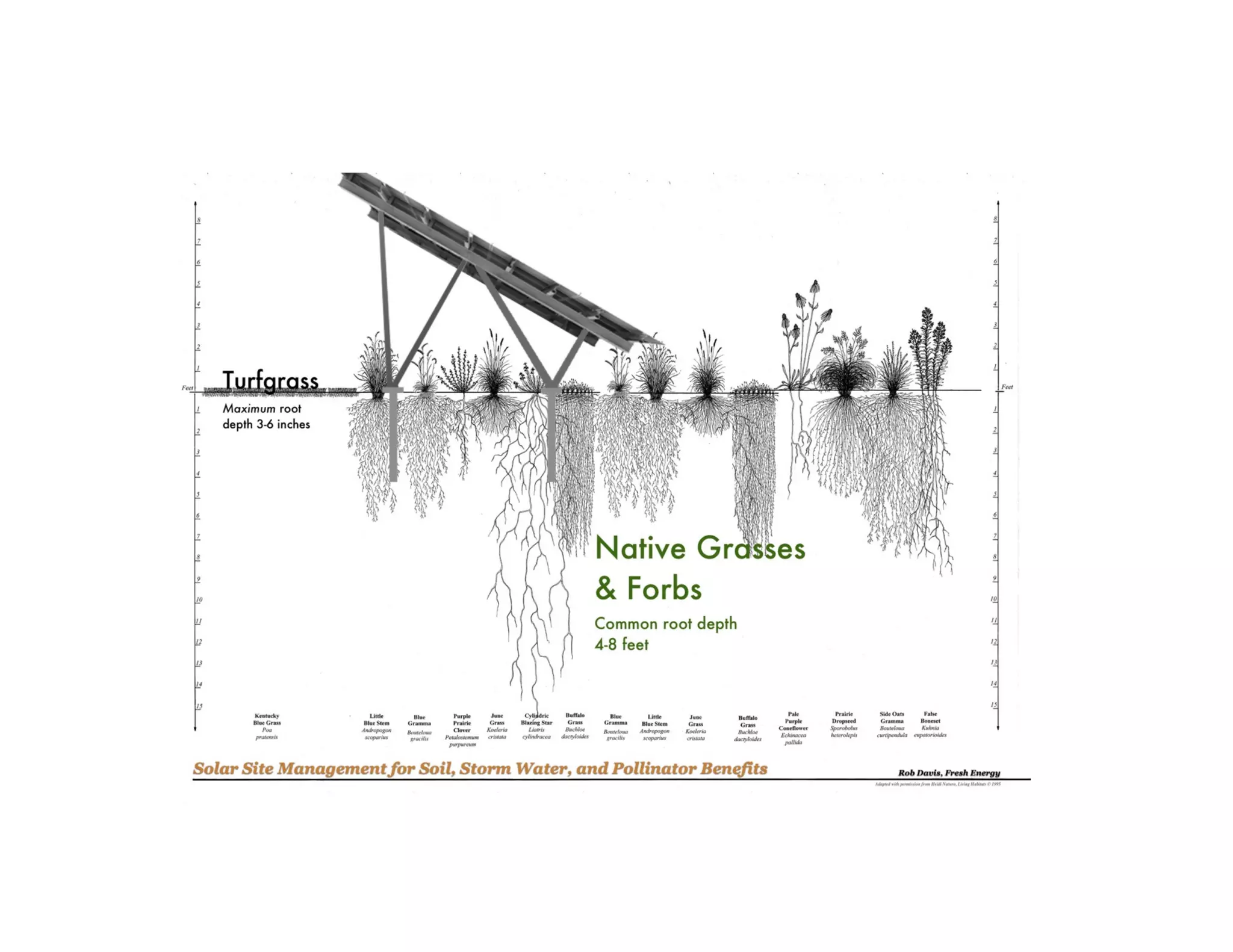


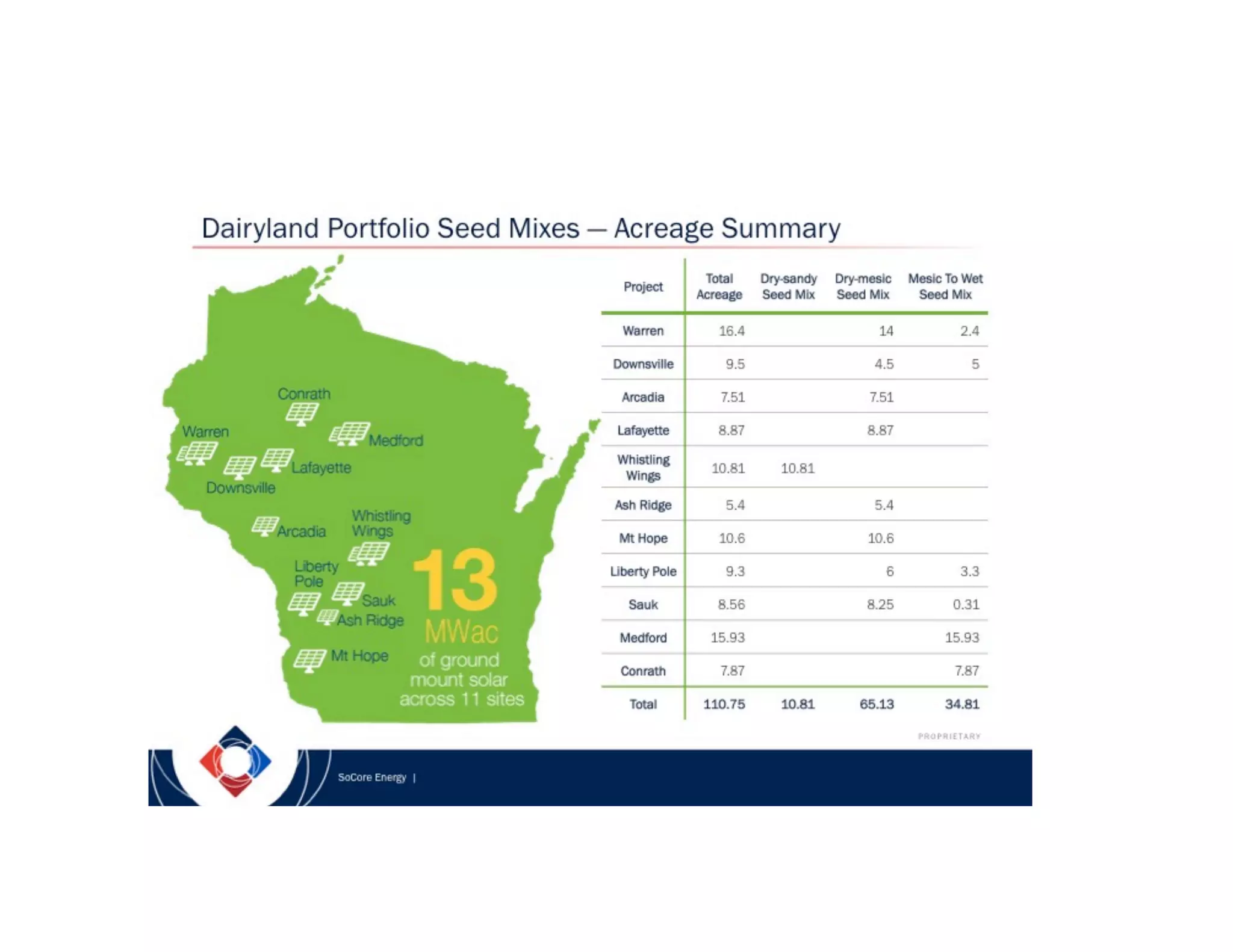





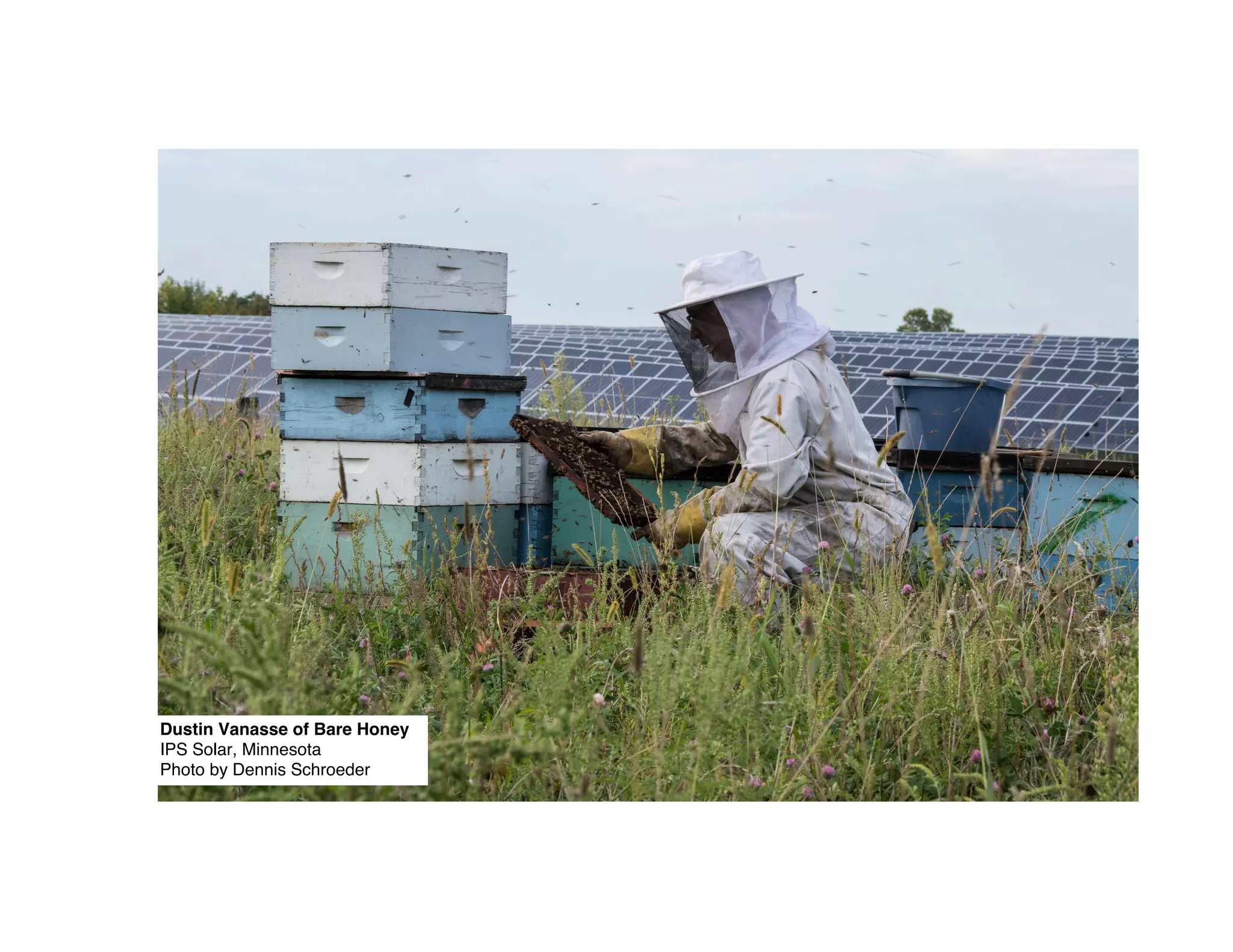



This document summarizes a presentation about using pollinator-friendly vegetation at solar sites. It discusses how incomplete pollination impacts 70% of crops and costs hundreds of billions per year. Maintaining pollinator habitats can help address this at a very low cost compared to other solar options. The presentation provides examples of large solar installations in Minnesota and Ohio that have used pollinator-friendly seed mixes, and discusses considerations for what constitutes an effective pollinator-friendly standard at solar sites. Benefits include community support, reduced maintenance needs, and protecting solar panel performance. Questions around risks of fire or endangered species are mentioned. Conservation grazing is also discussed as a method to actively manage vegetation diversity and soil health at solar sites


