JUGULAR FORAMEN ANATOMY
AND APPROACHES
Dr Dikpal
Anatomy
• located at the posterolateral skull base
• long axis obliquely directed in the
posterolateral to anteromedial
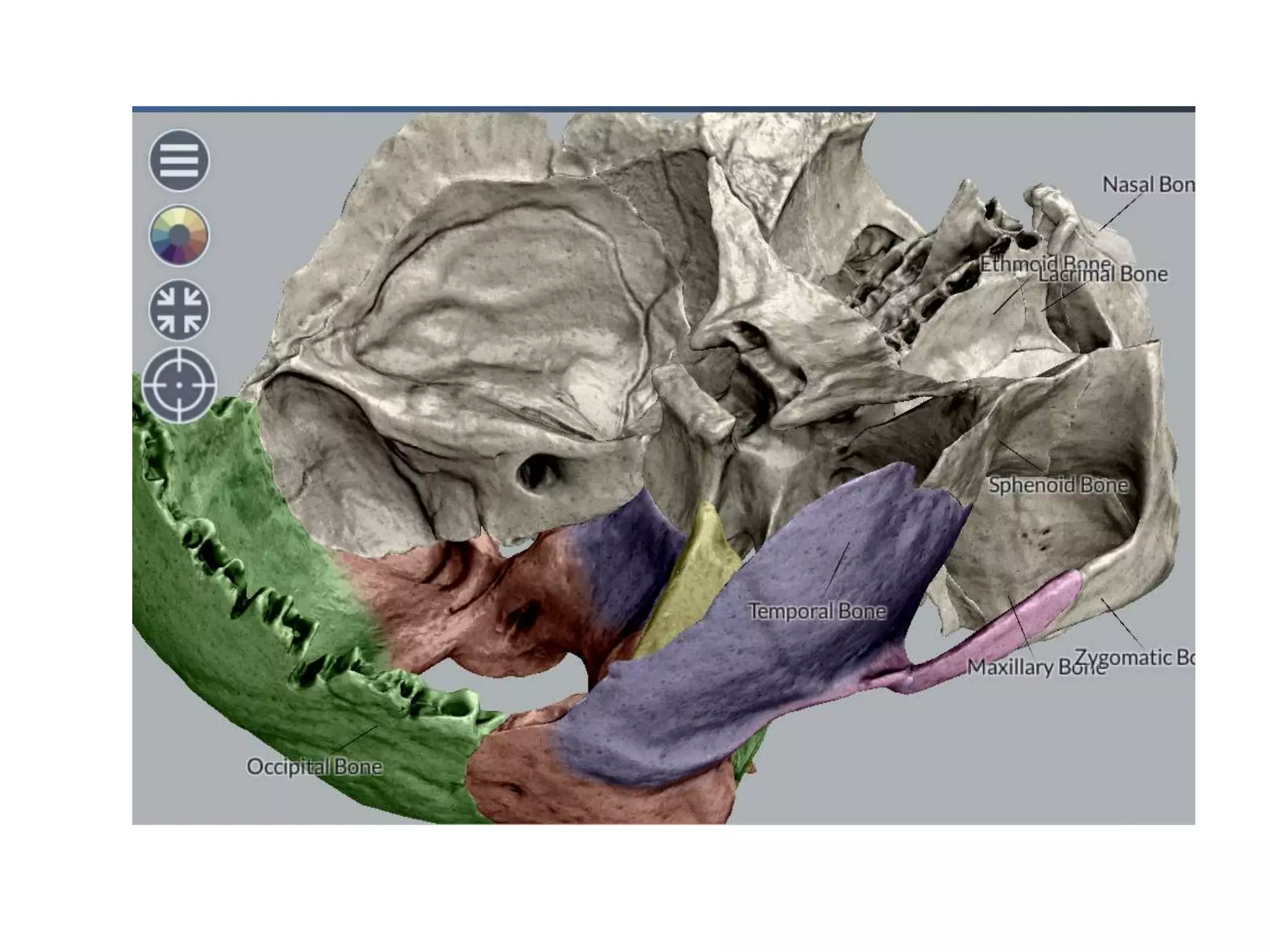
• formed by the petrous temporal bone
anterolaterally and by the jugular process of
the condylar part of the occipital bone
posteromedially
• The jugular foramen is traditionally divided
into a large posterolateral compartment (pars
venosa) and a smaller anteromedial
compartment (pars nervosa)
• three compartments: two venous
compartments and one neural intrajugular
compartment in between
• The venous compartments include a large
posterolateral sigmoid part and a small
anteromedial petrosal part.
• At the junction : two bony prominences
(intrajugular processes), arising from the
temporal and occipital bones: intrajugular
septum
• The dura over the intrajugular septum has two
characteristic perforations:
• (1) The glossopharyngeal meatus for the IX
nerve and
• (2) A larger vagal meatus for X and XI nerves
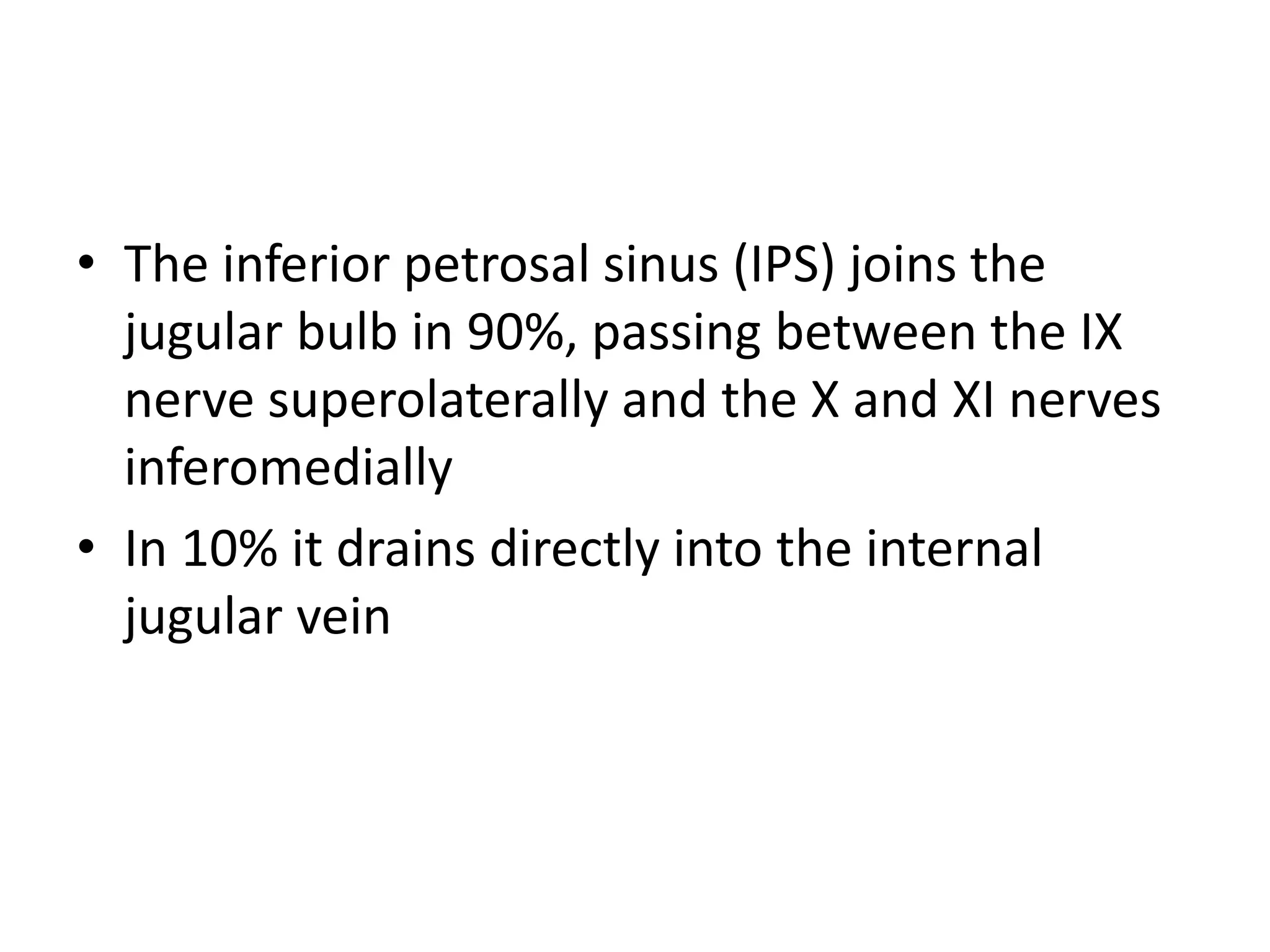
• The inferior petrosal sinus (IPS) joins the
jugular bulb in 90%, passing between the IX
nerve superolaterally and the X and XI nerves
inferomedially
• In 10% it drains directly into the internal
jugular vein
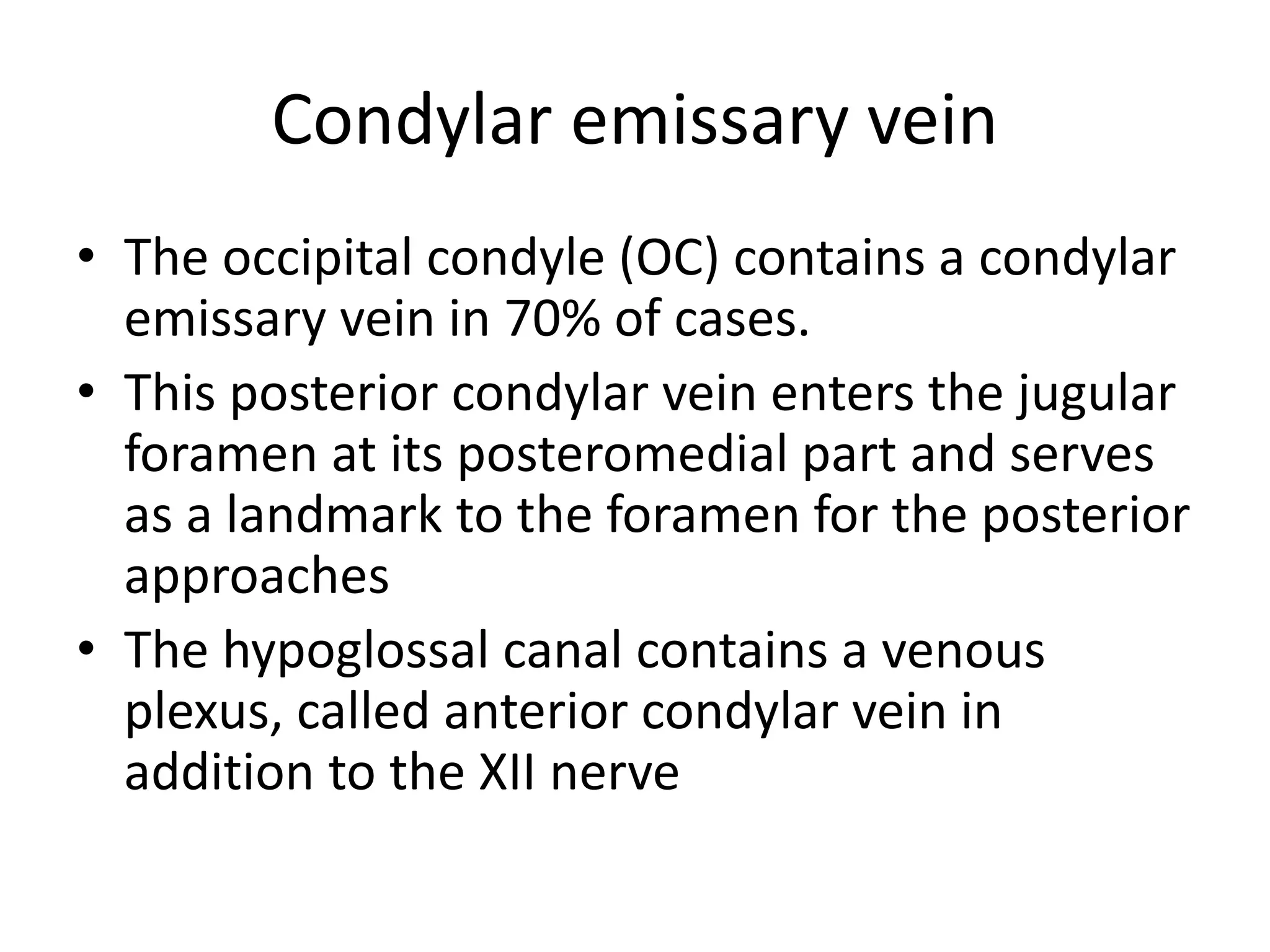
Condylar emissary vein
• The occipital condyle (OC) contains a condylar
emissary vein in 70% of cases.
• This posterior condylar vein enters the jugular
foramen at its posteromedial part and serves
as a landmark to the foramen for the posterior
approaches
• The hypoglossal canal contains a venous
plexus, called anterior condylar vein in
addition to the XII nerve
Relations at skull base
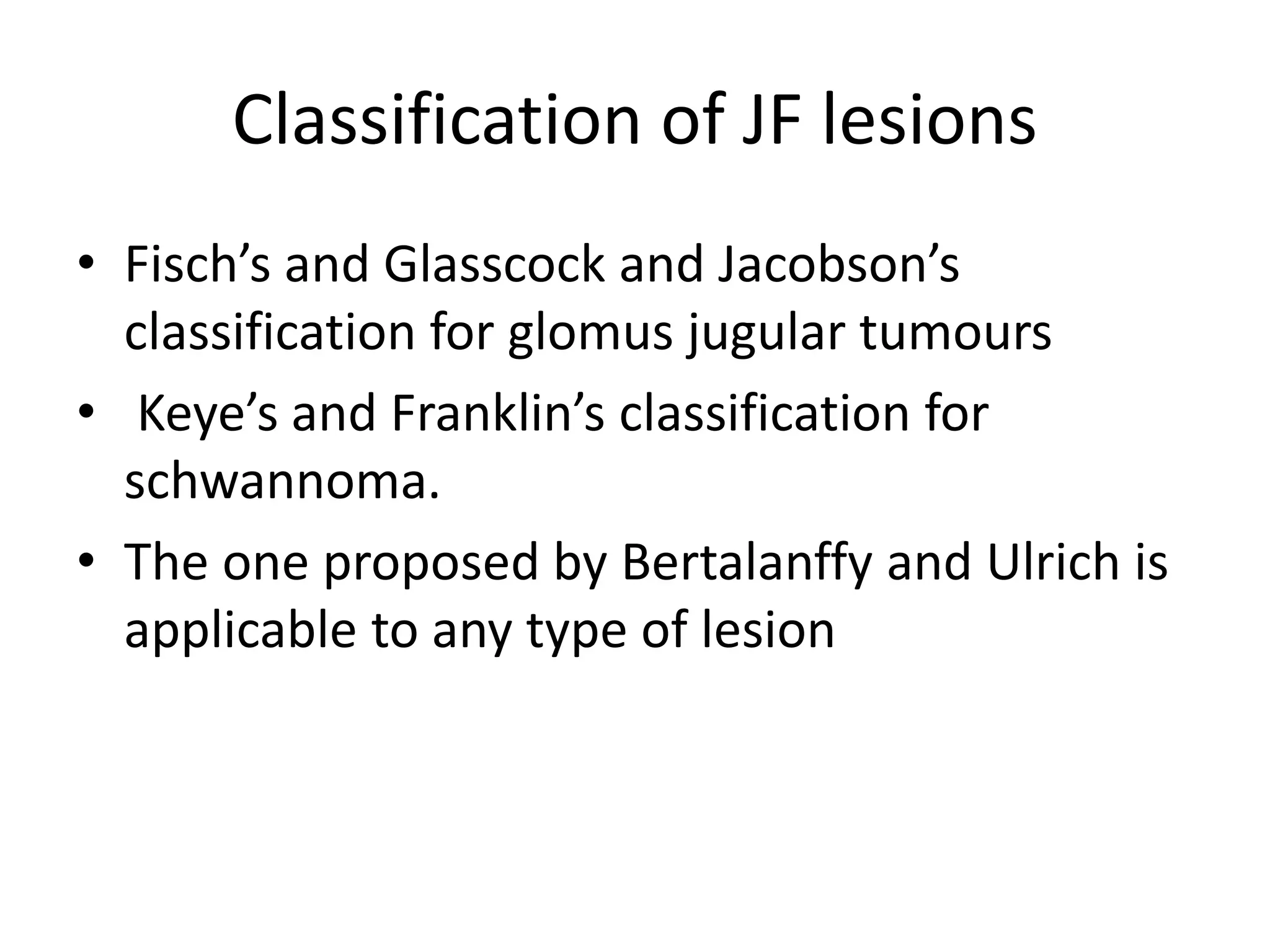
Classification of JF lesions
• Fisch’s and Glasscock and Jacobson’s
classification for glomus jugular tumours
• Keye’s and Franklin’s classification for
schwannoma.
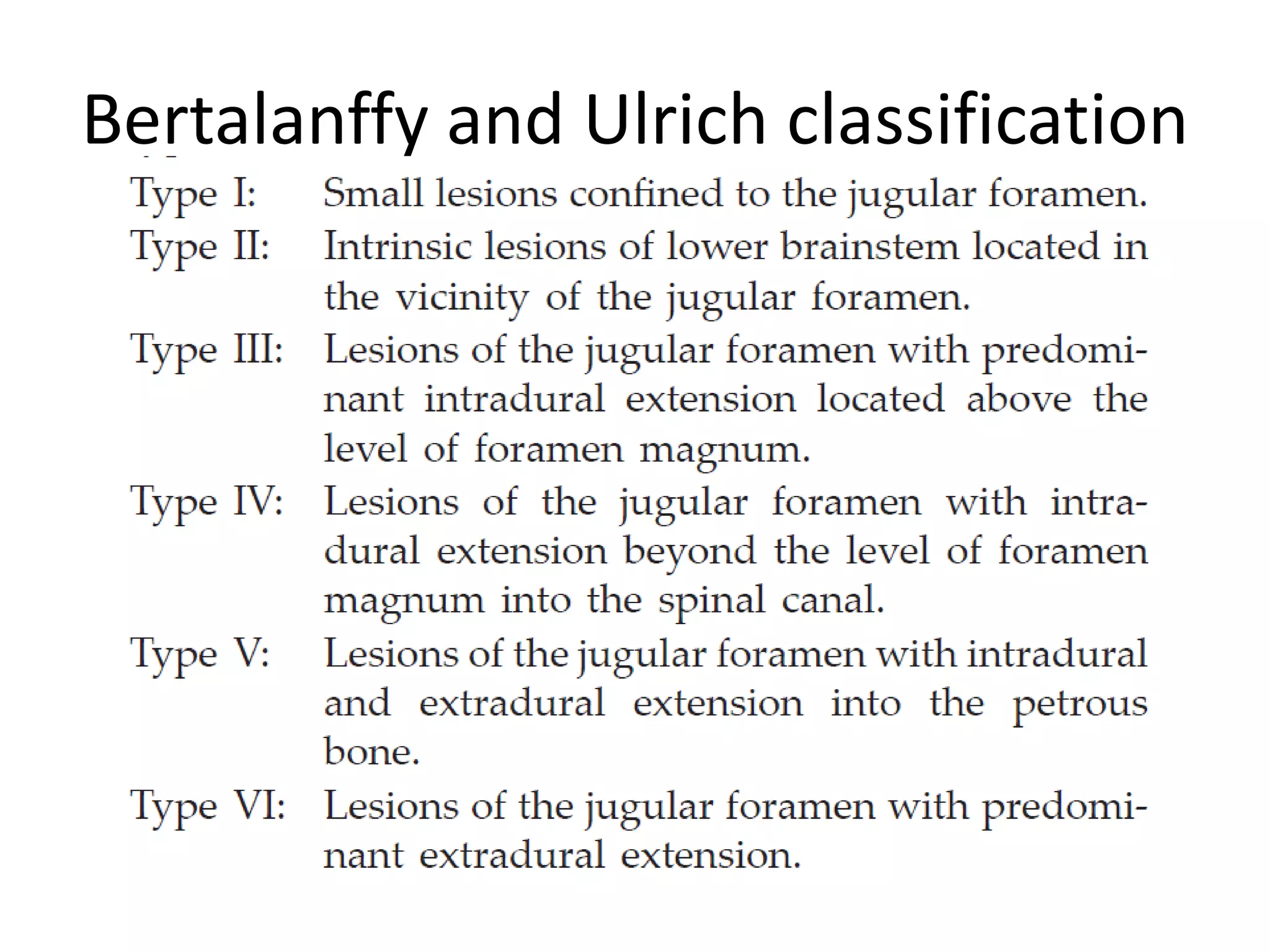
• The one proposed by Bertalanffy and Ulrich is
applicable to any type of lesion
Bertalanffy and Ulrich classification
difficulties in exposing
• its deep location
• the carotid artery anteriorly,
• the facial nerve laterally,
• the hypoglossal nerve medially,
• The vertebral artery inferiorly,
Surgical approaches
• Posterior
• Lateral
• Anterior
Posterior approach
• Sub occipital (SO) retrosigmoid
• SO transcondylar
• SO supracondylar
SO retrosigmoid
• One component of more extensive exposure
• Main indication (intradural)
type A schwannoma, acoustic schwannoma
epidermoid cyst
• Intracranial part of JF exposed by dissecting
arachnoid around 9,10,11
• Disadv: extradural and intrajugular
Suboccipital Transcondylar
• More extended lateral and inferior exposure
Bony resection includes
• Post and medial occipital condyle
• Jugular tubercle to expose hypoglossal canal
• Jugular foramen dorsally and inferiorly (post
emissary vein landmark)
• Risk : Injury (VA, CN)
Supracondylar app
• Small lesion limited to hypoglossal canal and
medial rim of JF
• SOC extended down to supracondylar fossa
• OC and FM preserved
• Jugular tubercle drilled extradurally
• Disadv : radical resection not possible
Anterolateral Approach
• Postauricular transtemporal
• Preauricular subtemporal – infratemporal
approach
• The skin incision: pre- or retroauricular, and
starts above the level of the pinna
• extends in a curvilinear fashion inferiorly into
the neck superficial to the SCM
Postauricular transtemporal
• Key component : mastoidectomy and neck
dissection
• Mastoidectomy : involve the intralabyrinthine
region with exposure of the sigmoid sinus,
jugular bulb, and mastoid portion of the facial
nerve
• Facial nerve mobilsed
• Rectus capitis lateralis ms detached
• Hearing does not sacrificed
Preauricular subtemporal –
infratemporal approach
• Preauricular incision across zygoma
• FT craniotomy
• Mobilisation of TM joint
• Middle cranial fossa removed , until carotid canal is
reached
• eustachian tube and tensor tympani muscle sacrificed
• removal styloid process allows anterior mobilization of
the internal carotid artery and access to the clivus.
• Drilling of Kawase's triangle gains access to the
posterior cranial fossa.
Fisch description
• Type A allows access to the temporal bone in
its infralabyrinthine and apical compartments
• Postauricular incision
• EAC transected
• Neck dissection : identification of CN , vessels
• Radical mastoidectomy and subtotal
petrosectomy
• Facial N anterior transposition
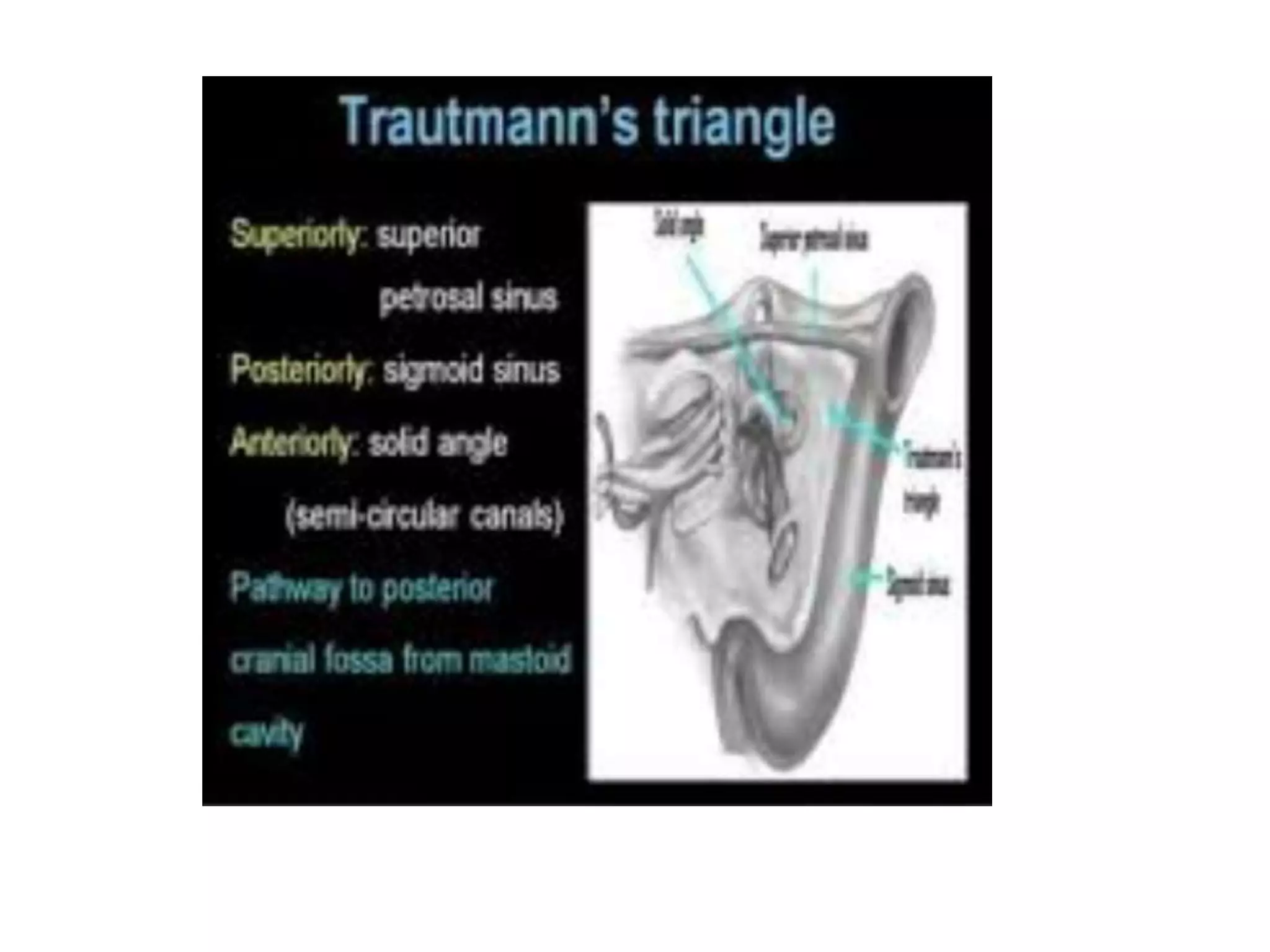
• Both middle and posterior cranial fossa dura in
front (Trautmann's triangle) and behind of the
sigmoid sinus are exposed.
• The petrous internal carotid artery is identified
and the eustachian tube is obliterated at its bony
isthmus.
• The mandibular condyle is resected, and the
temporal root of the zygoma and lateral orbital
rim are removed for additional exposure
Lateral approaches
• Juxtacondylar
• Lateral skull base
Juxtacondylar app
• Extradural, confined to jugular F
• Incision : superior nuchal line to medial border
of SCM below mastoid
• Transverse process of atlas removed and VA
transposed
• PL aspect of OA and AA joint exposed
• Post belly of digastric resected and occipital
artery ligated
• Partial mastoidectomy done distal SS exposed
• Post inf wall of jugular bulb drilled to expose
JF
• Adv : wide exposure of post inf JF without
petrous drilling : preserves hearing
• Extradural : no csf leak
• Risk : VA injury , venous bleed
Lateral Skull base
• Conserving Otic capsule
infratemporal fossa type A
Petro Occipital Trans Sigmoid (POTS)
• Sacrificing Otic Capsule
Translabyrinthine
transcochlear
Infratemporal fossa type A
• Incision : post auricular extending superiorly
to temporal region
• Inferiorly along ant border of SCM
• EAC closed
• VII CN exposed by neck dissection
• Lower CN , ICA, ECA, IJV exposed
• SCM and Digastric divided
• ECA ligated beyond Lingual br
• TM , malleus incus removed
• Radical mastoidectomy done
• VII CN freed from geniculate ganglion to
stylomastoid foramen and transposed
anteriorly
• Mandibular condyle is resected
• SS is packed or ligated
• Lateral wall of SS is opened to bulb and IPS
and entry of condylar vein packed
• ADV : wide exposure of anterior of JF till
petrous apex
Petro Occipital Trans Sigmoid
• Infralabyrinthine lateral skull base
• Indicated for :
• lower cranial nerve schwannomas with
intracranial extensions
• meningioma of the jugular bulb small
petroclival meningiomas lying anterio to the
internal auditory canal (IAC) with preserved
hearing.
• Technique: c shaped post auricular incision
• U shaped musculoperiosteal flap raised
• SCM retracted post
• IJV ant to lateral process of atlas identified &
ligated
• Radical mastoidectomy
• VII CN and JB identified
• Bone over SS and JB and posterior fossa dura
in front of the SS are removed
• suboccipital craniotomy
• The infralabyrinthine petrous bone is drilled
away taking care not to injure the posterior
semicircular canal or VII nerve.
• The occipital condyle is partially drilled up to
the hypoglossal canal
• SS is then opened and packed distally and
proximally
• A horizontal dural incision is made starting
posterior to the SS, coursing anteriorly traversing
the medial wall of the SS
• The removal of the lateral wall of the JB and, if
necessary, its medial wall, fully exposes the
intracranial part of IX−XI nerves.
• The dura over the drilled part of the OC is
excised exposing the hypoglossal canal
• ADV: hearing preserved
• Disadv: limited control over ICA , so
involovemet of ICA is contraindication

Jugular foramen anatomy and approaches

  • 1.
    JUGULAR FORAMEN ANATOMY ANDAPPROACHES Dr Dikpal
  • 2.
    Anatomy • located atthe posterolateral skull base • long axis obliquely directed in the posterolateral to anteromedial • formed by the petrous temporal bone anterolaterally and by the jugular process of the condylar part of the occipital bone posteromedially
  • 8.
    • The jugularforamen is traditionally divided into a large posterolateral compartment (pars venosa) and a smaller anteromedial compartment (pars nervosa) • three compartments: two venous compartments and one neural intrajugular compartment in between
  • 9.
    • The venouscompartments include a large posterolateral sigmoid part and a small anteromedial petrosal part. • At the junction : two bony prominences (intrajugular processes), arising from the temporal and occipital bones: intrajugular septum
  • 10.
    • The duraover the intrajugular septum has two characteristic perforations: • (1) The glossopharyngeal meatus for the IX nerve and • (2) A larger vagal meatus for X and XI nerves
  • 13.
    • The inferiorpetrosal sinus (IPS) joins the jugular bulb in 90%, passing between the IX nerve superolaterally and the X and XI nerves inferomedially • In 10% it drains directly into the internal jugular vein
  • 14.
    Condylar emissary vein •The occipital condyle (OC) contains a condylar emissary vein in 70% of cases. • This posterior condylar vein enters the jugular foramen at its posteromedial part and serves as a landmark to the foramen for the posterior approaches • The hypoglossal canal contains a venous plexus, called anterior condylar vein in addition to the XII nerve
  • 15.
  • 18.
    Classification of JFlesions • Fisch’s and Glasscock and Jacobson’s classification for glomus jugular tumours • Keye’s and Franklin’s classification for schwannoma. • The one proposed by Bertalanffy and Ulrich is applicable to any type of lesion
  • 19.
    Bertalanffy and Ulrichclassification
  • 20.
    difficulties in exposing •its deep location • the carotid artery anteriorly, • the facial nerve laterally, • the hypoglossal nerve medially, • The vertebral artery inferiorly,
  • 21.
  • 22.
    Posterior approach • Suboccipital (SO) retrosigmoid • SO transcondylar • SO supracondylar
  • 23.
    SO retrosigmoid • Onecomponent of more extensive exposure • Main indication (intradural) type A schwannoma, acoustic schwannoma epidermoid cyst • Intracranial part of JF exposed by dissecting arachnoid around 9,10,11 • Disadv: extradural and intrajugular
  • 24.
    Suboccipital Transcondylar • Moreextended lateral and inferior exposure Bony resection includes • Post and medial occipital condyle • Jugular tubercle to expose hypoglossal canal • Jugular foramen dorsally and inferiorly (post emissary vein landmark) • Risk : Injury (VA, CN)
  • 25.
    Supracondylar app • Smalllesion limited to hypoglossal canal and medial rim of JF • SOC extended down to supracondylar fossa • OC and FM preserved • Jugular tubercle drilled extradurally • Disadv : radical resection not possible
  • 26.
    Anterolateral Approach • Postauriculartranstemporal • Preauricular subtemporal – infratemporal approach • The skin incision: pre- or retroauricular, and starts above the level of the pinna • extends in a curvilinear fashion inferiorly into the neck superficial to the SCM
  • 28.
    Postauricular transtemporal • Keycomponent : mastoidectomy and neck dissection • Mastoidectomy : involve the intralabyrinthine region with exposure of the sigmoid sinus, jugular bulb, and mastoid portion of the facial nerve • Facial nerve mobilsed • Rectus capitis lateralis ms detached • Hearing does not sacrificed
  • 29.
    Preauricular subtemporal – infratemporalapproach • Preauricular incision across zygoma • FT craniotomy • Mobilisation of TM joint • Middle cranial fossa removed , until carotid canal is reached • eustachian tube and tensor tympani muscle sacrificed • removal styloid process allows anterior mobilization of the internal carotid artery and access to the clivus. • Drilling of Kawase's triangle gains access to the posterior cranial fossa.
  • 30.
    Fisch description • TypeA allows access to the temporal bone in its infralabyrinthine and apical compartments • Postauricular incision • EAC transected • Neck dissection : identification of CN , vessels • Radical mastoidectomy and subtotal petrosectomy • Facial N anterior transposition
  • 31.
    • Both middleand posterior cranial fossa dura in front (Trautmann's triangle) and behind of the sigmoid sinus are exposed. • The petrous internal carotid artery is identified and the eustachian tube is obliterated at its bony isthmus. • The mandibular condyle is resected, and the temporal root of the zygoma and lateral orbital rim are removed for additional exposure
  • 33.
  • 34.
    Juxtacondylar app • Extradural,confined to jugular F • Incision : superior nuchal line to medial border of SCM below mastoid • Transverse process of atlas removed and VA transposed • PL aspect of OA and AA joint exposed • Post belly of digastric resected and occipital artery ligated
  • 35.
    • Partial mastoidectomydone distal SS exposed • Post inf wall of jugular bulb drilled to expose JF • Adv : wide exposure of post inf JF without petrous drilling : preserves hearing • Extradural : no csf leak • Risk : VA injury , venous bleed
  • 36.
    Lateral Skull base •Conserving Otic capsule infratemporal fossa type A Petro Occipital Trans Sigmoid (POTS) • Sacrificing Otic Capsule Translabyrinthine transcochlear
  • 37.
    Infratemporal fossa typeA • Incision : post auricular extending superiorly to temporal region • Inferiorly along ant border of SCM
  • 39.
    • EAC closed •VII CN exposed by neck dissection • Lower CN , ICA, ECA, IJV exposed • SCM and Digastric divided • ECA ligated beyond Lingual br • TM , malleus incus removed • Radical mastoidectomy done
  • 40.
    • VII CNfreed from geniculate ganglion to stylomastoid foramen and transposed anteriorly • Mandibular condyle is resected • SS is packed or ligated • Lateral wall of SS is opened to bulb and IPS and entry of condylar vein packed • ADV : wide exposure of anterior of JF till petrous apex
  • 41.
    Petro Occipital TransSigmoid • Infralabyrinthine lateral skull base • Indicated for : • lower cranial nerve schwannomas with intracranial extensions • meningioma of the jugular bulb small petroclival meningiomas lying anterio to the internal auditory canal (IAC) with preserved hearing.
  • 42.
    • Technique: cshaped post auricular incision • U shaped musculoperiosteal flap raised • SCM retracted post • IJV ant to lateral process of atlas identified & ligated • Radical mastoidectomy • VII CN and JB identified
  • 43.
    • Bone overSS and JB and posterior fossa dura in front of the SS are removed • suboccipital craniotomy • The infralabyrinthine petrous bone is drilled away taking care not to injure the posterior semicircular canal or VII nerve. • The occipital condyle is partially drilled up to the hypoglossal canal
  • 44.
    • SS isthen opened and packed distally and proximally • A horizontal dural incision is made starting posterior to the SS, coursing anteriorly traversing the medial wall of the SS • The removal of the lateral wall of the JB and, if necessary, its medial wall, fully exposes the intracranial part of IX−XI nerves. • The dura over the drilled part of the OC is excised exposing the hypoglossal canal
  • 45.
    • ADV: hearingpreserved • Disadv: limited control over ICA , so involovemet of ICA is contraindication