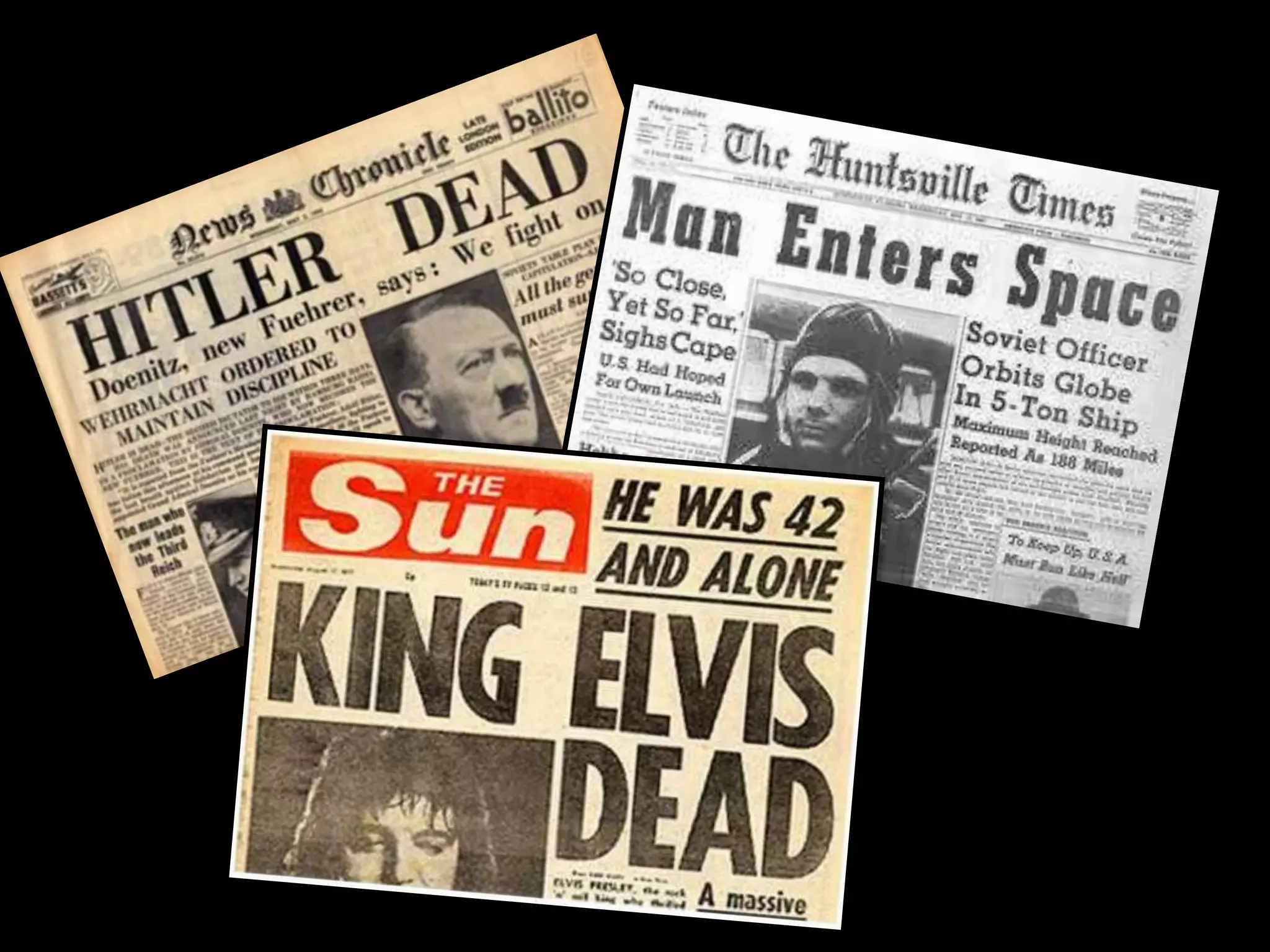
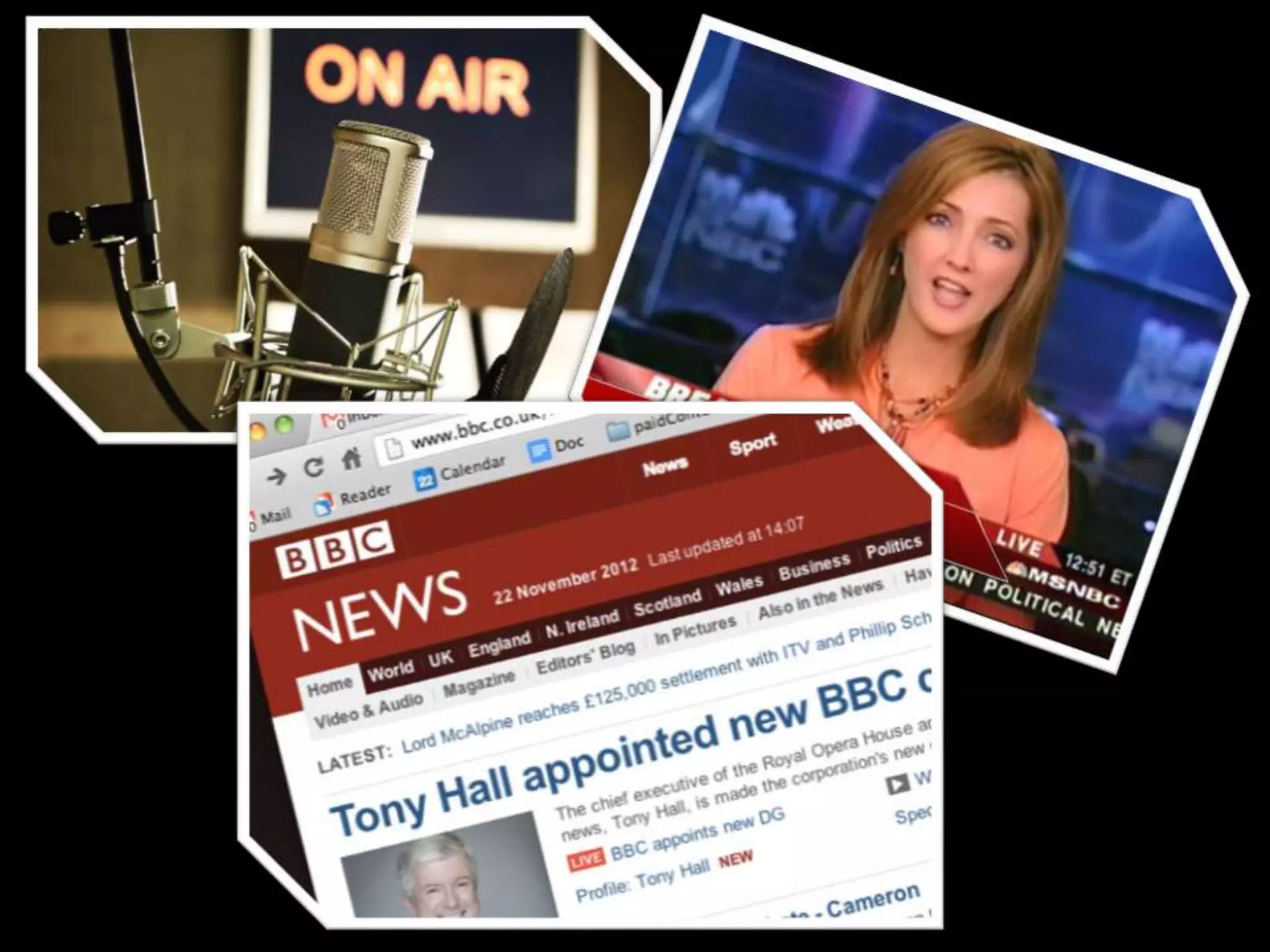
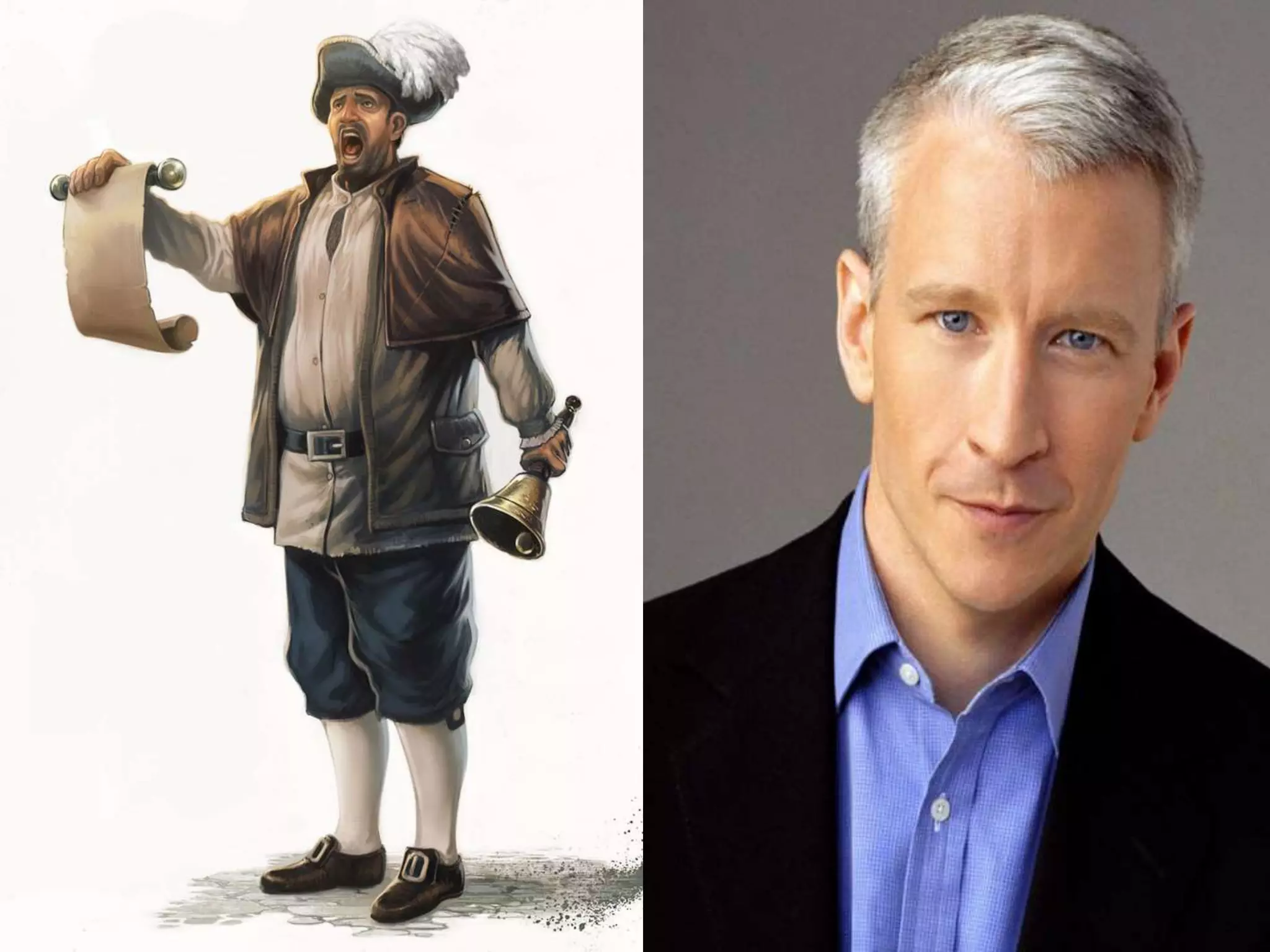
HUMANS WERE
BORN TO
GOSSIP
JOURNALISM
“is a method of inquiry and literary style
that aims to provide a service to the public
by the dissemination and analysis of news
and other information.”
FUNCTIONS…
1. Inform the public through the
news coverage
2.Influence and mold the public
opinion
3. Amuse or entertain the public
4. Serve and promote community
welfare as a whole
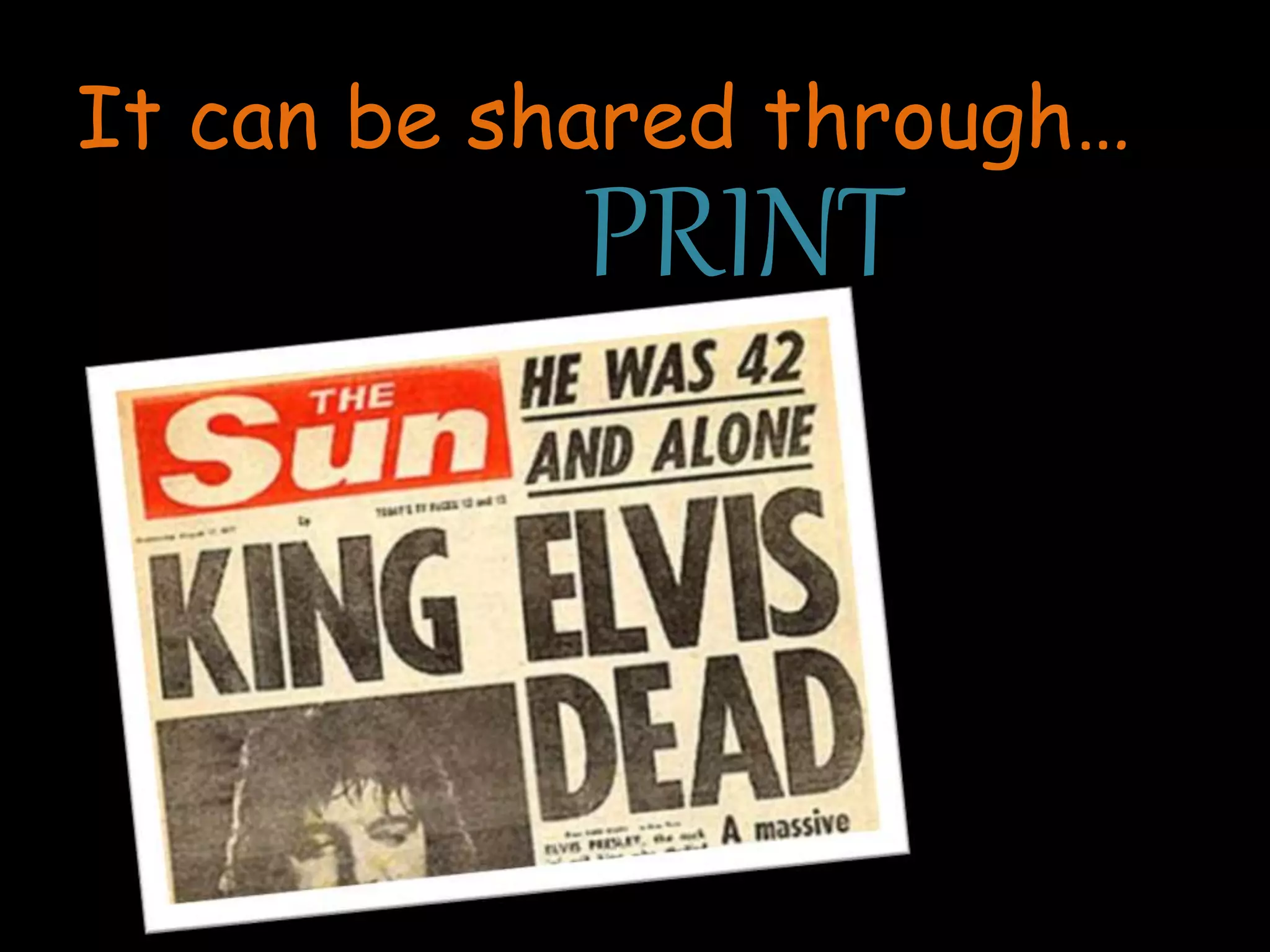
It can be shared through…
PRINT
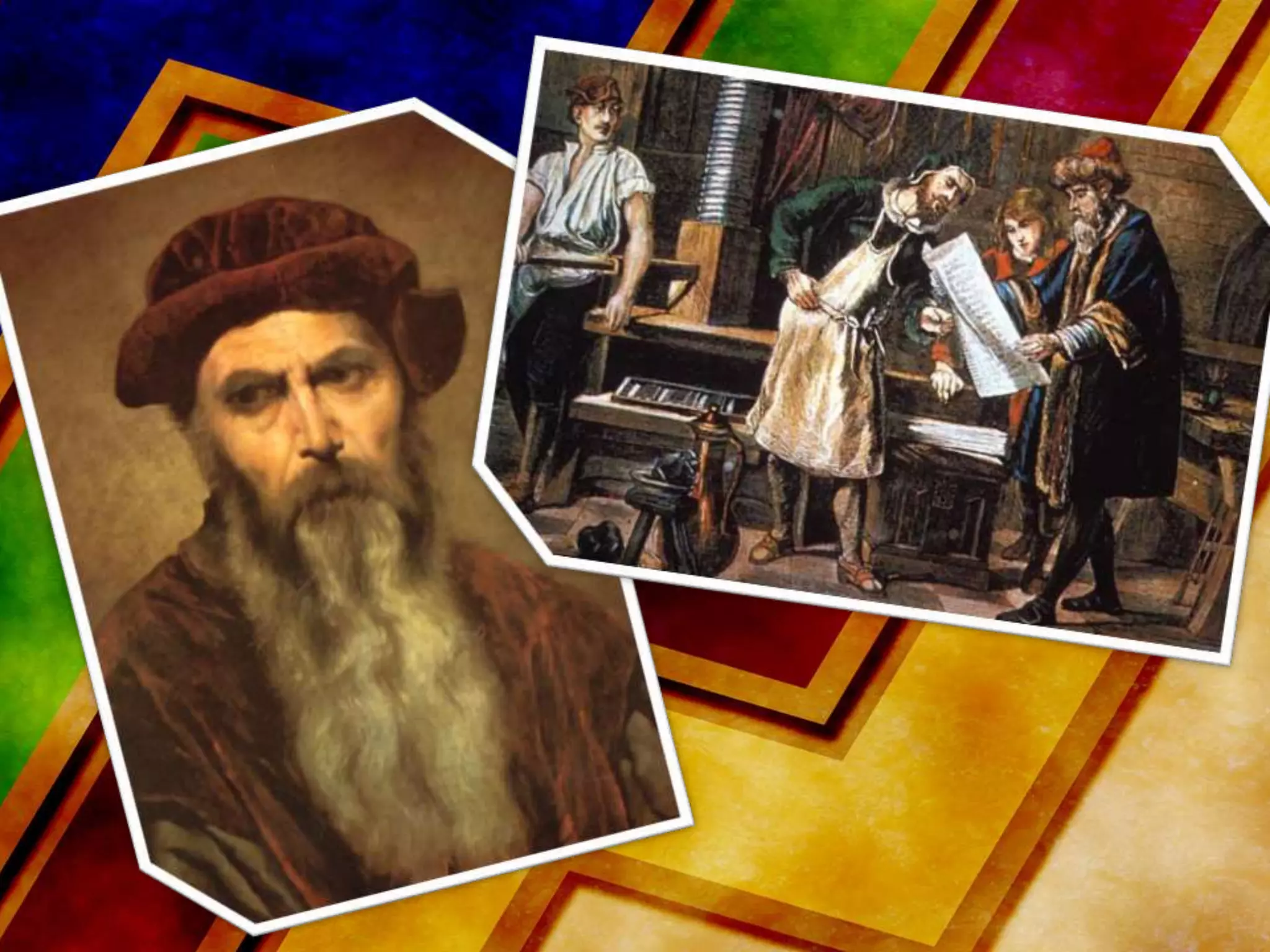
Johannes Gutenberg (15th century) –

invented the movable type printing press.
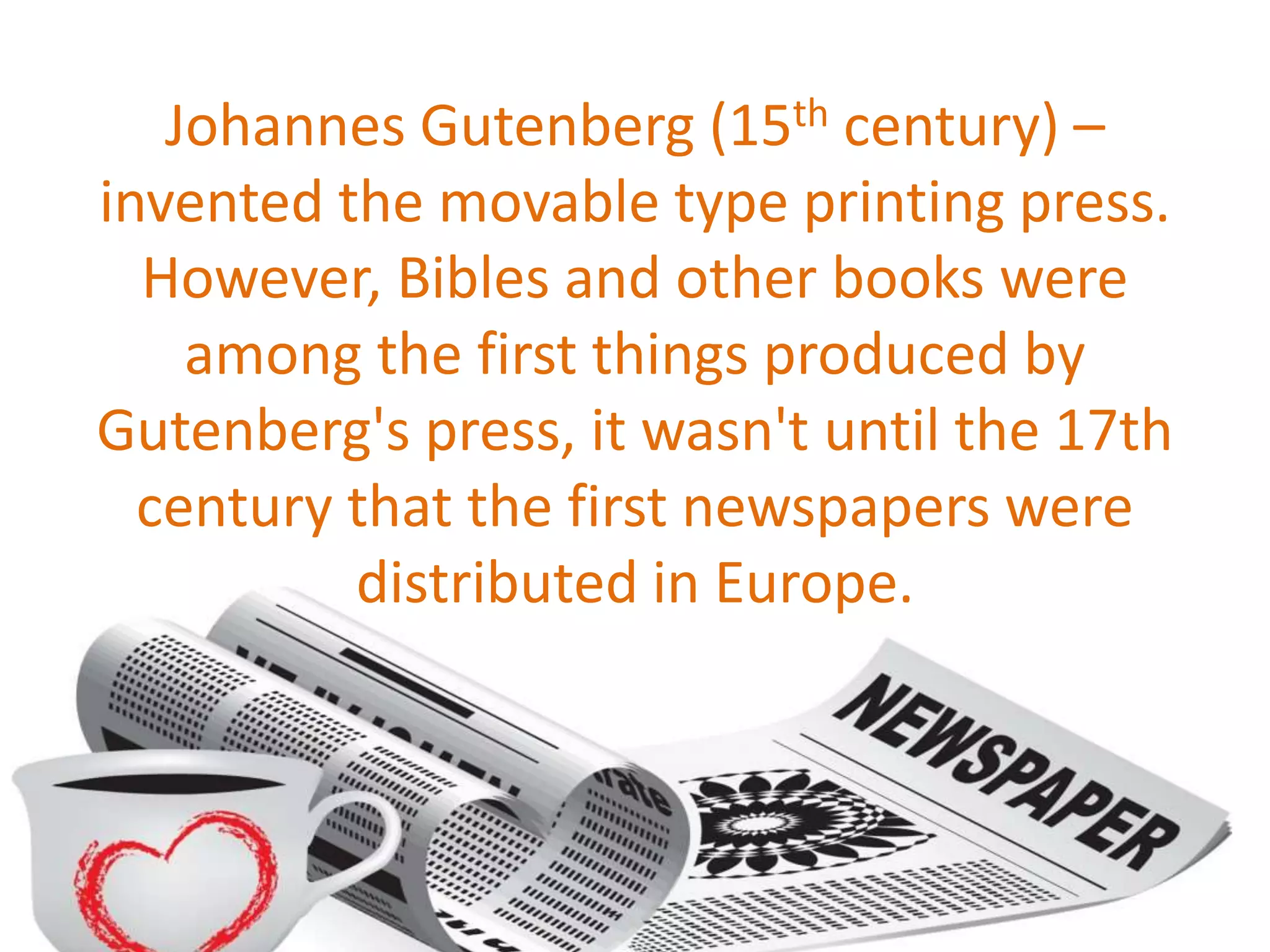
However, Bibles and other books were

among the first things produced by
Gutenberg's press, it wasn't until the 17th
century that the first newspapers were
distributed in Europe.
The Daily Courant
The first regularly published
paper came out twice a
week in England, as did the
first daily.
CAMPUS
JOURNALISM
“journalism carried out by students
on subjects related to campus life
or issues published in publications
only intended for campus
distribution and readership.”
Republic Act 7079 or Campus
Journalism Act of 1991:
AN ACT PROVIDING FOR THE
DEVELOPMENT AND PROMOTION
OF CAMPUS JOURNALISM AND FOR
OTHER PURPOSES
Four I’s of Campus
Journalism
INFORM
INFLUENCE
INTEREST
INSPIRE
NEWS
SO WHAT IS…
“News is the
communication of
selected information on
current events.”
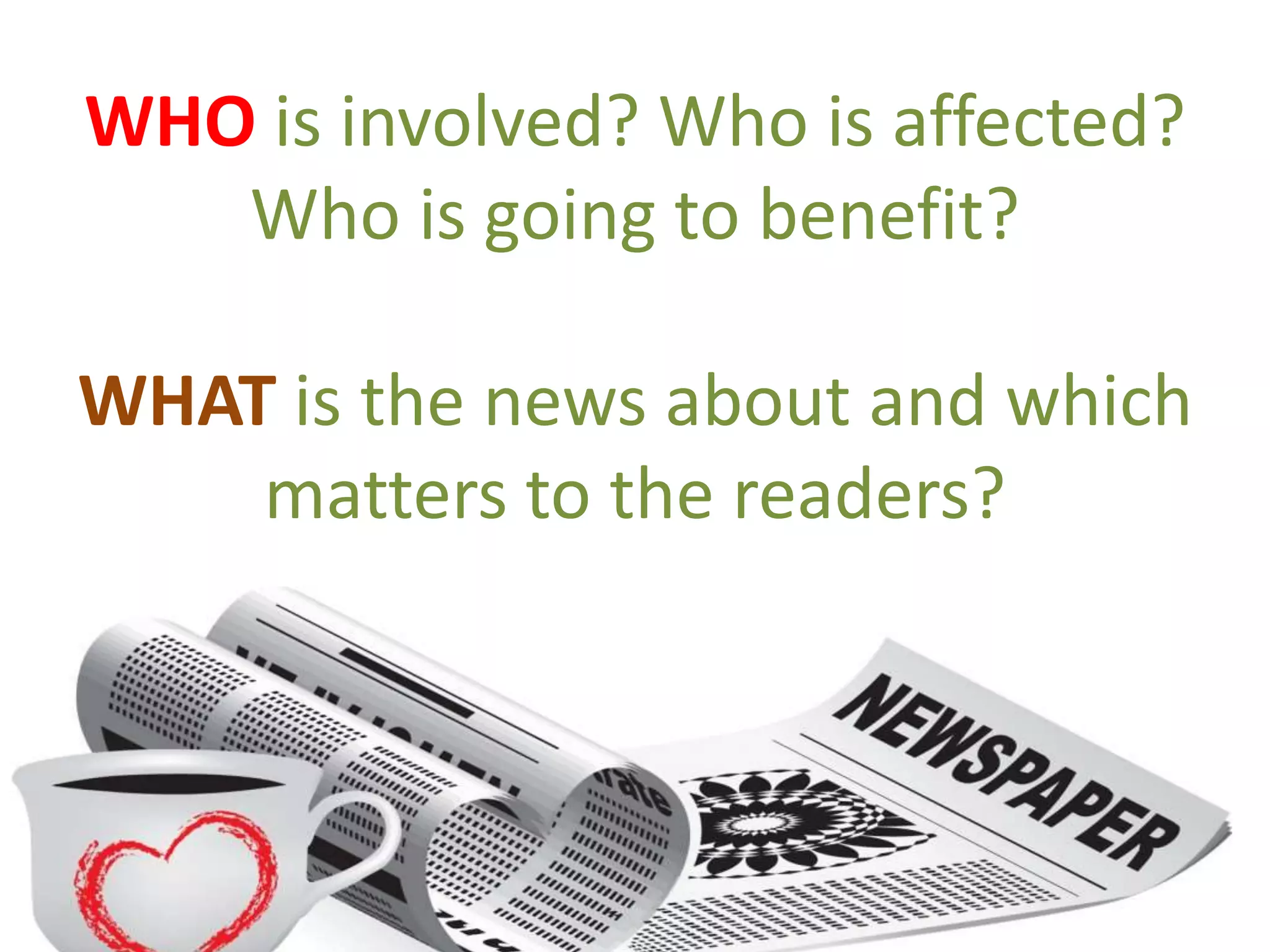
WHO is involved? Who is affected?
Who is going to benefit?
WHAT is the news about and which
matters to the readers?
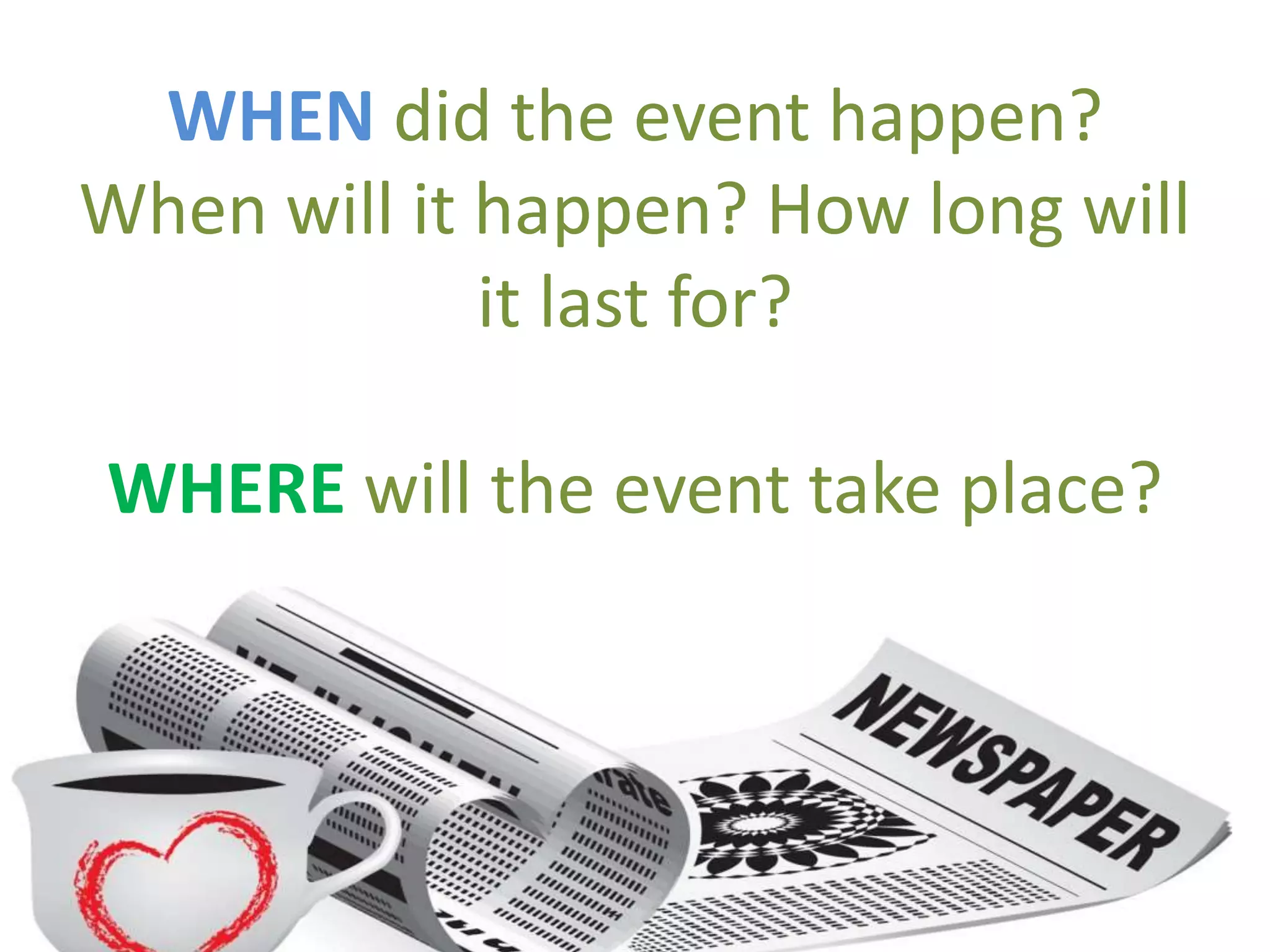
WHEN did the event happen?
When will it happen? How long will
it last for?
WHERE will the event take place?
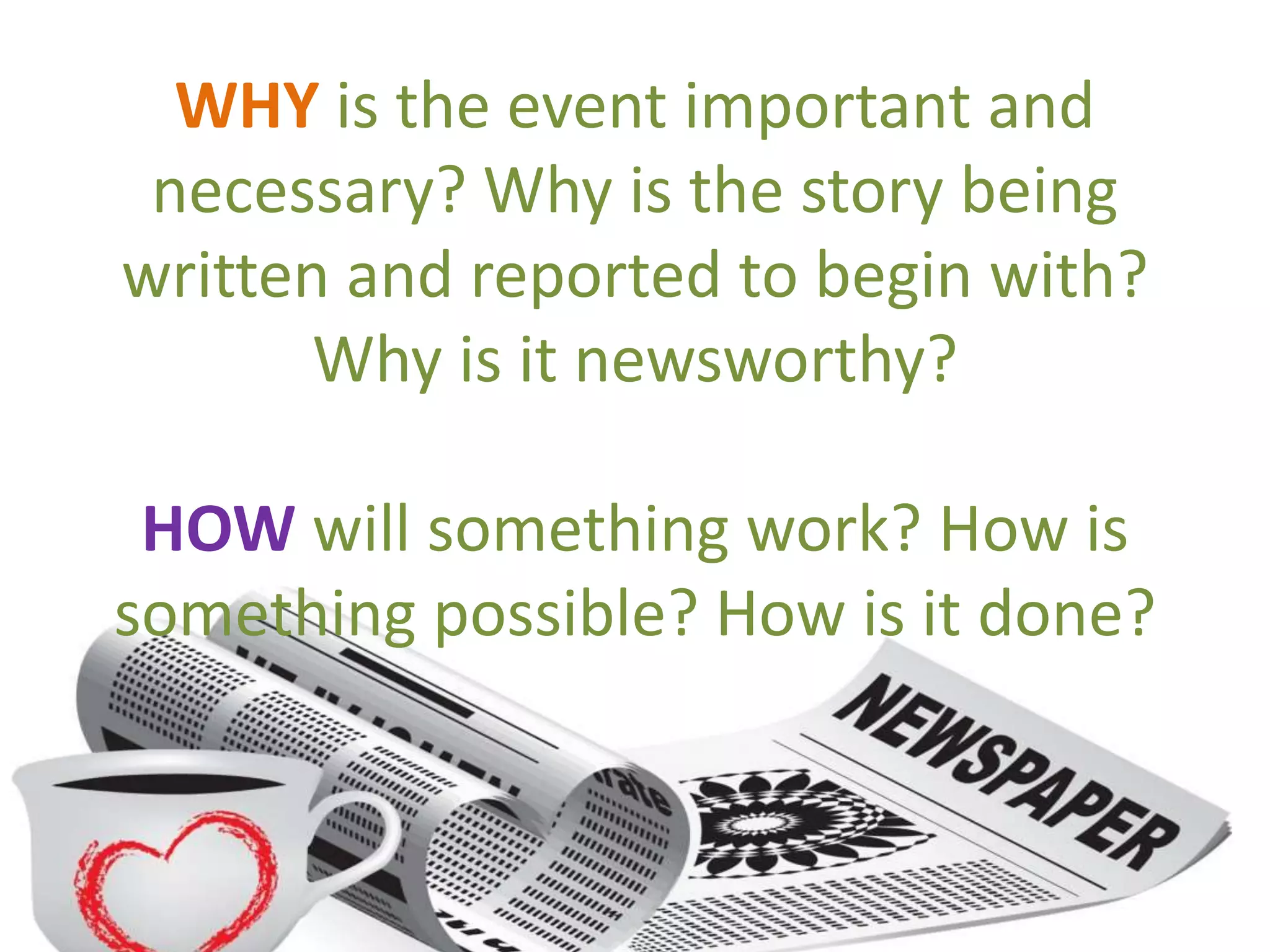
WHY is the event important and
necessary? Why is the story being
written and reported to begin with?
Why is it newsworthy?
HOW will something work? How is
something possible? How is it done?
HEADLINE:
must catch the scanner’s attention
and should summarize the entire
story in a few words. It should be
in bolded and larger fonts.
Example: “P-noy: I am not a thief”
lead
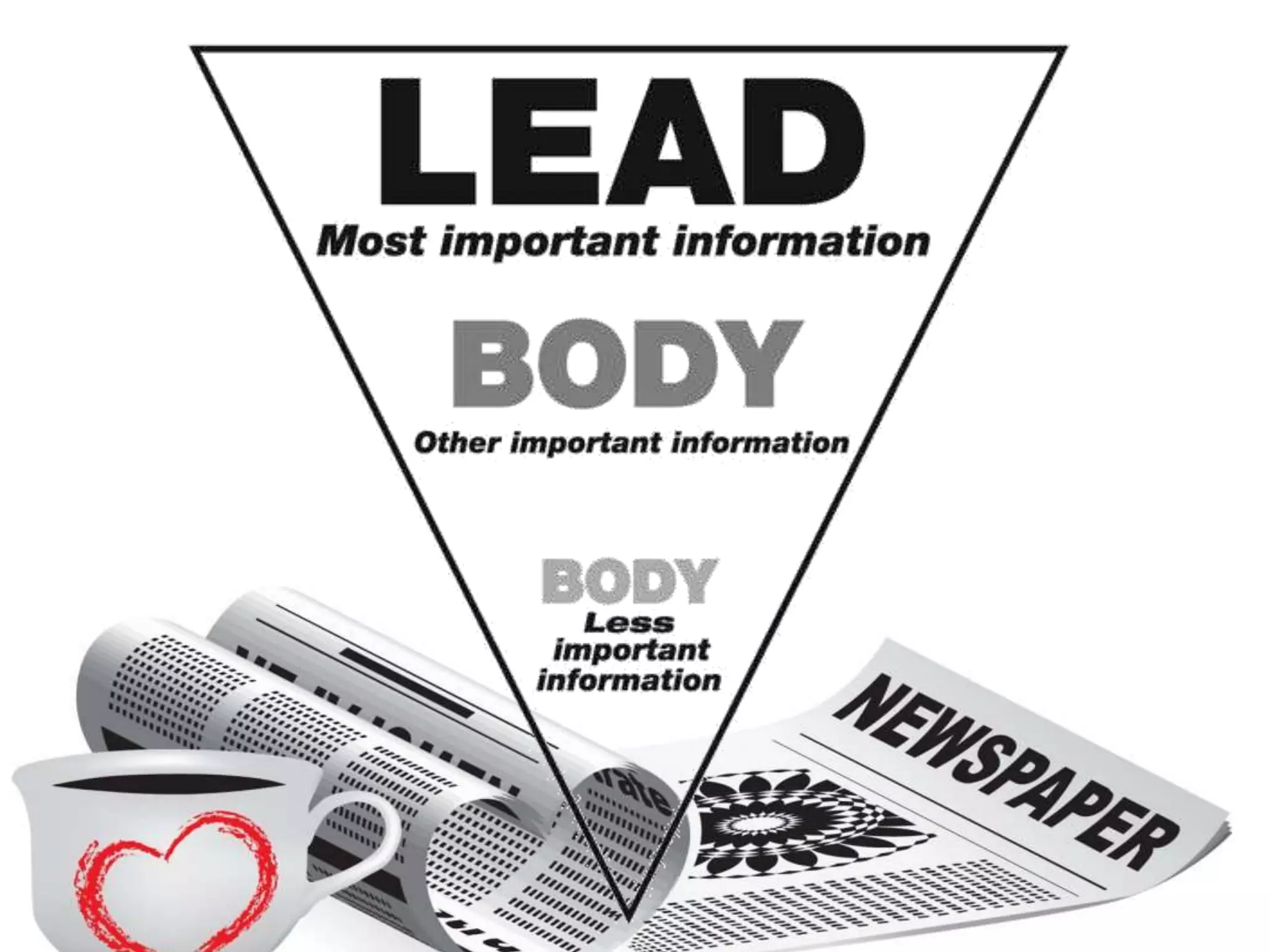
The MOST IMPORTANT information.
TYPES OF LEAD:
Rarely use these...
“Who lead”- begins with a person.
The person is usually not the most
important fact of the story.
“When lead” - begins with time. Rarely
is the time the most important factor.
“Where lead” - begins with the place.
Hardly ever is where the most
important factor.
Use these often...
“How lead”- begins with the how of
the story. Used often.
“Why lead”- begins with the cause the
story. Used often.
“What lead”- begins with the fact of
the story. Used often.
How to Write a News
Story
1. Begin with a lead.
- Indicate the who, what,
when, where, why and how.
2. Use the inverted pyramid style.
- Most important information
first followed by the rest of the
details.
3. Source the data.
- Include facts and data and
mention the source.
4. Include Quotations.
- Get quotes from involved and
relevant people.
QUOTATIONS
AND
TRANSITIONS
HELP AS WELL!
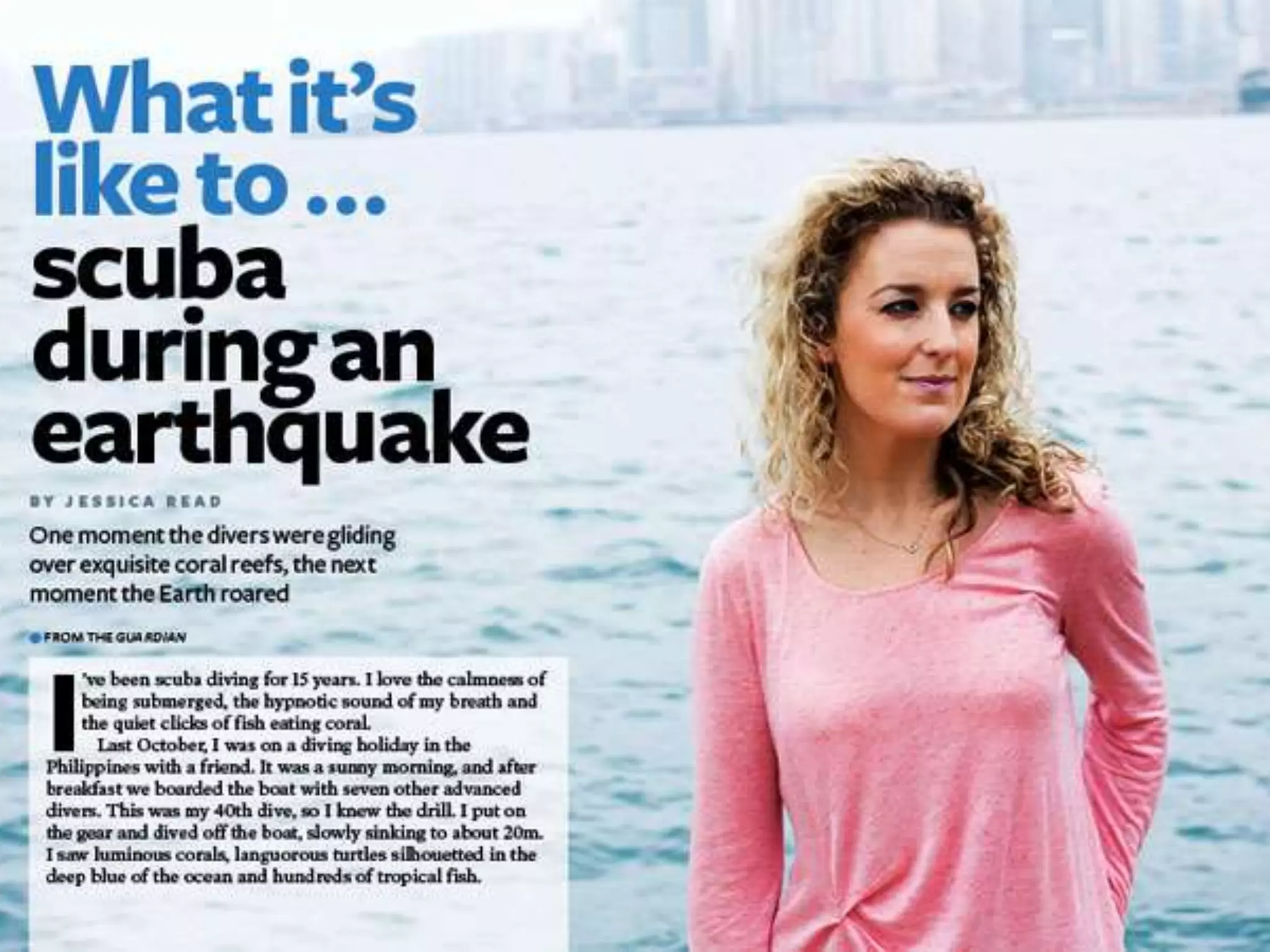
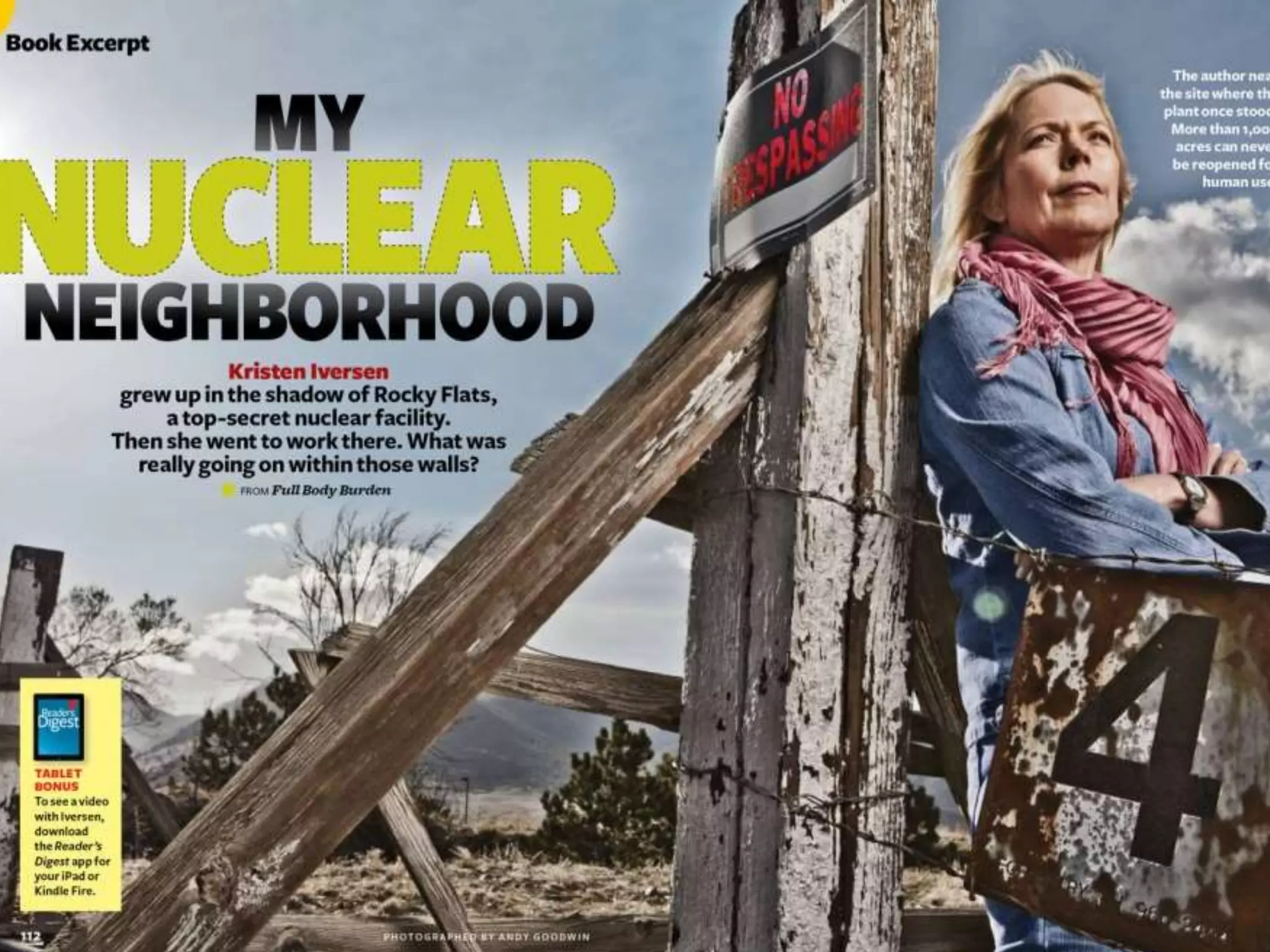
FEATURE
“are interesting articles that focus
on certain people, places, events,
or subject matters like career,
relationships, money, health,
lifestyle, etc.”
“are longer, more in-depth,
and more elaborate than
hard news stories.”
Different Types of
Feature Stories:
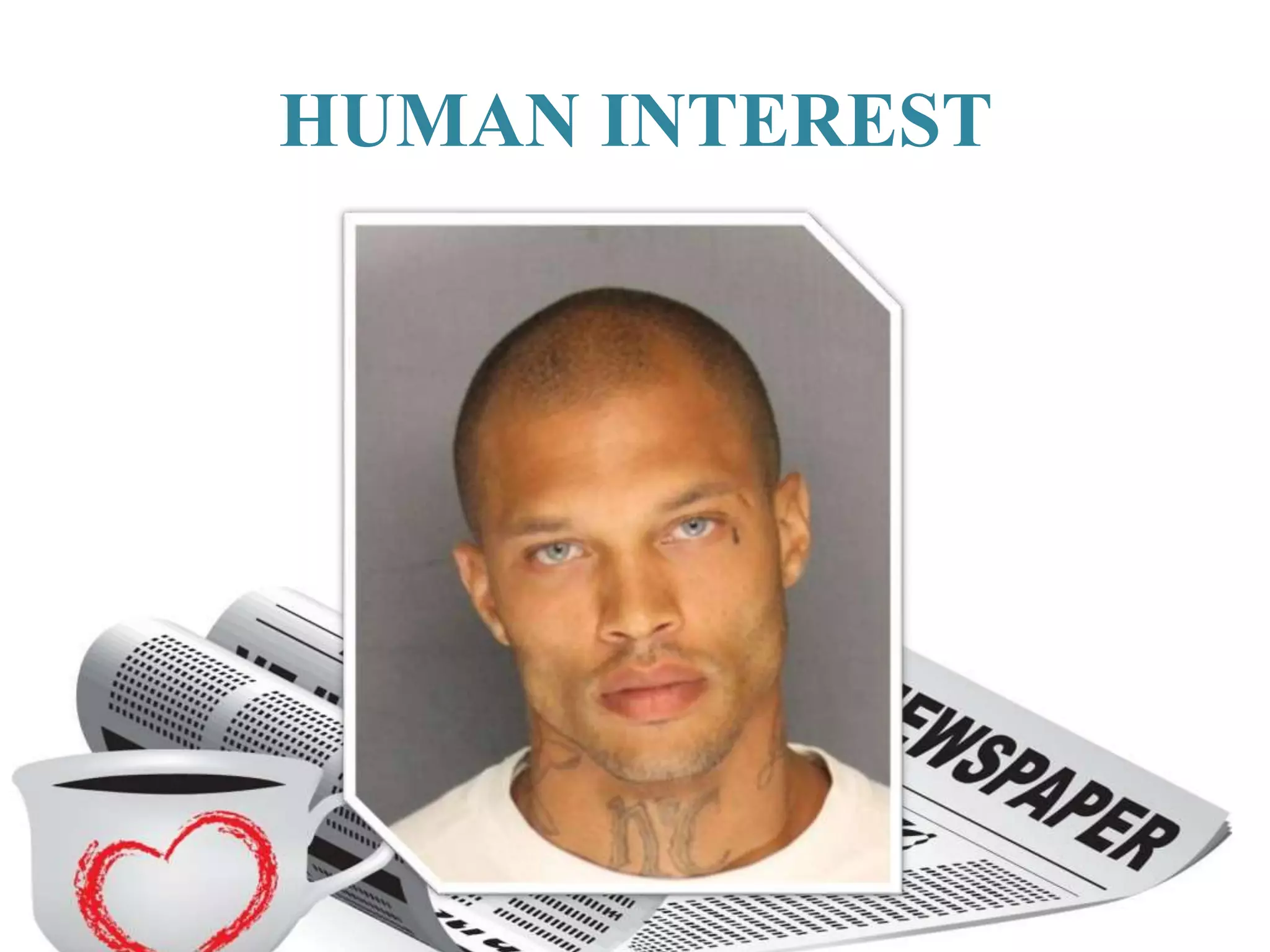
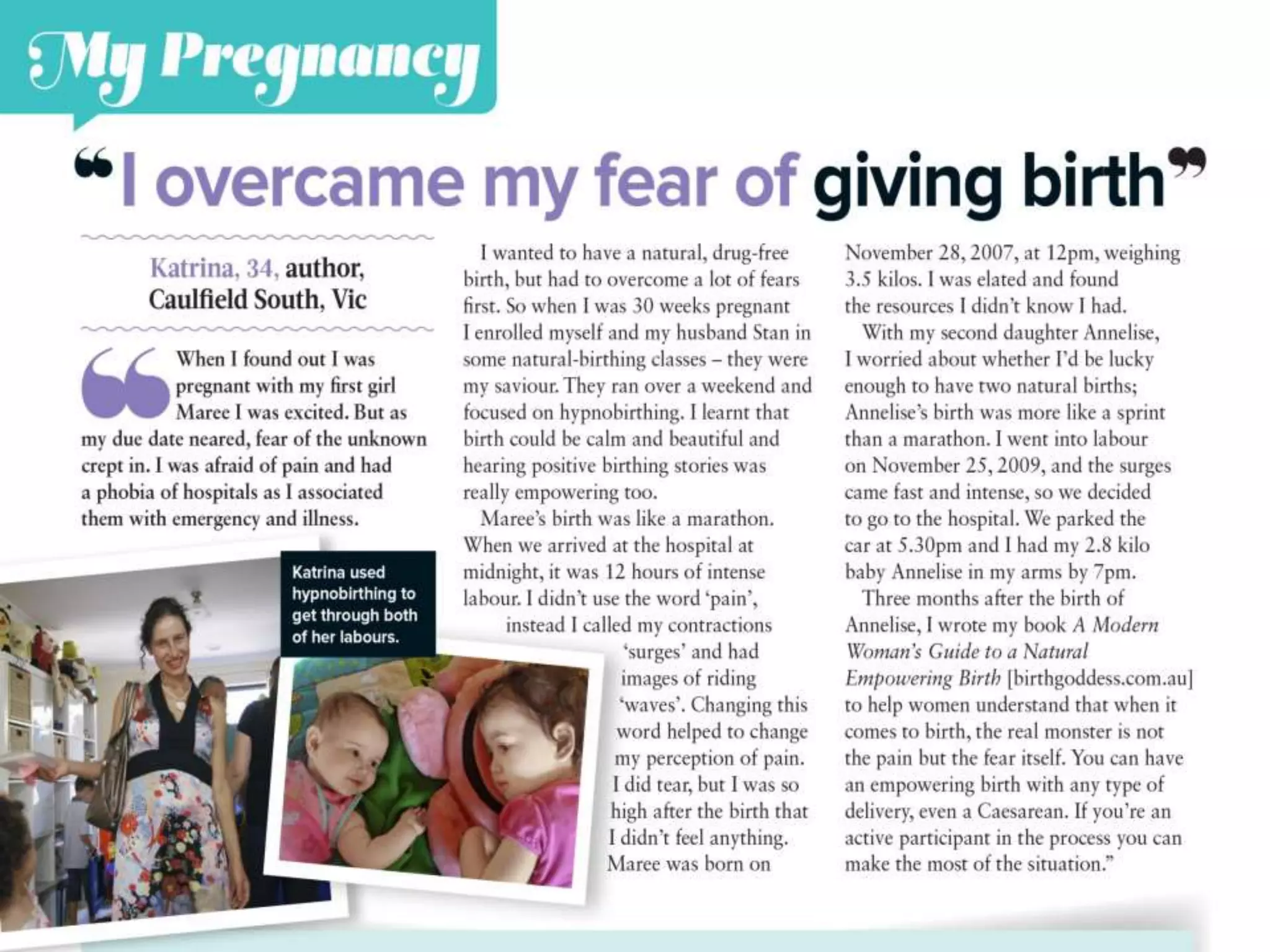
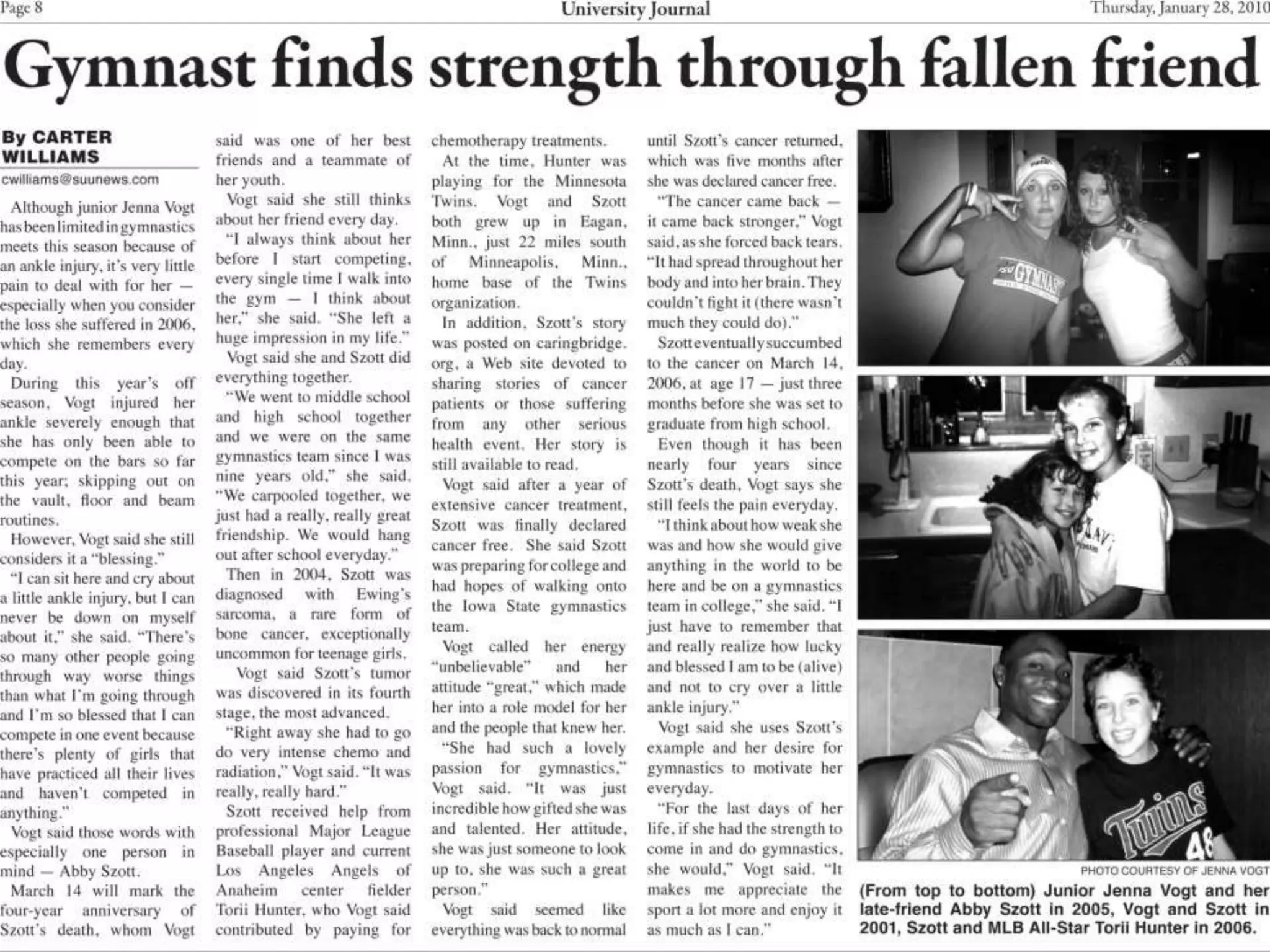
HUMAN INTEREST
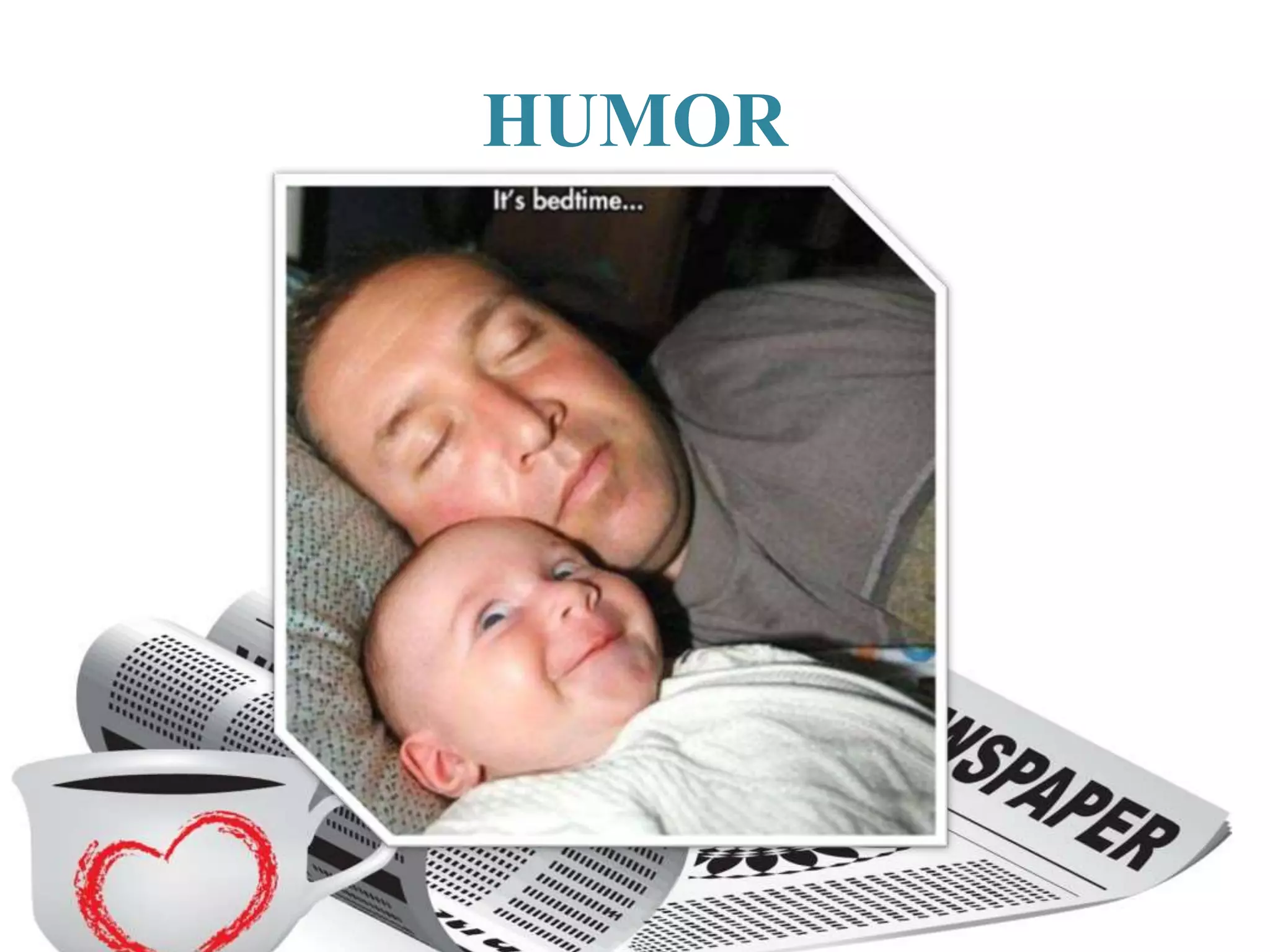
HUMOR
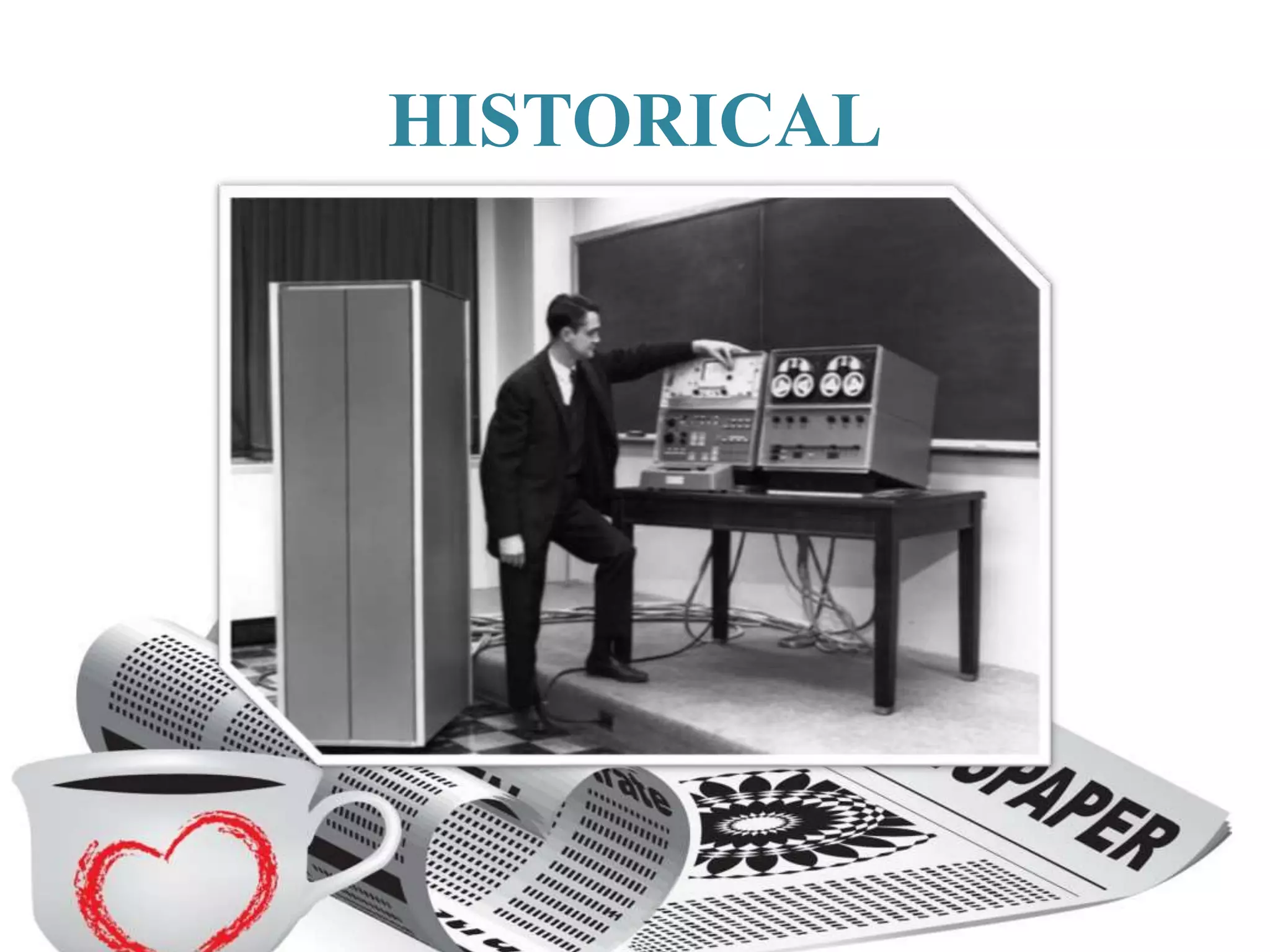
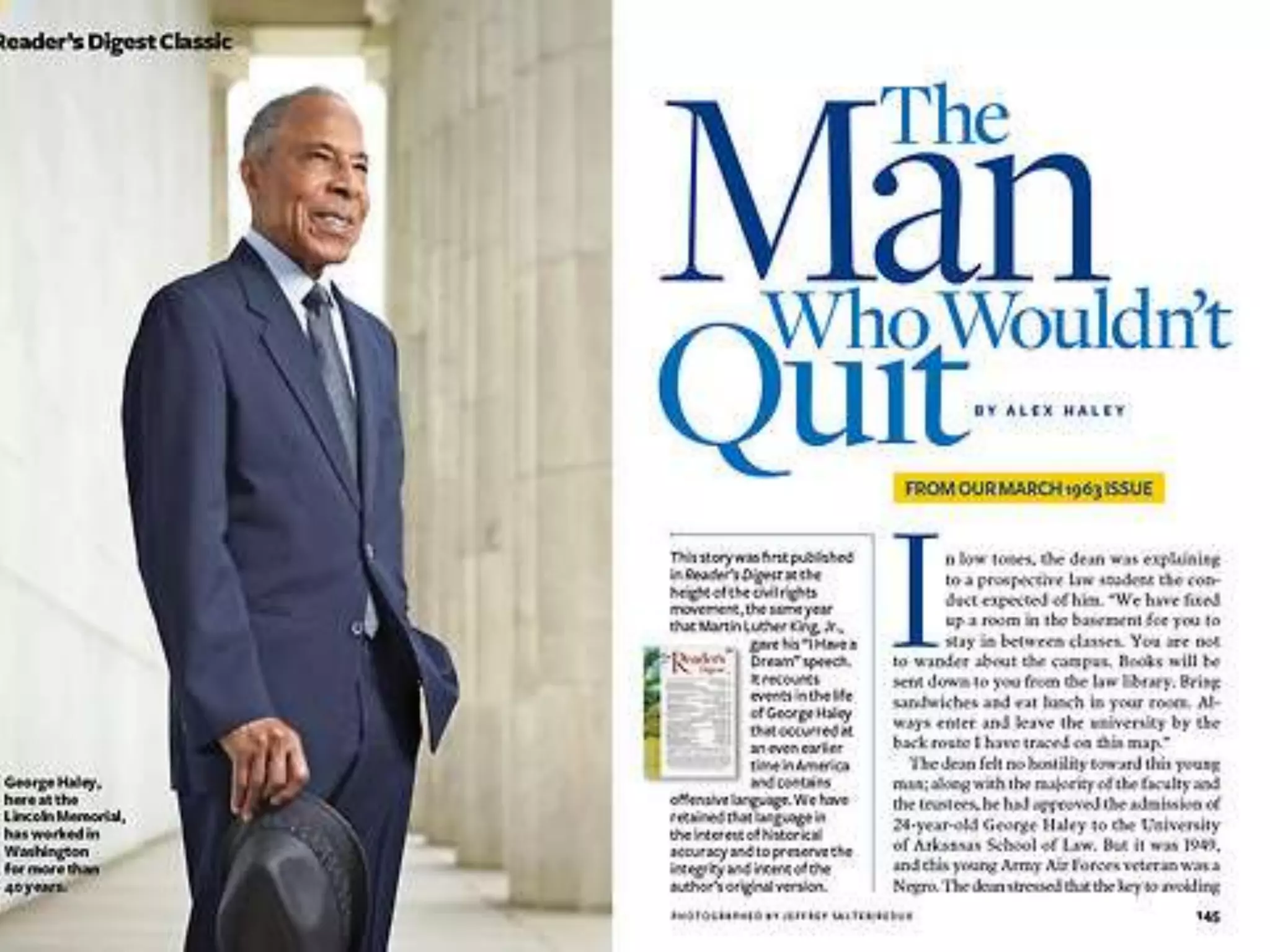
HISTORICAL
SEASONAL
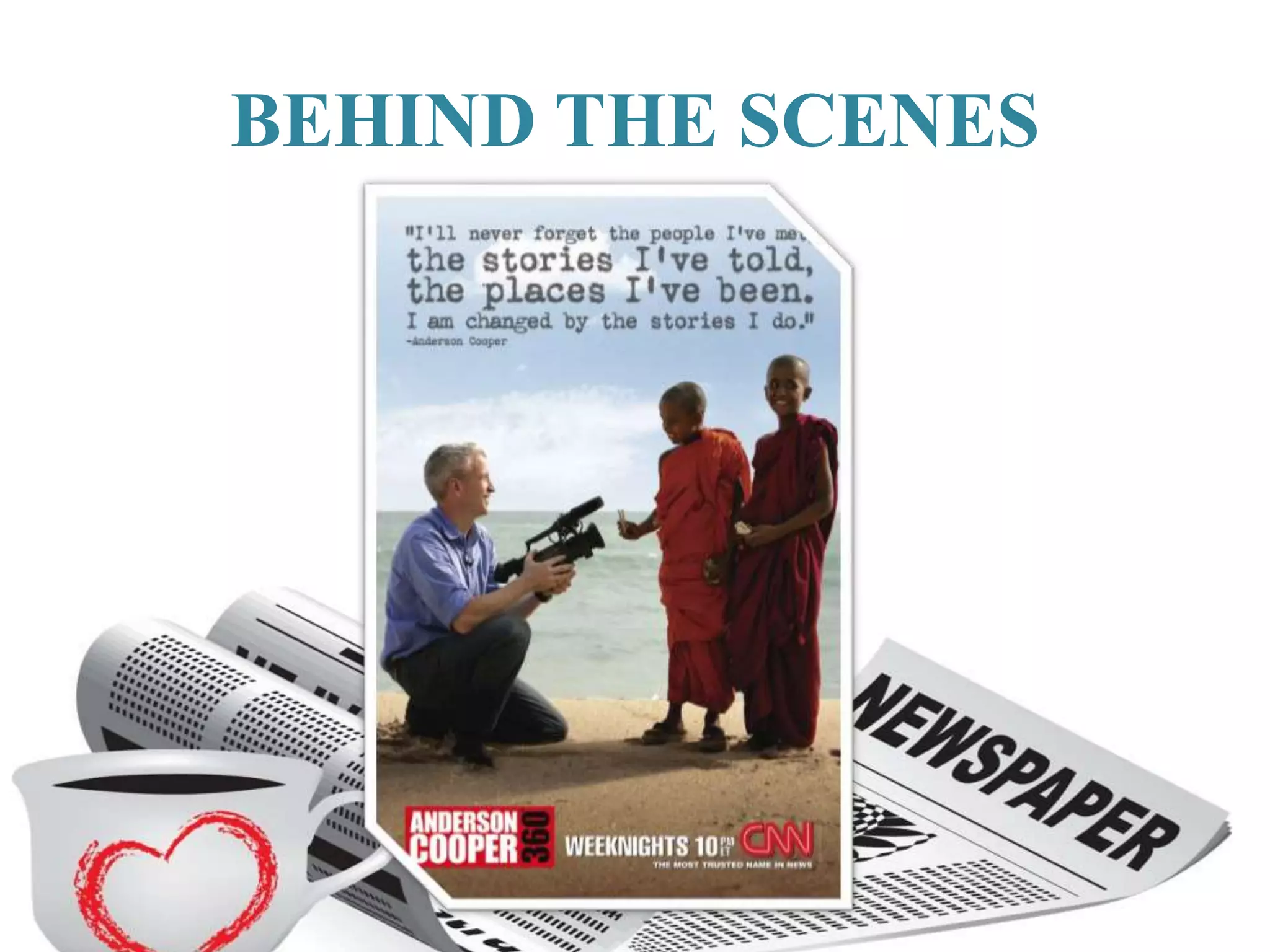
BEHIND THE SCENES
Journalism (News and Feature Writing)

Journalism (News and Feature Writing)

  • 1.
  • 5.
  • 6.
    “is a methodof inquiry and literary style that aims to provide a service to the public by the dissemination and analysis of news and other information.”
  • 7.
    FUNCTIONS… 1. Inform thepublic through the news coverage 2.Influence and mold the public opinion 3. Amuse or entertain the public 4. Serve and promote community welfare as a whole
  • 8.
    It can beshared through… PRINT
  • 12.
    Johannes Gutenberg (15thcentury) – invented the movable type printing press. However, Bibles and other books were among the first things produced by Gutenberg's press, it wasn't until the 17th century that the first newspapers were distributed in Europe.
  • 13.
    The Daily Courant Thefirst regularly published paper came out twice a week in England, as did the first daily.
  • 14.
  • 15.
    “journalism carried outby students on subjects related to campus life or issues published in publications only intended for campus distribution and readership.”
  • 16.
    Republic Act 7079or Campus Journalism Act of 1991: AN ACT PROVIDING FOR THE DEVELOPMENT AND PROMOTION OF CAMPUS JOURNALISM AND FOR OTHER PURPOSES
  • 17.
    Four I’s ofCampus Journalism INFORM INFLUENCE INTEREST INSPIRE
  • 18.
  • 19.
  • 20.
    “News is the communicationof selected information on current events.”
  • 23.
    WHO is involved?Who is affected? Who is going to benefit? WHAT is the news about and which matters to the readers?
  • 24.
    WHEN did theevent happen? When will it happen? How long will it last for? WHERE will the event take place?
  • 25.
    WHY is theevent important and necessary? Why is the story being written and reported to begin with? Why is it newsworthy? HOW will something work? How is something possible? How is it done?
  • 26.
    HEADLINE: must catch thescanner’s attention and should summarize the entire story in a few words. It should be in bolded and larger fonts. Example: “P-noy: I am not a thief”
  • 27.
  • 28.
    TYPES OF LEAD: Rarelyuse these... “Who lead”- begins with a person. The person is usually not the most important fact of the story.
  • 29.
    “When lead” -begins with time. Rarely is the time the most important factor. “Where lead” - begins with the place. Hardly ever is where the most important factor.
  • 30.
    Use these often... “Howlead”- begins with the how of the story. Used often. “Why lead”- begins with the cause the story. Used often. “What lead”- begins with the fact of the story. Used often.
  • 31.
    How to Writea News Story
  • 32.
    1. Begin witha lead. - Indicate the who, what, when, where, why and how. 2. Use the inverted pyramid style. - Most important information first followed by the rest of the details.
  • 33.
    3. Source thedata. - Include facts and data and mention the source. 4. Include Quotations. - Get quotes from involved and relevant people.
  • 34.
  • 35.
  • 37.
    “are interesting articlesthat focus on certain people, places, events, or subject matters like career, relationships, money, health, lifestyle, etc.”
  • 38.
    “are longer, morein-depth, and more elaborate than hard news stories.”
  • 39.
  • 40.
  • 41.
  • 42.
  • 43.
  • 44.