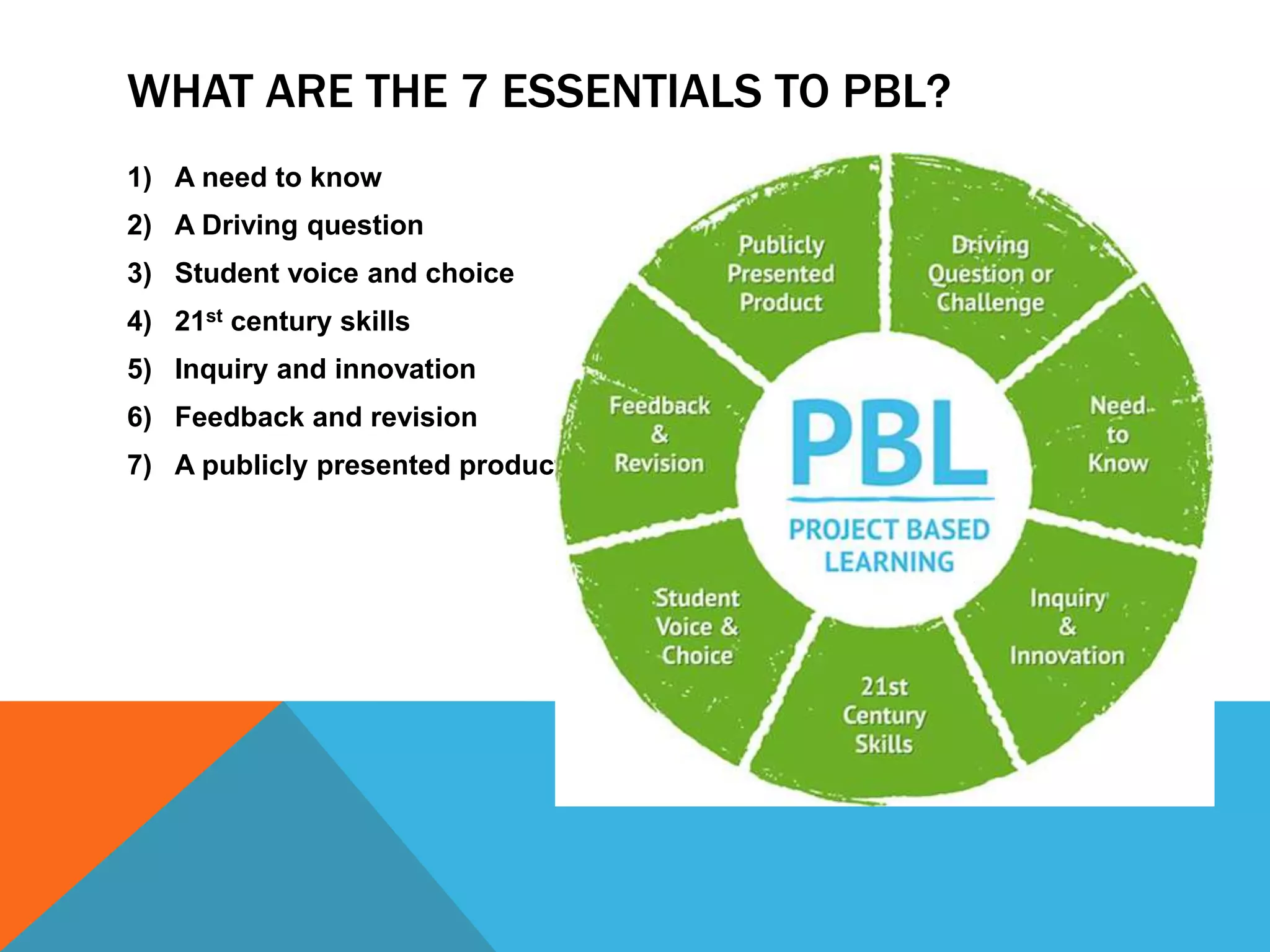



WHAT ARE THE 7 ESSENTIALS TO PBL?
1) A need to know
2) A Driving question
3) Student voice and choice
4) 21st century skills
5) Inquiry and innovation
6) Feedback and revision
7) A publicly presented product
WHAT IS PBL?
Project Based Learning is a teaching method in which students gain knowledge
and skills by working for an extended period of time to investigate and
respond to an engaging and complex question, problem, or challenge. In
Gold Standard PBL, Essential Project Design Elements include:
Key Knowledge, Understanding, and Success Skills - The project is focused on
student learning goals, including standards-based content and skills such as
critical thinking/problem solving, collaboration, and self-management.
Challenging Problem or Question - The project is framed by a meaningful
problem to solve or a question to answer, at the appropriate level of
challenge.
Sustained Inquiry - Students engage in a rigorous, extended process of asking
questions, finding resources, and applying information.
Authenticity - The project features real-world context, tasks and tools, quality
standards, or impact – or speaks to students’ personal concerns, interests,
and issues in their lives.
Student Voice & Choice - Students make some decisions about the project,
including how they work and what they create.
Reflection - Students and teachers reflect on learning, the effectiveness of their
inquiry and project activities, the quality of student work, obstacles and how
to overcome them.
Critique & Revision - Students give, receive, and use feedback to improve their
process and products.
Public Product - Students make their project work public by explaining,
displaying and/or presenting it to people beyond the classroom.
HISTORY COMES ALIVE
History comes alive for students as they develop
immigrant personas and become immigrants who make
the journey from Europe to the United States. Throughout
this process, students analyze primary source data to
create multimedia portfolios that illustrate their
experiences. Once on American soil, they participate in a
simulation of the Ellis Island immigration station. Students
then assume the roles of their immigrants and share their
experiences with the class. This exercise in creating
historical fiction, based on actual documents, photos, and
records, enables students to understand the motivations of
immigrants and the challenges they faced. This can be
part of a larger immigration unit where students also study
the experiences of other immigrant groups, or look at
immigration during different time periods or to different
countries.
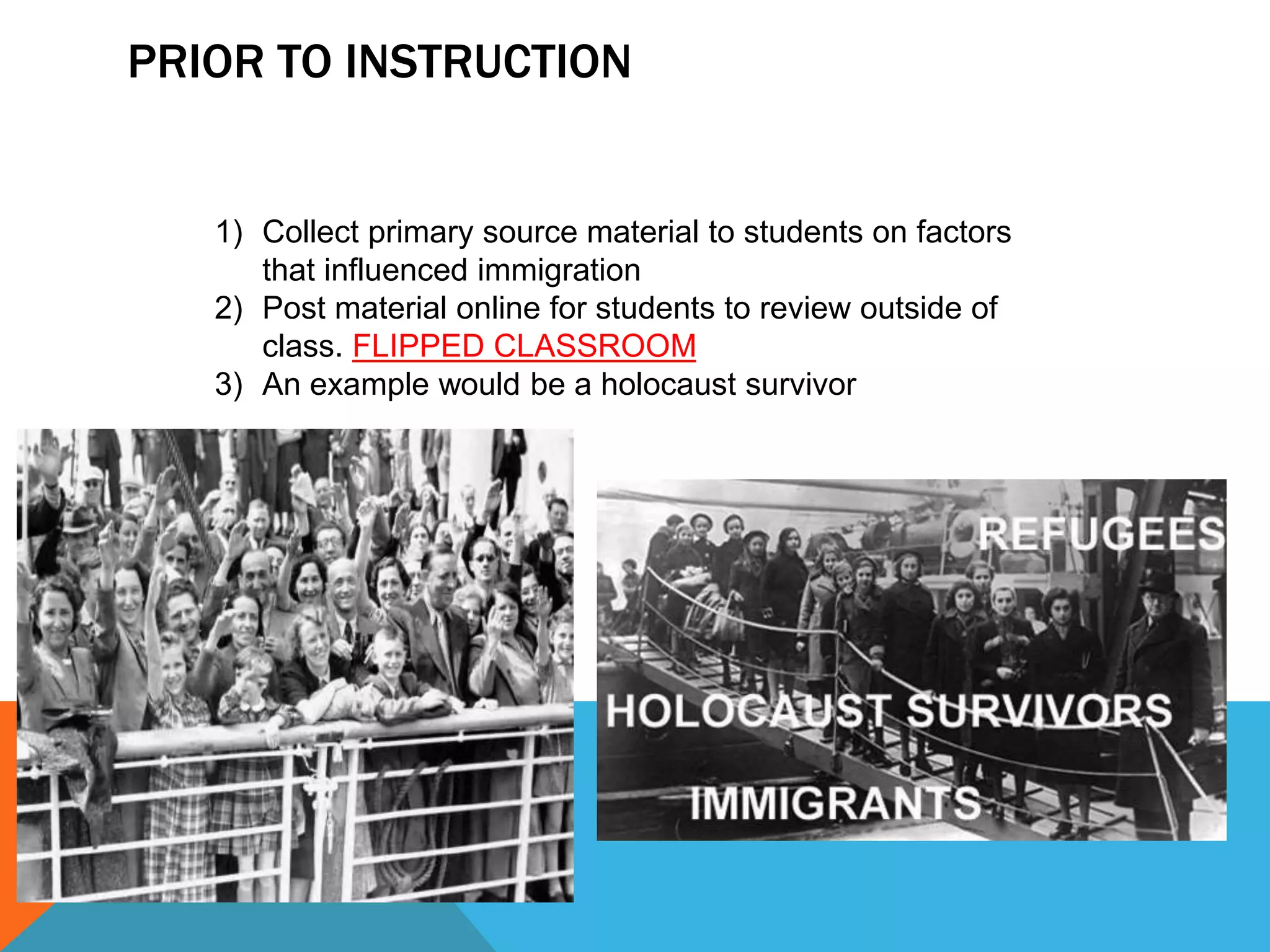
PRIOR TO INSTRUCTION
1) Collect primary source material to students on factors
that influenced immigration
2) Post material online for students to review outside of
class. FLIPPED CLASSROOM
3) An example would be a holocaust survivor
CLASSROOM DISCUSSION
PROJECT TIME
1) STUDENTS SHOULD BE DIVIDED INTO TEAMS
OF 2-4
2) EACH TEAM WILL BE RESPONSIBLE FOR
PREPARING A 5-10 MINUTE PRESENTATION ON
WHY JEWISH IMMIGRANTS (OR WHICHEVER
GROUP THEY CHOOSE) IMMIGRATED TO THE
US
• WHAT WERE THE CONDITIONS IN EUROPE
THAT CAUSED THEM TO LEAVE?
• WHAT WERE THEY HOPING TO FIND IN THE
US?
• STUDENTS SHOULD INCLUDE SOME PRIMARY
SOURCES IN THEIR RESEARCH. THIS COULD
INCLUDE DIARIES FROM IMMIGRANTS,
SPEECHES, OR NEWSPAPERS FROM THE ERA
3) A VISUAL COMPONENT WILL NEED TO BE
UTILIZED FOR THEIR PRESENTATION. THIS
COULD BE ANY FORM OF PRESENTATION
SOFTWARE OR VIDEO. STUDENTS ARE
ENCOURAGED TO BE CREATIVE BUT ALL REPORT
PROJECT CONTINUED
4) EACH TEAM MEMBER WILL BE REQUIRED TO SUBMIT AN
INDIVIDUAL PAPER THAT SHOULD BE BETWEEN 2-3 PAGES
• THIS SHOULD BE IN THE FORM OF 2 LETTERS
• LETTER 1- THE STUDENT SHOULD PRETEND THEY ARE
THE IMMIGRANT WRITING A LETTER TO THE UNITED
STATES. THEY SHOULD EXPLAIN THE CONIDITIONS IN
THEIR HOME COUNTRY AND WHY THEY WANT TO
IMMIGRATE TO AMERICA
• LETTER 2- THAT SAME IMMIGRANT SHOULD PRETEND IT
IS 30 YEARS IN THE FUTURE AND THEY ARE WRITING A
LETTER HOME TO THEIR NATIVE COUNTRY. THEY
SHOULD DESCRIBE THEIR EXPERIENCE GROWING UP
IN AMERICA.
WRAPPING UP
HAVE THE STUDENTS GO BACK TO THEIR
JOURNALS AND REFLECT ON THE ORIGINAL
QUESTIONS.
DEEPER LEARNING
• THIS ASSIGNMENT WILL ENCOURAGE DEEPER
LEARNING FOR THE STUDENTS BECAUSE THEY WILL
BE BECOME ACTIVELY INVOLVED IN HISTORY.
• STUDENTS WILL LEARN BY DOING

Josh pbl project

  • 2.
    WHAT ARE THE7 ESSENTIALS TO PBL? 1) A need to know 2) A Driving question 3) Student voice and choice 4) 21st century skills 5) Inquiry and innovation 6) Feedback and revision 7) A publicly presented product
  • 3.
    WHAT IS PBL? ProjectBased Learning is a teaching method in which students gain knowledge and skills by working for an extended period of time to investigate and respond to an engaging and complex question, problem, or challenge. In Gold Standard PBL, Essential Project Design Elements include: Key Knowledge, Understanding, and Success Skills - The project is focused on student learning goals, including standards-based content and skills such as critical thinking/problem solving, collaboration, and self-management. Challenging Problem or Question - The project is framed by a meaningful problem to solve or a question to answer, at the appropriate level of challenge. Sustained Inquiry - Students engage in a rigorous, extended process of asking questions, finding resources, and applying information. Authenticity - The project features real-world context, tasks and tools, quality standards, or impact – or speaks to students’ personal concerns, interests, and issues in their lives. Student Voice & Choice - Students make some decisions about the project, including how they work and what they create. Reflection - Students and teachers reflect on learning, the effectiveness of their inquiry and project activities, the quality of student work, obstacles and how to overcome them. Critique & Revision - Students give, receive, and use feedback to improve their process and products. Public Product - Students make their project work public by explaining, displaying and/or presenting it to people beyond the classroom.
  • 5.
    HISTORY COMES ALIVE Historycomes alive for students as they develop immigrant personas and become immigrants who make the journey from Europe to the United States. Throughout this process, students analyze primary source data to create multimedia portfolios that illustrate their experiences. Once on American soil, they participate in a simulation of the Ellis Island immigration station. Students then assume the roles of their immigrants and share their experiences with the class. This exercise in creating historical fiction, based on actual documents, photos, and records, enables students to understand the motivations of immigrants and the challenges they faced. This can be part of a larger immigration unit where students also study the experiences of other immigrant groups, or look at immigration during different time periods or to different countries.
  • 6.
    PRIOR TO INSTRUCTION 1)Collect primary source material to students on factors that influenced immigration 2) Post material online for students to review outside of class. FLIPPED CLASSROOM 3) An example would be a holocaust survivor
  • 7.
  • 8.
    PROJECT TIME 1) STUDENTSSHOULD BE DIVIDED INTO TEAMS OF 2-4 2) EACH TEAM WILL BE RESPONSIBLE FOR PREPARING A 5-10 MINUTE PRESENTATION ON WHY JEWISH IMMIGRANTS (OR WHICHEVER GROUP THEY CHOOSE) IMMIGRATED TO THE US • WHAT WERE THE CONDITIONS IN EUROPE THAT CAUSED THEM TO LEAVE? • WHAT WERE THEY HOPING TO FIND IN THE US? • STUDENTS SHOULD INCLUDE SOME PRIMARY SOURCES IN THEIR RESEARCH. THIS COULD INCLUDE DIARIES FROM IMMIGRANTS, SPEECHES, OR NEWSPAPERS FROM THE ERA 3) A VISUAL COMPONENT WILL NEED TO BE UTILIZED FOR THEIR PRESENTATION. THIS COULD BE ANY FORM OF PRESENTATION SOFTWARE OR VIDEO. STUDENTS ARE ENCOURAGED TO BE CREATIVE BUT ALL REPORT
  • 9.
    PROJECT CONTINUED 4) EACHTEAM MEMBER WILL BE REQUIRED TO SUBMIT AN INDIVIDUAL PAPER THAT SHOULD BE BETWEEN 2-3 PAGES • THIS SHOULD BE IN THE FORM OF 2 LETTERS • LETTER 1- THE STUDENT SHOULD PRETEND THEY ARE THE IMMIGRANT WRITING A LETTER TO THE UNITED STATES. THEY SHOULD EXPLAIN THE CONIDITIONS IN THEIR HOME COUNTRY AND WHY THEY WANT TO IMMIGRATE TO AMERICA • LETTER 2- THAT SAME IMMIGRANT SHOULD PRETEND IT IS 30 YEARS IN THE FUTURE AND THEY ARE WRITING A LETTER HOME TO THEIR NATIVE COUNTRY. THEY SHOULD DESCRIBE THEIR EXPERIENCE GROWING UP IN AMERICA.
  • 10.
    WRAPPING UP HAVE THESTUDENTS GO BACK TO THEIR JOURNALS AND REFLECT ON THE ORIGINAL QUESTIONS.
  • 11.
    DEEPER LEARNING • THISASSIGNMENT WILL ENCOURAGE DEEPER LEARNING FOR THE STUDENTS BECAUSE THEY WILL BE BECOME ACTIVELY INVOLVED IN HISTORY. • STUDENTS WILL LEARN BY DOING