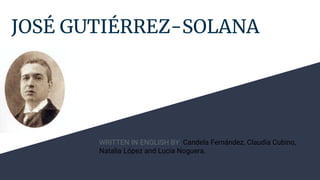
JOSÉ GUTIÉRREZ-SOLANA
WRITTEN IN ENGLISH BY: Candela Fernández, Claudia Cubino,
Natalia López and Lucia Noguera.
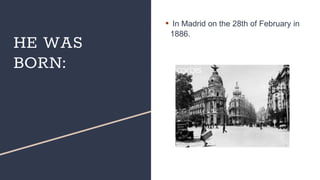
HE WAS
BORN:
▪ In Madrid on the 28th of February in
1886.
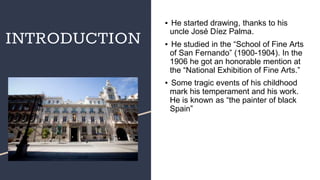
INTRODUCTION
▪ He started drawing, thanks to his
uncle José Díez Palma.
▪ He studied in the “School of Fine Arts
of San Fernando” (1900-1904). In the
1906 he got an honorable mention at
the “National Exhibition of Fine Arts.”
▪ Some tragic events of his childhood
mark his temperament and his work.
He is known as “the painter of black
Spain”
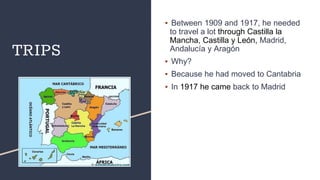
TRIPS
▪ Between 1909 and 1917, he needed
to travel a lot through Castilla la
Mancha, Castilla y León, Madrid,
Andalucía y Aragón
▪ Why?
▪ Because he had moved to Cantabria
▪ In 1917 he came back to Madrid
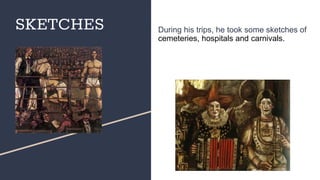
SKETCHES During his trips, he took some sketches of
cemeteries, hospitals and carnivals.
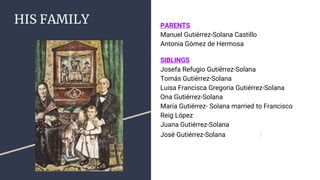
HIS FAMILY PARENTS
Manuel Gutiérrez-Solana Castillo
Antonia Gómez de Hermosa
SIBLINGS
Josefa Refugio Gutiérrez-Solana
Tomás Gutiérrez-Solana
Luisa Francisca Gregoria Gutiérrez-Solana
Ona Gutiérrez-Solana
María Gutiérrez- Solana married to Francisco
Reig López
Juana Gutiérrez-Solana
José Gutiérrez-Solana
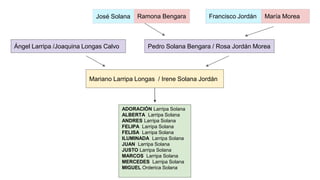
José Solana Ramona Bengara Francisco Jordán María Morea
Pedro Solana Bengara / Rosa Jordán MoreaÁngel Larripa /Joaquina Longas Calvo
Mariano Larripa Longas / Irene Solana Jordán
ADORACIÓN Larripa Solana
ALBERTA Larripa Solana
ANDRES Larripa Solana
FELIPA Larripa Solana
FELISA Larripa Solana
ILUMINADA Larripa Solana
JUAN Larripa Solana
JUSTO Larripa Solana
MARCOS Larripa Solana
MERCEDES Larripa Solana
MIGUEL Orderica Solana
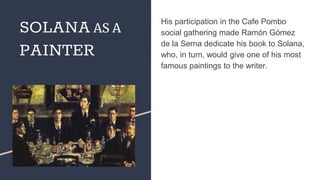
His participation in the Cafe Pombo
social gathering made Ramón Gómez
de la Serna dedicate his book to Solana,
who, in turn, would give one of his most
famous paintings to the writer.
SOLANA AS A
PAINTER
SOLANA AS
AN ENGRAVER
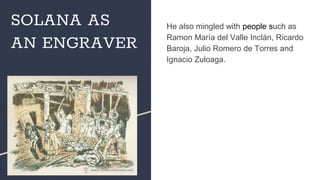
He also mingled with people such as
Ramon María del Valle Inclán, Ricardo
Baroja, Julio Romero de Torres and
Ignacio Zuloaga.
SOLANA AS A
WRITER
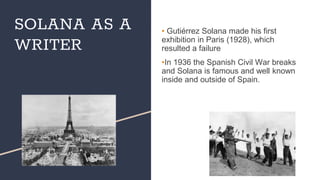
• Gutiérrez Solana made his first
exhibition in Paris (1928), which
resulted a failure
•In 1936 the Spanish Civil War breaks
and Solana is famous and well known
inside and outside of Spain.
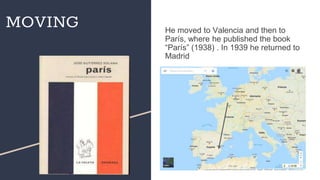
MOVING He moved to Valencia and then to
París, where he published the book
“París” (1938) . In 1939 he returned to
Madrid
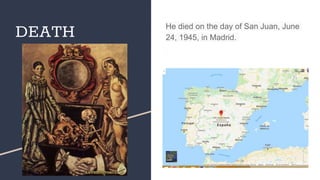
DEATH He died on the day of San Juan, June
24, 1945, in Madrid.
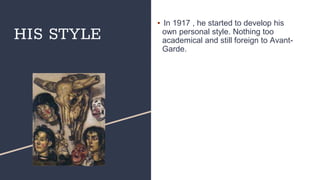
HIS STYLE
▪ In 1917 , he started to develop his
own personal style. Nothing too
academical and still foreign to Avant-
Garde.
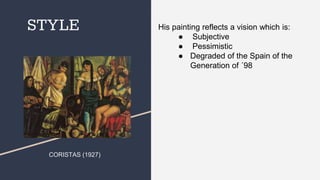
STYLE
CORISTAS (1927)
His painting reflects a vision which is:
● Subjective
● Pessimistic
● Degraded of the Spain of the
Generation of ´98
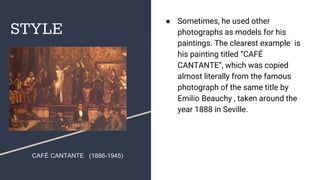
STYLE
● Sometimes, he used other
photographs as models for his
paintings. The clearest example is
his painting titled “CAFÉ
CANTANTE”, which was copied
almost literally from the famous
photograph of the same title by
Emilio Beauchy , taken around the
year 1888 in Seville.
CAFÉ CANTANTE (1886-1945)
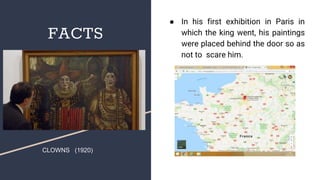
FACTS
● In his first exhibition in Paris in
which the king went, his paintings
were placed behind the door so as
not to scare him.
CLOWNS (1920)
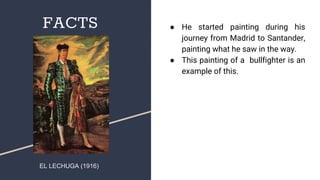
FACTS ● He started painting during his
journey from Madrid to Santander,
painting what he saw in the way.
● This painting of a bullfighter is an
example of this.
EL LECHUGA (1916)
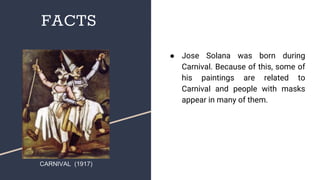
FACTS
● Jose Solana was born during
Carnival. Because of this, some of
his paintings are related to
Carnival and people with masks
appear in many of them.
CARNIVAL (1917)
THE
END!

José Gutiérrez-Solana

  • 1.
    JOSÉ GUTIÉRREZ-SOLANA WRITTEN INENGLISH BY: Candela Fernández, Claudia Cubino, Natalia López and Lucia Noguera.
  • 2.
    HE WAS BORN: ▪ InMadrid on the 28th of February in 1886.
  • 3.
    INTRODUCTION ▪ He starteddrawing, thanks to his uncle José Díez Palma. ▪ He studied in the “School of Fine Arts of San Fernando” (1900-1904). In the 1906 he got an honorable mention at the “National Exhibition of Fine Arts.” ▪ Some tragic events of his childhood mark his temperament and his work. He is known as “the painter of black Spain”
  • 4.
    TRIPS ▪ Between 1909and 1917, he needed to travel a lot through Castilla la Mancha, Castilla y León, Madrid, Andalucía y Aragón ▪ Why? ▪ Because he had moved to Cantabria ▪ In 1917 he came back to Madrid
  • 5.
    SKETCHES During histrips, he took some sketches of cemeteries, hospitals and carnivals.
  • 6.
    HIS FAMILY PARENTS ManuelGutiérrez-Solana Castillo Antonia Gómez de Hermosa SIBLINGS Josefa Refugio Gutiérrez-Solana Tomás Gutiérrez-Solana Luisa Francisca Gregoria Gutiérrez-Solana Ona Gutiérrez-Solana María Gutiérrez- Solana married to Francisco Reig López Juana Gutiérrez-Solana José Gutiérrez-Solana
  • 7.
    José Solana RamonaBengara Francisco Jordán María Morea Pedro Solana Bengara / Rosa Jordán MoreaÁngel Larripa /Joaquina Longas Calvo Mariano Larripa Longas / Irene Solana Jordán ADORACIÓN Larripa Solana ALBERTA Larripa Solana ANDRES Larripa Solana FELIPA Larripa Solana FELISA Larripa Solana ILUMINADA Larripa Solana JUAN Larripa Solana JUSTO Larripa Solana MARCOS Larripa Solana MERCEDES Larripa Solana MIGUEL Orderica Solana
  • 8.
    His participation inthe Cafe Pombo social gathering made Ramón Gómez de la Serna dedicate his book to Solana, who, in turn, would give one of his most famous paintings to the writer. SOLANA AS A PAINTER
  • 9.
    SOLANA AS AN ENGRAVER Healso mingled with people such as Ramon María del Valle Inclán, Ricardo Baroja, Julio Romero de Torres and Ignacio Zuloaga.
  • 10.
    SOLANA AS A WRITER •Gutiérrez Solana made his first exhibition in Paris (1928), which resulted a failure •In 1936 the Spanish Civil War breaks and Solana is famous and well known inside and outside of Spain.
  • 11.
    MOVING He movedto Valencia and then to París, where he published the book “París” (1938) . In 1939 he returned to Madrid
  • 12.
    DEATH He diedon the day of San Juan, June 24, 1945, in Madrid.
  • 13.
    HIS STYLE ▪ In1917 , he started to develop his own personal style. Nothing too academical and still foreign to Avant- Garde.
  • 14.
    STYLE CORISTAS (1927) His paintingreflects a vision which is: ● Subjective ● Pessimistic ● Degraded of the Spain of the Generation of ´98
  • 15.
    STYLE ● Sometimes, heused other photographs as models for his paintings. The clearest example is his painting titled “CAFÉ CANTANTE”, which was copied almost literally from the famous photograph of the same title by Emilio Beauchy , taken around the year 1888 in Seville. CAFÉ CANTANTE (1886-1945)
  • 16.
    FACTS ● In hisfirst exhibition in Paris in which the king went, his paintings were placed behind the door so as not to scare him. CLOWNS (1920)
  • 17.
    FACTS ● Hestarted painting during his journey from Madrid to Santander, painting what he saw in the way. ● This painting of a bullfighter is an example of this. EL LECHUGA (1916)
  • 18.
    FACTS ● Jose Solanawas born during Carnival. Because of this, some of his paintings are related to Carnival and people with masks appear in many of them. CARNIVAL (1917)
  • 19.