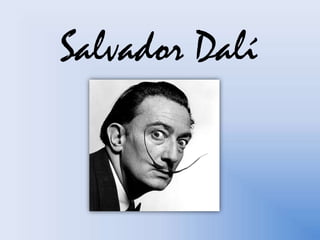
Salvador Dalí
Biography
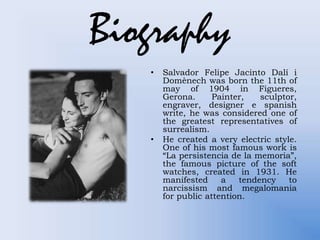
• Salvador Felipe Jacinto Dalí i
Domènech was born the 11th of
may of 1904 in Figueres,
Gerona. Painter, sculptor,
engraver, designer e spanish
write, he was considered one of
the greatest representatives of
surrealism.
• He created a very electric style.
One of his most famous work is
“La persistencia de la memoria”,
the famous picture of the soft
watches, created in 1931. He
manifested a tendency to
narcissism and megalomania
for public attention.
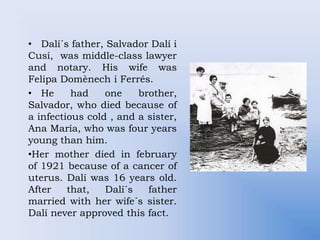
• Dalí´s father, Salvador Dalí i
Cusí, was middle-class lawyer
and notary. His wife was
Felipa Domènech i Ferrés.
• He had one brother,
Salvador, who died because of
a infectious cold , and a sister,
Ana María, who was four years
young than him.
•Her mother died in february
of 1921 because of a cancer of
uterus. Dalí was 16 years old.
After that, Dalí´s father
married with her wife´s sister.
Dalí never approved this fact.
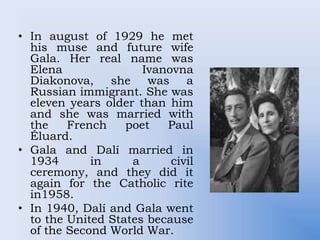
• In august of 1929 he met
his muse and future wife
Gala. Her real name was
Elena Ivanovna
Diakonova, she was a
Russian immigrant. She was
eleven years older than him
and she was married with
the French poet Paul
Éluard.
• Gala and Dalí married in
1934 in a civil
ceremony, and they did it
again for the Catholic rite
in1958.
• In 1940, Dalí and Gala went
to the United States because
of the Second World War.
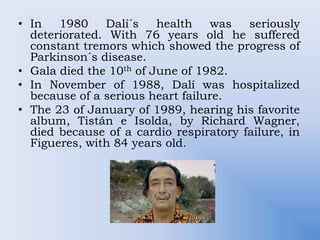
• In 1980 Dalí´s health was seriously
deteriorated. With 76 years old he suffered
constant tremors which showed the progress of
Parkinson´s disease.
• Gala died the 10th of June of 1982.
• In November of 1988, Dalí was hospitalized
because of a serious heart failure.
• The 23 of January of 1989, hearing his favorite
album, Tistán e Isolda, by Richard Wagner,
died because of a cardio respiratory failure, in
Figueres, with 84 years old.
Artistic Formation
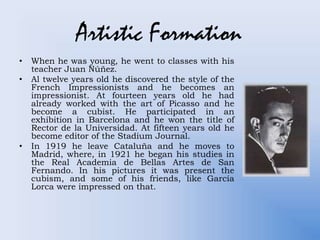
• When he was young, he went to classes with his
teacher Juan Núñez.
• Al twelve years old he discovered the style of the
French Impressionists and he becomes an
impressionist. At fourteen years old he had
already worked with the art of Picasso and he
become a cubist. He participated in an
exhibition in Barcelona and he won the title of
Rector de la Universidad. At fifteen years old he
become editor of the Stadium Journal.
• In 1919 he leave Cataluña and he moves to
Madrid, where, in 1921 he began his studies in
the Real Academia de Bellas Artes de San
Fernando. In his pictures it was present the
cubism, and some of his friends, like García
Lorca were impressed on that.
• In 1924 he illustrated a book
for the first time.
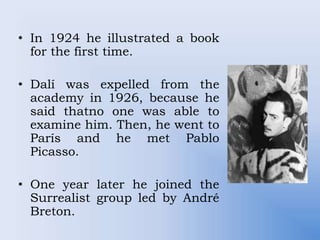
• Dalí was expelled from the
academy in 1926, because he
said thatno one was able to
examine him. Then, he went to
París and he met Pablo
Picasso.
• One year later he joined the
Surrealist group led by André
Breton.
• At the end of 1934, Dalí went through a surrealist
trial which resulted in her expulsion from the
movement.
• In 1960 Dalí started to work in a personal theater
and museum. It was the eldest of their individual
projects.
• In 1982, Dali was granted the title of Marqués de
Púbol by the king Juan Carlos
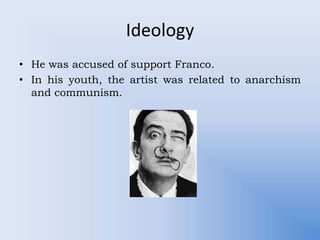
Ideology
• He was accused of support Franco.
• In his youth, the artist was related to anarchism
and communism.
Simbolismo
• Watches.
• Elephants, which create a sense of
ghostly unreality.
• Egg, which is a symbol of love and
hope.
• Ants, as symbol of death and sexual
desire
• Snail, as symbol of decadence and
terror.
Video
• https://www.youtube.com/watch?v=q-
HAyqUPmeo

Salvador dalí presentacion

  • 1.
  • 2.
    Biography • Salvador FelipeJacinto Dalí i Domènech was born the 11th of may of 1904 in Figueres, Gerona. Painter, sculptor, engraver, designer e spanish write, he was considered one of the greatest representatives of surrealism. • He created a very electric style. One of his most famous work is “La persistencia de la memoria”, the famous picture of the soft watches, created in 1931. He manifested a tendency to narcissism and megalomania for public attention.
  • 3.
    • Dalí´s father,Salvador Dalí i Cusí, was middle-class lawyer and notary. His wife was Felipa Domènech i Ferrés. • He had one brother, Salvador, who died because of a infectious cold , and a sister, Ana María, who was four years young than him. •Her mother died in february of 1921 because of a cancer of uterus. Dalí was 16 years old. After that, Dalí´s father married with her wife´s sister. Dalí never approved this fact.
  • 4.
    • In augustof 1929 he met his muse and future wife Gala. Her real name was Elena Ivanovna Diakonova, she was a Russian immigrant. She was eleven years older than him and she was married with the French poet Paul Éluard. • Gala and Dalí married in 1934 in a civil ceremony, and they did it again for the Catholic rite in1958. • In 1940, Dalí and Gala went to the United States because of the Second World War.
  • 5.
    • In 1980Dalí´s health was seriously deteriorated. With 76 years old he suffered constant tremors which showed the progress of Parkinson´s disease. • Gala died the 10th of June of 1982. • In November of 1988, Dalí was hospitalized because of a serious heart failure. • The 23 of January of 1989, hearing his favorite album, Tistán e Isolda, by Richard Wagner, died because of a cardio respiratory failure, in Figueres, with 84 years old.
  • 6.
    Artistic Formation • Whenhe was young, he went to classes with his teacher Juan Núñez. • Al twelve years old he discovered the style of the French Impressionists and he becomes an impressionist. At fourteen years old he had already worked with the art of Picasso and he become a cubist. He participated in an exhibition in Barcelona and he won the title of Rector de la Universidad. At fifteen years old he become editor of the Stadium Journal. • In 1919 he leave Cataluña and he moves to Madrid, where, in 1921 he began his studies in the Real Academia de Bellas Artes de San Fernando. In his pictures it was present the cubism, and some of his friends, like García Lorca were impressed on that.
  • 7.
    • In 1924he illustrated a book for the first time. • Dalí was expelled from the academy in 1926, because he said thatno one was able to examine him. Then, he went to París and he met Pablo Picasso. • One year later he joined the Surrealist group led by André Breton.
  • 8.
    • At theend of 1934, Dalí went through a surrealist trial which resulted in her expulsion from the movement. • In 1960 Dalí started to work in a personal theater and museum. It was the eldest of their individual projects. • In 1982, Dali was granted the title of Marqués de Púbol by the king Juan Carlos
  • 9.
    Ideology • He wasaccused of support Franco. • In his youth, the artist was related to anarchism and communism.
  • 10.
    Simbolismo • Watches. • Elephants,which create a sense of ghostly unreality. • Egg, which is a symbol of love and hope. • Ants, as symbol of death and sexual desire • Snail, as symbol of decadence and terror.
  • 11.