Downloaded 53 times
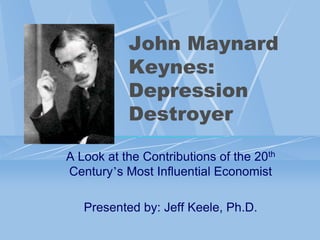
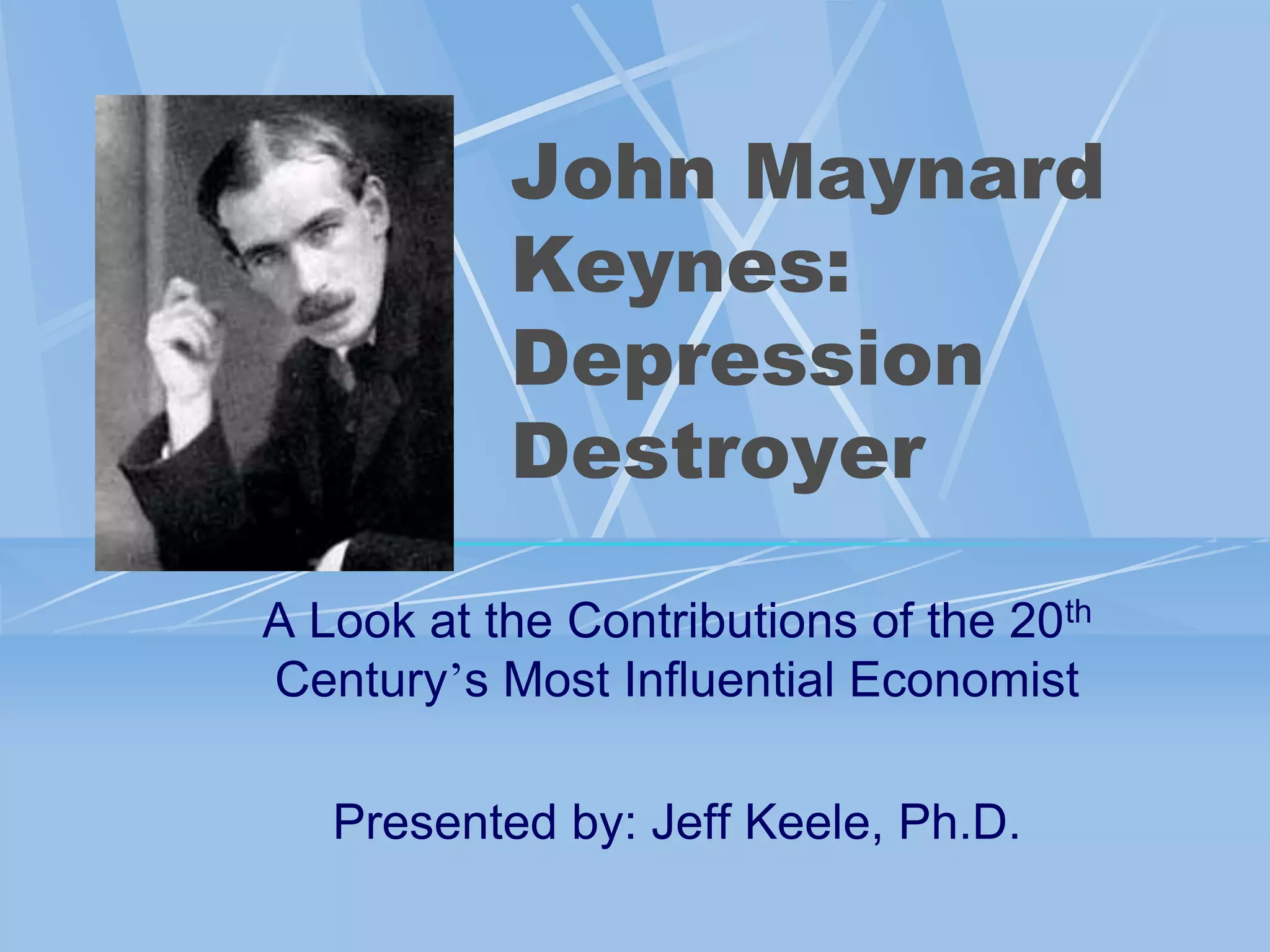
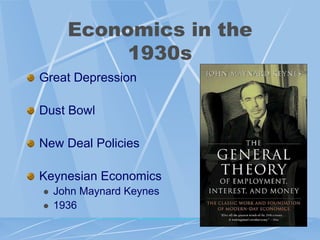

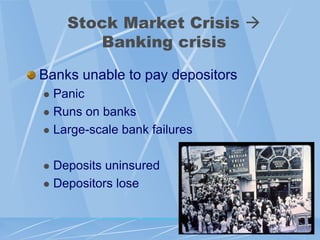
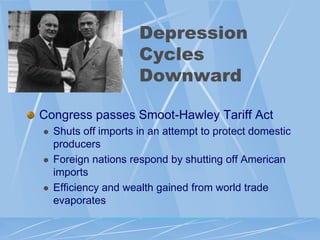
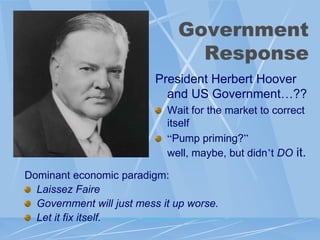
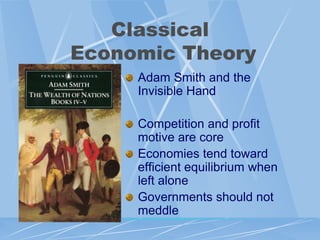
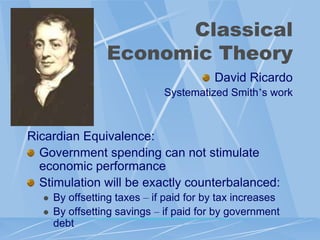
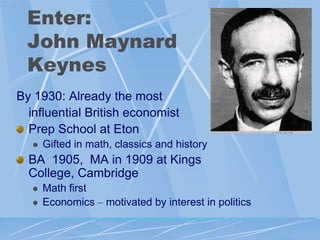

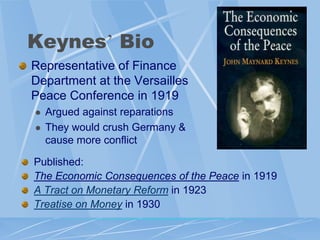
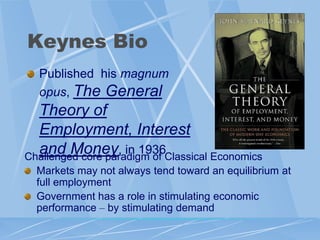
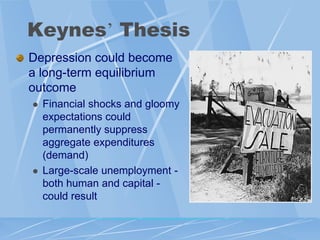
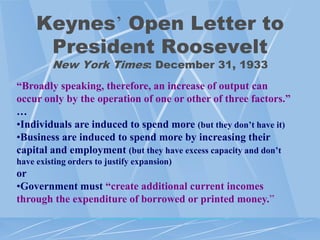
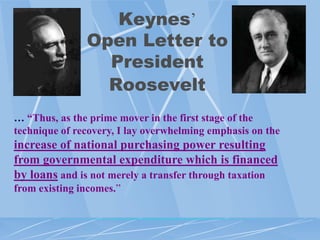


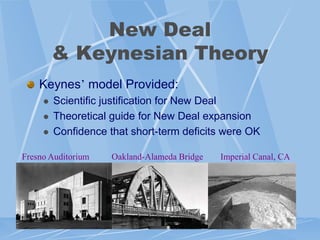

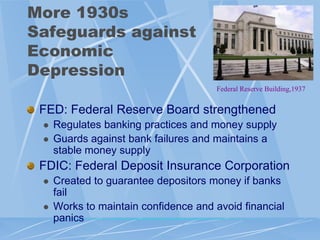

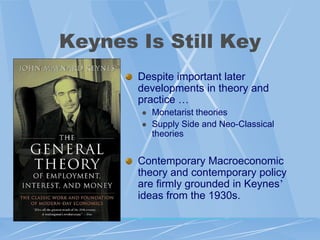

John Maynard Keynes was a 20th century British economist whose ideas helped shape policy responses to the Great Depression. His 1936 work, The General Theory of Employment, Interest and Money, challenged classical economic theories that markets would naturally reach full employment. Keynes argued that government needs to stimulate aggregate demand through spending, especially during economic downturns, in order to boost employment. His ideas helped justify New Deal programs in the US and influenced the establishment of institutions and policies aimed at preventing future depressions, including automatic stabilizers, the FDIC, SEC and Federal Reserve reforms. While later challenged, Keynesian economics remain influential in macroeconomic theory and policy.


![Causes of The Great Depression [slideshow]](https://cdn.slidesharecdn.com/ss_thumbnails/causesofthegreatdepressionshow-150909215502-lva1-app6891-thumbnail.jpg?width=640&height=640&fit=bounds)


