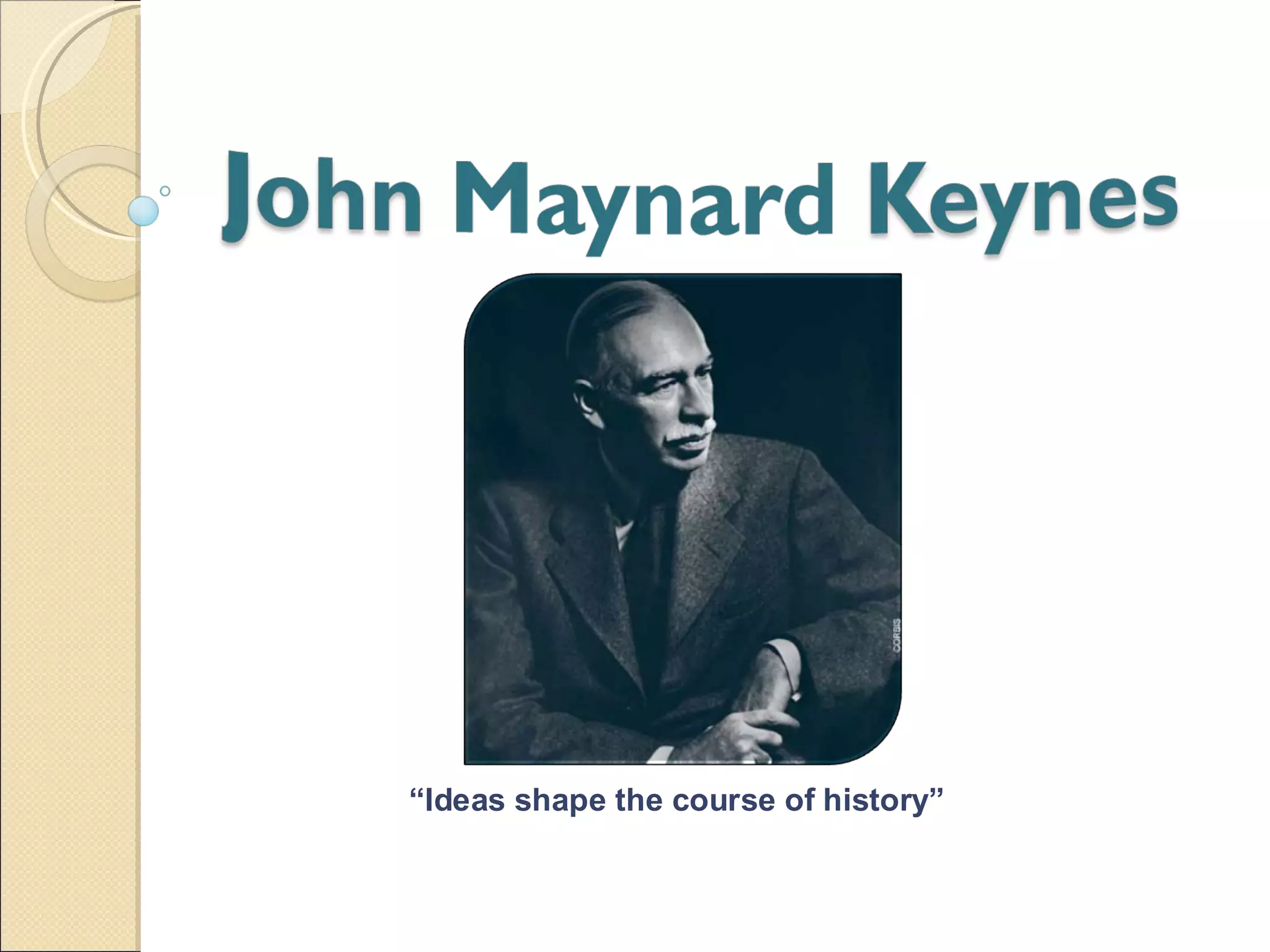
“Ideas shape the course of history”
Biography
 Britisheconomist
 Born on June 1883
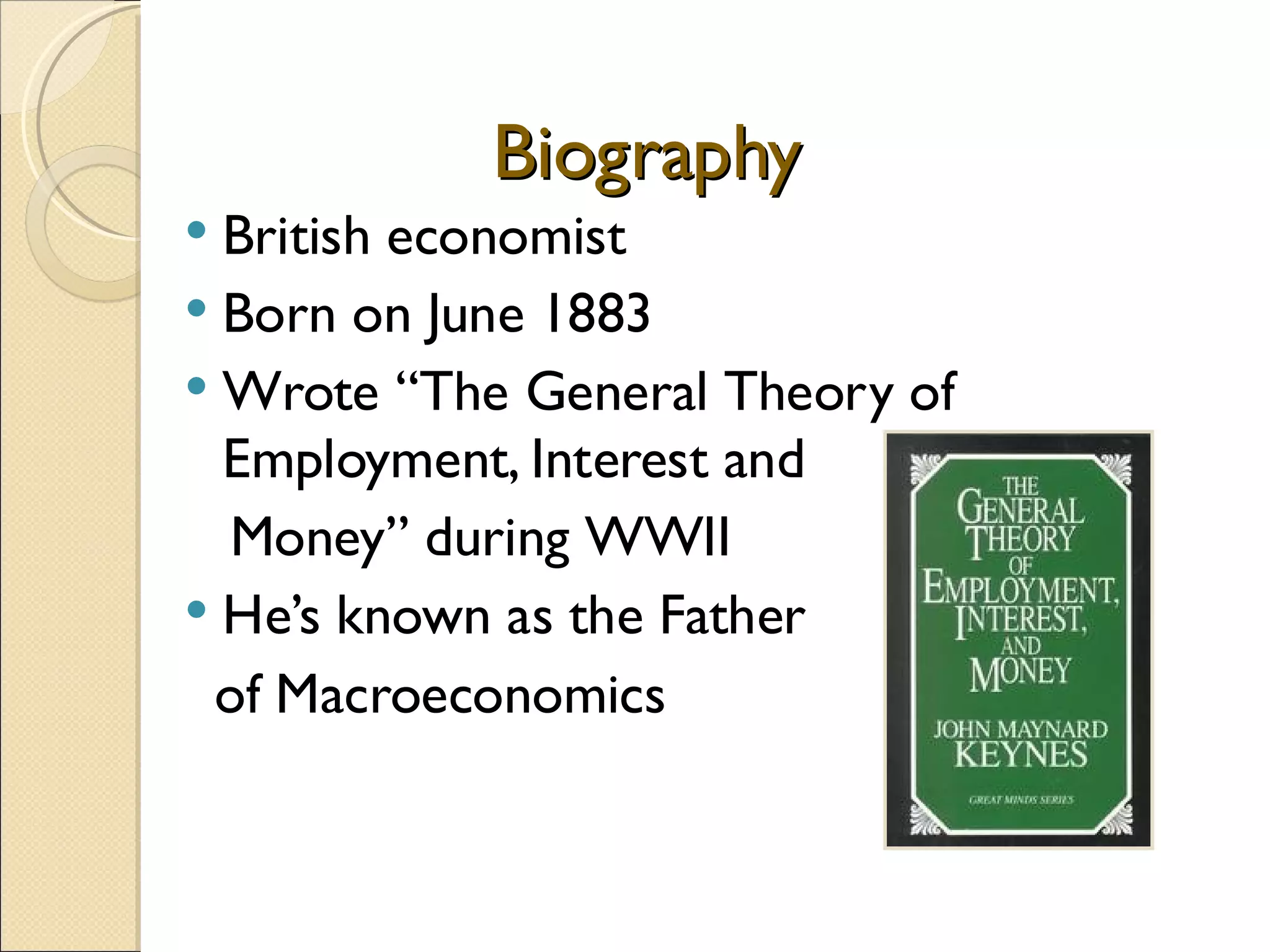
 Wrote “The General Theory of
  Employment, Interest and
  Money” during WWII
 He’s known as the Father
 of Macroeconomics
Major Achievements
 Helped in the economy’s recovery during
  the Great Depression
 Influenced the general economic boom by
  Western Nations between 1945-1975
 Formed the basis of Keynesian economics
 Introduced the Macroecomics theory
    ◦ He believed that government spending
      could pull an economy out of recession
The Great Depression
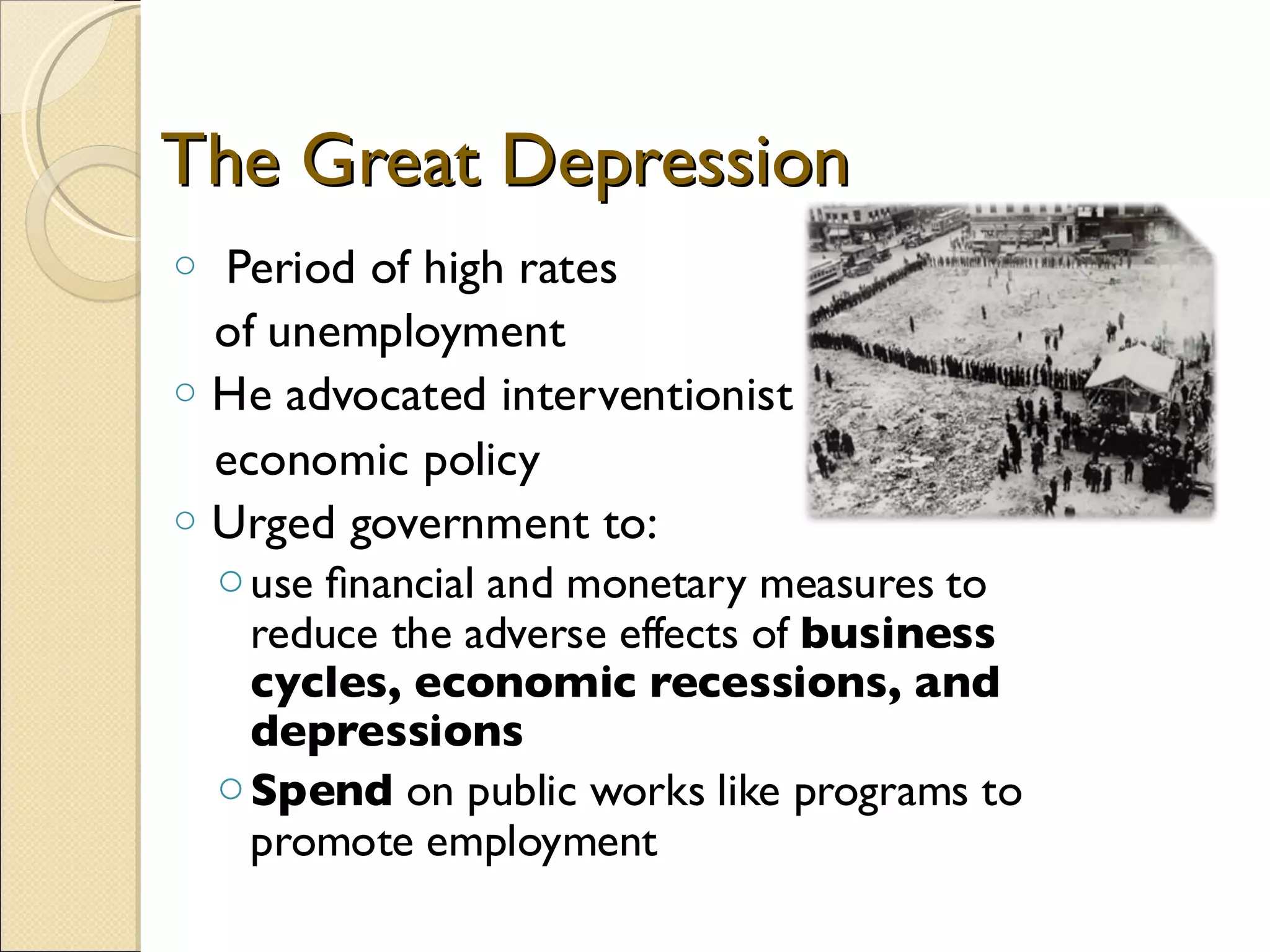
o Period of high rates
  of unemployment
o He advocated interventionist
  economic policy
o Urged government to:
    o use financial and monetary measures to
      reduce the adverse effects of business
      cycles, economic recessions, and
      depressions
    o Spend on public works like programs to
      promote employment
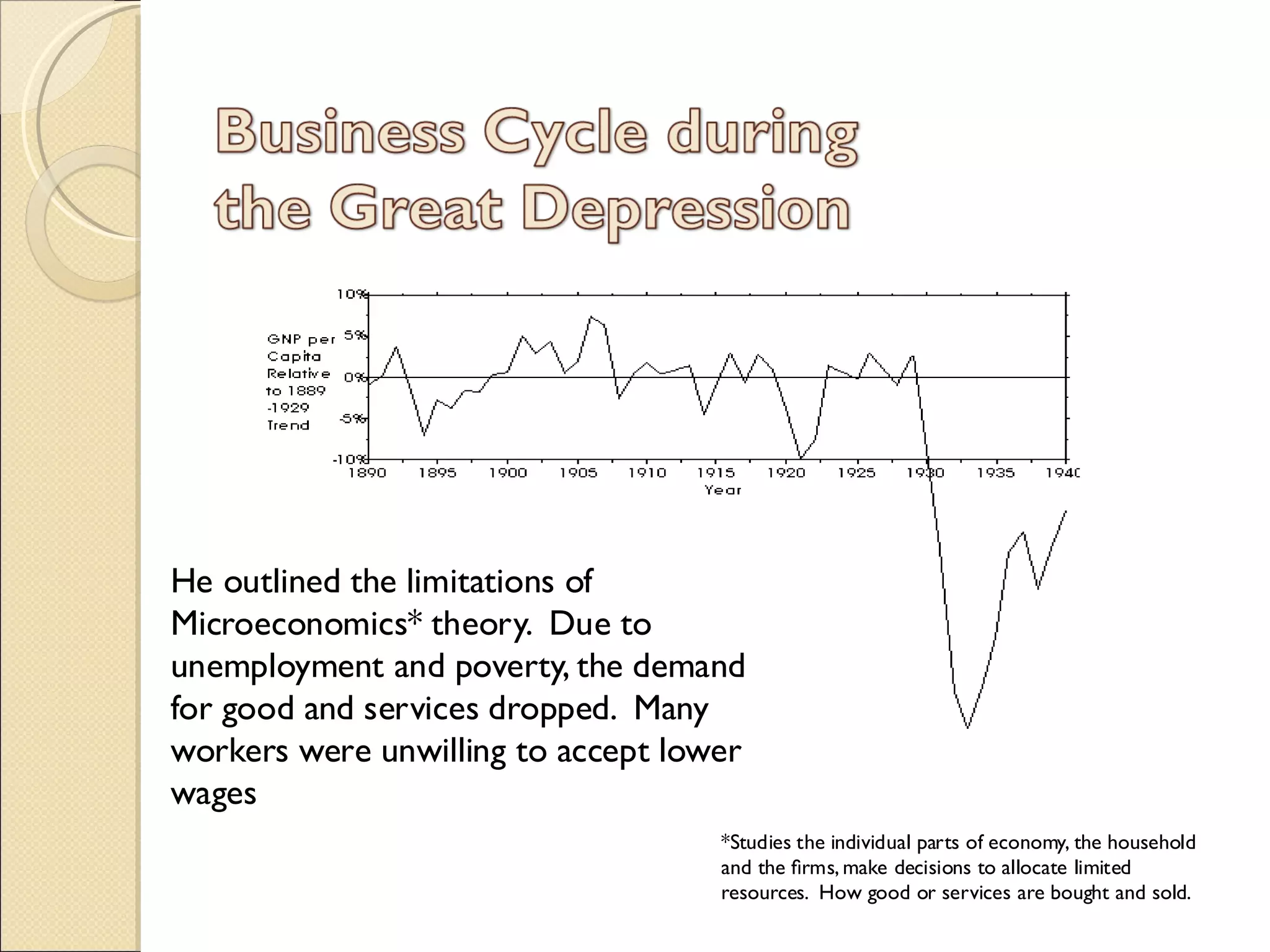
He outlined the limitations of
Microeconomics* theory. Due to
unemployment and poverty, the demand
for good and services dropped. Many
workers were unwilling to accept lower
wages
                                    *Studies the individual parts of economy, the household
                                    and the firms, make decisions to allocate limited
                                    resources. How good or services are bought and sold.
 High unemployment rate greatly influenced the
  development of macroeconomics
 Challenged the established neoclassical economics
 Introduced important concepts such as:
    o   Consumption
    o   Multiplier
    o   Marginal efficiency of capital
    o   Liquidity preference
                                                 END OF
   Government's responsibility is to        NEOCLASSICAL
    ◦ Reach and maintain full employment        THEORIES!
    ◦ Regulate markets and free trade      such as Laissez-faire
Keynesian Economics Impact
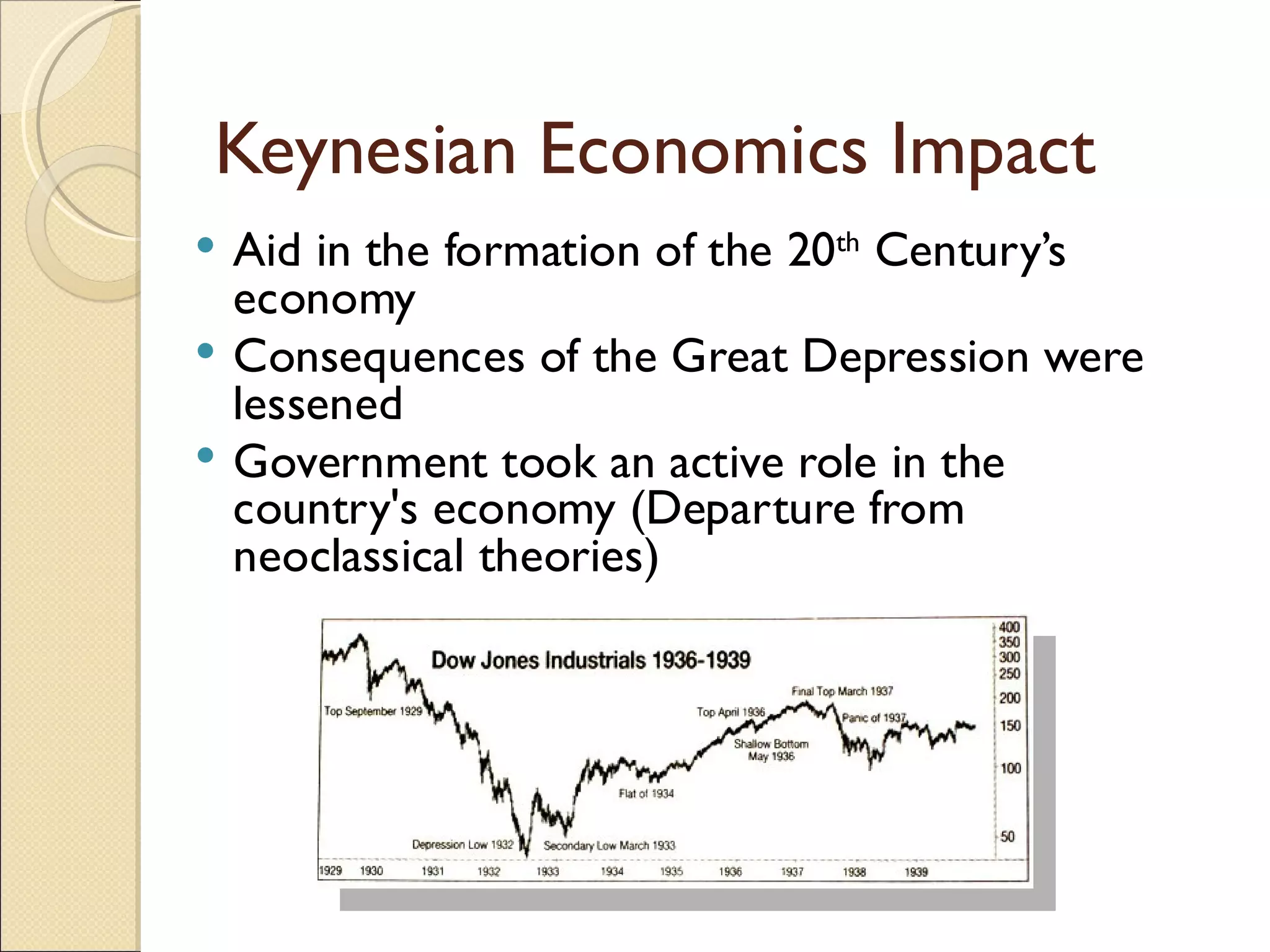
 Aid in the formation of the 20th Century’s
  economy
 Consequences of the Great Depression were
  lessened
 Government took an active role in the
  country's economy (Departure from
  neoclassical theories)
Why did the Keynesian theory
didn't work?
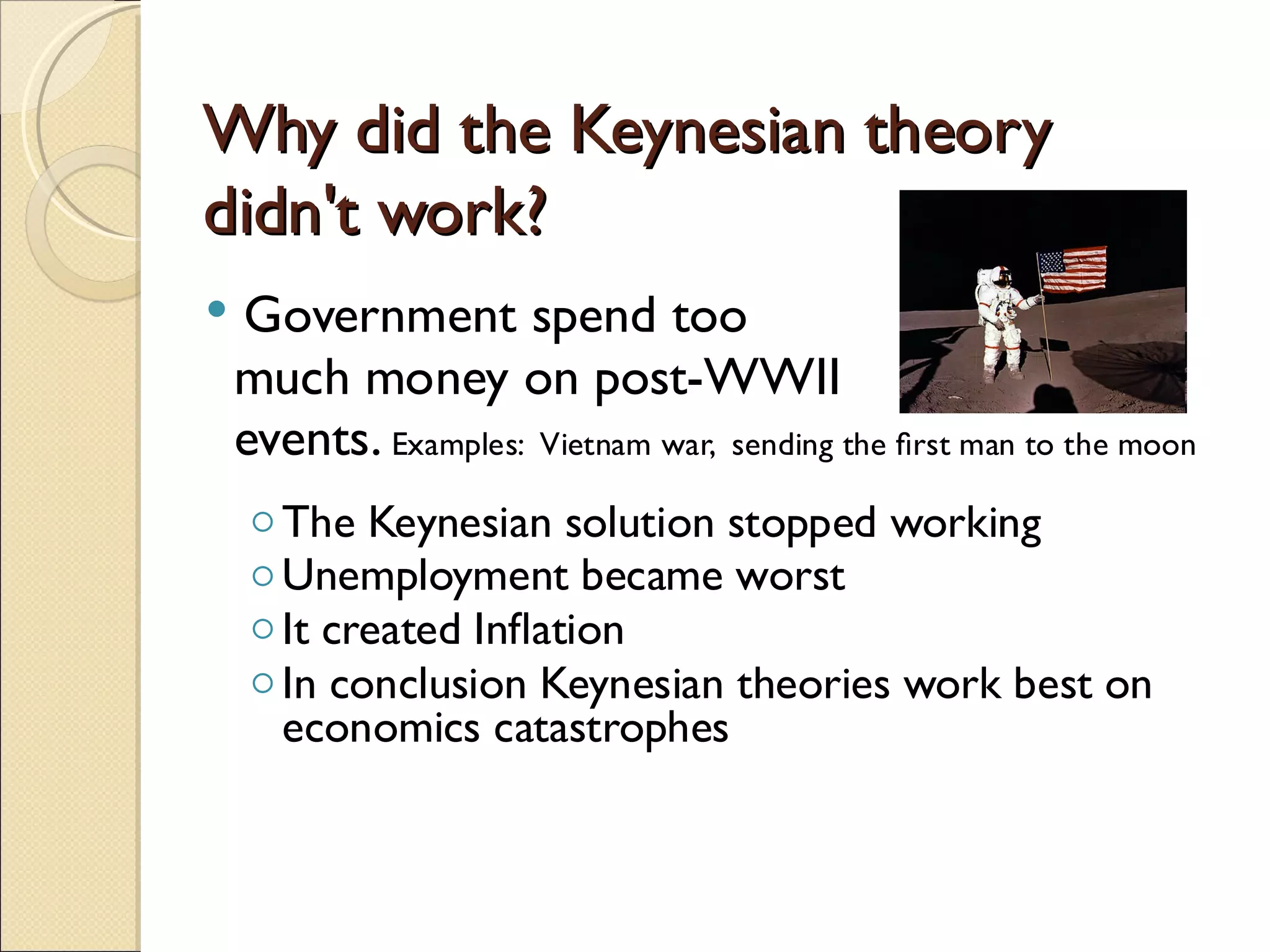
   Government spend too
    much money on post-WWII
    events. Examples: Vietnam war, sending the first man to the moon
    ◦ The Keynesian solution stopped working
    ◦ Unemployment became worst
    ◦ It created Inflation
    ◦ In conclusion Keynesian theories work best on
      economics catastrophes
Keynesian Economics Nowadays
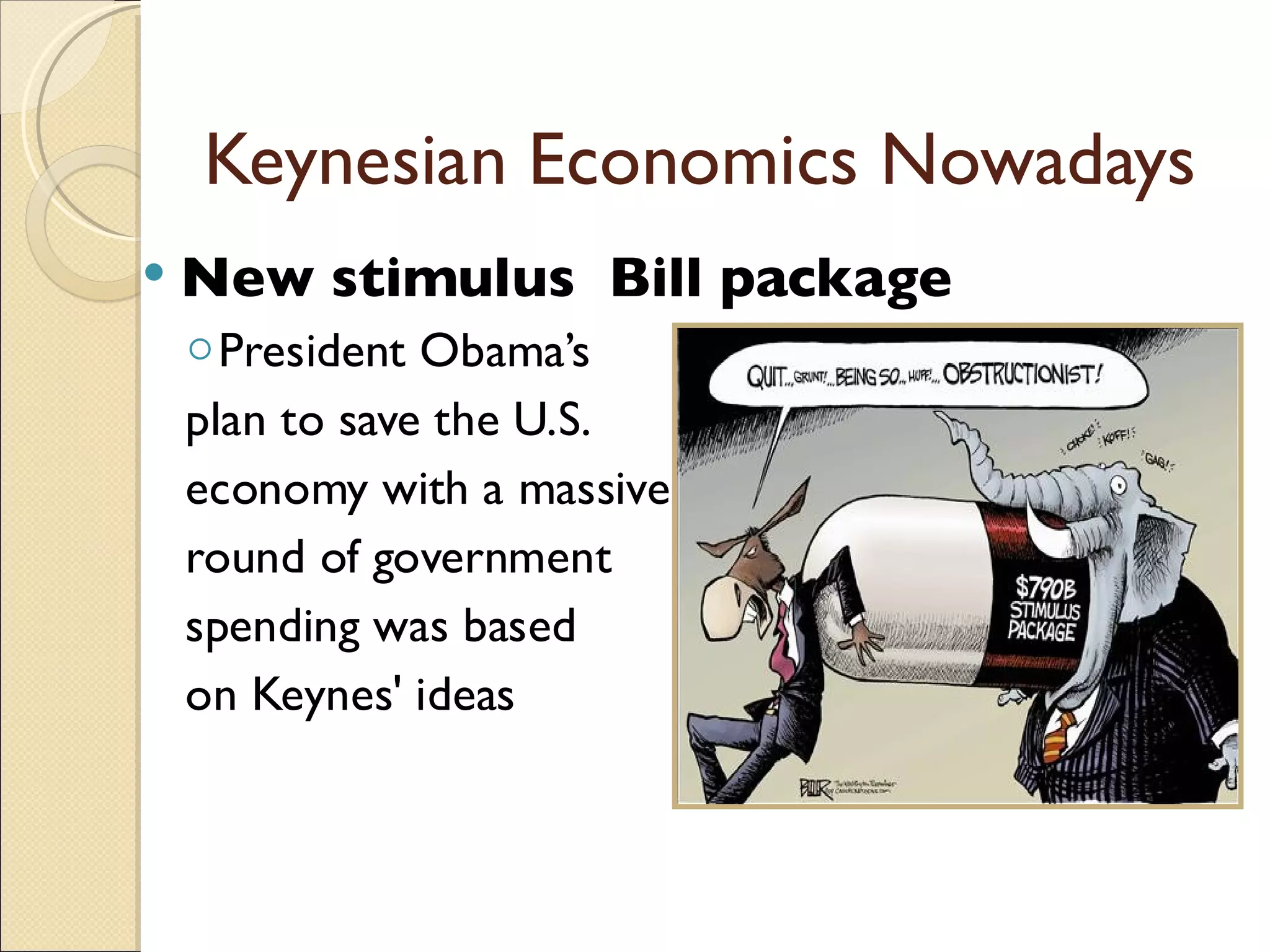
   New stimulus Bill package
    ◦ President Obama’s
    plan to save the U.S.
    economy with a massive
    round of government
    spending was based
    on Keynes' ideas
Bibliography
   Ryan, James John Maynard Keynes John Maynard Keynes; 2005, p1-2, 2p
   Columbia Electronic Encyclopedia, 6th Edition; 10/1/2009, p1-1, 1p. See Keynes’s Collected Writings
(30 vol.,
    1971–80) Biography by R. Skidelsky (3 vol., 1986–2001); G. Fletcher, the Keynesian Revolution and Its Critics
(1987);
    P. Clarke, The Keynesian Revolution in the Making, 1924–1936
(1989).
   NPR story: Davidson, Adam and Blumberg, Alex report was produced in collaboration with Chicago Public Radio's
    This American Life, Obama Gives Keynes His First Real-World Test, 2009
   Keynes, John M., The General Theory of Investment, Interest and Money 1936
   Lawler, JosephThe American Spectator, We’re All Keynesian Again, 2009

John M Keynes Presentation

  • 1.
    “Ideas shape thecourse of history”
  • 2.
    Biography  Britisheconomist  Bornon June 1883  Wrote “The General Theory of Employment, Interest and Money” during WWII  He’s known as the Father of Macroeconomics
  • 3.
    Major Achievements  Helpedin the economy’s recovery during the Great Depression  Influenced the general economic boom by Western Nations between 1945-1975  Formed the basis of Keynesian economics  Introduced the Macroecomics theory ◦ He believed that government spending could pull an economy out of recession
  • 4.
    The Great Depression oPeriod of high rates of unemployment o He advocated interventionist economic policy o Urged government to: o use financial and monetary measures to reduce the adverse effects of business cycles, economic recessions, and depressions o Spend on public works like programs to promote employment
  • 5.
    He outlined thelimitations of Microeconomics* theory. Due to unemployment and poverty, the demand for good and services dropped. Many workers were unwilling to accept lower wages *Studies the individual parts of economy, the household and the firms, make decisions to allocate limited resources. How good or services are bought and sold.
  • 6.
     High unemploymentrate greatly influenced the development of macroeconomics  Challenged the established neoclassical economics  Introduced important concepts such as: o Consumption o Multiplier o Marginal efficiency of capital o Liquidity preference END OF  Government's responsibility is to NEOCLASSICAL ◦ Reach and maintain full employment THEORIES! ◦ Regulate markets and free trade such as Laissez-faire
  • 7.
    Keynesian Economics Impact Aid in the formation of the 20th Century’s economy  Consequences of the Great Depression were lessened  Government took an active role in the country's economy (Departure from neoclassical theories)
  • 8.
    Why did theKeynesian theory didn't work?  Government spend too much money on post-WWII events. Examples: Vietnam war, sending the first man to the moon ◦ The Keynesian solution stopped working ◦ Unemployment became worst ◦ It created Inflation ◦ In conclusion Keynesian theories work best on economics catastrophes
  • 9.
    Keynesian Economics Nowadays  New stimulus Bill package ◦ President Obama’s plan to save the U.S. economy with a massive round of government spending was based on Keynes' ideas
  • 10.
    Bibliography  Ryan, James John Maynard Keynes John Maynard Keynes; 2005, p1-2, 2p  Columbia Electronic Encyclopedia, 6th Edition; 10/1/2009, p1-1, 1p. See Keynes’s Collected Writings (30 vol., 1971–80) Biography by R. Skidelsky (3 vol., 1986–2001); G. Fletcher, the Keynesian Revolution and Its Critics (1987); P. Clarke, The Keynesian Revolution in the Making, 1924–1936 (1989).  NPR story: Davidson, Adam and Blumberg, Alex report was produced in collaboration with Chicago Public Radio's This American Life, Obama Gives Keynes His First Real-World Test, 2009  Keynes, John M., The General Theory of Investment, Interest and Money 1936  Lawler, JosephThe American Spectator, We’re All Keynesian Again, 2009