JOB ANALYSIS
Job Analysis: A Basic
Human Resource Tool
Job Analysis, Job and
Position
• Job analysis - Systematic process of
determining the skills, duties, and
knowledge required for performing jobs
in an organization
• Job - Consists of a group of tasks that
must be performed for an organization
to achieve its goals
• Position - Collection of tasks and
responsibilities performed by one
person
Questions Job Analysis
Should Answer
• What physical and mental tasks does the
worker accomplish?
• When does the job have to be completed?
• Where is the job to be accomplished?
• How does the worker do the job?
• Why is the job done?
• What qualifications are needed to perform
the job?
When Job Analysis Is
Performed
• When the organization is
founded
• When new jobs are created
• When jobs are changed
significantly as a result of new
technologies, methods,
procedures, or systems
Job
Descriptions/Specifications
• Job description - A document that
provides information regarding the
tasks, duties, and responsibilities
of the job
• Job specification - Minimum
acceptable qualifications that a
person should possess in order to
perform a particular job
Reasons For Conducting
Job Analysis
• Staffing
• Training and Development
• Compensation and Benefits
• Safety and Health
• Employee and Labor Relations
• Legal Considerations
Job Analysis for Teams
• Historically, companies established
permanent jobs and filled these jobs
with people who best fit the job
description
• In some firms today, people are being
hired and paid on a project basis
• Today whenever someone asks "What is
your job description?" the reply might
well be "Whatever."
Types of Job Analysis
Information
• Work activities
• Worker-oriented activities
• Machines, tools, equipment, and
work aids used
• Job-related tangibles and intangibles
• Work performance
• Job content
• Personal requirements for the job
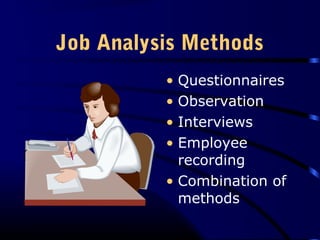
Job Analysis Methods
• Questionnaires
• Observation
• Interviews
• Employee
recording
• Combination of
methods
Conducting Job Analysis
• Interested in gathering
data regarding what is
involved in performing a
particular job
• People who participate in
job analysis
People Who Participate in Job
Analysis Should Include
(at a minimum)
• Employee
• Employee’s immediate
supervisor
• Job analyst
• Consultants
Items Typically Included in Job
Descriptions
• Major duties performed
• Percentage of time devoted to each duty
• Performance standards to be achieved
• Working conditions and possible hazards
• Number of employees performing the job
and who they report to
• The machines and equipment used on the
job
Job Description
• Job Identification
• Date of the Job
Analysis
• Job Summary
• Duties Performed
• Job Specification
Job Specification
Minimum Acceptable
Qualifications:
• Educational Requirements
• Experience
• Personality Traits
• Physical Abilities
Thank you

Job Analysis

  • 1.
  • 2.
    Job Analysis: ABasic Human Resource Tool
  • 3.
    Job Analysis, Joband Position • Job analysis - Systematic process of determining the skills, duties, and knowledge required for performing jobs in an organization • Job - Consists of a group of tasks that must be performed for an organization to achieve its goals • Position - Collection of tasks and responsibilities performed by one person
  • 4.
    Questions Job Analysis ShouldAnswer • What physical and mental tasks does the worker accomplish? • When does the job have to be completed? • Where is the job to be accomplished? • How does the worker do the job? • Why is the job done? • What qualifications are needed to perform the job?
  • 5.
    When Job AnalysisIs Performed • When the organization is founded • When new jobs are created • When jobs are changed significantly as a result of new technologies, methods, procedures, or systems
  • 6.
    Job Descriptions/Specifications • Job description- A document that provides information regarding the tasks, duties, and responsibilities of the job • Job specification - Minimum acceptable qualifications that a person should possess in order to perform a particular job
  • 7.
    Reasons For Conducting JobAnalysis • Staffing • Training and Development • Compensation and Benefits • Safety and Health • Employee and Labor Relations • Legal Considerations
  • 8.
    Job Analysis forTeams • Historically, companies established permanent jobs and filled these jobs with people who best fit the job description • In some firms today, people are being hired and paid on a project basis • Today whenever someone asks "What is your job description?" the reply might well be "Whatever."
  • 9.
    Types of JobAnalysis Information • Work activities • Worker-oriented activities • Machines, tools, equipment, and work aids used • Job-related tangibles and intangibles • Work performance • Job content • Personal requirements for the job
  • 10.
    Job Analysis Methods •Questionnaires • Observation • Interviews • Employee recording • Combination of methods
  • 11.
    Conducting Job Analysis •Interested in gathering data regarding what is involved in performing a particular job • People who participate in job analysis
  • 12.
    People Who Participatein Job Analysis Should Include (at a minimum) • Employee • Employee’s immediate supervisor • Job analyst • Consultants
  • 13.
    Items Typically Includedin Job Descriptions • Major duties performed • Percentage of time devoted to each duty • Performance standards to be achieved • Working conditions and possible hazards • Number of employees performing the job and who they report to • The machines and equipment used on the job
  • 14.
    Job Description • JobIdentification • Date of the Job Analysis • Job Summary • Duties Performed • Job Specification
  • 15.
    Job Specification Minimum Acceptable Qualifications: •Educational Requirements • Experience • Personality Traits • Physical Abilities
  • 16.