Career management
• The deliberate process through which a
person becomes aware of personal career
related attributes and the lifelong series of
stages that contribute to his/her career
fulfillment.
• Internal career: Refers to the individual’s
subjective apprehension and evaluation of
career. E.g. general ambition of an
individual to go ahead.
• External career: refers to the more or less
objective description of official progression
steps through a given occupation.
Career stages
• Growth stage: birth to age 14 in which
influence of teachers, parents and friends
moulds the internal and external career
concepts.
• Exploration stage: between 15 to 24 in
which an individual externally develops
occupational images after learning from
books, movies, parents, schools, sports
and experiences.
• Establishment stage: early career which
24 to 44. in this stage, an individual
passes through different processes of
recruitment and selection, orientation and
socialization and job placement, leveling
off, transfer and/or promotion.
• Maintenance stage: between 45 and 65 is
crucial for both the organization and the
individual.
• Decline stage: This stage arrives as the
employee reaches the retirement age and
includes the steps such as a formal
preparation for retirement and retirement
rituals.
Need for career planning
• To increase managerial competence.
• To increase technical/functional
competence.
• Job security
• Creativity
• For retaining employees in the
organization
Objectives
• To integrate environmental demands and
personal concerns.
• To increase organizational performance.
• To enhance institutional/social wellbeing.
Process of career planning
• Self assessment by the employee.
• Exploring opportunities.
• Identification of occupational orientation
• Identification of career anchors (a syndrome of
self perceived talents, values and motives).
• Identification of high potential occupation.
• Setting career goals to meet the career issues.
• Setting career plans
• Implementing career plans.
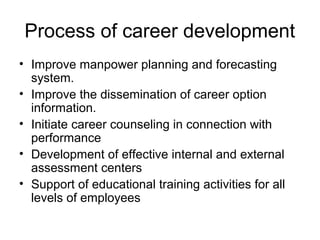
Process of career development
• Improve manpower planning and forecasting
system.
• Improve the dissemination of career option
information.
• Initiate career counseling in connection with
performance
• Development of effective internal and external
assessment centers
• Support of educational training activities for all
levels of employees
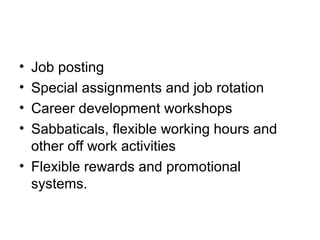
• Job posting
• Special assignments and job rotation
• Career development workshops
• Sabbaticals, flexible working hours and
other off work activities
• Flexible rewards and promotional
systems.

Career management

  • 1.
    Career management • Thedeliberate process through which a person becomes aware of personal career related attributes and the lifelong series of stages that contribute to his/her career fulfillment. • Internal career: Refers to the individual’s subjective apprehension and evaluation of career. E.g. general ambition of an individual to go ahead.
  • 2.
    • External career:refers to the more or less objective description of official progression steps through a given occupation.
  • 3.
    Career stages • Growthstage: birth to age 14 in which influence of teachers, parents and friends moulds the internal and external career concepts. • Exploration stage: between 15 to 24 in which an individual externally develops occupational images after learning from books, movies, parents, schools, sports and experiences.
  • 4.
    • Establishment stage:early career which 24 to 44. in this stage, an individual passes through different processes of recruitment and selection, orientation and socialization and job placement, leveling off, transfer and/or promotion.
  • 5.
    • Maintenance stage:between 45 and 65 is crucial for both the organization and the individual. • Decline stage: This stage arrives as the employee reaches the retirement age and includes the steps such as a formal preparation for retirement and retirement rituals.
  • 6.
    Need for careerplanning • To increase managerial competence. • To increase technical/functional competence. • Job security • Creativity • For retaining employees in the organization
  • 7.
    Objectives • To integrateenvironmental demands and personal concerns. • To increase organizational performance. • To enhance institutional/social wellbeing.
  • 8.
    Process of careerplanning • Self assessment by the employee. • Exploring opportunities. • Identification of occupational orientation • Identification of career anchors (a syndrome of self perceived talents, values and motives). • Identification of high potential occupation. • Setting career goals to meet the career issues. • Setting career plans • Implementing career plans.
  • 9.
    Process of careerdevelopment • Improve manpower planning and forecasting system. • Improve the dissemination of career option information. • Initiate career counseling in connection with performance • Development of effective internal and external assessment centers • Support of educational training activities for all levels of employees
  • 10.
    • Job posting •Special assignments and job rotation • Career development workshops • Sabbaticals, flexible working hours and other off work activities • Flexible rewards and promotional systems.