Downloaded 14 times
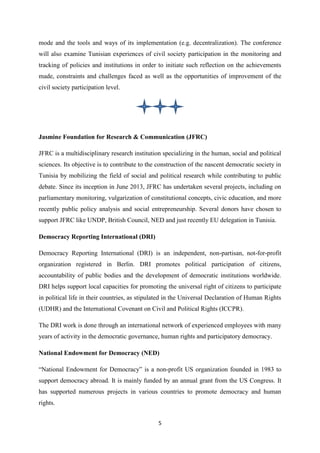



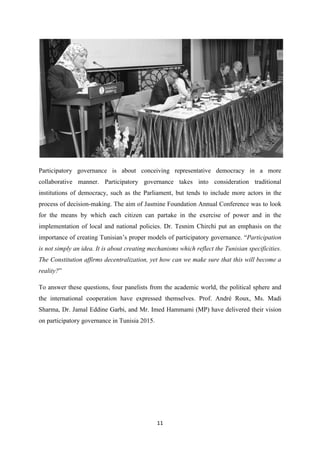
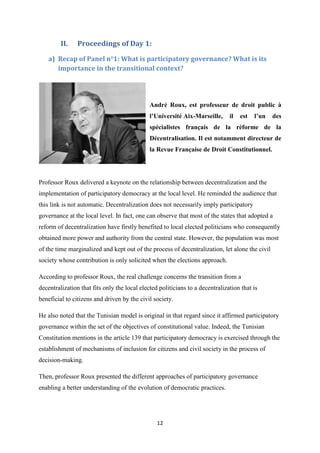

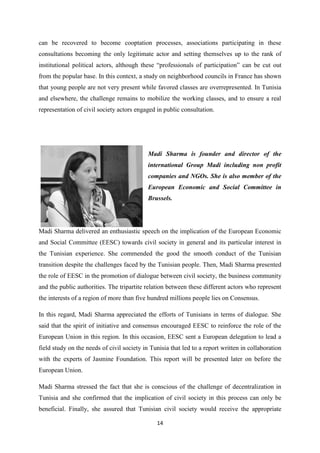
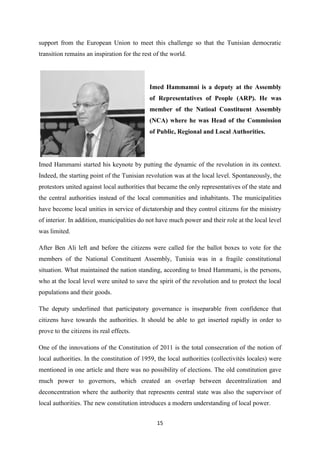
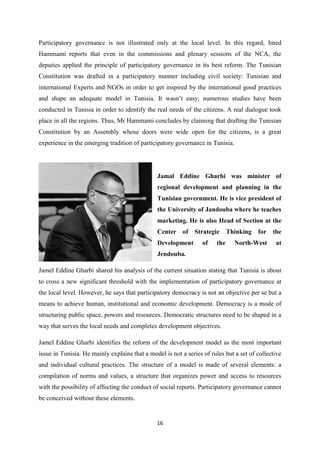

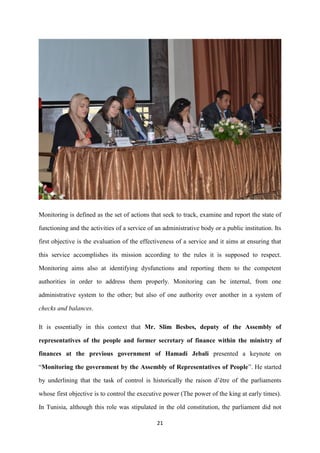




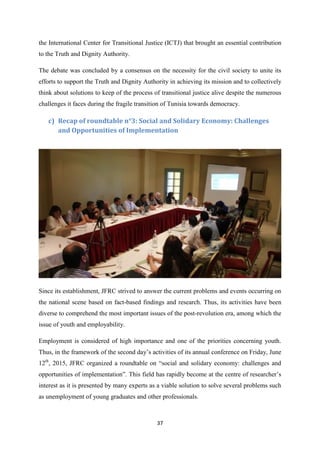
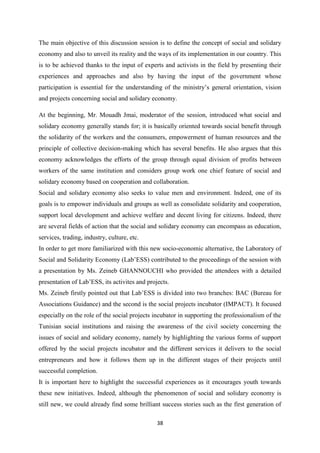
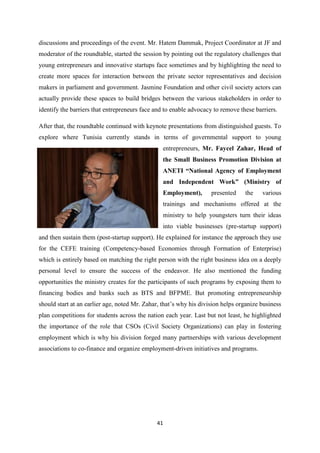
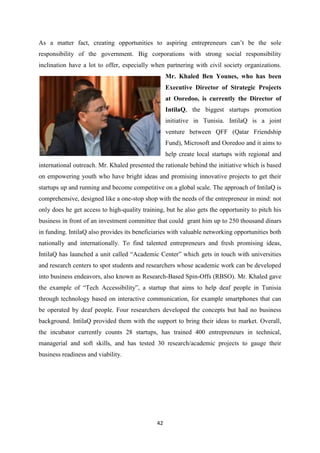
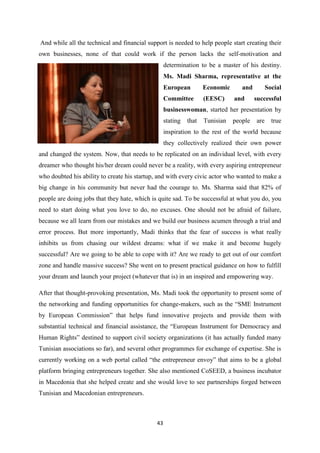


The keynote speaker provided an overview of participatory governance and its importance in democratic transitions. Decentralization does not automatically lead to participatory governance at the local level. The real challenge is transitioning to a model where decentralization benefits citizens and is driven by civil society, not just local politicians. The Tunisian constitution uniquely emphasizes participatory democracy through citizen and civil society inclusion in decision-making. Participatory governance can be approached functionally to improve management, or substantially to promote social cohesion. It implies transparency and engaging citizens in policy execution, monitoring and evaluation. There are different levels of democracy from informative to consultative to deliberative.


![[MDD02] for Publication_ State-media Relations the Rise of Private Ownership ...](https://cdn.slidesharecdn.com/ss_thumbnails/61a3d123-7517-4d33-af13-fac57e815c7e-151026124058-lva1-app6891-thumbnail.jpg?width=640&height=640&fit=bounds)


![[Report] Delegation visit of uk and irish members of parliament](https://cdn.slidesharecdn.com/ss_thumbnails/delegationvisitofukandirishmembersofparliament-131127073312-phpapp01-thumbnail.jpg?width=640&height=640&fit=bounds)


