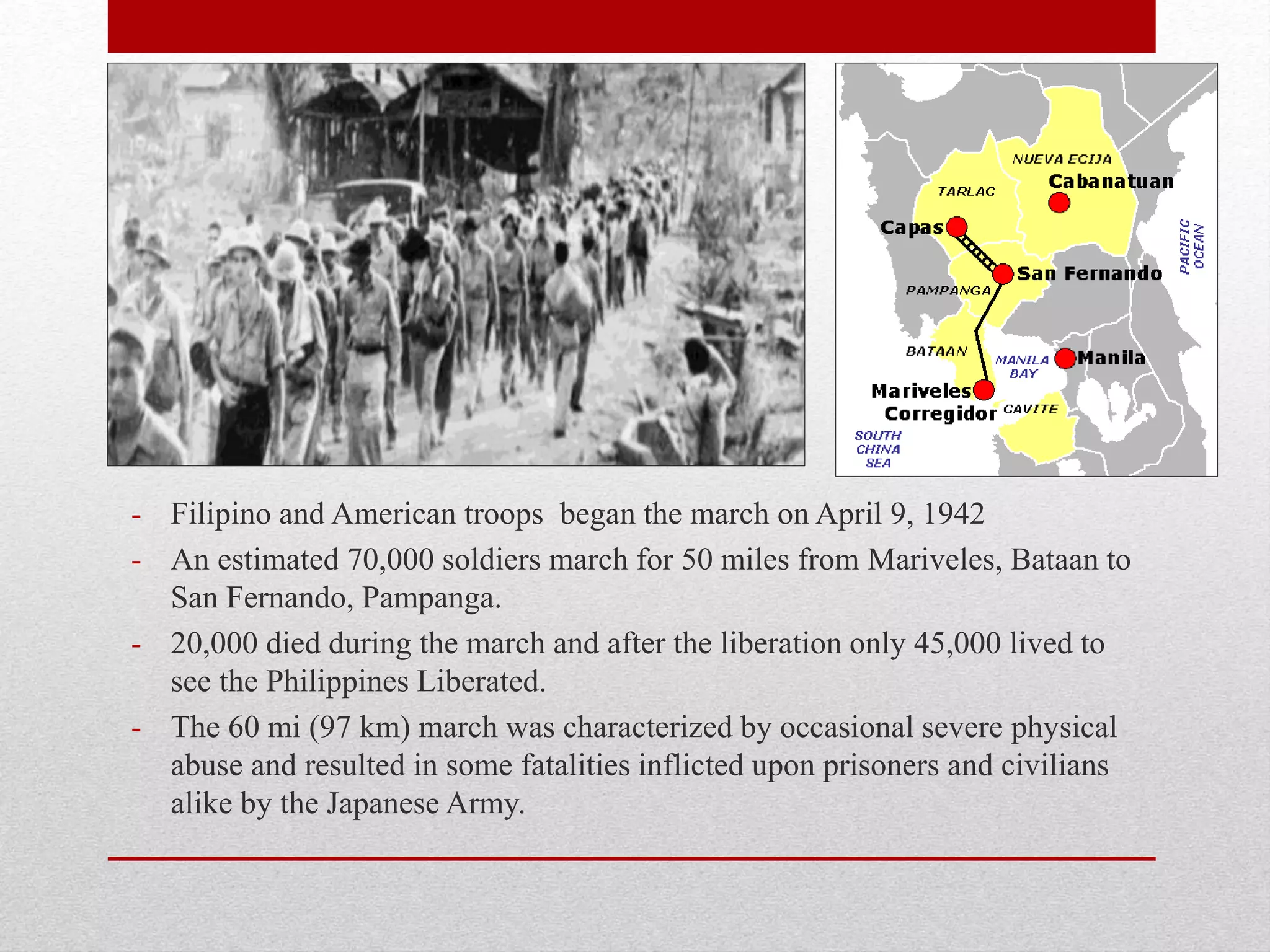
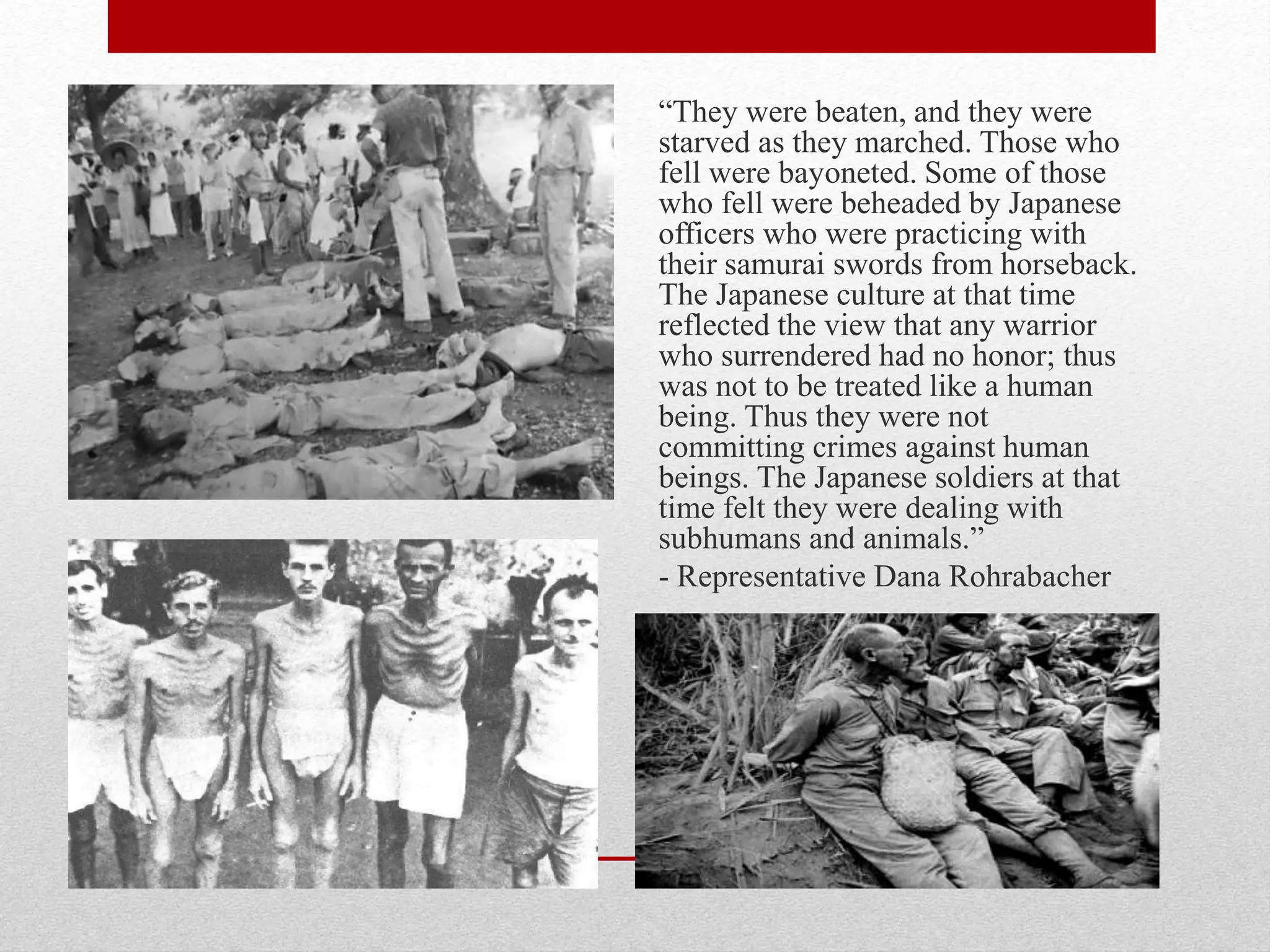
- Filipino and American troops began the march on April 9, 1942
- An estimated 70,000 soldiers march for 50 miles from Mariveles, Bataan to
San Fernando, Pampanga.
- 20,000 died during the march and after the liberation only 45,000 lived to
see the Philippines Liberated.
- The 60 mi (97 km) march was characterized by occasional severe physical
abuse and resulted in some fatalities inflicted upon prisoners and civilians
alike by the Japanese Army.
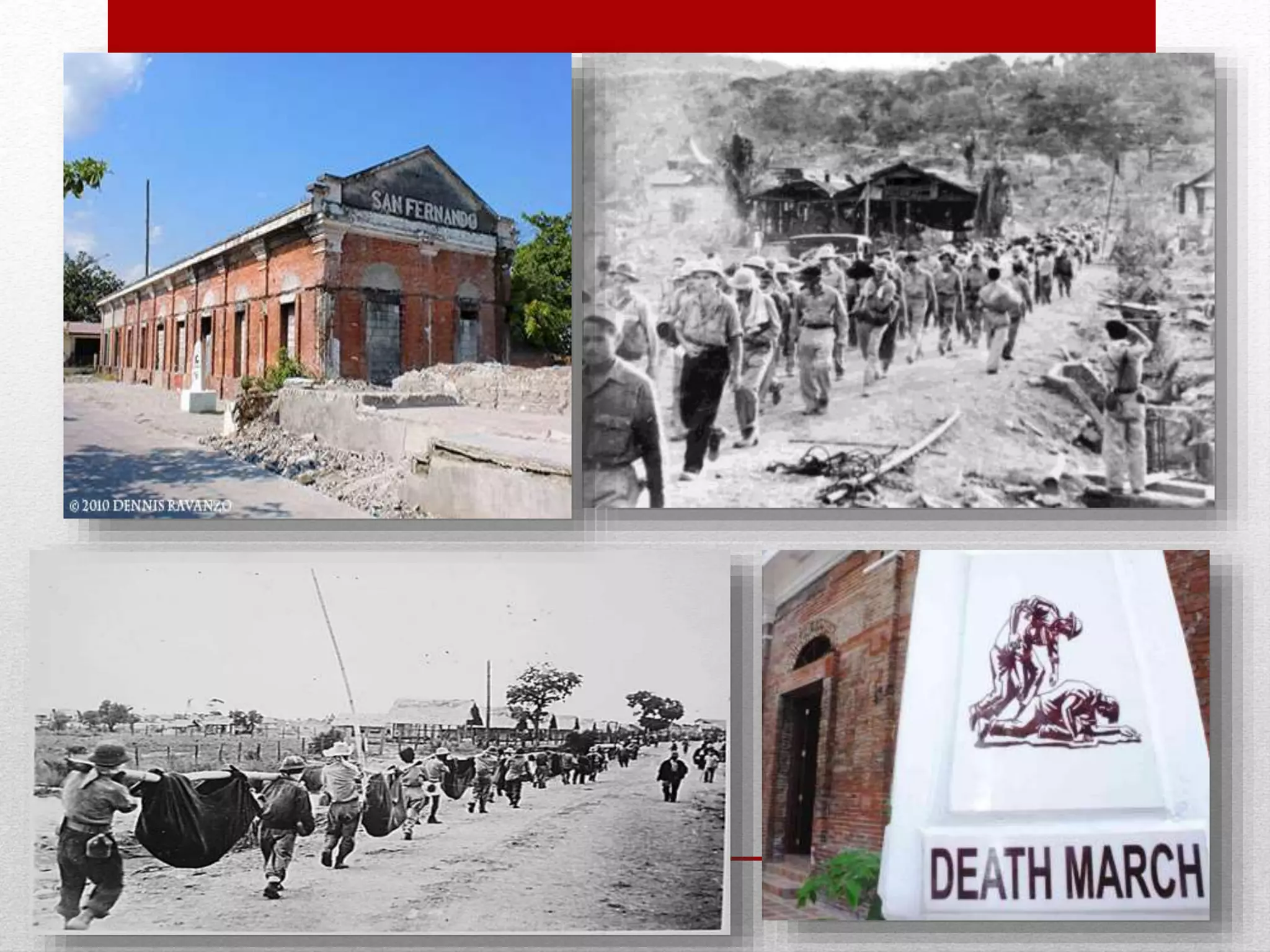
“They were beaten, and they were
starved as they marched. Those who
fell were bayoneted. Some of those
who fell were beheaded by Japanese
officers who were practicing with
their samurai swords from horseback.
The Japanese culture at that time
reflected the view that any warrior
who surrendered had no honor; thus
was not to be treated like a human
being. Thus they were not
committing crimes against human
beings. The Japanese soldiers at that
time felt they were dealing with
subhumans and animals.”
- Representative Dana Rohrabacher
• - Capas National
Shrine stands to give
honor and tribute to
those Filipinos and
Americans who
suffered and died
during the march and
in the concentration
camp.
• Located in Barangay
Navy Capas, Tarlac
Japanese Administration
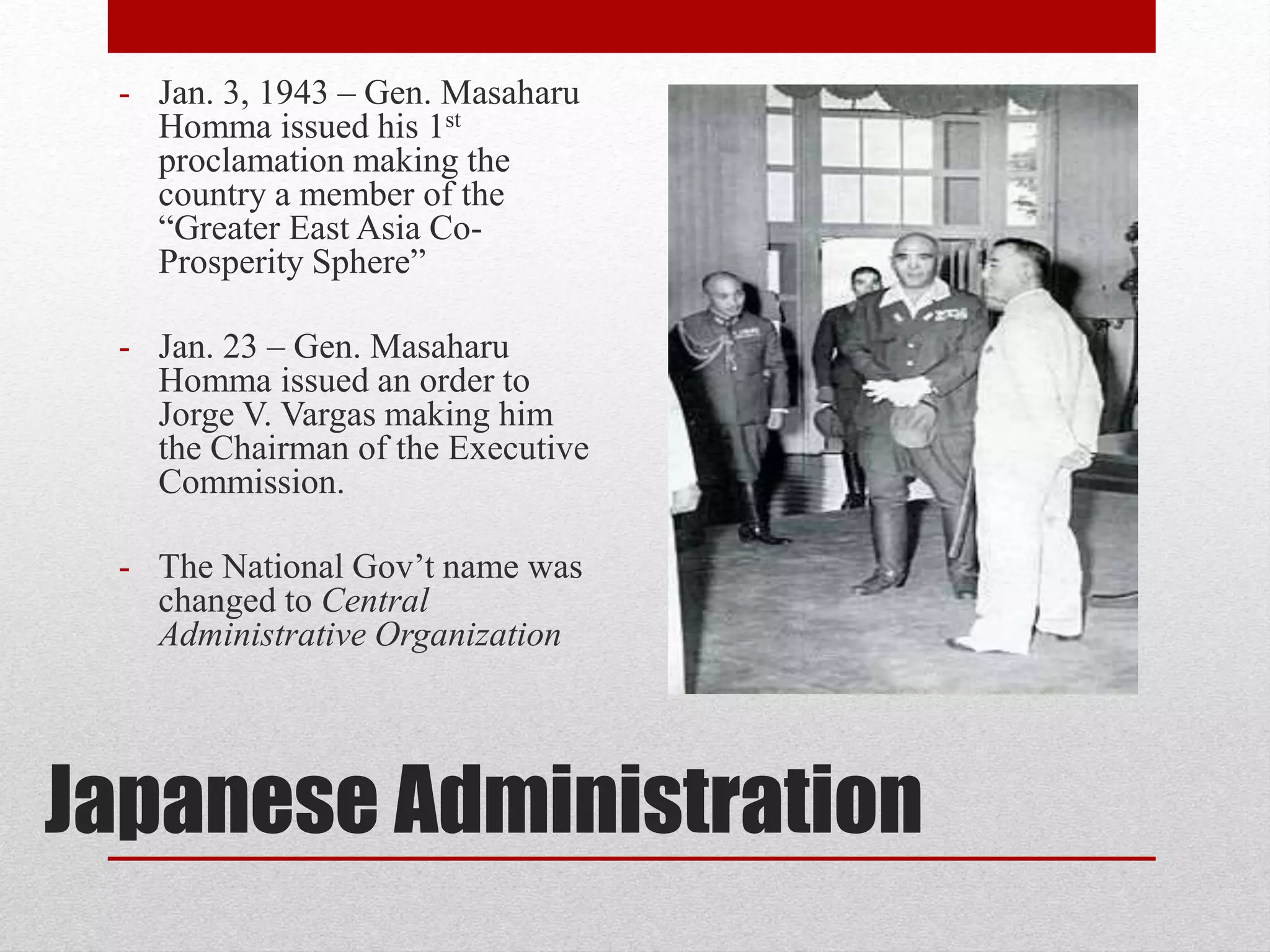
- Jan. 3, 1943 – Gen. Masaharu
Homma issued his 1st
proclamation making the
country a member of the
“Greater East Asia Co-
Prosperity Sphere”
- Jan. 23 – Gen. Masaharu
Homma issued an order to
Jorge V. Vargas making him
the Chairman of the Executive
Commission.
- The National Gov’t name was
changed to Central
Administrative Organization
Japanese Educational Program
• Military Order No. 2 (Feb. 17, 1942)
a. A deeper understanding on the positioon of the PH as a
member of Greater East Asia Co-Prosperity Sphere
b. To destroy ideas of reliance upon Western Nations and
to promote the New Filipino Culture
c. To elevate morals of the people
d. Diffusion of the Nihonggo and to terminate English in
due courses
e. Promotion of Vocational Education
f. Inspire the Filipinos to the spirit and love of labor
ADMINISTRATION OF PRES.
JOSE P. LAUREL
October 14, 1943 – August 17, 1945
Hunger due to lack of food
supply
• - JPL called on the people to
plant vegetables in every
inch of land.
• He launched the food
production campaign under
the NADISCO
• Kalatas na binasa sa bayan
ng Kawit, Cavite, noong
June 25, 1944
• “Ito ang mahigpit na
kaaway natin ngayon, isang
kaaway na mananalanta
nang hindi nakikita, ang
gutom. Pinupukaw ko kayo
upang mag sikilos. Bakahin
nayin ang gutom.
Mamayapa tayo, bungkalin
ang lupa at magtanim.”
INDEPENDENCE UNDER THE JAPANESE
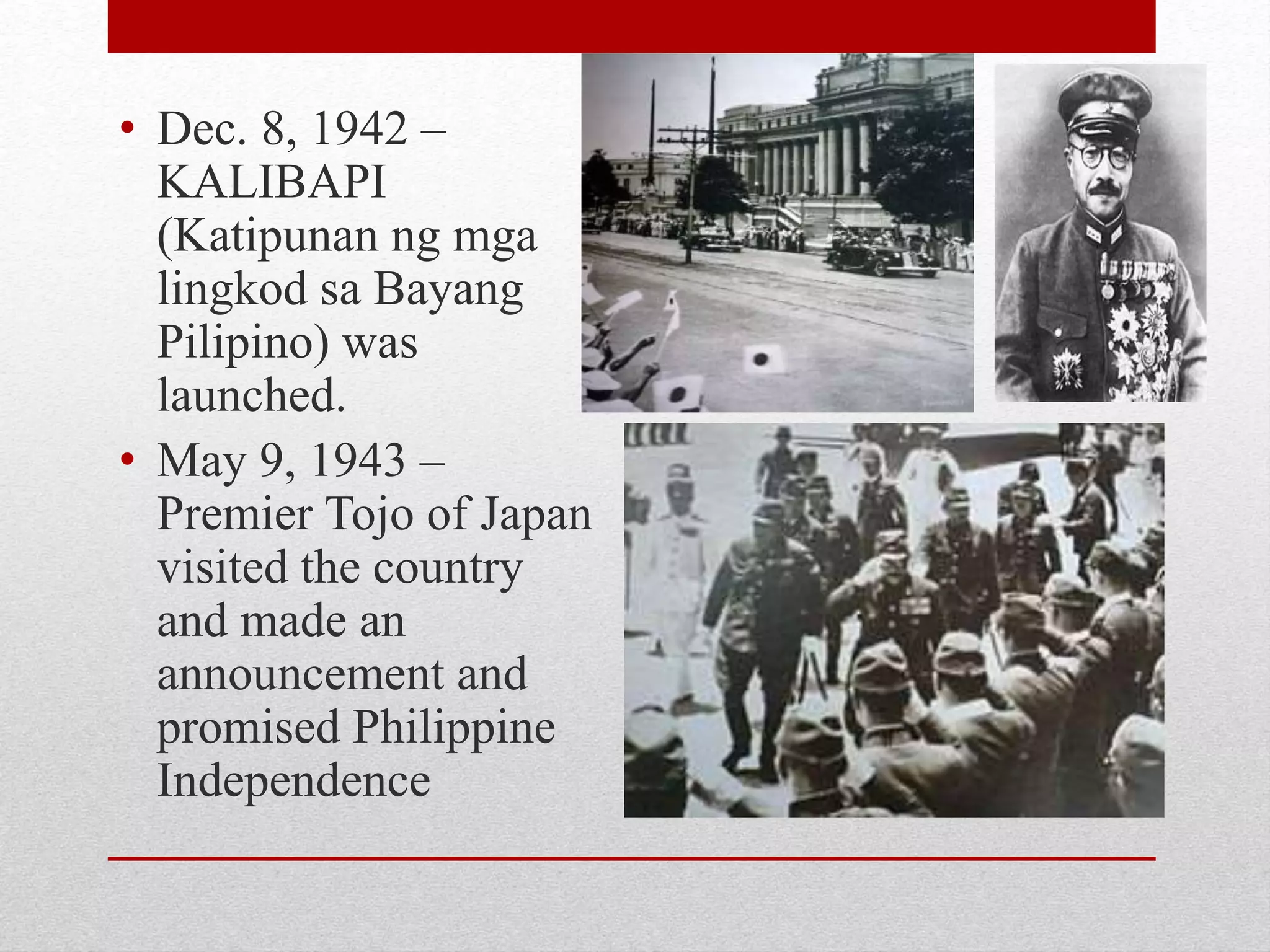
• Dec. 8, 1942 –
KALIBAPI
(Katipunan ng mga
lingkod sa Bayang
Pilipino) was
launched.
• May 9, 1943 –
Premier Tojo of Japan
visited the country
and made an
announcement and
promised Philippine
Independence
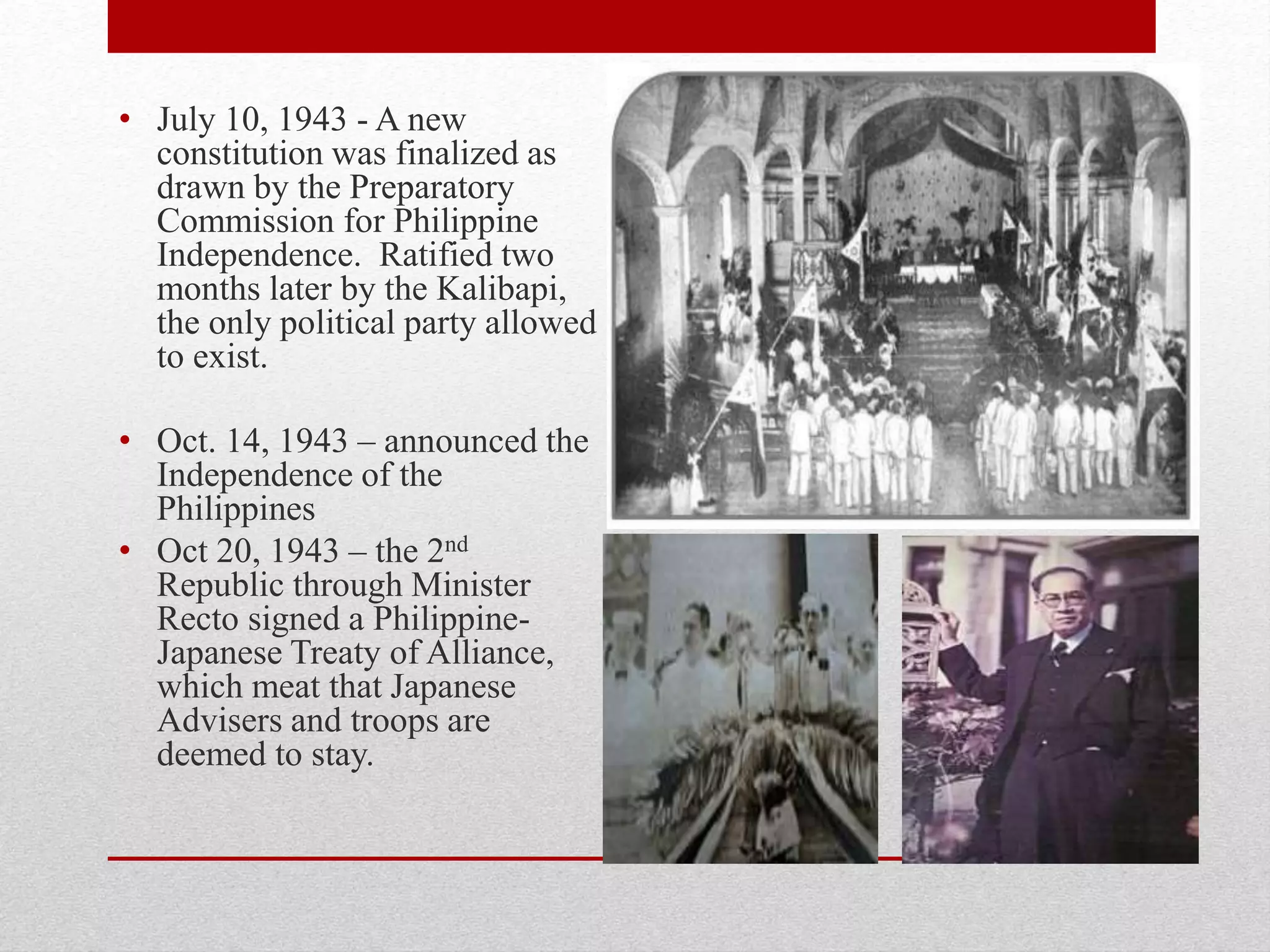
• July 10, 1943 - A new
constitution was finalized as
drawn by the Preparatory
Commission for Philippine
Independence. Ratified two
months later by the Kalibapi,
the only political party allowed
to exist.
• Oct. 14, 1943 – announced the
Independence of the
Philippines
• Oct 20, 1943 – the 2nd
Republic through Minister
Recto signed a Philippine-
Japanese Treaty of Alliance,
which meat that Japanese
Advisers and troops are
deemed to stay.

Japanese Occupation in the Philippines

  • 5.
    - Filipino andAmerican troops began the march on April 9, 1942 - An estimated 70,000 soldiers march for 50 miles from Mariveles, Bataan to San Fernando, Pampanga. - 20,000 died during the march and after the liberation only 45,000 lived to see the Philippines Liberated. - The 60 mi (97 km) march was characterized by occasional severe physical abuse and resulted in some fatalities inflicted upon prisoners and civilians alike by the Japanese Army.
  • 6.
    “They were beaten,and they were starved as they marched. Those who fell were bayoneted. Some of those who fell were beheaded by Japanese officers who were practicing with their samurai swords from horseback. The Japanese culture at that time reflected the view that any warrior who surrendered had no honor; thus was not to be treated like a human being. Thus they were not committing crimes against human beings. The Japanese soldiers at that time felt they were dealing with subhumans and animals.” - Representative Dana Rohrabacher
  • 8.
    • - CapasNational Shrine stands to give honor and tribute to those Filipinos and Americans who suffered and died during the march and in the concentration camp. • Located in Barangay Navy Capas, Tarlac
  • 9.
    Japanese Administration - Jan.3, 1943 – Gen. Masaharu Homma issued his 1st proclamation making the country a member of the “Greater East Asia Co- Prosperity Sphere” - Jan. 23 – Gen. Masaharu Homma issued an order to Jorge V. Vargas making him the Chairman of the Executive Commission. - The National Gov’t name was changed to Central Administrative Organization
  • 10.
    Japanese Educational Program •Military Order No. 2 (Feb. 17, 1942) a. A deeper understanding on the positioon of the PH as a member of Greater East Asia Co-Prosperity Sphere b. To destroy ideas of reliance upon Western Nations and to promote the New Filipino Culture c. To elevate morals of the people d. Diffusion of the Nihonggo and to terminate English in due courses e. Promotion of Vocational Education f. Inspire the Filipinos to the spirit and love of labor
  • 11.
    ADMINISTRATION OF PRES. JOSEP. LAUREL October 14, 1943 – August 17, 1945
  • 13.
    Hunger due tolack of food supply • - JPL called on the people to plant vegetables in every inch of land. • He launched the food production campaign under the NADISCO • Kalatas na binasa sa bayan ng Kawit, Cavite, noong June 25, 1944 • “Ito ang mahigpit na kaaway natin ngayon, isang kaaway na mananalanta nang hindi nakikita, ang gutom. Pinupukaw ko kayo upang mag sikilos. Bakahin nayin ang gutom. Mamayapa tayo, bungkalin ang lupa at magtanim.”
  • 14.
  • 15.
    • Dec. 8,1942 – KALIBAPI (Katipunan ng mga lingkod sa Bayang Pilipino) was launched. • May 9, 1943 – Premier Tojo of Japan visited the country and made an announcement and promised Philippine Independence
  • 16.
    • July 10,1943 - A new constitution was finalized as drawn by the Preparatory Commission for Philippine Independence. Ratified two months later by the Kalibapi, the only political party allowed to exist. • Oct. 14, 1943 – announced the Independence of the Philippines • Oct 20, 1943 – the 2nd Republic through Minister Recto signed a Philippine- Japanese Treaty of Alliance, which meat that Japanese Advisers and troops are deemed to stay.